Subscribe
Share
Share
Embed
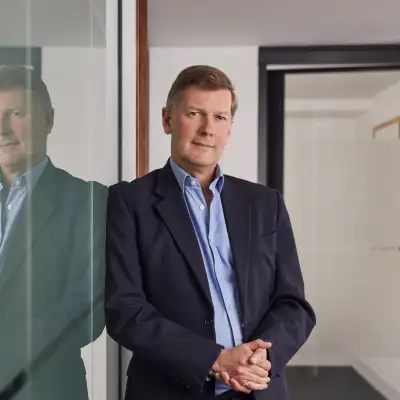
Welcome to The Boardroom Path, the essential podcast for aspiring and newly appointed Non-Executive Directors navigating the journey from executive leadership to the boardroom. Hosted by Ralph Grayson, partner at Sainty Hird & Partners, each episode offers insightful conversations with industry leaders, seasoned board directors, and governance experts. Our guests share practical strategies, valuable perspectives, and actionable advice on how to effectively transition into board roles, maximise your impact, and build a rewarding NED career.
Shefaly Yogendra: A lot of people will form their opinions of entire countries, entire cultures, entire parts of the world based on what leading newspapers here might be reporting or what conversation is happening in their stream on social media. How do we form judgement if everybody has the same fact base? If everybody has the same hot takes on those issues of the day? Where is the difference coming from?
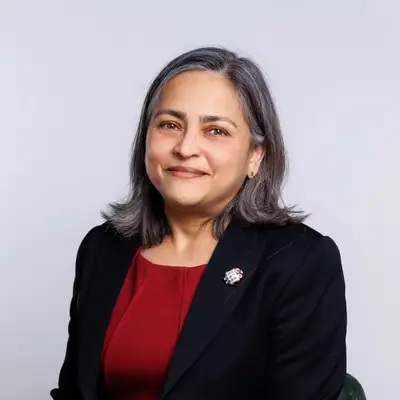
Ralph Grayson: Welcome to The Boardroom Path by Sainty Hird & Partners. I'm your host, Ralph Grayson, a partner in the board practice. In this series, we'll offer practical steps and useful perspectives for aspiring and newly appointed NEDs. Today's guest brings a rare combination of boardroom experience, academic rigour, technological insight, and practical leadership. Dr. Shefaly Yoghendra has spent her career operating at the intersection of governance, strategy, innovation, and decision making areas that have become increasingly critical as organisations navigate unprecedented levels of complexity and change.
An engineer by training, entrepreneur by experience, and non-executive director by vocation, Shefaly has served on numerous boards across the public, private, and charitable sectors, helping organisations confront the challenges of growth, transformation, risk and disruption. Alongside her board work, she has built a reputation as one of the most thoughtful voices on governance and decision making. Combining deep practical experience with extensive academic research into how leaders make decisions under conditions of uncertainty.
She's the author of _Uncharted Spaces: Reset the Agenda, Reimagine the Boardroom_, a timely and provocative book that challenges many of the assumptions underpinning modern governance. In it she argues that today's boards are being asked to govern organisations in a world that is fundamentally different from the one for which most governance models were designed. Whether the challenge is artificial intelligence, geopolitical instability, stakeholder expectations, technological disruption, or societal change, boards are increasingly required to make decisions without the comfort of precedent or certainty.
What makes Shefaly's perspective particularly valuable is her ability to bridge disciplines that are often treated separately. She brings together insights from technology, leadership, psychology, organisational behaviour, and governance to explore how boards can remain effective when the future is unclear and the pace of change is accelerating.
For listeners of the Boardroom Path, this conversation could not be more relevant at a time when directors and executives are being called upon to lead through ambiguity rather than certainty. Shefaly offers a compelling perspective on what good governance looks like, how effective decisions are made, and what it means to lead responsibly in what she describes as uncharted spaces.
Her central argument is simple but profound. Most boards were defined for a world that no longer exists. Shefaly, welcome to the podcast.
Shefaly Yogendra: Thank you. It's good to be here.
Ralph Grayson: So you've spent years in boardrooms, academic and leadership circles. What was the question that ultimately compelled you to write uncharted spaces?
Shefaly Yogendra: It was a question from a friend who asked me, _"If you were starting on boards today, how would you start?"_ And normally I have some kind of crisp and clear answers, some bullet points that people can take and run with, and I really didn't have an answer for her because the doorway that let me in is not a doorway that is completely open now, it is probably ajar.
It was the Board Apprentice Programme, which has more potential people who want to be apprentices than willing boards that would host them and that requires willing chairmen who will bring in an external person into their boardroom and be willing to mentor and coach them while letting them observe how boardroom dynamics work and also managing to not create a shadow board situation, which as comes with its own drama.
Ralph Grayson: I'm going to start with a provocative question on that because it's something that's come up again and again on the podcast. And indeed, I started this by talking to people who ran NED on board, and the FTE NED programme. Do you think there's a role for certification in boardroom governance?
Shefaly Yogendra: I think the answer is both yes and no. For a complete novice, a person who doesn't know what boards do, who doesn't know what restrictions are placed on boards, who doesn't understand what the duties of a board director and independent board director are, maybe the courses and certifications give them some kind of baseline to operate from.
But at the same time, there's a line that I'm fond of using, which is governance is a contact sport. Essentially, all the knowledge you gain has to come into action in the boardroom and at the time of encountering a challenge in the boardroom where maybe you disagree with the line that is being taken in the boardroom or where you might think that they are doing things, your colleagues are doing things that are outside the purview of a director's duties.
For example, stepping into executive territory, all the training you've had, all the lectures notes you have, all the principles you have learned, unless you can actually bring them to bear in a meaningful way that you are heard in the boardroom at the right time, staging the intervention at the right time. I think the certification is pretty much worth the paper it's written on and no more.
Ralph Grayson: Yeah, it makes me wonder whether you can certify judgement. You certainly can't certify boardroom behaviour. And what I'm always fascinated by when I talk to people who've done the FT NED course, which I did, seven months of hard work, the emphasis on board behaviour as good governance practice above skills, experience, knowledge, the things that people expect when they go onto the course. There's a polarity there.
Shefaly Yogendra: Definitely and you can't, as you said, you can't certify judgement. You can't certify behaviour because they are emergent. They emerge in the situation and they don't emerge in isolation with the person and their thoughts. They emerge in interaction between various people, amongst various people in the boardroom, where the views might be different, the perspectives might be different. People might bring different experiences, indeed, different preferences, which they might even consciously not be aware of and in all of that, in the churn emerges the need to make a decision that once it's made will not be sabotaged, which is the consensus building process that we all encounter in the boardroom.
Ralph Grayson: And the importance for everything to be contextual, I think is also fascinating in that regard.
Shefaly Yogendra: Definitely.
Ralph Grayson: Look you interviewed hundreds of people, I think or certainly had hundreds of conversations in writing the book. So let's just extrapolate that a little bit further. What surprised you in these conversations?
Shefaly Yogendra: What surprised me is I think it's a kind of selection bias probably when you approach people and say, I'm writing a book about the future of governance. There's a certain type of board director who will agree to spend their time with you when they don't know you. So the surprise was that I met really forward thinking, brave, provocative, and very principled people who are willing to take it on the chin so that they can better the governance in their boardrooms.
Now, you might wonder why this was a surprise. Was I expecting cynicism and darkness? I was, because a lot of private conversations with directors, which are not happening in events or situations where others can hear them, are about difficulties. So I'm glad that it, my surprise essentially was that there are people who are navigating the difficulty successfully. But the first step to navigating those difficulties is to articulate that there is a problem and once you have said it and put it out there, there's no going back from it. You have to then address it.
That was one surprise. And the second surprise was a saddening one. And it was how easy praise to propaganda we all are. We are all sitting ducks because most people's lenses and approaches into the world are where they are. So a lot of people will form their opinions of entire countries, entire cultures, entire parts of the world based on what leading newspapers here might be reporting or what conversation is happening in their stream on social media. Rather than saying, is this the whole picture? Should I go and look at what somebody else is saying, what the other party is saying? And that narrowing of the context window and what I call the epistemic flattening is a really terrifying prospect to me, and not just in my classrooms, for example, as that I've been teaching for 14 years, and the state of broad awareness of facts is narrowing. Everybody seems to have a beige sort of opinion, which is not what we need.
Coming back to your earlier comment about judgement, how do we form judgement if everybody has the same fact base, if everybody has the same hot takes on those issues of the day, where is the difference coming from?
Ralph Grayson: I'm fascinated just to explore how that may be different in terms of sector or geography? You've got a fascinating international background and perspective. A number of the podcasts we've done have explored the difference in corporate governance between the UK and the US. I wonder how much governance is a function of some of those social media pressures, cultural norms. How is it contextual whether you are in India as opposed to the UK or the US?
Shefaly Yogendra: I think that is definitely the pressure from society and stakeholders is definitely playing a big role in boardrooms where people are aware that they need to respond to it or even indeed be proactive about it. The second thing, which I have made mention of in passing because I didn't want to dwell on that, is how the governance structures themselves have a historical precedent.
So for instance, in the African continent, there are 17 countries which fall under the OHADA Alliance. They were all former French colonies. You can draw the line between the two that there is a system and a way of thinking that is crystallised in formal governance systems, which they have all signed up to. Countries that have been former British colonies. They are more close in their principles, at least to the Anglo-Saxon ways of thinking about governance, and they are all different stages of maturity. So some are more advanced in certain areas, some are less advanced, some are taking particular views that we, for example here, didn't take.
For instance in India, this idea that there needs to be at least one woman director on every board is mandated. And we know from our experience here in the UK that we have somehow decided that mandating is not necessary because social change, which everybody buys into and moves in the general direction of, is more likely to be permanent and less reversible than social change that is mandated because that also victimises the one person who's supposed to carry the can for their entire gender or for their entire ethnicity or representing a collective which may have differences of opinion with them.
Ralph Grayson: One thing that comes through strongly in the book is that many boards are trying to navigate a world that's fundamentally different from the one that shaped their careers. And you make an observation that I found fascinating, that experience itself can sometimes become a liability. Just draw that out a bit for me because I think it follows on naturally from the comment you just made earlier.
Shefaly Yogendra: Yeah, I do make that comment and it has annoyed people. I will say I was in an event a few weeks ago where I managed to annoy a former, a panellist sitting next to me when I said that.
Ralph Grayson: It's good for selling books.
Shefaly Yogendra: Well, the thing is that one of the things, a friend of mine whose criticism as well as support matters a lot to me because she has a massive intellect. She said to me, I sit with your book and then I put it away, and then suddenly in the middle of the night, I wake up and a line has struck me and I go back and locate it and think of all the ramifications from it. And saying experience is irrelevant, is I think, one of those lines in the book.
Now, what I meant by it is that if we look at everything we had in our past as an immutable monolith that we are going to now draw upon in order to deal with the future, that's actually a very risky situation to be in. A very risky position to take. What we need to be able to do in intellectual honesty is to look at the bits of our experience and say, this experience is useful in the following ways, considering the problems of governance we are dealing with. So for instance, if you are a person who spent 30 years in the regulated sector, you have a long arc of understanding how regulatory trajectories have worked, how the regulators' thinking has changed, let's say with the advent of the worldwide web in the workplace or with social media emerging and so on.
So equally, you could take a reasonably smart guess as to where the regulator will be heading next. That is relevant bits from your past experience, but that is not one point in your experience. That is something you have abstracted from the arc of your experience to say this bit is relevant. But to say this is how we did things when we used to fax people or telex people, God forbid, I have seen the telex work, I have sent telexes, and then expect that the speed of interaction between different parts of the business will remain the same. When things happen in a nanosecond, not just on social media, in how, let's say trading happens. If you ask an asset management person, they will tell you just to take two days to settle a trade and now you do it in a quarter of a second, and therefore your guardrails have to be very different, very sharp. Your trip wires have to be very clear. The conditions you attach to people who can actually finish a trade and approve a trade are very stringent. It's a whole different context.
So taking whatever we have and knowing what is relevant to pick and choose and apply and not insisting on using it just because we spent 30 years doing it is the trick and a lot of people don't actually spend the time to reflect on what is useful and what's not useful.
Ralph Grayson: Gosh, there's a lot to peel back there. A lot of NEDs I talk to when I say, how do you justify your seat of the board? What are you there to solve for? Talk about their experience. They talk about wisdom is a word that comes up with a certain type of board member.
How do we know they're applying wisdom rather than just relying on assumptions that no longer hold?
Shefaly Yogendra: One could look at good decisions and say, _"We did everything well."_ And if a decision is bad, people then reflect on it mope little bit and so on. But I think the key is to separate the decision making processes from the outcome. And invariably the reflection happens when the outcome is dreadful, but the reflection ought to also happen when the outcome is great. Looking back and unpacking what is it that we did in the process that might have led to it and what factors might we not have been aware of then, which would have shaped our outcome in ways for which we don't take credit, we can't take credit.
If you'll allow me, I'll tell you a little story. I'm on the board of Temple Bar, and this is a story that is known quite widely. In the first lockdown, we had to serve protective notice on our fund managers and initiate a very challenging and interesting process of doing a beauty parade of potential alternatives to the asset managers who were there in place. If you remember, this was the time nobody knew how to use Zoom properly and we undertook this massive exercise. We were a four people board. But the interesting thing about that board was, and still is, that board has tried to create and construct a board where everybody brings such different perspectives that at some point you've got to have a reflection moment to say, this is how we are pulling it together, this is what it means, and that's precisely what we did.
Then there was a lot of pressure to go growth, like growth style of investing. There was also a lot of pressure to become an ESG fund. If you remember then that was a summer when a fast fashion retailer was in the news because people invested in it and then found that they were operating basically slavery driven shops right here in Britain. So we, being an independent board, took a very different view. We actually undertook an academic exercise into the style, the value investing style, to see did it hold through the years and what circumstances has this style of investing faced?
Now it's interesting, I'm telling you the story in 2026, which is the a hundred years celebration of Temple Bar's existence, and we had a historian do a piece of work on what the fund's history is, and the fund did pay dividends during Second World War and during the depression, which means something was going right with the style of investing.
Anyway, that exercise has been done in 2026, not way back in 2020. But we asked somebody else to do an academic exercise looking at all the data available and they looked at it and came to us and said, this is the history of the style, and we chose to resist the pressures of going growth investing or labelling ourselves ESG and stayed with our style. Which then guided our process of painfully navigating Zoom controls and having lots of fund managers and their teams present to us. And then in the final ground, we met two teams and we chose the guys we chose.
In hindsight, we can always say, _"Oh yeah, we are trading at a premium. We are issuing shares."_ All of this, how wonderful, how smart we were, and pat ourselves on the back. But the process was very painful and time consuming and navigating not just the tech aspects, but actually we literally didn't meet in the process. Our research and our project management was done by somebody whom we never met. We didn't meet because we were not allowed to meet. Only at the final stage did we meet the last two candidates in person in the garden of one of the directors.
The reason why I'm telling this story in this detail is that it is important to reflect on the process regardless of the outcome. And when we don't do that, we are at the risk of not understanding what everybody brings. This might sound like something you do when there's a massive decision. I think boards must also look at their performance and their ability to interact and their effectiveness regularly by doing board appraisals and doing it with an independent person and not just doing a perfunctory thing. Like you come in and interview people and write a report, but letting that appraiser or that evaluator sit in on meetings to watch the dynamics, watch what style of conversation there is, how disagreement is surfaced and negotiated around how decisions are made. They could observe quite a lot if they actually sat in several committee meetings and several board meetings rather than attend one board meeting and have one-to-one conversations.
But that's a whole different podcast I think.
Ralph Grayson: It certainly is. The authenticity of those and the debate around internal and external appraisals. I think it was Kimberly Lewis on a prior podcast, she's Head of Stewardship at Schroders, said she'd never actually read a bad internal board appraisal as opposed to an external board appraisal, I think.
I just want to stay with this theme of process style. Should board governance have a process and style that changes depending on the context and should a board keep coming back to reaffirming its mission and purpose and validating it, that mission and purpose, on an annual basis or at least a regular basis?
Shefaly Yogendra: Yes. I think that is the short answer. I would also say that, at least for listed boards, there's a cadence of what we prioritise at what point of time in the year. If we are to put out a half year report or an annual report, of course the compliance aspects and the writing and drafting and approving of the report become a big important thing.
But the rest of the year, how much time do we give to everything is a judgement call and one of the conversations I have with a friend of mine in cybersecurity is he asked me, _"How much time do operating company boards give to cybersecurity?_" Four or five years ago, my answer was five to seven minutes. I think the answer is still pretty close to that unless there is a cybersecurity related hack or breach, in which case your entire board meeting and then some is about cybersecurity.
That ability to be malleable and flexible and be able to shape the agenda to make it relevant, not just to the broader context, but even to know how you would deal with the crisis if it arose, and to devote time to things like preparation for a crisis. I would also add that boards really, I feel now, can't afford the usual four to six meeting per year kind of cadence.
Now, I know that this can be controversial because it sounds like the board is going to try and do the executive's job. But it is more about more frequent sampling of the signals coming from the business and you can see, I'm going into my communications engineer mode here. So in a Hi-Fi system, it's called Hi-Fi, high fidelity, because it is reproducing the signal that was transmitted at the listener end with high fidelity.
What that really means is it has retained as much as possible the information that was transmitted, and the more frequently you'd use the sampling signal to sample the information, the more information it'll carry, which it'll replicate at the other end. And I think of that analogy quite frequently. It doesn't mean that the sampling signal goes and does anything to the original signal. It just says, right, this is the information you have in this nanosecond and this is the information you have. But that ability to continually keep in touch with the signals that are coming will then give us the ability to respond in quick time, in double quick time if there is a crisis and that requires a different kind of mindset and it requires different kind of time commitment, and dare I say, it'll require people to be compensated properly for that time that they're giving to any company.
Ralph Grayson: Gosh, let's not go down that dark alley. I'd love to just stay with this visualisation, I think it's great. You quote a chair who liked, and I think I quote correctly, _"Neat paperwork and messy meetings."_ Why are messy meetings the sign of a healthy board when it comes to those visualisations?
Shefaly Yogendra: Yeah. It is from Kevin Marsh's Senate testimony and messy meetings, clean paperwork. Clean paperwork is what we are being told. Messy meeting is about figuring out what we are not being told, what we should have been told, what we should have been told in some more detail, and what is basically fluff that is padding up the board paperwork, and that is why it's messy.
Ralph Grayson: So when you walk into a boardroom for the first time, what tells you whether it's a healthy, messy or not?
Shefaly Yogendra: That's a very good question. I am having to revisit my first days in any board. I think a lot of signals actually come in how you're interviewed. And I hate to bring up Temple Bar again, but the Temple Bar interview is very interesting. It was a very complex rolling conversation, examining different aspects of how I was thinking, what kind of preferences I had, what strongly held opinions I had, whether they were loosely held or not, as well in on other topics. That Interview was very interesting because the interview didn't even begin, but my small talk basically told them everything, I was told later, about how I think and my small talk was not small talk. It was unpacking the whole Uber case and essentially why I do and do not use Uber and all the reasons for and against, and what it'll mean as an investment proposition when it came to IPO because I understand how the Valley funds businesses and so on.
And I was told later, as far as we were concerned, that could have just been your interview. So I think being allowed to say what I was thinking actually told me that these people are not really people whose minds are closed, who only want to do things in a structured and perfunctory way. They're open to a little bit of chat in the edges, which they will use as an input in the process. I could be content that those inputs are taken into account where I could disagree if I had to and in the end they accepted me even though I was different from them. And I think that is where a lot of signals lie.
That said, if I were to tell you off the record all the stories of interviews where I knew entering the room that these are not people I can work with, that would be a whole different book.
Ralph Grayson: I really want to drill into this. I think this is fascinating. So I was talking to the chair of a client the other day and we were trying to look at what's happened at a major oil company and their chair being removed and what the norms committee should have done better during the interview process and what he could learn and what he was asking me was whether we as a firm do psychometric testing of NEDs because everybody talks about doing psychometric testing and team fits of executives. But it's very rare in my experience that this happens in boardrooms.
And this chair's criticism of his interview process for his other board members is that they were recruiting people who were just too polite and he wanted more contention in his team. And he wanted Sainty Hird to help him think through how he got that right balance between contention, safe space and challenge and whether psychometrics could play a, a role in that. Particularly in terms of looking at the team fit and therefore get the right level of contention, but not have a chair of the BP situation.
Love your thoughts on that.
Shefaly Yogendra: I think one of the challenges of the work of boardrooms and board directors is the amorphousness of the job. And to your earlier point about not too many boards are using it, I am on the board that used it. So I did the Hogan Inventory for the first time and it did lead me to think about that a bit more. And I would say that a lot of psychometric tools, are risky in that they provide a kind of mathematical, almost certainty, when what you are hiring for is the live organic creature and how that creature will behave in a test and exam situation, and we have all done plenty of those, and we know that's a completely different skillset versus how they will behave in the boardroom could be completely different, if not completely quite different.
The second thing that I would say is how the tool is used. At which stage? Do you use it when you are meeting the candidate, you as the advisor to the board or meeting the candidate for the first time? Do you use it in conjunction with or independent of their cv? Do you use it after they have met the board for the first interview? Do you use it when the process has finished as a confirmation bias, supporting mechanism? Or any of those, any combination of those? Because depending on when you introduce the tool in the process. You are at risk of confirming or denying your null hypothesis, right? So that's one.
The third thing I would say is that there are very few people that I know who have the ability to use a cross section of tools and actually make a recommendation to a client saying, this tool doesn't work for this process because you're looking for this, this tool might work or this inventory might work. There is a friend of mine who's certified, I think in 12 inventories, and she uses them very rigorously. She does a lot of CEO coaching work and she uses it very rigorously helping those CEOs pick their teams and stuff. So when we take the totality of all of those things, we have to be very cautious in using tools that give you certainty when the entire job is of navigating uncertainty, lack of clarity, amorphousness, messiness if we use our earlier adjective.
So that's my view on the use of psychometrics. That said, the Hogan Inventory I did was very interesting because it confirmed what they were thinking of me, and I had been officially told that's basically what was the read on me. But I'm no wiser, essentially from knowing what I clock as the MBTI type or what the Hogan Inventory showed as my spikes and so on.
I feel also we are not static as individuals. We evolve. I may do a psychometric test today and the outcome might be different from what I might have done a year ago or six months from now. So that is also a risk that we run. But if I had to pick one, I would say that they can give you a sense of structure and reliability and certainty when you are really essentially hiding for being able to navigate uncertainty.
Ralph Grayson: For me, the key word you used there was evolve and I want to link that to the idea of professional development as a core part of good governance in terms of developing and continuous education for board members. What I think is very interesting about this and, in the VC work that we do, we're seeing more and more VC investors as part of their term sheet saying, _"Yes, we'll invest. But only if you, the founder, or the executive team have coaching."_
And I think what's interesting prospectively about this idea of psychometric testing or more formal use of psychometric testing, not just of the individual but of the board as a team, is therefore to not force the individuals or, indeed the chair, but encourage them to think about what development that they need to get the best out of that group of individuals as a team.
So what we are doing now at Sainty Hird, which I think is really interesting because it's been demand driven, when we do a search and we appoint a board member, we will then provide four, five hours of coaching for that individual because it then draws out that self-analysis that otherwise the data of the psychometric test you can take or leave. But it's down to the individual to look themselves in the mirror and decide what do I need to fit in with this group? And actually to add value and lead, leadership in the boardroom is something I'm fascinated by. So let's just extrapolate that a little bit. Your idea of coaching for board members.
Shefaly Yogendra: So if I can for a second go back to what you said, how do I fit in this group? I think I would ask the question, how can I be more effective in this group? Because you may fit completely differently elsewhere. So that distinction being drawn, definitely seeking coaching rather than being told to get coaching are two different things.
And I have worked with quite a lot of founders through my working life and it is an interesting characteristic most of them share that they have a very clear, singular vision of what they want to build and how they want to build it. Which makes this particular aspect quite a difficult one to negotiate with them, let alone make them navigate it. But on board directors, definitely. At the same time, having said what I said earlier about certifications, we need to watch for formal programmes not to become another box tick exercise.
And it comes back to another question you had asked. How do you know about judgement? How do you certify judgement? You can't certify judgement. You can to some extent certify technical knowledge, but you can't certify judgement. For all the education formally that I have received, I'm constantly building on that as well. But what I do have is a substrate that I build on.
So I am still forming my opinion on director's development as a process. I believe, I think Guernsey has introduced some kind of CPD requirement. I may be not entirely accurate, but I veer between introducing CPD requirements and not because it, I fear, might become another way of box tick without necessarily boards being able to figure out, _"Okay, we spent all this money on your training, what did you bring that we could use?"_
Ralph Grayson: Just before we leave this idea of personal reflection, you talk about stewardship a lot in the book and you used the word bravery and you used the word courage. If I remember correctly, and I haven't misquoted you, you talk about the board director being the voice of sanity and bravery. What does bravery mean in the context of stewardship to you?
Shefaly Yogendra: If you look at the UK corporate governance code telling us what is required of us as board directors, it is to ensure long-term success of the company. Which means, to me anyway, beyond the term we might serve on the board, which is to look beyond the five years, six years that we may be around and looking at 10, 15, 20 years and the example I sometimes give, when I talk about this, is higher education. Higher education boards have a very big and real responsibility of supporting and enabling decisions which affect their students for 30 years or so of the students' lives. And as we know, education and its impact shows up in society for a similar period of time.
In such a situation, judging who's on the board and how they think about the future is a really tricky exercise because a lot of, unfortunately, a lot of higher education boards are made of people who are not being brave. They're just doing the job, whatever they perceive their job to be. That said, there are some extraordinary board chairs, et cetera, in higher education, and I have quoted some of them without citing some of them in there in the book.
So bravery to me means when the board is fixating on the next quarter, next six months, unless it is an issue of survival, in which case you have to survive before you can do anything long term. Bravery sometimes means being able to say what others in the room might be thinking but are not saying. And I see this dynamic, for example, in my classroom, one student will ask and 15 other students will ask adjunct questions, subordinate questions. You're like, you could have said this if I teach virtually as well. So you could have said this in the chat, you could have sent it to me on a personal message. But they wait. Everybody waits for one person to speak up and then they discover their voices. And being able to be that first person to speak up is a risky venture, it really is. Because then you could be seen as a tall poppy. You could be seen as a troublemaker when all you are trying to do is to raise the collective game.
And that then comes back to your earlier question about how do you know on the first day of the boardroom this is the right kind of messy or the wrong kind of messy? I think the chair's role in ensuring the right degree of messiness and the right degree of bravery is beyond critical and I'm coming back repeatedly in my conversations about the book to the point of the role of the chair. And because the situations we are dealing with right now, the context we are dealing with right now, we need chairs to be brave. We need chairs to be people who can say, _" __Yes,__ I know that what we decide today may not give me medals tomorrow, but I know that 15, 20 years from now when the history of this company is written, I will be written up as the person who did the right thing by the stakeholders."_
Ralph Grayson: I love that. I think you implied in the book rather than state it but certainly my reading or my reflection was that if people governed on boards with a view to the next generation, they'd be much better at their stewardship.
Shefaly Yogendra: Yes, absolutely. I agree with that. I am of the view, this is why I teach. If I can influence 5% of my students to find their bravery, their voice, their independent thinking, their critical thinking, I will have succeeded. Indeed, one of the endorsements in the book is from a former student of mine, which I consider the greatest endorsement and one of the other endorsements is from a 22-year-old whom I have known since he was three years old. And he not only read my book, he picked out the bit, _" __Thinkers__ of complexity, communicators of simplicity."_ And I absolutely loved that he picked that out. So yes, I think stewardship is about leaving the planet and the corporations that we run in a much better place.
And for the longest time, corporations were where jobs were created. Corporations were the creators of prosperity for society and for stakeholders. And increasingly, the state is going to play a key role. And how will the corporations navigate this space, this new emerging space, when all these years they have believed that they are the ones on whom everything rests?
Ralph Grayson: So reinforces what Patrick Dunne said on an earlier podcast. He'd wrote the book on five generations about how young people can learn from old people and old people can learn from young people. And, Helle Bank Jorgensen talking about stewardship of the future the role of every board is to think in a multi-generational context.
But let's come back to the decision making we have right here, right now, because it is, as you describe it, epistemic, we're in an epistemic crisis. So what does that mean?
Shefaly Yogendra: When we were kids, we used to pride ourselves on knowing random stuff. What is the capital of Burkina Faso? These things were like matters of pride and about 18 years ago, I started to notice a trend and got into an online debate when it used to be very civilised about the role of knowing things, the role of knowing things off the cuff, not by looking it up through a search engine.
And this has been a change driven by the easy access to all facts in the middle of a conversation and because you didn't hook that new fact onto something permanent, you don't recall it later. And that has carried on and it has come to a point where there's a very small context window, and the number of people who will in the middle of an online exchange say, _"__Oh,__ ChatGPT said this." _It just terrifies me. Because it refers to what I was saying earlier, that there's a flattening and uniformization of what we know, and that uniformization is in the form of sound bites. What you can repeat quickly to sound clever in the moment, but it doesn't lend itself to deep thinking, critical conversations, meaningful challenge, all of which are things we need to do if we are to think about the challenges we are dealing with today and their long-term impact, and therefore, how they either pen us in or set us free to make decisions for stewardship of the company and the society that we are serving effectively through that company.
Ralph Grayson: I love that. I just want to step back a little bit and try and join some of the dots on that. So multiplicity of data, we're getting information overload everybody talks about. No doubt we'll touch on AI in that respect. Master or servant in the boardroom. But I'm just trying to link all of that information overload, multiple data points, social media comment, stakeholders, with that wisdom and experience that a good board member has how does all that marry up for you?
Shefaly Yogendra: I think it is about sense making in the middle of all of that chaos. It's that voice of sanity reference that you made, which I mentioned in the book. Making sense of all of this in the context of the particular corporation whose board we are on, or particular charitable institution you are on the board of. Making sense of all of this is where our wisdom and judgement actually come into play.
There are things which have, historically, shown themselves to be reasonably truthful. History doesn't repeat, it rhymes. I believe it's attributed to Mark Twain. I could be wrong. What lessons, coming back to the point of relevance we were discussing earlier, what could we use that is relevant and what absolutely doesn't stand in the current context because it just doesn't hold?
And I think that sense making is critical. People say it's information overload. And I think I might have mentioned this to you in the previous conversation. In the early days of the web, there were two schools of thought. One was the shallows and the other was the cognitive capacity. And I will admit that I'm in the cognitive capacity, or at least I was more clearly in that tent saying everybody has bare cognitive capacity and that is why there'll be so many creators.
As it evolves, there are probably fewer than 10% of the people on the web who are creators. 90% are consumers, which puts, disproportionate and non burden on those who create and write and form opinions. But then there was the other risk which we were highlighted, way back then the shallows. That's where we have ended up with the flattening. So the job remains of sensemaking and I feel there is less information overload, more filter failure. At the same time, I did say earlier that we are all very easy to be propagandised. So we have to constantly watch our own processes of how we are forming an opinion and a good test for me, on a daily basis, when I'm tempted to give my opinion and my poor sister bears the brunt of this, the most I will say. Is I stop myself and say, is this my opinion? Is this something I read online? And if I read online, do I remember whose opinion it is that I am parroting to my sister? Then I stop myself, go back two steps and try and unpack what she was saying and respond how I'm feeling I should respond rather than what smart glib thing I might have read online, which I can quote because it's quotable.
So I think navigating that to me requires a large amount of self-awareness and self-critical examination of our own views, especially when we bring them to the board because that's where throwaway lines, like _"This person doesn't have integrity. They do this. They only do this" _becomes a problem. And those conversations don't happen in the boardroom, they happen outside, and people's opinions are being influenced by somebody else's opinion of a person. But the real poison that emerges in the conversation, because we have already written someone off. We are not even willing to listen to good things they say. So a lot of it, I think is in sense making and using our wisdom and judgement first on ourselves before we bring it to others and to issues in the boardroom.
Ralph Grayson: So the elephant in the every boardroom is AI in this respect. So let's try and look at AI as a technological tool and as a governance aid. Is AI in your experience adding to the information overload, or is it stripping that noise back to help boards have the clarity they need to make decisions in today's permacrisis?
Shefaly Yogendra: I think there's a third possibility, which is that it is making everybody read the same thing if they query the tool the same way, which is where we will lose all the edges and all the colour and all the variations and all the cognitive diversity that we talk so much about. So that's one, one aspect of it.
The other is two part. One is how AI plays a role in aiding better governance. Can people do deeper research? Can people look at competitive activity and so on? We have to remember, it's all backward looking what the tools are telling you, right? Whereas our job is forward looking. The second is the governance challenge, is having AI embedded everywhere in all the workflows creates for us. Do we understand what challenges we are creating for the business? Do we have good data governance? Do we understand our privacy and data protection implementation? If there were a breach of any kind, what kind of risks would it expose us to?
There is also a live conversation about recording meetings and the discipline of deleting things. But at the same time, there are all organisations, not the same. Listed companies and their board meeting minutes will only probably become public in a court case or in an acquisition or merger type of situation. But there are organisations like large charities, the NHS, whose minutes are meant to be either a matter of public record or freedom subject to freedom of information. How will your minutes stand up to scrutiny? And if somebody wanted to go after your recording, how does your recording match your minutes?
So in a lot of AI related conversations. People say, _"Yeah, okay, you probably wash your clothes by hand."_ Well, that's not the point. The machine didn't create all of these problems for us. It did create other problems like mixing coloured with whites in our clothes, laundry load, et cetera. But in a similar way, every new technology can aid, but it can also create its own new problems. And I think both conversations need to be had. Equally, as I said earlier, if everybody has the same opinion, at least some of us in the room are redundant.
Ralph Grayson: Yeah, for me, this is all coming back to, and I haven't got my head around this yet, is this balance between transparency, accountability and leadership. So if you over rely on AI, are you abrogating leadership? But if you don't use it enough, are you abating leadership?
Shefaly Yogendra: Yes, it's like the Goldilocks' porridge question, isn't it? And I don't think we have a definitive answer. At the same time, there are two other aspects, which is making the distinction between individuals using the tool versus what an organisation can do with the tool. And that too, both of these things also are the responsibility of the board to oversee and to direct and be engaged in to see the right balance.
A hundred employees using AI independently, AI tools independently, won't add up to something that is leading the organisation onto a dramatic step change in any way, productivity, creativity, innovation, whatever, and this dichotomy also needs to be navigated. And I don't think we have a definitive answer on that either.
Ralph Grayson: Yeah. It does seem to me that this idea of individual and collective judgement is going to be the defining feature of ai.
Shefaly Yogendra: I agree.
Ralph Grayson: What are you telling people to do?
Shefaly Yogendra: I think understand the tools and what they are capable of doing and not doing, and that's as individuals. But when it comes to making organisational decisions, know fully well, that tinkering at the edges is only going to get you pennies by way of any kind of return and you will do a huge front loading investment decision and then you will wait for the pennies to accumulate.
Alternatively, going back to our theme of bravery and imagination. If you had to design an organisation like this, doing this particular job, or serving the market in the following ways, or serving this purpose, how would you design it if you had a blank sheet? Because that will tell you where your current processes and workflows are and where they could be, if you were to design it aI first or automation first or take out the things that you think are not adding value but are there for historical reasons, and I think navigating all of those spaces is where the board's judgement comes into play.
Ralph Grayson: Gosh, we better leave it. That time is really running on. One of the things I do want to talk to you about before we finish, because it's so striking in your commentary that I've listened to recently, is the distinction you are drawing between black swan events and what you call black sky events. Can you just bring that to life for us?
Shefaly Yogendra: Yeah, I did do a course with Nassim Taleb. So I will say that, he is equally not fond of the Black Swan thing being thrown around in inaccurate ways. A Black Swan event is not an impossible event, it is a low probability event. But a Black Sky event is a term that has been invented by a crisis advisory firm, which basically says, do you know how you would function if all your enabling assumptions about energy availability, about the availability of water and food and stuff were to crash and you didn't have access to electricity, internet, food, water, et cetera, how would you function?
And that is an interesting provocation, especially because a lot of our basic infrastructure and critical national infrastructure is connected to the web, which is eminently prone to being compromised and I don't think we have enough public conversation about it. That said, it can sound like the extreme doomer scenario and so people want to avoid that degree of negative thinking. But somewhere between the avoidance and the extreme doomer scenario is where organisations plan for their resilience and that conversation needs to happen. Especially in organisations that run critical infrastructure, whether it is in energy, in finance, in actually running physical infrastructure, pipelines, through which things go from here to there.
So I think that's a resilience conversation and it definitely needs to happen. And then the Black Swan thing will come up in there because everybody has referred to COVID as a black swan event. And Nassim Taleb pains to point out that it is not. Indeed one of his collaborators, Yaneer Bar-Yam had written a piece in January 2020, where he actually unpacked how this will pan out if we are not smart about it and it would be exponential because of the contagion of a respiratory virus. And Yaneer was right.
Ralph Grayson: One of the things, if I remember correctly, you've linked this to the importance of effective scenario planning in board meetings. Just talk to me about how boards, board members, listening to this should be thinking about the use of scenario planning as part of their risk mitigation.
Shefaly Yogendra: I think low probability, but high impact events are good places to start to do scenario planning. And whenever I bring up scenario planning, the first comment I get from other board directors is cyber breach preparation. But there are lots of other things. When you are navigating geopolitical schisms and changes in whom we see as allies and not as allies. You're dealing with a whole bunch of situations, which only used to happen if you operated in certain parts of the world, like executive kidnapping.
I think being able to think beyond the scope of what we think about normally is important, but one has to think about what kind of things I would say low probability, high impact. Because if you prepare for that scenario, a lot of scenarios on the way will be covered in your organisation preparation. And amongst the things that they may want to consider is how do you communicate if your email and other assumptions of communication channels actually don't hold up?
Everybody's not supposed to be the, spokesperson in the middle of a crisis. Who will be the spokesperson? Who will be the people who will roll up their sleeves and do the work? Who will be the people whose job it'll be to run BAU and calm people down? And that is why you do smart board construction with not just people from different skill sets and styles and so on, but people of different temperaments. There are some people who are very good in the crisis. There are some people who just sit in the corner and cry. Nothing wrong with it, but we have to know which one is which.
Ralph Grayson: Gosh, there's a thought to finish on. So let's just pull all this together. So we've talked about uncertainty, we talked about stewardship, courage, judgments and a little bit about what the future might look like. If a listener to this episode remembers only one thing from our conversation, what would you hope it is?
Shefaly Yogendra: When we are in a difficult spot, the only way to get through that difficulty is to retain a degree of optimism. I am as prone as the next guy to making that joke about the oncoming light being a train or being switched off because of energy prices. But that's not the message I would like to leave with.
I would like to leave with the message that if things are difficult and we keep an eye on the big picture and retain some hope and optimism and remind people that whatever we do even then is something that might leave a longer term impact than we envisage, then it'll point us in the right direction and that's basically how I operate in my life and in my boardrooms.
Ralph Grayson: We better end on that positive note. Thank you so much. If people want to read the book and I've read it at least twice, where do they find it? How do they follow you on LinkedIn? Where do they keep up to date with your thoughts?
Shefaly Yogendra: So I am on LinkedIn as you said. Waterstones has copies of the book and if you want to go into a store, I believe Waterstones on Piccadilly always has copies. Online stores have copies, bookshop.org, which supports independent booksellers, they have copies and if you wanted a signed copy, you go to the book website, unchartedspaces.info, and I will ship you one. I am only doing this in the UK right now because it takes an inordinate amount of time to ship one copy of the book from the post office. And if somebody wanted to buy bulks of 20, multiples of 20, just drop me a message through the same website and I will ship it to you.
Ralph Grayson: Shefaly, it's been an absolute pleasure. Thank you so much for your time.
Shefaly Yogendra: Thank you for spending this morning with me, Ralph. Brilliant. Thank you.
Ralph Grayson: I hope that you've enjoyed listening to this podcast and have found it helpful when thinking about how to approach your own path to the boardroom. If you would like to push this a little bit further, Sainty Hird runs a bespoke one to one programme designed specifically to this end. For more information, please visit our website saintyhird.com, follow us on LinkedIn, and subscribe to the Boardroom Path to receive new episodes. Thank you for listening.