Subscribe
Share
Share
Embed
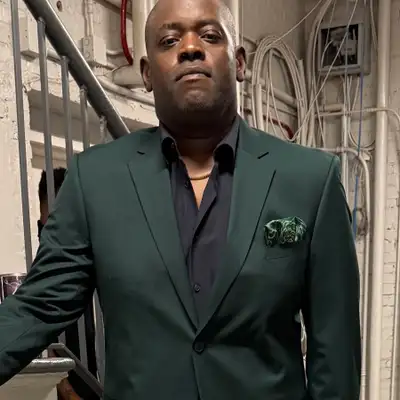
The Sound & Soul of the South spotlights destinations as they share the stories behind their community’s musical roots, legends, attractions, and vibrant live music scenes. Each episode explores how music shapes local identity, culture, and economic impact in destinations throughout the South—appealing to music fans and travelers seeking authentic, music-driven experiences.
Hello there. How you doing? Welcome to another episode of Sound and Soul of the South. Charles Davis over here. Susie Cowan over there, taking you on another musical road trip as we love to do here on the show.
Charles Davis:Susie, how are you doing? Fantastic. Good. Good. Well, we've made a couple trips to this town because they've got a lot to talk about.
Charles Davis:So we're returning back to Augusta one more time, and this time is to talk about all the great festivals that they have going on down there. They are more than just a music city. They have so much arts and culture going on down there. And on this episode, we are lucky to have the executive director of the Greater Augusta Arts Council, miss Denise Tucker, on our episode, talked about all the things that they go have going on, but especially the art in the heart of Augusta festival as well. So, cannot wait to talk to her.
Charles Davis:So without further ado, let's get into that. Welcome back to Sound and Soul of the South. Charles Davis here, Susie Kaplan. We are joined by Denise Tucker, the executive director of the Greater Augusta Arts Council. Good morning, Denise.
Charles Davis:How are you doing today?
Denise Turner:I am well. Thank you so much for having me.
Charles Davis:Well, thank you so much for being here as we round out our conversation about the great city of Augusta and all the great things that they have going on. First off, let's talk about you and let's talk about your role as the executive director of the Greater Augusta Arts Council. How did you become involved with this organization?
Denise Turner:Well, I've been affiliated, as long as I've been in Augusta, and I've been in Augusta now for thirty nine years. I, have worked in various aspects throughout the city. I own a juice bar in Augusta. And after COVID, I decided I wanted to go back to work. I reached out to then executive director of this organization and said, hey, ready to come back to work.
Denise Turner:I came to work here as a develop well, actually started on a project. Worked on the project, got hired permanently as a development and membership director. Then when she decided to retire, I applied for the role as they did a regional search for an executive director. I applied and here we are. So I have been the executive director now for this is I'm going into my third festival, actually.
Charles Davis:Okay. Okay. Alright. Alright. That's absolutely awesome.
Charles Davis:So let's talk about the overall vision of what the Greater Augusta Arts Council does because there's so many things going on in the city. But what is what do you feel like you all's role is in creating an environment to where Augusta is seen as this great art city?
Denise Turner:So we are actually, have been named the public art agency of the city. So our primary role as a nonprofit is to advocate for the individual artists in the city, and our other local nonprofits. We manage all of the city's public art with the majority of the public art. Our city sculpture trail, our city's galleries, we we we have a huge resource library for artists that they can use. They can come and they do reproductions of their work.
Denise Turner:They can borrow things. Our members can also borrow things, but we really our primary role is to advocate for the creatives in our community. On top of that, we also produce one of the region's largest festivals, the Arts in the Heart of Augusta Festival, which we do every September, and it's actually headed into its forty fifth year. Wow.
Charles Davis:Wow. Wow. No. That is absolutely awesome.
Denise Turner:Tell us more. Like, what all can what can we expect to see at the arts festival? What's So the Arts in the Heart of Augusta, like I said, it's been forty five years. Typically it would take place in Downtown Augusta along Broad Street and what we call our Augusta Common, which is the center of our downtown. However, right now our downtown is under construction.
Denise Turner:So all of our major events have been moved to the Augusta Exchange Club Fairgrounds. And so that is where we will hold the festival this year. Typically what you see at our festival and you'll see, I always tell people it doesn't matter where the festival is, it's still going to be the festival. So it is a cultural juried fine arts festival. So we take applications for juried fine artists and they have to be a fine artist in one of the two d art, three d art, fiber, clothing.
Denise Turner:It has to be one of those mediums. They submit their application and those are judged and scored by a panel of jurors. Then we accept those artists in. So you'll find at this year's festival, there are 103 fine artists. We have 20 cultures of food.
Denise Turner:So that's one of the highlights of the festival that people really look forward to is the cultures of food. So we usually have, we have from 19 to 20 cultures of food. This year we have two new countries joining us and that's Ghana and Nigeria, but there's food like India, China, wow, The Philippines. I mean, from so you can eat your way around the world. You can eat your way around the world, visit and shop with 103 fine artists, are actually small business owners.
Denise Turner:So I always say we want to support that. Then we have five stages of entertainment. So we have our global stage, which typically houses cultural performances. So you'll find like Indian dancers, you'll find Tog Kwon Do, you'll find dancers from local studios and at night you find bands. This year's headliner is a band that is a true cultural band.
Denise Turner:It's Weedy Brahma in the hands of time. Weedy was born in Ghana, but he was raised, of course, here in The US and they play African percussion and they sing and they dance. So that's our hit liner on that stage. And then we have a jazz and soul stage, which is primarily jazz music and soul music. So R and B, jazz, spoken word.
Denise Turner:And then we have a community stage and that is mostly local bands and acts that wanna get on that stage. Then of course, we have our family stage, which are mostly family acts. We have puppeteers, children's dance groups, and things like that. Then we have a literary lounge, which is for our literary artists. So they'll be doing poetry in there, reading books, and things like that.
Denise Turner:So five stages, a fully activated young artist market. So we have our young artist members, we have 91 this year and they display their art all weekend too. So they have to be from six years old to 17, and they can actually set up and sell their art as well over the weekend. So it's quite a bit to look forward to.
Charles Davis:And so the quite a bit more go ahead.
Denise Turner:Do the artists come from all over? Are they all from Augusta? Do. Actually, only about 10% are from Augusta this year. I like to tell people because a lot of times, social media can be so cruel and people are like, oh, they never use local artists.
Denise Turner:Well, it takes a special person to be a festival artist. A lot of local artists do not consider themselves festival artists and they do not apply. We do give preference to local artists when they do apply, but we don't have very many that apply because you have to be out there from sun up to sundown each day, all weekend. You really can't leave your booth unless you're going to go to the restroom or something. So this year, I think the furthest we have an artist coming from is California, but we've had Canada, Nevada.
Denise Turner:I mean, they come from all over. But mostly this year, it looks like the region. So Alabama, Mississippi, Tennessee, and then, of course, we have a few stragglers like California, Philadelphia, New York. Yeah. So, yeah, all over.
Denise Turner:Wow.
Charles Davis:No. No. That is that is absolutely amazing when you when you think about the just the scope of everything that you're working on. What is it about the scene in Augusta that you feel like it can handle something of this size and draw this type of attention to?
Denise Turner:I mean, Augusta has so I think people forget about the size of the city because Augusta is truly a city, and it's not a small city, but it operates like a town. So it has a small town feel, but it's really a city and it's not it's not a small city. So I think, you know, we can handle, of course, this festival is just a small part of what we do. The city has the capacity to handle so much more. So we've been really working diligently and looking at, you know, what we can do in terms of working, even working with our tourism committee to bring more to Augusta.
Denise Turner:We really should be a destination for tourists outside of, I mean, of course, you know, we have the masters and that's like one of the biggest events that happened around the year. If we can accommodate the masters, I think we can pretty much accommodate anything.
Charles Davis:Not very sure, no way, very sure. It when it comes to that and and and just going back a little bit to the to the art and heart of of Augusta Festival, having all of those stages and having all of those artists coming through. What have you seen as far as the the economic impact of what that is creating for you all down in Augusta during that time?
Denise Turner:It's a huge economic impact. I tell people all the time that the festival really does more for the city than it does for our organization. It was designed to be a fundraiser for our organization, but it has grown so much that if we break even after the festival, we're we're shouting for joy because it is a big endeavor. But especially when we were downtown, the economic impact is great. People shop at our local shops, people that come in from out of town, they peruse our downtown, they stay in our hotels, they eat at our restaurants.
Denise Turner:So it's a big push for our city as a whole to have all of these visitors in. And while they're here, they get to see what Augusta has to offer outside of the festival.
Charles Davis:And as you said, the Arts in the Heart of Augusta festival is just a small part of what the Greater Augusta Arts Council does. Talk a little bit about more about what you all do outside of Justice Festival.
Denise Turner:Oh, goodness. So the rest of the months of the year. I mean, this is a is a big part of what we do because, of course, it takes a lot to plan a festival. But the rest of the year, we have artists that we advocate for. We have other events that we do.
Denise Turner:We do a big party in March called the wet paint party and that gives local artists an opportunity to It's an art auction, but it's a party as well. So we have a theme, we have a big party and then we have art for auction. Sometimes for a lot of artists, that's the first time they've ever sold. So we have that platform. We also program the galleries at the City Gallery, which is in the Municipal building.
Denise Turner:We program the gallery at Augusta and Co, which is our convention and visitors bureau. We program several other shows throughout the year. We manage all of the public art. Right now we have a sculpture trail that houses about 20 sculptures. We have some murals throughout the city.
Denise Turner:So typically when a public art project is going to happen, the city or whomever brings it to us first and we actually manage the process from conception to completion. So that's primary our work. I mean, we're expanding that reach. We also in the past have administered the city arts grants and our city recently cut all the funding to all nonprofits, all NGOs. We don't have the city arts grants this year, but that was a big part of what we did too, is we would re grant funds to our local nonprofits.
Denise Turner:We're working right now to try to hopefully with our new administration find a way to get those funds back so that we can do more work with the other nonprofits, but also just looking for ways to amplify their voices differently. However, we can find ways to, you know, work with the city, work with the, you know, the local nonprofits, and find more more vehicles for our local artists to be able to create and sustain themselves.
Charles Davis:Yeah. Yeah. Yeah. And I and I guess you might have just answered that question, but with you bringing it up, I want to I want to hit upon that and and talk about why that is important. You just said the city cut off the funding for the arts and things like that.
Charles Davis:And you're saying that across the country in some places. You've been there. You've seen the work that has been done. You've seen how it has benefited. Why is it so important for you all and anybody else in that situation to fight to get those things back incorporated into the city?
Denise Turner:I think that people don't think about how much the arts play in our local economy and in our community. A lot of times when people think about the arts, they think of it as a hobby. And you forget that the arts encompasses so much. It's not just painting a picture. I mean, what you're doing right now as a podcaster, that's an art.
Denise Turner:And it's actually an art in our like our lending library, we have podcast equipment that, you know, if yours were to break down, you could come by and say, hey, listen, I got a show tonight. My equipment broke down. I can come and borrow. I think that if the community as a whole, and when I say community, I'm talking about worldwide community, begins to look at the arts as all inclusive and not just as a hobby. And think about the fact that our journalists are artists, that everybody has a creative working in their workplace, whether it's that person that's your graphic artist or that person that thinks differently and can figure out how to creatively do your workflow.
Denise Turner:We all have creatives. The culinary artist is a creative. So when we start thinking about every area that creativity exists in, I think then that will make our legislation, our city leaders think about what happens when you cut that funding off. You're not just cutting off funding for somebody that's trying to sell their next painting, you're cutting off funding and resource for that person that may create for your office in many different ways. So I just think that we just have to look at the arts differently than we do and realize that it's it's an economic powerhouse, and it's not just a hobby.
Charles Davis:Yeah. Yeah. And I think that's always something that the arts has had, the struggle of making sure that, and to say noncreatives, because as you said, everybody has something creative about what they do. So to say noncreatives is one thing. But for the stigma of arts is not a profession, arts is not something that is a is a money generator, and we tend to lose and forget that.
Charles Davis:And I think just along with what you said, not only are you taking it away from the current artists that you have, but a lot that art funding goes to education and to the kids of this. And so when you cut that money out of there, you're cutting money from the education. So future generations of artists are suffering from that and that, yeah, that is a that is a huge piece to watch.
Denise Turner:If you you really think about it, like, if you go to a concert to hear a band play, if you go to live theater, if you go to the symphony, if your child is in the high school band, if your child takes home economics and they sew or they do something creative, if they dance, like all of that is arts. And when you remove that, then what's left? And that's the thing I think that people miss. I mean, some people go, we don't need the arts. The arts are not important.
Denise Turner:But then you think about how many people the arts have actually saved. Know it saved me. I grew up as a dancer. I did theater. I sang.
Denise Turner:And if I had that, those things shaped who I am today. You know? So I just think we don't think about it until we're we don't even think about it when we're sitting in a movie theater watching a movie that it's some creatives to make that happen.
Charles Davis:That part. Because because you said you said a couple things. One, arts saved you because it saved you. It saved me, changed the entire direction of my life. So I can definitely agree with you on that.
Charles Davis:But, yeah, even at that point, I think when people think about the art, sometimes they think about it in the manner of, oh, like you said, this artist died here making a painting. That's not a real thing. But they'll go home and watch their favorite show on Netflix, or they'll go home and watch their favorite show on Hulu, and you gotta realize, okay, what did it take for that art director to get that job or that director to get that job or the cinematographer or the actor or actress that is on that show? There was something behind that. There was an arts organization behind that.
Charles Davis:There was some sort of grant behind that that allowed them at some point in their life to continue to cultivate their skills and to get there. And you have to have that for it to carry across the board on a lot of things. You being from Augusta and a lot of the things that we've talked about with multiple people from the city of Augusta, Coco and and the Brown daughters and and everybody associated with it. And on this show, we talk about it a lot. The show is called South and Soul South, and you live in the South of me.
Charles Davis:So I figured you would have a good explanation of this. With all the tourism and things that you see in the arts and the festivals that you do, what do you feel makes the South to me, and just personal opinion, a more important space when it comes to tourism and music tourism for that matter, but for the arts in general. The South is a little something different than what you see in the North and not on the West Coast and things. Is there something about the South that you feel like makes it special to the way that things are interpreted down here in how we look at things?
Denise Turner:Absolutely. And I'm I'm I'm actually not a native Augustan. Have been here That sounds good. Yeah. My oldest child is 38, so I've been here thirty nine years, but I'm actually from the Midwest.
Charles Davis:Augusta. Don't worry about that. You're from Augusta. I'm good.
Denise Turner:So I've seen both sides. There is something special about the South. There is an indigenous soulfulness that just lives and breathes in the South. Whether it comes from the servitude of the people who helped build the land, from black Americans to native Americans, it's just something special about the way our land breathes that you cannot move away from the soul in the city. Everywhere I go, I can feel it.
Denise Turner:There's a rhythm that happens in the South that's just not anywhere else. It's not like anything else. The man that I'm married to is a visual artist and he's from New York. And when he first came to Augusta, I thought I was going to get married and to New York. He came to Augusta and he was like, I can't put my finger on it, but I love it here.
Denise Turner:The South carries a stigma of people still caught up with the past and we don't want to let go of the past. I'm just a firm believer that we can't move forward without remembering the past because it's it's in our veins. We see it when we walk down the street, you know, we see it in our some of our, what I wanna call our monuments that won't go away. We see it in the history of the music of the South. Augusta has a very, very rich history when it comes to I mean, the land, the music, the art, the community, some of that has not evolved, but it really hasn't changed.
Denise Turner:You can still find pockets of Augusta that still operate like we're living in the sixties and the fifties. And pulling all of that together and pulling all those voices together, I always tell, I call it like the soul of Augusta is just in the soil. Everywhere you go, you're going to find something different. Because the South has been a melting pot of source, because if you think about the history, people were shipped here from all over. So you have all of these different cultures that make up this gumbo of the South, which makes it very important for us to amplify that and for people to actually see what we have to offer.
Denise Turner:So we have a very important voice in the South and it's never going to be the same voice, if that makes sense. It's going to be a different voice. Yeah. No matter where you go, you can go I I I live on the West Side Of Augusta, but you can go to the South Side Of Augusta, and it's a completely different sound. Almost like a whole different culture.
Denise Turner:So I always call it Augusta's gumbo because that's really what it is, and that's important to be seen and heard. You know?
Charles Davis:Yeah. Yeah. Rhiannon Giddens, an an artist, a musician. She calls it the rub of of what the South has been because, as you said there, all these people from different countries shipped in and brought in willingly or not. Having to learn how to live together in this space, as I always tell people, the South is important because this is where the civil war happened.
Charles Davis:So, like, when you have all of that, the the pain that came through the area, but the joy that was able to be formed out of that as well, how everything kinda grew out of that piece is a beautiful thing.
Denise Turner:So And it's still growing.
Charles Davis:Yeah. Yeah.
Denise Turner:It's still growing. Yeah.
Charles Davis:So when we talk about the Greater Augusta Arts Council, what kinda as executive director, what is kind of your visions, what the future looks like? What are you what are you all looking to do now? What what's the what's the future look like for you all?
Denise Turner:So I always say I don't share my secrets until I do it because this is my city. But I will say this.
Charles Davis:Don't talk about no here till it happens.
Denise Turner:I have I have some things up my sleeve that I want because part of part of what I see here in Augusta is that there's a project that I want to bring to life where we have these hard conversations that we haven't had in the South and really in this area by bringing together different communities and having these conversations and creating from that. I think that a lot of healing will come in our community when we're able to meet, talk, break bread, and and make some change in our city. So my vision is really to make people really the biggest thing is for people to understand what the arts actually bring to our community, why it's important, why you should support. And I mean, we're a membership organization, I really want to increase the membership so that I can increase the voice. I think for me, it's having a broader conversation with the entire community about what Augusta needs.
Denise Turner:Because right now, Augusta is it's it's it's a really we're in a really weird space. We're very collective and we're very community and we're very loving, but then we're also very divided depending on what space you're in. And, of course, like anything else, there's always going to be division and there's always going to be spaces that may be a better fit for people, may not be a better fit for this person. But there are still some very uncomfortable conversations that haven't been had that I feel like some great creativity can come out of. So that's one of the things that I have in my vision is like to bring more of the community together so that we could just be better.
Denise Turner:More we can create together, the more we can amplify together, the more we can put Augusta on the map as a creative city, I think will be great for us. That's just really a part of my greater vision is to make Augusta seen a lot more on the creative side. Know? People don't feel included. And that's one of the things that has been my mission is to make sure that people understand that we're operating in transparency and that we want to include anyone that wants to be included.
Charles Davis:Hey. Yeah. If you wanna be here, we we want you, and I feel good. So speaking on all those things, the question that we normally ask anybody that is on the show, and you've been there long enough, so you would know the places. If they were to come down for the Art in the Art of Augusta festival or any other festival that you have going on down there with the arts council, and they were gonna spend seventy two hours in town.
Charles Davis:Outside of the stuff, like I said, I want to talk about the sculpture walk again, but what would you recommend they do to get a full experience of what Augusta And The Arts has to offer?
Denise Turner:A full experience is hard because we have Okay. We have so much. But I would just say visiting our downtown, I would say you have to visit the Riverwalk and the Sculpture Trail. That's one. You have to go to the Augusta Museum.
Denise Turner:You got time. If you're here for seventy two hours, you can pop into the museum for a few hours.
Charles Davis:My
Denise Turner:husband would kill me if I didn't say you have to go to Humana Tree House. We're the only vegan establishment, cold pressed juice, but it's full of art. It's like a big mural inside. And you cannot come to Augusta without going to Augusta and Co because that is pretty much our tourism headquarters where you can find gifts about Augusta, gifts that represent our city, information on what's to do in our city. There's like pianos outside you can play.
Denise Turner:And and if you got a weekend, I think those are the things that you really, really need to make sure you see.
Charles Davis:Okay. Alright. Well, those are those are phenomenal recommendations, and and everything that you have said, today has been absolutely phenomenal. Denise Tucker, executive director of the Greater Augusta Arts Council, thank you so much for being here on the show. They greatly appreciate you, and thank you for all the work that you and the rest of the council are doing to, as you said, make Augusta more seen differently than what it is Augusta.
Charles Davis:So once again, thank you so much for doing this.
Denise Turner:Absolutely. Thank you for having me.
Charles Davis:Okay. Well, that was another great conversation. Wanna thank Denise Tucker with the Greater Augusta Arts Council for talking about all the great things that are happening down there. Reminder people, Augusta is not just a music city. They have a lot of it, but their entire arts culture is a great thing from the festival that they're having, the art in the heart of Augusta festival, but with the sculpture walk and all of that.
Charles Davis:Augusta is just a great place to go. When are we actually going down there, Susie? Because, like, we need to figure out
Denise Turner:I I can go gas up the car right now. We can be at that sculpture walk in, like, two hours.
Charles Davis:That is what you need in a road trip partner. They're always down to go. Now talking about that, first off, reminder, the things that the Greater Augusta Arts Council are doing with this festival, yes, it is in the fall, but support this great organization all year round. They're doing great things throughout the year, so don't just sleep on the rest of the year. And we wanna thank Visit Augusta for their partnership with this.
Charles Davis:Go to visit augusta.com and check out all the things that you could do while you're down there. Just saying, we're planning our trip. You should as well. So with that being said, make sure you're listening to all of the podcasts on streamthecreek.com. Check them all out.
Charles Davis:And with that being said, I am Charles Davis. She is Susie Callum. Until next time. Y'all be safe.