Subscribe
Share
Share
Embed

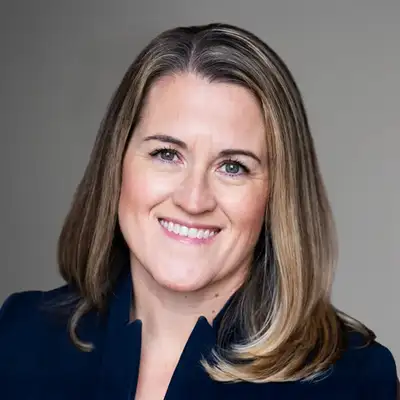
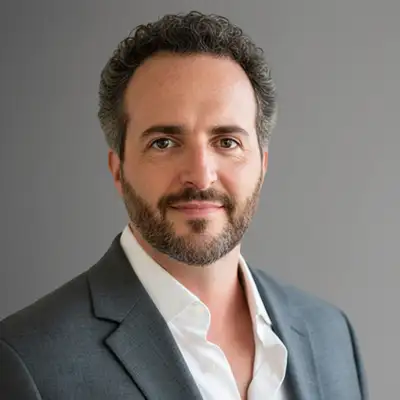
Meet the Insiders rewriting the rules of influence. Pulitzer Prize-winning journalist Brody Mullins and veteran DC strategist Lisa Camooso Miller interview the leaders who shape perception, move policy, and win when it matters. Not pundits or commentators – these are the operators driving some of the most critical strategies and outcomes in today's Washington.
French If the viewpoints I hear on the Democratic campaign trail were to be brought in the House, there is not support for that in the House of Representatives. Like, I don't think there's a lot of support for it across communities, notwithstanding their ability to receive a Democratic nomination or be elected mayor of New York.
And so sometimes every generation has to find that out for themselves.
ANNCR Behind every major policy decision, every corporate strategy, every Washington power play are the insiders shaping the game and the new rules to win it. The Deciders with Pulitzer Prize winning journalist Brody Mullins and veteran DC strategist, Lisa Camooso Miller.
Brody Welcome to The Deciders, where we talk to the insiders, rewriting the rules for effective advocacy in Washington, D.C. today, we're excited to have Representative French Hill, chairman of the House Financial Services Committee. Thanks so much for joining us.
French Great to be with you, Brody. Really good place to do.
Lisa You've got the trifecta as it relates to your background in Washington, D.C.. You spent time on the Hill. You spent time in the administration, in the private sector. Which has been your favorite?
French Well, my favorite is always been in the private sector. Each time after public service, I've gone back. I'm a recidivist in public service without an ankle bracelet. So, I'm back. I did two wonderful years working in the Senate Republican majority with Howard Baker as the majority leader during President Reagan's first term, went back to Texas in the private sector and then came back up to work for President Bush, 41, at the Treasury, for Nick Brady, the Treasury Secretary for President Bush.
And at that end of that four years, we moved home to Arkansas, and I went to work, for a really respected, long time, publicly traded bank holding company in my home state, a place where I had worked as a summer intern when I'd been in college years before. Yeah. So that was that was good. But I stayed in the public sector then for almost, you know, almost 30 years before I came back to Washington and, after the 2014 election.
So it is a trifecta and it's it's an indication how much I love public service, how important I think it is, but how important I think it is also for people with real world experience to come into public service and go back. I know that is deemed, horrible by some, maybe even on the, both the right and the left.
But I think that's ridiculous. The nature of a citizen run republic is to have ordinary people come in, in and out of government, whether it's the school board, or the quorum court in a county or and and the same is true in the Congress. They've gotten a lot of enjoyment out of it, but it's also made me a more effective legislator to have those trifecta experiences.
Brody What changed in 2014 to bring you back, to make you decide that you wanted to come back in.
French 2013, 2014? I wasn't sure we'd ever have a Republican president again after the reelection of President Obama. And how sort of the reaction to the Romney campaign and all that. So I announced in 2013 that I would run for the state House in my state House district in little Rock, which was a, I'd say lean blue district, but believe because of my Chamber of Commerce work and being a local business person, that I might transcend that.
But my predecessor, Tim Griffin, member of Congress for two terms from little Rock, now, the Arkansas attorney general doing a marvelous job as our attorney general. Tim, after the 2013 government shutdown, just had a a moment and it said, I'm not going to run for reelection. So he called me about 24 hours before he did that. He said, well, you should really now run for Congress.
You'd be much better in Congress, given your background, your experience, your work in the executive branch, the Senate. And, these are more your issues, frankly. And I decided to drop out of the state rep race and instead enter the race for the Republican primary for to replace timber.
Brody If you thought a couple times about what makes a good and effective member of Congress, you talked about your kids and leaving your family and having two houses, are there weight structural changes we can make in Washington so that more good people want to come to Washington?
French There's a desire that we should have term limits in Congress, and I understand it completely. But the Constitution, if you read the Federalist Papers, if you look through the founders thought process, they considered all that and they designed a two year term for the House, thinking that would be a lot of pressure. They'd be churning, churning, churning pressure, even by horseback or carriage ride in the earliest days to come to Washington for just a few weeks a year, and they would go back to being a tailor or a lawyer or a county magistrate or whatever.
But since I've been in Congress, 70% of the people that I was sworn into in January of 2015 have left. And we associate on both the right and the left. Well, but the, the, you know, poster child of this person on the right or left has been there for 40 years, and that's too long. Well, I can't disagree with that.
Right. Philosophically, I get that. But the point is that we have a lot of turnover.
Lisa Washington, D.C. can be a social town, especially when members are here. You've famously talked about how important it is to have relationships, not just within your own conference, but across the aisle. The Longworth Garner series is something that you've put together. Will you talk to us a little.
Brody Bit about that?
French My philosophy is that good policy attracts solid legislative support from both parties. You won't potentially get the fringes of whatever a democratic socialist is or someone who's a strict libertarian, because they're they're not for any of the, US code, effectively, you know, but to try to find people to rally around a good policy, I think you have to build relationships.
That's gotten much more difficult in Washington, D.C., since I was a staffer during those first years of President Reagan, when members, even for a two year term, would be elected and bring their families here and put their families in local schools and serve. But I was inspired by Nick Longworth, who was the speaker of the House. During the mid 1920s, Republicans controlled the House and the Senate.
In those days. Nick Longworth was a, from a very famous and well-to-do family from Cincinnati, Ohio. He'd married Teddy Roosevelt's oldest daughter, Alice, and one of the first people he made friends with in that, freshman class of 1903 was Cactus Jack Garner from Uvalde, Texas. Who was a country lawyer down in, South Texas, and a very active, successful Democrat operative in the Hill Country and in South Texas, Vanderbilt graduate.
So, I immensely liked him when I read about it. So the two of them become best friends. They're both on Ways and means. They're both excellent advocates. They do the homework, they know the issues. And so come, a few years later, 1920s, once the minority leader and once the majority leader, and then Nick become speaker, but he had a car and a driver and think about having a car in the 1920s and a driver in the 1920s.
That was a big deal. Whoever the speaker was, they promised each other they'd give each other a ride to work. So they rode to work together every day and every day. At 5:00, they went down to the first floor on the house side to room 128, and they had a, struck a blow for freedom, which meant they had a cocktail.
And even during prohibition, there's a great story about the code name for the dealer for alcohol in the Capitol was called The Man in the Green Hat. Nick Longworth had a fantastic speakership, and Jack Garner would as well. But I call it the Longworth Garner Dinner, because these two guys opposite side of the aisle in leadership, also opposite, in political positions on a number of issues, were close friends.
And so I have two Democrats and two Republicans come to my house for dinner, mostly on the committees. I'm involved with Foreign Affairs, House Intelligence Committee, House Financial Service Committee. And so it's a lot of fun. And I've been doing that now for, I guess, a decade. And it's a way to build relationships. And those relationships have been integral to the work that, you know, but I've done in the House without without any question about it.
Brody The center for Effective Lawmaking ranks you as one of the most effective lawmakers in Congress. I've heard you talk about your strategy for how to move legislation, including younger, members, including Democrats. Can you talk to us about your strategy for getting bills through Congress? Yeah.
French Well, when people come to Congress, people come for all different reasons ambition to go to a different office, ambition to go to the Senate, ambitious to be singled out as an expert and go into an administration or d some come to legislate because they loved legislating, perhaps in their home General Assembly. So you don't really know what motivates everybody who's here.
But I came to Washington essentially to legislate or change policy in the areas of international economic policy, which isn't all financial services. I serve on the Intelligence Committee, and I have served on foreign affairs. And now as chair of the Financial Services Committee, I'm selecting the policies, you're selecting whether you're going to be interested in them or not.
So, as Phil Graham famously said, I can explain it to you, but I cannot help you understand it. So but if you're on board with the policy ideas I'm coming up with, I want Republicans and Democrats. Why? Because you stand a chance of passing a bill if you do that, if that policy is important, which doesn't say that people don't do, marketing oriented introductions of legislation to take a stand, make a point, try to pull people a new direction.
There's nothing wrong with that. I'm not condemning that. So inside the authorizing committees, I like to try to say that this is an identified problem. Let's find a center right conservative view and then see if you can find, you know, some Democrats that would support that because of the unique targeting. It is a problem. And we can find a, bipartisan but conservative center right solution.
That's the the secret. There's no compromising principles here. We've outlined the problem. We've outlined a conservative base principle. And if you want to be fought before it, if you don't, you don't. But if you're going to try to legislate, I think it's an essential step. And then I think it has to be mirrored over in the Senate, which is a different body with different rules, with a different time span.
And and very challenging. Everything about it is different. The people who serve their their term, their thought process, how they engage many senators on four committees, their time is spread even more thinly. But I do think if you're serious about legislating, doing that with a bipartisan partner that shares your philosophical view is a way to move, I think the ball down the field.
Lisa And it seems that every time you introduce legislation, you're careful to make sure that you can find a Democrat co-sponsor.
French I think you do have to do that because you've got to bridge the gap not only in the House, which is a much authoritarian institution, but you also had to do that in the Senate, where you have to have a supermajority. And the final common is because things take multiple years. If you've done that prep work, we're the house to flip.
Then you have a built in system to take your idea back up through the opposition party because you've done your homework. I've been in the Congress. I'm in my sixth term, so I've had four years under Speaker Pelosi and then, John Boehner for two, Paul Ryan and Speaker McCarthy. Now Speaker Johnson. So it's three quarters Republican leadership, one quarter under Speaker Pelosi.
But that's how you would be productive were you to be in the minority, I think.
Brody And is that process getting harder in your ten, 12 years on Capitol Hill, finding that center coalition?
French Fair, fair question. But the short answer is no. I really don't think it is. I think this is, you guys cover this topic full time, but I mean, what one sees between 7 p.m. and 11 p.m. on cable or streaming news, new shows is not per se how things are done. It might be on the most hot button issue of the day, but there are a lot of issues that Congress deals with every week.
Brody We'll be right back after this break. Oh, the U.S. Senate could soon vote on the CLARITY Act, the first comprehensive regulatory framework for digital assets. But unless lawmakers strengthen the stablecoin section, local lending could be at risk. While current law bars stablecoin issuers from offering interest, crypto companies are exploiting a loophole by offering interest like rewards that threatens to draw away the local bank deposits that fund small business loans, mortgages and other critical lending tool.
Congress protect local lending by closing the stablecoin loophole. Visit ABC.com. Protect local lending.
Lisa Welcome back to The Deciders.
Brody Congressman. You talk about the importance of the bicameral legislative process. That sort of leads us to the housing bill, which somehow is done. But that process seemed upside down and backwards. Can you walk us through, how you ultimately ended up with a win?
French Well, first, the 118th Congress, the previous Congress, both Tim Scott and I introduced the bill in both houses, the Road to Housing Act. The Senate marked it up. We divided in concord between the two chambers. And so he chose to do housing first, and we chose to do the digital assets work first, thinking that we could get them both on tracks.
But then last fall, when we were prepared to go to housing and our housing agenda, we were in the midst of the Schumer shutdown. So that threw us off on all the housing work we were going to do. So we got out of sync there, and then the Senate bill was passed. There were provisions that I didn't have any support for in the committee or on the House floor, and I didn't want to put Speaker Johnson through a process where he had potentially putting a bill on the floor that did not have a majority of the majority.
Brody And then what do you think of Trump, not signing the bill after all that?
French Well, it's disappointing. I understand his rationale about. In fact, he summed it up best when he said, it's just a protest because you're not handling Save America like I Like you too is really not commenting on the bill. He's had a million different views on the bill. But this is the, a bunch of policies that the Trump administration supports.
It actually contains one of the provisions from his state of the Union speech that, he told me was very important to him. And so I am disappointed that he didn't sign the bill because I think this is a significant set of supply side reforms that will lead to more affordable housing being constructed at the margin, and more accessible housing and form and substance across the country.
Brody And it's also a great example, I think, of how the narrative around the country is wrong. Here's Congress functioning in a bipartisan, bicameral way. It wasn't always pretty, but still a tackling.
French And affordability issue, which I think, again, both parties claim as a big topic for the year.
Lisa Will the Senate be able to get a crypto bill done?
French I hope so, look, they have worked so hard. We passed our crypto bill, the digital markets framework bill last July. Exactly a year ago, and 78 Democrats joined us that dealt with all of these issues, yield on stablecoins, ethics, decentralized finance of the rules between the SEC and the CFTC. And I just want to thank, Scott, Senator Boozman, Senator Booker, Senator Warner, Senator Joe Brand, Senator Lummis, all or whomever, or try and and Senator Gallego, it's very important to the country.
This is not a political game because you like or dislike the press of the United States. This is critical to have passed the Genius Act, Bill Hagerty bill on stablecoins but not pass. The framework is like it's 1996 and we've given you a cell phone, but you have no cell towers, you have no network, you have no ability to do anything with this cell phone.
And for the stablecoin, a bill to be transformative and to use blockchain for financial services, we simply must have a market framework bill. And the bones of the Senate bill, you know, are at the acceptable level, along with the CLARITY Act passed by the House. I feel very good where we are. If we can just let's do it, is my response.
We can find a way to get people to. Yes, and I think it will be good for the country.
Brody So is this an issue going back to what you said before, where if Democrats take the House or the Senate, there's enough of a bipartisan framework that it could pass under Democrat rule? Or do you think Democrats will throw it under the rug?
French I'm really uncertain about that. In the final two years of the Trump administration, where the Democrats that take the House, the short answer would be yes, because we've built a strong bipartisan coalition that's pro innovation, pro blockchain with rules, pro ethics, you know, pro decentralized finance, again with rules to block illicit finance. We've done the work there.
So I don't want to automatically say no. But I think under what the politics of the moment, that seems, troubling. So I'd say the time to do it is now the.
Lisa Democratic Party is changing younger, more progressive. Does that make it more difficult for you to get work done in the committee?
French If the viewpoints I hear on the Democratic campaign trail were to be brought in the House, that there is not support for that in the House of Representatives, like, I don't think there's a lot of support for it across communities, notwithstanding their ability to receive a Democratic nomination, you know, and or be elected mayor of New York, for example.
But these kind of rules traditionally in economics, don't work. And so sometimes every generation has to find that out for themselves.
Lisa It strikes me that you are a student of history. A lot of people talk about now being especially tumultuous change. There are other moments in time. I'm sure that you've reflected on that, that were similar. How do you see today as part of the historical construct for America?
French Well, I just think it's, a continuation of the story of America. I don't other than the fact that it's now delivered to you in your smartphone, in an app, in your pocket, the acrimony and the debates and the, Partizan divide is no larger than it was in the 1800 election that was thrown into the House of Representatives.
I just view, the American experience successful because of the American people, year in and year out, working, taking care of family, having, civic pride, having pride in their faith, organizations and and growing, toward, you know, sure, they're interested in a more perfect union politically, but what they're really interested in is building success in the freest, most prosperous country in the world.
Brody We'll be right back after this break. Oh.
Lisa Strong retirement investments by you. Peace of mind. For decades, public pension funds have benefited from private investments. But for too long, those options have been out of reach for every day. 401 Key savers. Soon, that will change. More Americans could soon have access to private investment through their 401 K plans. More choices, more control, more secure retirement so families can focus on what's important.
Learn how private investment helps strengthen American retirement.
Brody Welcome back to desires but fragile congressmen. We ask every desire the same three questions. The first question is what's the decision the past year that you're especially proud of?
French Why? I'm proud in the last year, especially to support, funding, the fight in Ukraine against Putin and, pushing the House to bring up Zach Nunn's PEACE Act, which I passed over when I got out of our committee, which would more punitive sanction the government in Moscow on all their oil and gas revenue, including secondary sanctions, which, the Treasury secretary has done a fine job, but I think we would add a lot of weight if we had a strong bipartisan, bicameral support to say that we want Putin to lose.
I think that's a message that the Kremlin needs to hear from the elected representatives of the people and the great work. And I miss him so much of Lindsey Graham's loss, because this was a real priority for Senator Graham in his in his final days.
Lisa As you reflect on the last year, is there something you prefer to do over?
French Yes, I would crafted maybe a different approach on how to push the Senate, the starting of the debate on clarity in the Senate. I would have maybe work with Senator Scott to come up with, the way we thought would be the most expeditious way. But you don't know, you know, that's hindsight. I thought my 78 Democratic votes I got in the House, along with passing genius and having it signed into law would be that catalyst.
But I think I would have worked harder on working with Tim Scott on and John Boozman, and Amy Klobuchar to bridge it. AD Committee is very important.
Brody What's something in Washington that people are not talking about but should be?
French Well, the thing that I think I'm the most concerned about as a member of the House Permanent Select Committee on Intelligence is the risk I think our economy faces and our individual families face from cyber threat. And it is being talked about in Washington. I think it needs to be talked about in Rotary clubs. We're talking about fraud and ransomware as it impacts us as consumers, and we're talking about as it impacts business as well.
And we have collective action. President Trump's done an excellent executive order on combating that. And our agencies are working together slowly. That's the issue that I'm very focused on in my work in the Intelligence Committee. And I think it's something that every private sector actor should take very, very seriously.
Lisa Mr. chairman, it was a pleasure to have you today to.
French Be with you.
Brody Thank you. Thanks for joining us.
Brody Welcome back to The Deciders. That was Congressman French Hill. Lisa, what do you think?
Lisa Throughout the conversation he kept bringing up different points of history, like moments in history. So that was when I wanted to ask a little bit about his take. I loved his point of view about, historically speaking, how this is just part of the tapestry of the American history and the American story.
Brody I totally agree he talked about the election of 1800, which is fascinating. It's very similar to what's going on right now across the board. And speaking of history, spoke about former Speaker Longworth and Jack Garner from Texas. These parties, Republicans and Democrats who came together every day for a cocktail to talk about what was working and what wasn't working as a meeting, that he's now trying to replicate that.
The other thing I thought was fascinating, because you just don't hear this very often, was the congressman talking about his strategy and saying, if he has a policy that he wants to become law, you have to find a Democrat. If you have a policy that you don't want to become law, then you can just have Republicans on it.
I don't think there's that many members of Congress who can articulate their exact strategy for getting something done. I thought that was that was amazing.
Lisa I think he also articulated to that. That's also a durable way for policy to be made from Congress to Congress, even if the party flips. And that was another interesting takeaway.
Brody Absolutely. But he did say he did not think that would happen with crypto.
Lisa Which is bad, right?
Brody Well, thanks for joining us on The Deciders.
ANNCR The Deciders, as hosted by Brody Mullins and Lisa Camooso Miller and produced by Dave Tobey. Subscribe wherever you get your podcasts. Find more online at deciders.show and follow The Deciders on YouTube, LinkedIn and X.