Subscribe
Share
Share
Embed
Welcome to Lioness Women, a space for faith-fueled women to connect with their purpose and amplify their voices. These Lioness Conversations highlight purpose-driven women who share how their faith in Christ shapes their leadership, courage, and calling. 🦁
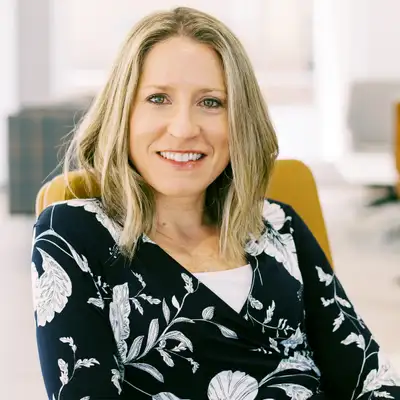
Hosted by Jen Porter, leadership and empowerment coach, this podcast shines a light on women who are leading with wisdom, strength, and grace — in boardrooms, businesses, ministries, and movements around the world.
Through raw, inspiring conversations, we explore how women of faith are building legacies, overcoming fear, and transforming their industries with bold vision and unshakable belief. If you’re ready to rise higher, lead with purpose, and stay rooted in Christ — this is your community.
Faith-Based Leadership | Christian Women | Women of Faith | Christian Podcast for Women | Kingdom Leadership | Spiritual Growth | Eternal Impact
Jen Porter (00:00)
Hey friends, welcome to the show, Lioness Women, Rooted in Christ. I'm your host, Jen Porter, leadership and career coach for ambitious and heart-centered women who want to put God at the center of everything that we do. This is a space for women who know we've been given only one life and we want to live it fully, courageously, and with deep intention. This is a place where strength is shared and where courage is found.
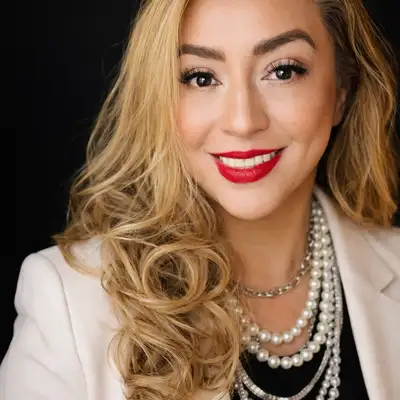
If you're woman of faith, you're in the right place. And even if you're not, I want to invite you to stay because in every conversation, there's wisdom to take hold of, clarity to lean into, and courage for the life you're living and the woman you are becoming. You are welcome here. It's an honor to introduce my next guest, Cynthia Vazquez. Cynthia is the founder of Lead with Impact, where she helps leaders and professionals amplify their impact.
without sacrificing their humanity in an increasingly noisy and technology-driven world. A former federal executive turned AI strategist and consultant, Cynthia has trained professionals around the globe and created the ReadySync AI framework, a practical approach for leaders who want to use AI as a tool for clarity, purpose, and meaningful influence, not just productivity.
She's a speaker, strategist and passionate advocate for faith-filled leadership, courageous growth, and doing work that truly matters. Cynthia, welcome to the show.
Cynthia Vazquez (01:33)
It's an honor to be here with you. Thank you, Jen.
Jen Porter (01:36)
I am so excited to have this conversation with you. We connected on LinkedIn and I'll tell you when from our very first conversation, I kind of felt like we had the shared heart, kind of a shared passion and purpose and it made for a really rich conversation. I just wanted to share that with others. So I appreciate you taking time to come and share your story here.
Cynthia Vazquez (01:56)
Looking forward to it.
Jen Porter (01:58)
So tell us about your work. I guess start with what you're doing right now. What is your main focus right now?
Cynthia Vazquez (02:07)
Great question. So right now I'm just looking to help everybody become AI fluid. And what that means is very broad because it is, right? My approach is very distinct in that I don't have a one size fits all approach. I tailor my teaching or whatever tool I'm equipping someone with based on their current circumstances. So that can look different.
to someone just leaving college and going into the job market for the first time, or someone transitioning from a current role to another season of their life, right? So really my message right now is helping everybody understand where we're at with AI, what they need to position themselves for whatever their next steps look like.
whether that be as an individual, as a founder, or anywhere, right? Even students I help out, even people in high school. just learning to be, the AI space is moving very quickly. And it is so important to me to help people, especially women, understand AI and help implement it in a way that will serve their best interest and to position them.
for whatever may come next.
Jen Porter (03:30)
Yeah, I mean, it feels like a little like the wild, wild west right now in the world of technology. so, you know, and there's so many different ways to approach what's happening. And you kind of describe those as, you know, leaning fully in being fully fearful or just sort of numbing out and trying to ignore and deny what's happening in the world. How did you get into this work?
Cynthia Vazquez (03:34)
I agree.
I love that question because I think that explains a lot of why I feel the way I do and why I'm so passionate about it. So it kind of happened by accident actually. I remember a few years ago picking up my kids from school and they were really excited about AI and they were telling me how someone in their classroom had used chat GPT to do their homework.
And they show me, yeah, and I of course didn't like the results. I'm like, no, you can tell this is computer written. This is no way. No. So I played around with it a bit, but I was not pleased with the results. That made me a skeptic. And then I didn't use it again for months. Until then I was, I found myself taking a challenge assignment with my agency and was helping with the comms.
for our agency and it's a big government agency, big responsibility, a lot of important pieces of any and all comms came from the work that me and my partner were doing. It was just two of us responsible for this. mean, podcasts, congressional correspondence, SOPs, memos, policy, we were putting it together and oftentimes had
20 minutes. So being in that environment, yes, we were forced to just use AI, just to have another set of eyes. Listen, make sure we're not missing anything, make sure it's going to hit the mark, That the tone is right, the spelling, the tenses, mean, all of that, right? Just to make sure it was in line with what we wanted to produce.
Jen Porter (05:27)
Mm-hmm.
Cynthia Vazquez (05:30)
little by little, initially it was just more like a spell checker, but little by little we saw how we could lean into it fully to help us be even faster in producing these things. Especially when we had documents issued to us that were like 195 pages, right? How do you synthesize that information, right? And how do you come up with a piece of correspondence
tied to that, summarizing that that goes to different levels, right? The workforce, the supervisors, the HR team, right? The senior leads, right? And externally. So it helped us really quickly be more efficient and also be more, since it took out a lot of the easy kind of admin stuff and helped us show up more fully in conversations because we weren't as worried of
Jen Porter (05:55)
Yeah.
Cynthia Vazquez (06:21)
about the huge time crunch because we knew we would be able to produce it in time. Does that make sense?
Jen Porter (06:26)
It definitely does. And talk about impact. mean, your job was to synthesize a massive amount of information in a very complex environment, by the way, and put out something that's going to be effective in a very short amount of time. I it's kind of like what AI can do. Can you tell us about, to what extent are you able to share the agency work that you do?
Cynthia Vazquez (06:37)
Yes.
Yeah.
Exactly.
We can speak to it overall broadly, but we did a lot of work. My agency is focused on security aspects. So we do vetting for individuals. So basically anyone that needs a clearance, we also handle cybersecurity. We also handle industrial security, and we also handle counterintelligence, which is really amazing, really powerful work, which is again why what we produced was so high stakes.
Jen Porter (07:15)
Okay.
Cynthia Vazquez (07:22)
because it involves a lot that we needed to get. We couldn't afford to make any mistake. High stakes, very high stakes.
Jen Porter (07:22)
Yes.
Yeah.
Totally, wow. And when did you begin to shift your own mindset about AI? mean, you gave that example of, okay, now you're sort of being forced to use it because you have to keep up, but what switched for you or maybe I'm wondering about trust. know, it's sort of like, when did you begin to trust the technology or do you at all? Like, what's your relationship with AI now?
Cynthia Vazquez (07:56)
I love that because that's kind of my journey. Initially, I did not trust it. And now that's my biggest message is I conduct workshops. Trust it. The sooner you trust it, the better results you'll get. Right. And why I say that is because I leaned into my AI use more so early last year. And why is because of all the changes happening in the public service environment and the ecosystem.
Jen Porter (08:06)
Okay. Huh.
Cynthia Vazquez (08:25)
There were a lot of changes, a lot of government reorganizations, restructuring. And so I was faced to use it to help others position themselves for a new career or current where they were at, of help position themselves to be in a better place, to not be cut from service. So as I was doing that work, I realized that
The more you trusted it, the better results you'll get. And I'll be more specific. So I did a lot of workshops during the first shutdown, and that would seem so long ago, to help people kind of position themselves for next steps. And also during the first wave of cuts, I did a lot of one-on-ones to help people with that, kind of strategize their next steps, right? And we kind of, it looked different for each and every one person. However,
My approach was similar in that, you know, we take what their current skill set was and customize a road plan, right, of what other positions they can transition to within the government, positions outside the government, and where, or positions that were of interest that they had kind of put on the side and put off, and what they needed to get there. So we kind of did.
Jen Porter (09:37)
Yeah.
Cynthia Vazquez (09:41)
a series of career maps, but also like a skill set assessment, but also a gap assessment and how they could quickly get there. And so we would use AI for all of that. But if people were holding back, it wasn't going to give them a good results, right? So we needed them, each of us who's wanting to use AI in this way, the sooner that we trust it and tell it what our
real goals are, right, in terms of careers, in terms of finances, where do we want to be, how much do we want to make a month, and how soon do we need that, right? The sooner we open up, the sooner it'll give us the results and produce a more robust career map to get us there sooner.
Jen Porter (10:31)
Yeah. And I'm just curious, was that part of, did that become part of your job or did you do that on your own out of your own ambition?
Cynthia Vazquez (10:41)
I did that just based on saying the need because, because, know, so I was a vice chair for the federal executive board. And in that role, we had boards throughout the country and all those boards were quickly closed. And there were a lot of, most of us, you know, did that as a voluntary role, but there were also a lot of paid individuals.
Jen Porter (10:44)
Really?
Cynthia Vazquez (11:07)
And it was happened about within a month. So seeing so many close friends, so many colleagues suddenly lose their livelihood. And a lot of people in public service, they join and expect to retire out of that. Right. Some people had just gotten started. For example, a close friend of mine had started in October and she was faced out. I can't remember now. I think it was March or May. So she had barely stepped into the role.
had left a really great career to join the board and be a paid individual, and then was forced out. And not only that, not only were they forced out of the federal executive board role, but out of government. So suddenly they had nowhere to go. So I started using AI to help them land their next role, to help them with the resume and identify what they could do quickly so that they would have some type of income.
Jen Porter (12:02)
incredible. I mean, you know, people like you are what make companies great because you're willing to recognize needs and step out of your own boundaries of a role to help others and especially at such a critical time. And you can't really teach that kind of drive and that kind of creativity. You have to really lean into it. And, you know, I appreciate the fact that you do that because so many
people have, it's such a traumatic experience to go through. And to have somebody like you that could help is just tremendous. So when, yeah, when did you, you and I talked about pivots, know, kind of career pivots, and sometimes those things come with a tremendous amount of uncertainty. Tell me about when you've made pivots in your career.
Cynthia Vazquez (12:36)
Thank you, I appreciate that.
So I would say this these whole two years have been a season of lot of pivots and and some of them undesired and unexpected. But I think that if you are a person of faith, you embrace it because at least that's how I've led through this. Because to me, all these things that
Jen Porter (13:02)
Yeah.
Cynthia Vazquez (13:15)
external that happen, think from my standpoint are just like stepping stones taking me in a new direction and I need to have faith that it's going somewhere where God wants me. Whatever that may look like.
Jen Porter (13:30)
So say more about that, because I know you mentioned that to me that faith is very grounding to you in these times of uncertainty. That may sound a little foreign to people. Can you make that a little bit more tangible for how that worked for you?
Cynthia Vazquez (13:45)
Yes, so to me, as a person of faith, the value of each and every one of our lives is measured by how much we give in the service of others. And I've always led that way in everything that I do, in my personal life, my work life, and now with my business. I'm always seeking to be of value and of service to others, whatever that may look like, right? And I think that's why my...
career path and why I'm all over the place because I'm not stuck in this one lane, right? I'm always looking to serve others, how it's gonna really be a value to them, not to me, right? Because I'm really just looking to be helpful, that's it, and give myself to others, right? And so that is why this journey has been interesting and my whole life has been that way, right? Because I'm always looking.
You know, if I meet someone and I see there's a need, I will help them, whether it's in my lane or not, right? So I don't really believe in those lanes. My lane is just being of service. going back to your question is, as things have pivoted in my career, I don't, I just tend to go with the flow. And I know that sounds wishy washy, but what I mean is,
Jen Porter (14:43)
Yeah.
Cynthia Vazquez (15:00)
The direction I was planning on going, which has been all over the place for the past two years, is taking me on a detour. I believe it's intentional. I believe that is God redirecting my path because he knows I will be of value to other people in this other road that I hadn't even thought about. But I just have to have blind faith and trust that it is for a reason.
Jen Porter (15:20)
Yeah.
Cynthia Vazquez (15:27)
and that it may not be clear to me for a while, but I need to have that faith that it is happening for a reason.
Jen Porter (15:34)
You know, you mentioned the word flow and I tend to live that way as well. The way I describe it is I'm not a person who forces things. I just sort of go with, like some people describe the Holy Spirit as a river. And when you're going with the river, it can be effortless if you're not resisting it. We're not swimming upstream and trying to go against the current. We're actually just laying in the water.
of this, you know, being held by the Holy Spirit, moving through the world and trusting that He's got us and wherever we're going. And that's how I see it. It's not easy because we don't know what's ahead in the river. We don't know, you know, we're afraid we're going to get knocked around, maybe even killed because the waters are treacherous at times. But that trust is knowing that we're being held by a higher power that knows more than we do.
Cynthia Vazquez (16:30)
Yes, I love that, right? And for me, people have asked me, well, how are you doing? How are you navigating this? And really, I've never felt as fulfilled because I don't think that I've ever been as strong as my faith as I am now. Right? Because I see that I'm being redirected to purpose, right? I just feel that I am being placed where I need to be. And I see that impact when I show up for others and how I'm helping them be better. Right?
Jen Porter (16:43)
Wow.
Cynthia Vazquez (16:58)
And helping others being able to finally sleep or have peace, I mean, there's just so much power in that. And it just makes me feel very fulfilled, like I had never experienced before.
Jen Porter (17:10)
I have this other belief that if all of us were giving out of the places that we've been gifted, if all of us are giving, then the world would have no lack. All the needs would be met, right? If every single one of us was operating out of our strengths and giving in those ways, there would be no lack. And that comes from a story in Acts in the Bible.
Cynthia Vazquez (17:23)
I don't know.
Jen Porter (17:36)
where everybody gave of what they had. And then those that had needs took from that bounty and then everyone had what they needed. It's a really beautiful story. The other thing that I'm remembering as I hear you talk about what a faith journey looks like, I do find that, and I want to hear if this was your experience too, even though we may not be clear on why something is happening the way it is, that seems to be happening
to us or against us, you know, holding us back or taking us in a direction that just doesn't seem good. When we're trusting in God, I find that he gives us signs and helps us kind of hold on to the raft, you know, in that river. Like, he gives us signs that he's with us, and he gives us in moments a sense of real peace that doesn't make any sense given our circumstances.
And it's encouraging, right? It's like, hang on, keep going, right? There's purpose in this. It's a way that God gives us hope. What have you found?
Cynthia Vazquez (18:37)
I love that because I feel like I have signs every other day. it's just because, know, this is what I'm doing now, right, is so different than what I had envisioned for myself. You know, I went into public service thinking of retiring in public service and never dreamed of having my own business, let alone doing consulting, let alone being a keynote speaker. All these different things, right. It's just.
Jen Porter (18:41)
Wow.
Cynthia Vazquez (19:04)
If somebody would have told me, Cynthia, in a year and a half, you're going to be doing X, Y, Z, I'd be like, you got to be kidding me. Like, what are you talking about? I don't know that person. That's impossible. Right. And I find myself oftentimes questioning, you know, what am I doing? Do I have what it takes? You know, am I going to be able to do this or, you know, do I need to reconsider? Because it's so different than the path that I had thought I'd be on. Right. And
I feel very blessed to have reminders seriously every two, three days and significant ones where I'm like, this is a sign. There is no other way to explain that, right? And that's what makes me feel very strong. Like I mentioned in my faith that for whatever reason, God has another plan for me that is not what I had envisioned. And I just need to trust that things will materialize and will work. And they have.
right? but it's interesting to me that when I'm most, at my weakest, he will be intentional in giving me a sign and showing me this is not for you. And closing doors that are going to lead me astray to ensure that I stay and follow through on the right path. I'm very grateful for that.
Jen Porter (20:20)
And tell us about Lead with Impact. What is your mission with your business?
Cynthia Vazquez (20:24)
So my mission ultimately is to help individuals with their AI fluency, specifically small businesses, because I see that as a critical need in the sense that a lot of small businesses fail, not because it's not a great business, but because the owner tends to be so focused on the operations that they lose sight of other important aspects. And because of that, the...
business ends up collapsing for a lot for a lot of them. It's the accounting or the inventory or and with AI, there's no need because we can take all of that off and let them focus on what they prefer to focus on and have the other stuff be automated. Right. There's no need for them to be struggling as much. So I love that work. I love to empower people. But ultimately, especially women. Right. I'm not sure if you've seen the numbers where AI will impact.
81 % of women. That is a ton. Yes. So as we move into this new AI era, 81 % of women will be impacted by AI implementations in the workforce. That is a huge number. And that is why the work I do and the message and the AI fluency,
Jen Porter (21:27)
Do you mean their jobs? Impact their job, yeah.
Yeah, yeah.
Cynthia Vazquez (21:42)
Literacy is so important to me. I'm always reaching out to nonprofits, trying to get in front of as many people as I can, because the time is now. I want to equip as many people to feel confident, to use AI, whether that means that they can stay at their current job or to position them for whatever's next, whether that be if they launch their own business. I want to help as many people as possible ensure that they are not displaced.
Jen Porter (21:50)
Yeah.
So I wanna help people understand. So Cynthia is being really humble, but she's a thought leader in this space, a speaker and a change maker. Like this is a movement and you are on the cusp of the movement. We've talked about chat GPT a little bit, but you and I also talked about Claude. So can you give us some examples of how Claude can help a small business with some of those things you just talked about?
Cynthia Vazquez (22:34)
I love that and that is what I, the bulk of my work is with Claude and helping small businesses automate as many things as possible using Claude. There are a lot of tools out there that you can pay extra, but a lot of the things can be done within Claude, right? Whether it's your marketing, your outreach, your DMs, your calendar, your email.
There's just so many powerful tools built in with Claude that can easily be implemented on your own, or you can have someone help walk you through what that is like. And again, this just, the tools are there. It's $20. It can make the difference in your sanity in your day to day, right? And that is so critical. And my message is, you know,
amplification, not automation. Right. And why I say that is because by taking off all these admin tasks, we can show up fully for conversations like this one. Right. You have the time to actually have those phone calls, to greet your customer, to have those, to continue to build those relationships. And in the age of automation, what is going to be the differentiator is how we show up for each other.
What does that look like? It means being fully present, being fully engaged. And that's hard to do when you have your email going and you hear thing, thing, thing, right? You can't, but now with AI you can because you, you know, you can rest assured, Claude will flag them with you, for you. It'll actually help draft the responses if you'd like. And it can even send the calendar link or whatever it is, however you want to set up. But now you don't have to worry about that.
Jen Porter (24:03)
Yeah.
So let me ask you a specific question about Claude, because after you and I spoke, actually dove into Claude more. There were three people in my life, which things happen in threes for me when I need to look into something, pay attention. And they encouraged me to like, you just got to check out Claude. So I did. And there was a week where I just kind of fully dove into it. And I was like, this is amazing. But I found that I actually stopped using it because
it didn't have a memory for what we had worked on previously. And so I felt like every day I was having to reteach it who I am, what I'm working on, what my purpose is, like the business. So it helped me understand how could I use Cloud more effectively given that it doesn't have a memory like ChatGBT.
Cynthia Vazquez (25:16)
I like that. it does that on purpose because it wants you to actually have different projects for different things so that it doesn't bleed into other aspects. So there's a component where you can actually create projects and you feed it like all your background info. So for example, let's say if you're a business, you could set up your main business folder.
with all like the LLC, all the whatever it is, right? Whatever the main one. And you could set up another one just for marketing. You could set up another one just for the newsletter and it will keep it within that project. And little by little, the more you use it, it will continue to add to create a memory because this just happened within the last week or maybe even days.
Jen Porter (25:59)
Okay.
Cynthia Vazquez (26:12)
where at night it has a feature that it'll go through your exchanges and keep the most pressing, most important aspects and will build that persona memory.
Jen Porter (26:28)
Okay, that's a new feature.
Cynthia Vazquez (26:30)
Yes, it just got released. want not this Thursday, this past Thursday, the one before. Yeah.
Jen Porter (26:35)
Okay, okay.
Interesting. Well, I haven't really used projects, so maybe that's part of my issue.
Cynthia Vazquez (26:42)
Yes,
and there's another ask. I usually tell people when you get started, tell it what you want it to know about you. And I call it establishing like you're about me. And I have a prompt where it'll ask you questions and walk you through it in a very quick way. So it'll actually generate the questions almost in a survey and ask you, what are you working on? What are your goals? Tell me about you, your voice, blah, blah. How do you use?
What does your day to day look like and so forth and it then builds this document that and starts working on that file for you and it becomes an iterative document that will continue to enhance and Grow as your exchanges continue
Jen Porter (27:31)
So is it true that if I created a project around say my brand and once I give it that information within that project, it will retain the work that we've done as long as I'm working within that project. And then when I start another project, we start from scratch. We build from, they don't connect.
Cynthia Vazquez (27:50)
Yes, 100 % correct unless you want it to connect. Yes. So for example, in any chat or any project, I recommend, let's say if you're working on a chat and that has gotten very long, I recommend people create what is called a handoff document. So I tell Claude, create a handoff document summarizing the most critical aspects and all key decisions and rationale behind those decisions.
Jen Porter (27:55)
okay.
Cynthia Vazquez (28:20)
and it'll create that document, then I feed it into another tab and we can continue going. Yeah, and same for the projects, right? Let's say I have a project that I'm working on. So let's say it's your branding, but you also have a separate project for marketing, right? So those are two different folders, right? So then you could go into your marketing one and tell it, give me a summary of everything that we're working on. Give me that handoff document to feed into my branding folder or vice versa.
Jen Porter (28:23)
⁓ Okay.
Cynthia Vazquez (28:47)
and you can then take that and plug it in there. That way you carry that context across multiple projects.
Jen Porter (28:55)
Well, that I'm going to use it differently. I'm not using it as effectively as I should. And you know, if people are looking into it, there's there, it is super sophisticated, right? It can do way more than I need it to do. And there's a whole coding aspect that I don't even need, but a lot of people can use it. So it does, it's very robust. But sometimes it's just a matter of simplifying it to do what you need it to do, right?
Cynthia Vazquez (28:57)
you
I love that. And that is my biggest recommendation for anyone and everyone is because AI is moving at a pace that even if you are in the space, no one can keep up with. mean, a lot of my friends and colleagues in the AI space, we're in there day in and day out, and we can't keep up because new changes keep dropping almost every other hour it feels like.
Jen Porter (29:42)
Yeah.
Cynthia Vazquez (29:48)
So then the biggest thing, right, for any and all individuals is don't worry about all of that because it doesn't matter. What matters is what you need at that current time. You don't need to know it all. And there's no way you could even if you wanted to. The important thing is how is it serving you? What do you need to do for you? And that is your first step. It's not whether should I learn everything about Claude or become an expert in?
Jen Porter (30:10)
now
Cynthia Vazquez (30:15)
Gemini or copilot no, I mean as long as you are understanding and it's serving your purpose That's good and take little by little right? Maybe at some point you will need cloud code But if you're not there yet, you're not there yet, right and that's okay. There's no rush
Jen Porter (30:23)
Mm-hmm.
Cynthia Vazquez (30:33)
There's no AI police coming to get you, The important thing is, how is it serving you? What do you need it to do for you? And usually that starts to me like, what is your biggest pain point right now? Where are you struggling with? And for me, was my multiple calendars. How do I manage that? So I set up an automation to do that. And that's it. It doesn't have to be something fancy. And I've actually received a lot of requests.
Jen Porter (30:36)
Hehehe!
awesome.
Cynthia Vazquez (30:59)
And people calling me, I need five agents, blah, blah, blah. And then once we walk it through, like, you don't need that. You're just needing to prepare for this keynote. That's a project. We can upload everything you have, and we can all contain it within a project. There's no need for an agentic workflow for preparing you for a keynote. And I think part of it is,
Jen Porter (31:07)
Yeah.
Cynthia Vazquez (31:25)
all we see around us, right? AA this, AA that, and you feel like you're being left behind, but no, we're not leaving anyone behind. And that's why these conversations matter.
Jen Porter (31:34)
Yeah. So say more about using AI for not just productivity, but for more clarity and an impact and more meaning. How do you come to that conclusion that it could be more meaningful?
Cynthia Vazquez (31:51)
I love that, right? And it kind of, you know, just happened by accident in the sense that I found myself with a really complicated work situation. And I always want to make sure that I'm objective, right? And that my thinking, there's no gaps in my thinking. And oftentimes that's hard to do when we are emotional or when we're having an emotional reaction to something.
And that first time I remember, you know, that incident happened at work and I had about 10 minutes before my next meeting. So I needed to get clarity quickly. You know, what I did is I just asked Claude, hey, this is what happened. Of course, leaving out names, ensuring I didn't disclose any sensitive information. And I said, help me think through this. Here's what I'm thinking. Here's how I'm thinking I'm going to handle it. What am I missing?
Give me gaps. What else do I need to consider? What are important ramifications from an HR standpoint? What else? How can I improve this? And the feedback it gave me was brilliant, right? And of course I loved it because it agreed with my recommendation. But it ensured, it gave me that, it almost served like a safety net to ensure that my thinking was in line and that it was in a quick way. And I made sure
that I wasn't overlooking something in haste, right? Since I only had about 10 minutes to deal with it, I wanted to make sure that my response and my approach was on point, not only with my thoughts, my beliefs, but also from a legal standing, right? That it was going to be the best decision. and that opened the door for me to start diving into more of that work, right? Having to...
having someone to bounce ideas off that is free of bias, right? And a lot of people don't use AI that way in the sense that they think that AI will agree with you. And yes, for the most part, it will, but it's all in the prompting and how you set it up, right? So if you make it where it's a thought partner, a sparring partner, and you're openly asking it for gaps in your thinking,
clarity, objectivity, it will provide those gaps and identify those for you that ensures that you are focusing on that clarity and also that you focus on whatever your goals are. and then it goes back to your initial questions about trust and how you're using it, right? The more you trust it and the more open you are with what you have on your plate, the
better it can be to guide you. And I'm not saying that it's meant to replace a coach or a mentor or an advisor. It's not meant to do that, but it can help and be that interim source that you can quickly bounce something off that will help you get to a better state in the interim.
Jen Porter (34:54)
I love what you're saying because it makes me think about being unbiased. when we are in, it's like in communication and relationships, when we're entering in with an intentional response versus a reaction, right? That can be filled with emotion and bias and fear, really. And so I think about all the different examples of when we go through our day where this is needed, like, let's get back to like a level set.
Right, I sometimes I call it a sanity check. I just need to like check in, like am I on point? What am I missing? How can I approach this in a different way that's gonna ultimately have a better outcome?
Cynthia Vazquez (35:33)
Yes, and that's so powerful, right? And that's like AI use at the next level because you don't want something that's always agreeing with you. You want to have something that challenges your thinking and helps you grow. So a lot of people, you know, have come to me and said, you know, well, why would I use AI if I can do it myself? Agree, right? We, humans trained it. Therefore, it can only give us results that we humans are capable of. But the problem is the speed one.
Jen Porter (35:45)
Yeah.
Yeah.
Cynthia Vazquez (36:03)
And two, I'm not an expert in all these other areas. So now we have all these experts that I can lean on. For example, a branding strategist, a marketing expert, a CEO, a financial advisor. And you can call these people in in your conversations. You can tell it. Act as a top financial advisor and help me work through this issue financially.
Jen Porter (36:20)
Yeah.
Mm-hmm.
Cynthia Vazquez (36:30)
And it
will help you get to these results faster. And not only that, identify things that we may not have been privy to. And that's not bad. It's just the reality. No matter, our expertise is our expertise, right? There's no way we can be experts in all these areas. But now with AI, when leveraged in a way that is more
Jen Porter (36:35)
Yeah.
Cynthia Vazquez (36:57)
More from a not contrarian standpoint for more of a holistic standpoint in the sense that we're using it to challenge our thinking I think that's where the real value is because that's where you can actually grow I find that I've learned I Had I'm a lifelong learner. I'm currently even taking two classes right now I'm taking the business international business class on importing and exporting and cybersecurity and why I share that is because
Jen Porter (37:05)
Mm-hmm.
Cynthia Vazquez (37:23)
Even though I'm continuously taking classes and I have for my whole life, even though I have two masters, I just really love learning, right? I have never learned as much as I have within the past year and a half. And I attribute that to AI. Why? Because I use it in this way. I use it to challenge my thinking, right? So that's not only helped me produce better results.
Jen Porter (37:30)
It's wow.
Cynthia Vazquez (37:50)
but it's made me smarter in doing so because I'm learning other things that I was never aware of. So there's a lot of, it's been very powerful in that way that not only is it getting me better results, but by using it in the way that challenges my thinking, I'm actually learning other fields that I didn't have access to in the past.
Jen Porter (37:56)
Yeah.
I want to ask about leadership. What have you learned about leadership over the last couple of years?
Cynthia Vazquez (38:19)
I love that question. So, and why I say that is because, you know, because most of my leadership experience, well, in the last 20 years has been with the federal government. My thinking was that there was going to be huge differences between private industry and government. But it's been so interesting to see that the pain points are nearly the same, if not identical.
Right. And that has been very interesting. Right. It's always comes down to the same thing. Psychological safety, trust, communication. Right. And and and it's been fascinating because it tells me that there's just a lot of work to be done in that space. But that really at the heart of it is leadership means humanity. Right. It's it's means and really that
Jen Porter (38:58)
Yeah.
Cynthia Vazquez (39:16)
aspect is critical to how leaders show up is that alignment with their values, their integrity, who they are, and that'll show up in their leadership. That's been a very powerful lesson, right, because no one is immune depending on the industry. It's really just more of the practice of showing up for each other and being of service to each other.
Jen Porter (39:26)
Yeah.
Hmm.
And you shared something with me that I want you to unpack. You talked about stewardship over ambition.
Cynthia Vazquez (39:43)
Yeah.
Jen Porter (39:43)
stewardship,
over ambition, and what you've learned about performance versus purpose. Will you share more about that? What does that mean to you?
Cynthia Vazquez (39:53)
Well, and to me this means everything. And why I say that is because I think that when you are leading from a place of alignment in who you are, in your beliefs, in your values, everything flows from there, right? And that is why these conversations, introspection, and doing that deep work is critical, especially for leaders. Because if you want to have impactful results,
You have to have that alignment. Otherwise, those issues will show up in how you lead. There will be those gaps. it's because of that. The leader hasn't done the work. And when you have that...
vision, that clarity, that strength, then you're able to show up fully with your, for your team, for your, individuals you're working with. And then everything else comes easy, right? Because they see that they see you're fully invested in them, well-being that you are pouring into them. Then the results will follow and people want results.
with they want shortcuts and you can't shortcut it. Maybe you can for a few months but it's not going to be sustainable right it's not going to be long lasting results. To me the long lasting results are by building those relationships up and then focusing on everything else. When you invest in the individual everything else flows from there.
Jen Porter (41:20)
Hmm.
So it's more about people than it is about performance. It's about the humanity of it. I love what you said earlier in another conversation, but you said something about pursuing your own path instead of climbing someone else's ladder.
Cynthia Vazquez (41:26)
Yeah. Yes, exactly. It is, it is.
Yes, I love that. And I think that oftentimes, you know, it's easy to just
go with the flow and we in an age of like so much digital products out there, right? We've seen these career maps and they look great, right? But there's, if that is what you want to do, that works, right? But I think, especially now and especially as women, we need to do the work, see if that's really what we want and if that resonates. And if it doesn't,
Or some, maybe some aspects do, but not the last three steps, right? And you have to give ourselves that permission to create our own path, to not give away our agency. And I think oftentimes, you know, we fall into a role and because that is kind of the expectation that you continue on this path, we just go along blindly. And in doing so we're
inadvertently giving up our own agency. And right now, because of AI and all these things happening is more critical than ever that we revisit those decisions and reclaim our power back and give ourselves the permission to explore and create our own path, whatever that may look like. And it goes back to what we were talking about, about the trust and using AI and all of that, right?
have that trust in yourself and give yourselves that permission to dare to dream. And now all those dreams are not that big dreams because AI can help you map your dreams out and what are the next steps to get there and which is very empowering.
Jen Porter (43:25)
You're so right. think there's never been a better time for people to create their own paths. mean, there are just so many needs and so many opportunities and so much freedom and flexibility to be creative and start our own thing like you're doing.
Cynthia Vazquez (43:41)
Yeah, exactly. Right. And so and with AI, we don't need someone, we don't need to hire someone to do our own commercials. We can create it with Claude in a number of minutes. I mean, it's just all these things, all these all these conditions for access have now been removed. You want to create your own app and that was your dream. You can now create it for a handful of dollars. Right. You don't need
Jen Porter (43:51)
Yeah.
Yeah.
Cynthia Vazquez (44:06)
a developer that was going to be 30, 50, 70,000. Now you can just create it. Right. And that's, there's so much power in that, right. You don't need a branding expert and you can create that. Right. You don't need to hire someone to do your logo. Now it's free. All these different things, all these, entry points for access have been removed. So now we are only our, our, our limit is that.
It's our permission that we give ourselves. Right? That's it.
Jen Porter (44:35)
So what advice would you give to women who are living in an AI world? What advice do you have that you want to leave the listeners with?
Cynthia Vazquez (44:45)
The advice would be...
Dare to dream, give yourself that permission to drive your visibility. If there is something that you don't know or is holding you back, do that work. And if you don't have access to a mentor or coach, lean on AI to walk you through it and help you bridge that gap. For example, right, if you're afraid of public speaking, you can prompt it and work with it to help you build up that skill, right?
Or you can do an AI twin and create like a fake videos using your voice if you're inclined to do that, right? There's so many things you can do. The thing is, don't be afraid. Just jump in. And if you're not sure, find someone else that can walk you through it. There's a lot of people in the space that are willing and eager to help.
Jen Porter (45:32)
Well, thank you for taking the brave steps that you are to lean into this because it's still fairly new for you. I mean, it's been a couple of years, which is a lifetime in technology world, but in the evolution of ourselves as humans, that's actually quite short. And you have really leaned into this, created your own path, created your, you know, leaned into the needs, made yourself a thought leader and a speaker and someone who's willing to come alongside.
organizations, businesses, individuals, even students to help them lean into how to use AI effectively and still maintain their humanity. And I love what you said at the beginning of our conversation. It's really the whole purpose is to create more space for us to be fully present with one another. It's a beautiful thing.
Cynthia Vazquez (46:19)
Yes.
Yes, it is. It is because it truly has, right? It has freed me up so much that I'm spending more time with my kids, even though that I'm busier than ever. It's like a contradiction that I, you know, I can't even understand really because it doesn't make sense. I'm the busiest I've ever been, but have more quality time. How is that even possible? Yes.
Jen Porter (46:41)
Incredible, incredible. I want
to make sure people know how to connect with you because some people may be listening and maybe they want to bring you in as a speaker, as a consultant, a, you know, leading a workshop for their organization, company or small business. How can they reach you? What's the best way?
Cynthia Vazquez (47:00)
The best way to reach me is by my website, leadwithimpact.io, and or they can find me on LinkedIn. I am Cynthia Vazquez at Lead with Impact IO.
Jen Porter (47:12)
leadwithimpact.io. Cynthia, thank you so much for sharing. It's just a joy to connect with you and to be in each other's world. I just love it. I can't wait to see what happens next. I'd love to stay connected and follow what you do next. And I'm just really grateful for this conversation. In the meantime, until the next episode, the lioness in me sees the lioness in you.