Subscribe
Share
Share
Embed
The World of Higher Education is dedicated to exploring developments in higher education from a global perspective. Join host, Alex Usher of Higher Education Strategy Associates, as he speaks with new guests each week from different countries discussing developments in their regions.
Produced by Tiffany MacLennan and Samantha Pufek.
Alex Usher: Hi everyone, I'm Alex Usher, and this is The World of Higher Education Podcast.
Iran's a country with a lot of higher education stories. There's stories about students. They were a key part of the coalition that overthrew the Shah in 1979, and they were the ones who spearheaded the capture of the US Embassy later that year. But since 1999, students have also been consistently and reliably at the head of all anti-government protests. Iranian universities are, as a result, the center of a great deal of physical confrontation at moments of national rebellion, such as the one that occurred in late December and early January.
Or you can look at stories about institutions in science. One of the least heralded developments in global higher education in the 2010's was the emergence of Iran as a major source of scientific advance, particularly in medical sciences. Despite never having had one of those fancy excellence initiatives, scholarly output rose nearly 20 fold in the first two decades of the century. Equally unheralded though, was the rapid decline in enrollments the country's seen in the 2020s due mainly, but not solely, to demographic change.
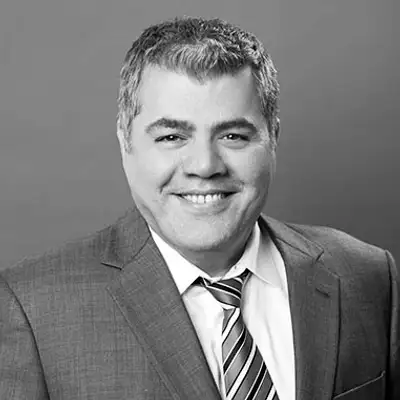
With me today is Saeid Golkar. He's a professor of political science at the University of Tennessee Chattanooga, and a scholar of the tactics of Iran's Basij — part of Iran's revolutionary guard — and of social control under Iran's Islamic government. Today we talk about all aspects of Iranian higher education. It's development, it's rise and fall. The degree of political control that the regime exerts over universities and the role that students have played over time in Iran's political system. Note that this interview was conducted on February 20th, eight days before the joint Israeli American airstrikes on Tehran and other Iranian sites. And thus, some of the conversation doesn't quite reflect the current situation in the country.
But without further ado over to Saeid.
Saeid, let's start by setting the scene a little bit. What does the higher education system look like in Iran today? Does it have lots of big multidisciplinary institutions, you know, like sort of American flagship institutions or is it, uh, one of those countries that has lots of small, specialized institutions?
Saeid Golkar: Very good question. Actually, Iran higher education system is large, but uneven and more importantly politically shaped. At the top we have a small group of the flagship public universities, mostly in the major cities. They are very selective and they're very prestigious, like Tehran University for example.
Alongside of them we have the specialized institution in engineering, sometimes in medicine, with the link with the state and the job market. But at the core of the system is, uh, Iran, uh, higher education divided to two main group. The medical education is run through the ministry of Health and Medical Education. So all of the medical education is under control of that. And every other university is under control of the Ministry of Science and Technologies.
Beside of these estate flagship prestigious universities, we have the other universities. Other universities is a semi-private universities, spread throughout Iran trying to recruit the people who are not able to go to the state universities. And so it's a tuition based system. All of these universities is under control of either the Ministry of Medical Health and Medical Education, or Ministry of Science Education, and there is one, an unelected body at the top of all of these systems, the Supreme Council of Cultural Revolution, who put all of the cultural ideological planning and programming for the universities. This institution is unelected, uh, controlled by the Supreme leader. So everything in Iran is like a hierarchy coming from the supreme leader of the control to the, you know, to the, uh, lower level of the university.
Alex Usher: Right, but what about, but there's this one very large private institution, which I think last I checked, is almost a third of the entire system and it's the Islamic Azad University, and I'm not sure how Islamic it actually is. Like we, we had a guest on a, a while ago talking about private higher education. He was sort of saying that that is Islamic is a, is a misnomer there, but it did have links to the regime when it was open because President Ref Sanjai was one of the founders as I understand it, of that organization, or at least he was president of it at one point. What is this organization? How did it grow so big?
Saeid Golkar: Yes, it is the Islamic Azad University, but it is not, Islamic is not other because it's not free, you have to pay the tuition, and it's not Islamic because there are less, uh, you know, ideological control over the, the, the state, uh, and the, the, the, you know, the environment is much more open compared to the state universities.
Everything in Iran is controlled by the state. So regardless is, is a semi-private or the private, all of them are controlled by the state.
They create these other Islamic universities trying to, uh, admit the student who are not able to go to the public universities. And because there was a huge demand after the 1979 revolution for the student to go to the university, and the state universities not able to answer that, they create this semi-private called Islamic other university.
Alex Usher: So you talked about, uh, state control of universities, both of public and, and so-called private institutions, but how does that work? I mean, is it, is Iran like Russia where the regime effectively has a veto at the level of, you know, selecting recs? Like is it, is it that level of control or is the control exerted through agencies like the Supreme Cultural Council that you talked about earlier?
Saeid Golkar: Iran actually is much more close to the North Korea than to the Russia in terms of the controlling. Iran is a pro totalitarian regime, and I'll explain how it works in Iran. Every university president should be approved by the Supreme Council of Cultural Revolution, that is control by the supreme leader.
So all of these people have been picked by the Ministry of Education, uh, Higher Education or Ministry of Health, and then the Supreme National Cultural Revolution should approve that. And this approval come from the top and then the dean will pick the head of each college. In the terms of the department, there are some kind of the very, uh, very limited, you know, uh, uh, autonomy, but that's very limited.
In terms of the hiring the faculty, everything is centralized in Iran and go through a political and ideological vetting. So not everybody's able to go and teach at the university. There are a massive ideological vetting for the postgraduate students from MA and the PhD student. There are a massive security institution like the Basij or the Herasat that is under control of the Ministry of Intelligence at the universities. So in terms of the curriculum, in terms of the even syllabus, in terms of the management, in terms of the hiring faculty, in terms of uh, admitting the, uh, student in the higher level in the PhD and masters as they are controlling directly at the, uh, universities.
We don't see this kind of the level of the vetting like in Russia. There are much more, you know, autonomy in the Russian system. It's very close to the totalitarian regime that the state try to control all aspect of the education.
Alex Usher: Interesting. Now until about eight years ago, you know, higher education in Iran, I think in many ways could have been described as a pretty big success story. You had rapidly growing enrollment. You had a research output system, I mean, Iran's research output was growing faster than almost anyone else in the world. I think it was about a 20, you know, 20 fold increase, much of it in the medical faculties, in, you know, in about a 15 year period. And they did it without any kind of big excellence program like, you know, the, the, the 985 program in China, or similar programs in Russia and Germany and Japan and elsewhere.
What explains that strong performance in the first couple of decades of the century?
Saeid Golkar: Uh, the strong performance in the area 2000 actually was driven by a combination of expansion of the university, given incentive by the state national strategies, and more importantly, from, uh, around 2000, the Islamic Republic still is a Socratic Republic is not as personalized or securitized like right now.
So third, you know, after the Iran–Iraq war ended, the Islamic Republic expanded the higher education, especially in master and PhD. A lot of universities start a PhD program and they, because of their high demand, the number of the student in the PhD, master increased, and that led to the more publication.
The policymaker at that time actually tried to show the scientific production as part of their prestige, so they are encouraging everybody to publish, that the promotion is linked to the publication as much as you can. So all of this actually helped Iran to expand in 2000. You know, and to Iran had a very deep pool of the talented individual, especially in STEM, uh, major that helped Iran expansion in 2000.
You have to remember, this expansion, uh, in social science humanities was not aligned with the increase of the qualities. you know, the quantities often, you know, matter with the quality of education, especially in social science, humanities. But, uh, in, in pure science, in, in math, in STEM without this expansion massively because the universities are expanding their postgraduate program. There are more students going there. The state are incentivizing by giving more money and promotion to these people who are publishing. So we will see that expansion as in 2000.
Alex Usher: And I guess that kind, that, that movement, that growth kind of peaked just before COVID is my reading of the data and, and things seem to have changed since around, I don't know, 2017, 2018, enrollments have fallen quite quickly. Institutions are facing significant pressures. You've got, uh, a lot of academics leaving academia or leaving Iran entirely.
Some of this I assume, is about demography, you know, shrinking youth cohort, and some of it I assume is about the effect of sanctions and, and broader economic stagnation in Iran. What's your take on this? What are the really big challenges inside Iran's universities right now?
Saeid Golkar: Uh, part of the expansion of higher education year happened, uh, during Ahmadinejad from 2005 to 2013. He's a populist guy and he's coming and using the expansion of university without thinking of the qualities as to opt Iranian people, to show that, you know, he is every Iranian, regardless of the, uh, you know, uh, the performance can go to the university.
From 2014, when the new government came to the power, they realized there is no quality in the most of these semi-private universities. So they're trying to cut it down and they try trying to focus on the quality. That's the first thing. So Rohani government tried to close a lot of these universities pop up during the Ahmadinejad.
Second, as you said, demography is the most important driver. There are less demand to go to the universities because there are shrinking of the birth rate in Iran. But more importantly, the, the economy is another driver too. Inflation, declining income, you know, change the family's, that the university's degree is not very important anymore. You cannot get a job after you are graduating. Without any doubt, the sanction, and more importantly, the mismanagement, economic mismanagement reduce the university budget. They lost their lab, they lost, uh, uh, they are not able to give good salaries to, to the faculties. So that's why many of these people start to immigrate outside of the Iran, mostly, you know, in the Persian world country, because they are paying much better.
We will see a very big brain drain in Iran. And the COVID is important too because turn the university to online remote. There, there is inequality to access to the, you know, the, the online education in Iran, especially because the internet is massively, you know, under the control, is not, doesn't have a good quality.
All to all, that led to the shrinking of the higher education from the 4 million student in 2017 to about 3 million point 500,000 to 2020.
Alex Usher: We're gonna take a short break. We'll be right back.
And we're back. Saeid, I wanna turn us now from the issue of, of universities to students, because I think when Iran makes the news internationally, it's very often because of things that its students are doing. Um, you know, I, if you go back to the, the 1979 revolution, obviously that was a, a mass uprising. It wasn't just students, but students were clearly active in the campaign to overthrow the Shah. And of course, they played a key role in seizing the American Embassy in, in 1979. And that was an act that, strengthened Ayatollah Khomeini’s position and paved the way for Velayat-e faqih, which is the, the rule of the religious class.
So at the time, were most students pro Khomeini or was this just a group of students who, who happened to be pro Khomeini? I mean, was it the radicals who, who stormed the embassy, uh, almost 50 years ago now, was that representative of student opinion at the time or not?
Saeid Golkar: Uh, to be honest, Iranian students from 1934 that the modern university created in Iran until 1979, most of them are the leftist Marxist socialist. They're belong to the different, uh, you know, uh, group of the leftist student. The Islamist student are very, a small number of the student. But when we get closer to the 1979 revolution, the Islamic students are growing up.
Still when the revolution happened, majority of the student at the university belong with the leftist group. There are leftist Marxist, liberal nativist, third ward, and Islamic group. The Islamist group has an advantage. Ayatollah Khomeini, the supreme leader at that time and the state are the Islamists, and they try to control the universities, the last space that they have not been controlling.
So with the pressure of the Khomeini and the new, uh, political elite, Islamic universities are able to come and take over the American embassies. At that time there are minorities, but even at that time, the leftist student are agreed to, uh, take over the the American Embassy because they see it as an imperialist country.
Alex Usher: Because being leftist, they would be very anti-American. So that that strategy of, of confrontation with the West would be popular both with Islamists and Marxists.
Saeid Golkar: Absolutely right. So seizing the American Embassy, was very popular for the Islamists and for the leftists, but the leftists forget as soon as Islamists consolidate the power, they came to perge them out of the university through the cultural revolution, 1980 to 1983 more than 10,000 of the university faculty and more than 50,000 of the university students, most of them leftist and, you know, liberal or or non-Islamic have been purged from the universities.
Alex Usher: Well since that time, of course, you know, students have found themselves frequently in opposition to the government. So, the very large protests in July, 1999, those were largely student led. Um, you know, students played prominent roles in the 2009 election protest, the 2022 Women Life Freedom protests, and, and those that occurred earlier this year.
Why are students so co consistently among the regimes most persistent critics?
Saeid Golkar: Absolutely. You know, from Samuel Huntington with people, uh, like him, we know that, that the student, you know, uh, in dictatorship when you open up the university and you know, the, the, people go to the university and gradually they're became more informed, connected. They have a political demand. They gradually grow for the political demand.
This happened in Iran too from, you know, 1999, after two decades after the revolution, the number of the student at the university increased. They are in connected with each other. They are educated, they are young. And now they are asking for political reform and having more political freedom.
So from 1999 to 2009, a student or of the front of any protest asking for political reform and more political freedom. From 2017 to now, a student are actively involved this time not for asking political reform, but asking dismantling of the regime or regime change, they realize that the regime is not reformable. Student are sitting intersection between the aspiration and radical idea and the block opportunities. They go to the universities, but they're coming out, there is no job. Their political repression is massive and they are informed and connected much more that the, you know, other part of the society.
This is a time that the student will realize, okay, something is, is not happening. And historically, Iranian student was politically active even during the Pahlavi monarchies. From 1934 to 1979, Iranian student are, uh, fighting and challenging the parliament. They were, as you said, they were very, they were very active in 1979 Revolution. So there is a history and you know, institutional memories of the student that this is a political institution. And when you are dealing with a very repressive regime that is incompetent, there is no other choice for you to start politics.
Alex Usher: And so tell me, how do students organize? Because it, you were saying earlier, you know, the universities are, are pretty tightly controlled politically, I'm assuming there's not a lot of, open student elections in Iran, the way you, you see in many countries. So how do protests get started on campus? Who organizes them? How do they, you know, given, uh, controls on the internet and things like that, how do students manage to coordinate their actions so efficiently, not just within a single institution, but often across the entire country?
Saeid Golkar: Uh, first, again, going back to the idea of totilitarian control, the Islamic Republic created a lot of, uh, student organization or association that they're connected to the state and they're working at the university to show the facade of, you know, the civil society and non-governmental organization.
Because of that, there, you don't see too much autonomous, uh, uh, student organization. There are a few, but they're massively under control, and that's why the student protests usually in Iran is spontaneous. You know, the, the, the, the student, because they're connected through the social media and you know, internet, they're able to communicate with each other.
You will see a lot of small group, dorm based group, or a small circle of the friend that communicate with each other are coming to protest in the state, in the university campuses. And then they are attracting more and more students who are massively disappointed and dissatisfied with the regime. And they are waiting for, uh, for, for some kind of the gathering to, uh, to protest.
This is a passive networking among of the students, you know, more than the active one, because all of these active organization are created by the state, like the Basij student organization for the Islamic Association of the Student, just a few, uh, that this has some advantage because you don't have a hierarchy, the, the, the universities or the state are not able to completely destroy you by ousting the, uh, the, the leader. But the problem is, you know, uh, mobilizing and organizing became very, very difficult because immediately the state shut down the internet or all of the social media. As we saw it in January 8th and January 9th, the state completely blocked any social media app. Internet was completely shut down. Even the phone service was shut down. So when you are cutting it down, then the whole flat organization will collapse.
Alex Usher: I am not sure how much you can enlighten us about what happened in the last, you know, 8, 10 weeks, 'cause I understand it's still difficult to get news out of Iran, but what actually happened on campuses in the January protests? My understanding is that you certainly had some conflicts on, campuses, uh, you know, invading dormitories at places like Tehran University. How did the crackdown unfold on, on campuses across the country?
Saeid Golkar: Uh, we have to know, uh, based on the, uh, data that we have, more than 130 students have been killed among of 35,000 people who allegedly have been massacred, uh, in Iran since December 28th. Since December 28th, a new wave of the protest has started that we call it the great, uh, uprising. Uh, the trigger was economic problem, but as soon as you know, the people are sort to come to the street, more and more people pulled because they're disatisfied for different reasons.
Again, Iran is politically repressive, economically incompetent, culturally closed. Uh, even there are grievances about the environment issues, water and scarcity, air pollution. So there are a lot of, uh, grievances. And, uh, from December 28th, as soon as the protest started, we see the protest, a small protest at, uh, at the campus, uh, around the cities.
And that's why in January eight, January nine, when the regime shut down the internet and killed 35,000 Iranian, immediately they closed all of the universities. The education have turned from the physical on campus to the online remote. Right now, all of the universities, especially the big one, are uh, turned to the online education.
The, the exam have been turned to online education. The whole idea is trying to, uh, limited the space for the student to gather. Dorms was still, uh, open, but the dorm that you said, many of the dorm in Tehran in the big cities have been raided by the security police, and many of the student, around thousand of them, have been arrested in the last month trying to keep the student quiet because they know the student are the bridge between the university and other part of the society.
Alex Usher: We're recording this on February 20th, and I guess it's been 42 days since the crackdown on, on the 9th of January. Uh, we don't seem, at least as far as I can tell, we haven't seen much of the, the pattern that we've seen in, in previous protest waves of the, um, you know, return protests after 40 days of mourning, um, is, is that likely not to happen with this set of protests?
Saeid Golkar: Actually the only returning to the protest mo, after the death was, uh, in 1979 during the Pahlavi, because Pahlavi was not as repressive as Islamic Republic. Pahlavi was the patrimonial dictatorship. Islamic Republic is a modern security state, and, uh, interestingly, again, we'll, we're seeing the, what we call the fourth day, uh, protest. You know, uh, in Islamic tradition, the fourth day after the death of your beloved one is the last day that you are get, get together and mourning for that.
And for the few days we have seen this, that in many cities, thousand of the people are coming, participating in these four day ceremonies and chanting against the Islamic Republic. You know, I have worked on the political repression in Iran for 25 years, and this is the first time that I'm seeing killing 35,000 people have not silenced Iranian.
For the first time, I'm seeing that the people is still are chanting a slogan on the roof, under the window, behind the window or on the street or chanting a slogan against Islamic Republic. This is very interesting issue, to be honest. It seems that the repression has a turning point that even after killing this number of the people, people start to think this is, you know, we cannot be silenced anymore. So, uh, my observation from around Iran is in the last few days that the 14 days after the January eight and nine, uh, is coming, people are still protesting in a much bigger number, you know, compared to the past, compared to the few years ago.
And the, uh, the, the, the, the fear is turning to the anger, and that's interesting to see, watch, and see what will happen in the future. What I want to say for sure, the Islamic Republic is relying on the repression, massive repression, but, uh, but these are not a, a stable and sustainable situation. People will come back to the street again.
Alex Usher: Sure. And I mean, I guess what struck me about the, the, the crackdown, uh, last month was that, uh, it sort of seems like the regime is is admitting that it's no longer of regaining public favor, right? And it's now just about maintaining control for as long as possible. So if economic crisis and political illegitimacy do eventually lead to a moment of transition.
Um, you know, maybe soon, maybe we have to wait for uh, Ayatollah Khamenei to to die. What role do you think students will play in that eventual transition? Will they act as, you know, the instigators of the revolution as happened in Bangladesh two years ago? Or will it be a broader base movement and students will be, you know, just one group among many.
Saeid Golkar: Uh, to clarify, you know, we, we've seen the student movement in Bangladesh or, Generation Z in Nepal, and you know, there are lot of discussion about that. We have to remember, uh, the, the Islamic Republic is not Bangladesh is not Nepal. Islamic Republic, in my humble opinion, is one of the most repressed political system right now we are talking about. I don't talk about North Korea 'cause there are a lot of, you know, uh, uh, not clear. But compared to the China and, and Russia, and other countries, Iran is the most repressive, security based regime. So the, uh, the possibility of coming out and changing the regime is very unlikely because as we've seen it, the Islamic Republic is able and willing to kill as much of Iranian to stay in a power.
But if Khamenei die or some kind of the foreign intervention happen, or, uh, for some reason we are in a transition, I think we will see a student, not maybe as a front runner of the protest, but without any doubt, a bridge between the universities, between the academia and between other group collaboration like 2026, for example, or 2022.
The student are part of this massive group of the people who wants to see a form of the translation from the Islamic Republic to the much more democratic secular, uh, regime.
Alex Usher: Saeid, thanks so much for joining us today.
Saeid Golkar: Absolutely. Thank you very much for having me.
Alex Usher: And it just remains for me to thank our excellent producers, Sam Pufek and Tiffany MacLennan, and you, our readers and listeners for joining us. If you have any questions or comments about today's episode or if you have suggestions for future ones, please don't hesitate to get in contact with us at podcast@higheredstrategy.com. Join us next week when our guest will be Lili Yang. She's Assistant Professor of Education at the University of Hong Kong, and we'll be talking about her recent book, Higher Education State and Society: Comparing the Chinese and Anglo-American Approaches. Bye for now.