Subscribe
Share
Share
Embed
Bridges & Beacons is a podcast from The Jimmy and Rosalynn Carter School for Peace and Conflict Resolution. We invite you to listen in to multigenerational conversations with the peacebuilders shaping our world. Through dialogue that bridges divides and leadership that shines a light forward, this series explores how connection, empathy, and resilience make peace possible.
Inspired by President Carter’s legacy of moral clarity and thoughtful mediation, each episode reveals the human stories behind conflict resolution—offering guidance, hope, and practical wisdom from those working toward justice and understanding every day.
This is a space where every voice belongs, every perspective matters, and every story strengthens our shared commitment to humanitarian values and community peacebuilding.
Peace isn't passive—it's built. At the Jimmy and Rosalynn Carter School for Peace and Conflict Resolution, our community transforms conflict into opportunity for justice. We combine rigorous research with real-world action, developing innovative approaches that address conflict at its roots and empower communities locally, nationally, and globally. Through transformative education and hands-on practice, students and alumni are equipped to create ethical, just solutions that matter.
To learn more visit: https://carterschool.gmu.edu/
This transcript has been edited for clarity, readability, and length.
**Kellye Richardson:**
Hello everyone, and welcome to Bridges and Beacons. I am Kellye Richardson, your resident peace influencer, and I'm delighted to welcome you to the first episode of our new podcast from the Carter School. To begin the series, we are speaking on the topic of building bridges in polarized times.
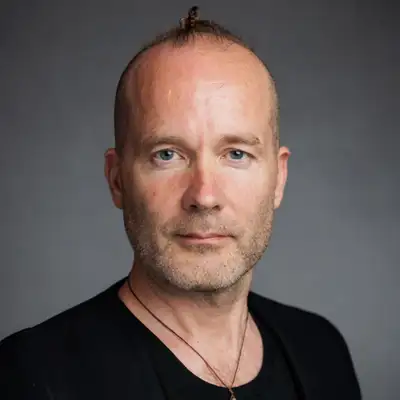
Our guest host for this episode is Professor of Practice Antti Pentikäinen, a leader in the field of reconciliation and peace building, and executive director of the Mary Hoch Center for Reconciliation and Think Peace Learning and Support Hub here at the Carter School.
Antti currently works with several indigenous communities on decolonizing mental health and finding ways to connect their cultural practices and ceremonies into existing mental health and psychosocial support modalities. He is also the recipient of the Finnish Christian Peace Movement Peace Prize.
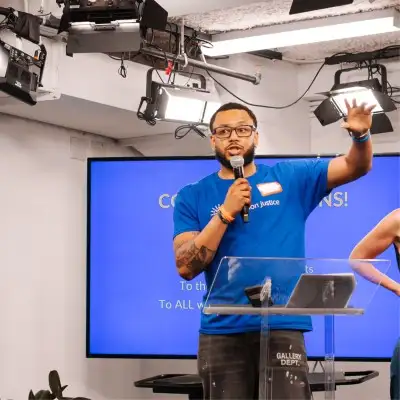
Antti is joined by two of our alumni, Dr. Nicholas Sherwood, peace psychologist and researcher at the Institute for Human Rights at the University of Alabama in Birmingham, and Cameron Cassar, a senior training manager in Brooklyn, New York with Common Justice, working at the nexus of prison reform, transformative pedagogy, and movement building.
This episode will explore the Mary Hoch Center for Reconciliation, its mission, its impact, and how the center integrates trauma-informed and restorative practices in its research and field work.
Welcome, professor. For our listeners, how would you define the Mary Hoch Center and its mission?
**Professor Antti Pentikainen:**
Well, Kellye, first of all, I want to thank you for bringing us into this conversation. It's very exciting that you give us space and that we can talk about this because the Mary Hoch Center for Reconciliation was actually established to understand what it takes as human beings to heal after violence. And when we look around what's happening in our world, I think it's becoming more and more topical. So we're just so excited to have this conversation with you.
**Kellye Richardson:**
We're excited as well, professor. Thank you so much. Why is reconciliation so urgent in today's world, in your opinion, both globally and here at home?
**Professor Antti Pentikainen:**
Well, I think most of us are wondering what's really happening? Why are people turning against each other? And I think one key foundational element is that societies can thrive. They can actually stay together if they're willing to deal with their difficult past. And reconciliation is the way that we can actually address the past in a way that we're honest about it.
But then we also work together, how we can move forward without turning against each other. So I think we're here because we have failed to reconcile, and so that's why this work is such an important topic for us today.
**Kellye Richardson:**
I am so excited that we're discussing this topic today as well. I'd like to welcome Nick and Cam into the conversation, and I'm going to turn it over to you, Antti, so that you all can share with our listeners what's important today.
**Professor Antti Pentikainen:**
Yeah. Kellye, you gave me this wonderful opportunity to be with some of my favorite people whom I miss. And I wish we could continue just the way it used to be, just working together.
But they've had some incredible things done in their careers. So, Dr. Sherwood and Cam Cassar, would you share what happened in your life since Carter School, and can you share some insights that helped you, what you learned while being in Carter School, in your current career? So, Dr. Sherwood, would you want to go first?
**Dr. Nicholas Sherwood:**
Yeah. So, let's see. I graduated fall of '23, was still living in DC working for MHCR and our partner NGO, Think Peace Learning and Support Hub, which I'm sure is going to come up later in the conversation as well. In August of '25, so this year, I transitioned to the University of Alabama at Birmingham, where I serve as a university researcher at the UAB Institute for Human Rights.
So in addition to that, I also work for Project Salama, which is one of the preeminent mental health NGOs, specifically servicing refugees and internally displaced persons, trying to think through how do we sharpen mental health services, make them more contextually and culturally relevant. How do you braid in trauma and resilience-informed care?
And then, yeah, I've got a few other side hustles. I work for the Bonnaroo Music and Arts Festival, which I've been doing for quite some time, doing mental health programming. And yeah, at MHCR, I had the honor and privilege of working with many different students from undergraduate, master's, and doctoral levels. I had the privilege of working with scholars and practitioners from across global regions.
I would say one of the greatest insights is that our field, both peace and conflict resolution, but specifically working in reconciliation, you're working with individuals who probably have very strong personalities and belief systems, number one.
Number two, and I'm sure we'll talk about this more, a lot of people who work in reconciliation would probably fall under the umbrella term of wounded healers. So these are individuals who, for whatever reason, have been exposed to or experienced trauma, conflict, and violence, and so working in this space, you have to have that understanding.
And so at MHCR, when we were all working together, I think that was very much part of our team ethos, right? It was really caring for one another, seeing each other as fully fledged human beings with many different needs, goals, aspirations, and beliefs. We were not just people in an office on a team, right? I would say that's probably been one of the best insights I got at MHCR that is very much following with me as well to this day.
Cam, over to you.
**Cameron Cassar:**
Yeah, I mean, I owe so much to Antti himself, and MHCR, and Nick, and the entire team.
A bit of my journey is I graduated from Mason undergrad in the pandemic, May 2020—living room graduation. But I was able to then take part in the dual master's program through the Carter School, which was hosted at the University of Malta. So I was able to live abroad for a year in Malta, taking part in that program.
But what also should be known is that I got accepted into that program before I graduated undergrad, and essentially got hit with the gap year because of the pandemic. And I wanted to find a way to stay connected to the work, kind of still flexing some intellectual muscles while I wasn't in school anymore, and found my way to MHCR.
I started off as just the communications officer, and lo and behold, did I know the world that would emerge from this very small startup organization that had been around maybe a year at the time that I joined. So, we were still building out the team and everything, and just all of the opportunities which emerged from that—the people who I met, the work that we were able to do, just the stories that we were able to hear, all centered around this idea of reconciliation and the different ways that looks.
Because this is also in the time where we're in the pandemic, and this is George Floyd going on, and it's just kind of seeing all the different umbrellas that reconciliation was able to cover and what does that look like. It really did inform so much of my academic career that by the time I was able to go to Malta a year later, I felt so in tune with the work.
And working at MHCR, I was intellectually challenged in that space, but that really helped me a lot when I got into the actual classes that I was doing in my graduate program. I had the opportunity to do that and still was working. I was insane at that time; I was still working with MHCR and Think Peace and building out the Think Peace podcast. But just those opportunities really informed me and gave me a new sense of looking at reconciliation and transitional justice, and now also restorative justice, which now informs some of the work that I'm doing now.
So since I've graduated, I moved to New York from the DMV area. I've been in New York coming up on two years now. My master's is in Mediterranean security and conflict resolution. I moved to New York to work in the reentry space. So I was working with formerly incarcerated individuals where I was like a training manager for them and essentially a professor in a lot of ways, kind of teaching them how to reengage back into society through the lens of human services and social work.
And so much of that work of being able to understand what does trauma-informed care look like? Obviously, there's a lot of think pieces which can come from that, but a lot of that was able to be built from the unique lens of what does trauma healing look like through the work that was cultivated at Think Peace and MHCR. I would work with students who were coming home from doing 25 or 30 years in prison, and it really taught me a lot just about the resiliency of the human spirit in general.
I now work at this organization called Common Justice, where I act as the senior training manager. And in that space, we do direct violence intervention work through a lens of restorative justice. So what our organization does in a nutshell is essentially we only do violent cases. And so I'm on the training team that is helping teams build out similar programs to that on a national scale and also here in New York, locally.
So, it's been really cool to have my pedagogical style also informed by the work that has been taught from MHCR and being able to translate somebody who was training to essentially be a diplomat—maybe work for the State Department or Foreign Service, be an ambassador or something—but now translating that work into real community-based work and helping build a network of people.
I always tell people that what we do is based around people over prisons, and looking at humans more through a lens of accountability rather than disposability of just sending people away for all of these years. And so much of that was, again, informed by the resiliency of the human spirit that we saw from the people we were working with at MHCR, and I've seen how that lens has been able to translate into these different contexts that I'm in now.
**Professor Antti Pentikainen:**
So Kellye, I think you and the listeners now understand why it was so exciting working with Nick and Cam. And the concept of wounded healers or the resiliency of the human spirit is very much in the core of what we're talking about.
But both of you also played a really significant role in the research that we did at MHCR, the Mary Hoch Center for Reconciliation. So can you just let us and the listeners know, how is that research advising countries who are divided, like we see the United States today? How can they heal?
**Cameron Cassar:**
Yeah, for sure. I mean, definitely in the country, we're seeing that we're in such a polarized time, and how do you go about bridging these divides in a wounded country? And I think that is some of the work that we tried to focus on in some of the early stages of MHCR.
Just kind of looking through that lens and realizing, also, looking at how power manifests itself within the society, and also just looking at so many psychological factors involved in why people feel how they feel within these spaces. I think that reconciliation is possible within the country, but it's going to be brought together by us having these common goals and shared interests.
And I think that that's something that we should be able to agree on as a country. I think that is where we find that common ground and how we can build from some of that, from understanding the shared humanity that we have and realizing that every single person deserves to live a dignified life. And somehow we've kind of lost the plot of what that looks like within the country, which is kind of why we've gotten to the space that we're in right now.
**Dr. Nicholas Sherwood:**
So, thinking about MHCR'S research, the main project that I was involved with and am still affiliated with was a series of interviews that MHCR has done with individuals that we termed insider reconcilers. So these are folks that are leading, facilitating, or supporting reconciliation within their own communities.
Oftentimes when we think about peace building or conflict actors, these are individuals who are intervening at a third-party level. So they go in and they run their mediation, then leave the context. What we were, and are, very interested in are the experiences of the people who live and work in their own communities.
And I'm going to kind of speak for my area of expertise. Conflict actors, people who are trying to do something good, bring people together, bring groups together that have been in war or been trapped in cycles of violence with one another—it's a really hard job. It's a really hard job that calls upon many different parts of the human experience.
There's the intellectual part of, how do I bring these people together? How do I build a facilitation plan, et cetera. There's the emotional part. You're sitting with grieving parties, angry, embittered, hopeless parties. That takes a deep psychological toll. And then also it takes—Cam, you were mentioning earlier about the social skills, the quote, "soft skills." I don't think they're soft at all, actually. These are really hard skills.
But yeah, these individuals, these insider reconcilers and people who are trying to step into the fray and lead reconciliation, are having to weave themselves deftly within and across different conflict groups.
One thing I think that sets MHCR apart—and other similar research institutes and centers do this as well—we're not just writing or engaging with scholarly or academic populations and audiences. We're also trying to talk specifically to practitioners and to policymakers.
Antti, I don't know if you want to talk about the work in Eastern Africa, maybe now or later, but a lot of the findings from the insider reconciler project are being put in the hands of government officials in Eastern Africa where MHCR and MHCR's sister NGO, Think Peace, has had a presence for several years as well.
It's not just stuff that's happening in Eastern Africa. This is stuff that's happening here in the United States. And part of my current work, we have human rights defenders who come into our office, the Institute for Human Rights, and I'm able to sit down with them and say, "You know what? The struggle that you've been experiencing, you're not alone in that. There are people all over the world who are trying to do similar—not the same, but similar—work, and they're struggling as well."
And here are some of the peer support programs that we did up in DC or that we ran in Eastern Africa or with UNDP, et cetera. This is where I think the research-practice worlds really do need to collide. And in reconciliation, which is a deeply humane space, I think any and all resources that we can get from the science that MHCR has been leading, this is stuff that needs to be shared as broadly and as widely as possible.
Yeah, and there's more to do, right? We need to keep publishing. We need to keep getting this info in the hands of decision-makers. But I was consistently impressed by the degree to which MHCR tries to communicate its findings well beyond conventional, scholarly communities and audiences.
**Professor Antti Pentikainen:**
Yeah. Thank you, Cam and Nick, for those insights and reflections, and also the aspirations we had as a team and then as a center to actually make a difference when the moment arises. We wanted to be there to provide the information for those who have to design.
But as you said, Cam, it's very difficult. It's individually very difficult, and as a society, it's very difficult. And so I've been working on this manuscript on how nations heal. One of the findings out of that work is that what we have to really learn here in the US is that this has been actually fought as a struggle.
And the challenge of a struggle is that it seems to be creating counter-reactions. It's not actually making the nation to heal. And there has to be a way forward for also those who have caused the harm to rehumanize themselves, also recognize that what they have done or are doing is harming themselves—their own wellbeing, their physical wellbeing, the family dynamics, their own communities.
And so for this country actually to live up to its promise, there has to be a way that we're not turning against each other. And part of that is that it cannot be based on name-calling and finger-pointing. And that's going to be a real challenge for us to learn.
Looking for something, I think many of us struggle how to live this true in our daily lives. And so, because you have spent time in school and now are doing this exciting work, what would be your advice for our listener who's thinking, how can I be more trauma-informed? What is it that I can do within my family if there's tension, or in my community, or more broadly in the society to actually have people to see each other and heal together? What would be your advice for our listeners?
**Cameron Cassar:**
I can answer that one first. I think that for me, if I wanted somebody to get better at trauma-informed care, I would tell them to literally lean into their experiences, because trauma is a very important teacher. And there's so many experiences that people don't necessarily register as trauma all the time.
And I think that as you begin to process and realize that, no, I'm actually a traumatized person as well, so I can find ways to empathize with this person just through this lens of us having—even though the trauma may not be the same—we experienced some level. I've experienced some level of trauma, no matter just off of my humanity. Obviously this looks different for people, no matter the context, but that's one way that you begin to lean into that is to realize that doesn't mean that you're going to be a subject-matter expert or anything like that, but you're a human.
And I think one way that people can get better at trauma-informed care is leaning into that shared humanness that we have. We have the capacity to empathize, we have the capacity to listen, we have the capacity to speak life into people as well, too. And I think that a lot of that comes from leaning into the things that you've experienced. That's not going to necessarily, again, say that you're the subject-matter expert, but that's a way that you can begin to think about this work a lot more.
A lot of the work that I can speak to comes from some of my personal experiences in my professional career. I've worked with people who are justice-impacted, which is the language that we use, and I've never been incarcerated myself, but I have a best friend who's been incarcerated now for nine years. I'm coming through this from the fact that I understand that we have a shared bond in the ways that we're trying to go about fixing this system, and we both want to address these structural inequities.
You're just coming at it from a different vantage point within that. So once we understand that we have the same goal in mind and we all have traumas that all look very different, that's something that was able to help me relate. And I think that's what people can lean into within their own lived experience. Because it's like there's direct lived experience, and then there's indirect lived experience, but the experience you have—an experience of trauma, of harm that's been caused to you or that you may have partaken in—you still deal with that. And that's something that is extremely powerful and will give you a lot of credence when it comes to trying to build your skillset in trauma-informed care.
**Dr. Nicholas Sherwood:**
Well, number one, start with the self. One of my whole shticks, both at the Carter School and beyond, is that when we act as a healer, both informally—so maybe in your family system—or formally through a conflict process, like I said before, it's really tough work. Take care of yourself. Take care of your body, your mind, your relationships. Make sure that you've got people who are going to show up and support you.
Once you're cared for, then you can kind of start moving outward. A few quick other ways to be trauma-informed: pay attention to the speed in which someone is talking and acting. Some people might have a lot of physical symptoms associated with trauma. Others, it might not be physical; it might be totally social.
And so do a lot of really good homework on what trauma symptoms can look like and what those symptoms might look like with the population that you're working with. Because as we know, how mental health symptoms show up is also a function of culture. So the way a good old American southern boy might experience or show trauma might be very different than, for example, a member of an indigenous community or a member of a community not based in the United States, right?
Do a lot of homework. Do a lot of homework before jumping in.
**Professor Antti Pentikainen:**
Thank you, Nick and Cam. And I think it speaks also kind of to the complexity of the question, but then at the same time, that this is everywhere and there is so much more work that we have to do as societies and communities, but also as individuals to uncovering what is affecting us? What is defining who we are and how we act, and what kind of actions and what kind of behaviors really represent our inner core and values?
There is an effort in some of the European societies to make the whole society trauma-informed, which means that everybody should have some basic information about what they're talking about.
I would just want to add a couple of things from my perspective. One is that if we are a society that defines our place in society by our worst moments—if that's what defines us—that'll be very harsh. And none of us wants to be judged just by our worst moments.
And this brings me to my second point, which is the necessity of actually love in the core of healing. And what I want to say is that the power of love doesn't become revealed in the absence of pain, but actually within the pain itself. And so by arguing that love is significantly needed in the national healing process, I'm not saying that we can reach a situation where there is no pain, but because of the amount of pain, there may not be any other ways forward.
And why I'm saying this is that when we look at love from a relational perspective, it puts into context also the flaws and the mistakes we have done with the inner calling and the beauty that all of us carry. So that's also something we need to practice in reconciliation, in the work we do in communities as well as with individuals. How do we keep that lens of love in our presence and in the way we see each other?
I would like to close with a question. If there's a listener who's thinking that, okay, that is interesting, I'd like to get involved—what would you recommend, Dr. Sherwood and Cameron Cassar, on how to get involved with the Carter School or how to get involved with community organizations or efforts that help our communities and nations to heal?
**Cameron Cassar:**
Well, definitely come to the Carter School. I mean, for me, the Carter School changed my life in general, you know what I mean? MHCR was one stepping stone within the Carter School, but I mean just the support that I received from just that whole world in general, the small world that was built within that community.
I've got to shout out Leslie Durham, who really changed my life when I first came to S-CAR, which—and it was still S-CAR, not even the Carter School yet—to the support that I received from the Malta program and taking part in that from Charles Davidson, who was my first ever professor within the Carter School.
I mean, just the lens that I used to look at the world was completely altered from the interactions which I had within the Carter School. Anytime I get the chance to speak about my experience at the Carter School, I love coming back to do that because I wouldn't be the person I am had I gone to any other school in the world. I know for a fact, because I wouldn't have been able to do the Malta program, I wouldn't have been able to do the peace building fellowship, I wouldn't have been able to be a part of so many amazing things, and met this amazing crew who I'm blessed to be on this call with again. These guys changed my life, truthfully.
There's really not enough that I can say about the Carter School. So if there's anybody out there who is thinking about it, if you want to begin to think critically through a lens that you didn't even know existed within the world, in the Carter School, I was able to really understand the why of why these things are happening—understanding the structural inequities, understanding the different lenses of conflicts that are around.
So I would definitely just say there was just such a good balance from that. And if I didn't have that lens that was added on by the Carter School and just the critical discourse, the critical discussions, the critical thinking lens from that school, I wouldn't be the person that I would be today and I wouldn't be able to translate that skillset into another space as well, too.
I think also the interdisciplinary nature of the Carter School is something that is so profound as well, too. Because again, I thought I was going to be a diplomat, saving the world, doing all of these things, and now I'm working with a population which is close to me, but it's not necessarily the world that I envisioned. But if I didn't have that skillset from that world, I wouldn't be able to translate it into these spaces.
So definitely just continue to do research into what the Carter School does. Look at videos, and even just the research, not just from MHCR, but just all of the different labs that are involved. Just thinking about the neurological side, like looking at the neuroscience, looking at the criminal justice system within the Dialogue and Difference project, and all the different labs that are involved in what makes the school go.
**Dr. Nicholas Sherwood:**
First, if you want to get involved, do some deep self-reflection. Think through where your natural gifts are, build off of those, and then think through where you believe you might have the greatest source of influence or ability to change.
Personal example: I've known since I was 19 years old—a long time ago, when the dinosaurs roamed—that I wanted to get a PhD because I've always been a nerd and I've been interested in mental health, trauma, healing, resilience building, all that great stuff. And I mapped out a course when I was much younger than I am now to bust my butt in undergrad—two majors, two minors.
If you want to be a hardcore field practitioner and you don't want to write books or articles or be rubbing shoulders with nerdy experts, do a master's. Or if you don't want to do grad school at all, try to get a job at an NGO after undergrad. It stinks to say, but know that you're going to be at the bottom of the totem pole for your first job or two.
I remember Cam and I on how many of our check-ins and I'm like, "I remember being a communications manager when I started out and then kind of working your way up."
But yeah, I would say to any person who's interested in this line of work: do a lot of really good self-reflection about what your skills are, the populations you want to work with, and the places that you don't think you can work with. Think about the populations that you might be really good working with and pick up as many languages as you can. That is not something that I did that I wish I had, especially if you're wanting to work internationally. Language is the name of the game. Try to tack on field experiences, travel abroad, et cetera, getting into the field as much as possible.
In summary: do reflection on who you are, where you fit in, what training pathway is going to yield the highest likelihood for success to get you into the career that you want, and be very critical about what you're willing to sacrifice for the work and what you're not. Take all of that together, find a great mentor, and good luck.
**Professor Antti Pentikainen:**
Thank you. Thank you, Nick. And I think your point on the universe is really core. What came to my mind when I was listening to you is the quote from Viktor Frankl, who is a Holocaust survivor who survived the death camps. And he said that he was observing the agency that he had in this probably one of the most destructive, horrible places a human can end up. He said that between the stimulus and reaction—the way we react—there is space. And in that space we have our freedom of choice. And that defines us.
And so I would just say to everyone that, yeah, it's one option to come and study and have that as a career, but to be a reconciler, you can start where you are with the challenges that are your everyday challenges in your life. Just start to pay attention to when you get a stimulus, how do you react? And expand that freedom of your understanding of what it is that makes you what you really want to be in those situations, and own that.
And that's how reconciliation will become real to you. Those are the hard lessons. Those are the hard lessons we have to go through as individuals, and it's based on that knowledge—and only that knowledge—can advise what a nation can do and needs to do when it has the opportunity to heal.
So, Kellye, thank you so much. I hope this was insightful for you and our listeners. I'll hand it over to you. Thank you so much for having us on this podcast.
**Kellye Richardson:**
Thank you, Antti, Nick, and Cam. This has been such an interesting conversation. It's wonderful to learn more about the amazing work being done at the center, including trauma healing, discovering one's vocation, and exploring the depth of the human experience.
We appreciate you joining us.