Subscribe
Share
Share
Embed
The history you think you know, with women in it this time
===
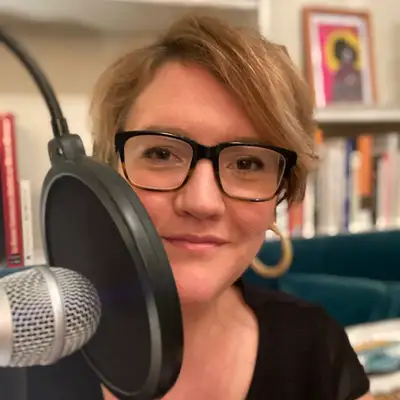
Isabelle Roughol: [00:00:00] Hello and welcome to Broad History, a podcast about the history you think you know with women in it. This time. I'm your host, Isabelle Roughol.
Happy birthday, America! This summer as the United States commemorates a very emotionally complex semi quincentennial, I thought we could use an alternative to the rather masculine official celebrations.
History tends to forget women in every era, but it is perhaps particularly true of the American Revolution, a time when history often blends with a national founding myth in which 60-odd men were enshrined in a virile civic religion and dubbed the Founding Fathers.
Of course, the Founding Fathers are the primary characters of the American Revolution, and that makes sense, and we will talk about them. Of course, combat in the Revolutionary War was mostly a masculine experience, and no one is denying that. But that does not mean women weren't there, as they always are in [00:01:00] war, and not just as passive victims.
Patriot women, loyalist women, both free and enslaved black women, indigenous women, they were all there, with their bodies and their labour on the line, contributing economically, and yes, politically. And we know the Declaration of Independence made promises it did not keep to women or to anyone, but propertied white men.
That's what we're going to be talking about over the next few weeks. We're spending the summer with the women of the American Revolution.
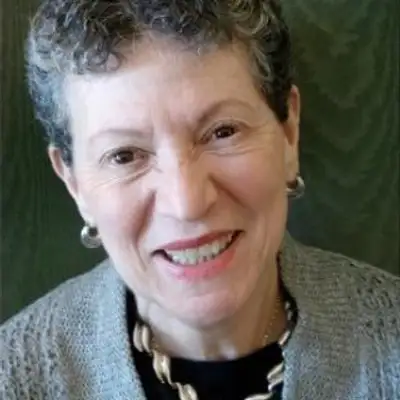
We are starting this week with none other than the excellent Dr. Carol Berkin, one of the preeminent scholars of women in the American Revolution, and the author of the book, Revolutionary Mothers.
I was privileged to speak with her at length for two episodes. She is raising the curtain with us this week on the American Revolution, and she will be coming back at the end of the series to close it.
But if you are a member of Broad History, you can hear [00:02:00] both episodes right away. And if I'm honest, I'm especially partial to the second one. Go to your members feed right now and you'll find the episode. If you are not a member of Broad History, well now's your chance.
Sign up at broadhistory.com/membership and you'll get the details to listen right away. As a member, you'll receive every episode early and with this series, I'll release episodes to member in batches. There's already two more coming next week. You'll get full access to the archives and more benefits as Broad History grows, but most importantly, you'll help me make Broad History happen. I research, produce, host, and edit this show all by myself. And your membership is the only way this can happen.
This week, there are many new members I want to acknowledge. We have a significantly larger listenership than when I last left you to prepare this series. We went a little bit viral. If you're a long time listener and you have no idea what I'm talking about, go to the newsletter, go to the [00:03:00] website, broadhistory.com, I'll explain it there.
Or you know, just check out the Instagram and and you might understand what's going on.
But thank you and welcome to the following new members:
Mary, Eleanor, Christina, Tracy, Cheryl, Susan, Mary Jo, Mary Beth, Diane, Melissa, Allison, Lauren, Jennifer. Lemme know when you see a pattern here. Kate, Kimberly, Avril, Laura, Jennifer, Carol, and Kathleen.
If you're not keen for a subscription, you can also support with a donation of any amount of your choosing, as did Anna, Barbara, Ann, Melissa, Lydia, Cassie, let me know when you see a pattern again, Molly, Amy, Elena, Ann, Hailey, Sarah, Ellen, and Barbara, as well as several anonymous donors. This is also something you can do at broadhistory.com/membership.
Thank you so much to all of you, as well as to the [00:04:00] longtime existing members, for this exceptional support.
Okay, now without further ado, let's not wait, get comfortable. We're travelling 250 years back to Colonial America. Here's Dr. Carol Berkin.
Meet Carol Berkin
---
Isabelle Roughol: Dr. Carol Berkin. Hello. Welcome to Broad History.
Carol Berkin: Hello. Nice to be here.
The three principles of colonial America's patriarchal society
---
Isabelle Roughol: Let's set the scene first. ~What, ~what does America look like before revolution? What does colonial society look like~ uh,~ for women and for gender roles?
Carol Berkin: Well, mostly I, I imagine you're talking about white women because Native American women have a completely other gender system. And African American enslaved people have a limited, actually, they also have a reverse gender system 'cause the women went out to work in the fields and the men became artisans.
But anyway, if you're talking about white women, one of the first things, what, the [00:05:00] colonies are all different. People don't realise. They were founded by different groups. They were founded by different purposes. They have pretty much the same political structure, but ~it, ~it varies. Their economies vary.
One of the things that unites them is their~ uh,~ gender ideology in regards to women.
And that's sort of ironic, I guess.~ I guess. Uh. ~Colonial America and England,~ um, for a,~ is a patriarchal society. That is, it traces everything through the father, and if you get married, you go to live in with his~ uh,~ domain,~ not,~ not your mother's. ~Uh, ~And it was based on three principles, ~the,~ which will seem absolutely absurd to us today, but...~ uh,~
The first was that God declared that woman must be obedient and subservient to her [00:06:00] father and then her husband because of the Garden of Eden. That apparently Eve is to blame for the temptation that got them expelled from the garden, and what it proved was that ~Eve is high, that~ women are highly susceptible to the devil's~ uh,~ appeal, ~uh~~~.~~~ ~which, is why of course most witches were women were assumed they were witches.
~Uh, ~Secondly, what they termed science ~in, ~in their day, in the early 18th century, which was that the women's brains were smaller than male brains and consequently weaker. And this explains why women were incapable of rational thinking.
Now, in the 18th century, in the 17th century, rational thinking meant also moral decision-making telling right from wrong. And so obviously,~ uh,~ if you [00:07:00] didn't obey your father and you didn't obey the guidance of your husband, heaven only knows what chaos in society you can create. ~Uh, and,~
And this theory explains why men raised their children.~ Uh,~ That is women could teach their daughters female chores and skills, but socialisation of children was the responsibility of the father: what your place was in society, what your place was in the family, what your moral values would be, because women were incapable of that.
The third branch of this, sort of to put the icing on the cake, was the law which codified these assumptions ~of, ~of religion and of science, so to speak. And the law simply said: ~once~ When you are unmarried, you are under the domain of your father. And once you [00:08:00] get married, you are under the domain of ~your hu~ your husband. So that in colonial society,~ uh,~ before the Revolution, women had no real legal identity. They couldn't sue or be sued. ~Anything, uh,~ Any money they earned went to their husbands.
~Uh, ~They, they couldn't~ uh, uh, ~write a will and, and leave what they brought into the marriage to anyone. In fact, their bodies belong to their husbands, and we are just beginning to really look at that. But I'll tell you that if a woman ran, if a slave ran away from his master, the poster that was put up said, "runaway." If a wife ran, ran away from her husband, the poster said, she has abducted her body from me.
Isabelle Roughol: Wow, the entitlement.
Carol Berkin: Yes. Yes. So [00:09:00] she literally belonged to her husband.
The permanent childhood of women
---
Isabelle Roughol: Is that very similar ~to, ~to Britain at the time, or is it particularly strong in, in America?
Carol Berkin: ~It, ~it is complicated in Britain because of aristocracy. That is ~ma uh, uh, ~married aristocrats, once they bore a son for their husband could do what, generally speaking could do whatever they wanted. ~Uh, ~In America... in fact, in America fornication was only a woman's crime. Men could not be accused. They, they, they might be unfaithful,~ but,~ but fornication was a woman's crime.
So what we have is a kind permanent childhood,~ uh, uh, ~set for women. They were passed from their father ~to, ~to their husband,~ uh,~ through marriage. And they were to be not just silent in the church, but they were to be silent in terms [00:10:00] of all civic activity.
Now, this was the ideology. There were of course instances, women certainly quote gossiped and sometimes gossip against a man, could bring down his reputation ~in, ~in town.
~The, ~There's ~sort of ~variations on this, but technically speaking, women were legal non-entities. Now, you could, there is one exception to this, and that is often sailors and ship captains who were away for a very long time could legally empower their wives not to be femme couverte, which is what all wives were, women covered, but femme seule. And it was always temporary and it was always through the granting by the husband.
Behind a lot of the laws relating to [00:11:00] women was the desire not to make them be a burden on the community. And so that's why femme seule was available to husbands who were away for a long time. But also that's why women had dower rights.
Doer rights said a woman was entitled to one third of the property of the husband when he died. Why? It wasn't because they thought she'd done such a wonderful job being his wife. It was so that she wouldn't go on public doll. ~Uh uh. ~So you can see that more than anything else, women were sort of passive recipients of history by rule, by law, by religion, by science.
~Uh, ~And all of this is going to change in the American Revolution.
The roots of revolution in the French and Indian war
---
Isabelle Roughol: Yeah. Yes. That's important context to set because when we know what we're about to know about how women behaved in the revolution,~ um,~ that is [00:12:00] very striking. So in this context, revolution breaks out, or revolt. I dunno if you can call it a revolution right away, but,~ um,~ in our minds ~it's, you know, ~it's Boston and the Tea harbour.
~Kind of, you know, ~What happens,~ what,~ what starts all this off?
Carol Berkin: ~Uh, ~Boston likes to claim it's everything. But in fact, what starts it off is the overwhelming and somewhat surprising victory of England in the French and Indian War.
Now, when I was in school, I grew up in Mobile, Alabama, where all they taught was the coming of the Civil War, the Civil War, and the aftermath of this, I thought the French and Indian War was a war between French and Indians. No!
It was a war between France and England and the Indians on the whole sided with France. And it was a long war, and it was bitterly fought, and England won at great expense. The [00:13:00] Crown borrowed money from local London merchants. They raised taxes, and when it was over, the treasury was empty. And they couldn't endure that because they hadn't defeated France. They hadn't conquered France. France was mobilising its army and its navy again for the next conflict. And those two countries will be at war until World War I, I mean they, they, they continued this rivalry.
So Britain had to keep up its army. It had to keep up its navy, it had to re-arm its men. And now it also had to govern Canada because they had taken Canada from the French. So they were in a, as my son would say, in a pickle. ~Uh,~
They couldn't raise taxes in England anymore because the people would riot.
So they changed their mind about why they fought the war. They give it a different spin and they say, [00:14:00] we fought it to protect the colonists~ uh,~ of New England from the French. And so they need to pay some of the costs ~of, ~of this new size of the empire.
For the first time in 1763 and dramatically in 1765, they passed taxes on Americans. This had never been done before. The American legislatures taxed the American colonists. Indirectly, England taxed them dramatically because they had a mercantile system that says, you can't trade with anybody but England. If you wanna buy French wines, you have to buy it from English merchants. ~If you wanna,~ You can't trade with any of the Caribbean islands that belong to other countries.
And so that was, in essence, America's understanding, that was how they were taxed. So now England passes the Stamp Act that says you have to put a stamp on every legal document, [00:15:00] on every plan card, on every divorce paper, on every... And Americans who had been cheering with Britain's ~victim, uh, a~ victory in 1763 suddenly felt themselves under attack by the British government.
Law after law ~were, ~was passed. ~The, ~The trade with foreign countries, which Britain had never really overseen before, I often say that they lost their empire 'cause they were too cheap to impose to, to enforce their laws, ~uh, ~suddenly they send customs collectors over and they arrest,~ uh, uh, ~cap tape boats from,~ uh,~ ships from John Hancock and others who are caught trading with the enemies. And it's a completely different ballgame.
All of a sudden, Americans are beginning to feel that England is oppressing them. That Parliament ~doesn't, ~doesn't care about ~the, ~the wellbeing of the colonies, that they're being [00:16:00] used. And ~so, ~for 10 years, really from 1765 to 1775 and 76, when they declare independence, you see this buildup of antipathy toward the British government.
And also a buildup of a sense that we are separate from Britain. ~It's a, you know, if you,~ if we're a toddler, you'd say separation, individuation. You know, they're beginning to, they, they don't think of themselves as Americans. They think of themselves as Marylanders and Virginians and Connecticut. But they all agreed that they're all being oppressed, first by Parliament, and then finally by the Declaration of Independence, they say the king is a tyrant. ~And, ~And ~that's, ~that's the final blow, that you have a tyrannical king. You have a legislative government that's oppressing you, what can you do? You have to declare ~your, ~your [00:17:00] independence.
Boycotts, liberty cloth and the political radicalisation of women
---
Carol Berkin: So during that whole pre-revolutionary period, women played an absolutely critical role.
~It is, it is. ~I'm often asked, what was the most radical thing about the American Revolution? And I'm tempted to say the politicisation of women. It happened, boom. Just like that. They went from being silent on all civic and political matters to being called to action, ~uh, ~immediately. Why? Because the reason most of those laws Britain passed were repealed was the Americans hit on an astonishingly effective ~te uh, ~strategy.
They called a boycott on British goods. And the two main British goods were cloth, which is what was, wool and cloth was what was driving the British ~in, uh, uh, ~industrialization, and tea, which though it wasn't produced in Britain, [00:18:00] was produced in its colonies in the Far East, and everyone in Parliament was making a lot of money off that.
The Americans? Tea was the drink of choice because no one drank milk. Pasteur was not~ uh, uh, ~alive yet. ~Uh, ~No one drank water. And so they boiled water. They drank tea, and they drank an enormous amount of alcohol. ~Uh, ~When I was writing one of my books, I evaluated, I looked at the statistics. According to modern day interpretations of what would make you an alcoholic, every man, woman, and child over the age of eight was an alcoholic, right? So, so they, they...
but not to be able to drink tea for women, when it was also a social experience. It was one of the few experiences where women got together, especially [00:19:00] rich and upper middle class women. ~They,~ Tea services were very big~ uh, uh, ~purchase. It indicated that you were genteel ~so,~
And cloth, ~I mean, ~as soon as British cloth became available, American women threw their spinning wheels away. Spinning was the most hated activity in a woman's life.
Isabelle Roughol: It's so dull. Like women did it for centuries or millennia even, and it's duller than watching paint dry.
Carol Berkin: That's exactly right. I tell my students the only thing duller is watching bass fishing on television. And, you know how much women hated it because we have letters where women are writing to another woman, "I'm pregnant, I hope it's a daughter 'cause I can make her do the spinning."
And we know that unmarried sisters who came to live with a married sister got given that job [00:20:00] and she was called a spinster.
So women made a huge sacrifice when they agreed to this boycott of British cloth. And boy did they agree.
Isabelle Roughol: Which, shows that they were very political then to be willing to do that for the cause.
Carol Berkin: It Blew away the idea that women couldn't make rational or moral judgements. 'Cause here they were saying, for the sake of our liberty, for the sake of our freedom, for the sake of our ~you know, ~society, we are not going to purchase British cloth.
And they not only didn't purchase it, there were all these spinning bees that they had and everybody had to learn how to spin because they hadn't done it in a long time. They spun flax, by the way, linen clothing.
But more importantly, they began to advertise that they would be boycotting. [00:21:00] They wrote manifestos and published them in the papers.
The only time a woman's name ever appeared in the paper before this period was as an obituary. And here were women saying, "We the women of Edonton North Carolina, are banning the drinking of tea and the purchase of cloth not because our husbands told us to, because we support liberty and freedom in America."
~I mean, it was, ~It was overnight. Ministers who had told women their whole careers "be silent in the church, and you have no business talking about politics or social questions" all of a sudden, praising these women. I have a,~ uh,~ a minister from North Carolina who says,~ uh,~ "the hills will celebrate the patriotic women..."[00:22:00]
it was, the most astonishing turnabout really, I think, in up to that date in American history. Women were being applauded by what we would call radical men, men who were moving toward independence. ~The president of gonna be~ The president of Yale said, "women are more patriotic than men are. ~Look at, ~Look at them ~picketing, ~picketing shops,~ uh,~ where,~ uh,~ merchants are trying to sell British goods."
~It was, and, and, ~And the women began to think of themselves as political actors. It wasn't just that they were doing politics. They were defining themselves as political. One young girl summed it all up. She said, "we commence perfect statesmen," and they called themselves Daughters of Liberty. And so what you see is the world stood on its [00:23:00] head in terms of gender ideology, and if the women had not supported the boycotts, the boycotts would've failed.
Men wrote ~in, ~in their legislatures, they wrote letters of protest and legal claims that these laws were legal. Parliament paid no attention. They couldn't have cared less. They thought all Americans were religious dissenters and country bumpkins. But when the women stopped buying cloth and tea,~ then, then, uh, and the, ~and ~the pri~ the sales dropped dramatically, then Britain repealed most of the acts they had passed.
Isabelle Roughol: So women really ~So~ discovered their power there.
Carol Berkin: ~Yes, ~Yes. ~They, ~They had what historians would call agency. They realised that they could make choices that would shape history,~ and,~ and that's a pretty heavy thing to discover after decades and decades and decades and centuries of being [00:24:00] told "this is none of your business."
Isabelle Roughol: Mm-hmm.
Loyalist women
---
Isabelle Roughol: And that, that's not all women though, of course, right? Because you had, you had loyalists of course. ~Do we know, ~Do we know what was the proportion in society of, you know, Patriots versus loyalists or. ?
Carol Berkin: We, we've... At the bicentennial year, people invested an enormous amount of time and energy, trying to count the number of loyalists, which of course was, you know, like how many jelly beans in a jar. Even loyalists women thought of themselves as political because they opted to remain loyal to their legal king.
~You know, this was, this was ~What the revolutionaries were doing was heresy. ~Uh, ~It was treason. ~And they, ~And they articulated their position in the same way that the revolutionary women articulated theirs. ~Uh, they, ~They couldn't support the boycott. They couldn't support not drinking tea, but they could support their [00:25:00] husband's loyalty ~to the, ~to the crown.
~Uh, ~John Adams always said, one third, one third, one third. One third were loyalists. One third were revolutionaries, and one third were neutral. I think the number of neutrals in the 1776 was the biggest group, because most of the ~PE~ farmers said, "you know, somebody's gonna tax me. What do I care who it is? I don't have any power."
Many of them could not vote if they were tenant farmers or if they were hired help. And they said, "eh, you know, what difference does it make to me? "
The war and the behaviour of the British army is what turned many of these neutrals into revolutionaries. The British army behaved so arrogantly.~ Uh,~ They engaged in so much rape of American women.[00:26:00]
They destroyed people's homes. They burned the furniture, as the army marched across America.~ Uh, uh, ~They burned the furniture to keep warm when they made camp. They took the crops. They took ~everything,~ all the stored food. And Americans,~ uh, uh, ~who were subjected to this, became revolutionaries. ~Uh, I, ~I think that you would find that that was true in many countries that felt themselves invaded.
Isabelle Roughol: Yes.
Carol Berkin: ~this, ~This is not unique.
Break
---
Isabelle Roughol: And we'll talk in a minute ~about, ~about this very thing, the very experience ~of, ~of the battles themselves and of the fighting ~for, ~for women on the home front. We'll just take a quick break and we'll be right back.
Speaker 11: Did you know that women pretty much invented mass market publishing? Locked out of higher education, and therefore out of writing academic books that impressed the elites, women identified a niche in a general audience instead, a hunger for entertainment and education among ordinary men and women. So they wrote for them, [00:27:00] it wasn't a rich woman's hobby, it was done to support themselves and their families.
And it wasn't just Jane Austen. Between 1780 and 1830, 10 of the 12 bestselling novelists in Britain were women. And at that time, across Protestant Europe, about one in five published authors was a woman, a number we wouldn't reach again or get passed until the late 20th century. But researching, writing, editing, publishing, it's full-time and it's expensive.
I should know, that's exactly what I'm doing here with Broad History. Advances from publishers did not remotely cover the costs of writing unless you were quite famous already. So authors turned to subscriptions. They asked their network, their friends, their readers to pre-buy the book, to fund their efforts in advance. And in exchange for that, they would get early access to the work and other perks like getting their names printed in the acknowledgements. That, my friends, is a membership programme and is exactly what we're doing here in 2026.
Become a founding member at broadhistory.com, and you too could be like one of those early benefactors who funded the creative and intellectual work of [00:28:00] women. You'll get a backstage pass to the building of Broad History and so much more as we grow like early and ad free listening to the podcast. You'll get lifetime top tier membership at the price you lock in today. And first in line access to anything else we come up with as Broad History gets bigger, like premium content, merch, online community events, and more, I've got big plans. Joining right now, just as I'm getting started, is super important to give broad history the fuel that it needs to get going. I would really appreciate your support and I promise it's gonna be good.
So join as a founding member at broadhistory.com. Again, broadhistory.com. That's it. Back to the show.
The revolution was the real Civil War
---
Isabelle Roughol: We're back with historian Carol Berkin talking about women in the American Revolution, and we were just talking about ~sort of, uh, ~the lead up to ~re~ revolution, the importance of,~ uh,~ women in boycotting~ uh,~ British goods and in finding their political power.
And you were just telling me about~ uh,~ the behaviour of the British Army and how that turned so many Americans in favour of the Revolution ~and, ~and against the, what was [00:29:00] essentially an occupying force.
And that's what I found so interesting. The more, the more I read about the American Revolution, the more depth ~it, I,~ I find that it has, because it's such a unique conflict in that you have you know,~ um, ~a revolution,~ uh,~ a change of regime from monarchy ~to, ~to republic. You have a war ~of, ~of independence from a colonial power.
you
Carol Berkin: you have a
Isabelle Roughol: a civil, civil war. Exactly. And that's what I wanna get to because ~you know, ~this cuts across, across families, across towns. You have no traditional frontline really. You have fighting in every home, in every town hall, everywhere.
Carol Berkin: yes. ~Uh, ~It is really more a civil war than what we call the Civil War in America. The Civil War in America was geographic. The South against the North, right? This is a war of individuals? Where individuals' loyalty lay. [00:30:00] And in the same families, I think particularly in Massachusetts of, say the Quincy family.
One Quincy daughter married John Hancock. One Quincy daughter married one of the leading Massachusetts loyalists. The sons divided between loyalists and revolutionary. And this was true. Towns were divided, families were divided, brother against brother. And ~it, ~it, it was so, uh, uh, intense, I guess is ~the, ~the word, because... you couldn't remain, as the number of neutral positions began to ~va~ vanish, it was very hard to try to remain neutral.
~Quakers tried to remain neutral, and, and really in the end, many of them wound up. One became a general in Washington's army. It's, it's, and if you see the,~
The South bore the brunt of the fighting
---
Carol Berkin: The British Army marched first in the North. It abandons New England almost immediately. They take [00:31:00] Boston after the Tea Party. There's Lexington and Concord, and by 1776, they're out of New England. Then they're in the middle colonies, New York, Philadelphia, and across New Jersey. But the biggest fighting was in the South. Two major campaigns there.
It's not hard to understand why. There were more loyalists in the South than anywhere else. Who were the loyalists in the South?. And this is one of the great ironies of the American Revolution. ~It, ~It's so interesting and so complex. All the back country farmers,~ well,~ not every one of them, but most of them, supported the crown, the king, on the grounds of "the enemy of my enemy is my friend." Who was their enemy? The planters of the coastal counties who were oppressing the farmers in the [00:32:00] back, taxing them and not letting them organise counties so they couldn't vote in the legislature.
And this was going on through the entire period. And in fact, in 1775 before the ~Constitu, the uh, uh, ~Declaration of Independence was signed, North Carolina back country farmers waged war on coastal elites. ~Uh, ~They were defeated,~ but,~ but there was a warfare in north ca... so the British were not stupid. They said, "let's go where we have the most likelihood of having supporters."
And this meant in the South, the fighting was most brutal because guerilla warfare was the Patriots' only,~ uh,~ the Americans,~ uh, uh, ~only method. The British army swept in, took over Charleston, took over.... And so you get these famous heroes, the swamp fox and [00:33:00] other~ uh, ~guerilla fighters.
And so it's American against American. It's loyalist troops against guerilla troops. ~And, ~and there's a lot of no quarter that is, if you win, you massacre the other side. So the south is just a hotbed of conflict.
Not to mention that the British Army issued a proclamation saying, any slave that escapes to our army will be given their freedom. They're trying to destroy the Southern planter economy. And so you have this movement of Black Americans seeking freedom.
~Uh, it's, ~
War is everywhere and women can't sit it out
---
Carol Berkin: it's exactly the kind of fog of war, if you will, that we talk about in 20th century wars, or 21st century wars. But most people think the revolution was the little quaint war where people with muskets faced each other [00:34:00] and went, bang, bang, bang. And then that was it.
Isabelle Roughol: the red coats and the kid with ~the, ~the, with the fife ~and the, ~and the,
Carol Berkin: Yeah.
Isabelle Roughol: And it's not that at all. It's a very modern, very modern war really.
And, and so of course women can't sit it out, right? I mean, it's happening everywhere around them, so they are part of it.
Carol Berkin: It's not just happening around them. It's happening on their farm. It's happening on their plantation. It's happening in their home. ~One of, ~If you read the letters of these women, it's amazing. One woman said "they came in and they destroyed every bit of furniture and tore the drapes down and then tore the buckles off my shoes. 'Cause they thought they were gold." ~I mean,~
And worse than that, crops. ~I mean, ~most people with subsistence level farmers or sold some,~ uh,~ farm goods to the market. Crops were taken.~ Uh, uh, ~Stored food was taken. ~Uh, women were left. It, ~There was inflation. [00:35:00] There was an absence of supplies. They needed~ uh,~ salt for instance. They bought their salt from England. And what did you use salt for? To preserve food for the winter. Well, they no longer had salt. And women spent months trying to find an alternative. In one case, they came up with walnut ash. Must have made the food taste terrible. But ~I mean, ~they're desperate. And it's all summed up in this letter from a wife to her enlisted man husband in Washington's army.
She writes, "Winter is coming. We have no wood and we will freeze. We have no food and we will starve. Pray come home." So the war is evident in the lives of women everywhere.
The same is true in the middle, middle col now [00:36:00] states where rape ~is, ~is a danger. ~Uh, ~One of the British commanders ~on the~ on Staten Island said with delight, if a young maiden steps out into her garden, she's likely to be ravished.
You know, he thought that was funny. And so you can see that I, I start my discussion usually with my classes with this: ~well, when doing revolution. Well,~ if they didn't notice the war was going on, either they were high on drugs or they were in some kind of catatonic state 'cause it was happening right in their town, in their, on their farm.
The heroism of ordinary people
---
Carol Berkin: And so you see heroism that is, I mean, ordinary people, that's one of the things that so strikes me about the revolution. I mean, everybody knows about Washington and,~ uh,~ all the big wigs, but the ~tar~ heroism of ordinary people is really just [00:37:00] amazing. And these women, many of the women, for instance, in the South, stored ammunition and guns for the guerilla fighters. And if the loyalist troops or the British troops heard, they marched up to the house demanding these things.
There were women who burned their own home down in order to prevent them from getting the weapons. ~Uh, uh,~
This one woman who I just love, her husband had a,~ uh,~ 'cause he was off fighting, had a ornamental Japanese sword over the fireplace, and she, there was a, a matron, a woman in her forties, you know, she comes out of the home wielding this sword and she says to the British, "you take one step closer and I'll cut your head off." And they're so ~sort of ~stunned that they turn around and leave.
I, I, I mean, yeah, it, the, the things that, the bravery and the loss that [00:38:00] they encountered, I mean, you burn your home down, basically. That's the only possession of, you know, that's a woman's domain.
Riders and Spies: how women used being underestimated to serve the revolution
---
Carol Berkin: And they, that they spied. ~The, ~the number of women who acted as spies, who acted as messengers couriers is just amazing.
Isabelle Roughol: One thing I was, I was, uh, stunned to read about, because we all hear about Paul Revere, ~you know, uh, ~on his horse going to~ uh,~ warn~ uh,~ Patriots the, the British are coming, right? Well, it wasn't just Paul Revere. There were dozens of messengers and many of them
Carol Berkin: stopped.~ He, ~he got stopped.
And by the way, they didn't say the British are coming because they were still British at the time. They
Isabelle Roughol: Yes.
Carol Berkin: The red coats.
The Army red coats are coming.
Sybil Ludington
---
Carol Berkin: There was a young girl in upstate New York, near Poughkeepsie, whose father was the commander of a militia unit, and a courier came [00:39:00] from Danbury, Connecticut and said, we're being killed here by the British Navy.
They're bombarding us. You've got to send help. And then he collapsed, ~sort of. ~So the father,~ the,~ the commander of the militias sent his daughter Sybil Ludington to ride out across the whole county. I mean, people couldn't telephone one another. They couldn't send an email. They didn't all live close to each other.
Sybil Ludington rode out in the night to every single home and said, ~must "~ "We're mustering the militia come to our home." She was, I think, instead of being called the Paul Revere of women, which is what some people labelled her, I think Paul Revere should be labelled as the Sybil Luddington of men, because Sybil Ludington finished her ride and she was the only one involved in it.
There were women like this, girls like this, [00:40:00] all in every state. ~They, ~They played on the British assumption that women, ~you know, ~weren't involved, didn't know what was going on, which was a really dumb thing to, to think.
~Uh, ~There was a woman in ma, a young girl in Massachusetts who had to carry a message to Washington when he was in Boston, and it's like Little Red Riding Hood.
She had a little basket of food. And when she was stopped, she said, "oh, I'm gonna see my sick uncle and my mama packed~ uh,~ food." ~And, ~and the British, and these women got away with that. ~Uh, it, it, they used every, ~They used every assumption, stereotypical assumption whenever they could. And in every colony, every state, you see women spying.~ Uh,~
Lydia Darragh
---
Carol Berkin: Lydia Darragh in Philadelphia, the British occupied Philadelphia. And they took over the house. The officers took over the house next door to hers, and she said, please don't take my house. [00:41:00] I'll give you a room where you can meet. And they said, okay, we'll hold our ~set~ planning sessions. Lydia Darragh's husband was a~ uh,~ undertaker. She was an older woman, a Quaker. ~She, the,~ The commanders come over one night and they lock themselves in this room, and she knew something was up.
~She, ~She goes and listens at the door and she hears they're planning a surprise attack on a segment of Washington's army that's housed at Valley Forge. But this group is some~ uh,~ nearby. And she wants to notify Washington's army. Her son is actually enlisted with Washington's army.
Her husband's an undertaker, and because people were afraid of disease from corpses, as soon as someone died, they got them outta the city. So they put a note to Washington warning him of this surprise attack in the [00:42:00] jacket of a corpse, and somehow communicated this to her son. And when the corpse reached outside, you know, the waggon reached outside of the city, he looked in the jacket,~ and,~ and Washington was prepared for this so called surprise attack. I mean, little old lady saved a branch of Washington's army.
They are everywhere. ~And the stories are the, ~the one thing I will tell you though about these girls, young girls who carried messages, I read~ uh,~ so many of their accounts that were passed down through the family over the ages. Nobody body ever rode out on a nice, clear night. Every one of these accounts from Maine to Georgia begins, it was a dark and stormy night. Apparently the weather was never good ~if you were, ~if you were a messenger. ~So,~
But what you see is sort of, the [00:43:00] heroism of ordinary people and of women whose life experience had not prepared them to play that kind of active role.
Valley Forge and the army's instant cities
---
Carol Berkin: ~And, ~And I would add that in the Army, I always get angry at those pictures of Valley Forge, which just shows soldiers. It's like a bro conference, you know, uh, uh, traipsing through the snow. That's not what Valley Forge was like at all. Remember the woman who said, "We're gonna starve. We're gonna freeze. Come home"?
Everywhere the American Army and the British Army settled in for winter quarters, women, children, favourite pets poured into those encampments. They became instant cities. Valley Forge became an instant city filled with family. Because the women were afraid of [00:44:00] starving to death, they were afraid of being raped, they were afraid they couldn't survive the... and so they poured in, in the winter to these encampments.
~I ~I can only tell you that you, you'll see the same thing in modern wars. In Vietnam, anytime either of the army settled down, ~little~ countrysides all became thriving towns.
Washington hated this. ~He, ~He despised, he, he wanted to have a super professional army like the British did.
Camp followers
---
Isabelle Roughol: ~Well, ~I have a question about this because, so these are the people that we ended up calling camp followers, sometimes with some scorn. ~Um, ~But I don't understand why Washington hated it because these women worked for the army. And what plan did he have for the cooking, the washing and everything?
Carol Berkin: That's, you are right.
Isabelle Roughol: How was it gonna work?
Carol Berkin: First of all, there were no prostitutes in the encampment. The American army made [00:45:00] absolute, this doesn't mean they weren't outside the encampment, you know, but camp followers were not prostitutes in either army.
In the British army, oddly, the officers were not allowed to bring their wives, but the enlisted men were. Those were the camp followers. And they were listed, by the way, by the guy who kept records as baggage. And that's why where I grew up in the South, if a woman was a little loose, people would say, "oh, she's just a piece of baggage, because they didn't understand that these camp followers were married to the, anyway,
So in America, Washington was furious. And then he said, "I can't send them home 'cause if I send them home, guess what will happen? The men will desert." So he put them to work. They cooked, [00:46:00] they cleaned, they nursed the sick, they gathered the wood. It was actually cow~ uh,~ deer pies. They,~ ~
Isabelle Roughol: ~Hmm.~
Carol Berkin: for fuel. But they did one critical thing that, I think, saved the American army.
How laundresses saved Washington's army
---
Carol Berkin: The men were mostly young boys. 17, 18, 19. They'd never been away from home before. What are teenage boys like? They assume their mother does the laundry. My son could take a computer apart, right? But he couldn't figure out how to work the washing machine. So the boys arrived in whatever clothes they were in and they just stayed in them.
And they stayed in them and they stayed in them and they got lice. Did this inspire them to wash their clothes? No. This inspired them to scratch. So they scratched and scratched and scratched. And the person in the [00:47:00] regiment who was supposed to tell Washington, how many people were battle-ready said "I got a whole group of young boys, they're not battle-ready they're covered with scars. That is scabs."
The boys also were bored 'cause they didn't have video games or anything like that. So they invented competitive games. What was their favourite competitive game? Throwing hot tar at the lice and then seeing who killed the most. So now they had burns and scabs.
Isabelle Roughol: Not, the sharpest tools in the shed, are they?
Carol Berkin: No. So Washington seeing this told the wives of individual soldiers, you not only have to wash your husband's clothes and the officers clothes, you have to wash the clothes of all the soldiers in this regiment. And so you had women ~and, ~and of course I always have a freshman student who said, where'd they get the washing machines?
I said, [00:48:00] I mean, it's amazing how presentist kids are.
So I said, they had great big pots of boiling water and they washed the clothes and rinse them in the, yeah, and then put 'em on rocks to dry. So you had women who were washing 50, 60 men's clothes. And that's why these boys no longer had lice, and that's why they were battle-ready. If it hadn't been for washer women, Washington wouldn't have had the sizable army that he had. And we know that they understood that because every place an American army went, a branch of the army went, the first sign they put up was "Washer Women Wanted." I mean...
Isabelle Roughol: The things things a war hinges on...
Carol Berkin: Yeah. Yeah. It just how people don't wanna, don't know [00:49:00] how the funny and the horrible and the, the, the amazing stories is just amazing.
Molly Pitcher and women in combat
---
Carol Berkin: And, and we should last cover the women in the fort. By the way, these women who followed the army, when it came time in the spring to march, many of them marched with the army. And they were sent out on the battlefield in the midst of battle to pick up,~ uh,~ boots and coats and arms and ammunition from the dead and dying.
And many of them were wounded. And we know that women were wounded on the battlefield because at the end of the war, when it was over, some 250 women asked for veterans payment. You know, they didn't get it.
Isabelle Roughol: Did, yeah. Did they?
Carol Berkin: But, so in the forts where a fort is set up with barracks here, then a big empty space, then the [00:50:00] cannon over here.
So if the cannon exploded, it wouldn't kill people ~in the, ~in the~ uh,~ barracks. So the men would fire the cannons. The Indians would be firing fiery arrows over, the British would be firing,~ uh, uh, ~cannon balls. The men in the fort had to reload the cannon. And the cannon was very hot, so they would shout out Molly Pitcher.
Now Molly was a popular nickname for Margaret and by Molly Pitcher, I thought they were bringing water, when I first started this research, for the men to drink that they were hot. No, they were bringing water to cool down the
Isabelle Roughol: Oh, pour on the cannon
Carol Berkin: so Right. So the men could reach in and reload it without burning up their hand.
The women had to run across this open space. Cannon balls,~ uh,~ arrows coming over. [00:51:00] Some of them were wounded and many women took over if their husband who was a cannonier, you know, uh, I don't think that's a real word, but, you know, firing
Isabelle Roughol: it might be.
Carol Berkin: Yeah. Took over their place. And people think there was a person named Molly Pitcher.
There was no such person. Bless their hearts in New Jersey, they have a rest stop on the highway called the Molly Pitcher rest stop. There was no, that's like Rosie the Riveter in World War ii.
There was no person whose name was Molly Pitcher, right?.
Every woman in the forts who carried water to the cannon was a Molly pitcher. And we have accounts of individual women who were wounded, who asked for veterans,~ uh, uh, ~payment. And a couple of them got it. And we have traced these women. ~So, you know,~
women were in the [00:52:00] midst of the battles, is what I'm trying to say. And in some cases, women dressed as men and fought as men. ~The most.~
~And, ~And we don't know how many there were because if they got away with it, the only record we have is of them with a male name.
Deborah Sampson
---
Carol Berkin: But we have one very famous woman, uh. ~Oh, why am I having a, I'm having a senior moment. Uh, ~Deborah Sampson. ~Deborah~
Isabelle Roughol: ~Yes. Yes.~
Carol Berkin: ~right? Most~ Many people know her story. She was this big, tall, strapping woman who had been indentured as a household servant when she was five years old.
And she knew she was gonna live her whole life that way because she'd never have a dowry. And she heard that in Connecticut they were offering a signing ~bonus ~bonus to anybody who signed up in the military. She said, Hmm. So she put on, covered up her hair, she put on ~a man~ men's clothes, and she went to Connecticut and she signed up. And she got a signing bonus.
And then she left and [00:53:00] went back to Massachusetts and she said,~ Hmm,~ that was pretty good. So she signed up in Massachusetts. And for reasons we really are not clear on, she stayed as Private Robert Shirtliff, and she was in the Army for three and a half years. She was wounded in the thigh. Nobody knew she was female until when the war was over ~a, ~a piece had been declared.
She got camp fever, she was in Philadelphia, and she got camp fever and the doctor finally opened up her shirt and he said, "oh my." And she served admirably. And so they gave her~ uh,~ honorary discharge, and Paul Revere heard about her, she was from Massachusetts, and he supported her appeal for a veteran's pension.
And she got it. She [00:54:00] got payment. She went back and she worked as a man for ~a, ~a while, I don't know how long, in the fields, 'cause of course men got paid more than domestic servants who were women. And then one day, as she describes it, the birds were singing, the flowers were out, spring had come and I went into the house and put on my bonnet and put on my apron.
And she ~got, ~became a woman again. She got married, she had five kids. So her name is Deborah Sampson Gannett. And here's the clincher. When she died, her husband, Mr. Sampson, sued for a veteran's pension and got it. And got it. So.
Isabelle Roughol: Oh, might be ~the, ~the first case of a man getting a woman's pension.
Carol Berkin: Women's pension. Yes. Yes. ~And, ~And she was just a character. She was illiterate, but she told her story to a Massachusetts [00:55:00] man, and it's written. ~And it's, it, I mean, ~She's just a larger than life figure. ~And, ~And she took her show on the road at one one point, and she would appear on a stage dressed as a soldier, and she would go through little routines with her gun, you know, and then she would leave the stage and she would come out as a woman in a bonnet and apron in a dress.
And she said, "why did I enlist as a man? Because I wanted to fight for American liberty. And she passed the hat to the audience.
Isabelle Roughol: Well, that's an American show woman, if I've ever seen one.
Carol Berkin: Yes. I, she really is.
Women Everywhere Except Politics
---
Carol Berkin: So ~my, ~my point from all of this is that women were there at every phase and in every place in the American Revolution, there's nothing except high politics.
They weren't at the signing of the Declaration of Independence. They [00:56:00] weren't at the writing of the Constitution. They weren't in the First American government because they did not have formal political rights. But in every other regard, they were active contributors to the American Revolution.
Isabelle Roughol: This was Dr. Carol Berkin. Her book, Revolutionary Mothers is really accessible, fun, and quick to read. It's not an academic text. I do really recommend it. You'll find it in a Broad History bookshop, another way for both British and American listeners to support the show, support the authors to give us their time and expertise, support independent bookstores, not big, bad billionaires, and get great books at a discount. You'll find links in the show notes and at broadhistory.com.
I also want to acknowledge that some of the stories Carol told us, uh, particularly Sybil Ludington and Lydia Darragh, there are a few different versions [00:57:00] of these stories out there and they're quite contested. And that actually gets to some of the difficulties that are very specific to women's history. Um, I'll try to get into those details on the newsletter next week.
So do sign up for that to get a bit more background and a bit more thorough understanding of these stories. That's at broadhistory.com as always.
If you are hankering for more from Carol Berkin, she's coming back at the end of this series to talk about the consequences of the revolution for American women. We also talked at length about the fate of black and indigenous women at independence. I think I like that episode even more than this one, and you can listen to it right away if you sign up as a supporting member. It's at broadhistory.com/membership.
This has been Broad History, a podcast about the history you think you know with women in it this time. This episode was researched, produced, hosted and edited by me, Isabelle Roughol. Music by Aaron Kenny.
I'll talk to you next week.
Speaker 9: [00:58:00] Hey guys, one more thing. Hey, this summer when you're being inundated with all this American bicentennial, 4th of July bruhaha, don't forget what you're celebrating. And that's the fact that a bunch of slave owning aristocratic white males didn't want to pay their taxes.