Subscribe
Share
Share
Embed
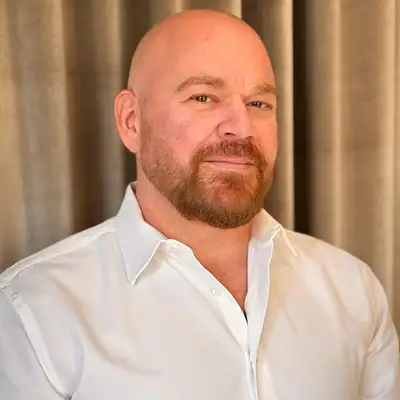
David Strickel examines consciousness, fear, judgment, and how humans orient themselves in a rapidly changing world.
His perspective is shaped by his ongoing relationship with Source consciousness known as the Stream.
These episodes provide context, inquiry, and reflection through conversation and lived experience.
The podcast exists to support clear thinking and sovereignty of mind during periods of uncertainty.
(00:00:01):
The Tya Podcast.
(00:00:03):
Discover the daily practice that makes spirituality actually work.
(00:00:07):
Going beyond law of attraction to turn struggle into prosperity and success into real happiness.
(00:00:14):
Tya is an advanced operating system for life and you're about to learn it right now.
(00:00:21):
Welcome to the Tya Podcast.
(00:00:23):
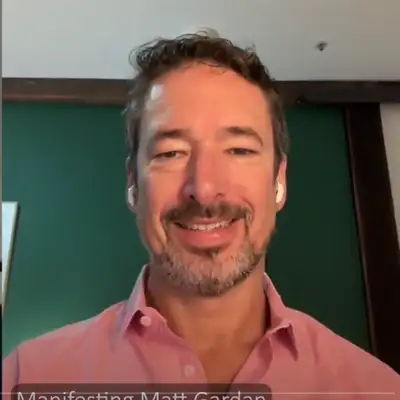
We have Matt Garden back with us.
(00:00:26):
The Tya Intention Coach.
(00:00:28):
Wonderful to be here.
(00:00:29):
It's certainly a thrill.
(00:00:30):
You're such a lovely audience.
(00:00:33):
You don't know them.
(00:00:34):
How do you know they're lovely?
(00:00:35):
Hey, hey.
(00:00:39):
They may be thinking right now, I'm not lovely.
(00:00:40):
You don't know me.
(00:00:41):
Don't assume I'm lovely.
(00:00:43):
It's from Sergeant Pepper.
(00:00:47):
All you music buffs will know this.
(00:00:49):
All you music buffs of our generation will know this.
(00:00:51):
I was going to say it depends on the age group that you're.
(00:00:54):
Say Sergeant Pepper is someone under 50, they're going to think you're talking about a spice.
(00:00:58):
Anyway, so you are a student of many spiritual teachings.
(00:01:08):
Yes.
(00:01:09):
Well, less Judeo-Christian stuff because I grew up in that and had it rammed down my throat.
(00:01:14):
But more Eastern stuff I'm really interested in.
(00:01:17):
Yeah, yeah, yeah.
(00:01:19):
Yeah.
(00:01:19):
And the interesting thing is I have not been that interested in that.
(00:01:22):
I've definitely explored spiritual modalities, but not a lot of Eastern philosophy.
(00:01:26):
But I do find it appealing and interesting,
(00:01:29):
especially when I find similarities with what we're creating with Tya and what
(00:01:34):
you're seeing in some of these teachings.
(00:01:35):
So I kind of want to dig into that a little bit.
(00:01:38):
Yeah, happy to, happy to.
(00:01:39):
History repeating is a good title for this podcast.
(00:01:42):
I think part of the thing is also your environment really affects you a huge amount.
(00:01:49):
And I grew up in Asia.
(00:01:50):
So I grew up in Indonesia.
(00:01:51):
I'm back in Asia now.
(00:01:52):
And it's funny how it feels so familiar.
(00:01:55):
You know,
(00:01:55):
you have people who travel and then they end up coming back to kind of the area
(00:01:58):
where they grew up in or the kind of stuff when they grew up in.
(00:02:02):
I've kind of inadvertently done that.
(00:02:04):
And I can understand the appeal because it just...
(00:02:07):
feels very familiar and it takes you well i think i think it creates our foundation
(00:02:10):
you know it's sort of like it imprints on us like this is who we are no matter
(00:02:15):
where we go or what we do in life yeah this is really who we are is we're connected
(00:02:20):
to that geographic space yeah that makes sense yeah yeah um so i've always been so
(00:02:28):
so i think that's given me a bit of interest into the more
(00:02:34):
Eastern philosophies and esoteric philosophies,
(00:02:36):
and it's always given me a sense of wanting to just have a curiosity,
(00:02:41):
basically.
(00:02:41):
You know,
(00:02:42):
I'm a seeker,
(00:02:43):
and so I seek knowledge and information and that sort of stuff because that kind of
(00:02:48):
excites me.
(00:02:50):
I mean, I'm very grateful to – I grew up very, very –
(00:02:54):
strict Roman Catholic and my mom was in an evangelical church and I spoke in
(00:02:58):
tongues at the age of 12 and stuff.
(00:03:00):
So I'm very appreciative of that because it gave me a real understanding that there
(00:03:05):
is a spiritual world,
(00:03:07):
an energetic world.
(00:03:09):
And certainly in Indonesia,
(00:03:10):
they take that stuff very,
(00:03:13):
very seriously,
(00:03:14):
especially Bali,
(00:03:14):
where we spend a lot of time.
(00:03:16):
Yeah,
(00:03:16):
I remember feeling that as a child,
(00:03:18):
even in just regular Methodist,
(00:03:20):
Baptist,
(00:03:21):
you know,
(00:03:22):
where I was raised in those things.
(00:03:24):
And I remember feeling that feeling.
(00:03:26):
But of course, it sort of gets co-opted by the religion and says, OK, that feeling is God.
(00:03:30):
And here's the book and here's the rules and here's the things you got to do and
(00:03:33):
you're not supposed to do and who you're supposed to worship and what you're
(00:03:35):
supposed to do.
(00:03:36):
Based on all of that.
(00:03:37):
And when you're a child,
(00:03:38):
you just believe that because it's they must know what they're talking about
(00:03:40):
because I feel this.
(00:03:42):
Right.
(00:03:42):
Yeah.
(00:03:42):
And they're adults and they're, you know, I trust them and that's what we're programmed to do.
(00:03:46):
Right.
(00:03:48):
And so, yes, I'm really so I'm really interested in that sort of stuff.
(00:03:53):
I did a little bit of Buddhism for a while and now I'm really into the Tao Te
(00:03:56):
Ching,
(00:03:56):
which is the excuse me.
(00:03:59):
Chinese spiritual text.
(00:04:02):
Interesting.
(00:04:02):
It's not a religion.
(00:04:03):
It's a very practical spiritual practice or just a series of kind of riddles slash
(00:04:11):
poems written by a mysterious guy 3,000 years ago.
(00:04:15):
And it has a lot of similarities with the teachings of the Tya Academy and the
(00:04:23):
Four Pillars of Tire.
(00:04:24):
And I just keep finding that
(00:04:27):
kind of universal truth that comes back, that keeps repeating, that does.
(00:04:34):
And look, at the heart of it,
(00:04:39):
all religion is about love and all religion is about loving your fellow human,
(00:04:44):
you know,
(00:04:45):
and there's not one religion that isn't about not trying to be a better person,
(00:04:50):
you know,
(00:04:51):
not trying to do your best and not trying to do what's morally correct.
(00:04:56):
And Taoism does that a lot, talks a lot about that.
(00:04:59):
Well,
(00:04:59):
if you think about the root of all of this is what I call source and some people
(00:05:05):
call that God or there's other words for it,
(00:05:07):
certainly,
(00:05:08):
but
(00:05:09):
My identity of source,
(00:05:14):
the way I experience source,
(00:05:17):
I know that it's that same energy that I got when I went to the Baptist revival as
(00:05:22):
a child and they get you all sort of amped up at the revival and oh,
(00:05:26):
you feel this move in you,
(00:05:27):
it's time to come down front and give your life to God and commit to being one of
(00:05:32):
us and that sort of thing.
(00:05:34):
And I remember having that feeling
(00:05:36):
And I remember it just being this powerful thing that almost walked me down at the
(00:05:41):
First Baptist Church in Minden,
(00:05:43):
Louisiana,
(00:05:43):
walked me down there to get saved,
(00:05:47):
is what they call the Baptist Church.
(00:05:49):
And I remember it being a very spiritually moving moment.
(00:05:53):
And then they made such a big deal out of it.
(00:05:55):
And then the next day I woke up and I was the same person.
(00:05:58):
It felt like, okay, you know, I'm saved, but it feels kind of the same.
(00:06:01):
And then I went to school and a lot of my friends went to that church and,
(00:06:05):
oh,
(00:06:05):
David got saved the other night.
(00:06:08):
And all of that just sounded wrong to me.
(00:06:11):
I remember as a little kid saying,
(00:06:12):
okay,
(00:06:12):
something happened with me,
(00:06:13):
but I don't think it was about all of that.
(00:06:15):
I think it was about something with me personally.
(00:06:17):
Yeah.
(00:06:18):
Yeah.
(00:06:18):
Yeah.
(00:06:19):
And you can't, but you can't put it into words, right?
(00:06:22):
Like when you have a Kundalini experience, you can't really explain it.
(00:06:25):
And it's something you have to experience.
(00:06:27):
And what's interesting is the very first sentence of the Tao Te Ching is the Tao
(00:06:32):
that can be named is not the true Tao.
(00:06:34):
And it says,
(00:06:35):
you can't,
(00:06:35):
we don't,
(00:06:35):
we actually don't have the words to properly describe how this universe is
(00:06:41):
structured and what this Holy Spirit energy is.
(00:06:46):
life force loving intelligence is right we just don't have the words in any
(00:06:50):
language to really describe what's keeping us alive our soul yeah well the thing is
(00:06:55):
that energy exists in everything yeah and i know that everybody has this in them
(00:07:00):
everything has it in them and that's why you will never prove it or disprove it
(00:07:04):
scientifically because how do you do that with something that exists in everything
(00:07:08):
yeah well scientists have narrowed it down to the dmt right the god molecule which
(00:07:11):
is kind of a a chemical structure that exists in everything
(00:07:16):
I think that's supposed to be what they've identified as the first step of physical creation.
(00:07:21):
Yeah, yeah.
(00:07:22):
That's where consciousness bridges into creation.
(00:07:26):
And I have seen that in my channeling.
(00:07:30):
And the thing that, you know, I talk about channeling in the Stream of David and all that.
(00:07:35):
The channeling has always been,
(00:07:37):
and I have always said from day one,
(00:07:38):
this is something that is in me that I think is in everybody.
(00:07:42):
I have just spent a whole lifetime choosing to go into that.
(00:07:46):
I'll go sample something, not to the length that you do.
(00:07:49):
I'll sample something a little bit and say, okay, that's interesting.
(00:07:53):
That's a different way to think about that.
(00:07:54):
But I'm going to go back to my inner knowing.
(00:07:56):
And that inner knowing has always guided me in a direction where things worked out.
(00:08:03):
Always, always, always, always without fail.
(00:08:05):
But trying to define,
(00:08:07):
because you know I've asked these questions of it,
(00:08:09):
of the inner knowing of the stream,
(00:08:12):
how does consciousness become physical creation?
(00:08:18):
And I can understand it, but I can't always communicate it.
(00:08:25):
Even when I'm channeling, it's challenging to communicate how consciousness becomes
(00:08:32):
is energy and how that energy becomes more dense and takes form and then gets
(00:08:38):
specific in its form to create anything and everything that you consider physical.
(00:08:44):
Yeah.
(00:08:44):
Yeah.
(00:08:45):
Yeah.
(00:08:46):
And,
(00:08:46):
and,
(00:08:47):
and,
(00:08:47):
you know,
(00:08:47):
I mean,
(00:08:47):
I keep coming back to the,
(00:08:49):
to the Tao Dijing,
(00:08:50):
but it's,
(00:08:50):
it's interesting that,
(00:08:52):
They also believe in multiple different types of universes and experiences.
(00:08:57):
And they believe that if you happen to manifest in one that has a very strong,
(00:09:02):
heavy gravitational field,
(00:09:03):
like where we are now,
(00:09:04):
that's a real blessing.
(00:09:05):
That's like a power up for your soul because it's much easier to evolve in a dense
(00:09:14):
gravitational field than it is if you're spread over hundreds of thousands of light
(00:09:17):
years.
(00:09:19):
It's because we're in this linear experience and the density causes us to be
(00:09:24):
separated from source.
(00:09:26):
We perceive ourselves as being separated from source, which creates suffering, if you will.
(00:09:33):
And then the suffering motivates us to create something to solve the suffering.
(00:09:40):
That's why we talk about the polarity pillar of Taya.
(00:09:43):
The density of the environment accelerates evolution.
(00:09:47):
Yeah.
(00:09:48):
Yeah.
(00:09:48):
It's a real, it's a real blessing.
(00:09:50):
People keep trying to speed it up,
(00:09:51):
but actually it's,
(00:09:54):
it's,
(00:09:56):
it's one of the tools you need for your soul to evolve.
(00:09:58):
You know, if you want, if you want.
(00:10:01):
Well, what I gather from the stream is the,
(00:10:08):
We think of something as desire,
(00:10:10):
like I desire to go to earth and be a human and have this human experience or I
(00:10:13):
don't desire to do that or whatever.
(00:10:15):
We think in terms of desire and the evolution of a strand of consciousness or a
(00:10:21):
soul is really automatic.
(00:10:26):
It's not a choice or desire as much as it's just,
(00:10:29):
if you want to think about it like this,
(00:10:31):
it's the mission of it.
(00:10:33):
The mission is to always expand no matter what.
(00:10:36):
And we see that expressed in physical and evolution.
(00:10:39):
Yeah.
(00:10:40):
So that's, you know, I've gotten that from source that that's how creation actually occurs.
(00:10:44):
And then how we organize these things into physical creation is a whole other mind
(00:10:49):
blowing,
(00:10:50):
you know,
(00:10:50):
topic that it's hard to express in words,
(00:10:52):
but really the people want to know what source really is.
(00:10:57):
And yeah,
(00:11:00):
The very best way I can describe source
(00:11:05):
is source is the powerful creative energy of the universe.
(00:11:09):
It's in all things.
(00:11:10):
It's always creating expansion.
(00:11:12):
It can create destruction, but that destruction leads to new creation.
(00:11:16):
So everything is really expansion.
(00:11:17):
Just like we say positive, negative, or high vibration, low vibration.
(00:11:22):
Really,
(00:11:22):
it's all positive because what we consider low vibration or unwanted only exists
(00:11:27):
because we create it,
(00:11:28):
first of all,
(00:11:29):
in a dense environment.
(00:11:30):
And secondly, because we create
(00:11:33):
not only create the challenge, the solution to the challenge is our evolution of consciousness.
(00:11:39):
It is our new creation.
(00:11:40):
It's the expansion.
(00:11:42):
Yeah.
(00:11:43):
And that's why it's on autopilot.
(00:11:45):
Even though we perceive this as a choice, it's an automatic thing that we do.
(00:11:50):
And our strands of consciousness have been around long enough to where we've sort
(00:11:54):
of,
(00:11:55):
for lack of a better term,
(00:11:56):
we've sort of leveled up to this environment.
(00:11:58):
And you're right.
(00:11:58):
There are people that say that, you know, oh, I would never choose to come to Earth.
(00:12:02):
This is terrible.
(00:12:02):
I don't ever want to do this again.
(00:12:03):
I want to get off this.
(00:12:04):
I see that all the time.
(00:12:06):
Well, what else do you think is out there?
(00:12:09):
Yeah.
(00:12:10):
Yeah.
(00:12:11):
And I mean,
(00:12:12):
there are an infinite number of realms out there,
(00:12:14):
but your Earth-based ego isn't aware of them.
(00:12:17):
You know, your soul is.
(00:12:18):
Your soul is having an infinite number of fantastic experiences simultaneously,
(00:12:22):
but it's capable of doing that.
(00:12:24):
Yeah.
(00:12:25):
Well,
(00:12:25):
and obviously I think we're eternal beings,
(00:12:27):
like you said,
(00:12:28):
our soul,
(00:12:29):
our consciousness,
(00:12:29):
whatever you want to call it,
(00:12:30):
has an eternal aspect that is most of what we are.
(00:12:34):
But in this experience,
(00:12:36):
obviously,
(00:12:37):
we are meant to be grounded and focused in this experience while we're here.
(00:12:42):
And that's why we never get too into talking.
(00:12:45):
You know, let's let's talk to dead people.
(00:12:46):
Let's talk to aliens.
(00:12:48):
Let's I want someone to predict the future.
(00:12:50):
All of those things.
(00:12:51):
We just don't do that because we're here for a brief amount of time.
(00:12:56):
And for all we know, this is all there is.
(00:12:58):
We don't know that.
(00:12:58):
You know, we believe, but we don't know that.
(00:13:01):
So why not?
(00:13:02):
Why not utilize the things that we learn and the things that we experiment with
(00:13:06):
improve to ourselves to have the best life possible in this lifetime?
(00:13:13):
Yeah, absolutely.
(00:13:14):
And to follow what makes your heart sing, right?
(00:13:17):
To follow your bliss.
(00:13:20):
But it's interesting, even then, when you were saying, we believe that, but we don't know it.
(00:13:26):
That's a very kind of...
(00:13:28):
you know, Newtonian approach to value of thought, right?
(00:13:34):
Something's only valuable because I can test it and see it with my eyes or I can
(00:13:39):
see a result that I can comprehend.
(00:13:42):
Whereas the human eye is only capable of seeing like a tiny fraction of a light spectrum.
(00:13:48):
Yeah.
(00:13:51):
We live in a world now where unless you can test it and validate it scientifically
(00:13:55):
and put a number on it,
(00:13:56):
it's worth less than an emotional experience you've had.
(00:14:00):
Yeah.
(00:14:01):
And people that refuse to believe anything unless science has proven it to them.
(00:14:05):
I always say,
(00:14:06):
gosh,
(00:14:07):
I have experienced so many things that science would say don't exist,
(00:14:11):
but I've experienced it.
(00:14:12):
So it doesn't matter whether I'm imagining it or I'm really experiencing it.
(00:14:17):
It doesn't matter.
(00:14:18):
I'm still having the experience.
(00:14:20):
I'm having the experience.
(00:14:21):
It doesn't matter.
(00:14:22):
And there's richness in my life because of the experience that I have had that if I
(00:14:28):
just listened to science,
(00:14:30):
I would have never believed it or given it power or even had the experience
(00:14:33):
probably.
(00:14:35):
700 years ago everyone thought the Earth was flat.
(00:14:37):
Science would tell you the Earth was flat.
(00:14:40):
And Galileo almost lost his life for daring to suggest that the earth revolved
(00:14:47):
around the sun and that the earth wasn't the center of the universe.
(00:14:51):
So everyone who believes in science,
(00:14:53):
and I often think about this,
(00:14:54):
what's something we believe today that is going to be ridiculously large?
(00:14:58):
Oh, sure.
(00:14:59):
The most scientific fact is tomorrow's disproven theory, for sure.
(00:15:03):
100%.
(00:15:03):
For sure.
(00:15:04):
And that's how science works.
(00:15:05):
They're always trying to disprove what they believe to be true at the moment.
(00:15:08):
Well, that's it.
(00:15:08):
The scientists believe there's something else.
(00:15:10):
They just want to, they want to validate it and prove it.
(00:15:14):
And so they're dreamy.
(00:15:15):
Really, a scientist is a dreamy person that believes something more is there.
(00:15:19):
And really that something more is usually source and want to find a way to
(00:15:24):
authenticate that this is real and not something they just are choosing to believe.
(00:15:28):
But then there's other people,
(00:15:30):
especially people that claim to be intelligent,
(00:15:31):
you know,
(00:15:32):
believe they're intelligent.
(00:15:33):
They're so intelligent.
(00:15:34):
They can't believe anything unless some scientist has proven it.
(00:15:37):
Yeah.
(00:15:38):
Well, that's the Dunning-Kruger effect, right?
(00:15:41):
Where you know a little bit and you think you know everything and you
(00:15:45):
overcompensate for the small amount of knowledge you have.
(00:15:49):
It's a scientific principle, basically.
(00:15:55):
Well, I think it's all rooted in the fact that we want to feel grounded and safe.
(00:15:59):
We want to feel safe in our beliefs.
(00:16:01):
We want to feel safe and secure in our lives.
(00:16:03):
And really, that doesn't exist.
(00:16:07):
Safety and security, first of all, you're not going to stay safe forever.
(00:16:11):
Eventually, something's going to take you out.
(00:16:14):
Whether it's your health or a natural disaster or another person or whatever,
(00:16:18):
something's going to take you out of the experience.
(00:16:21):
The only real certainty is you're going to die.
(00:16:24):
Yeah.
(00:16:24):
The only thing that we do know for a fact is that the physical experience is not eternal.
(00:16:29):
We haven't found anything yet that is physical eternally.
(00:16:33):
And we know that.
(00:16:35):
Maybe that's not true.
(00:16:36):
Maybe there is a physical environment that's eternal, but we don't have awareness of that.
(00:16:40):
So if you know you're going to die,
(00:16:43):
it isn't interesting that we're so taught to fear and judge death when it's the one
(00:16:48):
thing that we all know we're going to experience.
(00:16:50):
Yeah, we spend so much time fearing death, we forget to do the living bit.
(00:16:56):
Yeah.
(00:16:58):
Yeah, and how many spiritual practices are out there that are really quasi-religion?
(00:17:05):
I talk a lot lately about being spiritually exhausted just because spirituality has
(00:17:09):
expanded,
(00:17:09):
which I think is a good thing because it's a bridge away from organized religion
(00:17:14):
that was very limiting.
(00:17:15):
Yeah.
(00:17:16):
but it's such a big tent and there's so many beliefs that are all,
(00:17:19):
uh,
(00:17:20):
you know,
(00:17:20):
crowded under the,
(00:17:21):
the spiritual umbrella that it can be very confusing.
(00:17:26):
And there can be a lot of things that you try that maybe don't work for you or they
(00:17:29):
don't work,
(00:17:29):
you know,
(00:17:30):
on a longterm basis.
(00:17:32):
And,
(00:17:33):
What I have found is that source is really simple.
(00:17:37):
The process of creation is really simple.
(00:17:39):
It's very simple.
(00:17:41):
And the sexier we try to make it,
(00:17:43):
the more mystical we try to make it,
(00:17:45):
the more complex it becomes.
(00:17:47):
And then you're really not serving anybody by trying to make it something that's so
(00:17:50):
sexy and mystical and out there and hard to do.
(00:17:53):
It really isn't.
(00:17:56):
The hard to do thing is to shift the belief patterns
(00:18:02):
that keep you stuck in, in places and circumstances and events that you don't want to be in.
(00:18:07):
That's the hard thing is because we're so programmed to, to stay there with fear and judgment.
(00:18:11):
Yeah.
(00:18:12):
Yeah.
(00:18:12):
And there's a, there's a, there's a big difference between simple and easy, right?
(00:18:18):
Everything beautifully designed is simple and the universe is, is,
(00:18:26):
our understanding of it.
(00:18:27):
And it's terribly simple, you know, really at its core.
(00:18:32):
And then that doesn't mean that it's easy.
(00:18:34):
It doesn't mean that life is easy or that it's supposed to be easy,
(00:18:37):
but it is,
(00:18:38):
you know,
(00:18:40):
I think we believe that you're just here to have a full rich experience.
(00:18:45):
Have your experience.
(00:18:46):
That's it.
(00:18:46):
That's your only job.
(00:18:47):
Well, and part of the rich experience includes the things that we have been taught to suffer in.
(00:18:55):
but we've been taught to suffer in them.
(00:18:57):
We suffer in them because we're taught to suffer in them.
(00:19:01):
So suffering is optional.
(00:19:02):
And I don't think there's anything wrong with suffering if you choose it,
(00:19:05):
but just understand that you're choosing it.
(00:19:06):
And to me,
(00:19:07):
the understanding of it really shifts because if you feel like something was done
(00:19:14):
to you and you had no control over it whatsoever and it was thrust upon you and
(00:19:21):
you're judging it as something that shouldn't have happened,
(00:19:24):
then you're creating your own suffering.
(00:19:26):
Yeah, yeah.
(00:19:28):
True.
(00:19:30):
My wife,
(00:19:30):
who's much more intelligent and brilliant than me,
(00:19:33):
was reading a book recently and came across a really cool Buddhist theory called
(00:19:39):
the two arrows.
(00:19:41):
And it's pretty much what you're saying.
(00:19:44):
You get hit by the first arrow, and that hurts, and you take it out.
(00:19:48):
And then you get...
(00:19:50):
mentally hit by the second arrow which was the injustice of why the hell did anyone
(00:19:53):
fire an arrow to me like the physical pain is done the event is passed but you're
(00:19:58):
still reliving it that second time and it's not a physical thing that hit you it's
(00:20:04):
just your reaction to the event
(00:20:09):
to the circumstance.
(00:20:10):
And so circumstances will happen to you in your life.
(00:20:13):
That's what your life is programmed for, to have a whole bunch of circumstances and experiences.
(00:20:19):
And the game, if you will, is to experience the reaction to those circumstances.
(00:20:28):
And we see people who have very easy lives and complain all the time.
(00:20:34):
And we see people who have very hard lives, difficult lives, and rarely complain.
(00:20:39):
You know, and you see, and I'm not,
(00:20:42):
judging either of them and everyone does their own thing and i'm not belittling
(00:20:45):
anyone who's had serious trauma i imagine that's very difficult to deal with but um
(00:20:53):
the way in which you deal with the things that have happened to you just unjust
(00:20:59):
lucky unlucky joyous tragic i the way you deal with that and the way you manage
(00:21:06):
that second arrow is entirely in your within your control
(00:21:10):
Yeah,
(00:21:11):
and that's hard for a lot of people to swallow because we've been taught otherwise,
(00:21:14):
and they're really stuck in that.
(00:21:17):
Yeah, I have to judge this space because, well, why?
(00:21:20):
Well, because if I don't judge, it's going to happen again.
(00:21:22):
Well,
(00:21:23):
there's a lot of things that we judge in this world as things that shouldn't exist
(00:21:26):
that still do,
(00:21:27):
and in fact,
(00:21:27):
they grow and intensify.
(00:21:29):
So at some point,
(00:21:30):
humanity is going to,
(00:21:31):
I think we've already started,
(00:21:32):
but more of us are going to wake up and realize,
(00:21:35):
wait a minute,
(00:21:36):
what we pay attention to,
(00:21:37):
we give power to.
(00:21:39):
In our lives and across humanity.
(00:21:42):
And these big problems that we think we can't solve, notice how we just demonize them.
(00:21:47):
And that's what's so disempowering about most religions,
(00:21:52):
not all,
(00:21:54):
is that you have to demonize something.
(00:21:57):
There has to be a boogeyman.
(00:21:58):
There has to be a demon.
(00:22:01):
This is demonic.
(00:22:02):
This is wrong.
(00:22:02):
This is something that shouldn't exist and you shouldn't be experiencing.
(00:22:07):
And then it goes right into that victim language.
(00:22:09):
You shouldn't have experienced that.
(00:22:10):
Oh, you poor thing.
(00:22:12):
It's not helpful.
(00:22:13):
No.
(00:22:14):
And again, something being wrong or something being black or white is polarity, right?
(00:22:19):
You only know joy because you've suffered pain.
(00:22:24):
You only know heat because you've had cold.
(00:22:26):
You only know sweet because you've had sour, right?
(00:22:28):
That's how the polarity is the way in which we experience everything.
(00:22:35):
And this is something that bugs me a lot is this idea of,
(00:22:38):
good and bad is taught, right?
(00:22:41):
Racism is a taught behavior.
(00:22:43):
We're not born racists, right?
(00:22:45):
And we're not born liking or disliking Brussels sprouts.
(00:22:49):
We're taught that, you know, you have preference for it.
(00:22:51):
But interestingly,
(00:22:54):
in Japan at school,
(00:22:55):
they teach kids to like vegetables at the public schools there,
(00:23:00):
at the state schools.
(00:23:01):
So when you graduate school in Japan,
(00:23:03):
you have been taught to eat healthily and you like it,
(00:23:08):
you know?
(00:23:09):
It's exactly the same teaching as putting Mars bar vending machines in every school, right?
(00:23:14):
It's the same thing that's happening.
(00:23:17):
Yeah, you're right.
(00:23:18):
And the concept of should not be is the single most damaging thing for humanity and
(00:23:27):
the single most damaging thing in somebody's life.
(00:23:30):
And that's the concept of that second arrow, right?
(00:23:32):
Yeah, that's the concept of the second arrow.
(00:23:33):
It's not preference, right?
(00:23:36):
We're discerning preference all day.
(00:23:37):
That's our ego's job is discern preference.
(00:23:39):
We're constantly doing that, and that's how we move through life experience.
(00:23:42):
But where we get into judgment is when we start labeling something as shouldn't
(00:23:46):
exist,
(00:23:46):
shouldn't be,
(00:23:47):
because we amp up the energy around it when we're saying that.
(00:23:52):
And we've been taught to do that.
(00:23:53):
You've got to fight.
(00:23:53):
You've got to push against.
(00:23:54):
Never forget.
(00:23:56):
And all of these things that we never forget,
(00:23:57):
that we push against,
(00:23:58):
that we fight and we battle,
(00:23:59):
only intensify.
(00:24:02):
If we want to start solving things as human beings,
(00:24:06):
First, start with your own life.
(00:24:07):
Start solving the things in your life.
(00:24:08):
What are you labeling it should not be that you can change the conversation around?
(00:24:14):
And then collectively, there's a lot of power in collective consciousness.
(00:24:18):
And collectively, we give power to a lot of things that we don't want.
(00:24:22):
And they keep coming back and they get stronger.
(00:24:24):
And there are people out there that know this.
(00:24:26):
And that's why they don't mind being polarizing.
(00:24:29):
They don't mind that part of the population loves them and another part absolutely hates them.
(00:24:34):
And you know what I'm talking about.
(00:24:36):
They don't mind that because they know that's very empowering.
(00:24:40):
Let me hate me.
(00:24:41):
You're giving me power.
(00:24:41):
It doesn't matter.
(00:24:42):
Yeah.
(00:24:43):
And,
(00:24:44):
you know,
(00:24:45):
God or source or the Tao or all of that doesn't mind either because what they're
(00:24:50):
interested in is the intensity of the experience.
(00:24:53):
Yeah, yeah.
(00:24:54):
The source is loving all of it because the new creation that comes from the low
(00:24:59):
vibration experience is expansion of consciousness.
(00:25:03):
Just as valid as the creation that comes from high value experiences, right?
(00:25:08):
It's expansion.
(00:25:10):
Well, and the nice thing is that I believe in our intelligence for humans.
(00:25:16):
We don't have to react the way we once did.
(00:25:22):
We are very reactionary, and that reaction has its place.
(00:25:26):
Our fight or flight, if you will, those components of our ego.
(00:25:33):
Fear has its place in our ego.
(00:25:34):
Something's about to eat me.
(00:25:36):
Fear kicks in.
(00:25:37):
Fight or flight.
(00:25:38):
I'm going to get out of the way,
(00:25:39):
or I'm going to fight this thing because my ego wants to live another day,
(00:25:42):
period.
(00:25:43):
But that has been hijacked.
(00:25:45):
Yeah.
(00:25:45):
probably thousands of years ago,
(00:25:47):
you know,
(00:25:47):
somebody figured out,
(00:25:48):
oh,
(00:25:48):
we can take that fear mechanism.
(00:25:50):
Yeah,
(00:25:51):
we can take that fear mechanism and we can definitely harness the power of that
(00:25:56):
very powerful fear mechanism and we can control human beings with it.
(00:26:00):
And we've been controlled by that.
(00:26:02):
And I don't think it's necessarily bad.
(00:26:04):
We probably wouldn't be having this conversation this way.
(00:26:08):
right now if we hadn't moved through a fear-based matrix that motivated us to
(00:26:14):
create all the things that we've created as human beings so i don't even think that
(00:26:17):
i just think it's time for let's move on to something else already because we know
(00:26:20):
it now we the jig is up we know it yeah yeah and look throughout history they've
(00:26:25):
been excuse me
(00:26:27):
Throughout history, there have been very dark periods, you know.
(00:26:32):
I mean, everyone's caught up on Islamic fundamental terrorism at the moment.
(00:26:37):
Back in the Middle Ages,
(00:26:38):
the fundamental terrorists were the Roman Catholic Church and the Pope sending
(00:26:41):
crusades to the Middle East to rape and pillage at will.
(00:26:48):
They weren't stealing oil back then.
(00:26:50):
I remember going on these tours in Europe and you hear about these little villages
(00:26:54):
where certain religions came in and murdered everybody that wouldn't agree with
(00:26:58):
them and believe.
(00:27:01):
We're not taught that much in the United States,
(00:27:03):
but when you get outside the United States,
(00:27:05):
you hear that quite a bit.
(00:27:06):
Yeah,
(00:27:07):
and look,
(00:27:08):
and again,
(00:27:08):
you know,
(00:27:09):
the history of the United States,
(00:27:11):
Protestants who left because they wanted to set up their own
(00:27:18):
their own belief system and their own structure.
(00:27:20):
But look at part of the reason we're so in the United States and in England,
(00:27:25):
Europe's a little less and in Asia it's a little less too.
(00:27:27):
But part of the reason we're so funny about our sexuality and awkward about it is
(00:27:33):
because the Roman Catholic Church was terrified about sexual energy,
(00:27:37):
you know?
(00:27:37):
Oh, yeah.
(00:27:38):
Yeah.
(00:27:39):
And they wanted to harness the power of reproduction.
(00:27:43):
And how do you harness the power of reproduction if you don't make right and wrong
(00:27:48):
what people are naturally motivated to do?
(00:27:50):
Yeah.
(00:27:51):
And obviously, we're naturally motivated to do far more than what the church prescribes.
(00:27:57):
But notice how self-serving it is when you tell people heterosexual sex.
(00:28:01):
No abortion, which is a relatively new thing, even in the Catholic Church.
(00:28:04):
And no birth control.
(00:28:06):
We want more Catholics.
(00:28:07):
How are you going to get more Catholics if all the men are doing their thing together?
(00:28:12):
Let's get more Catholics by having this.
(00:28:14):
And again, if I were trying to build a village, I would probably say, hey, we need more people.
(00:28:21):
And that village was going to go to war.
(00:28:23):
I would say we need more warriors.
(00:28:26):
Or I wanted to be industrialized.
(00:28:27):
What do we need?
(00:28:28):
We need more workers.
(00:28:30):
How are we going to do that?
(00:28:31):
We need more people.
(00:28:32):
We need more of us.
(00:28:33):
Because if there's more of us, we will survive.
(00:28:35):
If there's less of us and there's more of them, we might not.
(00:28:39):
That's where I came from.
(00:28:40):
Yeah.
(00:28:41):
And look, in different parts of the world, life is worth different things.
(00:28:46):
In America, one person dies.
(00:28:47):
There's a huge uproar around it.
(00:28:49):
It's on the news for days and days and days.
(00:28:53):
In more crowded countries, a thousand people die.
(00:28:55):
It doesn't make the news.
(00:28:57):
Yeah.
(00:28:58):
You know, at all.
(00:29:01):
Yeah.
(00:29:01):
And definitely the age of critical thinking seems to be becoming hijacked by social
(00:29:12):
media,
(00:29:13):
by the little device in our pockets,
(00:29:15):
by constantly scrolling and seeing,
(00:29:17):
you know,
(00:29:18):
being influenced.
(00:29:19):
And I don't think that we have to avoid those things completely.
(00:29:25):
Yeah.
(00:29:26):
But you need to develop a system for yourself that when you feel that little
(00:29:30):
trigger,
(00:29:31):
you feel judgment coming in,
(00:29:34):
you stop and say,
(00:29:35):
wait a minute,
(00:29:36):
I want to understand this more deeply.
(00:29:38):
Instead of fearing and judging it and racing down into low vibration and being all
(00:29:42):
upset by something that I've seen,
(00:29:44):
I want to understand this more deeply.
(00:29:46):
Anything that triggers me, and it's interesting, I have noted that
(00:29:53):
We're doing a lot more advertising right now for Taya in general on Facebook and Instagram.
(00:29:59):
And when I have an ad where I get a lot of negative comments right away,
(00:30:04):
I know it's going to do really well.
(00:30:05):
There's a lot of people seeing and commenting and talking about it.
(00:30:08):
And I notice that people ridicule things that they don't bother to even understand.
(00:30:12):
Because you know the people that are ridiculing the ad,
(00:30:15):
you know,
(00:30:15):
who's this crazy bald guy talking about this stuff,
(00:30:17):
it's snake oil,
(00:30:18):
it's fake,
(00:30:18):
it's whatever.
(00:30:19):
And, you know, that's every, that's daily, that's daily that people say things like that.
(00:30:23):
And so...
(00:30:26):
It's so easy to just, and I'm not complaining about that.
(00:30:28):
That's not a big deal in my life at all.
(00:30:30):
But it's just something that I've taken note of is that people ridicule things that
(00:30:33):
they don't understand.
(00:30:34):
And so it's kind of ridiculing something.
(00:30:37):
I always want to understand it more deeply if I feel like it's even worthy of bothering with.
(00:30:42):
A lot of things out there are not even worthy of bothering with.
(00:30:44):
Yeah,
(00:30:45):
and look,
(00:30:46):
there's that beautiful F.
(00:30:48):
Scott Fitzgerald quote,
(00:30:51):
the sign of intelligence is being able to hold two opposing thoughts in your mind
(00:30:54):
at the same time.
(00:30:55):
Mm-hmm.
(00:30:57):
And usually,
(00:30:58):
and one of the catches that I love,
(00:30:59):
you know,
(00:31:00):
I love my catches whenever I'm,
(00:31:01):
you know,
(00:31:02):
sort of being triggered by something at all,
(00:31:04):
I always have a catch so that I can reframe it to how do I understand this better?
(00:31:09):
The truth is usually in the middle,
(00:31:11):
almost always,
(00:31:12):
because you've got this energy that may seem in opposition,
(00:31:15):
but really it's the same sort of polarized energy.
(00:31:18):
And if you get in the middle of that energy,
(00:31:20):
then you get to see both sides and you realize,
(00:31:23):
ah,
(00:31:23):
there's truth on both sides.
(00:31:25):
And we and we are weakened.
(00:31:28):
And this is so important.
(00:31:29):
If you're listening to this and you get nothing else from this podcast,
(00:31:32):
we are weakened when we're polarized,
(00:31:35):
when we are drawn.
(00:31:37):
up,
(00:31:37):
down,
(00:31:37):
left,
(00:31:37):
right,
(00:31:38):
however you want to describe it,
(00:31:39):
on any topic,
(00:31:40):
we are weaker individuals when we're polarized.
(00:31:43):
We are more powerful when we're centered.
(00:31:47):
And the way to be centered is to seek appreciation of all things,
(00:31:51):
appreciation of both sides,
(00:31:52):
instead of bothering,
(00:31:53):
fearing,
(00:31:53):
and judging,
(00:31:54):
which disempowers you.
(00:31:57):
Yeah, because source doesn't judge.
(00:32:00):
Well, that's the thing.
(00:32:01):
You want to know what source is?
(00:32:02):
Source is appreciation of all things, period.
(00:32:05):
Well, how can source appreciate?
(00:32:06):
Well,
(00:32:06):
source is in it,
(00:32:08):
source is there,
(00:32:08):
source allows it,
(00:32:09):
and if you call source God,
(00:32:11):
well,
(00:32:11):
then God allows it,
(00:32:13):
right?
(00:32:14):
That was one of the things I couldn't reconcile with religion.
(00:32:16):
Okay,
(00:32:17):
God allows this,
(00:32:19):
but God created it and created us and created us in his own image,
(00:32:22):
but at the same time,
(00:32:24):
likes certain versions of us better than others.
(00:32:27):
Yeah, yeah.
(00:32:28):
You know,
(00:32:29):
I grew up in the Deep South where white people were superior to non-white people,
(00:32:33):
according to God,
(00:32:34):
according to the churches that I attended when I was a kid,
(00:32:37):
that God said,
(00:32:38):
and they could read a verse out of the Bible and justify it.
(00:32:41):
And I remember, I'm not hearing that in there.
(00:32:43):
You know, I'm not hearing that at all.
(00:32:44):
You're using the Bible,
(00:32:45):
and of course it's very useful this way,
(00:32:47):
to justify,
(00:32:49):
you know,
(00:32:50):
your own preference,
(00:32:51):
really.
(00:32:51):
Yeah, yeah.
(00:32:52):
Listen, God has been co-opted for...
(00:32:56):
racist and hateful campaigns throughout history.
(00:33:01):
Hitler was talking about the chosen race being the God-given one.
(00:33:07):
In the Middle East, everyone's God is telling them that they're better than the other ones.
(00:33:13):
So that's an often used excuse.
(00:33:16):
But it comes back to what you said before,
(00:33:18):
which is really important,
(00:33:19):
is when you stop being so fixated on that second arrow and that one...
(00:33:26):
If you're polarised,
(00:33:27):
there's this kind of idea of...
(00:33:31):
I'm right and that's wrong or this is good and that's bad.
(00:33:35):
And there's a tension there.
(00:33:36):
We have talked about that from day one.
(00:33:39):
Good, bad, good and evil.
(00:33:41):
You know, this is right.
(00:33:42):
This is wrong.
(00:33:43):
And again, that's polarized thinking.
(00:33:45):
And when you stop thinking something is wrong and we all have this,
(00:33:49):
those of us that have been around,
(00:33:51):
you know,
(00:33:52):
age 40 plus.
(00:33:54):
And if you're not there yet, it's okay.
(00:33:55):
You'll get there.
(00:33:56):
Yeah.
(00:33:59):
Well, nowadays there are teenagers that listen to things like this and get really into it.
(00:34:03):
That's cool.
(00:34:04):
But if you've lived enough life,
(00:34:07):
and what I'm talking about is a linear experience of life,
(00:34:09):
and that's where age has value.
(00:34:11):
So if you've lived enough life to where there was something that you once judged as
(00:34:15):
wrong or should not be,
(00:34:17):
and then your thinking evolved around it,
(00:34:20):
and now you have a whole different experience with it.
(00:34:24):
So we do this naturally.
(00:34:29):
We talk about detuning a lot, finding appreciation for things that we can't readily appreciate.
(00:34:34):
That's a big part of Taya.
(00:34:36):
We naturally detune.
(00:34:39):
I naturally detuned my mother when I was a teenager,
(00:34:42):
you know,
(00:34:42):
that turning point at 14,
(00:34:43):
when she was telling me,
(00:34:44):
you go kill yourself.
(00:34:45):
I hate you.
(00:34:46):
I wish you were never born.
(00:34:47):
That was the best thing ever because that made me kind of step back and realize,
(00:34:51):
wait a minute,
(00:34:52):
this isn't about me.
(00:34:53):
This is her thing.
(00:34:55):
And from there forward, just having appreciation of her without needing her to change.
(00:35:00):
And guess what?
(00:35:00):
She didn't.
(00:35:01):
So, you know,
(00:35:04):
that just allowed me to just appreciate her from a distance ultimately,
(00:35:07):
but appreciate her because she was just a product of her environment and how she
(00:35:13):
chose to respond to it.
(00:35:15):
And she didn't have podcasts and metaphysical books.
(00:35:17):
And she grew up in small town, Louisiana.
(00:35:20):
So she was a product of her time.
(00:35:22):
She did what she was told to do and believed what she was told to believe.
(00:35:25):
And again,
(00:35:26):
coming back to how she responded to it and coming back to how you responded to it,
(00:35:30):
the first arrow was this awful thing your mother said to you
(00:35:33):
you know really really hideous thing said to you and then the second arrow was you
(00:35:36):
decided actually i don't believe that and and i and and the value yeah and and the
(00:35:43):
value of my mother or my relationship to my mother isn't bound up in believing
(00:35:47):
everything she says you know which is a rule to everything yeah yeah and and you
(00:35:56):
know
(00:35:58):
My father was a difficult person.
(00:36:00):
I mean, I love him dearly, but he was a difficult person.
(00:36:01):
And one of the biggest things I had to understand was I can still love him even
(00:36:06):
though I don't like a lot of the stuff that he did,
(00:36:10):
you know,
(00:36:11):
or even though I wished he would have been a different way.
(00:36:13):
Everyone's kind of flawed.
(00:36:15):
And then coming back to this kind of,
(00:36:18):
you know,
(00:36:18):
second arrow thing,
(00:36:19):
you have people who get divorced and you have women who've been divorced 15 years
(00:36:23):
and they still haven't moved on from the injustice of it.
(00:36:27):
Yeah.
(00:36:28):
And that was my mother also.
(00:36:29):
She got divorced in 1975 and lived to 2014.
(00:36:32):
And I don't think I ever got over it.
(00:36:34):
And it was her choice.
(00:36:36):
You know,
(00:36:36):
she,
(00:36:37):
yeah,
(00:36:37):
she was in her thirties when she got divorced and she had a lot of opportunities.
(00:36:41):
And at one point, a couple of years after she got divorced, she inherited some money.
(00:36:45):
And I remember telling her, you know, this is your chance to really kind of reinvent.
(00:36:49):
I was a kid, I was 12 years old.
(00:36:52):
And I remember saying, no, I was nine when this happened.
(00:36:55):
I was nine years old.
(00:36:56):
And
(00:36:57):
I remember saying to her,
(00:36:58):
you know,
(00:36:59):
you can go to school,
(00:37:00):
you can start a business,
(00:37:01):
you can do all these things.
(00:37:03):
And none of that happened.
(00:37:04):
We just blew through it.
(00:37:05):
And we're actually even more in poverty once the money was gone than we were before we had it.
(00:37:10):
And,
(00:37:10):
you know,
(00:37:10):
she missed these opportunities,
(00:37:12):
I think,
(00:37:12):
because she just didn't think she was worthy of them.
(00:37:15):
Yeah.
(00:37:15):
Yeah.
(00:37:16):
Yeah.
(00:37:17):
Thousand percent.
(00:37:18):
What's that stat?
(00:37:19):
Ninety eight percent of people who win the lottery are back to where they started
(00:37:22):
two years later.
(00:37:23):
yeah or worse because it's the the money has created a lot more problems in their
(00:37:26):
lives than they had to worry about before and not just lottery winners you know
(00:37:29):
sports stars as well it speaks to it does speak to vibration because when you
(00:37:35):
accumulate wealth over time and whether you're investing or working or some
(00:37:41):
combination of those things when you accumulate it over time you have the time to
(00:37:45):
adjust to that new altitude
(00:37:48):
And you become that new version of yourself.
(00:37:50):
And everybody wants a quick fix.
(00:37:51):
We want to push that Amazon button for everything.
(00:37:54):
I want my life to be perfect tomorrow.
(00:37:57):
And I went through a decade of that until I realized that,
(00:38:00):
okay,
(00:38:00):
I have incrementally improved,
(00:38:02):
but where I'm suffering is that the tomorrow hasn't shown up fast enough.
(00:38:08):
Why don't I just shut up about that and just enjoy the practice and the journey?
(00:38:12):
And that's where I am now.
(00:38:13):
And anybody that practices Thai,
(00:38:15):
I always say,
(00:38:16):
you know,
(00:38:17):
you're really there when you fall in love with the practice so much that it just
(00:38:20):
becomes your way of being and you're no longer needing anything to shift or change.
(00:38:28):
And that's when really things really took the shift and change too.
(00:38:30):
Yeah, yeah, yeah, yeah, yeah.
(00:38:32):
And it's always that, right?
(00:38:33):
It's always that.
(00:38:33):
When you start, you want this and that and you want the material stuff.
(00:38:36):
And when you finally get the material stuff,
(00:38:38):
you realize,
(00:38:38):
I mean,
(00:38:39):
it's nice,
(00:38:40):
but the real gift is not having that second arrow.
(00:38:46):
Yeah.
(00:38:47):
Well, and I will tell you that, you know, for my life,
(00:38:50):
My life journey, let's just say from adulthood, early 20s till now, I'll be 58 next month.
(00:39:00):
I'm pushing 60 here.
(00:39:02):
My life journey so far and the journey of Taya,
(00:39:06):
I would have never imagined getting to this place the way that I did with my life
(00:39:14):
or with Taya.
(00:39:15):
I would not change a thing.
(00:39:17):
Absolutely.
(00:39:18):
There have been challenges.
(00:39:19):
Absolutely.
(00:39:20):
There have been twists and turns.
(00:39:21):
Absolutely.
(00:39:22):
There have been spin outs that I thought were going to end me or in the practice
(00:39:26):
or,
(00:39:26):
you know,
(00:39:26):
whatever.
(00:39:28):
And all of it allowed me to make adjustments and create a better version of a
(00:39:35):
better version of,
(00:39:35):
you know,
(00:39:36):
I'm in my third marriage.
(00:39:39):
Uh, I am, you know, I've been up and down health wise, you know, not health wise.
(00:39:44):
Actually, my health's always been really good weight, weight wise.
(00:39:46):
I've been up and down weight wise.
(00:39:47):
So I have these spin outs.
(00:39:48):
I have these experiences and I'll go over here and I'll be this way for a while and
(00:39:51):
I'll go over there and do that.
(00:39:52):
And then what I notice is, is that I'm collecting experiences.
(00:39:56):
You know,
(00:39:57):
I know what it's like to walk into a place and have everyone turn and look at me,
(00:40:01):
which is really nice for your ego.
(00:40:02):
And I also know what it's like to walk into a clothing store and have the guy at
(00:40:05):
the back yell,
(00:40:06):
nothing in here is going to fit you.
(00:40:10):
Michael and I joke about that all the time.
(00:40:12):
We'd put on a lot of weight during COVID and we walked into this Italian,
(00:40:15):
you know,
(00:40:16):
Italian clothing is very,
(00:40:18):
and you know,
(00:40:19):
the guy in there just said that and we just laughed and we ended up making friends
(00:40:22):
with this guy and we ended up buying some jackets from him,
(00:40:24):
but you know,
(00:40:25):
it was just so damn funny and we weren't offended by it.
(00:40:28):
You know,
(00:40:28):
it's like these two big guys walk in and you know,
(00:40:30):
he's just saying nothing is going to fit you.
(00:40:33):
But I know, I know both sides of that coin and I love that I know both sides.
(00:40:40):
Yeah,
(00:40:40):
and I know what it's like to have plenty of money flowing in and spend like there's
(00:40:44):
no tomorrow and have just about everything that I want.
(00:40:47):
And I know what it's like to think,
(00:40:48):
oh,
(00:40:48):
my God,
(00:40:48):
I don't know how I'm,
(00:40:49):
you know,
(00:40:50):
I might be homeless next week.
(00:40:52):
I don't know how I'm going to buy groceries.
(00:40:53):
I don't know how I'm going to feed myself.
(00:40:54):
I've been in both.
(00:40:55):
And I would not change that for anything.
(00:40:59):
Because one of my favorite experiences is times I've been flat broke and then found
(00:41:04):
my way out of it because I didn't judge it.
(00:41:06):
I just enjoyed the experience.
(00:41:08):
Oh, of course, this is where I am.
(00:41:10):
I've been worried about money and I've let the momentum build around that.
(00:41:13):
And reality is showing up for me.
(00:41:15):
It does very quickly.
(00:41:16):
And I know how to shift it.
(00:41:19):
And it will shift as soon as I just appreciate the experience that I'm in.
(00:41:24):
Yeah, it does.
(00:41:25):
And what joy to be able to find joy in everything.
(00:41:32):
You know,
(00:41:33):
what a miracle it is to be able to see the happiness in every situation that you're
(00:41:37):
in.
(00:41:38):
Yeah.
(00:41:39):
You know, I'll wrap up with one more story.
(00:41:41):
I worked in retail for many, many years.
(00:41:43):
And retail can be brutal because the person walking through the door,
(00:41:46):
the customer,
(00:41:47):
you know,
(00:41:48):
we were in high-end retail.
(00:41:49):
The things we were selling were expensive.
(00:41:52):
And
(00:41:53):
People can just be brutal.
(00:41:55):
And then when people spend a lot of money,
(00:41:57):
when they are your client and they do spend a lot of money and something goes
(00:42:00):
wrong,
(00:42:00):
they can be really brutal.
(00:42:02):
I used to always tell the sales team,
(00:42:04):
you know,
(00:42:04):
people don't get any nicer after you take their money.
(00:42:06):
So make sure you really want to do business with these people before you sell them.
(00:42:10):
Right.
(00:42:10):
Well, you know, retail is all about take everybody's money.
(00:42:13):
We need everybody's money.
(00:42:13):
And I didn't work.
(00:42:14):
I didn't operate like that.
(00:42:15):
I was very successful in my position and I spoke exact opposite of what the company
(00:42:19):
taught very often.
(00:42:21):
And I would say you want the right customer.
(00:42:24):
You want to do business with the person that you're aligned with.
(00:42:27):
You don't want to necessarily try to sell something to every person that walks through the door.
(00:42:30):
That's not what we're here for.
(00:42:31):
And so.
(00:42:33):
In training people,
(00:42:34):
I would always say,
(00:42:36):
you want to make sure that you are in alignment with them,
(00:42:39):
that they're the kind of person you want to deal with.
(00:42:42):
And understand that we have to be able to go in the back room and laugh about these
(00:42:48):
things because it's so stressful.
(00:42:50):
We've got to be able to just laugh all this stuff off because sometimes people are
(00:42:54):
brutal and nasty and bad things happen and money goes away and commissions go away.
(00:42:58):
And the only way to survive in a high stress environment like that
(00:43:02):
is to go laugh about it.
(00:43:04):
Let's go just blow off steam.
(00:43:07):
You've got to be able to do that in a high-stress situation.
(00:43:09):
So take that to your life.
(00:43:11):
You've got to be able to make fun.
(00:43:14):
And I don't mean make fun of people necessarily, but you need to be able to make fun
(00:43:19):
In any situation, no matter how dire, you've got to be able to make fun.
(00:43:24):
If something happened to somebody that I deeply cared about,
(00:43:26):
the first thing I would do is want to find the fun in it.
(00:43:29):
What's the laughter I can have?
(00:43:31):
What's the appreciation of this experience, even if it's grief?
(00:43:36):
Even if it's grief.
(00:43:38):
Yeah.
(00:43:38):
And often those experiences,
(00:43:40):
grief and pain and suffering,
(00:43:42):
really intense suffering,
(00:43:44):
they're rare experiences,
(00:43:46):
hopefully.
(00:43:47):
And so you should treasure them for the rareness of it.
(00:43:53):
Well, that was another, I said I was going to wrap up on the last thought, I'll wrap up on this.
(00:43:56):
And one of the things I did really go deep with the stream about early on is trying
(00:44:02):
to understand people that are in a suffering situation that is well beyond what I
(00:44:08):
have experienced personally.
(00:44:10):
Cause I, you know, I'm a white man living in the United States of America.
(00:44:13):
Pretty damn good here for me.
(00:44:15):
So didn't always feel that way, but I get it now.
(00:44:19):
So now,
(00:44:21):
well,
(00:44:21):
anybody that's in their situation,
(00:44:23):
they're pretty much in their bubble of reality and they're comparing everything to
(00:44:25):
their bubble of reality.
(00:44:26):
But that's, that's another topic for another podcast.
(00:44:28):
But think about the person that is born into,
(00:44:32):
you know,
(00:44:33):
the,
(00:44:33):
the,
(00:44:34):
the starving village,
(00:44:36):
the drought,
(00:44:36):
the,
(00:44:37):
the war,
(00:44:38):
the genocide,
(00:44:39):
that sort of circumstance where if we were the fly on the wall in their life,
(00:44:46):
we'd say,
(00:44:47):
oh my God,
(00:44:48):
hunger and abuse and sickness and death all around you.
(00:44:52):
And then the army is going to come in and wipe the village out and maybe you're the
(00:44:56):
lone survivor.
(00:44:57):
And now not only are you sick and starving and dehydrated,
(00:45:02):
you've seen your whole family,
(00:45:03):
that sort of thing.
(00:45:05):
and you know how i i'm trying to wrap my head around that and what they shared with
(00:45:09):
me was you're in this experience in this vibration and trying to understand their
(00:45:17):
experience and their vibration from where you are you might as well try to
(00:45:20):
understand somebody on a different planet because they're just choosing such a
(00:45:24):
different experience and when we say choosing remember how we started out this
(00:45:28):
episode talking about how earth as a human is a very advanced way for a soul to
(00:45:33):
express
(00:45:36):
The soul that's choosing that is choosing that for the expansion of consciousness
(00:45:43):
that's available in it.
(00:45:44):
We think we're luckier.
(00:45:46):
We're just not there yet.
(00:45:50):
Yeah.
(00:45:50):
Wow.
(00:45:52):
All right.
(00:45:53):
On that heavy note…
(00:45:57):
It's always good to talk to you.
(00:45:58):
I can have these deep conversations with you.
(00:46:02):
We have such an interesting group of coaches at Thai Academy because we have
(00:46:06):
Michael,
(00:46:07):
the psychologist.
(00:46:08):
We have Derek, the scientist.
(00:46:09):
We have David Rood, the one that just really gets into it.
(00:46:12):
He calls himself a Thai geek.
(00:46:13):
I think I gave him that name a long time ago, but he really is deep into Thai.
(00:46:16):
Yeah.
(00:46:17):
And you are really deep into a myriad of practices and philosophies that you study.
(00:46:22):
And so it's so interesting.
(00:46:24):
I was telling somebody the other day that when we decided to launch the new program
(00:46:29):
and I decided it was time to bring in more coaches,
(00:46:32):
I realized all of our coaches were already there.
(00:46:35):
They were already right there in my world.
(00:46:37):
You know,
(00:46:38):
and that's what's so wonderful about this is that,
(00:46:40):
you know,
(00:46:41):
I didn't have to go out and look for people and train.
(00:46:43):
No,
(00:46:43):
they're already there and they're already bringing all these different perspectives
(00:46:47):
and it has enriched Taya so much.
(00:46:49):
We were all aligned with a system that we can operate our lives with that does away
(00:46:55):
with suffering unless we just choose it and allows life to become more and more
(00:47:00):
magical on an ever increasing basis.
(00:47:03):
It's such an efficient system.
(00:47:04):
It's amazing.
(00:47:06):
I'm definitely about systems and efficiency and,
(00:47:08):
you know,
(00:47:09):
I love all the spiritual stuff,
(00:47:10):
but how do we,
(00:47:11):
I'm spiritually exhausted.
(00:47:12):
How do I just make this work?
(00:47:13):
What really matters?
(00:47:15):
And the four pillars of Thaya are what really matter.
(00:47:17):
And we're seeing that again and again and again across everyone that chooses to practice it.
(00:47:21):
Thank you all so much for listening.
(00:47:23):
Always good to have you on.
(00:47:24):
Thank you.
(00:47:26):
That's it for today.
(00:47:28):
Taya is a system of elite emotional mastery.
(00:47:31):
The work lives at tayaacademy.com.
(00:47:34):
That's t-y-a-academy.com.
(00:47:37):
I'll leave it there.