Subscribe
Share
Share
Embed
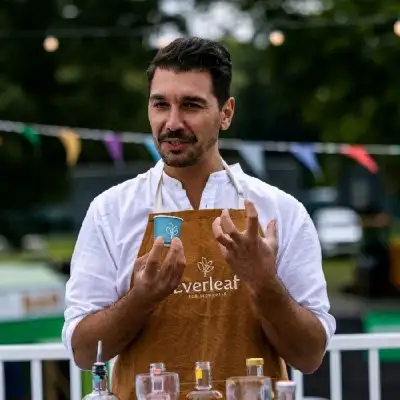
In Episode 034, I spoke to Gaetano Chiavetta. He heads UK & Italy On-trade at Everleaf Drinks | B Corp. He has previously worked for Global Brands and brings Bar Manager and Bartender experience from several On-trade venues in London. I hope you will enjoy our chat.
Time Stamps
(2:26); Building Demand
(7:46); Targeting Via Wholesalers
(17:17); Building Systems For Connection
(26:28); Value of The Cocktail Menu
(29:58); Do The Homework
(39:10); Growing Beyond Your Home Market
(42:12); Contact Gaetano
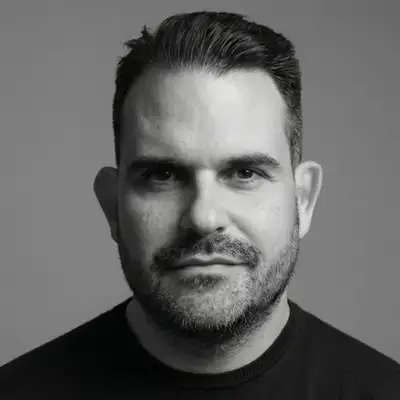
About The Host: Chris Maffeo
About The Guest: Gaetano Chiavetta
In Episode 034, I spoke to Gaetano Chiavetta. He heads UK & Italy On-trade at Everleaf Drinks | B Corp. He has previously worked for Global Brands and brings Bar Manager and Bartender experience from several On-trade venues in London. I hope you will enjoy our chat.
Time Stamps
(2:26); Building Demand
(7:46); Targeting Via Wholesalers
(17:17); Building Systems For Connection
(26:28); Value of The Cocktail Menu
(29:58); Do The Homework
(39:10); Growing Beyond Your Home Market
(42:12); Contact Gaetano
About The Host: Chris Maffeo
About The Guest: Gaetano Chiavetta
The MAFFEO DRINKS Podcast is a leading drinks business podcast delivering actionable insights for drinks leadership.
For founders, directors, distributor MDs, and hospitality leaders navigating the tension between bottom-up reality and top-down expectations.
20+ years building brands across 30+ markets. Each episode features drinks builders: founders, distributors, commercial directors, sharing how the drinks industry actually works. Not the conference version. Honest conversations.
Insights come from sitting at the bar.
Beyond episodes: advisory for leadership teams, subscription with episode deep dives and principles to navigate your own reality.
Beer, wine, spirits, Low and non-alcoholic.
Bottom-up Insights & Episode Deep Dives at https://maffeodrinks.com
Welcome to the Maffeo Drinks Podcast, I'm your host Chris Maffeo. In episode 34 I spoke to Gaetan Uchiaveta, he heads UK and Italy on trade at Everleaf Drinks B Corp. He has previously worked for global brands and brings bar manager and bartender experience from several own trade venues in London. I hope you will enjoy our chat. Hi, Gethano.
Chris Maffeo:How are doing?
Gaetano Chiavetta:Hi. Good morning, Chris. I'm very good. Thank you very much. How are you doing?
Chris Maffeo:So finally, we managed to meet in person. Last week at Barconvent in Berlin, we managed to take a selfie and a hug and and exchange a few words. It was a real pleasure after a long time writing to each other on LinkedIn. And first of all, I have to say that you are the main push when I got your message a year ago maybe, and you said, when are you gonna launch your podcast? That would be great.
Chris Maffeo:And then it made me think because I had it in the back of my mind, then I was procrastinating. And then finally, I said, okay. If Gaetano is pushing me, then this is the excuse. There is at least one follower and one listener. Thank you for that.
Chris Maffeo:And on on behalf of all the listeners, because you were the main driver behind it.
Gaetano Chiavetta:When I was, reading your fantastic blog, I would call it, it was like, this will be amazing just to listen while I'm on the tube or when I'm traveling rather than reading, because we read every day, so many emails and having a podcast that actually talks to you some talks to you about something that you eat and breathe every day. It's amazing. And yeah. So, yeah, I'm very glad that you started there. I'm very glad that the listener, I enjoy your, skills.
Gaetano Chiavetta:Yeah.
Chris Maffeo:Thank you. Thank you, Gettano. And, of course, I mean, you are originally from Sicily. I mean, we are we are both Italians, but that's fun because it's the first time we're speaking English to each other. We are usually riding and speaking Italian.
Chris Maffeo:Let's dive in because I have a a lot of questions for you that I think our listeners could benefit from, and then you would be able to re listen to yourself in the car or in the tube. That's going to be fun.
Gaetano Chiavetta:This is amazing. That's an amazing opportunity. And yeah, really look forward to the question. Thank you very much.
Chris Maffeo:Absolutely. Let's start with the basics. One of my favorite topics is building demand. How do brands build demand? Because one of the few things, and especially since you started working in bars, so you have been on the other side of the fence.
Chris Maffeo:One of the struggles that most brands have is that they fail to build demand before entering the bar. So they show up at the door, they speak to a bar manager, to a bartender, to the owner of a pub or a bar, and with a brand that these people have never heard of. And that's the first step to getting the door on your face. So how do you build demand or how do you believe brands should build demand? And what's your experience from, let's say both sides, because probably like people have been reaching out to you to list products back in the days.
Chris Maffeo:And now you are that person that does that. So what's your take on that?
Gaetano Chiavetta:First of all, I feel like the demand needs to be there. If there is no appetite for a specific product, it's very difficult to create a product that doesn't have any demand. So if I create something with the Marmite liquor, when there is no Marmite demand in the market, it's pretty much impossible to sell that. Although, know, maybe a Marmite liquor will be interesting to that. But yeah, the demand needs to be there.
Gaetano Chiavetta:The appetite for that specific brand, that specific product needs to be there, or at least that a little demand needs to be there. And once the demand is there, it's just about targeting the right audience, the right customers. For bartenders, it's being a cool brand, about being a real brand. It's not about being a brand which being created by a corporate that has been reading data and he's been seeing the gap in the market that they found the gap in the market and they jump into the Bay Of, oh, there's a new trend. We're going to target this.
Gaetano Chiavetta:We're going to create this. So I feel that bartenders are more emotionally attached to the brand. So try to find the kind of demand trying to find the hook is important. And for my specific experience with Everly, it was that Paul is actually have got really true roots into nature, which is what we are about and then to into bars. So he's a bartender.
Gaetano Chiavetta:Lemur is also a genius of plant. He's also a conservation biologist. This really helps creating that demand and really helps driving the truth of the brand.
Chris Maffeo:How do you do that? Or how do you believe that it should be done? So is it about talking about the product or do you talk about specific target occasion? I know Everleaf is a non alcoholic aperitif. So in, in that, in that sense, what is the actual hook that you are using in terms of building demand?
Chris Maffeo:So for example, a lot of people are doing either a podcast or they are doing, they're writing about it. They are talking, they are doing PR they're doing, what is the theme that you believe works based on your experience when you enter the bar and actually people say, oh, I heard about you. I heard about your brand.
Gaetano Chiavetta:So social media is obviously nowadays are key, really important having those important button that's talking about the brand. It's great credentials because they're people that look at those buttons and say, oh great, that X button that is using Everleaf. So it must be good because that button that is incredible. That button that is a judge into a drinks awards competition and so on. We entered so many competitions for, in the last few years as well that gave us a gold and silver stars.
Gaetano Chiavetta:And that's really important. PR as you mentioned, obviously is key, but I feel like creating the money itself. It's literally, important to go bar to bar. And that's how you start. That's how I started myself with this brand.
Gaetano Chiavetta:Then it's the second brand I start from the beginning when the first few weeks with Everleaf was literally how many accounts do we have? Like we had about 10 in London and I'm like, there is no point I'm going to like contact wholesalers if there is no demand from the bottom. If the bars itself don't even know what it is, they didn't even try. What's the point on going to the wholesalers and say, can you list my product please? Among the 20,000 products they already have, No matter how good it tastes, no matter how good the PR is, no matter how good the social media is, you really need to create demand from the bottom.
Gaetano Chiavetta:The only people that can help you with it are the bartenders or the boss. So I literally hit the road, couple of bottles in my bag, try this, not even introducing myself in a way I'm this, I'm that I'm just let the liquid speak. And that's the strength.
Chris Maffeo:Let's dig into that Len without sharing trade secrets from your work, but just to give an idea to listeners on how you work and how you actually build that demand from the bottom up. So taking the example of the 10 bars that you mentioned, you know how I'm a big believer of the one case in one bar is better than six bottles in six bars, but ultimately it has become a bit of a joke now when I talk about it, because obviously in the beginning you need to do that one bottle in each bar. You need to break that case, open it and walk with that bottle. So what is the balance on actually like really getting started when you have only 10 bars that are actually selling you?
Gaetano Chiavetta:Yeah, I feel like both theories are right. Six bottles in one bar. Great. You have a deep penetration within that box, but you need to remember that bar is ordering from one single wholesalers when six bars might order from three or two or six different wholesalers. So you really need to target that specific topic.
Gaetano Chiavetta:So if you want to achieve all those six wholesalers, you might need to find 10 different bars that buy from that different wholesalers in order to get the attention from the wholesaler that will buy your product and distribute to that bar. So if you go and focus just in one bar at the beginning, it's not going help you much, because it's not going to create much demand. 90% of the wholesalers would ask you between 10 to 20 distribution points before you even consider to approach them to buy your product. The game at the beginning was literally going around, see which wholesalers was mostly used by the bars and penetrate in there. So if I would see, okay, X, Y, Z bars are buying all from Christmas fair distribution.
Gaetano Chiavetta:I'm like, great. So Christmas fair distribution is very strong in this area. I will do my best to win those three or four accounts with incentives, with trainings, with all the techniques that we use in sales, in order to unlock Chris, my fair distributions. And once I have Chris, my fair distributions, I prove the point to that wholesalers, prove that I'm selling. And then my build the relationship with the wholesalers who eventually will introduce you to another hundred, two hundred accounts that they are working with.
Gaetano Chiavetta:So it's all about relationships, which we know it's all about finding and pleasing the customer in a way that not pleasing by saying, yeah, I would do anything if you take the product, because that's being desperate. That's not being a salesperson. It's, it's probably finding a gap or finding something that the account that the customer needs and solving an issue for them more than actually selling. See you later. I'm not going to see you again.
Gaetano Chiavetta:Just helping them with ourselves and helping them with having something interesting to offer to their customers.
Chris Maffeo:And I love what you're saying because it's touching many interesting points now, because I get a lot of requests about what's the best distributor in that country. What's the best wholesaler in that city. It's a bit like when people are coming to Prague and they say, oh, can you give me a list of places to visit for my friend? And I was like, you know, tell me more. Is he coming with his wife?
Chris Maffeo:Is he like a honeymoon? Is it like a five blokes wanting to have fun?
Gaetano Chiavetta:Do they
Chris Maffeo:like techno music? Do they, are they vegan or do they like to have sausages and beers? Tell me more because otherwise I cannot help. There is this tendency of, oh, this is a strong wholesaler. You should go with them.
Chris Maffeo:It's about understanding where your target occasion or demand space or however companies call it nowadays is for me, at least it starts from the bar. It starts from the bar. And then as you said, rightly, depending on where that person, where that bar owner or bar manager buys from, then you will get the right direction towards the wholesaler. But in the beginning, before doing that, before doing it top down, you have to do it bottom up and really understand what is the right bar. And then I will worry about who's the wholesaler that brings them bottles.
Gaetano Chiavetta:Yeah. You do your research. Obviously you do your research in advance. We were quite lucky because Paul owns Freebarts in London. So he knows the wholesalers already knows which wholesaler is specific for which product.
Gaetano Chiavetta:I was coming from another company, so I knew some of the wholesalers, but as you were saying, there is never the best wholesaler. That is the biggest wholesaler. Yes. The one that will generate the most revenue. And the one is more spread around the one that's got most number of sales person in the ground, but there is never the best wholesaler.
Gaetano Chiavetta:There is the best wholesaler for your type of product. So I know that my product will not be the best product for wine specialists, for example, because people that, that they use wine specialists, they, they look at their wholesaler for wines. I know that I was going to look for a wholesaler that we need to look for wholesalers. Are a specialist of spirits. They are specialists of cocktail ingredients, because that's where our brand essence is founded.
Gaetano Chiavetta:You need to look for what's the best wholesaler for your product and for your target audience, for your target bars. So when we started, we, with Everleaf, we started with a wholesaler. There was the one that the customer we found was using wasn't necessarily the best wholesalers for us. No, probably wasn't. It was just what the account was using.
Gaetano Chiavetta:And then slowly we started to realize that there was another wholesaler that was actually the most geeky wholesaler. They had the best tequila. They had the best liquors. Had the coolest salesperson out there that could basically be the best faces of us. We are very distinctive product.
Gaetano Chiavetta:Yes. Non alcoholic are growing. Yes. Aperitifs are growing, but we are still a very geeky product. So people who sell these kinds of products needs to be really expert or the cocktail scenario.
Gaetano Chiavetta:So you need to find what suits your product.
Chris Maffeo:You are already funneling down on much less outlets than somebody else may think, no. And depending on the product, of course, like you, you starting from very specific outlets that respond to very specific category, not to your point, like a non alcoholic beverage. Automatically, you are filtering down the full potential of that brand in that city, because this is another of these topics that very often is confusing. Now you are now sitting in London, but that doesn't mean that all London's on trade is responding to your product. It will take time.
Chris Maffeo:And to what you were saying earlier, know, there is the best wholesaler for that product. And I would even add for your life stage of that product, because what's good in the beginning may not good in five to ten years time, for example.
Gaetano Chiavetta:Yeah, I completely agree at the beginning, you would, target those super high end bars. They would use a specific wholesaler as you grow, you would target even more mainstream bars because that's where you generate real volume. That's where you generate big distribution, number of distribution. So the wholesalers will be different for those two types of values. And for those two types of stages of life stage of the brand, If you would tell me five years ago, would you get your product into the pub next door?
Gaetano Chiavetta:I probably wouldn't care about that because nobody knew about the brand and there was no point for me to position that brand and start from the pub around the corner, no offense to the pubs, but you will start from the high end bars where everybody looks at and where the trend starts and then slowly go down. But nowadays we are on the stage where we would love to be in the more mainstream pubs because the brand has grown enough that there is more consumer awareness. There is people's started people asking for that product to the bar itself. It makes more sense.
Chris Maffeo:And listening to you, it makes me think that there is a clarification also like to be done on the category we're talking about now because your categories automatically, and I don't want to call it like an elite category, but you know what I mean? Like it's very specific for specific type of bartenders that are looking for specific type of flavor, taste profile, botanicals, and so on. So automatically you are filtering down that the down the street pub may not be there yet. Right. If you had a gene, a more mainstream category, no matter if it's a premium gene or not, but as a category itself, gene is more mainstream automatically than another type of product.
Chris Maffeo:Then I feel that there is a lot of importance in actually not going to target only the top bar if you cannot access that, but targeting actually the pub down the street, because then in that sense, you actually makes yourself relevant because maybe you know them or they are sitting next to your distillery. In Czech Republic with breweries, they used to call it like around the chimney. Like they are around the chimney. You can visit them often. You can go there.
Chris Maffeo:You can have a lunch break there. They are part of your growing journey. And I feel very often there is too much focus on this very high end. I mean, yesterday there was the 50 best bars announcement. There is a lot of focus on those, but specific categories are more relevant for those specific bars.
Chris Maffeo:And other categories, they could actually make much more money and focus at the beginning on more mainstream local game. I don't mean go into like mainstream pubs as such, but to, to win the locality. We used to call it local bigness in the old days. It's make yourself big locally and be perceived even bigger than you are because that's the importance. Going back to what you were saying before about connections.
Chris Maffeo:This is one of the topics I always discuss on the podcast with my guests is we know it's a people business. Like, we after writing to each other all the time, like, finally, we met and we hugged each other. And finally, now we feel even more connected because we literally met. There is a glass ceiling to that. No?
Chris Maffeo:Because, ultimately, people have many friends. People have many contacts. Everybody has a brand or a friend working in a bar or a bar owner and so on. So I feel that we over rely on that. We've all done it in the past.
Chris Maffeo:Now, when I went solo on my consulting, I was like, come on, I've got like thousands of connections. I've got so many colleagues and so on. And then all of a sudden it's crickets and the phone was obviously not ringing because everybody has already quite a lot of stuff. So what's the importance of creating a system, an operating system to complement how great you might be with connections and with friends and and the community?
Gaetano Chiavetta:It's funny that you're saying that because when, when I moved from the last brand I was working with to this one, I think I had about 200 something account. I'm like, okay, great. I can turn them all into new Everleaf customers. But obviously there were the challenges of the wholesalers. We were knowing the whole of the wholesalers, but as you were saying, yeah, it was surprising to see some great relationships I had in the past, completely muted, completely disinterest.
Gaetano Chiavetta:Like they didn't care about what I was doing. And that's made me realize that sometimes the relationships you feel are great. I'm not that great, because they just are either using you for their own interest or there are no real connections. Creating a system to build the relationship. It's a bit tough because I mean, in a big city like this, it's not easy to meet with people.
Gaetano Chiavetta:It's not always easy to see all the people that, you know, I feel trade shows are important because you get to see those people all together. You get to say hi in all in the same room, all in the same place. As you were saying, when we met in Berlin, I went there on my own for the first night and I posted on Instagram and after ten minutes, six people told me, oh, you're in Berlin. Let's go have a drink. Went, okay, cool.
Gaetano Chiavetta:That's great. So I'm not on my own. I feel like social media helps you a lot. I use a lot of them for work and for connecting with people. Like we go many perks in the job that we do.
Gaetano Chiavetta:We can bring people out for a pizza, for a drink. We can host events and stuff, but yeah, we could use something like that to invite them to a party and make sure you, there is that conviviality is not just about the business yourself, but it's about human connection.
Chris Maffeo:One of the things that I've always been struggling with, whether I was a sales guy myself, or whether I manage people in the field, no matter the market, like it was in many different European markets or elsewhere. The issue was always you need to allow some freedom. I don't like to dictate the sales team where to go. I don't want to, I don't want to do the routing for them, especially because on trade is not like off trade. Like you're not sitting, you're not having an appointment with a buyer in Tesco that has the appointment in their outlook calendar and they take it seriously.
Chris Maffeo:You know how bars are. So it's always like the guy doesn't show up or there was an emergency. He had to go to another bar that he owns on the other side of the city. You are just there and so forth. So my question is more about how do you manage to navigate that, to navigate the complexity of having a team on having yourself as a, you know, your first one man band as well, and building a system that actually can let you prioritize things and not wasting time.
Chris Maffeo:Because for me, it's not about do you do five calls a day, 10 calls a day, 15 calls a day. It's more about how can you be effective going to the right bars that you're going to have more chances to succeed rather than just walking around the street and entering and cold calling random pops as many salespeople unfortunately still do.
Gaetano Chiavetta:It's the most difficult part of the job, but why is the most important prepping and planning is absolutely key, especially in a big city like London or any other big cities in Europe and the world. So I always stress the salespeople I work with to prep and plan in advance one or two weeks in advance. I literally, put in their calendar the values that they want to hit. And once you visit those values, you really need to prioritize the one they've got real interest because sometimes those people get trapped into talking a lot without listening to actual the, what the other person is saying. Sometimes they don't gather that person is completely not interested.
Gaetano Chiavetta:That menu has been there for the last three years. They could literally feel it. They could literally feel that the menu has been there for three years. It's not going to change for another three years. So I don't see the point why some salespeople keep on going to that bar and they don't simply ask, are you going to buy a product in a more like polite way?
Gaetano Chiavetta:I literally asked that question. Are you going to buy the product? Are you going to change the menu? This is a direct question. You obviously need to be more creative on the way you ask, but more on an open question.
Gaetano Chiavetta:I've been a big fan of the classic seven steps of a call. I'm not sure if you ever seen this. I'm pretty sure you've seen it. I always been a big fan of warming up the conversation at first to warm up the person you got in front of you because you meet different athletes, you've met different people, everybody's different. So you need to be able to warm up that first.
Gaetano Chiavetta:Ask open questions to gather as many information as possible. Let them talk. And then based on what you, the information that you've gathered, one person might say, yeah, the next anxiety is changing in January. Great. It's September.
Gaetano Chiavetta:We got still three moms. Shall I come back in December? When will you do your R and D? These kinds of questions are important to actually get the real opportunity. And if that is not a good timing straight away, put it in your calendar for the next, I don't know, three, four months to go and revisit when there's, when is a better time.
Gaetano Chiavetta:And don't you worry about asking them when is a better time to come back. I understand this is not good. It's not a good time. And possibly during this time, just go there, have a drink. Don't even talk about your brand.
Gaetano Chiavetta:Just go there, have a drink, show them your face, show them that you're interesting to their bar, show them that you're a person who actually goes out and likes their bar and put a bit on the side, the fact that you got your goals, your targets to hit. Sometimes it's more important, the chocolate on top of the cappuccino rather than the coffee itself that you put in the cappuccino. Sometimes it's the way you present the situation than the goal itself. I agree. I'm a good friend with some bars and some people in bars and they never bought a bottle of my product in the last five years.
Gaetano Chiavetta:And it happens. And then after, when they moved to another venue, they put the product in three quarters without me even asking. So there is many different dynamics in each part. It's about your capacity to read those dynamics and to prioritize the one that eventually will lead into a listing in a week or a listing in six months. Both of them are important.
Gaetano Chiavetta:You just need to see when you need to push harder or when you need to buy chocolate on top of a cappuccino to sweeten the person that you're talking to, the account that you're talking to.
Chris Maffeo:And it brings us back to the building demand now. Like if you are doing what you're doing right. And you focus on the long term of it, although keeping into consideration the short terms object objectives that you've got, because of course you need to hit the monthly target. But if you do the things right and it's going the right direction, then maybe we are in October now and then maybe what you're doing today is going to make April target easier for you. Exactly.
Chris Maffeo:You may not get the October one, but you know that you've built something for April and then April is gonna be a little bit easier, but then in April you're gonna work for the next September kind of thing. And it's about having that kind of vision now that often we get trapped into the, I need to get that menu today. And you know, that drives the whole conversation into a different and wrong behaviors somehow. Mentioned the cocktail menus. That's a very hot topic of mine.
Chris Maffeo:What's your belief that all companies are working with the back bar with the beverage menu and so on. And there is a lot of like focus on that, on, on those kinds of elements. What do you think is ultimately the main driver to, first of all, getting to the menu? And then is that really the main driver of sales or actually it's a little bit overestimated in terms of driver of sales?
Gaetano Chiavetta:So it really depends again, it really depends on the venue itself. It really depends on the crowd of the venue. So sometimes you might step into a place and you realize that place is literally bar calls. It's literally people coming in order, whatever they want. They don't even look at them, at the menus.
Gaetano Chiavetta:If you go into a cocktail bar, specifically a cocktail bar, people go there because they want to try what these guys are capable to do. If you go into a, gastro pub or into a restaurant, you're less likely probably to have a look at the cocktail list because you're more focusing to, into food. So you would definitely look at the food menu, but you probably will not look at a cocktail list. You will, you will order a classic. If you want to have a cocktail, you will order something which is being promoted on the fruit list.
Gaetano Chiavetta:So it's an aperitif, like one or two drinks that are on top of the fruit list and they catch your eye. I'm like, oh great. I like this flavor. So yes, cocktail menus are important, but not in all of the venues, but also the structure of how the cocktail menus is done. It's important.
Gaetano Chiavetta:I find myself a lot of people have been spoiled in the last few years by big brands that to the point that I step into a venue and they say, we would love to be a non profit partner. We would love to have one or two drinks in your list. And they say, yeah, we charge 1,000, £2,000 for listing fee for each drink. I'm like, great. That's brilliant.
Gaetano Chiavetta:How many drinks would you do per year? How many bottles have you done of your narcotics in a year or something like that? And they come back to you and say, oh, I don't know. When you ask for those volumes, are like, I don't know, 80 baht to see or something like that. And then you do your quick maths and you're like, okay, how much money am I going to lose in this account?
Gaetano Chiavetta:Do I want to lose this money? Why would I lose this money? And sometimes those menus are not even amazing for my specific topic. They put a non off colleagues at the really end of the menu. So you really need to gauge what the structure of the menu is and what people are ordering that menu.
Gaetano Chiavetta:And don't you worry about asking them literally what's your best selling cocktails? What are your best selling cocktails? It's fascinating because some bartenders might say the best selling cocktail is the espresso martini, but then you go to actually look at data and you sit down with a bar manager and the data says completely different because for some reason they sell more of, I don't know, strawberry diatries. Sometimes what bartenders say is not always true, but it's what they perceive, sell or what they actually like. So don't let yourself just believe in what you hear from one or two bartenders, but actually get the right insights.
Gaetano Chiavetta:Yeah. So menus are important. Definitely. It really depends on the venue itself and don't be worried about asking data from them.
Chris Maffeo:That's one of the drivers of my bottom up philosophy, so to say, so it's let the data, but let's not talk about like the big data, they can be very small data as well. It can be like five bars there, to analyze and really understand where the sales come from, because you may also be surprised, you know, because as the bar manager you mentioned or bartender may not actually know, like you may have a perception of what sells most often is like, think that one account is a big account, Actually it isn't, or a neighborhood is a big neighborhood. And then it's like, oh, with this brand, I'm going to focus on Shoreditch in London. And then all of a sudden all your sales come from Clapham and the big accounts are actually in Clapham. Need to always go back to the data to analyze what actually works and what doesn't work.
Chris Maffeo:But you said it very rightfully. There is always a tendency not to do the homework before entering the bar, and that is the biggest mistake that I see salespeople do. They go there and they don't get an understanding versus where I used to be like a sales guy hitting the streets in Rome. Now technology has moved on. There were no Instagram pages.
Chris Maffeo:There were no Facebook page. There was no Google maps. It was literally like the paper map going and navigating in the Rome streets. And now you can click on Google maps and see what they sell. What are the keywords?
Chris Maffeo:There's so much you can do before you actually even step in that bar.
Gaetano Chiavetta:Exactly. Yeah. You can literally go with the Google act in front and seeing the feature of the bar outside. You can literally step into the bar. We are really lucky nowadays because we got so many tools.
Gaetano Chiavetta:We got internet, we got Instagram. We can see literally what that bar is about or how that bar wants to be perceived, which is different actually, how the bar itself is and how the bar wants to be perceived. How the bar wants to be perceived is probably what the Instagram looks like, what the messaging is, what the website is about. But then when you step inside the bar is the key and most important thing. Your homework are super, super important.
Gaetano Chiavetta:Be prepared when you step inside the bar. Sometimes, even though I've done amazing research, I'll pretend I don't know about the bar. I don't know if it makes sense because sometimes if you do so many homework, you step into the bar and your conversation leads you into what you researched, but not necessarily the, yeah, the marketing or the sales of that bar are linked to how the bartenders act in that bar itself. So it's nice to get to gather those information from a different point of view, but definitely researching is super important. You might discover that venues go a sister venue that venues doing events that have venue.
Gaetano Chiavetta:It's doing a big event. I don't know if we're all Chelsea Flower Show, just dig into their Instagram and she worked that down the year before they probably going to do it again the year after. I'm always bringing this example to salespeople when we chat about how to approach value, how to research. One of my first years, I stepped inside a hotel to try to sell my product. I did my research.
Gaetano Chiavetta:I knew it was an independent hotel. I went there with my bottle of mixtures, spoke to the bartenders. They loved the product and they agreed to stock the products. I went back to my boss and my boss started to ask you all these questions. How many rooms is the hotel?
Gaetano Chiavetta:I'm like, why are you this question? Do they have a restaurant? I said, I don't know. I'm like, they said they will buy. Why are you still asking me these questions?
Gaetano Chiavetta:Because what he was trying to say to me is look at the bigger picture. You need to look what the real opportunity is in that. Would they be able to stock the product in the mini bars? Would they be able to stock the product in the restaurant? Do they have banqueting at the basement?
Gaetano Chiavetta:Which you probably never see when you step into a hotel. Nobody brings you around the banqueting if you're just going inside the bar in the lounge, you know, okay. So it made me look at things in a completely different way. And obviously suddenly that account will become from 10 cases a month to a 100 cases a month, just in one go. And that's really important, especially when accounts pretend to receive that commercial support.
Gaetano Chiavetta:When they specifically ask for that commercial support, you can easily say, yes, I do this for you, but do you do this for me? I know you've got massive bunkers in the basement, but I know you go 80 rooms with MIDI bars and let's try to work on that and getting the product in that too. So look for the
Chris Maffeo:bigger picture, definitely when you approach those accounts. Also think about another thing that you spoke about the perception, like of the venue and also how like, like the journey that they want to embark on. Because for example, like some places are imagine like the physical and digital. That is one of the aspects I was discussing with some clients, like just a couple of days ago. You see some venues that are fantastic venues, but their digital presence is very bad.
Chris Maffeo:And vice versa, you get some places that they have totally nailed their Instagram profile. They look amazing. And then they're actually, the cuisine is actually nothing special. The drinks are nothing special. They've got great pictures, but it's nothing special.
Chris Maffeo:So sometimes it's also not only what your brand can do in terms of love and money. I was discussing with Morris Doyle, like the emotional aspects and the, and the profit margins kind of thing. But also like from a strategic perspective, what you bring to the table now, because maybe they, to your point in non alcoholic aperitif, they want to embark on a journey on non alcoholic or known law, and they're not there yet, but there could be a huge opportunity. So if you only analyze it from where they are today, you would never go there to sell because it's like, this is a total waste of time. They've got nothing non alcoholic.
Chris Maffeo:They just sell Coke and Fanta as a non alcoholic offering. But then when you sit and talk to them, maybe you will see, oh, actually we're launching a brand new non alcoholic menu. We really want to push non alcoholic low and no on it. And then you will be the enabler for that transformation. You move the conversation on a, on a totally different level from margins.
Chris Maffeo:And I know the guys or not to I will be your partner from a strategic perspective. And maybe you will lose a little bit of money or maybe you can do some events. We can do something together to really upscale your venue. And then you can reuse that case study on another venue that maybe was one of the objections, not like we don't need non alc. And then next time, you know what?
Chris Maffeo:I, I was talking to some colleague of yours, like a bar and that's one of the things that he was struggling with. And then now he's one of the biggest revenue drivers is actually non alcoholic cocktails. And then all of a sudden, you overcome the objection by giving a real example of somebody that was not interested in the first place.
Gaetano Chiavetta:It has happened in the past where I stepped into rallies, they don't even have an offer of non alcoholic and they say, oh, we don't sell any non alcoholic cocktails. You don't even have it on your menu. You don't even have non alcoholic cocktails. You're not even offering them. So yeah, I like these kinds of challenges and they definitely, moved, in the last few years, so they moved into interesting venues where you can have actually delicious non alcoholic cocktails.
Gaetano Chiavetta:So yeah, it's very important to analyze what their value needs and help them with a blog, with a story on Instagram to let our audience know that there is a new bar with promoting that non alcoholic on low end, no list. So yeah, that gives us all value, which goes beyond the money as you were saying, which goes beyond the commercial, the margin, the GP, because I would rather sell a 100 cocktails a day, 50% GP then six cocktails a day and 95% GP. So when people actually know about your product is, it costs exactly the same as the house gin or your products, it costs more than our house gin. Okay. Great.
Gaetano Chiavetta:Yes. But how many cocktails would you sell? We have proofs and we have data that we sell two and a half times faster than any other non alcoholic spirits with one wholesaler. So this is already giving you a massive proof that when people use Evolish in certain cultures, our tools, with our help, they sell twice if not three times faster than any other non alcoholic brand. And the reason being, because most of those non alcoholic brands probably are linked to a big portfolio, a big company where they don't, they don't really have to focus on.
Gaetano Chiavetta:They just say, okay, you need a non alcoholic here. Off you go a gin and tonic, a non alcoholic gin. When we actually, all we need and bring to this non alcoholic.
Chris Maffeo:Let me ask you another question. We spoke about London and the focusing on one city to actually grow the brand. And then you go at national level and then you go on international level. Do you bring something that is very British in that sense? Because that's the home term of the brand.
Chris Maffeo:That's where it was born. That's where all the, the, the initial network was and so on. And how do you export that know how and that demand to another country like Italy, which is totally different from a habits perspective.
Gaetano Chiavetta:Italy is an interesting market because it's obviously much smaller, much different than an even in terms of drinking habits in terms of volume, even overall sperm per person, or the sperm is much lower than an everen per person. The premiumization is there, but it's not there yet. That makes sense. With a British product like Everleash, we probably know that in Italy, we look at British products or American products in a way like, oh, wow, this comes from far. This comes from, from England, British and English products and American products.
Gaetano Chiavetta:So that sometimes could help. But the challenge in different markets is that each market is specific of their own consumers and non alcoholic outside of UK or outside of The US are still seeing like something that's near to discover. So something that could be challenging. The price could be challenging at times in Italy because you could easily buy an Aperol Spritz probably for 4 or €5 and and the bottle of Aperol for €7. So it's, it could be challenging, but that's why you, in a new market, you will start from top to bottom in a way that you start from the fact that applies, you start from the new trendy cocktail bars where they really sometimes copy and paste what we are doing in England, what we are doing in Singapore, what we're doing outside of the world.
Gaetano Chiavetta:As you were saying yesterday, there was a 50 bus and there is five bars within the top 50 in the world that are in Italy, which is fantastic. So it's definitely grown. It's definitely becoming trendy as well, but there's still a lot of work to do with awareness.
Chris Maffeo:This is going back to what we were saying before because it's an innovative product. The thing is probably like slightly different than if it was another gin or a whiskey or something that would be more mainstream to the level of adoption, not much in the price point, but more in the adoption curve.
Gaetano Chiavetta:Yeah. I feel like gin and tonics are growing and growing in Italy now when in England, for example, was five years ago. And the genes are in decline in England and the genes are up and the gin and tonic is up in Spain and in Italy. It will get there in a few years. I'm pretty sure it will get there.
Gaetano Chiavetta:But yeah, at the moment it's slowly getting there. There is definitely the awareness that is starting kill the appetite, but not there yet.
Chris Maffeo:Let's talk about how can people find you Gaetano? So I want to give you some space finally on, on where can they find you, your product, how they can get in touch with you and and so forth.
Gaetano Chiavetta:As a company, we all have an Instagram account and the easiest thing to do is call the handle, have a niche and the name of the person. So my name, I shorten it to GT. So Everleaf GT on Instagram or Gaetan or Chaveta on LinkedIn. And then yeah, you can find Everleaf Drinks on our website to discover more about the other products and Eleph Drinks on Instagram as well. We go London Copter Week this week.
Gaetano Chiavetta:We have about 30 venues showcasing our product. So if you're a long runner, you want to hit some of those fantastic bars, you can find them on London Copter Week website. Yeah. Thank you very much for, for your time. And thank you very much for having me.
Gaetano Chiavetta:It's a real honor to be here. Thank you, Chris.
Chris Maffeo:Absolutely. It was a great pleasure to chat with you. And, despite the back, the background noise that we managed to overcome somehow, This is the beautiful thing of stuff that in the entree you cannot really plan. Right? Let's talk soon and hopefully I will be able to see you soon somewhere around Europe.
Chris Maffeo:That's all for today. If you enjoyed it, please rate it, comment and share it with friends and come back next week for more insights about building brands from the bottom up.