Subscribe
Share
Share
Embed

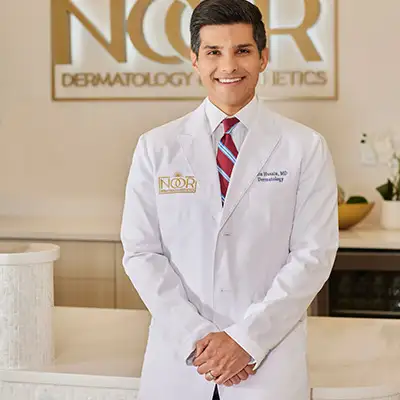
Welcome to Skinside Out, where science meets beauty, the ultimate dermatology podcast! Dive deep into the fascinating world of skin health with expert insights, evidence-based discussions, and myth-busting truths. Each episode explores the medical, cosmetic, and surgical aspects of dermatology, while keeping you informed about trending skincare topics. Whether you’re a skincare enthusiast, medical professional, or just curious about how to achieve your best skin, Skinside Out is your go-to resource for staying informed and inspired.
Real skin, real science, real confidence with Dr. Zaid Hussain. Welcome to- Skin Side Out
[00:00:07] Speaker: Welcome to Skin Side Out. I'm your host, Dr. Zane, with Heather and Courtney. So we're all ready and prepped for our fall treatments. Let's get straight into it. Let's start off, um, kind of going along with the same outline that we did from the last episode. So we'll talk about pigment, we'll talk about vascular, and then finally, anti-aging.
So Heather, let's start.
[00:00:27] Speaker 3: Um, so pigment. There are lots of great procedures for this. However, it d- also depends on the pigment. Like if you have melasma, for example, you can... It's safe for you to do certain lasers or procedures, but maybe not others. Um, so I think one of the tried and true, um, devices or procedures that you can do for pigment in general that most people know of is IPL.
So intense pulse light. It's not truly a laser. Um, it's a using a broad sh- spectrum of light to target pigment. It also does really nicely for vascular, so we can talk about that too. , However, it can potentially worsen melasma. So if you do have melasma, and it's been diagnosed, that's not something you probably should do.
Um, but it does do a really nice job. It is definitely more of like a fall or winter kind of thing. You d- don't want to do this- Mm-hmm ... in the spring or summer. Um, and you're pretty red afterwards and a little swollen, but it does a nice job. It is
[00:01:26] Speaker: riskier than, you know- Yeah ... your actual lasers. Yeah. So you have to be very careful.
[00:01:30] Speaker 3: Right.
[00:01:30] Speaker: Um, I've seen so many burns with IPL- Yeah ... um, with people not knowing how to use it and using it on tanned skin.
[00:01:37] Speaker 3: Yeah.
[00:01:37] Speaker: So um, you know, IPL's awesome if done correctly by the right individual.
[00:01:42] Speaker 2: Mm-hmm. That's why it's so crazy they have the, like at-home IPL kits now. And I know they're for like hair removal, but sometimes you see people
[00:01:51] Speaker: get a sunburn.
I mean, honestly, how effective are they? I mean- People
[00:01:52] Speaker 2: swear by them. But I just, I think it's a little pussy. I don't know.
[00:01:56] Speaker: can't imagine that they're getting the same results as like- Yeah ... with a 1064 YAG-
[00:01:59] Speaker 2: Yeah ...
[00:02:00] Speaker: laser. Right. So. Um, so we're... We talked about IPL. So we also have pigment-specific lasers.
So we have wavelengths that specifically target melanin in our skin, and that can help to break up pigment, reduce sunspots, and very safe. Um, obviously you still have to be careful with the sun. You can't be tanned during those procedures, and you wanna really limit sun exposure after. But that can be a great option for treating, you know, hyperpigmentation from sun exposure.
Mm-hmm. So, um, you know, these freckles that pop up, um, over summer, um, you know, blotchy lentigos on the face, um, you know, sun damage that has a combination of pigment and vascular called poikiloderma. Mm-hmm. So they can be really, really effective for that. Mm-hmm.
[00:02:47] Speaker 2: Mm-hmm.
[00:02:48] Speaker: So those are laser technologies. Now, what about using chemical peels?
[00:02:53] Speaker 2: doing a little bit more of like a medium depth peel... We kind of talked about last episode our, our superficial peels are glycolic and mandelic ac- acid, but using, um, TCA, trichloroacetic acid, or using, um, some type of TCA. There's so many branded peels. You can, you know, you can use the TCA by itself.
Um, you can- What's
[00:03:12] Speaker: that one that you like?
[00:03:14] Speaker 2: I love the Perfect Derma. Yes. Yeah. The Perfect Derma I've had really nice results with. It's a combination of TCA. It has a little bit of phenol in there, help numb the skin. Um, kojic acid, glutathione, which is, you know, a phenomenal antioxidant. Um, a little bit of retinoic acid, so it...
Vitamin C. I, I mean, it's just a, a powerhouse of ingredients, I feel like, to really tackle pigment, so.
[00:03:34] Speaker: Yeah. Um, any other treatments? A non-ablative fractional laser- Mm-hmm ... I forgot to mention that. Mm-hmm. So these are, um, it's the technology that uses specific wavelengths to, um, you know, penetrate deeper into the skin and l- leads to the elimination of some of this hyperpigmentation, um, and then also very superficial pigment.
Mm-hmm. So it's something that I find very helpful. It's not my first go-to for most patients. Mm-hmm. I do feel like it's something that I can add on in combination- Mm-hmm ... um, for the best results. But if I'm strictly trying to treat pigment only, that's not what I'm reaching for first. Right.
[00:04:11] Speaker 3: Mm-hmm.
[00:04:11] Speaker: Yeah. But it's a great treatment, and it's great for texture also and rejuvenation.
Um, and it has some pigment reduction properties.
[00:04:19] Speaker 3: Yeah.
[00:04:20] Speaker: Okay, let's move on to vascular. So we have redness, we have sensitive skin, we have rosacea. What do we do?
[00:04:27] Speaker 3: like I mentioned, IPL is great for targeting vasculature. Um, there's also certain wavelengths of light that do a much better job at targeting hemoglobin specifically.
What's
[00:04:39] Speaker: hemoglobin for our listeners?
[00:04:41] Speaker 3: Um, it's within the blood vessels, and so the reason why it, these lasers are good for vascular is because the hemoglobin is within the blood vessel. Um, so it's a little bit more specific, um, and a little more sensitive for targeting that, and I think those lasers do such a nice job.
I actually did some spider veins this morning and it, you know, it's just a kind of an immediate gratification. I love it. Yeah.
[00:05:06] Speaker: It's one of my favorite things.
[00:05:06] Speaker 3: Yeah. It works so well. Um, and anything vascular really- Mm-hmm ... you know, aside from rosacea. But rosacea, kind of the tried-and-true, um, treatment would be something a little bit more targeted.
[00:05:19] Speaker: Now, what do you do for, um, your rosacea patients in terms of, you know, like facials and, you know, peels, Courtney?
[00:05:27] Speaker 2: I actually like a laser facial. Um, I really like the toning clear, um, with the 1064, 532, where we're basically, um, using the 1064 to build some collagen, um, using the 532 to help with that redness, and it's really no downtime, it's painless, it's easy, it's quick.
I think it's such a phenomenal treatment. Um, one of my friends actually, I've done two or three on her, and after her last one, she was with me the next day, and she's like, "I just cannot tell you how- Mm ... how this has changed my life." She's like- You know, she, she flares a lot in her cheeks, and she's just reduced the amount of flares that she's had.
And like I said, for it to have such low downtime, I'm, I'm someone that hates downtime. Yeah. And I think a lot of patients probably are the same way. So it's just nice to have a treatment option where you don't have to worry about what you're gonna look like the next day.
[00:06:12] Speaker: Do you have to do it more frequently to get those results?
[00:06:16] Speaker 2: I tend-
[00:06:16] Speaker: Compared to like a more intensive, like, vascular treatment.
[00:06:19] Speaker 2: I do like doing every two to three weeks on them. I think doing them a little bit closer because there's less downtime, um, I think you can get a better result by doing it that way. But, you know- Yeah.
[00:06:32] Speaker: Another common vascular laser is the pulsed dye laser, PDL.
Tried and true. Love that laser, um, and it's really good for, you know, the flushing rosacea and just general redness.
sometimes electrocautery, um, it can be- Yeah ... helpful for, like, little angiomas that have popped up over the summer, um, some blood vessels. Um, I call it the poor man's laser. Um- ... it really can do quite a bit, um, for a relatively inexpensive treatment.
[00:07:00] Speaker 3: Mm-hmm. Mm-hmm.
[00:07:00] Speaker: Um, obviously it's got its limitations, but-
[00:07:03] Speaker 3: Mm
[00:07:03] Speaker: um, it does a nice job. I
[00:07:05] Speaker 3: think it would be hard for, like, like, um, spider veins or, like, telangiectasias that are a little, little bit more spread out. Mm-hmm. But it is really nice for cherry angiomas that are very concentrated.
[00:07:17] Speaker: Yeah. All right. So moving on to anti-aging. So general collagen stimulation, um, improving texture, pores.
What are some of our favorite procedures?
[00:07:29] Speaker 3: I do like microneedling. I think standard and RF microneedling are really nice for stimulating collagen. Um, and it's this kind of like controlled injury that makes your body, um, stimulate that production.
[00:07:42] Speaker: Yeah. How about you?
[00:07:43] Speaker 2: Yeah. I think I like radio frequency in general, um, with the microneedling.
Um, radio frequency by itself without the microneedling, definitely a lot less painful. Um, I think, you know, you can u- same thing about the downtime. You can do it, you know, every other week, once a month. I mean, like I said, low downtime, low pain, those are all my favorite things, so. Yeah. And that it works.
That's like, you know, obviously number one.
[00:08:07] Speaker: Do you like ultrasound?
[00:08:09] Speaker 2: I-
[00:08:10] Speaker: Like HIFU?
[00:08:12] Speaker 2: You know, it de- so I, I used to do Thermage. Thermage was really painful. I, I thought I was getting ph- and patients agreed. They thought the results were phenomenal, but we would literally have to, yeah- Mm-hmm ... do, like, a Percocet before their treatment.
Um, which is, like, kind of crazy. But, um, and then, like, we have Exilis in our office, and I feel like that's been a great, um, great procedure. It's really
[00:08:36] Speaker: well-tolerated.
[00:08:36] Speaker 2: It's w- it's... Exactly. It's really well-tolerated. The, the different, different types of, yeah, ultrasound can be very painful. So I think- Yeah
having a treatment that someone can tolerate really makes a difference because obviously if you can't tolerate the procedure, then you might risk not being able to do that procedure well enough for someone to get the, the benefit, so.
[00:08:54] Speaker: Yeah. Um, so we talked about, um, you know, those types of technology that are non-invasive.
You know, non-ablative fractional laser is also amazing- Mm-hmm ... um, to help improve fine lines, wrinkles, texture, pigment. Um, it's a workhorse in our office. We're always using it. Mm-hmm. , And then you can go into more intensive laser therapies, right? So we have our ablative technology, so we're really targeting that superficial skin.
You know, the water on the skin is what it actually targets. And we have the CO2 fractional laser, um, the UltraPulse, which is a beast. Um, I really do like the results from it, but you really have to be prepared for significant downtime. Mm-hmm. Seven to 10 days. You kind of look like a burn victim, but the results are incredible.
[00:09:40] Speaker 3: Mm-hmm.
[00:09:41] Speaker: Um, and the skin- You know, like tightening that you get from the contracture. It looks so good. Mm-hmm. Um, but you know, not everyone can afford, you know, taking two weeks off from work.
[00:09:50] Speaker 3: Mm-hmm. Mm-hmm. Some people say, um, the erbium, yeah, Er:YAG or erbium YAG is really nice. Um, it is also ablative. Some people say that the downtime is much less than CO2.
I think-
[00:10:04] Speaker: Do you find that to be the case?
[00:10:04] Speaker 3: No, not really. I mean, I think it is pretty close. I think-
[00:10:09] Speaker: I mean, we treated Wendy with erbium, and she was like, "It took a whole week."
[00:10:11] Speaker 3: Yeah. Yeah.
[00:10:12] Speaker: It was longer
[00:10:12] Speaker 3: probably. Yeah. It did. Yeah. I think it might look a little less, like-
[00:10:16] Speaker: Mm-hmm ...
[00:10:17] Speaker 3: intense, but she definitely felt-
[00:10:21] Speaker: I feel, I feel erbium doesn't do as good of a job as CO2.
[00:10:23] Speaker 3: Yeah. Yeah, if you're gonna do something ablative- Mm-hmm ... you might as well just use CO2.
[00:10:26] Speaker: Yeah.
[00:10:27] Speaker 2: Mm-hmm.
[00:10:28] Speaker: Um, so those are kind of, you know, light-based and energy-based technologies. What else can we do to help our skin look more fresh and, you know, youthful?
[00:10:39] Speaker 3: Um, I think, you know, we talked about topical biostimulators, but injectable biostimulators- Mm-hmm
are really nice, too. Love them. So like Sculptra and Radiesse, these are phenomenal. It's pretty much laying a scaffold down for your collagen to build on top of. Um, very minimal downtime, too. I think with the, with Sculptra, there's just a little bit more, like, homework on your end. So massaging your face five times a day, five minutes each time, um, for f- five minutes five times a day for five days.
Um, but it works so well.
[00:11:09] Speaker: Yeah. And I don't even really ex- um, kind of explain it as it being a filler- Yeah ... which a lot of people in their minds, that's what they think it is. Yeah. But it's a biostimulator. It's stimulating your own body to produce its own collagen, which stays with you long term, which is really why I like it.
Mm-hmm. Um, and it gives you a more natural appearance because you're not really seeing the volumetric effects immediately like we do with hyaluronic acid-based fillers. Yeah. Um, but you get a nice glow. You get subtle improvements in contours and lift. Mm. And, um, I do really like, um, you know, Sculptra for the face.
I love hyper dilute Radiesse for the neck, and we do see some really nice and impressive results.
[00:11:51] Speaker 3: Mm-hmm.
[00:11:52] Speaker: Yeah. Um, so speaking of injectables, um, tried and true, tox. Neurotoxin is really helpful for reducing fine lines, wrinkles, improving texture, so I feel like that's a slam dunk all the time. Um, in the right areas and the right doses, you can be absolutely ageless, um, in my opinion.
So I absolutely love my tox.
[00:12:14] Speaker 2: Mm-hmm. I know. The other day- Mm-hmm ... I have a video I'll have to show you guys after, but, um, I was texting my, my friend, and I, my tox has just kicked in that you did, like, last week or the week before, and-
[00:12:25] Speaker: Thank you.
[00:12:26] Speaker 2: Okay. You're... Yeah, thank you. I guess you can say thank you for your treat.
Mm-hmm. Um, so anyways, I sent her a video 'cause I could literally move my ears. Like, I can, like, move... My face is so frozen that I can, like, move the... Yeah, I can move the muscle in my ears up and down. Like-
[00:12:43] Speaker 3: Yeah, my grandmother used to be able to do that. But your scalp moves, too. Yeah,
[00:12:46] Speaker: I can move my whole, like-
[00:12:48] Speaker 3: Yeah.
[00:12:48] Speaker 2: Yeah.
[00:12:49] Speaker 3: Your whole, like...
[00:12:51] Speaker 2: Yeah, it was- It's- It was so funny ... that's crazy. Like, do
[00:12:53] Speaker 3: it.
[00:12:54] Speaker 2: It's better on this side
I'll show you the video. Oh. Okay. Okay. I'll show you the video. I believe you. I don't know that I can do it on command now.
[00:13:05] Speaker: Yeah, so tox is always, um, a really nice, um, type of procedure. Like, you get those results pretty quickly and, you know, lasts for a couple months, uh, and get your glow.
[00:13:16] Speaker 2: Mm-hmm.
[00:13:16] Speaker: Yeah. Um, peels.
[00:13:18] Speaker 2: Mm-hmm.
[00:13:19] Speaker: Always love peels. Um, I feel like we underutilize peels in dermatology. Mm-hmm. I feel like we should be using them much more often- Mm-hmm
because of the valuable, you know, results that we can get from them, and they're safe if done correctly.
[00:13:34] Speaker 2: Mm-hmm. Yeah, I'll never forget when I first, um, started doing aesthetics, one of my doctors gave me this giant book about chemical peels, and in that book there were pictures of, like, the trophenol peels- Sure
where you have to be monitored- Mm-hmm ... 'cause your, your heart can go into cardiac arrest. Um, and like, just the deeper TCAs, um, like, for, but for full face, like the 70% TCAs and just those look even, I would say, worse than CO2 patients. Um, they look horrifying. But some of those before and afters were incredible.
I mean-
[00:14:07] Speaker: Mm-hmm. Oh, yeah ...
[00:14:07] Speaker 2: I think is well worth it. I mean, if you don't wanna do the facelift route, like-
[00:14:11] Speaker: Sometimes it looks even better than the ablative-
[00:14:14] Speaker 2: Yeah ...
[00:14:14] Speaker: lasers. Like the ablative- It was
[00:14:15] Speaker 2: insane.
[00:14:16] Speaker: Yeah.
[00:14:16] Speaker 2: Mm-hmm.
[00:14:16] Speaker: So, I mean, I think chemical peels are awesome. Mm-hmm. And I love it for pigment- Mm-hmm ... especially.
[00:14:22] Speaker 3: Yeah.
[00:14:23] Speaker: Well, hyaluronic acid-based fillers, right? We talked about the- Yeah ... biostimulators. So these are your more traditional fillers, you know, your Juvederms, your Restylanes. Um, and they definitely have a place. I mean, they are great for volumizing, lifting, hydrating.
Mm-hmm. And I feel like they're being demonized because of the work of some inexperienced- Mm-hmm ... or, I don't know, like un- underskilled, um- Mm-hmm, mm-hmm ... injectors. And, you know, overdoing it can really change the way a person looks and kind of distorts features. Mm-hmm. But if you do it in a very thoughtful and well-executed manner, you can get some phenomenal results.
Mm-hmm. Um, I often use combination of biostimulators and hyaluronic acid-based fillers to really get that optimal appearance that- Mm-hmm ... my patients are looking for.
[00:15:10] Speaker 3: Yeah.
[00:15:11] Speaker: And, you know, like for certain areas, like that's really what I use. I really like using it for the tear troughs, uh, for nasolabial folds and lips.
I mean, soft areas, thinner areas. Mm-hmm. Um, so it looks more natural.
[00:15:24] Speaker 3: Mm-hmm. Yeah.
[00:15:26] Speaker: Well, another procedure that we can look into, um, you know, we talked about regenerative medicine, right? So PRP, PRFM-
[00:15:33] Speaker 3: Yeah ...
[00:15:34] Speaker: we can kind of use these technologies to help with, you know, inducing collagen synthesis. Mm-hmm. And it's from your own body, so a lot of patients like this, especially if they're more on the natural side.
Um, it does take longer to see the results, but I do see some good results with it. Mm-hmm. You just have to be patient.
[00:15:48] Speaker 3: Yeah.
[00:15:50] Speaker: And then lastly, hair restoration, right? So there's a lot of treatments we have available for, um, hair restoration. You know, we're no longer wearing our baseball hats or our sun hats and, you know, our scalps are showing.
Yeah. So, um, you know, this is a good time to not only get medically optimized, but there are treatments. Um, red light therapy you can do. Um, PRP using growth factors and non-ablative fractional lasers to stimulate. And, you know, if it's severe enough and it's something that the patient is interested in, hair transplantation.
Mm-hmm. So that could be another good option. Then you have, like, a lot of the winter to, you know, kind of recover and, you know, by next year you'll look great.
[00:16:29] Speaker 3: Yeah, you probably wouldn't wanna do a hair transplant and then go wear, like, a baseball cap all the time. Mm-hmm. And probably wouldn't allow- Yeah
the grafts to settle.
[00:16:38] Speaker: Yeah. Mm. All right. I think we covered it. So these are the fall treatments that I think most of our patients are looking for. Um, we all get them ourselves, and I do think that this is a great time of the year. Take advantage of, you know, the decrease in sunlight, and people are just kind of like more homebodies at this time of the year, so, um, you know, maybe a good time for you to be able to hide out.
And then also, like, you can get it done before the holidays. Mm-hmm. Or you can do it after the holidays. Mm-hmm. But this is a really great time of the year to really think about, um, doing treatments, and that's kind of why it always coincide our, you know, open house. Patients can learn about cosmetic treatments so they can plan their fall and their winter and really use that to their advantage.
[00:17:24] Speaker 3: Yeah.
[00:17:24] Speaker 2: Separate of all of those, another really great procedure to be doing in this time of year is laser hair removal.
[00:17:30] Speaker: Hmm.
[00:17:31] Speaker 2: Because I think people don't think about it. You
[00:17:33] Speaker: got that six months.
[00:17:33] Speaker 2: Yeah. Yeah, you have six months- Mm-hmm ... and you don't want to be tan- Mm ... with laser hair removal, and everyone always notices their hair- Mm-hmm
in the summer, but then- Mm ... it's a little riskier to treat. So I think this time of year, if you're thinking- Yeah ... about laser hair, is a phenomenal time to, to do it.
[00:17:46] Speaker: Good point.
So I thought that was a really comprehensive episode on fall treatment, so if you have any questions, please, you know, shoot us a comment, like, subscribe, but until next time, Skinside out. Out.
Thanks for listening. This episode of Skin Side Out is complete. If you enjoyed today's episode, don't forget to subscribe, rate, and leave a review wherever you listen to your podcasts. For more tips, updates, and behind-the-scenes content, be sure to see what fun we're up to on TikTok. Follow us on Instagram and Facebook at Noor Dermatology and Aesthetics.
Check us out online at norderm.com. Discover why our patients give us five stars on Google. Call us today at 919-617-0717