Subscribe
Share
Share
Embed
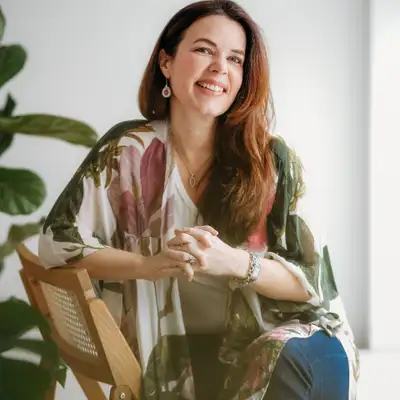
The Words in the Wilderness podcast is for those who have the conviction to make changes in their life as they drag their feet through the messy middle, crying into the void "it ends with me."
Led by Jacky Power - The Therapeutic Poet - these are conversations that look underneath the label, the diagnosis, the tidy explanation, at what's actually going on.
If you've made a decision to change your life and now you're in that wobbly, lonely bit where nobody quite gets what you're going through, I made this for you. Because I've been there. Many times.
Each episode starts with one of my own poems, using therapeutic poetry to set the scene. Sometimes it's just me, unpacking human tricky things. Sometimes it's a guest - a therapist, a coach, someone whose lived experience has taught them something worth passing on.
We talk about leaving what doesn't fit anymore, about breaking the patterns you inherited and don't want to leave as your legacy, about all your human tricky things that you've maybe been taught to hide.
I'm Jacky Power and I'm on a mission to rehumanise, one poem at a time. Reminding you that you have permission to feel and use those feelings as data to decode, not symptoms to squash.
Follow Jacky on Instagram: @the_therapeutic_poet
Find out more: www.jackypower.com
Listen to Jacky on Insight Timer: www.insighttimer.com/TheTherapeuticPoet
Join her on Substack`:www.jackypower.substack.com
Jacky Power (02:13)
Welcome to this episode of Words in the Wilderness. I'm delighted to welcome you, Dufflyn Dufflyn Lammers, author of You Have Me at Bonjour, it's so good to see you.
Dufflyn (02:23)
Hi,
thank you. Thanks so much for having me.
Jacky Power (02:27)
Dufflyn I can't wait to get into your book. think it was such, I think it really embodies the idea of healthy relationships actually. And I think we live in a world now where there's so much around this idea of toxic masculinity this or narcissistic that or, you know, all of these labels. And I thought what you do so well in this book is you sort of...
really pierced through all of that into the shared humanity in us all. And that's what I really loved about your book. So the way that I start these episodes normally is I start with a poem and I've got this poem which I just thought so encapsulated what you did. So if I share the poem and then maybe maybe you can then share from there. I'm not, yeah, brilliant. Okay, so this is the poem. I loved him once.
I loved him twice. I loved him against the best advice. I loved him like no other could. I loved him just not like one should with boundaries and self-care intact. I loved him more than me in fact. The eggshells that I trod around were where my self-esteem was found. But as I fell down to my knees, I heard a whisper on the breeze.
It doesn't have to be this way. This poster child of great dismay, of helpless hope, hopeless hapless woe, it's not about to stay or go. Why do you choose a heart that's scarred? What payoff in this love so hard? A battle fought, a battle won, no battle child, for we are one. What misery you may seek from him is already in a form within.
Leave him and you'll find one more to bring you back down to the floor. This chance you found yourself right now is one to truly find out how his not his acts that injure you, but views within you're holding true. It's time to turn your life around. Now find the help, get off the ground. I loved him once, I loved him twice. To love him.
was the best advice.
Dufflyn (04:45)
Hmm. it's so beautiful, Jacky I really love it. And one of the things that I love most about it is this idea of loving him, but not as one should.
Jacky Power (04:58)
Hmm.
Dufflyn (04:59)
Right? As if there is a correct way of of loving.
What I've come up against so much in my relationship and in my work is that so many of us are loving people, or we think that we're loving people to get something, right? In order to get them, we want them to be a certain way.
Jacky Power (05:29)
Mmm.
Dufflyn (05:30)
Right. And when in fact to love someone means to sit in front of the person in front of you and love them as they are.
Jacky Power (05:36)
Mm-hmm.
Dufflyn (05:37)
Never
was there a larger challenge asked of me in my life, I will tell
Jacky Power (05:40)
Mmm.
Dufflyn (05:41)
you, right? Which is a lot of what I'm writing about in my book. because it's it's just, I mean, I think that's one of the greatest challenges for us as humans. because part of what that means is also loving ourselves as we are, and none of the shoulding, none of the asking me to be different, but just let me love myself as this flawed human that I am.
And part of the reason
Jacky Power (06:06)
Yeah.
Dufflyn (06:06)
that I, you know, part of the reason that I wrote this book was during the first three years of my relationship. so you had me at Bonjour is is about that and about my own journey because I was struggling. I was super, super insecure and full of self-doubt. And and I was sure I was gonna get it wrong, that I didn't know how
Jacky Power (06:28)
Mm.
Dufflyn (06:29)
to love him correctly, or that he wasn't gonna love me correctly, more importantly.
Jacky Power (06:36)
Mmm.
Dufflyn (06:37)
Right. And so writing it down was my way of figuring it out.
Jacky Power (06:42)
And you do figure it out so beautifully because like I said, I mean, there are so many instances in this book where you come across your own protection, right? Where you're saying, you know, there's this incident or this, yeah, this incident and my immediate thought or my immediate reaction was this. But I can trust myself now.
to handle whatever is going to come my way. And if I trust myself, then what can soften within me and what other possibilities are there? And I think you do that over and over again. that is not a narrative that we hear at all out there. And it is such an important one.
Dufflyn (07:29)
thank you for saying that. You know, I was actually super terrified about publishing this book. Because, like I said, writing it is the only reason I still have a relationship, if I'm honest, right? Because I had I had to go somewhere where I could be radically honest with myself. And the page was that for me. And because I was terrified if I told a therapist or another coach or even my friends.
This is what I'm going through. That what I would hear is, his hypermasculinity, but the way he's behaving, but that's not okay. And that that they were going to tell me that I had to leave. And I knew I wasn't
Jacky Power (08:09)
Yeah.
Dufflyn (08:10)
doing that. And also I knew that I had been through one heartbreak after another. And that I wanted to have a healthy relationship. And that a large part of the reason that I didn't was because of me.
So I
Jacky Power (08:24)
Mm-hmm.
Dufflyn (08:25)
would right, I wasn't gonna change. A lot of women come to me and they say, How can I start attracting more available people? Why why am I attracted to unavailable people? My answer to that is the question is actually, how can I become a more available person? So that's what I was working on, and that's what I was struggling through. But it was absolutely terrifying because, as you say, there's all these relationship gurus out there.
And when you look at it from the outside, it seems like somebody else has it figured out. They don't. They don't. We're all struggling through it. And I think the trick is, as you say, that keep coming back to my centre keep coming back to love.
Jacky Power (09:11)
Yeah, yeah. But I, well, I love, think love is the opposite of shame, right? Like, you know, that we, how can I love myself more and how can I love them more? And you're absolutely right. The societal pressures for us to love in a certain way, because the fear is if I am too forgiving, like in inverted commas, in one area, that I'm then going to be labeled as being a walkover or, you know, X, Y, and Z.
But what I see in your book...
is that Benjamin or Benjamin I loved all of you you do this
Dufflyn (09:46)
Bye.
Jacky Power (09:47)
so well yeah because because obviously this is happening in Paris and lot of the conversations happened in French and I also want to say one I appreciated your your accent in because I listened to the audio but two how you also managed to translate the conversations like you did that in such a such a beautifully kind of subtle way like it never felt oh here's the clunky English that's coming next
But what I really noticed in this book was Benjamin's, like he was, he's in recovery as well. So you're both in 12 step recovery. He was in a lot less time than you. I think when you met him, you were about 12 years and he
Dufflyn (10:25)
Yeah.
Jacky Power (10:26)
was 18 months. Is that right? Something like that.
Dufflyn (10:28)
Okay.
Jacky Power (10:29)
So he's early days. You don't know if the person you're meeting you met at day one is the person that he's gonna be further down the road. But what really struck me was how many times he was willing to show up too
Dufflyn (10:45)
Yeah.
Jacky Power (10:45)
And
I think that's the key thing, right? It's not that this idea of perfection in either one, but it's are you prepared to roll up your sleeves and go, my bad, okay, how do we manage this in a way where I'm not gonna betray myself, but I am gonna be committed to the relationship?
Dufflyn (11:05)
Yes, yes, absolutely. One of the big moments where that came up is this idea about having having a child, right? Because I told him on our third date that I did not want children. I had gotten used to saying it early in relationships so that I didn't get myself into trouble. And then we were about six or eight months into our relationship and
His best friend and his best friend's wife had a baby. So it was suddenly just in our face, right? And he was sending me pictures of him holding the baby. And I'm like, what does this mean? And he's also seven years younger than me. So for him, I think he felt like he had time. But I was in my early 40s, and I also was very clear that I did not want to have a child. So we had a really tough conversation. And I remember saying to him,
Look, I I want you to search your heart and ask yourself, you know, if if you can really live with this, because I'm not going to change my mind. I think he thought I was going to change my mind down the line, kind of thing. And at the time we were still between Los Angeles and Paris. So the next time I came back for a visit, I said, Okay, what did you find? And he said he would rather be with the right person than go out and try to find someone who wanted a baby but
wouldn't be the right person. And for me, the miracle of that wasn't necessarily that it went the way that I hoped it would, and right, and we could keep going together, but that I didn't abandon myself. Right? That that I
Jacky Power (12:46)
Yeah. Yeah.
Dufflyn (12:49)
that I was honest about who I really am with myself and with him, because I had to be honest with myself first before I could be honest
Jacky Power (12:56)
Mm.
Dufflyn (12:56)
with him.
Which is the irony of that is that's actually what would have made me a really great mom. Isn't it? Right. Because you have to be a great adult in order to be a great parent. And right. And to be a person who's
Jacky Power (13:08)
That's true.
Dufflyn (13:10)
not gonna abandon themselves, because you're gonna be tested. Right. And
Jacky Power (13:15)
Mm. Yeah.
Dufflyn (13:17)
and that was that was just a huge
Turning point, I think, in our relationship that we got through that together and the way we got through it together, as you say, by both of us showing up and having the tough conversations and being honest with ourselves and each other.
Jacky Power (13:33)
Yeah, but there was a real kindness in that clarity as well. think, you know, I mean, talking about parenting, that's one of the things I say to my kids sometimes is like when it's a no, it's a no and I'm not going to change my mind. So like, this is not up, you know, and it just feels like that is a very affirming way to say this is not up for negotiation. But there's a kindness in that.
You know, I think sometimes we can try and set boundaries and then take care of the other person's feelings. And that never ends well. It's, you know, it's okay to set those boundaries and then there's space for the other person's reaction to that, right?
Dufflyn (14:15)
Absolutely, clear is kind.
Jacky Power (14:17)
Yeah, yeah. So you're a relationship coach. You're known as, what is it, the American love coach in Paris or a relationship coach in Paris? It should be love coach.
Dufflyn (14:29)
Yes, that's it. The American Love Cards in Paris.
Jacky Power (14:34)
And you talk a lot about attachment in the work that you do and obviously there were threads of it in here. I'd love for our listeners to track through your own relationship, your own familial relationship, you your family of origin and what blueprints that set.
to kind of really also illustrate the real hard work that you were having to do here, the unlearning that you were doing and the challenge that you were set by the blueprint that you had.
Dufflyn (15:04)
Mm-hmm. Mm-hmm. 100%. When I was four years old, my parents got divorced and my mother moved away. And she went to Hollywood and then Nashville and then Vegas. She was always moving around. And I saw her about once a year after that. And she had promised that she would come back for me. So I was always kind of trying to twist myself into a pretzel and be cute enough or fabulous enough that.
She would finally live up to that promise. Because I had, you know, as a child, of course, I thought that that was about me, which is fundamental to the preoccupied or anxious attachment style, is that inconsistent parenting, which leaves the child wondering, okay, how how do I need to be in order to get them to love me? So that was very clear. But I was also left growing up alone in a house with a dad who was very angry.
And very emotionally dysregulated. So his anger, and you know, he would punch walls and throw things and curse at me, and I was afraid. So, in that relationship, the source of fear is also the source of love, which is consistent with disorganized attachment or trauma bonding. And so I also developed that idea about.
What love felt like and what love looked like. So I was, you know, by the time I was 14 years old, I was in love for the first time. I was in very big trouble. And I remember reading a book called Women Who Love Too Much. And I knew I was one of them. I just didn't know what to do about it. Right? So I was very lost when it came to that. And
You know, I think at that time attachment wasn't talked about as much as it is now. But even looking at that book, you know, I was like, okay, but what's the solution? Like now I understand it, but what am I going to do about it? And I didn't want to just live with it. So when I found Ideal Parent Figure Protocol, which is the work I now do with my clients.
I was able to create a new internal working model so that those experiences weren't the only experiences that I had to draw from when making meaning of the present moment, so that I could react differently to the present moment.
Jacky Power (17:31)
Mm.
Dufflyn (17:32)
And healing that.
Jacky Power (17:34)
Just
to pause on that a sec. So when we talk about inner working model, is two things, isn't it? It's the way we view ourselves and it's the way that we view the world and how safe and secure the world is for us to go and reach out for that help. And what you're talking about is with different attachment styles, we have different working models. the different ways that we view the self and different ways we see the world. And what you're saying is you had kind of two kind of in a way, conflicting working models going with your mom and then with your dad, which...
left you as you were with a lot to deal with. And then you had this ideal parenting protocol, which is, you know, as an adult, actually being able to find those resources in different ways, in different places, primarily with yourself, learning to do that for yourself or through other good attachment figures, like a therapist or something, or a coach. Would that be fair enough, or how was it for you?
Dufflyn (18:25)
Well, the ideal parent
Yeah, the ideal parent figure protocol is a meditation intervention for attachment repair. So what we're doing with our clients, it's facilitated guided meditation. What we're doing with our clients is guiding them through imagining a set of ideal parents. And then we walk them through the five functions of secure attachment, which is safety and protection first and foremost, attunement, delight, comforting and soothing.
Right. So they they get all of the things from these imagined ideal parent figures that they didn't get from their very human, flawed parents. because we all are, right? No, no, no
Jacky Power (19:04)
Hmm. Mm-hmm.
Dufflyn (19:07)
parent is going to be perfect, and also no therapist and no coach is gonna be perfect, which is why
Jacky Power (19:10)
Mm. Mm-hmm.
Dufflyn (19:12)
we right we get to do it in a perfect way in our imagination. They get to imagine exactly what it was that they needed, exactly what it was that they wanted. And
They have an experience of it, a felt experience of it in their imagination. And in the process, they create a new way of seeing themselves and the world. So they then have a choice. They can respond from that new way of seeing the world when things come up that that feel kind of triggery with their human tricky things like you talk about come up. Right.
Jacky Power (19:42)
Yeah.
Dufflyn (19:44)
Then they're like, I can respond from this paradigm that was handed to me or from this new one that I've created.
And it just sets you free to be able to be that adult for yourself because you've imagined receiving the care that you needed.
Jacky Power (20:04)
Yeah. And like you say, I think that really important piece of it is not just through imagination, but that sense of embodiment. So it's almost like you can, you have that felt sense of what it feels like to be soothed and seen in that way. Yeah. Yeah. Yeah.
Dufflyn (20:18)
Yes, exactly. So you internalize it. So then you have it. It's yours. And you don't have to
go looking for it everywhere else, right? Which is part of what I could see myself doing. I mean, I I always knew that I was doing that. And writing about it really helped me to kind of articulate it, you know, to say,
Jacky Power (20:39)
Yeah.
Dufflyn (20:39)
this is exactly how it looked for me, because it looks different for different people, but this is how it looked for me. And then
As I was doing it, because I wrote this book over a 10-year period, as I was doing it, I would, I would write down, okay, here's what happened when I tried it a different way, which also helped me remember it. Part of part of
Jacky Power (20:59)
Mmm.
Dufflyn (21:00)
becoming securely attached, you know, because now we know that we can move from insecure to secure attachment. And part of that journey is about being able to form a coherent narrative of your life.
Jacky Power (21:13)
Mmm.
Dufflyn (21:14)
Right. So this is why I think there are so many memoirs about trauma and abuse and neglect, because that's what we're doing.
Jacky Power (21:21)
Yeah, but I think it's the same with poetry, right? I think that poetry, you know, it's like the jigsaw puzzle pieces and you're putting them all together in a poem and it makes sense in a poem. I mean, yeah, it makes complete sense. And like you say, having your own narrative because, you know, like you say, you had a mother who told you that she was coming back and I'm sure there were reassurances around that, but your experience was that she didn't come back. And so learning to trust your own
narrative and grieving that as well, I imagine, know, is, yeah, is ongoing work.
Dufflyn (21:59)
Absolutely. I I think that's one of the biggest, one of the biggest surprises for me was you know, because my mother was sort of my number one resentment. And so when I entered recovery, I'm I'm a person in long-term recovery from substance use disorder and lots of other things. And you know, I did this sort of repair process and
I was asked to look at, you know, what was my part in that resentment against my mother? And I was like, well, I have no part in that. And what came back to me was actually your part is not letting it go.
And that was the work that I had to do, was to grieve the childhood that I didn't get and to let go of it instead of continually looking for it in every single human being that came into my path.
Jacky Power (22:50)
I have a poem called Just Wait Until You Meet Hopelessness, which is really about that grief, the grief of, it really is actually hopeless and letting go of any elements of if I just in this way or if that just or if just the justs, you know, around it. And it is, it is. But I think a lot of addiction recovery work is a lot of grief work. I don't know what you think. Yeah.
Dufflyn (23:17)
Yeah, yeah,
absolutely. Prime primarily that. I mean, my belief now, because part of the reason why I became a love coach is because I started to see that the people who I was coaching around substance use disorder, the reason they were relapsing was often over relationships. Whether that was a relationship with a family member or a colleague or a partner.
That's what triggered their attachment wounding. And so that's when I
Jacky Power (23:45)
Mm-hmm.
Dufflyn (23:45)
started studying attachment. And I was like, this is the thing underneath all the things. So
Jacky Power (23:50)
Hmm.
Dufflyn (23:51)
it made so much sense to me once I figured that out and also gave me a pathway towards healing it.
Jacky Power (23:58)
Yeah, and there's a couple of other things. mean, when you had a career as an actress, I don't know if you still act now or if that's something. I mean, that's interesting, isn't it? I'm sure you've spent time thinking about this, of how much of that is about that outward approval, but how much of it was that inner, your inner essence of wanting to be your full-felt self who is somebody that performs in that way?
Dufflyn (24:27)
Yeah, I think I really struggled with that. as as I write about in the book as well, this process of understanding what was I looking for as an actor? What was I seeking? And part of it was my mother's approval, right? Which I could see
Jacky Power (24:49)
Mm-hmm.
Dufflyn (24:49)
very clearly from the way she interacted with me. I remember going to visit her in Las Vegas when I was about
12 and she took me along with her to see this young woman who was singing up on the stage and right, and my mom was jamming to the music and she was like, she's so great. And I'm like, Why isn't it me? Why don't you look at me that
Jacky Power (25:11)
Yeah.
Dufflyn (25:12)
way? Wanting that delight, right? The that that I wasn't getting from her somehow, or that I wasn't getting enough of, because once a year would just wasn't enough.
Jacky Power (25:23)
Yeah, funny that.
Dufflyn (25:24)
Right. And and thinking that
that might be the way to get it, that that might be one way that I could get her attention, that I could hold her attention. And if I couldn't get it from her, well, maybe I could get it from other people. So that much was clear. And at the same time, the first four years of my recovery, I did improvisation technique with a guy named Stephen Book in Los Angeles. And I'll tell you what, being thrown up there on the stage with like all you had was like character activity and location.
Jacky Power (25:54)
Mm-hmm.
Dufflyn (25:54)
I still use this in my workshops today, right?
Jacky Power (25:57)
Mm.
Dufflyn (25:57)
And and and you had to just make something happen out of nothing. And you were forced to be spontaneous and authentic and generous because that's what you had to be, yes, and with all of these other
Jacky Power (26:09)
Yes!
Dufflyn (26:10)
right, with these strangers up there. And that was absolutely training like how to become more securely attached as well. So there were many things that my acting career taught me that.
that I wasn't looking for in it, but that somehow it just gave me what I needed anyway.
Jacky Power (26:27)
Yeah, it's funny you say it about improv. I did improv last year for the first time and that whole yes and I wrote about it as a you know on my Sub stack of like this is that like this is therapy that whole yes and you know like you say that generosity and let's go with that and see what happens. So that containment is just it's it's a really key part I think it's great to hear you bring that into your workshops. What workshops do you run now then? What are you doing with people?
Dufflyn (26:58)
The most recent one I did was Boundaries are the New Black, which is just a foundational
Jacky Power (27:01)
You
Dufflyn (27:03)
course. I mean, boundaries are everything. So that's why, you know, boundaries are basics. And then I recently did Attachment Games in London, which is using creative writing and improvisation games, theatre games, to
Jacky Power (27:19)
Mm.
Dufflyn (27:20)
to teach about attachment, which is super fun. The next one is gonna be based on my book, You Had at Bonjour.
And that one is an interactive storytelling experience. So I'm really excited about putting this together and I'll be bringing it to London in November at Lee Fitzgerald's conference. And
Jacky Power (27:41)
fantastic.
Dufflyn (27:42)
yeah, and really just I want to create more of an experience for people. Like you get to step inside this book and have this experience. And then you also get to again begin to see yourself in the world in a different way.
So all of it is based on attachment science, but I think there's something so creative about that, which is what I love about bringing the imagination in.
Jacky Power (28:07)
Yeah, that sounds fantastic. I mean, one of the things that you're saying, you know, with seeing your mum and how she was, and then in your relationship with Benjamin, and something that gets talked about a lot in attachment wounding is this hypervigilance. And you just, you sort of talk about this in the book as well, don't you, about the hypervigilance around Benjamin and what his responses were. And you talk a lot about looking at him looking at women.
And then there's an episode that you describe in the book where he makes commentary about your body. I'd love you to share more about that and what you did, because I think it was just brilliant.
Dufflyn (28:48)
Yeah,
I really jealousy was sort of an odyssey for me. It was, it's definitely a journey that I that I go on in the book. and
Jacky Power (28:56)
Yeah.
Dufflyn (28:57)
right, because again and again it came up for me and and there were so many moments, but this particular moment was one where we were, I mean, I had sold everything I owned and left my career behind.
And moved 6,000 miles to be with this man. So there was a lot at stake, right?
Jacky Power (29:17)
Yeah.
Dufflyn (29:18)
And I remember standing in front of the mirror one day, and I was talking about how I needed to start working out again or something like that. And he comes up behind me and he's like, il faut perdre ça. And he puts his hand on my hip and remonter et ça, and he puts his hand on my butt. And he's like, basically, lose the saddlebags and tighten up your ass. And I was mortified. Under no circumstances was this okay.
and I sort of froze in the moment. I was so wounded. And
Jacky Power (29:47)
you
Dufflyn (29:47)
and also I just didn't know how to respond. And and I wanted to talk myself out of it. I think this is something that happens a lot too, you know, of well it's a cultural difference is la la la la. So I paused and I'll I'll read you a little section, if I may.
Jacky Power (30:03)
Brilliant. Yes, of course.
Dufflyn (30:07)
By the next day I knew I had to do something, although I didn't know how he would react. I told him to undress and lie down on the bed. What are we doing? he asked. It's gonna be fun, I told him. Just trust me. I took out some essential oil and lit a candle. I dabbed orange oil on each of his feet. Orange oil was not my favorite. I would have preferred sandalwood or jasmine, but it was what I had. I adore these feet which carry you to me every day.
I said. He let out an uncomfortable chortle. I smiled a little too big. I had done this several times in my Tantra classes with strangers. They had not been naked. They had not been my lover. If I could do it with them as an exercise, I could do it with him for real, couldn't I? Close your eyes, I said. I felt more than naked. I felt like every move I made broke something and also moved me closer to what I ached for.
I honor your legs and their strength, their power to heal. I dabbed the oil on his legs at the knee and the shin, and the smell of oranges filled the room. Then I blessed his sex, which we giggled about some more. comment les Grande, comment les Dur all the things
Jacky Power (31:23)
Hehehehehe
Dufflyn (31:25)
a man wants to hear about his penis. I felt young again at that moment, innocent almost. He was not the first man I had made love to, but he was the first lover I had done this with.
Time seemed to stop in our little room with the horrible garish wallpaper and the two small bed, as if my heart were beating slower and slower, as if it might stop and become something else. Then I blessed his belly and his chest. Next I reached for his arms, the arms that hold me, and I tapped the tender inside of his elbows where he had once pushed a needle in, where once there had been rot. He was pale next to me.
His skin the color of half-grown peaches. I love these lips, I said, dabbing the oil on his pillowy mouth that give me lots of kisses. Outside I could hear scooters whizzing by and the bus tolling its bell, and now and then muffled cries of friends parting. I was so far from home. I was so far from the person I had been, and yet I was exactly where I was supposed to be.
When I was done, I lay down on the bed and pulled my hair out from under me so it splayed across the pillow. Now it's my turn, I said. It took all my courage to say it. He had no idea how much was writing on this. You do the same for me. You can do it in French if you want. He started by repeating what I had said, but in French. You can make it your own, I mean, say what you really think, as long as it's kind.
He travelled up my body until he came to my belly. I love your scars, he said, and he touched his finger to the oil and then to the scar on my stomach. Really? Why? I asked. Because they're different. Because they're you. My heart cracked open. And I like your tits, he added.
Dufflyn (33:28)
I shook my head and laughed, and he laughed too, and we got back under the covers and made love, with our blessed bones and our sacred scars altogether new and complete and bursting with light.
Jacky Power (33:40)
Mmm, that is beautiful.
Because it was, I mean, yeah, like, you know, you'd had car accidents, hadn't you? You'd been involved in a couple of car accidents, so you had significant scars, and he had scars from where he's using days and things, and so it was a real exercise, like what you were saying before about accepting each other and loving each other for who you were. Did things change after that? Did he kinda get what you were getting at? Did you have a conversation around it?
Dufflyn (34:12)
Yes and no. He still has you know his and there there are some cultural differences. the body positive movement hasn't reached France and probably never will. Right? That's not a thing here.
Jacky Power (34:26)
Yeah.
Dufflyn (34:27)
and food is a whole different thing. And their relationships with their bodies are different. And and I talk a lot in the book also about his relation, this particular person, this particular French person and his relationship with his body that existed long before I came along. But ultimately what I realized in that moment is that the best response is usually the most loving response.
And if I am face to face with someone else's wounding and the way that that's expressing itself is hurting me, that that's not about me, but what you know, Marianne Williamson says, everything is either love or a call for love.
Jacky Power (35:17)
Hmm
Dufflyn (35:17)
And when I looked at it that way.
Then I was like, that's what this is. This is a call for love. And this was someone who, you know, like I said, when I met him, he was 18 months clean off of heroin, and he was a low-bottom heroin junkie.
Jacky Power (35:35)
Yeah.
Dufflyn (35:36)
You know, in and out of prison. He was on probation for carjacking and had, you know, been through maybe 15 different rehabs at that point. So
And and by that point in our relationship, I knew all of that. And I could have, and many people would have, just walked away. Just said, okay, this is too much. Like you say in your poem, why did you choose someone so scarred? Literally and figuratively. But that was what I had asked for. You know, it's funny because several years before I met him, I had been single for 12 years and I was.
not happy about it. And one night I remember just feeling so lonely and so despondent about that situation and crying on on my knees in my apartment and and sort of casting this spell that someday I would meet my soulmate. And when I did, he would have the same number of letters in his first name and last name with double letters in the same places and the same scars as me. And that was my I would like
After the movie Practical Magic, I was like, I'm casting my spell. This is what it's gonna look like. And several months after that, I met this man in Italy who did have seven letters in his first name and seven letters in his last name with double letters in the same place and did have the same scar on his belly, but who did not love me.
Jacky Power (37:08)
Mm-hmm.
Dufflyn (37:09)
So I was like, okay. And that gave me this sort of permission to surrender. But when I met Benjamin, you know, it doesn't matter if they have the same scars or different scars. Really, I think the opportunity was to love the person, warts and all, as they say, scars and all. Because that's what I asked for. That's what I, that's
Jacky Power (37:32)
Yeah.
Dufflyn (37:33)
really right, what I was asking the universe for is teach me, teach me what love
Jacky Power (37:37)
Yes.
Dufflyn (37:38)
really is.
And boy did the universe show up and give me the opportunity. So I took it.
Jacky Power (37:46)
But there's a real bravery in that as well, isn't there? Because, like you said, you you ended up writing a lot of it down on paper because it felt like if you tried to talk about it with other people, it wouldn't be understood. But I do think that is a real testament to yourself and your knowing of yourself, like you say, understanding. And I do think on a spiritual level, on a soul level, that this is something that's really important
Dufflyn (38:12)
Well, and it's just who I am. I think it's it's partly, you know, and and that's one of the things that I that I love also about this podcast is that you're talking about truth and really becoming who who you are, not
Jacky Power (38:26)
Yes.
Dufflyn (38:27)
who who you think you're supposed to be. And and that was
Jacky Power (38:29)
Yes. Yes.
Dufflyn (38:31)
so, so integral also considering what we talked about in terms of the preoccupied attachment. I had been pretending to be all sorts of people.
Because I thought it would get me love. My whole life. Finally, I was not. And if this is who I am, okay, then let's be that person, which is also like putting that down on paper and then publishing it and allowing people to read it is the most terrifying thing I've ever done.
Jacky Power (38:59)
But that's what I like so much about you. Because I think, I've known you for quite a few years and we did Liz Gilbert workshop together, but I really got to know you in this book. And what I loved about you was you are full,
Dufflyn (39:13)
Think
Jacky Power (39:15)
you felt like you're full Dufflyn in this book.
There's just the humor about yourself, but the absolute that there's no apology there. There's no bigging up there It's just I can see myself straight on in the mirror and I'm happy to share it with you and it's so refreshing it's so Refreshing. So thank you for that, you know, and I really hear you how terrifying is I completely There's a lot of bravery in this book, but I don't mean that as being an observer. I mean that as a
A cheerleader. You know?
Dufflyn (39:50)
And as a person
walking beside me on that path, I think. Right? Yeah. Yeah.
Jacky Power (39:53)
Yeah. Yeah. Yeah.
Dufflyn (39:56)
And and and and thank God. Thank God that I'm not alone.
Jacky Power (40:02)
But it's only through you being having the bravery of going this is me that you know those other people those other people will find you. I have to say I hope this doesn't sound disrespectful my absolute favorite line in the book was nothing to do with any of this it was I can't give a rat's ass about the French Revolution. That made me laugh out loud. I can't give a rat's ass. That was just so very honest it's full of humor and it's full of
I mean, you covered dark topics, but it's full of lightness
Dufflyn (40:34)
Yeah, yeah. That's the the funny thing. I think that's what's what's been hard for me, both as an actor and as a writer, is finding my audience because people sometimes are like, well, we don't know what to do with you because I I am at at one point going to the bottom of the pool. Like I want to go deep with everybody immediately. But then I'm also like, let's make a joke about it. And
Jacky Power (40:56)
Yeah.
Dufflyn (40:57)
and at the same time, other people who are walking the same path as us, especially other people in recovery, get that.
Immediately. They
Jacky Power (41:04)
Yes.
Dufflyn (41:04)
get that, right? Because it's like, well, yeah, but what are you gonna do? And like this is life.
Jacky Power (41:12)
Yeah, yeah. And I think it's, a certain kind of recovery as well, because, you in the recovery world, there can be people that are dealing with substance.
know, substance abuse, substance misuse, and that's where they stop, you they get that nailed and like, like you were saying, often relapse, can be when there's a lot of relational stuff going on that that can be well, but they might not even hit that because actually they don't need to or they don't choose to, whatever. And so there are sort of different layers to it. And that's what I really, really picked up in this book is the depth that you go to, but you are holding it with a real lightness of touch as well. So thank you for that.
Dufflyn (41:50)
thank you for recognizing it. I appreciate that. Yeah, we need lightness and we need magic, right? This is
Jacky Power (41:56)
Yeah.
Dufflyn (41:56)
this is also like I wanted to have that thread of magic going through it. And I know people talk a lot about magical thinking as if it's a bad thing, but I think it can be a good thing.
Jacky Power (42:08)
I think when you're in touch with that, like, know, Liz Gilbert talks about enchantment, right? And I think when you're in touch with that enchantment part of yourself and bringing that along for the ride all the time, then there's something very special about it. And I think that's what you do in this book. Well, not just your book, in your life, think, Dufflyn
Dufflyn (42:25)
thank you. well, well, sincerely,
yes, that's something that I'm reaching for in my life, right? Is is not only to understand who I am and why I'm here, but to be able to touch that that ineffable part that's that is enchanted. And do you know Dacher Keltner? He talks about awe.
He's a professor
Jacky Power (42:52)
Okay.
Dufflyn (42:52)
in Berkeley and he talks about awe and the different kinds of awe. And this is something that I'm I'm intentionally trying to create in my own life is reaching for that and allowing myself to experience that as often as possible because I feel like there's a place where those two things meet, where like the depth, like you go so deep and so high at the same time, and then it's gonna meet in the middle.
Jacky Power (43:17)
Yeah
Dufflyn (43:18)
And it's it's gonna
be right there and you can be like, it's God. Yes.
Jacky Power (43:23)
It's like multi-dimensional, it's actually sort of astrophysics
you're talking about. Yeah, but I also think, I've had this conversation with different writers and things, I do think that is part of being a poet. I think you do, that's a common thread, is that that wonder and that awe is something that you're very in touch with and it comes through in the way that you live and the work you do.
Dufflyn (43:50)
Yes, yes, absolutely. This is one of the things too that's been super important for me in the last couple of years is living a literary life, which I I think it's it's an art artistic life, a creative life, a life that's full of that wonder and that awe. Right. And just like that's the life for me anyway, that I was meant to live. and setting myself free to be able to do that without
Without a lot of shoulds, without but I but I should be crunching numbers or whatever.
Jacky Power (44:27)
I'm totally with you on that. I I talk about living a poetic life, but that is more in the noticing, right? It's in the, and the reframing. And I don't mean like in the toxic positivity kind of way, but it's like, that you've done in all of your work. What is this teaching me? How do I make meaning out of this? And the level of humility that takes, I think is quite extraordinary. yeah, it's lovely to see that.
Dufflyn (44:51)
I love that what you said about in the noticing. 100%.
Jacky Power (44:54)
Yeah.
Dufflyn (44:55)
That just being present with like what is and and allowing yourself to go deeper into the moment and notice it. And that's the heart of poetry. I mean, a hundred percent.
Jacky Power (45:09)
Yeah, I was walking yesterday and I was thinking about, haven't really written poetry for a while, but I was thinking about like, I want to write this poem of like, to start something like, I don't want to write a poem, I want to be inside the poem. It's almost like, I want to be playing hide and seek in the poem. It's bringing it up above my head, like, know, it's that kind of way. It's like that fabric of a poem, you know?
Dufflyn (45:33)
yes, that's I mean, if if I could have that all day every day. my God. That's what I want to try to do with the You had Me at Bonjour storytelling experience. Is l I wanna live inside it, which is really the reason I'm doing it. But I'll I'd also like to invite you to come with me.
Jacky Power (45:54)
Yeah, well that's where the passion comes from, right? When you love it so much yourself. Yeah, and that already has extended itself to other people, so that's fantastic. You touched on the vulnerabilities, my last question for you.
How are you handling that? Because, you know, there's just that even the passage that you described, it's a very personal passage. I mean, it's fantastic. How are you, how's that going? Has Benjamin read the book? What's, what response has been of friends and family? Did you decide not to tell them?
Dufflyn (46:27)
God.
it's that's also been such a learning experience. because so with Benjamin, I had read him chapters as I was writing the book, and I'd had a few conversations with different people who appear as characters in the book, but I there was a part of me I never thought it would get published, so I just wrote what I wanted to say, and then suddenly it was being published.
And I thought, my gosh, I've got to ask permission because I'm also sharing some stories and some secrets that don't belong to me, especially Benjamin's. His story is very much a part of this story. And so I went to him and I gave him a copy of the book. I also gave a copy to his mother, my mother, and my two sisters. With Benjamin and with his mother, I said, if there's anything you want me to take out, just let me know. Now that was that was a big risk too, because Benjamin.
Right, if he was like, Take out that
Jacky Power (47:25)
Yeah.
Dufflyn (47:26)
chapter, what was I gonna do?
Jacky Power (47:28)
Yeah
Dufflyn (47:30)
and the funny thing, he's he's hilarious. So a couple days later he, you know, I said, Okay, so what did you think if you started reading? And he's like, it's fine, it's fine. And I was like, You didn't finish it that quickly. And then I saw the look on his face and I was like, you didn't read anything at all.
I was like, listen, you have to tell me now if there's something you want me to take out because it's gonna be out there and this is very intimate and very personal. And I don't want you to be mad at me later. So don't say I didn't tell you so. So finally he starts reading the book and he calls me from work and he's like, what's this about you and two men?
And that's the part of all the intimate things I've shared. It's one sentence where I reveal that I had a threesome with some men years before I met him. This is what he's upset about. So adorable. And I was like, okay, all right, in keeping with that's just so Benjamin. So finally, weeks pass, the book actually did come out, and he finally started listening to it on audiobook. I think it was too difficult for him to read in English, not because it's as
terribly complicated book, but just he wasn't he wasn't doing it at any rate. So he got the audiobook. He started listening. And then he was on the train on his way to Normandy to see a friend and he texted me and he said, Merde. Like, it's so sad.
Jacky Power (48:56)
Awesome.
Dufflyn (48:57)
And I was like, what's so sad? And he said, the beginning about you and your mom, it makes me want to cry.
Jacky Power (49:02)
Mmm.
Dufflyn (49:04)
and this is why, right, 12 years on we're still together because he sees me.
Jacky Power (49:09)
Mm-hmm. Mm-hmm.
Dufflyn (49:09)
Right. Because
however his first reaction might be fraught, but he always comes through in the end. And he always sees me. And it's just, it's extraordinary. I mean, it's like you were saying earlier, it it this is what love is. It's two people showing up and doing the work, even when
Jacky Power (49:26)
Yeah.
Dufflyn (49:27)
it's hard. And so so ultimately that's been his reaction with my mom and my sisters remains to be seen, but I I I feel okay about it. I I I feel like
what I've written is not only the facts but the truth. And you know they're not necessarily the same thing. But that's what was important for me is to share my truth.
Jacky Power (49:49)
Yeah.
Dufflyn (49:49)
Either way, no matter no matter what. so yeah, it's been it's been vulnerable and I I've been definitely a little squirrely here and there, but I've got a great support network getting me through it.
Jacky Power (50:01)
Yeah, fantastic. Brilliant. I'll put links to the book on the show notes, but people can buy it
Dufflyn (50:07)
Well, it's not in bookstores. It's only online. So you can buy it
Jacky Power (50:10)
Only online, okay.
Dufflyn (50:11)
anywhere anywhere books are sold online as ebook and
Jacky Power (50:14)
Okay.
Dufflyn (50:14)
audiobook. The audiobook is greating getting really great reviews. So I highly recommend the audiobook. Read by me.
Jacky Power (50:20)
Yes, I can recommend that too. I read it whilst walking around in the woods around here, so I sort of think of you now and I can't walk in there without you in my ears, but yeah, it was a great story. So thank you so much for sharing it.
Dufflyn (50:35)
Thank you, Jacky This has been a great conversation.
Jacky Power (50:38)
Yeah, well thanks again. Thank you, Dufflyn