Subscribe
Share
Share
Embed

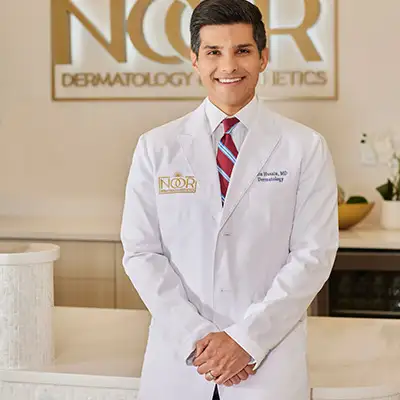
Welcome to Skinside Out, where science meets beauty, the ultimate dermatology podcast! Dive deep into the fascinating world of skin health with expert insights, evidence-based discussions, and myth-busting truths. Each episode explores the medical, cosmetic, and surgical aspects of dermatology, while keeping you informed about trending skincare topics. Whether you’re a skincare enthusiast, medical professional, or just curious about how to achieve your best skin, Skinside Out is your go-to resource for staying informed and inspired.
12 Skinside Out
===
[00:00:00]
Dr. Zain Husain, MD: Welcome to Skin Side Out where Science Meets Beauty. I'm your host, Dr. Zane, with Heather Courtney, and Nurse Wendy. She's back. We don't scare her off. So today we're gonna be discussing, um, you know, continuing our discussion on the bio-psychosocial model and a. Condition that we don't often talk about, but it is really important and related to dermatology, that's body dysmorphic disorder.
So we're gonna be talking about that in more depth and how it intersects with our [00:01:00] practice.
Nurse Wendy: I. Yeah. So we're gonna talk about the psychological impact that it has on our patients, recognizing body dysmorphia within our, um, patient clientele and its role in dermatology. Um, the role we play in it, in collaborating and working with other providers on how to treat this.
Yeah.
Dr. Zain Husain, MD: So what is body dysmorphia?
Nurse Wendy: So
Courtney Carroll, LE: body dysmorphia is a mental health disorder where individuals are. Super fixated on how they appear. So they are perceiving flaws in their appearance that, you know, are often, um, really minor, um, to the average eye, but they can be all consuming for these patients.
Heather Murray, PA-C: In dermatology this manifests as someone who is heavily focused on their skin, whether it's acne, blemishes, scars, um, or even just imagined imperfections that aren't necessarily visible or maybe very mild. [00:02:00]
Courtney Carroll, LE: I feel like it's important to note too, that I feel like we all go through times where maybe we have a pimple and you know, we're obsessive over that for those moments, so that's normal.
But we're talking about people who are consistently finding flaws in within themselves
Dr. Zain Husain, MD: and affecting your quality of life. like all consuming.
Courtney Carroll, LE: Exactly.
Dr. Zain Husain, MD: So what are the impacts that we see on, you know, the individual?
Courtney Carroll, LE: People who have this, um, typically will experience heightened anxiety.
They might not want to go out or do certain things if they feel that they look a certain way or will be perceived a certain way. So it can impact your sense of self-worth. Um, it can affect you as far as things like depression go. Um, again, just limiting things that you would otherwise normally do. Um, so it's.
Kind of all tied back to those perceived flaws.
Heather Murray, PA-C: Yeah. And that psychological impact can, um, lead to, you know, constant worrying [00:03:00] or attempts to try to fix these perceived, um, imperfections. And so in dermatology, it's not, our job isn't just to treat the skin. It's really to recognize when a patient's concerns go beyond physical appearance.
Yeah.
Nurse Wendy: And patients with body dysmorphia, they often come back time, after time, after time, and they are getting the same treatment over and over again, and they're just not satisfied with the results. So for us, it's very discouraging. 'cause, you know, we wanna make everybody happy, we want them to feel good about themselves.
And with this, it's, it's something within them mm-hmm. That needs to be treated not on the surface level.
Dr. Zain Husain, MD: An example that comes to mind is, you know, like the Human Barbie doll and the human Ken Doll, like these are people who have undergone so many plastic surgery procedures to essentially look like Barbie and Ken, and it almost distorts their features.
Doesn't make [00:04:00] the look human. And it's kind of sad because, I mean, I'm sure that they were very attractive people to begin with.
Courtney Carroll, LE: Mm-hmm.
Dr. Zain Husain, MD: And they just kept doing more and more and more. They can't get out of that cycle.
Courtney Carroll, LE: Well, I think unfortunately, you know, the role that social media has played in this has really amplified this.
Mm-hmm. Especially you think back to Snapchat where the filters, and then now TikTok, you have the clear skin filter, which obviously removes every imperfection you have. Mm-hmm. You know, um, filters that change the shape of your face. Um, things that you know. We didn't really ha like we weren't constantly looking at each other, um, before social media.
And so I think it has really amplified. You see all these other people, but you don't know are they using facetune? Are they using a filter? So it's really hard to, um. You know, tell people that, to separate out reality from what's fake.
Heather Murray, PA-C: Yeah. I think not only social media too, but also just society in general [00:05:00] I think plays a big role in this, especially for young females.
Mm-hmm. I mean, we are so, overly mindful of the way that our bodies look and our skin looks. I know when, um, I was growing up, I was in high school and I, you know, had those insecurities and, um, I even, I. Crazy story. I went down the rabbit hole of like finding different models that I like the look of in magazines, cut out their pictures, put it all on a big poster, and hung it in my closet at the mirror.
And so it, it's like. You know, I wouldn't necessarily say that. I mean, I wasn't ever diagnosed with body dysmorphia or body dysmorphic disorder, but I had that sense of I wanna look like them. I don't wanna look how I look. I want that look.
Dr. Zain Husain, MD: Yeah. And as a dad of three girls, um, I am constantly figuring out ways to kind of connect with them, to let them know [00:06:00] that they're beautiful the way that they are.
And they really are. They're beautiful girls and. I, it breaks my heart when I hear things like, oh, someone at school told me that I look like I don't look pretty, or like, I look hairy, or, you know, like my teeth look funny. Things like that. And I just really feel so bad for a lot of these young women, young girls, who are constantly bombarded with these images of perfection.
And then also these comments from others about their bodies. I don't think that is fair. I think it's damaging for self-esteem and it's, it's not solicited. So like you mind your own business. Like that's what I tell 'em. Like, you mind your own business. Don't talk about my body. That is personal.
Courtney Carroll, LE: Yeah. And at the end of the day, time and time again.
You don't know what's going on in someone's life. So no one is perfect. No one is always, and we always joke about [00:07:00] this, we work in the industry. Mm-hmm. We get pimples, we have wrinkles, like we, we get it all. So no one is perfect. And so it's, figuring out your comfort level and, um, being mindful of that.
Heather Murray, PA-C: To add on to that just body dysmorphia, but also, um, things like anorexia. I mean, I grew up, I did gymnastics my whole life and um, unfortunately saw a lot of that and I think, you know. You have to be careful what you're saying to people. Um, you know, people might take something a different way.
I was called Thunder Thighs once, and that's crazy.
Courtney Carroll, LE: That
Heather Murray, PA-C: is crazy. But yeah, I mean, you know, that person who told me that probably doesn't remember saying it, but I've remembered it ever since. Mm-hmm. We did, um, words cut deeply. Yeah. Cut really
Courtney Carroll, LE: deep. We did, when I was a camp counselor, this exercise where we folded up a sheet of paper, um, for the kids to show them that.
Sure. So each, each insult, [00:08:00] we, you know, would crinkle up the paper. Then at the end we would unfold the paper and show them, okay, these are your words. They're, you know, still impactful. Um, even though you've let them go, like the, the paper still hasn't. Oh, that's cool. Yeah. I think the kids really were able to visualize that.
Yeah.
Dr. Zain Husain, MD: And it also affects men. Mm-hmm. So I remember in high school, like I was super thin. Like I played soccer, I was a runner. Um, and you know, I was just really thin and I was always really self-conscious, um, about that. So like, and I started hitting the weights and, you know, started like, you know. Taking, you know, whey protein supplements, things like that to kind of, you know, build up my body so I can look like the other guys.
And, you know, it, it, it does weigh on you. And men also kind of have these stereotypical, um, images that bombard them that this is how you should look. You should all like, be like really muscular and lean and, you know, should be acting a certain way. So, you know, it does affect men too.
Courtney Carroll, LE: Yeah. So how do [00:09:00] you guys as providers recognize that in patients that you're treating?
Dr. Zain Husain, MD: That's a good question. So I think it starts with the consult
Courtney Carroll, LE: and
Dr. Zain Husain, MD: just kind of listening to the patient. So I really always start my consults with asking the patient what they see in the mirror, and if I'm seeing a huge disconnect between what I am seeing and what the patient is seeing, and then just. A very skewed, you know, vision of what they see as wrong with their, their bodies, their faces.
Um, then that's a red flag. Um, then I kind of double a little bit deeper. Okay. So why do you think this and what have you done in the past and, you know, how do you think this can be improved? Things like that and kind of probe a little deeper.
Heather Murray, PA-C: Yeah. I think it's definitely a challenge though. It's not, um, you know, an easy topic to talk about mm-hmm.
And bring up, but I think it's really just kind of finding that balance between treating the skin and [00:10:00] acknowledging the psychological impact of the condition.
Nurse Wendy: Sometimes their expectations are just way off the charts. And you know, I mean, when they come in with beautiful high cheekbones and they want more and more and more that you know, then you're gonna start morphing yourself into looking like not yourself.
Mm-hmm. So, um. So that's, you know, you gotta kind of find the common ground and then they start letting you know about all the treatments that they've had. Mm-hmm. Mm-hmm. Because sometimes they hold all that in at first. Mm-hmm. So you build up that rapport with them. Yeah. And then they kind of let everything out and you can, you know, tell that they've, they've been on this journey for a while
Dr. Zain Husain, MD: and another red flag, they doctor hop.
Mm-hmm.
Nurse Wendy: Yes. They go from
Dr. Zain Husain, MD: office to office to office. They're never happy, um, with their results. And they talk poorly about, you know, another
Courtney Carroll, LE: Yes.
Dr. Zain Husain, MD: Physician or um, provider. And that. Also kind of raises my red flag.
Courtney Carroll, LE: Yeah. And that's where it's so important for providers to have the understanding of that and not just treat, treat, treat.
[00:11:00] Um, I think there are providers out there, unfortunately, the reality of it is that don't care about that and. And basically use that to their advantage, financially advantage of Oh yeah. They see someone that's willing to spend money and do all of these treatments mm-hmm. That they might not necessarily need.
Yeah. And so they're really a victim of that, um, situation. And
Dr. Zain Husain, MD: remember, as physicians, we took an oath. Mm-hmm. Do no harm. And this can harm patients. Mm-hmm. Mentally. Physically. Um, so it's really important to carefully navigate these discussions. And honestly, if I have a feeling that, you know, a patient has body dysmorphia, I try an tactful way to, to like try to bow out.
I'm not the one you're so
Nurse Wendy: good about saying you're beautiful, you've got great structure, you know? Mm-hmm. And so you, no matter what our patients are coming in for, you always accentuate their highlights and let 'em know that they are beautiful and they [00:12:00] are, they're so, you know, I think that's very important.
Yeah.
Courtney Carroll, LE: And I think some procedures can be. Better utilized than others. For example, I had a patient I saw at my last practice. She was a young woman, um, in her like late thirties, and she constantly was concerned about her pores or, um, she would point out the tiniest little start of a freckle or they come in with a magnifying the mag, get rid the magnifying.
No one has. Eyes that magnetize things. So you do not need to look in that mirror and assume that's what people are seeing. No one is looking that close. And if they are, they better be buying you dinner.
But she just constantly was going after things. And so in that scenario, I don't mind doing things that I know are not harmful, such as microneedling, where, okay, we'll do the microneedling monthly. You'll still reap the benefits of that, but it's not something disfiguring. Right. Whereas, you know, there are things like the filler or talks that you're [00:13:00] overdoing it and can really disfigure that person.
Heather Murray, PA-C: Yeah. And I think just as professionals, it's essential to approach these situations with sensitivity, empathy, um, and in some cases it's crucial to involve mental health professionals. Mm-hmm. Um, especially when we notice patterns of excessive concern. We can provide guidance and encourage our patients to seek therapy or counseling.
Dr. Zain Husain, MD: Absolutely. I mean, I feel like we are trained to navigate and identify some of these mental disorders, but we are not the true professionals, so we really need to seek out expertise for that.
Courtney Carroll, LE: Mm-hmm.
Dr. Zain Husain, MD: And our psychiatrists, our psychologists, our social workers, um, they're incredible allies who can help dramatically.
Nurse Wendy: And there's some other ways too. Um, working with their primary care physicians and stuff, there's some cognitive behavioral therapies that are really great and that helps to retrain their [00:14:00] brain around thinking about themselves and other ways that they can do to alleviate their anxieties And, um. And refrain from doing harmful things to their appearances.
Dr. Zain Husain, MD: So what role can we play in the office, um, in a dermatology practice for these types of patients?
Courtney Carroll, LE: Well, I know I have definitely played the role of therapist many a times, especially I think Courtney is
Dr. Zain Husain, MD: essentially a therapist. You get free therapy while you're getting a facial. I cannot
Courtney Carroll, LE: tell you how many patients have gotten off my table and said.
Man that was better than a therapy session. You know, you get your facial so you feel good, you look good. And then, yeah, you get things off your chest and you know, what happens in my treatment room, stays in the treatment room. It's a very personal, um, experience. And so I think, you know, being mindful of that, um, confidentiality and that, um, vulnerability that people share with you is so important and.
It's kind of heartwarming too. Like I, I love being there on that other side and helping people, um, talk things out and feel better about, how they look and, um, how they [00:15:00] feel essentially from that.
Nurse Wendy: And, you know, when they come into our office, you know, we treat everybody like family, but once they've.
Come in a few times, then they get more comfortable with us, and then they'll really let us know how their feelings are. So we have to have our ears ready to pick up on that and, you know, be able to, you know, gradually let them know that you know, hey, you know, there might be a little problem here, but you gotta do that in a way that isn't very intrusive and it doesn't make them feel.
Belittled or unthought of 'cause these are real true concerns and um, they're real issues to the patient. So we don't ever want them to think we're dismissing them and we don't care.
Courtney Carroll, LE: We see people at their most vulnerable selves. I mean, even when you think about just skin checks, we're seeing people undressed.
So naturally people feel very, um. Vulnerable exposed. I mean, we're, we're checking it out head to toe. So, um, yeah, being aware that people are coming in there already sometimes with a little bit of anxiety from that, making them feel comfortable and at [00:16:00] home and at ease is really important.
Dr. Zain Husain, MD: And what Heather mentioned, like empathy is so crucial.
Courtney Carroll, LE: Mm-hmm.
Dr. Zain Husain, MD: Um, you know, it's very easy to judge.
Courtney Carroll, LE: Mm-hmm.
Dr. Zain Husain, MD: But really kind of stepping in from the patient's perspective, like they're revealing some really. Personal details about themselves, and I do think that it's just important to just have 'em be heard. Yeah.
Heather Murray, PA-C: Yeah. 'cause they might feel ashamed or embarrassed mm-hmm.
To bring up those concerns or even talk about their appearance. And so creating that supportive and understanding environment really makes a significant difference as a healthcare provider.
Dr. Zain Husain, MD: And being able to refer to a professional who is adept at treating. A lot of these mental health disorders can be one of the biggest gifts we can give to a patient.
Courtney Carroll, LE: Yeah.
Dr. Zain Husain, MD: So getting them the help that they need, um, and just also kind of having them, you know, [00:17:00] potentially back down from doing these procedures and seeking out that help, that can be so helpful. But many times they don't have insight into it.
Nurse Wendy: No, they don't. And you know, so that's when you collaborate with the other mental health therapists and you know, we have.
Good doctors, good therapists that, um, we keep in our toolbox that we can, you know, refer these patients to in a kind manner and, and still keep them as our patients. But, but for the mental health aspect, we really need to collaborate and, um, you know, get them the help that they need. 'cause it's hard. I mean, I struggled with anorexia for years and years and years.
You wouldn't tell now, but it took a long time for me to feel safe and happy in my skin. Mm-hmm. And you know, whether it's your size or your color or whatever you have, I mean, you're embarrassed by it and you wanna hide it. So when someone points that out to you, that's the last thing you wanna hear. And then you just kind of go back in your little turtle shell and you might not ever see them again.
So. It's, you know, it's important that they get help, but it's also important that we continue to, [00:18:00] um, treat them and let them know that, you know, you shouldn't be ashamed of this, that, um, like you said before, and just remember how deeply it affects them and that. We can help them. So we wanna offer that help to 'em.
So we have different ways that we can, you know, get them the help that they need.
Heather Murray, PA-C: Yeah, I think that multidisciplinary approach is the most effective way to treat, um, these patients and really to just provide both emotional and physical care, you know, dermatologists and dermatology providers in general.
You think, okay, they're treating. The physical aspects of the skin. Well, that's true, but it's not the only thing. We're also, you know, treating that emotional and psychological impact will refer or involve mental health professionals, psychiatrists, if we need to.
Courtney Carroll, LE: I mean, it's night and day. I, I even think about from the medical standpoint, our Accutane patients, for example.
Mm-hmm. And that was one of the things that I, um, really drove me [00:19:00] to get into aesthetics was seeing all of these acne patients and their gradual process to clear skin and just seeing every time they would come back with. A bigger and bigger smile on their face. Mm-hmm. I mean, they just were feeling better about themselves.
They were confident in their skin and that really, um, was encouraging to see. So even on standpoints of things we don't think about, you know, acne, eczema, psoriasis, anything that's visible, um, can still really be
Nurse Wendy: impactful. Yeah. The melasma patients, you know, you can just see. They just kind of sink when they start talking about it.
I mean, it, it really affects their lives. I know our
Courtney Carroll, LE: patient recently made me tear up, but she was so excited. She, um, had really bad full face melasma. Um, and she had her daughter there translating with her and she, her daughter just said, you know, my mom is so excited to start this journey and be clear and I, I was getting emotion.
That's horrible. Yeah.
Dr. Zain Husain, MD: Yeah. Um, another unique situation that I've seen that kind of relates to bio dysmorphia is not. Sometimes the actual patients, sometimes [00:20:00] it's their partners. Mm-hmm.
Courtney Carroll, LE: Mm-hmm. Their caregivers. Mm-hmm. Parents. Parents.
Dr. Zain Husain, MD: And I still remember a case, um, in my practice in New Jersey where this, she was like 17, um, coming in, you know, she was coming in for acne, but her mom was asking me about lip filler and the girl's got beautiful lips, I wanna touch it.
And she really was that interested, but like the mom was insistent on it.
Courtney Carroll, LE: Hmm.
Dr. Zain Husain, MD: Like to the point where it's uncomfortable. I'm like, she doesn't really need this. She's like, well, if you're not gonna do it, I'm gonna find someone else. I'm like, okay, go ahead, do that. Well,
Heather Murray, PA-C: I actually had a patient at my previous practice.
Um, I was seeing the wife, but husband came with her. And, um, you know, I asked the patient what she was looking for, and before she could even get a word out, the husband says, I just need you to make her look prettier. And I was like, I didn't know what to say. Oh my God. Because how, what do you say to that?
Yeah. You say, get out of the room. [00:21:00]
Courtney Carroll, LE: She's already looking better. Yeah,
Dr. Zain Husain, MD: yeah, yeah. There are no words for that. No. Yeah. Yeah. I mean, body dysmorphia is one of those, you know, conditions that's really difficult to sometimes identify even harder to treat, and I think that as healthcare providers, we should just be mindful of.
What's going on, whether patient's mental health and when to seek help. I think that is one of the most important takeaways from this episode.
Heather Murray, PA-C: And sometimes the patient might not recognize those struggles themselves. Mm-hmm. And like talking through it might help them realize what's going on.
Courtney Carroll, LE: Mm-hmm.
Dr. Zain Husain, MD: So I think that this was, you know, an interesting topic to talk about and a lot of people wouldn't think that it relates ly with, um, dermatology, but we see this.
Um, quite frequently.
Courtney Carroll, LE: Oh, yeah.
Dr. Zain Husain, MD: Yeah. Especially with our cosmetic patients. Mm-hmm. So [00:22:00] I do think that having that partnership with our patients crucial, having open lines of communication and just being able to refer them to help when needed is so important. All right. The
Nurse Wendy: skin's the biggest organ. I mean, it, it, it showcases who we are and I mean, it really affects people's.
You know, so you need that. Well balance your wellbeing. It all reflects on the outside, so, yeah. And if people think it's off, then they're completely off.
Heather Murray, PA-C: Yeah. Help is definitely out there, whether it's through, you know, therapy, counseling, um, medications, or simply just having a compassionate conversation with somebody can make a huge difference and the support you need is available.
Dr. Zain Husain, MD: So, um, if you light this episode, please follow us, like us, and until next time, skin side.
Heather Murray, PA-C: Ouch. Ouch.[00:23:00]