Subscribe
Share
Share
Embed
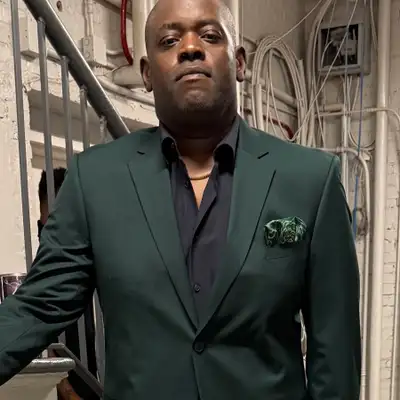
This series shares the stories of Macon/Central Georgia nonprofits, giving them a platform to raise awareness of their causes and highlighting their role in the Macon community.
Hello, and welcome to Ripple Makers. This is the first episode of this great show. I am Charles Davis. I'm joined by cohost of this show, general manager and creative visionary, station visionary, miss Susie Cowan. How are you doing, Susie?
Susie Cowan:Wonderful. How are you, Charles?
Charles Davis:You know what? I cannot complain. Now, this show, Ripple Makers, is as we said in the very beginning off air, this is gonna be our one pun about this. This is all about the nonprofit organizations that are making waves here in Macon, Georgia. Susie being brand new to this community and being the station visionary that she is, we cannot have you seeing the things that you want to recognizing the great community that we have in this town without introducing you to the people who are making the the moves and the decisions Doing the about what's going on in this town.
Charles Davis:And we've got some great ones coming up for you. But for the first one, I decided we need to do this big for you. And Macon is a music city, so we will start with those two. We have two phenomenal, guests on our show today. Number one, Justin Andrews, the grandson of Otis Redding and a big part of what's going on with the Otis Redding Center for the Arts and the Otis Redding Foundation, and the one only, as I call him, sir Richard Brent of the Big House Museum, the executive director of all things Allman Brothers.
Charles Davis:So, Susie, to start off this show, we got some good ones for you today.
Susie Cowan:I'm so excited. I can't wait to learn more.
Charles Davis:Now, Susie, beginning of this of this venture that we're on teaching you all about the things Macon, figure we need to start with a big one first. If we're gonna introduce you to all the people that make a difference in this community, we need to start big. Now, I'm gonna ask you a question and this is going to might be disrespectful to you for me to ask me for me to ask you this, but you do know who Otis Redding is. Right?
Susie Cowan:Oh, yeah.
Charles Davis:Okay. Cool. Just wanna just wanna make sure. Didn't wanna offend you or
Susie Cowan:anything. I mean, honestly, one of my first memories of music or live music was not Otis himself, but someone singing on the Dock of the Bay. So actually, that song is absolutely nostalgic for me.
Charles Davis:Well, that's very good. That means having our first guest in the building
Richard Brent:would be absolutely great. We've got Justin Andrews in the building from the
Charles Davis:Otis Redding Foundation. Justin, what's going on with your brother?
Justin Andrews:I'm good. How are y'all?
Charles Davis:You know what? We're doing good. Now, I'm I'm having to restrain myself and Justin is going to be good as well because we have a history and I will try. It can get foolish but we are here For business.
Justin Andrews:For
Charles Davis:business and better things today. So I'm gonna shut up talking and since Susie's trying to learn everything about Macon, Susie, you take the floor.
Susie Cowan:That's right. So what is Otis Redding Center for the Arts?
Justin Andrews:Oh man, what isn't Otis Redding Center for the Arts is a better question. I mean we are a 15,000 square foot performing arts facility right here in the heart of Downtown Macon to help enrich kids' lives and give them confidence, ages five to 18, through music and arts education. That doesn't necessarily mean that they're, like, coming into a classroom every day to take random music classes or things like that. It's more of a, where do your creative juices lie? Do you know what you like to do?
Justin Andrews:It may not necessarily be music. It could be photography. It could be videography. It could be graphic design. It could be engineering production.
Justin Andrews:It could be a lot of different things. You have to show kids there is something else to work for besides what is in your neighborhood and inside of your four walls.
Richard Brent:Mhmm.
Justin Andrews:That's the only way that a kid can succeed in life and know that there are other opportunities there.
Susie Cowan:Man, that is fantastic. Yeah. Tell us a little bit about the space itself.
Justin Andrews:The space is incredible. It was probably about ten years of planning on our end. Wow. And now we have this place where we have a full working studio inside of this place, full live room, full control room, full ISO vocal booths. We have five practice rooms in there as well.
Justin Andrews:We have six lab spaces. We have two lounges in there for our five to 11 year olds and our 12 to 18 year olds. We also have a tech lab in there for kids to be able to do, you know, graphic design, videography, photography, also use it as study halls or things of that nature to do projects if need be. The one of the greatest things we have inside of that space is what we call our Zen Room, which is more of our sensory room is what it really is. So it's great that we have that space inside of the center where kids can come in freely, use that room for maybe ten to fifteen minutes, and then get back in normal instruction with everyone else.
Susie Cowan:That's fantastic.
Charles Davis:Yeah. And it is an absolutely beautiful space. Your grandmother, the the great the queen herself, missus Elmer Redding, she took over a legacy at a very young age. Mhmm. We know that two of the things that your grandfather was passionate about was education and music Definitely.
Charles Davis:With kids. And your grandmother kept this alive and kept his dream of this alive. I know you said this was ten years
Richard Brent:Yeah.
Charles Davis:In the making of this, but I know it's her thought process has been around this a lot longer. How proud is your grandmother of this space?
Justin Andrews:Oh, she loves it. I mean, she absolutely loves it. I mean, we just wrapped up Otis Music Camp a couple weeks ago, and, you know, it was great to to see her there almost every day, You know, coming in, listening to the kids, giving kids a little bit of encouragement, and just, you know, the kids being able to to see her in this element. For her to be able to be in there and sit on that amphitheater stage and look out every day, it warms my heart that she definitely got to got to see this and see this thing through and now is, you know, reaping the the fruits of the labor that we have done. It's always great to see her in there every day.
Susie Cowan:Well, I'm glad you mentioned the camp. Tell us more a little bit about the camp.
Justin Andrews:Yeah. Camp is camp is great. So we run two summer programs, just wrapped up our nineteenth year of Otis Music Camp. Next year is a big one for us, the big 20, and we did not think we would go this far. We went from eight kids in one week to about 50 kids for two weeks.
Justin Andrews:And then one crazy year, we decided to do 75 kids in two weeks, was the craziest idea we've ever don't
Charles Davis:know why y'all thought that.
Justin Andrews:And then once we got in our space at the Center for the Arts, we did a three week program now, so now it's 50 kids in three weeks for those kids to come in and of course not only write, perform, produce and record all their own original music, but then we take it a step further, we teach the kids the business, we bring in those BMI professionals, those Sony Music publishing professionals, people down that are in this industry, so kids could get real world advice from people who are in this every single day. And you know, we always say there's a right way to, the wrong way to do music, and then there's the oldest Redding way that we do music. And we are teaching kids the oldest Redding way to do music, which is own your stuff, and read your contracts and make sure you own your stuff. And all of our kids know that now, so they get to experience all of that and then an amazing performance at the Grand Opera House on the last Saturday of camp, and the kids have full creative control of the show. So it's great for for those kids.
Justin Andrews:So Otis Music Camp is kinda where this whole thing started. And then it just blossomed from there.
Susie Cowan:That is so amazing. Yeah. I love that you're doing it the right way.
Justin Andrews:Have to. You have to. That's right. We only had one shot at it. We had to do it right.
Charles Davis:Very,
Justin Andrews:Seeing almost a full house in the Grand Opera House for 50 kids ages 12 to 18 to be able to grace the stage and do their own original pieces that they may never have this opportunity again.
Charles Davis:Exactly.
Justin Andrews:The public is really beginning to see what we could do. I mean, we took 14 kids to the ramen to open up for Jason Isabel. How many 12 to 18 year old kids can say they graced the ramen stage? And thanks to our supporters and donors, we were able to make that happen for them.
Charles Davis:How proud do you think of your your grandfather be of what you all have been able to do to keep this going?
Justin Andrews:If he was here, first off, we would probably have 50 of these, one in every single state. Yeah. We would it definitely would be. Of course Macon would always been the first. Yeah.
Justin Andrews:But we would have satellite locations all over the place.
Richard Brent:Yeah.
Justin Andrews:For him, you know, looking on us, I think he's just like, Jesus Christ, what is wrong with y'all? Like, what what
Charles Davis:is is y'all's problem?
Justin Andrews:I agree, you know, we started and I said, you know, we'll do music, we'll do education and the arts and keeping kids in school, but y'all just took it to a whole another level that I did not think that this was going to get to. And you know, I I just think he would honestly just be absolutely overjoyed and would be there every single day trying to give some child some kind of advice that didn't ask for it.
Charles Davis:But he gonna give it anyway.
Justin Andrews:He's gonna give it anyway. But yeah, he would be I I think he would be overjoyed and over the moon with what we've accomplished down here.
Charles Davis:Yeah. That and that just kind of flows into this next part of this as well. As you said, you've got the camp, you've got Orca, you've got the museum right down the street and and continuing that legacy. You all do so much to preserve making music. Why do you think making music matters yesterday
Richard Brent:Mhmm.
Charles Davis:And then now what y'all are doing going into the today and the future of what music should be looking like?
Justin Andrews:Because if there was no making music, we would not have any of the music that we would have today. I mean, of course you have Otis Redding and Soul and that, and now you have people trying to imitate that. I mean, you got the brothers that come in here with southern rock. I mean, nobody was doing that before the brothers came in, so now you have this whole new blend of of southern rock. You got rock and roll and Little Richard coming in doing all of these crazy things on the piano.
Justin Andrews:Thomas Dorsey and gospel music and what he represents and what has gone on. All this came from from Macon. Yeah, you got your Memphis, you got your Muscle Shoals, you got your Nashvilles, but there is not a place in the world like Macon that has brought out more superstars that have stood the test of time than Macon, Georgia.
Charles Davis:I say that all the time, bro. I swear I do. For anybody that wants to find out more information about what you all are doing, where can they go to find out?
Justin Andrews:They can definitely go to Orca Macon, orcamacon.org. We also have otisreddingfoundation.org. We have otisredding.com. You can follow us on all the socials.
Charles Davis:Alright. So go check out all of those things. Now, you being the first one, being the big one, and to ask you, oh, pick an Otis Redding song. It's kind of crazy, but is there a song that you would like to play from your grandfather that we can kind of roll with today?
Justin Andrews:It's Groovin' Time. It's an upbeat song, number one. I mean, if you listen to Groovin' Time and Groovin' Time doesn't make you happy, then something's wrong with you.
Richard Brent:Really it
Justin Andrews:is? But looking at Macon and here we are with all the things that we are doing, we are groovin'. Yeah. And I mean, Macon is moving and groovin'. We are up here with all the rest of these little towns of the world.
Justin Andrews:Macon is now back on the map how we should be. So hey, let's let's keep grooving.
Charles Davis:I hear you on that. Justin Andrews with the oldest Redding Foundation and the oldest Redding Center for Arts. Thank you so much for being here. Thank you, guys.
Justin Andrews:I appreciate it.
Richard Brent:Of course.
Susie Cowan:Thank you so much for investing in the future of Macon, investing in the future of music in the world, good music
Richard Brent:in the world Yeah.
Susie Cowan:And doing it the right way.
Justin Andrews:Hey. We couldn't do without y'all support, so thank you all as well. Appreciate you.
Charles Davis:Welcome back to the show now, Susie. This being the first show and all, we figured we will take this easy. We want you to learn all the things, but I don't think you're really gonna have a lot of difficulty with this because if I don't know anything else about Susie, is that Susie loves music. Isn't that right, Susie?
Susie Cowan:That's absolutely right.
Charles Davis:Okay. And if I don't know anything else about Susie, I know Susie likes a type of music.
Susie Cowan:That's right.
Charles Davis:Don't you, Susie?
Justin Andrews:Absolutely.
Charles Davis:And so to make this easy for you on the first Ripple Makers to get you introduced to things and people in this town that you already know about, but give some deeper information for the people who do not know about it. We have in the building, sir Richard Brent of the Big House Museum here in Macon, Georgia. Richard, how are you doing today, boss?
Richard Brent:I'm fantastic, man. Always great to be down here with you guys. And, yeah, anytime you get a chance to hang out in the studio here at the creek and talk to some great personalities, some of my favorite personalities,
Charles Davis:Ryan. So I really appreciate that. But, Susie, like I said, this is this is in your wheelhouse. So I'm just gonna back away from the microphone and let you go to work.
Susie Cowan:Let's talk music, Richard. Uh-oh. Tell me about the Big House.
Richard Brent:Yeah. It's a big house.
Susie Cowan:Lots of magic has happened
Richard Brent:in the Big House. No. I mean, look. People come from all over the world to to come to Macon to see the the place where a bunch of hippies lived at, you know, and they just happened to write a bunch of great songs and be one of the most iconic rock and roll bands in the in the world.
Richard Brent:Humble breath.
Richard Brent:So but, yeah, man. The Allman Brothers was a place they called home, a place they found so much inspiration for so many great songs. And it's just a real step back in time, you know, to be able to, you know, come to a place, walk through the door, and all of a sudden, you're transported back to 1970. You know? Nothing's changed inside those walls.
Richard Brent:You know? And it's
Susie Cowan:Tell me about the timeline.
Richard Brent:Well, the band, of course, they they get to make it in 1969, but, it's once they settled in and were able to bring their wives and girlfriends up, Linda Oakley found the house for rent in early nineteen seventy. There was a company back then called Day Realty. They had it listed, the Higgins family. They just wanted to rent it. And so, yeah, Linda found the house for rent, and she named it the Big House because quite simply, it was just the biggest house she'd ever seen.
Richard Brent:And she fell in love with it. It was 6,000 square foot Tudor style mansion. And, you know, she just knew that she wanted to be there. And how that was gonna happen was she was gonna have everybody stay there and everybody pitch in on the on the rent, which was
Susie Cowan:idea what that rent was?
Richard Brent:Well, it started out as $225 a month.
Susie Cowan:Jesus. Wow. It's a
Richard Brent:lot of money back in. But it got it got raised by a whopping $10 once the Higgins family found out there was more people staying there than agreed upon. So we land they landed at $2.35. Of course, I'll tell you a funny story that not too many people know that that even though it was always kinda considered the Oakley home because the Oakley's were the the the mainstays of the house. You know, Greg and Duane were there for the first several months.
Richard Brent:But as soon as they rented the house, Linda knew that that the band was about to take off and be busy. And then, of course, the guys were on the road for over three hundred days out of the the year in '70. So she kinda made Barry go back to Florida for, like, a little beach trip. Well, Duane was actually the first one in the house. And the first thing Duane did because the 3rd Floor was off limits.
Richard Brent:That's where the the Higgins family had their furniture and everything locked up up in there. And so Dwayne being Dwayne, he breaks in. So he furnishes the whole house with their furniture.
Susie Cowan:That's fantastic.
Richard Brent:So yeah.
Charles Davis:That's crazy.
Susie Cowan:Well, it is impossible to talk about making music history and not immediately include the Allman Brothers Band. For those that have been living under a rock, who are the Allman Brothers Band?
Richard Brent:Well, the Allman Brothers Band are they're considered the first, I don't know, jam band, if you will. But
Susie Cowan:That's right.
Richard Brent:This thing called Southern Rock Music was they were the originators of it. You know? Dwayne Allman had an incredible vision. I mean, we could talk for hours about how the story goes. Yeah.
Richard Brent:The cliff note version is Dwayne, you know, Phil Walden heard Wilson Pickett's version of Hey Jude, and this amazing guitar was on it and wanted to know who it was and found out it was some hippie named Dwayne Almond. So, you know, he signed him. He I like to tell people that Phil provided Dwayne the blank canvas to paint his masterpiece, you know? And and what that was is southern rock music. And what southern rock is, it's just it's it's it's just a mixture of all genres of music.
Richard Brent:And you take each guy in the band, they each brought their own personal, you know, influence. And and that's what the All My Brother sound became. It's a mix of R and B and country and jazz and rock and blues. And so it's just everything. It's just a you put it in a blender and hit puree.
Richard Brent:You know what mean?
Charles Davis:A lot of them came from the Jacksonville, from the from that Florida area, but it was their time here that cemented what they were. And I know you talked about Phil hearing Dwayne, but kind of how do you think the city of Macon the impact of what that band was and the city of Macon coincide about about how being here kinda helped them become who they were?
Richard Brent:You know, if you could consider Macon a person, I think they were searching for something as well as the band was searching for. I think they were, you know, searching for each other, so to speak. I think there was this movement happening, and I think the Allman Brothers came along at the right time. They were able to balance that movement out. You know, you were kinda transitioning.
Richard Brent:I mean, know, let's face it. Times are rough here in the South.
Charles Davis:Yeah. Yeah.
Richard Brent:You know? And, you know, then all of a sudden, you've got this integrated southern rock band, a bunch of hippies and and and a black dude rolling through the South here and hanging out. But I think what Capricorn was doing was showcasing what could be and what should be, you know, as a better society and everything to go along with it. That, you know, music is color blind, so everybody can get along in that aspect. You know what I mean?
Richard Brent:And so I can't probably tell you the exact reason other than just to say it like that.
Charles Davis:But Yeah.
Richard Brent:You know, you had this movement in Muscle Shoals. You know, things happened in in Memphis. Yeah. Yeah. Know?
Richard Brent:And then certainly, what what was happening here in Macon. Yeah. None none of this would happen if it was Capricorn in here.
Charles Davis:Don't know. Very true.
Richard Brent:I know Phil certainly needed the brothers. Yeah. Yeah. Like after losing Otis Redding. Yeah.
Richard Brent:I mean, you know, he was lost.
Charles Davis:But that was the part I think you you you get into is that Yeah. The Macon music community was still reeling from that and Yeah. Macon needed something. The brothers needed that that community. And like you said, the two the two hands coming together actually made a beautiful connection if that makes sense.
Richard Brent:Yeah. No. Absolutely. I mean, you know, the the impact Otis Redding had on the world is just tremendous. And then the loss of him at at at such a young age was was even even tougher.
Richard Brent:And and, you know, so, yeah, the brothers kinda came along at the right time, I think. And they were they were a band aid in a lot of ways, and then they were trailblazers in the other way, you know, so.
Charles Davis:Having places like Capricorn in town, being able to have that preserve that history, but the house itself, the big house itself is it's you said the museum is still up and doing what it's supposed to do, it's not just the house and the museum. It's an event space. It's a music venue. How do you think the house now plays into the current modern space as far as what making music is is concerned with?
Richard Brent:Well, I think it it was I think it was one of the early what new models of a museum. I mean, we certainly had our struggles, trying to accomplish things and but, you know, we've always kinda been able to kinda do what we needed to do or at least, you know, get our vision Yeah. Displayed. You know? As a museum, we bring in people from all around the world, all around the country, which which only benefits the the city because all the, you know, all the people that come there, they then come down here and spend their money and all that kinda good stuff.
Richard Brent:And, I'm really proud of what we've been able to do at the museum. It's our mission to make sure everybody knows the significant impact that they left on society as a group. I've seen it all at that museum, and that's a great thing. And hopefully, I'll continue to see it for many years.
Charles Davis:I hear you now.
Susie Cowan:Well, on that note, what are your hopes for the future of the organization? And does the road really go on forever?
Richard Brent:Road absolutely goes on forever.
Charles Davis:That's what you did there. That was good. I'll give you a belly flat.
Richard Brent:And when world domination is our goal. Yeah. I mean, that's I mean, we're doing exactly what we need to be doing. And so we just we just try to to enhance the experience. Right now, we're in the process of in the beginning stages of building a new event space on the property.
Richard Brent:So we've kinda got our own little Big House compound up there now.
Charles Davis:It almost feels dumb me to ask Richard Brent of the Big House Museum to pick a song that represents the Big House Museum. But, yeah, with that being said, we always have the organization bringing the song. What song did you choose today from the plethora that you could have?
Richard Brent:Well, you know, one of my my favorites is please call home. It's a song that that that was written in the house. It's written about the about the house. Obviously, a song about home. And, you know, and it also sums up Macon too.
Richard Brent:The band formed in Jackson, but but, you know, Macon Georgia was home. It's
Charles Davis:home. Yeah.
Richard Brent:On all the road cases, this was always stenciled Macon Georgia, you know, and so that's where
Charles Davis:they're See, now you got me thinking about the lyrics of that song and I never really attributed it to Macon like that. But immediately in my brain it goes, if you ever need me, you know where I'll be. Please call home.
Charles Davis:If you
Charles Davis:change your mind, if you leave and you need it, just call home. Sitting right here so now that makes a lot of sense. Well Richard Branda the big guy, thank you so much for being here. We greatly appreciate you guys.
Richard Brent:Thank you all for having me.
Charles Davis:Alright, Susie. Well, first off, we wanna thank both of our guests today, Justin Andrews from the Otis Redding Center for the Arts and Richard Brent from the Big House Museum. For the first episode trying to get you integrated into the community. I think those are two big ones.
Susie Cowan:It was fantastic. You know being a fan of Otis and of the Brothers, I've known about their music and learning more about the influence they had and and how they're still inspiring people.
Charles Davis:Yeah.
Susie Cowan:And their music and their their legacy lives on through the big house and through Orca, and is just making the world a better place.
Charles Davis:Yeah. It is. You know, between both organizations, they are both doing what I believe Macon is very good at is protecting and highlighting and celebrating what made the city what it is, and that is the Otis Redding's and the the Allman Brothers Band and making sure that we know the history and celebrate the history, but also the work they are doing to ensure that it's not just history that we celebrate. It's the future that we celebrate as well with what they're doing with the oldest Redding Music Camp and all the influence of all these new guitarists and players that find their way to the Big House and become inspired by what they see there and what the brothers were able to do. So shouts out to Orca and shout out to the Big House Museum.
Charles Davis:And we want to thank you all for being here for this first episode. We'll be back with more of these as we go on. We've got a lot more organizations to talk about, but as always, to catch up with us always, go to streamthecreek.com. And until next time, we'll see you laters.
Susie Cowan:Ripple Makers is a podcast by Creek Media, hosted by Charles Davis and Susie Cowan. This show is produced and edited by Big Hair Productions. Follow us on social media at stream the creek. Engage with us, like, subscribe, share with a friend. Be sure to stream this and more podcasts you may love at streamthecreek.com.