Subscribe
Share
Share
Embed
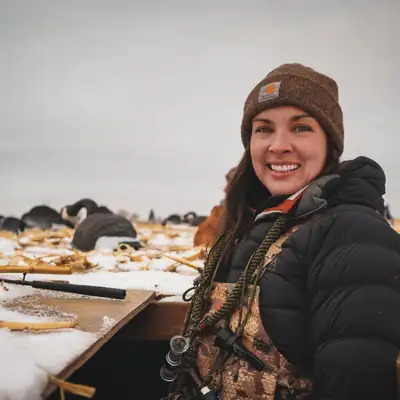
Ascend is a multimedia platform that spotlights the millions of outdoorswomen across our country who go hunting, fishing, hiking, camping, biking, running, and perform important conservation work every day.
Our web series and podcast feature guests who share their experiences with a focus on entertainment, education, and authenticity. Our viewers and listeners will get to know them and learn all about their passion for the outdoors. Whether you've been in outdoor communities all your life or are just getting started, Ascend is the place for you to follow your story!
Brought to you by Ducks Unlimited.
Welcome to the ASCEND podcast, a podcast by and for women in the outdoors. Every episode delivers real stories, practical how to's, and a welcoming community to help you start, sharpen, or rediscover your passion for the outdoors. Authentic women, real stories, outdoor adventures, ASCEND. Presented by Ducks Unlimited, the leader in wetlands conservation. Your next adventure starts here, the ASCEND podcast.
VO:Don't forget to rate and review the ASCEND podcast. It's the best way to grow the podcast and help other women discover the next step on their outdoors journey.
Erin Crider:I'm bringing you one of the most influential women in my life, Anna Sabotka. She is one of the big game archery guides for uncharted outdoorsmen here in Colorado. She also puts on one of potentially the only women's archery class in the nation, and she tagged her first public land archery bull. Anna, do you wanna introduce yourself a little?
Anna Sabotka:Yeah. My name is Anna, and I've lived in Colorado for about ten years now, but I grew up in Nebraska on a farm, big country girl. And I've shot archery most of my life, but kinda growing up in a big family, you just share everything. So I actually didn't get my own bow that was mine until much later. In addition to being really into the outdoors and archery and hunting, my main job is I'm a music teacher, and my main instrument is violin.
Anna Sabotka:So I have to joke with everyone that if it has something to
Erin Crider:do with the bow, I'm into it.
Anna Sabotka:So I've got my violin bows and cello bows and then my archery, like, compound and recurve bows. So it's it's pretty fun.
Erin Crider:Tell us about your archery bull hunt. I've heard a little bit. It was like, what, within the first week you had tagged out?
Anna Sabotka:Yeah. September 4.
Erin Crider:The average harvest rate in Colorado from what I've heard from hunters education, it was, like, every seven years, people tag a bull. And so the fact that this happened is a big deal. So we're gonna share all the details here.
Anna Sabotka:I've been hunting that area for, like, four years. And, of course, every year, you know, I get better as a hunter. Maybe two weeks before I went and scouted, woke up really early, hiked up to the top of the mountain, set up a game camera, and I just, like, did a loop around this basin. And I happened to I think it was, like, 01:30PM, and I happened to glass up a bedded bowl. I was like, well, this is super cool.
Anna Sabotka:Pinned it on Onyx, and I have a I took a picture of it through my binoculars. I actually have a really good picture of this bowl, and I, like, hiked down this different way that I came up. So I, like and I never done that particular hike before, so I got to see this area, and I found this flat spot, which is incredible. These mountains are so steep. There's, like, no flat places for camps.
Anna Sabotka:And so I was like, this is, like, a tiny little spot of flat ground. I'm gonna pin this because this is the only place on the entire mountain I could set up a tent. And so I did this little scouting trip, and which is the only reason I tagged out is because I went and did that hike that afternoon. It's the only reason I tagged out. You put in the work.
Anna Sabotka:Yep. And I we've always done scouting trips, and that one in particular, because I found that bull, knew where he was, I basically found his bedroom. And then I knew where the water was, because I I hiked in there, and I knew where we could camp. So it was super important. And then there's this one area in that unit that generally opening day has always been amazing.
Anna Sabotka:And so we get there, we get set up, we camp, Blah blah blah. We go to this one range that always opening day is amazing. We're like, we're gonna go up there because opening day is always amazing. And there was nothing. It was quiet.
Erin Crider:There was No no bugles. Nothing.
Anna Sabotka:No screams. Absolutely nothing. Just absolutely stupid. We were really discouraged. It was because it's always been amazing that that spot.
Anna Sabotka:I said, well, there was that one bowl that I, you know, I glassed up, blah blah blah. Let's go. Maybe let's just go over there. So we we packed camp in Thurs the night of the third, and we set up our camp. And then the next morning, we, like, hike over to where that bowl was bedded.
Anna Sabotka:And on the way, I stopped when I looking through my binoculars, which we call glassing. So I glassed up this really big bull on the top of the mountain, like, top top top of the mountain, like, tree line. And he was Same. Giant. He was on the he was, like, skyline so I could, you know, see his antlers so well, and he was huge.
Anna Sabotka:And it was really fun. Just I sat there and watched him for a little bit.
Erin Crider:And there's no way like, tree line is, like, eleven, twelve thousand feet. You know? Most of America's at zero.
Anna Sabotka:Yeah. It is vertical and rocky. Yeah. He was 12,000 feet. Yeah.
Anna Sabotka:Because later, I went and stood where he stood. So I was like, okay. Yeah. And so, anyway, so I'm glassing him up, and I think it was very fun about that. This is so much fun to be outside and watch animals, because you just you could learn a little bit about them all the time.
Anna Sabotka:But I'm watching him, looking at him, and this doe, this mule deer doe comes over top the mountain. He's just standing there, and she just does a circle around him, and he just he's standing there, and he's facing kind of away from her, she's doing the circle behind him. And it's just so funny because he doesn't move, but he just moves his head, and he's watching her. But, like, he couldn't be bothered by moving his, you know, moving himself, but he's just, like, turning and watching her. That was just so much fun, you know, seeing a a doe go that close to him, and he couldn't care, and she couldn't care, obviously.
Anna Sabotka:But I'm over here thinking, like, why are guys up there? Get down here. Like, don't wanna hike up there. How dare you? Like, that's stop making me work so hard.
Anna Sabotka:So we're like, okay. Let's go get him. And then Thomas asked me on the way. He's like, well, if we run into, like, a smaller bull on the way, are you gonna shoot it? And I was yeah.
Anna Sabotka:I'm gonna shoot it.
Erin Crider:Communication about your hunt. That's my next podcast.
Anna Sabotka:Oh, there you go. Mhmm. Yeah. I was like, if I get a shot on an elk and he's legal, I'm gonna kill him. Like, I I don't need that giant one.
Anna Sabotka:Like, that'd be cool. But, no, if I get an opportunity, I'm gonna shoot something. Because he also has a tag too, so it's like, well, you know, we both have to tag out, so I'm cool. Just shooting something. And so we move in, and we get to that area where I glassed up that bowl two weeks ago.
Anna Sabotka:And we're walking through, and I, like, turn to Thomas, and I'm I'm whispering. I'm like, this is this is where he was bedded. I'm sure of it. You know? This is that tree.
Anna Sabotka:Like, I recognize that picture. You know? And we hear a stick break. And I'm like, okay. Let's get set up because there's stick coming.
Anna Sabotka:You there's someone's here. Right? And our win was really good, which is, you know, that's gonna be the first thing that blows you. Mhmm. But when I say, like, set up, basically, I'm shooter.
Anna Sabotka:Thomas is caller. And so I move, like, 20 yards. Sometimes it's more, sometimes it's less. But in this particular situation, way the trees were, I only moved, like, 20 yards ahead of him, and he's back. And sure enough, I'm I, like, move up enough where through the trees, I just see a brown body.
Anna Sabotka:I don't see anything else. I just see a brown body through the trees. And I, like, turn back, and I look at Thomas. So funny. I look back at him, and he is just still he is, like, there's nothing behind him.
Anna Sabotka:The sun is shining on him, and he's just, like, couldn't be more obvious. He's a person. There's nothing behind him to, like, block his, you know, his silhouette. And I just am like, what are you doing? Have you even elk hunted before?
Anna Sabotka:And so I was, like, laughing, but I was trying to, like, get not talking in front of a way, but I'm trying to, like, signal, like, get something behind you. He's coming this elk is coming in. He finally figured it out, but it made me laugh because it was just like, I look back and the sun is shining on him, like, oh, you know, like, here here he is. It was super funny.
Erin Crider:Because you only use hand communications. Like, you have, like, grown sign language out there.
Anna Sabotka:Kinda. Yeah. I have I have different hand gestures I'll use to, like, I want you to bugle. I want you to cow call or whatever. Like, we'll we'll we're pretty good at that.
Anna Sabotka:And there it's nothing fancy. We just nonsense that we've come up with, but we know what it what it means. So
Erin Crider:Mhmm.
Anna Sabotka:So this elk keeps coming in, and I had where I was standing, I had a a a window, like, pretty much one window that he needs to come through. And, of course, he didn't. And he comes straight at me, and so he, like, goes around this tree, and he's probably, like, 15 yards from me. He's just straight looking at me, and there was no chance for me to take a frontal shot because the way the the terrain was, his head was, like, covering his vitals. He was looking down, plus he's looking straight at me.
Anna Sabotka:I can't draw my bow back. He's looking at me.
Erin Crider:Does he know you're there?
Anna Sabotka:He knows somebody's there. I believe at this point, when we were getting set up, I do think Thomas at this point did do a cow call. And he I'm confident he heard us. I think he heard us initially. Like, we never we weren't calling when we walked and got close to him, but he just, you know, we're walking through, and you can hear his sticks breaking, whatever.
Anna Sabotka:Like, we're trying to be quiet. But it's also El Continent, you don't have be as quiet as you think because they're they're loud as heck. If you hear one if you hear one running through, it's like there's a a freight train going through the trees. Like so he he knew we were there, and I I do think at this point, we did do a cow call. But he's, like, looking straight at me and came in, and that was super fun.
Anna Sabotka:It's just fun to have an elk stare off that close, and, like, keep your cool.
Erin Crider:Mhmm. Because there's
Anna Sabotka:an elk, you know, 15 yards away from me looking at me, and I'd want I wanna kill him, and it's not happening. Like, it's it's a it's a big moment. And he didn't like it, and so he he didn't win us or anything, but he, you know, he can see that, like, I'm not what is I'm supposed to be at a I don't look like an elk, so something's not right. So he rolls and leaves. I did a cow call, and then definitely Thomas did a cal call.
Anna Sabotka:Like, he knew, like, oh, he he he walked away. Can we get him to come back in?
Erin Crider:It's the ladies. Yeah. Exactly.
Anna Sabotka:And this is a younger bull, so he's stupid. Thank goodness. And so he comes back in, but he does he doesn't like it. He's, like, a little more, you know, wary of it. And luckily luckily, Thomas was there.
Anna Sabotka:If Thomas wasn't there calling, I don't think I would have ever gotten this elk. Because, you know, he's he knew that where I was wasn't cool, but now he hears Thomas behind me, and he's like, woah, what about what's going on over there? Right? So Thomas is doing some cow calls. And at one point, the bull, like, does this he does he barks, which basically means, like, danger.
Anna Sabotka:I'm a human. And so Thomas barked back. Oh. Which was key. And so he was kinda like, oh, well and then he stuck around a little longer.
Anna Sabotka:And then he went into my shooting lane that I wanted initially. And so at this point, though, the the shooting lane that he walks into, if he was to look towards me, now I'm silhouetted, and so the way that the the, like, landscape was behind me, there's a little bit of a a mound behind me. So actually, it dropped in when I was kneeling, and I had my arrow knocked, and he walks into my shooting lane, and there's a tree, And I'm, like, waiting for him. Okay. So he's, like, going behind a tree and waiting for him to take a step, and then I'm gonna, you know, draw and shoot.
Anna Sabotka:And so I draw back, and, of course, he stops behind the tree. So his vitals are covered, and he doesn't take that step, and I'm at full draw. And I'm kneeling. I don't know how long I stayed at full draw. It was ridiculous.
Anna Sabotka:Too long. It was exhausting. And finally, though, you know, between him kind of wondering what's going on and Thomas calling, he finally takes a step. I was probably at full draw at least a minute, maybe more. And then, I mean, just smoked him.
Anna Sabotka:Like, couldn't have been better Yeah, girl. In the shot. And if you look at the picture, that broadhead, just absolutely devastating. Exactly what you want. Giant hole.
Anna Sabotka:Just you know, he whirled, and then we heard him go down, like, instantly. Yeah. So he and he when we did, like, the blood trail, he did, like, a weird, like, kinda went up and then, like, did a circle. So the blood trail, like, was further, but then, like, straight across from where he was standing to where he died was 60 yards. Oh, wow.
Erin Crider:How far was your shot?
Anna Sabotka:40. Perfect. Right? I mean, ideally closer, especially if we're guessing. Not great.
Erin Crider:But I feel like if I hear, like, sixty, seventy, that's when I'm like, oh, okay. You guys are gonna be looking for that thing. You know?
Anna Sabotka:Yeah. It just depends. I mean, I I don't know. For me, I you know, I've gone to full drought enough animals and killed enough animals where if I just have a gut feeling that it's gonna be okay, usually, I'm pretty good. If if there's, like, this gut feeling of, like, yeah, this is something not right.
Anna Sabotka:You know? So that for me, that's a distance thing. And, like, you just fix. Yeah. Well, you just have to know your capability.
Anna Sabotka:Right. And that's why get trigger happy.
Erin Crider:Yeah. And
Anna Sabotka:I practice a lot so you know. So you know.
Erin Crider:Because it what you see on social media is not necessarily, like, a big bull every year. Easy peasy. Right?
Anna Sabotka:No. It's rarely that.
Erin Crider:Here on the ASCEND podcast talking about all the little intricacies and all the work that it took to get up here. But with that, let's take a break, and we'll come back and hear more about the pack out. We're gonna hear about the meat processing, and then how the uncharted outdoorsman elk camp went. We'll bring all that back to you after a word from our sponsors. And we're back here with Anna Sabadka.
Erin Crider:Now we are talking about the pack out. Because you're how far back are you? You're like Too far. 11 miles? I was like, I am so glad she did not text me.
Anna Sabotka:We weren't 11 miles back, but calculating from where he died, getting him all the way back every single, you know, piece back was 11 miles in total, just getting him out. And this is very, very steep country, so it was a lot of work. And definitely, pack trekking poles when you're doing a pack out. It's amazing. When you're on those, you know, really steep and you've you know, you're working through all that, and you've got all that weight on your back, and there's deadfall, you have to climb over it, and all that stuff.
Anna Sabotka:It's so nice to have that extra support through the trekking poles. So that's, yeah, key for sure. Yeah. We broke him down. That went really well.
Anna Sabotka:He died under this tree, which was very inconvenient. But we were able to kind of actually get under there, break a couple branches, and then it was nice because everywhere like, he was on the only kind of sort of flat spot in the area. It was he just died in this terrible place. Hard to to cut him up there because of the slope.
Erin Crider:Killing elk on the side of the hill was when I'm last year, that cow looked vertical.
Anna Sabotka:She was. And in hindsight in hindsight, I wish we would have just, like, tried to get her all the way down to because it was flat at the bottom. You just don't know what she's gonna get hung up on on the way, and it was far enough up. So we ended up just, like, tying her, you know, off to a couple trees and then, like, quartering her and then retying her up so we didn't wouldn't lose her. It's super dumb.
Anna Sabotka:It doesn't sound pretty. Well, and then you're you have a knife in your hand. It's a whole thing. So it you just have to work a little slower just so that you're being careful. Yeah.
Anna Sabotka:But he was very similar. But luckily, this tree because we're it's September 4, so it's gonna it's getting very warm. And so and so we did, like, one shuttle, I guess, to this creek that was closer to our camp, left two quarters there, and left some of the stuff from our pack that we did didn't need that was just extra weight. Went back, grabbed the rest, went all the way to where our camp was set up. And then we actually we did call in the cavalry we had.
Anna Sabotka:Some friends come out and help us. Thomas' brother and his fiance came out. And so we met them. We went further down past our camp. We met them, and they took that load from us and then took it all the way
Erin Crider:to the car. So went back pulling the whole carcass out.
Anna Sabotka:No. We we did Like,
Erin Crider:from the Midwest. Like, we're used to, right, is Right. Oh, you just drive up the ATV, and you hook it you hook it to the sled, and you hang it in the barn.
Anna Sabotka:That's We not would have had more luck with the helicopter coming in Yeah. At that point.
Erin Crider:Yeah. No. Which is normal here in the Rocky Mountains to have a hunting pack with a meat shelf that's ultralight. So Anna is what quartering means is taking off the legs, the back straps, you know, the neck rotors if you want to. Not required.
Erin Crider:But
Anna Sabotka:Yeah. We try to take as much as we can Mhmm. For sure. We always grab the heart. So we're doing the gutless method, you're we're not opening up the guts at all.
Anna Sabotka:We're or, you know, the abdominal cavity. We're just pulling the core we're skinning, pulling the quarters off around that. Backstraps, you kinda do need to get inside for the heart and the tenderloin. You can kinda do that last, and we try to, like, have them facing in such a way that guts are kind of, you know, not pushing up. They're getting kind of pressed down.
Anna Sabotka:So you can get in there and, like, you move a rib, and you can cut a rib and, like, get in there.
Erin Crider:And I feel like that's like, gutting figuring out how to gut an animal is one of the things that I, as a big game hunter, when I was brand new, my very first year, I didn't pull the trigger because I was alone, and I wasn't totally sure. And my my degree is even in agriculture. I looked at meat slabs, you know, for four years, but it was still like, oof. I don't know. I'm three miles back here, and my first hunt was a pronghorn.
Erin Crider:So and I didn't pull the trigger because of that. Y'all, it is easy to gut an animal. It is not hard. You're gonna mess it up. No one is perfect.
Erin Crider:There's lots of YouTube videos about it. There's lots of diagrams too, so don't be scared. Pull the trigger.
Anna Sabotka:Especially if it's a deer. The meat. Deer is so much easier because you can you can really move it as you need to. Elk is is a bit harder just because they're so big.
Erin Crider:This is, like
Anna Sabotka:maneuver it at all?
Erin Crider:The top of hunting. Archery elk hunting, I feel like, is, like, the hardest thing that I can imagine.
Anna Sabotka:Yeah. Sometimes too, like, even doing gutless where you're just pulling quarters off, so much of that, like, if you just know a little bit about, you know, working a knife or just what meat looks like, if if you just get you know, if you even go to Costco and get, a bigger thing of beef and you're like, I'm gonna cut my own steaks out of this bigger piece of meat, like, kinda know what it looks like and where, you know, different muscle groups are and everything. When you're gut excuse me, doing gutless and you're just taking those quarters off, some of it is very intuitive. You're following the the lines of the bone. Like, don't cut through bone.
Anna Sabotka:That's ridiculous. Don't do that. You just follow the line, and you can just it's somewhat intuitive if you have a little bit of a sense of what that should look like. Yeah. And it's you know, you don't wanna poke the guts, like, that's the big thing.
Anna Sabotka:You don't wanna, like, you know, getting it out on the meat if you can help it. Right. It's also not gonna be the end of the world. Half the time too, the shot can be so destructive inside that you already have the fluid on the meat. So
Erin Crider:Yeah. You know? Like, it's already there. You are like a dedicated archery gal. So is one shot, and you're done.
Erin Crider:I feel like the norm is multiple shots.
Anna Sabotka:It can be, and it's also just important, like, to plan on multiple shots. Like, the the very first thing I did was knock another arrow. Like, you just don't know. If you can get a follow-up shot, just get that thing down. Because you also don't know where, you know, property lines are if you're, you know, heading, you know, close to private.
Anna Sabotka:Here, luckily, you know, that wasn't an issue, but also, he could go anywhere, and I could lose him quickly. He could it could be amazing shot, and I still not find him. That happens all the time. Right? Happens all the time.
Anna Sabotka:Just those mountains are crazy. So if you can get him down quicker, then do that, and why wouldn't you anyway? Because it's just, you know, we try to make a make it so some, you know, painless deaths are quick as possible. So there's all
Erin Crider:that tough. So elk camp, historically, always done elk camp on public land for local women who wanna learn how to backcountry elk hunt. When we got introduced to Zeppelin Ranch, it became different. And at first, I felt like they were like, wait. You girls want to be the guides?
Erin Crider:I'm like, yes. Us gals, women, can guide this, and you don't even need to be there. And they were like, okay. Sure. Let's try it.
Erin Crider:And I feel like we need more gentlemen like that to be like, hey. These girls are insured, have outfitters license, and we don't have to like, I can go hunt in Texas while I'm still making money at my ranch, and I don't even have to be there. And we left that place spotless, but our clients were a little different. Right? Because we really struggled to find people that were in shape enough.
Erin Crider:Like, I remember year one, we wore them all out, like, day one. And a lot of them didn't make it to the end because it's November in Colorado, in the Rockies, in altitude. Yeah. It's cold. And it'll test you.
Erin Crider:And so we just gotta try things. And so we did, and it was wildly successful, especially how you and Taylor, like, worked together, blew my mind.
Anna Sabotka:That was super cool. And I really liked the the public land hunting too. And and Mhmm. You know, it's harder to get it at elk on the ground because, like you said, one in seven years. And we got close to elk multiple times.
Anna Sabotka:It's also we had on public land, it was all bull only tag. And so and that unit has parameters on it, and so you can't shoot a bull unless he has at least four tines on one side. Or if he's a three by three, his brow tine, the first one, has to be exceeding five inches. And when you're looking at a bull and you're like, alright. I need to get my measuring tape out.
Anna Sabotka:Like, you probably shouldn't shoot it. Right? So we were running into smaller bulls on public, and this is with a rifle. And this is with a rifle, and it's also public, though, and so you're dealing with the public. And so you'd we'd show up at spots and, like, well, these are these hunters over here, so we
Erin Crider:have to go it's a whole kid trying to get us first deer.
Anna Sabotka:Public land hunting. And so
Erin Crider:So we tried something new with a lodge. There was a garbage disposal at Elkham. Like, that was wild.
Anna Sabotka:It was warm. It was lovely. There's beds. Yeah. Yeah.
Anna Sabotka:That was really, really cool, but diff different. Right? Very, very different. There we weren't climbing mountains to the top or anything like that. But, yeah, we did great.
Anna Sabotka:We got three cows down in Yeah. Three We did. We took two down in one day out of the same group, same herd. That was really great. That was, like, our hope.
Anna Sabotka:We wanted to do that. Mhmm.
Erin Crider:And we kicked it off with the rifle class because since this is a plains elk hunt that we put together, the first thing that the landowner said was you gotta shoot accurately out to 500 yards. And I thought, oh, boy. That's not something you really do. And he was like, that's this is how we do things. And so the first night, we all got there, got checked into the lodge, got all set up, and then we went through the rifle class, which was key.
Erin Crider:If you're putting together women's elk hunt, please kick it off with a rifle class. And if it's at not 200 yards, but out from that, highly recommend the tripod situation. And we were using 6.5 Creedmoor's, and everyone was like, oh my gosh. This is, like, not the caliber I would choose. Three elk, one shot.
Erin Crider:It works.
Anna Sabotka:Well, they they also choose that caliber. It's super important because when you're out there and so the what what day would that have been? The second day of hunting, we took two cows out of the same herd. And so they they want that caliber so that they don't have pass throughs and get a second elk that was behind. You shouldn't be shooting an elk if there's one sitting behind it.
Anna Sabotka:Anyway, right, but, yes, stuff can happen. They can move quickly, but they don't want that bullet. Yes. It will pass through, but they don't want it hitting another elk if possible. So that that is a big intention.
Anna Sabotka:Yeah. Those tripods were awesome. I mean, that rifle class was awesome. Didn't I think everybody tried to shoot out to 600 and were either successful at 500 or 600. I mean, it was it was amazing just how quickly everyone got really comfortable.
Anna Sabotka:And they're we used those rifles all had suppressors on them, which was wonderful because it just helps everybody not react. Right? Mhmm. And it's also we also needed them to take multiple elk out of the same herd so they are not spooking out of the country.
Erin Crider:And the first one we saw, she was alone, which was weird.
Anna Sabotka:I mean, I've seen lone elk before, and the one guy who was there to kinda make sure we were good, Zach, we were asking him, you know, why do you think, you know, this lone elk is around here? And and he didn't know either. He's just like, don't know. She's just she's a little Keep
Erin Crider:chasing her. He's been chasing her. Yeah. But we got her.
Anna Sabotka:Did we see elk the first morning?
Erin Crider:I think you all saw them.
Anna Sabotka:We glassed her up. Mhmm. Like, way at the other side of the property, and then we went out in the evening, and then we split up. And so it was you, me, and then one of our hunters. And, yeah, we that lone elk came in.
Erin Crider:Mhmm.
Anna Sabotka:And we got it done.
Erin Crider:Yeah. And it was this gal's first elk, second big game animal, and she's a new mom. This was such a big moment for her. And I'm sitting there. We're holding cow decoys.
Erin Crider:Right? Because we're trying to this is a plains hunt. I am holding, like, a beef cow thing to cover up the movement so that Anna could get the rifle hunter in place and get her comfortable. And, I mean, that cow, the elk cow, is looking right at us. Like, she is just squared up with us.
Erin Crider:She knows something's up. I feel like we had a moment of panic when we spotted her, and we're just like, oh, this is there's not 200 of them. There's one. And so holding that, and you walked her through the your shot process, really, and pulled me back so I wasn't right in front of the muzzle. She took an easy shot, and we were all wearing ear protection, but it wasn't I wasn't wasn't that loud with that suppressor, so I'm definitely getting myself one of those for sure.
Erin Crider:Yeah. And then it was the aurora borealis.
Anna Sabotka:Yeah. We were we didn't even know. We were gutting gutting her out and then
Erin Crider:In the dark.
Anna Sabotka:In the dark. And then it was just like, why is that red? Why is that blue sky red? It was really cool. Yeah.
Anna Sabotka:Very, very cool evening. Very, very special. Yeah.
Erin Crider:And we gutted her completely. You both I mean, Taylor really walked everyone through exactly what she was doing all the way to the detail of which way the knife she likes the knife pointed when she's gutting things. It was an incredible experience seeing y'all teach how to gut that animal. And you started talking about the different muscle groups, and she was on her way the next morning. But we do suggest letting them hang.
Anna Sabotka:Oh, yeah. They they they really do need to hang overnight. Let them hang a while because you need that moisture to come out. So if you're putting that in the the cooler, that's not great.
Erin Crider:We're talking about public land, do it yourself. Gals, you've got the confidence. You've got the skills. If you've been to our camps, you can do this. And the whole ASCEND podcast with Ducks Unlimited is all about redesigning the outdoors, not only for women, but also for our community.
Anna Sabotka:Yeah. It's also you know, your your hunt is your hunt, and what you should always do is just figure out for yourself. And then if you have a hunting partner, you need to talk about this too. But just how are you defining success?
Erin Crider:Mhmm.
Anna Sabotka:I mean, Thomas and I are pretty hard on ourselves, and we really much def just define successes. We need a dead animal.
Erin Crider:Y'all been at it a while.
Anna Sabotka:We need to have the freezer full. Well, we were like this from day one too.
Erin Crider:I'm like, oh my gosh. I saw one. Like, I yeah. So, like trained eye.
Anna Sabotka:First year, I mean, we obviously wanted to kill him, but I said, I wanna bugle to a bull, and I I need him to talk back to me. Like, that's my in that and it happened, and it was like, okay. That was my success. But find out, like because because, yeah, the the chances of you, you know, killing an animal, very low, but get out there anyway.
Erin Crider:The other thing I'd like to add to that is when you buy those tags, it goes back to public land conservation.
Anna Sabotka:Yep. Always a win.
Erin Crider:With that, thank you so much, Anna, for being on the DUSN podcast.
Anna Sabotka:Thanks, Erin.
Erin Crider:To our listeners, start small. Stay curious. And remember strength is something you draw from within.
VO:Thank you for listening to the ASCEND podcast. New every week, the conservation driven podcast one week, and our adventure video series the next. Watch the ASCEND adventure episodes on the Ducks Unlimited YouTube channel, and be sure to like, share, and subscribe. Opinions expressed by guests do not necessarily reflect those of Ducks Unlimited. Until next time, follow your outdoor story wherever it leads you.
VO:ASCEND. Don't forget to rate and review the ASCEND podcast. It's the best way to grow the podcast and help other women discover the next step on their outdoors journey.