Subscribe
Share
Share
Embed

The World Pipelines podcast, with Elizabeth Corner, is a podcast that connects and unites pipeline professionals to learn about issues affecting the midstream oil and gas industry.
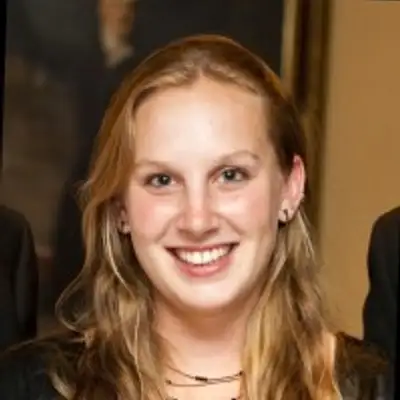
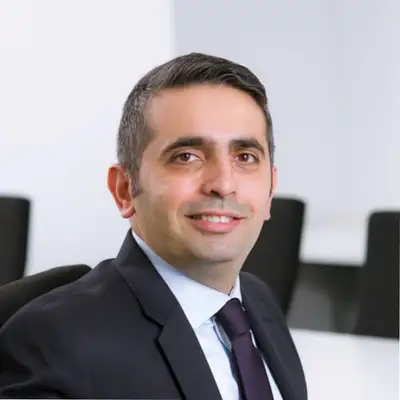
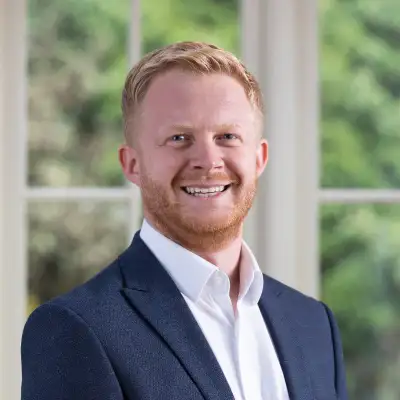
Hello, and welcome back to the World Pipelines Podcast for part two of our CCUS panel discussion, recorded live at the World Pipelines CCS Forum in March 2026. In this episode, we're showcasing the audience Q and A session where delegates from both the World Pipelines Podcast and World Cement's EnviroTech put their questions to our expert panel on the future of carbon capture, utilisation, and storage in The UK. The panel Rachel Sutton, interim CEO of Peak Cluster Tolga Timirci, head of global CCUS projects at Heidelberg Materials and Tom Redfern, head of sustainability at Holsom UK. The discussion is moderated by Senior Editor of World Cement, David Bisley. I hope you enjoy listening.
Advert:World Pipelines helps oil and gas pipeline professionals stay informed about the midstream oil and gas sector, offering technical articles, regional briefings, project and contract news, and think pieces on pipelines all over the world. Register to receive a print or digital copy at worldpipelines.com and search World Pipelines on LinkedIn to join our community.
David Bizley:So before we move we've got another question here on the screen. But before we move to that, is there anyone in the audience who hasn't used the EnviroTech app who has a question? If you do, please wave your hand and, somebody should be running down to the front with a microphone for you. If you could just keep your hand in the air, that'd be great. Thank you.
David Bizley:When it comes to questions of cost, what part does the pipeline cost pay in the overall cost alignment and cost effectiveness of the project? And in relation to that, is the water content of the c o two an important factor? Because that can be an important factor in determining pipeline cost. And I wondered if there was alignment between the cement industry and the pipeline operators.
Rachel Sutton:Yes. A couple of bits there. So first part of the question, I guess, what proportion of the the entire system cost is pipeline? I can't give an exact percentage off the top of my head, but relatively small. Most of the costs are in the capture technologies and then with the storage facilities.
Rachel Sutton:Obviously that is highly dependent upon the length of the pipeline. So if you have a much longer new build pipeline that creeps up. But fundamentally, the CapEx costs of the pipe going in the ground are not your major sensitivity to the overall pounds per tonne of CO2 abated. To the other question on water, absolutely you're right. So one of the major factors in the pipeline design are corrosion studies and water content is a really key part of So there's several aspects here.
Rachel Sutton:There is a CO2 specification that has been set by High Net and by Usophase Cluster. They are close but subtly different. Peak Cluster in the first instance is assuming the High Net CO2 specification. It seems a sensible starting place, but we're currently undergoing very detailed work, both from a pipeline assurance perspective, but actually more critically from a storage perspective to understand what the consequences of the various impurities within the CO2 stream are going to be. There are some extremely sophisticated thermodynamic models out there now to understand what the corrosion risks are going to be, and we're undergoing some really detailed modelling at the moment to make sure we understand the impacts of the various impurities within the CO2 stream.
Rachel Sutton:Fundamentally, the design codes for these pipelines are the same as they are for natural gas pipelines as well. So there's no the challenge at the moment and the work we do at the moment is focusing on understanding the thermodynamics of the CO2 as opposed to the pipeline design aspect itself. But that's a piece of work that's being done as we speak. So guess to go back to your original question, yes, the water content will be a balance of costs between the dehydration of the CO2 before it goes into the pipeline and the cost of actual building the pipeline itself, although it's worth saying that the store probably has even more sway of the CO2 spec than the pipeline itself does. And the overall cost impact on the project is not likely to be massively sensitive to that when you take into account the Capture Thirties and the store.
David Bizley:Excellent. Thank you. Anyone else with a question? Gentleman over there.
Speaker 6:Thank you. Good morning. Duncan Muxolland from Honeywell GOP looking at carbon capture technologies. This relates my question to either the pipeline or each industrial emitter, each cement emitter. How important is it to have a lump sum turnkey EPC contract, noting the reluctance in the market for the traditional oil and gas contractors to go turnkey EPC, labour issues and so on.
Speaker 6:Or is
David Bizley:the government underwriting those cost overruns? How important is it for contractors to be bidding EPC lump sum to enable these projects to be sanctionable?
Rachel Sutton:I'll defer to you first having been through the procurement process. EPC,
Tolga Timirci:of course, all the owners' first choice is to have the EPC contracts contractors available. But when the market, especially in UK, for full EPC we can't talk about the partial EPCs, EPC of the carbon capture part, ISPL, certain parts, but the full EPC for the entire plant to have the full EPC seems a little bit, in the current market situation, is difficult to get. Of course, in your EPC, you have more cost assurance, you have more control on the project from cluster point of view, from owner point of view, etcetera, but it's difficult. For that reason, what we are trying to do is we are trying to derisk the EPC none availability of this EPC pricing. And for the reason, we have this long term FEED studies, and then we have a strong owner team in the project coming bringing from other projects to other CCS projects to make sure that we have the control on the project more.
Tolga Timirci:Otherwise, with the EPC, you just sit down and watch the game. But, unfortunately, it's not the case for those projects in UK, especially at the moment. But we see.
David Bizley:Before we move on to this question on screen, anyone else in the audience has a question for our panelists? Somebody at the back there.
Speaker 8:Stuart Robson from Atkins Realis. You mentioned there is a potential for expansion of the the use of the pipeline potentially. Has that been built into the model, and what sort of capacity expansion could you expect? And would you be able to sell that use of the pipeline to try and reduce your overall costs in the future?
Rachel Sutton:Yeah, I'll caveat what I'm about to say by saying this is the core part of the peak cluster project does not include expansion. It is Spirit Energy who are operating the Morecambe Net Zero storage that are looking at this. So I'm speaking somewhat on behalf of them. So don't hold me totally to account of what I'm saying. But just to give a bit of context, the store itself has a billion tonnes of CO2 storage capacity.
Rachel Sutton:The peak cluster pipeline alone is looking at about 3,000,000 tonnes. So there is plenty of additional capacity. And absolutely, the more CO2 you can put into that, that more it drives down your overall cost of abatement. So there is absolutely an economic incentive to make sure that we maximise the CO2 storage. It is extremely early days at the moment, but what Morecambe are starting to look at is shipping.
Rachel Sutton:So importing CO2 from other parts of The UK and potentially from Western Europe as well, bringing that in via ship into Merseyside into Stanley, and then transporting that via pipeline. So it isn't part of the core cluster project. It's not going into the pipeline from the Peak District, but the store itself is looking at potential expansion opportunities to again drive down the cost further.
David Bizley:Okay.
David Bizley:Thank you. So let's move to this question from the screen here. Politically, what is the risk of these schemes being scaled back if a change of government leads to the scrapping of net zero targets only for that government to be out of power within a single term? Let's not get political.
Tom Redfern:I can tell everyone, it's always a risk, isn't it? I think it's always dangerous to try and predict politics. Who knows? And we're definitely in an ever changing world, but I think it's also important for us to acknowledge that it it's more than just net zero. This is protecting UK industry.
Tom Redfern:That was the point we talked about where, like, this gives us a clear future and a kind of a a future to commit to grow upon. That's important for jobs. The actual pipeline itself and storage is important for jobs. So I hope and I'm confident that regardless of the government that comes in, these other merits to doing this, which aren't just for net zero drive, and I think it's important we talk about those more.
Rachel Sutton:Yeah. Yeah. As you said, I think we we need to focus on the economic benefits as well as the net zero benefits of these projects and sustaining British business, making sure that we don't see the loss of we've seen so many sites close in The UK over the last few years and we don't want to see that replicated within the cement and lime industry as well, so it's important that we focus on those benefits as well as the net zero ones. But let's be clear, if we have a government that comes into power that chooses to repeal the Climate Act, this is going to be a very difficult project to justify. So yes, it is absolutely a risk and something that we're working very closely to understand how we can work with all potential governments coming in make to sure that they understand the importance of peak cluster.
Rachel Sutton:I guess it's worth saying that we've already got INET away. So that project is not going be halted. That's moving forwards. It's the future projects that could potentially be at risk. We are working extremely closely with DESNAS to make sure that the current government is aligned on exactly what needs to be done and the timescales on which we wish to achieve it, and to make sure that we can get this through within a supportive parliament.
Rachel Sutton:But yes, it is a risk.
David Bizley:Thank you. And following on a similar note, if government funding doesn't happen, is there any likelihood of private funding stepping in, or would that put the whole project at risk?
Rachel Sutton:I guess there's two elements to government support. Part of it is funding, and as I said earlier, we are trying to move away from government financial support as much as we possibly can. We recognise that subsidies into the future is not a viable option. The CCS industry is going to have to stand on its own two feet. I'm not going to speak on terms of which private funding might come in to step into that.
Rachel Sutton:But we are looking at as many ways as we can of moving this off the balance sheet. What I would say is the other element of government support that's required is the regulatory side of things. CO2 transport and storage system is a regulatory asset, it needs to go through a government process to make sure that we have an industry that operates. So even if we can fund it privately, you still need a supportive government who are willing to put this into a RAB in order to make the project be a success as well. So there's two elements.
Rachel Sutton:Part is regulatory and part is financial.
David Bizley:Okay. Thank you. So we've talked a bit about government support, and this was actually very similar to my next question, moving to the realm of public support. There have been some recent local protests on the PEEK cluster development that show how public perception how important, sorry, public perception is to the success of these projects. What are some of the most effective strategies to ensure positive public perception, and what examples can we point to?
Rachel Sutton:Yeah. Absolutely. So, yes, we have had some local protests on the peat cluster pipeline and to put some context around that, the struggles we've been having are where the pipeline is going through an area which isn't seeing the immediate economic and environmental benefits of capturing the CO2 in the Peat district. So it's the opposite end of the pipeline. I guess it's worth saying that local protests to large infrastructure projects are not uncommon.
Rachel Sutton:And this is why we go through a development consent order process to make sure that nationally important infrastructure projects are considered outside of purely local circumstances. That being said, bringing the public with us is absolutely critical. We want to work really closely with the local communities to make sure we understand their concerns. We are still very early in the process and we've just gone out for our initial consultation where we're starting to introduce the project to landowners. And now what we need to do is be working with them on a one on one basis to make sure that we understand their concerns and can design the project sensitively around that.
Rachel Sutton:So making sure where the pipeline is passing through their property, for example, that we can route the pipeline into an area which has the minimal impact on them. The other thing we need to be really clear on is how we're managing environmental impact. There is always a difficult balance between a project that's designed to mitigate environmental impact through capturing CO2 versus the local environmental impacts through the construction phase. And that is always a challenge. And we are absolutely committed to making sure that we are fully aware and do absolutely everything we can to mitigate local environmental impacts.
Rachel Sutton:For example, one of the things that we are doing is looking at a 10% biodiversity net gain, which means we are committed to making sure that the project leaves the environment in a 10% better position from a biodiversity perspective to how we found it. So the responsibility and the onus is on us is to show how the benefits of the project will be realised by those local communities. And that's what we're endeavouring to do over the coming six to twelve months of kind of engineering detailed engineering design is to make sure that we can understand what the consequences are going to be and mitigate those as much as possible. I think it's worth saying that High Net did an excellent job of managing this, and there was actually generally very positive support from that. There was the benefit that the benefits of the project were being realised in the same region as the construction impact, so it was a weighing of pros and cons on an individual basis, as opposed to people seeing the local impacts without seeing the benefits to their local communities as well.
Rachel Sutton:So Peak Cluster does have a different challenge to High Net. And equally, the political environment is very different now to where it was three years ago as well. It is a very difficult situation and we really need to continue to engage with the local public to make sure that they understand why it's important to them as well as why it's important from a national perspective.
David Bizley:Tom, did I think you want to add to that?
Tom Redfern:Yeah, echo again many of those points, but that's why through Peak Cluster we went out far earlier than we actually needed to with consultation because it's so important. We start by engagement early. We take onboard that feedback. We understand the concerns, which we understand far better now through taking those steps. And it's on us now as Pete Cluster and as he admits us to make sure that we can give the confidence and the certainty to those communities that are impacted, that we take environmental protection seriously, and and we care about them as well.
Tom Redfern:We want to make sure the impact is as minimal as possible, and we need to demonstrate that now as we go through the process towards that DCO.
David Bizley:Thank you. And I think this is for Tolga and Tom, but we'll start with you, Tolga. Most carbon capture technologies rely quite heavily on electricity. Now do you plan on building your own green electricity production infrastructure, or are you going to be relying on the national grid? And when planning carbon capture projects like this, how are you planning to deal with equivalent emissions?
Tolga Timirci:It depends on the plant as well. So there are plants that we have heat extra heat available, so we use them. Or but there are plants that we are also investing 100 megawatt power plants to to make sure that our CCS plant works, but that's also captured, and that's that's captured as well. The power plant is captured as well in the Fendi Flouglas. So it depends on the plant capacity, heat availability.
Tolga Timirci:For example, if we have a very small CHP and getting the rest from from the grid for the electricity.
David Bizley:And, Tom, for Holston UK's perspective.
Tom Redfern:We would we're very unlikely to have our two renewable energy generation when we had to not pick this at National Park. That would be very difficult to pursue on the scale of the energy generation we need. Our preference, I think we would say, would always be to be supplied through the grid, and that that kind of comes back onto that political support piece again, that government support. We would really like to see prioritization of increased energy power to the CCS projects moved up to that list. Otherwise, then we'll have to, of course, look at doing our own on-site generation, but that, as Tolga said, then brings with it his own emissions.
Tom Redfern:They're the things that we'd have to deal with as part of the process. So grid energy would be our preference.
David Bizley:K. Thank you. Moving to another question from the audience. UK produces about 7.7 megaton million tonnes of cement. Here, about half will be carbon capture enabled or net zero by 2032.
David Bizley:How do you expect the market to absorb that volume at a green premium? Who would like that one?
Tom Redfern:I'm happy to go, but Tolga, I have some experience from Brevik first, and then I'm happy to
Tolga Timirci:There are different mechanisms. Carbon bank, different mechanisms available. I think we need to look from a holistic view, not only the price of the the green premium. So we need to look for the holistic view. So we have, at the moment, from Brevi Case, started even selling this green premium for the data centers all over the world at the moment, and there is a demand for it.
Tolga Timirci:I guess it's a matter of the market matur maturization about that. It's not only selling one product. It's the combination of the products and also the necessity for it.
Tom Redfern:Yeah. I think we can see this kind of book and claim system ever evolving, which is probably going to form a core part of green cement sales going forward. So it might not necessarily be the cement produced at a plant in The UK is then claims the the green premium. Who knows? But that certainly seems to an evolving evolving area.
Tom Redfern:Also, I think as we see increased ETS costs go up, let's assume that policy stays the same, governments don't change, we can still see those really sharp increases in carbon taxation. That's gonna start to ultimately bring that into more of a level playing field as well. K.
David Bizley:Thank you. Is there an obligation to produce cement and sequester c o two coming with the public funding?
Rachel Sutton:I don't quite understand the question, if someone's able to elaborate. Just to give it to the funding that's coming forwards, I presume you're referring to the National Wealth Fund funding for the DevEx, but I'm not
David Bizley:Let's assume.
Rachel Sutton:Okay, that money is specifically going towards the development costs of developing the pipeline. So I guess, yes, that cost is expected to be spent on sequestering CO2 from produced cement. We're not getting in there's no public funding at the moment coming through to for cement production, which isn't related to CO2 in terms of the context of these projects, but I'm quite happy to answer a question if I haven't interpreted that correctly.
David Bizley:Okay. Excellent. Does anyone else who isn't using the app have a question to ask? If so, please wave your hand. K.
David Bizley:Excellent. Just make sure I'm not missing anybody out. We've got another question here on the screen, though, so we're getting plenty through here. When it comes to the construction phase, will you be looking at setting strict conditions when it comes to using UK based labour, UK manufactured products specified to assist in getting public and government backing?
Speaker 6:So I'll take this from a Peakless perspective, but I guess perhaps you can pull
Rachel Sutton:on UK content from your experience as well. So there is absolutely a keen focus on UK content from this, from a procurement process, and with something we're already looking at in detail is making sure that we can maximise the amount of content from a labour perspective, from a materials perspective that we can source within The UK. That is really important to us to make sure that we are maximising the domestic opportunities. That being said, we always have to recognise the limitations of the availability in The UK. The UK is not able to supply 100% of what we need.
Rachel Sutton:And often UK does come at additional costs. So when you're looking at the economics from particularly from a government funding perspective, when it comes to DevEx, for example, you need to make sure you're spending that money appropriately. So it's always a balance. I think it's probably worth saying that at the moment, the general consensus on CCS projects in The UK seems to be dancing at around about the 50% UK content. Just to put it into context, that is not a strict obligation at the moment, although there may well be an obligation that comes into force in the future.
Rachel Sutton:But we are working very closely with DESNA's and with DBT to make sure we understand from both sides how we can maximise the opportunities to The UK economy as a result of these projects.
Tolga Timirci:And we've made a very long search and study what's available in UK, which kind of equipments, which kind of services, which kind of construction we can get from UK, and identify the companies and maximize as much as possible from UK content, not only to get the support of the public, but also from finance financial point of view, because at the moment, after this Middle East conflict, logistic prices and and unavailability of the contractors are overseas. So we see a big benefit that UK contractors, UK fabrications, UK equipment suppliers will play an important role to supply that on demand, on time, and on on cost. So as mentioned previously, we are looking for partly modularization or, let's say, pre assembly units for our plants in page food, and there are good suppliers in UK that can accomplish that fabrication. We are on it too.
David Bizley:Tom, did you wanna add to that?
Tom Redfern:I think this kind of feeds in nicely to some of those non net zero benefits. It's an opportunity to potentially build four carbon capture plants at the same time in The UK and help make The UK a leader in carbon capture technology, which can both attract UK labor, skilled UK labor, and also then replicate that across the world. I think it presents an amazing opportunity.
David Bizley:Thank you. And another question's just come in as well. How important is the CBAM carbon border adjustment mechanism for these four projects to reach FID? Who'd like to go first?
Tom Redfern:I'd to go. A watertight CBAM is vital for you The UK cement industry, let alone getting these projects to to FID. If we don't have a robust CBAM in place, as we said, the ETS costs are now gonna start to significantly ramp up over the next ten years, but until they phase out altogether, The UK cement market will be left unable to compete with with imports which aren't attracted to same ETS costs. So for this project, The UK cement, in general, it's vital.
David Bizley:Thank you. Is anybody else like to comment on that, or we'd all agree? Okay. Excellent. So as more projects come online over the next few years, what do you expect the lessons will be learned from or the main lessons to be learned from sort of first generation of carbon capture plants that have come online at cement?
David Bizley:And I'll start with you, Tolga.
Tolga Timirci:There's plenty of lessons learned. So I can just give you one example from our project, Langford, Meggistat, and other pilot projects. We have a lessons learned database. Now it reached 2,500 points items. So what we are doing is that we are identifying all the relevant ones now for Pacewood and implementing them for Pacewood.
Tolga Timirci:There are for engineering lessons learned. There are execution lessons learned, contracting mechanism lessons learned, there are project management lessons learned. So all these things we are trying to implement, not to start from scratch all these projects. Because what's happening is that it's new for everybody, also for contractors, for technology providers and EPC, EPCM contractors. They are learning with us as well.
Tolga Timirci:So what we are trying to do is give them our lessons learned directly to them and get their lessons learned from their other projects to make sure that we don't start from scratch. Otherwise, those learnings will cost you during the project execution.
David Bizley:And, Tom, Rachel? Yeah.
Speaker 6:I was just going to add that we've paid with well, Heidelberg have
Rachel Sutton:been kind enough to do a lessons learned session with the Peak Cluster partners as well, which again is a fantastic demonstration of collaboration amongst competitors, is that opportunity for everyone to get in a room together and talk through what went well for Paidswood and what the Peak Cluster team are able to take away from that as well. I think it is really heartening to see how the cement industry is coming together in The UK to pass those lessons on and to make sure that we continue to drive this to a successful place.
Tom Redfern:Yeah, think just a maturing industry, means we don't need to look exactly as Tolga said, so we don't have to learn those lessons again every time and both make things quicker, efficient, and increasingly more cost effective. The more we do something, the more we get mature in how we do it, the better, the quicker it's going to become.
David Bizley:K. Excellent. Thank you. Now going back to something Rachel actually touched on in your introduction about storage availability. You mentioned, I think it was like a was it a billion tonnes I caught from?
David Bizley:So demand for carbon capture is only going to grow. Is there actually enough capacity when you take into account other industrial sources as well? We're well placed in The UK, but is this potentially a problem for other areas?
Rachel Sutton:Yeah, so certainly in The UK we are extraordinarily geologically blessed with storage capacity. I think the latest CCSA estimate was 78,000,000,000 tonnes of CO2 storage capacity availability in UK waters, which, yeah, that's just offshore. That is huge and vastly more than we would ever need in The UK itself. And actually that positions The UK quite nicely to become an importer of CO2 from a storage perspective, I should add. But that's actually a really nice way of building a CCS market, is by collaborating with the European industry and providing shipping opportunities and providing essentially a market through which we can market CCS capacity and import that CAT and build a merchant model around carbon storage.
Rachel Sutton:So I think, yes, here in The UK there is more than enough storage, and actually our challenge here is to exploit that rather than to worry about filling it up too quickly.
David Bizley:Thank you. And I always like to wrap these things up with by asking people to get out their crystal ball and their tea leaves. So starting with you, Tom. Looking ahead ten years from now, where do you expect, or maybe hope might be the better word, the state of carbon capture in the cement industry to be?
Tom Redfern:I hope and expect that it'll be matured. I would like to hope and think that peat cluster would have been delivered, and that will take out a huge chunk of The UK's cement emissions. And, really, what we're doing this for, it's to decarbonize cement so we could continue to provide a good material, provide safe, warm, and clean homes, houses, infrastructure that we all rely on. So I think my hope is in ten years, we're benefiting from net zero cement to allow production of cement to continue into a future and continue to deliver all those important things that society depends on. Thank you.
Tom Redfern:And Rachel?
Rachel Sutton:In my ten years' time, I would hope that we're starting to see material quantities of carbon now being captured and stored from projects like Peat Cluster, like East Coast Cluster and the like. Starting to see demonstrated quantities of CO2 being stored. And I think where we'd really like to get to is that The UK establishes itself as an exporter of green cement. This is an enormous economic market opportunity for The UK. This is our chance to establish ourselves globally as an exporter of green cement, and I think that's where we'd really like to see this go.
David Bizley:And Tolga, final word for you.
Tolga Timirci:We have started the first feasibility study for Previk in 2014, so twelve years ago. At that time, it was a black box for a cement company for a cement company. Carbon capture plant was a completely black box. And maybe 80% of the company, they were not believing in that project. But now after twelve years, for us, for Heidelberg, we are in the details.
Tolga Timirci:We know that we can deliver those projects, and they are viable projects. It can be viable if the industry plays with it and the policy plays with it. And I believe in ten years, it's it's a process. So we've learned in the last ten years, we learned that these projects are technically possible, viable if they work, and we can build those projects. In the next ten years, it comes down to scalability and also make them modular to reduce the costs, and then you can apply it everywhere quickly.
Tolga Timirci:Because at the moment, they are expensive and takes long time to execute those projects. So each project takes between eight to ten years to execute from initial stage until commissioning. So I believe in the next ten years, the industry, the technology providers, with contractors, with policymakers, that we will find a way to how to execute those projects commercially and also time wise so that we can, widely worldwide, in Europe and worldwide, execute those projects.
David Bizley:Excellent. Thank you so much. Please give our panellists a warm round of applause. Thank you.
Emilie Grant:I hope you enjoyed the second part of this two episode feature on UK CCS pipelines and projects. As always, if you like this episode and want more pipeline focused listening, please like and subscribe and share with a friend or colleague. Thank you.
Advert:World Pipelines helps oil and gas pipeline professionals stay informed about the midstream oil and gas sector, offering technical articles, regional briefings, project and contract news, and think pieces on pipelines all over the world. Register to receive a print or digital copy at worldpipelines.com and search World Pipelines on LinkedIn to join our community.