Subscribe
Share
Share
Embed
Reframe is the podcast about building sustainability.
Commercial and public buildings are among the biggest producers of carbon emissions. It’s a problem of massive scale. But, for building owners, engineers and contractors, solving it may actually be more of an opportunity than a challenge. That’s what the “Reframe” podcast is all about. Join host Jeff Nichols on an exploration of the forces driving sustainability in our built environment. And meet the people who are leading the charge.
Bridging Mandates and Momentum
Jeff: [00:00:00] Welcome to Reframe. I'm Jeff Nichols. Everyone's talking about clean buildings, but behind the big ideas and climate pledges, things get messy. Building owners want efficient buildings, but they're juggling empty floors, tangled rules and incentive programs that few can actually navigate. Yet real progress is happening not because of mandates, but because of community.
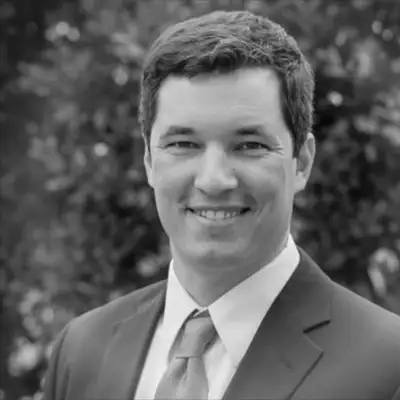
A growing network of architects, engineers, and policy makers working together, sharing ideas, solving hard problems, and proving the collaboration is the real engine of change. That's what drew me to Daniel Poppy, executive director of the Seattle and Bellevue, 2030 districts organizations built entirely on that belief.
Daniel sits at the crossroads of policy design and ownership, and he is not afraid to give it to us straight. What's working, what's broken, and what it's really gonna take to make our buildings part of the climate solution. Daniel, welcome to the podcast.
Daniel: Thank you so much, Jeff. I'm really excited to be here.
Jeff: As I've gotten to just understand or kind of know the industry, I've been really fascinated with this whole. Seattle 2030 Bellevue. 2030 Jazz. So I'm sure you're gonna walk us through the name and kind of what it all means. But first let's talk about you. What is, what is your role at Seattle and Bellevue 2030, and how did you get there?
Daniel: Yeah, so I'm the executive director of the Seattle and Bellevue 2030 districts. Uh, we are. Two of 26, 20, 30 districts across North America and places like New York, Dallas, Toronto, Pittsburgh, Philly, Detroit, um, and [00:02:00] we are an organization, environmental organization, dedicated to building sustainability and making our buildings more sustainable.
Our goal is to see a 50% reduction in energy, water, and transportation emissions by the year 2030. For me, you know, my story really begins out here in the Pacific Northwest, but more than that, it really began in the mountainous Cujo province of China, where I was serving in the United States Peace Corps for two years, from 2011 to 2013.
And I don't know if you've been to China during that time. Now it might be a little different, but when I was there, the air was so polluted that everybody I knew developed a cough. You would see black, you know, coming outta your nose. You couldn't drink the water. We had to use distillers that would leave this gnarly residue from all of the gross stuff that was being taken out of the water.
And for me, you know, I looked at that. Uh, being in my mid twenties and was thinking I could see a future for my own country and my own home. That looks a lot like this unless we start taking some serious actions to make some changes. And so I came back to the Pacific Northwest, settled down here, went to grad school out here, and I've been in the environmental nonprofit space ever since.
So I've been running the Seattle 2030 district since 2022 in the Bellevue 2030 district since we launched in 2023. And it's what I'm passionate about and what drives me.
Jeff: I have been to China when I was in business school. We did a trip to, uh, Beijing and Shanghai and likewise. All of the preconceptions you have.
What I would say is it, it's, it's not exactly what you think. We visited China Postal and it, it literally was like something out of a James Bond movie was like the whole experience. And then there are other parts of like, uh, Shanghai, it was like the most advanced, modern, capitalistic [00:04:00] place I think I've ever been in my entire life.
And so. It is amazing. There was an article in the New York Times yesterday about China and solar power. Obviously, they're the world's, uh, leaders and they've developed up in the Tibetan Plateau, I think it is the largest solar farm in the entire world. It spans the surface area of seven Manhattans, if I have that right.
I mean. Unreal. Yeah. China and, uh, climate change. We all need China to continue to go on the journey that we're also trying to go on. How did you find out about the executive director job? Like what drew you to that?
Daniel: You know, I'd been in the clean energy space for a while working for a really great nonprofit called Spark Northwest, which was really focused on helping low income folks, affordable housing providers.
Rural businesses, farms, all access the benefits of wind, solar, energy efficiency measures, that kind of thing. But I wanted to do this at a bigger scale and the district scale really appealed to me to work with basically the second leading cause of carbon emissions in the state, which is from the operations of our buildings.
And so as I was looking for new positions, I saw that this one came up. I think I had actually attended a 2030 district event. Many years prior and have been really inspired by their work and their partnership with architects and the way that they've sort of bridged that public private divide to advance building sustainability.
And so I applied and the boards offered to bring me on in this role, and it's just been an absolute joy. The people in this space are so incredible. Both the property owners and the property managers, but also the architects, engineers, contractors, the developers, all of these folks are. So forward thinking about this and are always looking for ways to make their buildings better, and that's something that I find really inspiring.
Jeff: Well, I'm excited for this conversation 'cause I feel like in many cases sometimes we have to [00:06:00] tiptoe around things, you know, um, certain organizations can't say certain things. And what I love is you kind of span everybody. And so I wanna talk about some of the dirty little secrets. Uh, when we talk about clean buildings and performance standards and all this stuff.
There's some stuff that's, that I think is, is working well and I, but I also wanna unpack maybe. Some challenges that really exist and I feel like, uh, Daniel can kind of just give it to us straight, which, um, I, I always certainly appreciate. So I'm excited to dive into that. But before we go too much further, I do kind of wanna, like this whole Bellevue 2030, Seattle 2030, what happens when we hit 2030?
Does the organization end like, what, you know, why the name? Are we gonna have to change all the logos in five years? Like, what's the deal?
Daniel: Yeah, so the 2030 districts were originally formed out of Architecture 2030, which is this famous think tank that was developing, uh, climate targets for the built environment.
And the big target that they created back in 2011 was the 2030. Challenge for architecture, and that was to see a 50% reduction in energy, water, and transportation emissions by the year 2030 baselined against the 2003 CBEs. So I think at that time, folks looked around and said, we need somebody to actually implement some of the.
Programming that's gonna help us get there. The education, the networking, the policy advocacy work that's gonna actually help get us to a place where we have achieved these targets. And they spun up the first 2030 district here in Seattle and we been working ever since. So it, it started here. Yep.
Jeff: And how many cities now have a a 2030 district?
Daniel: Well, they all kind of vary in how active they are, but we have 26, 20, 30 districts across North America. So we have a couple up in Canada. Most of them [00:08:00] are in the United States. Some of them are in larger municipalities like New York and Dallas, and some of 'em are in smaller municipalities like Ann Arbor or Burlington, Vermont.
Um, but on the whole, all of them have the same. Overarching goal, which is to make these buildings more sustainable and to actually achieve these targets that were developed by architecture 2030. Now, we also have targets for 2040 and beyond, but sort of the first goal is to get to these 20, 30 targets.
And amazingly, we are actually on our way. Now, how much of that is being driven by improvements to the building code or uh, building performance standards? Like I'm sure we're gonna talk about. It's hard to say versus the. Building improvements that we're seeing among our, among our members. But on the whole, we can see the industry is really moving in this direction and this is really becomes increasingly visible as you look at over time how much real estate we're adding to the total real estate makeup in the United States and how much energy usage has decreased over that time.
And carbon emissions have actually decreased since like 20 14, 20 15. So I. We're seeing a lot of progress. I don't know if we're gonna make our 2030 targets. I think we stand a really good shot of making it happen. So that's really important for us.
Jeff: That makes sense that it stems from architect 2030 and and some of the work there.
And clearly, uh, we need our lead designers and our architects to help make these spaces really efficient. Like you, I was really blown away with just kind of the role that our buildings play in climate change. And had no clue that, you know, especially in this neck of the woods, the second largest contributor to greenhouse gas emissions are buildings.
And so I would love to kind of unpack that a little bit further and talk about not just kind of what is today with our buildings and kind of. How do we think about this process to make them more efficient or have less of an impact to climate change, but also touch [00:10:00] on me what could be, and so let's first start with the state of the state buildings.
Talk to me about commercial real estate and vacancy levels and like what, what is the state of the state as we sit here in October of 25.
Daniel: Yeah, I mean here in Seattle it's been better. We currently are looking at a 25% vacancy rate or a 75% occupancy rate in downtown Seattle, and that's based on some of the work that's come out of the Downtown Seattle Association and the, the city's activation plans for the downtown.
What that functionally means is that one fourth of our buildings are. Currently empty, at least of our commercial buildings, and that's a pretty big number.
Jeff: What is it historically like? What do we have, kinda any reference points to say how good or bad that is?
Daniel: Well, circa 2019, right before the pandemic, I think it was floating up around 97%.
Now, I don't think that's always been that high, but this is a significant dip. And when you think about one in every four buildings essentially being vacant, it does mean that there's a lot of. Vacancy, and that's a big strain on the commercial property owners. At the same time, it's kind of spurring opportunities for innovation, and we're seeing some folks actually kind of take advantage of the vacancies to do building improvements to explore new efficiencies and new ways that they can be utilizing space.
Thinking about a different normal for the commercial real estate sector and how tenants can occupy those spaces. And also thinking a lot more about how we can bring people back into the downtown and get them back into these buildings and spending more time in the central business district, which is, is important.
So, you know, there's, there are some opportunities around this, but it's been better in terms of a real estate market.
Jeff: [00:12:00] I, I think that's important perspective for two reasons. Number one, while we need business owners to take action and really move to help drive some of our greenhouse gas emissions lower, I, I do have a lot of empathy for them.
Right. That's a pretty significant drop. And you know, that presents a lot of challenges. But to your point, I think for those that can figure out. The opportunity, like with every challenge, I very much believe there's an opportunity, and that's one of the things I've heard in talking to building owners is.
While the rent rolls aren't where they want, when they have floors that are empty, it makes the renovation aspect a a lot more straightforward or efficient. It's, it's hard when you're building is fully occupied to do that or do it quickly. And so that's what I see. Kind of the, the more forward looking folks doing is they're going, okay, this is the state of the state, yes.
How do we fill these spaces? But also when we do that, how do we upgrade them to. Be more efficient and that's gonna allow us to charge, you know, higher rents and, and really collect kind of a green premium for really, you know, great spaces. So maybe not great at the same time. There's, there's some upside.
So then let's kind of contrast, 'cause you straddle both, you know, two major metropolitan areas, Seattle and Bellevue. And of course when it comes to commercial buildings and performance standards, you've got one city that's kind of taking a certain approach and you have another city that's taking another approach.
So maybe kind of give us, uh, an update or, you know, give us an overview there.
Daniel: Yeah, I mean, things are really booming in Bellevue and what's inspiring to me to see is a lot of the new buildings that are coming online are really state-of-the-art buildings, and part of that I think is driven by state building code and energy code, and also by the tenants that are gonna be occupying them.
When you have an Amazon coming in, they're expecting. A [00:14:00] certain standard and developers are really rising to meet that standard. But at the same time, they're also doing things that are really innovative. I look at some of the new buildings coming online over there, like 5 55 Tower and Bellevue, 600, the rt, you know, these are, these are really top tier buildings that are.
Hitting incredible energy codes. They're reducing their embodied carbon that's going into these buildings. They're thinking about transportation really holistically and how people are gonna be getting to and from their buildings. It's an exciting time in Bellevue. And at the same time, they're also looking at the Wilburton neighborhood and how they're gonna do a massive redevelopment over the.
That's gonna prioritize transit oriented development. It's gonna prioritize sustainable buildings, it's gonna prioritize affordable housing. So there's a lot that's going on over there that I think. Is really exciting. Now, Bellevue's a smaller municipality and I think that they have a little bit more flexibility in the way that they're doing things, but it's really exciting.
And the city's sustainability plan, which is currently going to be up before the city council here this month, is something that I think anyone sustainability minded could look at that and say, this is what we wanna see in every municipality across North America. This is the kind of direction that we really wanna go.
I think there's some really interesting opportunities too, that are happening both at the municipal level but also at the utility level. So,
Jeff: Hmm.
Daniel: Puget Sound Energy has instituted a program that's called Demand Response, and for anyone who's listening who doesn't actually know what demand response is, essentially it's a way for, uh, property to utilize energy at a different time than they might otherwise do.
So this could look like preheating a space or pre-cooling a space during the summer and. By doing that, you can avoid using energy during the peak times in the day when the buildings are demanding the [00:16:00] most from the grid. And just like in COVID, what that means is that we're trying to flatten that curve because every time here in Seattle and Bellevue that we go outside of what we can.
Produce through our hydropower, we have to buy energy off of the grid, and some of that means that we're getting energy from places like Montana where they might be using gas or coal to produce that energy. And that energy comes a little dirtier than the energy that we're using. So even though we're not using less energy by changing the time that we are using it, we are keeping it so that the grid is just cleaner.
It's just a cleaner grid because we're not having to buy energy from some of these dirtier producers. So that's something that Puget Sound Energy has been doing over in Bellevue. They've been doing that on the residential side, and now they're doing it on the commercial side as well, which is a really exciting opportunity for folks to actually get paid for the energy that they're not using as well as the avoiding.
The higher energy fees that you would pay when you are using energy during that peak time. Seattle City Light is on track to do a similar program here in Seattle, and these are the kinds of things that I think are gonna be really helpful for property owners when they're thinking about justifying some of these better smart building controls or building automation systems that are gonna help them actually make some of these energy changes.
Jeff: Yeah, I think there's two parts, right? When we think about buildings, there's new buildings as you mentioned. So how does our new building code drive an efficiency standard? I, it's shocking when we think about buildings, what is their lifespan, but it's decades. In many cases, some of these buildings will outlive us, right?
And that I think is a little bit more straightforward in terms of how that, the ripple impact. The harder part is what do we do with existing buildings? And the stat that I love to quote is that 80% of the buildings that are gonna exist in 2050 by when we have to get to net zero have already been built.[00:18:00]
There is no magic pill. We're gonna have to do a little bit of everything. And you have to tackle existing buildings, which was a lot of the intent behind the Climate Commitment Act and the Washington State Clean Building standard. But I think what's interesting both. Probably empowering because it kind of puts local communities truly in charge of how to do this.
For anybody that owns buildings across a lot of municipalities, it probably drives them nuts because there's not just like one standard. There's a lot of standards and you know, you have in the city of Seattle the Building Emissions Performance Standard or beps. It's somewhat in alignment with the Washington state, but it is two different standards and you know, set of rules, if you will.
How do you think about that? Is that a good thing or is that maybe not such a great thing?
Daniel: If I had, my druthers would probably have one building performance standard that covered everything that we wanted to achieve in that way, but I recognize that that's a very hard thing to do across a whole state and give everybody what they're looking for in that way.
I think the building performance standards. Our tool in the toolbox, and I think we need to be using all of our tools. At the end of the day, I feel like most of the property owners that we talk to really wanna make these changes. They want their buildings to be healthier, they want their buildings to be more efficient.
They want their buildings to be more sustainable. And I don't know that we are currently giving them all the tools that they need to make that happen.
Jeff: Yeah. Can we unpack that a little bit more? Yeah. So what other tools do you think we should be providing, or what have you heard from them that would be actually truly more helpful?
Daniel: I think there's a lot of money in the space. I think we don't always do the best job getting it out the door as much as we could. The utilities have all these great incentive programs, and sometimes they're not getting utilized for a whole variety of reasons. Sometimes it's just a [00:20:00] matter of folks on the project side don't necessarily know who is responsible for going after certain incentives.
I was talking to a designer of somebody from a design firm the other day, and he said. You know, for new construction projects, we only go after incentives that we've been directed to pursue by the developer because otherwise we can't spend the man hours on it. We can't spend our time going after those grants unless we've been really directed to do that, and that shouldn't be the case, right?
Like if there are opportunities for people to save money or get rebates, that should be automatic in these new projects and for existing retrofits as well. And so finding ways to make that happen, and I, I, I really credit the utility teams for trying to get these grants out the door. But there seems to be a disconnect sometimes that not everybody knows where what's available or how to get it.
This is why the state has been trying to develop essentially a navigator for years that would enable folks to find out what kinds of resources are available to 'em. We've also explored using things like C PACE or financing, which has been much talked about and not very much utilized here. We'd love to see that.
Get adopted more.
Jeff: For folks that may not know, C Pacer is, um, it's a funding mechanism where you can essentially pay for the efficiency improvements through the energy savings. The complexity, as I understand it, is that. It requires a lot of legal maneuvering and subordination of lenders. And so it means not only does the building owner kind of have to say yes, but all you know, typically they're gonna have other financial backers that then have to take a back seat to the the C Pacer loan, which in many cases still makes a lot of sense for everybody involved.
But it's not an easy button from what I can tell.
Daniel: I mean, you're essentially [00:22:00] taking first position because the repayment of the loan is coming through as a property assessment rather than as a repayment to your lenders. And that is great because it disentangles these building improvements from the property owner, right?
It stays with the building as a property assessment. But the downside is that. You do need to get consent from your primary lenders, and that is not always an easy thing to get when they're talking about having to go a little bit further back in line. But we do see this being utilized really well in other places, so there could be a good opportunity for us to take better advantage of it out here.
The other thing that I think would just be absolutely phenomenal in this space would be if we could actually fully fund our green bank. So we just recently launched Green Bank here in Washington. These have done extremely well in other places, and the benefit of the Green Bank is that they're lending for projects that have.
This environmental positive impact. So this would be like energy efficiency improvements, sustainability improvements to the buildings, and as those get repaid, that fund that the bank holds is being replenished over and over again. So rather than having money go out the door and it's gone forever, you have a cycle where the money goes out the door, but then it comes back with interest and you are able to fund additional projects.
Currently our green bank is funded to the tune of, I think something like $800,000, which is not nearly enough to support the kinds of projects that we need to see. And this can be used for a whole variety of things in the environmental space, not just buildings. It can be used for, uh, electric. School buses, it can be used for, uh, fleet electrification for other, uh, organization, universities or public agencies.
It can be used for clean energy projects, a whole variety of things that we could use it for. And we've [00:24:00] got it in place. We have a fantastic executive director for the Green Bank, but we just need more funding to make it actually happen. And I think that we could start to get that through the Climate Commitment Act, but.
Somebody needs to make it happen. Yeah,
Jeff: there is money, there's grant money. We probably still need to make it easier than it is, but this concept of Green Bank, I agree with you. Grant is just a one-time thing. We give you this one-time check and that's it. Versus if we have a mechanism to lend that out, to do that work, but then can receive interest back.
That now can create this virtuous cycle. And I think there's some things that a Green bank could do that a state agency would never, could never really plan that space. Right. They'd just be too hamstrung. Is that kind of what you're, I hear you saying,
Daniel: yeah. I would say so. And things like the Early Adopter Incentive program, I think in the early period of time, following the adoption of the Clean Buildings law.
I think there was still some kinks being worked out. It's looking a lot better for the tier two building, so you know, it's a higher dollar amount. I think thresholds for participation, I believe are a little bit lower, so it's, um, going better in that way. But yeah, you know, when it comes to sustainability, the money is better served to get out the door as soon as possible because every year that you're operating, using.
A gas boiler or you know, gas for heating or whatever, those emissions just keep stacking and stacking and stacking. And so that money is more valuable to us to go out the door now and to make those changes now rather than keeping it in reserve for some future, future thing. So I'm all in favor of running down the money as quickly as we can.
The nice thing about a green bank is you can do that and then it comes back home. So, you know, that's, that's what I'd like to see more of.
Jeff: You were mentioning even if we get people benchmarking and have a better understanding of where we are and who's efficient, [00:26:00] there's gonna be some really tough buildings for us to tackle, right?
Mm-hmm. I think you talked about historic buildings, right? Can you, can you explain a little bit more about that? Like just paint the picture so people understand what we're dealing with.
Daniel: It's a tough road for historic buildings. There's very little that they can do to the exterior of the building. A lot of the time they can't do anything to the roof, which is where you'd be putting a lot of your HVAC equipment.
I think. Broadly speaking, our historic buildings in Seattle have been facing higher vacancy rates than some of our other buildings, and it's a tough, tough challenge for them. A lot of them are on steam, and our steam has been around for a really long time here in Seattle, and it's this super resilient energy source.
Unfortunately, the steam is currently produced using natural gas, and what that means is that. The steam actually has a higher emissions intensity than if you were to say. Be using a gas furnace at your property. So currently the steam is sort of the worst offender when it comes to carbon emissions. Now our hope is that the steam utility is going to be starting the process of decarbonizing switching over at least one or two of their big, um, commercial, uh, steam boilers to electric, which would go a long way towards dropping that emissions intensity and getting kind of below.
The onsite gas usage that we are seeing, but a lot of our historical buildings are on steam. So even though, you know, we've got some exemptions and some, uh, alternative compliance pathways and things built into these building performance standards to help folks who are on steam or our historic buildings or have.
Particularly high vacancy rates. Eventually the rubber's gonna hit the road and folks are gonna have to comply. And it is tough for buildings that don't have duct work, [00:28:00] that don't have more modern building controls, those kinds of things. I think that's really where it's gonna get interesting for some of the buildings in our space.
And you know, we've talked a little bit about what it would look like to convert some of these older. Commercial office buildings into residential, that's a big challenge. It's gonna require a very special building type to be able to do that, but I think people are gonna get more serious about looking at it because I'm not sure what the other pathways are for them.
That's one thing that I'm particularly concerned about. I look at a few of the historic buildings downtown. I worry about them and their path to achieving compliance with the building performance standard and the state's building performance standard.
Jeff: So at some point it will come to a head, if you will, to kind of figure this out.
I, I also think that sometimes we get kind of this all or nothing, and the reality is, is like. These historic building owners, expecting them to do it all on their own when it benefits all of us, I think is unreasonable. That we need to be finding mechanisms to continue to incentivize them and also assist with that.
Because, you know, a hundred years ago when it was built, you know, they weren't in, they didn't even understand this, right? So I just think that you gotta kind of have to take that perspective. We talked a little bit about what's gonna happen as soon as fines start getting in place with the Clean Building's performance standard, where's that money gonna go?
And that would be a great place to set aside some of that money to help these really challenged properties that kind of, through no fault of their own controls is an easy button that a lot of people can push, as you said, build the automation. But in that case, that's not really an applicable solution for them.
Daniel: A portfolio engineer that I was talking to a while back said. In relation to the building performance standards, that it was like they were being asked to get better fuel economy from an older car than the car had originally had. And you know, I, I don't think it's a perfect metaphor, but I [00:30:00] definitely understand the sentiment, right?
This building was built to code. It was built to perform a certain way. That's how it performs. We can do things here and there to try and improve efficiency and all the rest, but. That's how the building performs, and now you're asking us to do better than it was originally built to do. I, I understand the sentiment and I also understand that it's the second leading source of carbon emission, so we have to deal with it.
But I agree when penalties do start dropping, if people are paying on those penalties, that money needs to get recycled back into easing the burden for property owners too and property managers to make these transitions. And I can see a world in which that funding is going to support things that are unrelated to the building sustainability space.
And I hope that that's not the case. I really, really hope that our local and state governments are gonna choose. To recycle it right back in to helping affordable housing providers decarbonize affordable housing. That's a huge lift and they have no money. What are they supposed to do? They need every bit of support that they can get.
Same is true I think, for some of our historic buildings. We need to subsidize these and not for nothing. Some people might say, well. Knock it down and build a more efficient building. It'll take 50 years for the operational carbon emissions to catch up to the embodied carbon that's gonna go into a new construction building.
So we have to try and improve what we have. You know, those buildings just need to get better and we need to find ways to enable property owners and property managers to make those changes.
Jeff: So Daniel, we clearly have some challenges, but there's reason for hope or something that gives you optimism. Do you wanna share that?
Daniel: I mean, the thing that gives me the most optimism, honestly, is working with. Our community of building sustainability professionals, the property owners, the property managers who are dedicated to making their buildings more sustainable, the developers who are creating new buildings that are really [00:32:00] pushing the limits of how a building can operate.
We're starting to see regenerative buildings, buildings that are actually a carbon sink and are using less carbon than they emitted to build a building in the first place. When it comes to the numbers, our energy use and our emissions, they peaked around like 20 14, 20 15, but since then, they've been on a downward trajectory since they peaked.
We have added all this new real estate, but our emissions have actually gone down by something like 30% since 20 14, 20 15. Our energy use has gone down by something like 8% since 20 14, 20 15. We're actually on a pathway to achieving both the 2030 targets and our broader climate goals. That's amazing. When I was in undergrad in 2006, 2007, they predicted that by the year 2025, wind power would make up less than 1% of our national energy production.
They predicted that solar would make up less than 1% of our national energy production and today. That's the leading source of energy in the United States, and that is incredibly inspiring to me. And it's, I think the biggest way that we're gonna win this thing is by getting clean energy, increasing efficiency, and reducing emissions in the buildings.
Jeff: I think sometimes we forget the pace of change. You know, we're, we're so focused on what's right in front of us or what's at hand and reality is it, it takes about 30 years, kind of that multi-generational change to really move the needle. If you look at from horseless carriage to automobiles to.
Electrification of rural America. You know, it all kind of falls within a 30 year span and we're on our way, but we still have a long ways to go. 30% of all energy to buildings is just wasted. So there's a lot of still low hanging fruit. I think that can make a really big difference. Daniel, help explain more about Bellevue [00:34:00] 2030 and Seattle 2030, what you guys do and, and why it's important.
Daniel: The Seattle and Bellevue, 2030 districts are two of our 26, 20, 30 districts across North America. We're in places like New York, Detroit, Dallas, Pittsburgh, Philly, uh, and each one of these districts is unique and has unique challenges, but we're all committed to the same 20, 30 targets, which is a 50% reduction in energy, water, and transportation emissions by the year 2030.
What do those challenges look like in different districts? Well, you know, out here, storm water is a really big challenge for us because of our proximity to the Puget Sound, the impacts of pollution on our salmon populations. Um, storm water is, is a big piece, and that's not the case for some of our other districts.
You know, meanwhile, in Detroit. They've got a really dirty energy grid, and so for them, energy efficiency is the name of the game. The way that they can reduce pollution, reduce carbon emissions is by getting their buildings to be more energy efficient. Out here, we're a lot more interested in electrification because electrification just means that you're getting onto what is.
Already a pretty clean grid. So we have these different sort of priorities, but all of us are the same in the way that we are leveraging property owners and property managers to make their buildings more sustainable and reduce their impact on the environment.
Jeff: Why would I wanna be a member?
Daniel: I mean, the main reason that people join the 2030 districts is because we have this incredible community of property owners and property managers, but also the service providers that are helping those owners and managers achieve the 2030 targets if they're looking for somebody that can help them with Lumin luminary level lighting controls.
We have those people in our community. If they're looking for someone who can help them with clean energy finance, we have those folks in our community. There's people in our community who can help people reduce the embodied carbon in a new construction project. Or [00:36:00] there's people who can help them transition away from.
Gas or more polluting sources of energy at their buildings. We can work with them to make transportation more accessible for their tenants. It's only through this collective voice, this collective action that we're gonna really see the changes that we wanna see when it comes to building sustainability.
There's a whole host of things that can be done by leveraging the shared expertise of our community. So we do education programming. We do networking events. We work with our property owners and property managers to benchmark their buildings and make sure that they're on track to achieve not just our targets, but also the targets laid out by the state and local building performance standards.
And finally. Thing that I think is the biggest benefit to people when they're joining the 2030 district, is that we use our collective voice to advocate for programs, incentives and resources that are gonna make it easier for property owners and property managers to hit those sustainability goals, to achieve what they need to achieve, not just for our 2030 targets, but across a whole range of metrics.
And that's the main thing, is we're building a collective voice, a collective action that says we want our buildings to be more sustainable and here's how we think we can get there. And if you live in a place that doesn't have a 2030 district, Portland, Oregon, think about spinning up a new 2030 district.
Jeff: As a newer member, I can remember, you know, my first experience just feeling like I found my tribe. If you care about climate change, if you care about the built environment and kind of like how can we move this forward, come find your tribe. It will feel like coming home. With that, thank you Daniel for the conversation for the time, and, uh, look forward to seeing you at one of these events.
Daniel: Thank you so much, Jeff. I really appreciate it.
Jeff: As I think about my conversation with Daniel, a few things really stand out. First, real progress is built on community, not mandates. It's people, [00:38:00] architects, engineers, developers, and city leaders coming together to share ideas and spark change from the ground up, from the 2030 districts to local collaborations, its communities.
Not policies alone that are driving innovation and proving what's possible. Second, the path is messy, but the momentum is real. Owners are navigating confusing rules, empty floors and incentives that don't always work. Meanwhile, utilities are driving new programs like Demand Response, and other stakeholders are pushing for a fully funded green bank.
To unlock financing for energy upgrades. Progress isn't perfect, but it's happening through creativity and persistence. And finally, Daniel made another point that stuck with me. Building owners don't necessarily love new regulations, but it's still better to have a process than no process at all, because structure creates clarity, and clarity creates action.
And that brings us to this episode's reframe. We often assume new buildings are automatically greener, more efficient, more sustainable, more advanced. But new construction comes with a hidden cost, the embodied carbon and all that concrete stealing glass. By the time those efficient new towers offset what it took to build them, decades have passed.
That's why sometimes the most sustainable thing we can do isn't to start over. It's to make what already exists work better. We need to focus on the systems, the controls, and the behaviors that can transform today's buildings into tomorrow's climate solution. It's not as glamorous as breaking ground on something new, but it's where the real carbon savings are hiding.
I am grateful to Daniel and the 2030 district community for reminding us that progress isn't theoretical. It's happening right now [00:40:00] in our cities with people who refuse to wait. Until next time
Speaker 3: you've been listening to Reframe the show about building sustainability presented by pilot life opinions shared by the reframe guests aren't necessarily the views of their companies.
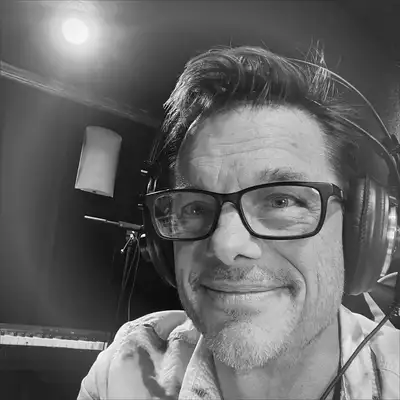
If you'd like to learn more about the podcast, the show's host, guest, or topics, check out this episode's, show notes, or visit pilot light.ai/podcast. Got a question for the reframe team. Drop us a note at reframe@pilotlife.ai. The reframe podcast features original music by Dyaphonic. The show's produced by Robert Haskitt with Eric Opal and the show's host Jeff Nichols.
Before you go, this would be a great place to hit pause in your podcast app and then hit that little plus sign up in the corner to follow the show. That way you'll never miss an episode. Thanks for joining us.