Subscribe
Share
Share
Embed
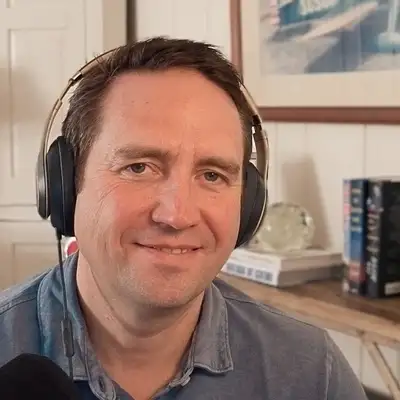
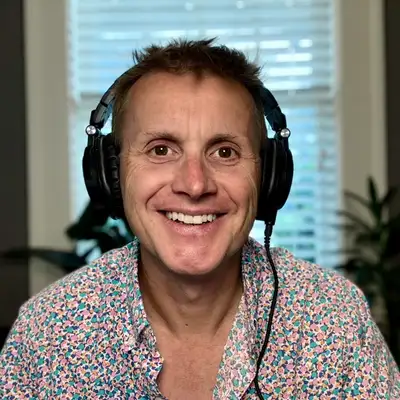
Space Insiders is your bi-weekly deep dive into the intersection of space, cloud technologies, and entrepreneurship. Hosted by Tony Sewell and Rob Ruyak, both seasoned space-tech executives, this podcast features candid conversations with founders, investors, and entrepreneurs shaping the future beyond Earth. Whether you're launching a startup, investing in innovation, or just space-curious, Space Insiders gives you the behind-the-scenes insights you won’t hear anywhere else.
New episodes drop every two weeks. Subscribe now and join the orbit!
Disclaimer: The views and opinions expressed in this podcast are those of the hosts and guests and do not necessarily reflect the official policy or position of any organization or employer.
Alright. Welcome to Space Insiders. My name is Tony Sewell, and as usual here with my good mate Rob Riyak. How are going, Rob?
Rob Ruyak:Great, Tony. It was good seeing you this week.
Tony Sewell:It was. Back in the the home office now, late late flight home last night. But we had a really fun interview this week. Our first one in person, episode number 14 with Kevin Stein.
Rob Ruyak:Yep. Kevin, great guy. We both known, I think, for quite a long time. You more than me, but, yeah, he's got thirty plus years of satcom experience, and he was the CEO of several companies, including OneWeb Technologies most recently. And then he was also CEO of iDirect, where he also had some before that, he had some very interesting senior positions where he was doing a lot of M and A for iDirect.
Rob Ruyak:And is just someone who's a, I think, very different type of leader just in how he carries himself and how he looks at culture and developing others. So, was a really fun conversation with him.
Tony Sewell:Yeah. It was. Kevin and I first crossed paths back in the oh gosh, maybe twelve years ago on the Masak Global Express program, the challenging early days. IDirect was a big supplier to IMARSAT for that program, but it was good to relive some of the experiences there. But I think one of the things that I didn't realize until we started talking to Kevin, because the whole premise of this episode was about leadership and culture and helping to differentiate between management and leadership and what makes good leaders.
Tony Sewell:I think we all agreed this is not something you're born with, it's something you learn and you model behavior. But as we started talking to him and I was thinking about some of the unique challenges for him as a serial CEO, I hadn't really appreciated the merger and acquisition piece that he'd been involved in so many of those as CEO. So I think that was a really interesting little thread that we discussed.
Rob Ruyak:It was. And I think it was fun. I mean, he was the one who brought that up, And I don't want to ruin it, but we we
Tony Sewell:talked the upside. About
Rob Ruyak:Yes, please. But just to give a little hint in case this is the only piece that you have gotten through so far, that there's a direct correlation with culture and the success of how some of these transactions work. Right. And I don't think it's a surprise to probably most people that that's the case. But I feel like that was one of the first examples he brought up where recognizing how different people and different cultures can actually mesh and work together is actually everything.
Rob Ruyak:You could have a great strategy and you can have the most highly skilled people. But if you don't have, you know, I think a leader that helps exemplify in action direction and in strategy, the way that we get things done, the way that people operate, the way that people respect one another, the way that people advocate for those that have real talent and have good ideas is like the core of how individuals can work better together and can have good relationships and friendships. But it's also it applies to companies, both large and small also. So, I thought that was a fascinating part of the discussion.
Tony Sewell:Yeah. And I think there's going be some good little nuggets in this discussion for people that earlier in their career, maybe they aren't managers yet or they aspire to be managers and they're thinking about they're still developing their own leadership style through to people that are founding businesses and maybe finding themselves in a founder's role or in their first CEO role and some of those foundational skills that We all really agreed on what some of those foundational skills were around decisiveness, empathy, resilience, humanity, just the power of relationships and the importance of that role bringing people together for a common purpose. So, yeah, probably shouldn't talk anymore about it. We should probably just go to the interview. What do you reckon?
Rob Ruyak:Let's do it, Tony. Yeah. Alright.
Tony Sewell:See you in a minute. Alright. Kevin, welcome to the show. This is a little bit of a different experience for us doing this
Kevin Steen:in person, Rob. Yeah. Thanks for inviting me. It's great to see you two face to face, although I see you sometimes face to face.
Tony Sewell:Sometimes. Yeah.
Kevin Steen:Sometimes. It's been so thank you for inviting me.
Tony Sewell:Yeah. It's awesome. And this is a, it's a topic that Rob and I have been talking about for a while. Leadership comes up all the time in our discussions. And obviously we've been talking about it lately and we saw it given your backgrounds, having been a CEO of large companies, small companies, different sort of different levels of maturity, it'd be great topic to explore
Kevin Steen:with you. Looking forward to it.
Tony Sewell:So, I mean, just to get us started, Kevin, you and I have known each other for ages. We were in the trenches of the Massac Global Express program when you were at iDirect. But, yeah, just tell our listeners a little bit about your background and what you're doing now.
Kevin Steen:Keep it. So so as you said, was at iDirect, started off there in business development, then became the COO and was fortunate enough to be nominated to be the CEO and selected. So that was a wonderful experience for me personally. Just was it was a very formative part of kinda who I am, and I kinda grew up there in that context. Then moved on to OneWeb Technologies, a service provider, LEO service provider serving the DOD.
Kevin Steen:And then from there, went to where I am now, a very small startup, pre revenue startup in the UAV marketplace, command and control, as well as sensor technology. So I'm the CEO at very small company now.
Tony Sewell:At your you've lived through a couple of big acquisitions too.
Kevin Steen:Yes.
Tony Sewell:So both at iDirects Yep. Which now is ST Engineering and also when OneWeb merged with Eutelsat.
Kevin Steen:Correct. Correct. So I have a a fair amount of experience. It started back, prior to that, I was with SAP, and I was at a software startup that got acquired by SAP. So I led the, integration of that company into, SAP, and they liked how I did it.
Kevin Steen:And so they asked me to join their m and a team m and a team. So I did a lot of integration acquisition work at SAP. And then, yes, at at iDirect, we had a couple small ones, and we had a large one when we acquired Newtek. And then at OneWeb Technologies, the acquisition of OneWeb by Eutelsat, but then the Eutelsat proxy, right, came together with the the OneWeb proxy. And so I led those two proxy combined orgs for
Tony Sewell:a little while. Yeah. So, I mean, just to get things started, I'm keen to talk about management versus leadership. And I was kind of reflecting on what were some situations where I kind of realised that leadership was more important than management. I don't think you can be a good manager without being a leader.
Tony Sewell:I'd like to sort of delve into that a little bit. Having been through big organisational changes like acquisitions, like that's the ultimate, like in the commercial setting, that's one of the ultimate tests of leadership. So can you tell us a little bit about how you approached that sort of change within an
Kevin Steen:Yeah. So I would say that so, a, I agree. Right? There is a definite difference between leadership and management, and I agree with you. The most effective managers are also good leaders or at least have the raw skills that you that can be then honed and developed into leadership.
Kevin Steen:Right? I gotta have that foundation. An acquisition is probably one of the hardest things I've ever done. And what's the metric? 70% of them somehow never quite exceed or fulfill their potential or fail for lots of reasons.
Kevin Steen:And I think the number one reason that's out there is just culture fit is the number one reason that that these things don't work out as they planned. And so I think the thing that I learned the most at SAP when I did all those transactions was and and most important thing besides leadership was empathy. Understanding how the acquired company feels and being able to then handle that and be ready to address those issues, concerns, or proactively think through that. And I think that's the hardest part for any acquisition, whether you're acquiring or being acquired. It's hard to think about how the other side is thinking of this.
Rob Ruyak:Mhmm. They're
Kevin Steen:not doesn't mean people are bad people. It's just they all have different perspectives. But the ones that I think have gone the best is when you can truly be empathetic to how the other folks are feeling, number one. And then number two, as the leader, you have to be in the middle. Right?
Kevin Steen:You have to be neutral. You can't be seen, and you can't believe that you're gonna favor one side. You really have to just think of the end game that you're the goal. Why did you wanna do that transaction and what was the value in it? And just drive to that and leave the the the partisanship or the politics, if you will, behind.
Kevin Steen:And sometimes that's hard because, you know, you you I spent so many years with my legacy iDirect folks. Suddenly, had
Tony Sewell:all these new Newtek folks. And I
Kevin Steen:made sure that I wasn't being seen as favoritism, but also just, again, focusing on that value. And that's really because I was at iDirect for, what, ten years before we acquired Nintex. I had all these long standing relationships. Yeah. And that's that's a tough one.
Kevin Steen:So but it was it was a a very hard experience compounded by COVID. Right? Closed the acquisition October '19. March '20. Yeah.
Kevin Steen:Couldn't come at a worse time.
Rob Ruyak:No. It great timing. Yeah. Yeah. Yeah.
Rob Ruyak:Yeah. And being being empathetic through a video, as you know, experience is is difficult.
Kevin Steen:So that divide, already there from an ocean, literally an ocean, just got bigger. Yeah. Right? Because I was trying to get there literally every other week.
Tony Sewell:Mhmm. I think about, like, we've talked about, like, good leaders and bad leaders we've seen.
Rob Ruyak:And Yeah.
Tony Sewell:And I'm so glad you said empathy because it's like when I was thinking about things, like, I wrote it down a bunch of times, and I think that is something that really separates good from the bad.
Rob Ruyak:Yeah. I agree. And I think This is just my opinion. I think that term empathy is defined differently by different people. Right?
Rob Ruyak:Sometimes for some people, it's weakness. For other people, which I think is good. I think the trend now is empathy is actually strength. And it is interesting you pick that word because I kind of agree with that. I don't think there's a lot of people in the world that aren't striving to just feel valued, right?
Rob Ruyak:In any organization. But I think some of the culture in some companies, they struggle with it because these are people that are trying to do a job and they don't necessarily need recognition or an award, but they just want to feel themselves that they're valued. And a
Kevin Steen:lot of
Rob Ruyak:that, I think, for a strong leader is being empathetic to the fact that people do want to feel valued. And I think the worst leaders out there are ones that are narcissists. Truly just are there for their own benefit, their own way up and chain. And they feel because historically, I think have to come from organizations like that. I think this was of the past of the people on the team are there.
Rob Ruyak:I got to treat them right. I got to make sure that they're doing their job. But it's all serving my own progression. And I don't think that's the trend nowadays, which is a good thing.
Kevin Steen:Absolutely. You agree
Rob Ruyak:with that? Yeah. Absolutely. Yeah.
Kevin Steen:Yeah. It's it's if you don't get joy out of leading people, shouldn't be in the job. Yeah. And that's those folks who behave that way don't get any joy out of it because it's all about themselves. Yeah.
Kevin Steen:And one of the things you you had we talked previously is about mentorship and things like that.
Rob Ruyak:So at
Kevin Steen:that point in the conversation, I'll talk about some mentoring that came my way that changed how I approach things. Yeah. Right?
Tony Sewell:Let's Yeah. I I mean, let's talk about mentorship. And the comment you made about about the leaders that are sort of using their position as a way to get themselves to where they want to go. And I was thinking about I was really lucky. I learnt I had a very structured sort of training in leadership because I went through officer training.
Tony Sewell:Yeah. And it's all about leadership and I sort of think about how I've taken those learnings and sort of evolved them throughout my career. I do remember one of the very first things that my first commanding officer, I'm going give him a shout out, Marcus Thompson, he went on to become a Major General. He was the first head of information warfare for the Australian Army and he's been a mentor through my career. But one of the remember one of the first things he told me when I was a junior officer getting some advice is is you worry if you look after look after your people, like the career stuff will come or the the opportunities will come.
Tony Sewell:And and being being a being a that that was really kind of one of the the key essences here. I don't know
Kevin Steen:if you found that. So when I
Rob Ruyak:think back, I've had probably
Kevin Steen:two big mentors or influencers in my life from a career perspective. The first one, his name was Ted Less. Ted, if you're listening, thank you. People side of it. Right?
Kevin Steen:He led by example, and he was a big family man. And so we worked very hard, worked a lot of hours, and had a
Rob Ruyak:lot of things that we had
Kevin Steen:to get done. But he always put family first, and he demonstrated it firsthand through his leadership and his mentoring of me. He said, hey. You know, you gotta take care of your people because they are what propel all companies forward is the people. That was one, and he he gave me some great personal life lessons in how to treat people.
Kevin Steen:When my wife had a her first pregnancy was a troubling pregnancy, And he gave me time to work from home, and he said, I don't wanna see you for x it was just wonderful. And secondly was being a business leader, being someone that those around you in the business, because I was in finance, can come to as a thought leader or as a someone who can actually help them and add value versus just double check some numbers. You know? So be versed in the business so you can add value and help them do things they hadn't quite thought possible. The other piece relative to, you know, people is Mary Cotton.
Kevin Steen:Was the CEO She at nominated me to be the CEO, and she was a hugely, hugely influential mentor in my life. She took me aside one day when I joined iDirect when you first early in my career. I was in business development, individual contributor, one person. Then I became COO, and I moved down here to Virginia. And she took me aside probably, you know, I don't know, a year into being COO and had a heart to heart with me.
Kevin Steen:She said, you know, you're so used to doing things. You're you've been successful, which you plow through. You do it yourself. And if someone's not getting it done the way you want it, you just go around them or steal them. She goes, and you're you're getting stuff done, she goes, but you're limited by you.
Kevin Steen:She goes, so if you can't learn to not only work with people and through people, but enjoy it and get joy out of it. Yeah. You are you're you're topped out of your career. You are the Peter Brits. You won't go any farther.
Kevin Steen:Maybe someday, but
Tony Sewell:you'll Yeah. Yeah.
Kevin Steen:And she it was a real, defining moment for me. She goes, but you need to really be able to truly get joy out of working with and through others and motivating them and and, you know, bringing them along and being a leader. That was one. And the other point she made was, hey. You know, you're surrounding yourself by all a players.
Kevin Steen:She goes, that is not the recipe to success because there are b players in this world who love being a b player. She goes, if you're only with a's, she goes, you're gonna miss out on all these people that you need to be successful who are b's and are you need b's or happy being b's. So those were two, like, really interesting people lessons that she taught me that I really took to heart. Right? And I think, people give me positive feedback of of when I was the CEO at iDirect and OneWeb Technologies that they enjoyed.
Kevin Steen:They they had positive experiences when I was CEO, and I think that was a big part of it, was being able to, like, empower, enable people and to put them forth and to support them. And, you know, all those cliche sayings. Right? You know, the team is stronger than an individual, all that stuff. But but working and making sure because if they're successful, I'm successful.
Kevin Steen:So I didn't have to do it all. And so it's it was a it was a humbling conversation. She delivered it in a very constructive way. It was a very upshot. Well, but it was one of the life defining moments for her mentor.
Rob Ruyak:I feel like that's a very unique trait in a leader to I usually use the term advocacy, like an advocate, like we have a leader who's an advocate for his or her people Because they do believe that if they can help their own team and the individual members of the team, we're all very diverse backgrounds. We all come from different places. We have different experiences, good and bad. But being an advocate for those individuals to actually succeed and be in a position to be successful is really important. And I honestly feel it's hard to find good leaders that do that today.
Rob Ruyak:I think there's a lot of good ones out there. But again, it's all based on your own experiences. The other thing that-
Tony Sewell:You talked to me about that, the importance of advocacy, particularly in a company like Amazon, which is so big and it's very structured in the way that they do, like performance reviews and all that sort of stuff. That's where I really kind of learnt how important that role was in all aspects of your teams, whether it's opportunities for promotion, whether it's compensation, because compensation is directly linked the way that Amazon does it. It's directly linked to how you're annually assessed. So, that advocacy was absolutely Yeah.
Rob Ruyak:I mean, I think talking about mentorship, I mean, I also want to call it a few people. There's one in particular, Michael Farber, who I worked for, Booz Allen, who was still a close friend of mine. He's an unbelievable leader. I mean, very successful Booz Allen because he's a brilliant man. He's innovative.
Rob Ruyak:He's incredible with clients. He's got that right personality, but he's such an advocate for people. And he still is someone I rely on as a mentor. Another one is Shailesh Bhabashu. He's had a very strong career.
Rob Ruyak:I worked for him as an engineer at Sun Microsystems in the early 2000s. And what I love about Shailesh Bhabashu, I still talk to him once in a while, is that he just brings this kind of element of humor and vulnerability to everything. He's very successful, but he makes everybody laugh. He treats everyone as if he works for them, which is also really unique, right? Like you were saying, Kevin.
Rob Ruyak:And I think I learned a lot of that. I'm very fortunate and grateful to work for people like that because, again, I think it's what your experiences are. Did you find
Kevin Steen:that you had a, like, a formal mentoring program or was it more informal?
Tony Sewell:No. For me, it's always like it's always been informal and seeking seeking people out.
Kevin Steen:Like,
Tony Sewell:I think Amazon is the first company I've come to that has a, a formal mechanism, but honestly, I
Rob Ruyak:haven't found it particularly helpful. Well, I've never either. And I love that question actually. Yeah. Cause I never really think about it, But, yeah, every company I've worked I've worked for all big companies and all of them have had these formal mentoring programs.
Rob Ruyak:I don't think any one of them none of them have ever worked because maybe the point is that it's not it can't be forced.
Kevin Steen:Right. It can't be. Yeah.
Tony Sewell:You know, can't mean, what's your experience, Ben?
Kevin Steen:Same. I I think the the one thing I found that I liked about a a formal mentoring program is just the marketplace for people who are interested in being on either side Sure. To join. Yeah. And that's it.
Kevin Steen:Then the then it has to happen organically. If you force it and you say, you, mister and missus manager, have to mentor three people, it doesn't work because their heart's not in it.
Rob Ruyak:Yeah. The the value out of
Kevin Steen:a mentorship is both sides really have to embrace it and want it and engage in it and see value in it. Otherwise, it's just Yeah. You're forcing them to do it.
Tony Sewell:Yeah. And I think there's there's different types too. I mean, I think there's, like, the organic nature of it is really important. I think you'll have explicit there'll be sort of more like explicit sort of mentoring relationships where you like, that has a little bit more structure around it perhaps. But I really like the way that, we're talking about Professor G earlier.
Tony Sewell:He talks about like your kitchen cabinet. When you're making a big decision, whether it's a career decision or whatever, these people you'll go to sound them out and are like, Is this to get some objective advice on stuff? I thought that was a pretty cool way of putting it. And that's that's like an informal sort of mentorship.
Kevin Steen:We all have those. Yeah. Yeah. So
Rob Ruyak:what about okay. So what about startups? Just wanted to, like, bring us back to that whole part because you've had both large and small company experience. Kevin, how do you and by the way, I've seen you as a mentor too, as I've known you the last couple of years. I've loved getting to learn from you and I love the conversations we have.
Rob Ruyak:How
Tony Sewell:do you do that as
Rob Ruyak:a startup? Mean, it's like, you know, it's a small little newborn baby and then you're looking at it. And I think, you know, as a parent, you get those that are parents can see this. You know, like, how do I not mess this up? Yeah.
Rob Ruyak:Because I know I can really influence it, which is a great opportunity. But you don't want to quote unquote mess it up. No. So do you have any like, how do you go about that in in a start up company to really craft a culture and a leadership that you wanna see?
Kevin Steen:Yeah. It's it's it is harder in the construct of because there's so fewer people, there's a high risk as a CEO, you just suddenly change the culture overnight unintentionally. You gotta be self aware, which, again, is one of my mentors taught me that. Right? That c in front of your title, no matter how humble you are, that the perspective, the perception on their side, you're the CEO.
Kevin Steen:Just gotta carry that mantle and be ready. But it is hard. I think how I I think about it is, again, leadership is even it's it's just as important, if not more important, that construct. One is look at the team you have and find those that you think are the strongest who need the least amount of leadership or direction or whatever of those elements. Then where are those where there's a gap, especially in a small company, everybody's doing a lot of different things, where are the places that you need to focus your presence, right, to help them understand the importance of X or Y or Z?
Kevin Steen:And just be cognizant that small statements that I make can be taken differently. Right? And in a small word, you'll have a more profound impact. So you have to you have to be a little more careful and cognizant. We're in network systems.
Kevin Steen:One of the things that as a small company, you don't want to over structure because you're stifle, you're not nimble, right? But if you under structure, chaos and things go awry. Right? And so from a program management perspective, we have a gentleman there who's really, really good at it. But I think he needed some support to to have him understand that his role was so vital And I applied a little attention to it, not to change anything.
Kevin Steen:He's really smart, but to let him know, like,
Rob Ruyak:your role is And it's Yeah.
Kevin Steen:Actually really important that we were in the middle of an interesting program. But it's identifying those folks who you can get leverage out of, and I don't mean that in a bad way, but those leaders who can help and you get you find out quickly, are we all rolling in this direction? I wanna go in that direction. And are you on board with that? Are you gonna be in the boat rowing with me?
Kevin Steen:Are are you gonna have your horse straight up in there watching? Are you gonna be dragging your oar in the water? That's one of the first things that you have to find out and assess really quickly in a startup because that that that's a game changer if there's those who don't, you know because as the leader, my job is to set the direction. That's one of
Rob Ruyak:the things about leadership.
Kevin Steen:Right? Leader management. Management is to set that direction, set that vision, and get people rolling that way. And my style, though, is to get them on board with it and explain, like, collaboratively move them that direction. Yeah.
Kevin Steen:And then at the end of the day, if there's still disagreement, then I you have to deal with it.
Tony Sewell:In a in a in the startup environment, so obviously, you came from being a CEO of a large large, quite few known for its bureaucracy. So Yeah. Like, a very different environment. But what what was some of the skills that you had to kind of
Rob Ruyak:maybe amplify or or attenuate, like,
Tony Sewell:coming from that company to a to a start up as a CEO?
Kevin Steen:Yeah. So definitely, I'm I'm a little more detail oriented by nature. Right? And so I'm not so at a smaller company, I I do more things from an administrative nature. It's okay.
Kevin Steen:So I had to make sure I was thinking of that and not putting them off and not expecting someone else to do all of those things. I think that was one so I, you know, have to get down into the nitty gritty of little stuff myself, which is fine. That's that's the way it goes. I promise you I'm not high maintenance. And I think that the day to day decision making, though, right, that's I'm much more involved in that because I have to be.
Kevin Steen:Because if I don't do that, right, then it just won't happen. Right, because they don't by their very nature, that structure isn't supposed to be there. So day to day decision making, I'm much more involved in. I am much more connected to the investors as a start right? So I spend way more time with investors internally focused than I do externally at prior jobs.
Kevin Steen:So that's just a name of the game as part of the it's gotta happen. And then some of the, you know, just the nuts and bolts from a financial perspective. Right? Where are we at? You know, you gotta watch your cash.
Kevin Steen:Right? I didn't really have to be as into the day to day cash at at Dutelsat. Right? You know, on the flip side, some of the structure that they had, right, have to think about you have to set your eye on the future of where do you wanna be. Know, there's gonna be structure coming.
Kevin Steen:And getting the team ready a little bit at the time, like, I guess, the frog boiling in the water. That's probably a bad analogy. But getting them ready for not all structure is bad. Right? It'll help us be more efficient in scale.
Kevin Steen:Right? And and so leading them through that change though, because some of those folks who are a startup love that, oh, I do everything. Whatever needs to be done, I just go do it. And as you march forward and grow, you have to become a little more specialized. That's a that's a or the leadership is getting those people across that chasm, if you will.
Kevin Steen:And some of them don't like it, and so they move to the they just go to the next startup. And that's okay because that's their DNA and that's their passion. But, yeah, those are, you know, some of the skills is and also then on the flip side, thinking about the things that I thought were maybe just not appropriate for the beauty. You kinda filter those out. But you try and I try and spend time in the mornings thinking about, okay, what do I need to get done today?
Kevin Steen:What's important? But also, what do I not want to do? Someone taught me once upon in my life the importance of the about fields of negative scrutiny. Be aware of my scope. Don't write.
Kevin Steen:One of my mentors. And that was Mary again. And it was a good learning lesson for me. But it is so different from, you know, 1,200 employees to, you know, 60 to 30.
Rob Ruyak:Yeah. Actually, let's talk about that for a minute. So, you think what I'm hearing from you is that if you're someone who's an effective leader, let's put it that way, like an effective leader in a startup, it's also shown Can someone be an effective leader in a startup and a large company maybe is what I'm trying to get to. Do you think that's possible? Because, you know, I think, and I agree with you, you know, when you talk about some leaders that are very, really strong or like they're into the details or in the trenches with their people.
Rob Ruyak:And I think some of the leadership that they exude is actually through action, not just words. Then within a large organization, depending on how many people that individual is actually leading and responsible for, you can't be involved in everything. But they can be an effective leader in different in a different definition. So do you think there are a lot of people out there that are that can do both?
Kevin Steen:I I think yes, under one condition. If you've been in a large company and you're a CEO or a leader at a large company, and then you go to a small company, you've never been in one, I think that's where you'll struggle.
Rob Ruyak:Mhmm. But if
Kevin Steen:you've ever been an individual contributor in a smaller startup, you will have empathy as the leader. It'll be really hard to for someone to go from a very large company and just suddenly become the CEO or the COO overnight of a 50 person or 60 person. If they've never been in a company that small, I they won't know what they won't know. Right. And that's where they'll struggle.
Kevin Steen:That's interesting. Yeah. Because I was at multiple startups earlier in my career. I founded my own company once upon a time. So, have a lot of experience in startups as an individual contributor and then as a manager.
Kevin Steen:So, it gave me context and empathy. But yeah, that's it would be hard for someone who had never experienced it. It be a shock to the system.
Rob Ruyak:Yeah. Interesting. Okay. So so yeah. So so what you're saying, and I I agree with this, there's a correlation between experience and being a good leader.
Rob Ruyak:Do you think leaders are typically more born, or can you become a good leader?
Kevin Steen:I believe it's a function of not only your life upbringing experiences and how you've handled diversity or adversity sorry, adversity as a youngster and how you're taught to deal with adversity and challenges and problems, all these things like that, how you embrace that or don't embrace it as a youngster and how you maybe, I don't know, the academic environment you're in. And then a function of the experiences you have early in your work career and how you deal with those same things. And that's where the mentorship comes in of watching people you admire and how they do things and how they problem solve
Rob Ruyak:Yeah.
Kevin Steen:And how they motivate. I had a a great mentor. You know, one of the best people I ever saw with people. His name was Bill Earl, and he worked in the Bolt Baranuk and Newman. Phenomenal motivator of people.
Kevin Steen:Amazing. And he did it so subtly. You had no idea you were either being mentored or judged.
Tony Sewell:Mhmm.
Kevin Steen:Right? Yeah. The most amazing yeah. It incredible. And, Bill, if you're listening, hello.
Kevin Steen:I still take some of your life lessons with me. But I think it's it's all about that because if if someone who watches a leader that they admire, the only reason they admire that leader is they have a lot of cash and a sailboat and a car. Right? That's the kind of leader they're gonna be. Right?
Kevin Steen:Yeah.
Tony Sewell:Well, it's like your kid it's, I mean, It's like with your kids. It's amplified for your kids. They're going to model what they see. Absolutely.
Kevin Steen:And so I think it's not in your DNA. It's your life experiences that start it, and then it kind of forms which way you're gonna go and what type of leader and how hard you wanna lead and how high you wanna go. I'm just a very competitive person.
Tony Sewell:I have
Kevin Steen:been since I was a kid. And so for me, I kind of knew where I wanted to be career wise. I set my sights on that.
Tony Sewell:Don't- Do you knew you wanted like CEO? Would that Was
Kevin Steen:that COO or CEO? Didn't. Yeah. Okay. I knew that early on.
Kevin Steen:And so I made decisions I thought that were putting me on that track while still trying to enjoy myself as I went through my career. And that's, for me, that was one of my biggest challenges. Did I really enjoy that job? Not so much. Did I enjoy that job?
Kevin Steen:Yeah. I did. So you try and think about what you get enjoyment out of. I wish I'd paid a little more attention along my career path.
Tony Sewell:Yeah. Yeah. Yeah.
Rob Ruyak:Because I
Kevin Steen:had some jobs I didn't enjoy.
Rob Ruyak:Yeah. I mean, it's read a lot about this too in general. And I think for I'll I'll just say for me, I mean, I I've been working for a long time now. And sometimes I have to catch myself and ask and and be more introspective and say, why do I really like this moment? Like, why do I like doing this with you?
Rob Ruyak:And why do I like doing this? What is it? It's not just it's a you know, it's interviewing somebody, but there's enjoyment of, I like learning from other people. I like meeting other people and talking to them and getting closer to them. That could translate into how I am as a leader or the type and more importantly, the type of people that I wanna work for,
Kevin Steen:which
Rob Ruyak:sometimes maybe it's the time in my life whatever it is, I just like, you get what you get and you deal with it. But that's actually not really the case. Right? Like, you really have to think hard about, you know, yes, I want to go work in like a space company. I want to do this and that.
Rob Ruyak:But it's also, I need to think about who I want
Tony Sewell:to work for. Right. And as you get older, you start thinking about, like, how many more jobs am I going
Kevin Steen:to have?
Rob Ruyak:Yes. Exactly.
Tony Sewell:Right. Want to pretty spend time.
Kevin Steen:Darn And I think that the one of other ones is is is being open to the constructive feedback. Like, what am I doing well with? But Yeah. Which part? The hardest part is actively seeking it.
Kevin Steen:Some people aren't comfortable delivering
Tony Sewell:that. Yeah.
Kevin Steen:But you know they have a good insight. Yeah. So it's it was super uncomfortable the first few times I asked them. They're like, okay. What am I doing well and what am I not?
Kevin Steen:But you gotta be ready for the answers, and you gotta be sincere when you make the ask because they know you're not. They're just not gonna tell you the truth.
Tony Sewell:Yeah. Yep.
Kevin Steen:Right? And so you gotta be ready for it. And sometimes it's harsh. Right? Yeah.
Kevin Steen:You know how it's delivered. Right? You feel we're all human beings.
Rob Ruyak:We're all
Kevin Steen:it's all personal. Right?
Rob Ruyak:And so,
Kevin Steen:yeah, that that defining moment was incredible.
Tony Sewell:And the but those those formative years are important too. And, like, having a having leaders around you as you're a junior manager or whatever and and having that support, that shapes your attitudes. So, like, again, thinking back to, like, this first this first commanding officer I had, because as a as a as a lieutenant in the army, you've you've been in the army for eighteen eighteen months in training. And then you step into your first leadership role as a platoon commander or a troop commander, you've got 30 people. All of them have been like, 90% of them have been in the army longer than you.
Tony Sewell:You've got a you've got a platoon sergeant who's probably at least fifteen years experience. Yeah. Now he's calling you, sir. And, like, that's a super challenging thing. Anyway, thinking back to one of the one of the bits of advice that Marcus gave us was as fresh lieutenants is like, I see you when when you're learning to drive in Australia, have it they call it l plates.
Tony Sewell:It's this magnetic yellow sign. Just lamps on the back of the car so everyone knows you're a learner. He said, oh. As a lieutenant, I you're on your
Kevin Steen:l plates.
Tony Sewell:Expect you to stuff up. Just don't make the same mistake twice. And you know, I'm not gonna penalize you for it. You need to learn. You need to learn.
Kevin Steen:It must have been intimidating.
Tony Sewell:Make mistakes. That must
Kevin Steen:have just been intimidating being that right. I couldn't even imagine.
Tony Sewell:I mean, it is. I mean, you have- Driving with that big yellow
Rob Ruyak:sticker No. On your Here in The States, some people put that up, but, you know, we're so I think our parents these days like me are just, you know, oh, my son would be like, you better not put that on my our arm. Patient.
Tony Sewell:You do. Like, when you're thrown into thrown into that situation, you know, I was sort of reflecting those. I hadn't thought about it before. But you do have to learn some of those fundamentals really quickly. Decisiveness is really important.
Tony Sewell:And, like, the empathy piece of looking after your folks, but also getting input. Fresh lieutenant, you better be taking the advice of your sergeant, or at least being able to considering it and sort of quickly synthesizing all these bits of advice and making it as a decision and and off we go.
Kevin Steen:That is great. Willing to live with it.
Tony Sewell:Yeah. Yeah. Yeah.
Kevin Steen:That's we're we're all human. Right? Second guess ourselves. Yep. That was probably the scariest time in my life.
Rob Ruyak:One of them was when I
Kevin Steen:became the CEO for the first time at iDirect. Right? Some sleepless
Tony Sewell:nights. What was that lot like that first, like, step into that?
Rob Ruyak:I was
Kevin Steen:so apprehensive or a bit of like, oh my gosh. I hope
Tony Sewell:I don't screw company for so long.
Kevin Steen:I thought it'd be I thought it'd be easier.
Tony Sewell:The next day, alright, you're the man.
Rob Ruyak:It was
Kevin Steen:oh, I was nervous about messing up, making a mistake that would affect others. Not not so much embarrassing myself. I don't care much about it. But it was like, I was afraid I would make a mistake that would affect someone else's life.
Rob Ruyak:Yeah. Yeah.
Kevin Steen:Right? And never make a poor decision to do x y. And so that was hard. And one of my mentors at the time, Jason, said that's what's gonna make you a great CEO. Self aware.
Kevin Steen:He goes, it's important that you do. Like, you're not going in cocky arrogant. You're being humble. Like, you're thoughtful. You're thinking.
Kevin Steen:Yeah. He goes, So just don't ever lose that was what he taught me. Goes, Use that apprehension, that nervousness as a strength. Stay inquisitive and stay And I got over it, but it took me probably a year to get through that, nine months to get through that phase where I was a little more comfortable in the role. One of my mentors said, The CEO job is the loneliest job in the world because you have no peers.
Kevin Steen:So you have to go find other CEOs to talk to.
Tony Sewell:Oh, that that was a And
Kevin Steen:if you don't do that, you're gonna bottle it up. So she remains to this day one of my mentors. Wow.
Tony Sewell:So who like, who are they? What are those key relationships and support mechanisms for you in in that in those roles? Like, it your mom
Rob Ruyak:and get jealous for your wife.
Kevin Steen:Actually, wife is my wife is one of them. It's a gift. But it's it's those people that you built relationships with that you trust and you have a a challenging problem and you wanna run through them, run by them, and you know they're gonna be brutally honest, not just make you feel better. Yeah. Of them have been CEOs, but some of them have just been CEOs.
Kevin Steen:Or there's someone who not just, that's a I didn't mean to come off. It's condescending. But it's those people who know you, know your strengths, know you all those things, and will be honest with you. And ideally, have had that kind of experience. They can help, Well, think about this, think about this, think about this.
Kevin Steen:And, you know, sometimes they just say think about versus give you
Tony Sewell:the answer. Right? Because that's
Kevin Steen:the answer getting the answers to someone else is kind of a shortcut that I don't subscribe to. Right. Right? Yeah. That's that's kinda like the the easy way up.
Tony Sewell:One sort of one thing I'm interested in is, like, what about the relationship with the board? Like, I never get to experience experience that. No. Like, what is that? Yeah.
Tony Sewell:That's probably a
Kevin Steen:little bit of a logic question. It depends on the structure you're in. Like, if you're in a startup, and they're your investors, that's a very different relationship than a board like a OneWeb Technologies board versus your board when you're just you're a wholly owned subsidiary by a multinational. So I've had all of those board experiences, and they're all very different. Right?
Kevin Steen:One was all inside people. Right? The multinational Singapore Technologies, it was all, right, folks from Singapore who were on the board. So that was a very different experience from OneWeb Technologies, right, from where I am now. So they're all they're all different, but it's been a great experience for me to learn how to interact and manage a board.
Kevin Steen:They those boards have different motivations. And so I love external board members, especially if they come from the industry and they understand it because they have a perspective that can help you. And unlike any other board, it's phenomenal. Investors, though, are great in that they wanna win. They wanna succeed.
Kevin Steen:So their hope they're guiding you that way sometimes a little more forced, a little more direction because their money's at stake. Right? But it is a it is a time investment that if you ignore it, it will blow up in your face. It won't bite you. It will blow up.
Kevin Steen:So you have to allocate amount of your time to interfacing with your board. But and it takes time to build relationships with board members. And if you don't attempt it in some capacity, it'll blow up in your face.
Rob Ruyak:Yeah. Right. Have you seen, I mean, you know, Tony and I love space. We know you love space. We should ask a space question.
Rob Ruyak:Do you think there's anything unique in this commercial space industry about leadership. I I think the thing that we've talked a
Kevin Steen:lot about
Rob Ruyak:is that this is not a new industry. It's a revisiting, burgeoning new commercial industry. Lot of the best ideas,
Tony Sewell:not in a
Rob Ruyak:lot of industries too, but come from engineers. And I think in startups, you see a lot of those engineers, they're starting the companies. We had a really good discussion with a good friend, Janice Spruce. She was our second interview and she came from Firefly. We asked a similar question.
Rob Ruyak:Do we think that there's a unique angle to leadership in this industry when you have a lot of very talented engineers? Maybe a lot of them are out of those V types that you actually talked about, which are, I just want to build stuff. Like, want to do the impossible. Don't really need I don't want to work with the board. I don't even know how to do any of that stuff.
Rob Ruyak:So, but do you think in this industry, there's anything unique to leadership?
Kevin Steen:I I think there is on two fronts, a negative and a positive. So for so long, so many years, it was this niche industry that nobody really understood. Right? CapEx intensive, and no one understood our link budget and all that stuff. Right?
Kevin Steen:And so now when people understand that they can extend a network and make it a multi hybrid, you know, LEO, GEO, all these things come together, not being so insular, and being open to new ideas. So I think it's a hard thing for some of people who've been here for fifty years or thirty years, right, to accept, terrestrial based technologies into a space network. It's just foreign to them. Right? They didn't learn it that way in school.
Kevin Steen:They didn't do it for thirty years. Now suddenly, right, there's this change. And how do I adapt to it? So that's, I think, a hard thing in the satellite industry. I've seen it.
Kevin Steen:They just can't digest it. And those networks were so close, it was really not invented here. I didn't think of it. I don't want it because that's my secret sauce. That's what differentiates me because I got a normal slot.
Kevin Steen:You got a normal slot. I gotta be different. Right? I invented something. Okay.
Kevin Steen:Think that's that's one. On the flip side, what's super cool in this industry still is there are technological advancements that are still happening that will continue to happen that are gonna blow our minds. Right? Okay. Leo, the proliferation of Leo, that no one thought.
Kevin Steen:Really, they didn't I don't think they grasped what was gonna happen. Flat panel antennas been tried for years We're and years and there. And it's changing stuff. Optical links. Think about that.
Kevin Steen:Right? The RF link is is the pinch point is that uplink, if you will. Right? At which frequency you're using. Optical links are gonna change it.
Kevin Steen:And again, oh, no. Clouds and all that stuff. It's it's being solved now. It is going to be it will change, I think, statcom in the way that Spot Beam's changed it and frequency reuse. Right?
Kevin Steen:Got way more throughput out of your instead of up in space. Right? So all of this in there, all the supply chains has been happening for several years of trying to, you know, make it like a car versus make it bespoke, all those things. Yeah. So the supply chain stuff, every industry as it matures and consolidates go through, that was a natural thing that was gonna happen.
Kevin Steen:But there are things that are technologically possible that are common to space either because the terrestrial world uses it, like five g splits adopted. Okay. Fine. But then there's new stuff like, you know, ISLs. I mean, just think of what Iridium did.
Kevin Steen:Right? They were the first ones with RF links. They figured out mesh in space. Yeah. Okay.
Kevin Steen:Yeah. The governments did some other stuff. Mhmm. But they really commercialized it. Oh, that's RF.
Kevin Steen:Okay. Let's take it to optical. All that technology advancement is there's more and more still yet to come waves of incredible advancement in satellite.
Rob Ruyak:Yeah. No. I think those are really good I think those are important points because it is a and the thing that's really interesting to me too is the defense tech area now, which Space is part of. Think that there's a lot of companies that can actually start learning from these space startups now that are trying to look into defense tech because it's very similar, right? The challenges around being able to manufacture at scale things that we really aren't used to, even the largest defense contractors.
Rob Ruyak:I think they're going to be able to maybe learn some lessons from some of these companies. Like, how do you mass produce satellites? That wasn't a thing right now many Now, years ago, they're going be looking at things do produce a lot more hypersonic missiles? And you name it. It's going to be a thing.
Rob Ruyak:So, and I think those folks too are Yes. I mean, you're talking about leaders in companies that have been, let's say with the Lockhees, Northrop, Raytheon's for twenty, thirty, some forty years now, have to change their mindset a little bit. I think there is a uniqueness to these revisited or changing dynamics in an industry and how a leader needs to be adaptable, flexible, and all that too. So Absolutely agree.
Kevin Steen:That's that that's a good analogy I hadn't quite thought of is this kinda stayed or been doing it this way for years and years and years. Suddenly, there's this need to change. Right? I think your point is it's coming to the large defense integrator contractors as well.
Rob Ruyak:And maybe bringing it full circle, how we all started this conversation around leadership. It's, A good leader is an advocate, is empathetic, is vulnerable to learn from the people that they lead. And in a lot of these companies, I think the most successful ones in these dynamics are going to be the ones that say, I've been here for forty years. You just worked at SpaceX for the last five years. Like, tell me what I should be doing differently.
Rob Ruyak:And it's okay to be vulnerable as a leader and have that diverse thinking.
Kevin Steen:Right? That's going to be the hard part for those leaders. Yeah. Those that are open to it will do will thrive on this new thoughts or capabilities or ideas. Yeah.
Kevin Steen:Those that are stuck in their old ways will not ultimately survive. Yeah. Yeah. At least they want as individual. I'm not seeing a company to go under.
Tony Sewell:Yeah. But yeah. Yeah. Yeah. Well, I think that's a great way to finish.
Tony Sewell:This has been awesome discussion, Gavin, and and it's been fun in this format. It is. Yeah. I will with some of the technical aspects. I believe this sounds alright.
Rob Ruyak:Yeah. It's fun.
Kevin Steen:Super fun. You're a first in person one. Person.
Tony Sewell:So Really? Yeah. Yeah. They got a T shirt? We'll have maybe She gets
Rob Ruyak:a We actually should do that.
Tony Sewell:We should get, like, some mugs or a cup of mug or a tea.
Rob Ruyak:Yeah. We should do that. You know yeah. Yeah. I think that's It's gonna be hard for
Tony Sewell:us to do these in person in a couple of months.
Rob Ruyak:I'm gonna have to tell a reason to come to Australia.
Tony Sewell:So we normally finish with a bit of fun question, and I didn't really like the question, but I came up with.
Rob Ruyak:I think I have
Kevin Steen:a good one.
Tony Sewell:All right. Sure. All right.
Rob Ruyak:I don't know. I mean, I think it's kind of
Kevin Steen:a good one.
Tony Sewell:Well, I was gonna I want to ask the question here. Are you reading at the moment? The Wager. The Wager.
Kevin Steen:Yes. It's about a British ship that is following a Spanish ship that is has gold on it, and they want to capture it. And they go around the Horn Of of of South America, sorry, and they shipwreck.
Rob Ruyak:Right.
Kevin Steen:And it's what happens a to them, they live on they're on this deserted island for a while off of the coast of Chile. Or nonfiction. Nonfiction.
Tony Sewell:Oh, wow.
Kevin Steen:Well, it's but it's written in a fiction style.
Tony Sewell:Yeah. Yeah.
Kevin Steen:And one party, one group, a larger group, sets off in a handmade boat. They get picked up in the ocean, and they go back to England, and they tell everybody what's happened and all that stuff. And then the last handful that didn't go with them, which include the commanding officer, they finally make a handmade raft. They get out, and they get picked up, and they go back to England with a very different story. And it's there's Mutants mutants
Rob Ruyak:and murder.
Kevin Steen:And intrigue, oh, they became cannibals. It's fascinating.
Rob Ruyak:Woah. Woah. Woah. They became cannibals?
Kevin Steen:There's rumors in the book. They hint that some of the people were to survive on this island Yeah. Had to resort to cannibalism. Gosh. So that's book a.
Kevin Steen:Yeah. And the other book that I I need to get back to is there's a woman who swam the seven of seven continents of multi oceans of the world, the seven oceans of the world as a distance were. Jeez. So that's a that's a true a biography. It's not autobiography, but she's part of
Tony Sewell:the movie.
Rob Ruyak:But that's
Tony Sewell:a those are cool.
Kevin Steen:It's nonfiction. And it's a story of perseverance. And she wasn't like the fastest swimmer in the world from a world record perspective, but she's just a very passionate distance swimmer who swam in some of the most incredibly challenging waters in the world.
Rob Ruyak:Jeez. Alright. What book are you reading right now?
Tony Sewell:It's kinda well, I'm reading a book on on the Vietnam War, actually. My history going back to, like, the the the French sort of colonization and then sort of it's fascinating because I I I think I started reading reading about it because I was sort of thinking about, like, the the current sort of situation with with conflicts going on around the world and and very different I've never really read that deeply on the Vietnam war before, but very different perspective on sort of what was happening politically. And and, I don't know. It's super it's super interesting. Yeah.
Tony Sewell:Yeah. So that's what I'm reading.
Rob Ruyak:These are too serious. These books. I'm just adding to it. I'm just adding to it. Reading The Kill Chain.
Rob Ruyak:Have you heard of this?
Tony Sewell:I've heard that.
Rob Ruyak:It's good. It's actually really interesting. The author is Christian Oh, man, I hope I don't. I think it's Bruce. He's actually at Androle.
Rob Ruyak:He's a chief strategist at Androle now. And it's a really good book because I think it paints a dark yet very promising picture because I think there's some really good prescriptive advice that he gives around the potential conflict that we may face in the future between our adversaries like China, Russia, why is INDOPACOM like really challenging? Like, what is the uniqueness geographically in the world for our defense? And is deterrence real? And how can we position ourselves differently with deterrence based on investments that we should make?
Rob Ruyak:No, I think it's good because it's Can't sleep at night. Well, here's the funny thing. So, I do have problems sleeping. When I do wake up in the middle the night, I pick up a book and for some reason, I just can't seem to go back to sleep when I read that one. But I will say, I highly recommend that book for anyone that works in defense, not security.
Rob Ruyak:It's good. But I have a more a funnier question I wanted to ask.
Kevin Steen:Wait. I I see. Tell tell the truth, though. There's one more. I I my wife got me hooked on audiobooks.
Kevin Steen:Oh, yeah. Oh, yeah. So we are listening to a series from Robert Galbraith, who's actually a pseudonym for JK Rowling. Oh, really? Series.
Kevin Steen:It's a detective series set in in London, CB strike, and it was actually a show on, I don't know, one of the streaming platforms of Netflix or Yeah. Yeah. Whatever it is. Right? So I'm listening to that as I drive.
Tony Sewell:Alright. Just when I'm not
Kevin Steen:on a call in my car, and my wife is like already on book five. She has it going inside the house on her headset. Right? And she's like five
Rob Ruyak:or That sounds like a better recommendation. Mean, kill chain.
Kevin Steen:It's unbelievable. I think Jacob Rally's a really good writer. Oh, yeah. They're written really well. Layers upon layers
Rob Ruyak:of stories. She's doing something right.
Kevin Steen:Yeah. You should. I would I would if you like that type of detective Yeah. Anyway, what was the next one?
Tony Sewell:What was the next question?
Rob Ruyak:Well, I mean, my question was actually, do you think Michael Studd actually would have been a really good CEO? And do you think there's any quotes that you would think exhibit his CEO worthiness?
Kevin Steen:I don't think I wanna wade into that one.
Rob Ruyak:No? No. Okay. You go. You go.
Rob Ruyak:Yeah. What do
Tony Sewell:you think?
Rob Ruyak:Well, besides all of the nonpolitically correct things that he did. I think the fact that he was extremely vulnerable and brought humor to every day was pretty powerful and understated in the show.
Tony Sewell:Yeah. K. Well, so
Kevin Steen:a very funny the reason I started laughing really hard was I was in Manhattan yesterday. Mhmm. Hang on. I have to show you a picture. And I walked into a Starbucks, And let me see if I can find it.
Kevin Steen:Just give me a second. Here it is. The person behind the counter asked me for my autograph.
Rob Ruyak:Oh my god. Boy, that was a timely question. Yeah.
Kevin Steen:Wow. I said, no. I'm not him.
Rob Ruyak:For those listening, Kevin is showing us a picture of Michael Scott. Yeah. When he got the gray beard? Yeah. I can see
Kevin Steen:it. I lost some weight.
Rob Ruyak:Maybe that's why I was thinking know, that's why
Kevin Steen:I was thinking It was very funny.
Rob Ruyak:Yeah. It's pretty cool. Well, it's been wonderful interviewing you today, mister Michael Scott. Think I'll
Kevin Steen:call him if he ever needs a body double or a bowler.
Rob Ruyak:I would do that. Throw a few bucks your way. Yeah. Why not?
Tony Sewell:You like you you you're like you like the American version. Do you feel feel like that's superior to the the original Ricky Gervais version?
Rob Ruyak:Totally not.
Tony Sewell:No. No. No. No. No.
Rob Ruyak:It's hard. I see. I feel like they're, like It's very they are like different shows. Yeah.
Kevin Steen:Yeah. Yeah. But I just laughed when you asked that question.
Rob Ruyak:I know. It was funny.
Kevin Steen:My friends make fun of me. They're awesome.
Tony Sewell:Well, Kevin, thanks for joining us. It's been a lot of fun.
Kevin Steen:Thanks for
Tony Sewell:having I hope people got some I I really enjoyed this discussion.
Rob Ruyak:It's great.
Tony Sewell:Some really some topics that we really wanted to talk about. So Yeah.
Kevin Steen:Can we share with my kids?
Tony Sewell:Yeah. Yeah. Fantastic. And thanks to you for listening to the show. As usual, if you like what we're doing, give us a rating, write a write a review.
Tony Sewell:It'll really help us get the word out for the show. And look forward to seeing you next time. Cheers. Cheers. Thanks, Kevin.
Tony Sewell:Thanks all. Bye.