Subscribe
Share
Share
Embed
This is Impactful Breakthroughs, the podcast where we highlight top leaders driving breakthroughs in clinical research and life sciences.
Each episode features candid and inspiring conversations with the people who have dedicated their lives to shaping the future of healthcare. You'll hear stories from the physicians who've run hundreds of clinical trials, biotech founders chasing the next cure, surgeons pioneering new techniques, and patient advocates who turned their own diagnoses into a mission to help others.
Hosted by Zach Gobst, who has spent his career working alongside clinical trial teams and patient communities, be sure to subscribe on Apple Podcasts, Spotify, or wherever else you listen.
I asked her, why do you do this work? And she said, my life is something that I'm really proud of if I can impact just one other person in a really positive way. And then I saw her impacting tens of people, hundreds of people, and I realized that that's the kind of pursuit that I want to have in my life. What's really important for rare disease is recognizing that our limited experience does not define an experience of a patient population. After two years of doing this, I still learn more every day from speaking with community members.
Kate Stratton:So just ensuring that my work continues to be patient centric.
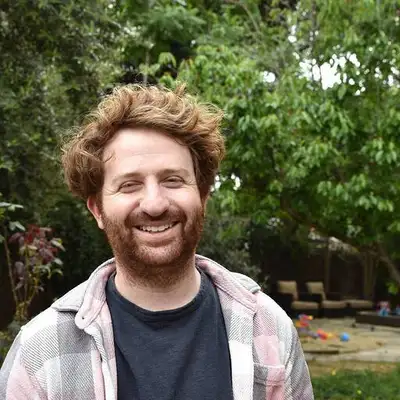
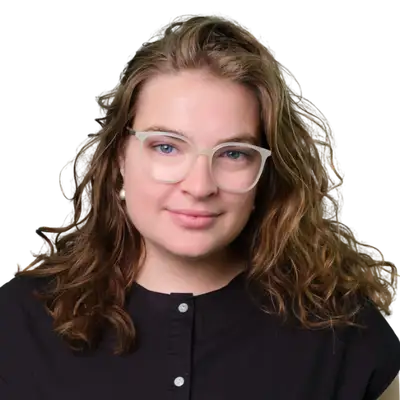
Producer:Welcome to Impactful Breakthroughs, the podcast dedicated to the incredible individuals who are shaping the future of medicine. You just heard a snippet from today's guest, Kate Stratton, the Executive Director of Lipodystrophy United, a patient driven, global community dedicated to improving the lives of those affected by lipodystrophy through advocacy, community, and research. Kate brings a deeply personal commitment to her work, amplifying the voices of those diagnosed with this rare condition. As you'll hear today, her mother, Andrea Stratton, journeyed through a thirty seven year long diagnostic odyssey with lipodystrophy before she finally received a proper leading her to cofound Lipodystrophy United back in 2012. One consistent through line in Kate's story is her belief that those living with lipodystrophy are the true experts and should be essential to each and every decision initiative.
Producer:And now, your host, Zach Gobst, founder and CEO of Leapcure.
Zach Gobst:Kate, welcome to the show.
Kate Stratton:Thanks for having me.
Zach Gobst:So where did this all start, your involvement in patient advocacy? Well, let's start from the beginning. How did you get into it?
Kate Stratton:So my mom has the rare disease lipodystrophy. She has familial partial lipodystrophy type two. So I was a family member for my whole life, and I saw my mom navigating her rare disease diagnosis. She wasn't diagnosed until twenty eleven, and so she lived her whole life without a diagnosis with a bunch of very strange symptoms and feeling like she was crazy, even being told that she was just a noncompliant diabetic by many doctors and that she was doing something wrong. So the diagnosis was really validating for her and for the whole family.
Kate Stratton:And I watched her found the organization Lipodystrophy United with a group of patients and work in the space for about eight years before moving on to a different role in rare disease. So it was incredible watching her journey. And after college, I didn't know what I wanted to do. I was doing some traveling in Europe, and I met up with a fellow advocate in Germany. She has lipodystrophy, and she runs the German Association.
Kate Stratton:And I ended up spending about a week with her, and everything that my mom was experiencing while I was growing up was exactly the experience of Sabine, who was this incredible woman who was doing similar things to my mom. But what really struck me is how similar their experience was with the fatigue and pain. And before, I had thought that my mom was just a little dramatic, and I didn't fully believe her symptoms. But after meeting someone and seeing the exact same effects, I knew that I had to know more. And that's what led me to start connecting with other patients and what eventually led me to running the foundation.
Zach Gobst:Yeah. Why don't we speak a little bit more about lipodystrophy? You spoke about your mom's journey from having symptoms for years, not having a diagnosis, feeling like she was crazy. Tell me more about the condition and how it affects different bodies.
Kate Stratton:Yeah. So lipodystrophy is a heterogeneous group of rare diseases characterized by dysfunctional adipose tissue. So fat isn't going to the places it should go. In some cases, there's fat in parts of the body and not others. In other cases, there's head to toe fat loss.
Kate Stratton:But what's true about all types of lipodystrophy is fat is just not working as it should. And many times, it ends up in and around the organs and causes many, many metabolic complications, which in turn has a full body multisystem effect on the body and really on the day to day causes pain, fatigue, notably hyperphagia, which is just an insatiable hunger where people just cannot feel satiated. And that's actually because people don't have the hormone leptin, and leptin kind of signals to the brain that people are full. So because people don't have the normal storage of fat, they're not burning fat in the same way. So the body's like, oh my gosh.
Kate Stratton:What's happening? So everything kind of just gets thrown off.
Zach Gobst:Yeah. And for your mom to go a significant portion of her life with that not being understood about, you know, how her body works.
Kate Stratton:Yeah. Exactly.
Zach Gobst:Say more about kind of what that was like, you know, having that in your household and living in a situation where that that was this kind of unknown thing to everyone but but affecting everyone?
Kate Stratton:It was really difficult because what she was being told by many of her doctors were, you shouldn't be experiencing these symptoms. It's normal to have fatigue and pain. Like, it's just a normal human experience. And her triglycerides were so high, and she had such high insulin resistance. So they basically were like, are you eating just so many bad foods every day?
Kate Stratton:Like, the doctors just kind of dismissed her as someone who was not being compliant with their recommendations. So she felt really invalidated. And because there wasn't a very good understanding of what she had, she also felt invalidated by our family because we weren't able to understand what she was going through. Honestly, many people in her life just kind of thought she was depressed and sick for a reason we couldn't identify, so it was really challenging.
Zach Gobst:Thanks for sharing, and I'm curious about your path to advocacy and your ability to kind of support other people and families, people like Sabine and others. Tell me more about kind of what you've been able to observe on the advocacy side of the coin.
Kate Stratton:So I think the first moment that I was introduced to advocacy is when I was 12 years old. My mom said something to me that really struck me. I asked her, why do you do this work? Like, why did you start Lipodystrophy United? And she said, my life is something that I'm really proud of if I can impact just one other person in a really positive way.
Kate Stratton:And then I saw her impacting tens of people, hundreds of people, and I realized that that's the kind of pursuit that I want to have in my life. So I've always been interested in advocacy. I worked at an immigration law firm to help people get asylum in The United States. I'm from Central American countries for a year. I worked at Planned Parenthood to work on health education policy.
Kate Stratton:I helped manage a political campaign focusing on homelessness. I always wanted to have an impact on many people, and I realized after meeting Sabine that where I should be is a lot closer to home than I expected.
Zach Gobst:Well, yeah, the the depth of your experience with what your mother went through gives you this opportunity, and kind of curious not to overlook, you know, all the experiences you shared about what you did before. Like, how do you integrate, you know, what what you just shared in terms of, you know, advocating for immigration, advocating for underserved communities outside of like, what have you seen that kind of apply for you?
Kate Stratton:Yeah. I think I think I just love connecting with people and really speaking with people about how I can amplify their voice for change, and I think that's a commonality among really all advocacy, like, being able to listen and then being able to amplify a voice rather than creating your own. Like, I really enjoy when people kind of speak through me, and I can lift up other people's voices rather than bringing a new voice. So I think it's the same for me in the way that I just want to make genuine connections with people and really listen to what people need and then helping advocate for that. So for me, it's it's all very similar even though it's they're very different issues.
Zach Gobst:Yeah. That's amazing. We We haven't talked a lot about kind of weight care in my company, what we do. You know, we essentially are helping advocate for patients looking for clinical trials across many conditions. And I learned a lot hearing from your journey and how you go about it because for us, for for people to get to better health outcomes, whether it's through a clinical trial or not, amplify voices, being an instrument to kind of not be a different voice, but to kind of bring out what's going on with people and help integrate that into a clinical research decision or any other pathway to improving health.
Zach Gobst:It's made a great deal of difference for us to kind of take that path and what you shared in terms of like how you can maybe we go to the next, like how like the FDA will listen and you can create a platform from the ground to kind of connect people to have their voice heard in in policy and a lot of different decisions. Tell me more about kind of how you think through amplifying voices and the different things that you've discovered, like what you shared with me. How did you arrive at that? You know, what have been the discoveries, and how have you gone about it?
Kate Stratton:Yeah. I think I'm really fortunate in this space to be a caregiver because I am a community member directly, so I have that experience and so I can really relate to people. But I think what's really important for rare disease is recognizing that our limited experience does not define an experience of a patient population, so ensuring that we as leaders speak to many different people with the condition, different family members. Because after two years of doing this, I still learn more every day from speaking with community members. Just ensuring that my work continues to be patient centric.
Kate Stratton:We have a patient advisory board that we meet with monthly, and those people are really helping us guide decisions in our organization. Like, just because we are a staff made of patients and family members, this doesn't mean that we shouldn't be expanding our network to more and more patients every day so that we can really have a full understanding. And in lipodystrophy, there's many different types just like in many rare diseases. So just making sure we are fully representing the patient. I think that it's important for the field of patient advocacy as we continue progressing and prioritizing patient voices that having one token patient or one experience, that's not patient centric.
Kate Stratton:It's like really working with patients every step of the way and making sure everything we do is a decision made by our community, and we're just helping figuring out how to structure it and programming and Yeah. Other things.
Zach Gobst:Yeah. That's amazing. Well, I mean, just kind of reflecting back on what you shared, like, the situation with your mom. They heard what it sounded like she was going through, and they put her in the wrong box. And it sounds like in your work, you're making sure that people are not being put in the wrong box.
Zach Gobst:You're making sure
Kate Stratton:that
Zach Gobst:are able to express what's going on even though there might be different types of lipodystrophy or even the same type. You're making sure that that space for them will want to understand what's going on with them specifically, but also share what's going on with them specifically. But that space is there, which is pretty amazing. Talk about what it's like to kinda carry the torch for a condition that your mom has and kind of dedicate your career into this space. You talked about, like, how connection and connecting with people matters, but there's this kind of interesting family element and this really kind of lovely pursuit as as you think about or as I think about, like, how you've gone about kind of advocating for something your mom went through.
Zach Gobst:So
Kate Stratton:Yeah. I honestly feel so honored to be the one who gets to do this. I get to represent an incredible population with incredible people and make tangible change at such a young age. I just feel really fortunate to be able to do this. And I also feel a little bit of impostor syndrome.
Kate Stratton:I'm one of the younger leaders in the rare disease community. But I also believe that when nobody's doing something and it needs to be done, like, kudos to whoever chooses to do it, and my age is not a barrier to me making really incredible change for the Lipodystrophy community. So I just feel really honored that the community continues to choose me and wants to work with me. And, yeah, I just feel very inspired by everyone I've been able to meet and everyone that I've taken on our team. Because now it's not just me carrying the torch.
Kate Stratton:It's like a group of 10 of us carrying the torch, and I just have the honor of working with great people.
Zach Gobst:That's amazing. I think, like, everyone faces impostor syndrome in different ways, at different scale. And ten years plus into running my company, and it's like, oh, there's something where, like, why why didn't I go to this next level and there's impostor syndrome to deal with? But, yeah, tell me more about kind of being a young advocacy leader and, you know, some of the things you've learned along the way.
Kate Stratton:I've learned that no matter what age, we're all just kind of figuring it out. Like, nobody knows exactly what they're doing, and if they do, they're probably doing it wrong. So I bring, like, this very openness because I'm so new, and so I think that's a strength. I'm not rigid in what I think we should do as a community. I'm open to new suggestions, And so I think I can grow and change with the community.
Kate Stratton:And I've learned, especially in the rare disease space, that people are doing this not because they have a very specific interest in being a rare disease patient advocacy leader, but because their kiddo or their family member or themselves have this rare disease, and they've molded their career into something new. So in a way, we're all new to this, and we're all kind of figuring it out together. And I've learned that people are genuinely interested in helping young people, and so I've really benefited from that. And, also, just being able to learn with other people has been really great. I'm learning that, like, collaboration is really key in this space and probably all spaces.
Zach Gobst:Yeah. I love your responses and how you think through things. I it's clear that you kinda see the opportunities, you know, the opportunity to connect the way that you describe the community that you're working with, how you feel honored by it, how you see the opportunity in, like, you being not in it for twenty years that you have openness to different paths. Yeah. That's fantastic.
Zach Gobst:Tell me about, you know, some of, like, what's been rewarding for you. Like, what are some of the successes? Well, I guess sometimes, like, what's what feels successful about other people, you know, and what feels most rewarding to you can be different. Maybe it's the same, but, yeah, what what stands out so far?
Kate Stratton:The amount of money we've been able to raise from the beginning, I look back, and I'm we had, like, $5,000 in the bank when I started, and we've raised over $250,000. And that might not seem like a lot of money, but looking back, it's like, wow. We actually have a bit of capacity now. So that feels big. Also, having the opportunity to build my own team from scratch and create our roles has felt really rewarding.
Kate Stratton:Like, at first, I started with nothing on my own, not knowing what to do, and now I have a staff of three, and we meet every week. And, like, it's the little wins, really. But we've been able to work on some research and publish in the last two years, and that's felt really huge. Getting our meeting with the FDA, the externally led patient focused drug development meeting, has been huge. And just gathering people together, building a scientific advisory board, building a board of directors, people that are really passionate about this but just didn't know how to help has been really rewarding because I see us as, like, the master connectors.
Kate Stratton:And a lot of movement in the Lipodystrophy space, I think, wouldn't happen without us because we kind of help direct people. Like, here's where you should go. And we've honestly seen a lot more research and movement and a lot more motivation in the space since we kind of started a couple years ago. Started back even though this was a foundation before.
Zach Gobst:Yeah. That's heartwarming in. To kind of get to those milestones, like, based on, like, your own creative skills, you know, inspiring others to join, inspiring people to to donate, to scale from 5,000 to 250.
Kate Stratton:Yeah. Our first Giving Tuesday, like, raising, like, $11,000, I cried. Like, these small wins are so amazing because we haven't seen any big wins yet. So any win is, like, a huge win for our community. So it's just so exciting, like, watching the the growth.
Zach Gobst:Yeah. That people have this within us, you know, that that we can channel toward these things that matter to us, inspire the people around us, and and do it for the purpose of supporting people that you care about.
Kate Stratton:Yeah. It's awesome. It really shows the power of community coming together. Like, who knew some random 23 year old out of college could help propel the community, but it's happening. So
Zach Gobst:Yeah. Kudos. That's you got a lot to be proud of. I'm I'm really happy to hear that. Thanks.
Zach Gobst:And so, yeah, now curious kind of from where you are, what feels next for you, like, what's interesting about what you're taking on next in your endeavors?
Kate Stratton:Yeah. Our meeting with the FDA is super crucial. For those listening, these meetings are really important for patients to communicate the burden of the disease to the FDA. And it's not like a patient listening session where they have a few minutes to speak, and it's on a very specific drug. This is, like, a very broad, like, this is what the patients need in this space in total.
Kate Stratton:And we'll write up a voice of the patient report, and the FDA will use that every time a new treatment or any new development comes across their desk for lipodystrophy. So it's really huge for our community. Really excited to host another global symposium next year for doctors and patients and researchers all over the world. And, yeah, just kind of taking it day by day. I don't have any plans to leave Lipodystrophy United because we've just been growing at such a fast pace, and I wanna be here for it.
Zach Gobst:Yeah. Yeah. It's it's great. And, yeah, with you growing your team, and it sounds like what happens with me is, like, you'll look back on kind of the milestones you've had, what's going on here, and but then years in the future, you'll look back and be like, oh, I remember when this was exciting, but I I you know, you're capable of even going further. From what I'm hearing from you
Kate Stratton:Totally. It's addicting. It's like, next. Next. It's also exciting.
Kate Stratton:Like, it's hard to get out of. But I'm honestly like, I didn't know my career was gonna go this way. I was applying to law school when I started this, but I'm really excited to be doing this. So
Zach Gobst:Yeah. Well, you've created not just a very purposeful path, but a really rewarding one for other people. And so, yeah, that's really amazing to hear and really good message for other people that can get more involved in advocating because, you know, a lot of people get faced with situations like your mom's and it can be really challenging, you know, whether you've had your diagnosis yet or you do, you know, you're faced with a diagnosis you don't know what to do and these paths have become available to connect, find community uplift voices, create purpose, create a rewarding path for you. I I think is quite special. So glad we're able to do this.
Zach Gobst:Any other messages you think that are important to kind of shout out or share while we get, you know, the podcast recording?
Kate Stratton:I think my story is a good example of just believing that you can do something and just deciding to do it. I think young people are kind of told that they have to go a traditional career path, but I think people can decide to be a boss and then just be a boss in life. I think my generation is really starting this, like, unconventional career path, but it's something that I really stand by in a way that, like, if you believe you can do something, you probably can do it. Yeah. So just do it.
Kate Stratton:Like, do the thing that you're thinking you can do.
Zach Gobst:Yeah. It's a great message. I think pursuing what's intrinsically motivating, whether you hit it the first time or not. You know, I I'll share a little bit about my experience with this, which is, you know, prior to Leapcure, I'd I'd tried building, like, a fantasy sports app because I I liked fantasy sports. I realized later I didn't care about people who use fantasy sports apps, but it led me to kind of, like, when I found Leapcure, which kind of aligned my intrinsic motivation, but I had all these other experiences from the past putting my head against the wall, building the wrong thing.
Zach Gobst:You kind of find your way. It's it's so but, yeah, for your for your generation that you kind of are signed. Yeah. I just turned 40. For your generation to, like, be doing that age is amazing.
Zach Gobst:There's a lot of kind of social friction I remember I had to go through to, like, leave a good corporate consulting job to try to be an entrepreneur. And then, like, how do I talk about what I'm doing? And, like, it can be difficult, but I I think you're sending a, you know, really powerful message and setting a great example for how people can start doing that early, get comfortable with the uncomfortable, depending on, you know,
Kate Stratton:Yeah. There are so many social implications to doing something that might not be what grandma, like Yeah. Thinks the right thing to do. But I think surrounding yourself with people that are really creative and doing similar things is really amazing because you realize that there are so many people that are just doing what they think is best for the world and not caring about what other people think.
Zach Gobst:Yeah. Those are the people
Kate Stratton:that make the most impact in history.
Zach Gobst:Right, Arch. Yeah. Well, yeah. Kate, it's been a pleasure. Thanks for being on the show.
Zach Gobst:Would love to
Kate Stratton:Thank you.
Zach Gobst:Get in touch and and maybe do this again in the next couple of years.
Kate Stratton:Sounds good. Thanks for having me.
Producer:That's a wrap on this episode of Impactful Breakthroughs. A heartfelt thank you to Kate Stratton for her commitment to amplifying the voices of those directly affected by rare conditions such as lipodystrophy. Her advice to others looking to create change is powerful and even more impressive when you consider the progress she's already made in her early career. Follow your beliefs and prove yourself right. It can be done.
Producer:If today's conversation sparks something in you, be sure to subscribe, share, and connect with us for future episodes. Until next time, stay informed, stay engaged, and keep pushing for better health outcomes for all.