Subscribe
Share
Share
Embed
Featuring interviews, analysis, and discussions covering leading issues of the day related to electromagnetic spectrum operations (EMSO). Topics include current events and news worldwide, US Congress and the annual defense budget, and military news from the US and allied countries. We also bring you closer to Association of Old Crow events and provide a forum to dive deeper into policy issues impacting our community.
Ken Miller (00:02)
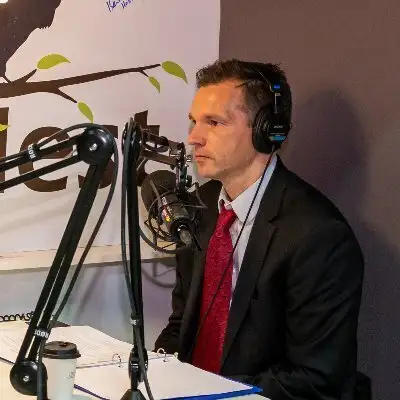
Welcome to From the Crow's Nest. I'm your host, Ken Miller, from the Association of Old Crows. As always, it's great to be here with you and thanks for listening. Well, first off, I'd like to thank Black Arts Technologies for powering the next few episodes as we pivot our discussion to the Indo-Pacific region. Black Arts Technologies is a leader in antenna and passive RF component design with experience in a wide range of military and commercial applications. They are based in Australia.
And have been instrumental in helping me bring to you, our listeners, a taste of what we are discussing at some of our regional summits, including AOC Asia that took place earlier this month in Adelaide, Australia, and our annual InfoPack 2026 conference in Honolulu, Hawaii, which will be happening later this month. So thank you to Black Arts Technologies. And you can learn more at BlackArts Technologies dot com, and we will hear from them on the next episode. Now, on to this episode, which will be the first of two covering
Our AOC Asia program. In this episode, I am pleased to bring you two guests, Dr. Nathan Johnson. He is the president of the AOC Australia-New Zealand chapter, and Dr. Chen Yi Tu, who goes by Crystal. She is a research fellow at the Institute for National Defense and Security Research in Taiwan. Crystal gave a featured presentation on EMSO in China, military-civil fusion, AI integration, and strategic implications.
And then following these segments, I'll provide a brief update on where we stand with the annual congressional defense budget process. But without further delay, let's listen into my conversation with Dr. Nathan Johnson. I'm here with my first guest, Dr. Nathan Johnson. He is the president of the board of the AOC Australia-New Zealand chapter, known as AOC ANZ chapter.
Nate, thanks for joining me here on From the Crow's Nest. You played a huge role in planning AOC Asia 2026. appreciate you taking time to join me here on the podcast.
Dr. Nathan Johnson (01:56)
Thank you very much for the invitation, Ken. It's a pleasure. and yeah, it's one of my final duties as the president of the board. So thank you for having me.
Ken Miller (02:03)
You're welcome. So just to help our listeners along a little bit with the event and the chapter, could you tell us a little bit about your background and your role as the president of the chapter and the work of the chapter in Australia, New Zealand?
Dr. Nathan Johnson (02:16)
Not a problem. so quickly my background, I was a 20-year army officer. I also spent a lot of time in academia. I actually studied in the US. did a PhD in artificial intelligence about 10 years ago. before I I say yeah, I did I did AI before it was cool. As a 20-year kind of electronic warfare specialist in the Australian army, I've been on the periphery of the association for a very long time and
had the opportunity as I was transitioning roles and jobs, to to step into the president role and yeah, took the opportunity to kind of lead association that has you know had a lot of value in Australia in guiding the as not only the thought guidance and and and thought leadership, but also as the as the stewards of the body of knowledge of electronic warfare and spectrum operations.
Ken Miller (03:04)
So this year's AOC Asia Symposium, it was co hosted with the Ad Star event. talk to us a little bit about the theme of the AOC Asia portion and how that fits into the broader military discussion taking place at AdStar. We
Dr. Nathan Johnson (03:22)
We
had an opportunity about eighteen months ago. we were approached by the defense science and technology community here in Australia, who obviously recognized the work of AOC globally as you know, RF and spectrum thought leadership and and the body of knowledge. So they actually approached us to take or, you know, conduct the spectrum and RF component of the ADSTAR. Now the Ad Star are not I I
Stretch my memory to remember exactly what the acronym stands for, but essentially it's run by our defense, so government defense science and technology group, who then are bringing in the, you know, 2,000 to 5,000 of the leading scientists and researchers across the Australian defense science and technology professionals around Australia. you know, so that community. so it is the peak event for S T in Australia.
And it was actually a an amazing opportunity to combine the two associations, the two kind of peak bodies, to really optimize and make the most of the one event. so really a massive event from an Australian defense science technology perspective, and a great opportunity to show the power of the AOC brand. So we took the opportunity to combine them and we have conducted concurrently with the Ad Star Conference AOC Asia twenty twenty-six.
Ken Miller (04:45)
So basically, this event is for for those who are not familiar, it really brings together all the leading stakeholders in the region, in the ST research and development and science and technology fields. A lot of the conversations, a lot of the presentations for the AOC Asia portion, a lot of focus on artificial intelligence, machine learning, software defined capabilities, things of that nature. From an RF perspective, you mentioned that.
AOC Asia kind of fills that RF spectrum track for Ad Star. What was the theme or what was the message that you want in total that you wanted to provide to the Ad Star effort from an AOC perspective for RF and and Spectrum? Was it about the cutting edge technology on the horizon or force designer? What was the theme for this year's show?
Dr. Nathan Johnson (05:36)
That's a big question. and I suppose I can I can answer it not so much from a theme, but what what were we trying to achieve? And I think the biggest kind of message and takeaway from partnering with AdStar and combining our kind of opportunities here by combining the conferences was to provide that guidance and and leadership from an operationalization perspective where you're actually, what are we researching in? What are we
What are we driving forward in that RF domain? And how can that be focused on what the actual needs are from a research community and a defense and a government and defense perspective? Like where are those needs and gaps that need to be filled and where to focus our effort moving forward and to evolve to and take out and our obviously our discipline to in support of the nation. so I think that's the that's the big takeaway I have.
Ad Star as a assa conference itself was very it's absolutely multidisciplinary. So whole bunch of different types of research, whole bunch of different types of initiatives, you know, from the exotic and quantum to everything down to standardization of hose fittings, which actually in an operation in a in a navy sense is really important. I found out that if you don't have the right hose for the right fluid, ships stop going. so there's little things like that. But yeah.
From our perspective, from the association's perspective, that combination allowed us to kind of drift between both tracks, you know, the Ad Star track and the AOC track, and actually see where those needs were and to help guide our community going forward.
Ken Miller (07:16)
In some of our previous interviews from the show, a common thing that came up was just the complexity of the security challenges in the region. You know, it's not just a vast geography space you're covering Taiwan, up towards the Korean Peninsula, Taiwan, South China Sea, down to Australia, New Zealand, Philippines, all the that that whole region, but also in terms of the the leaps in technology that are happening with AI and and so forth.
It feels like a lot of those challenges are almost layering upon themselves. And so it's very easy to kind of lose perspective in terms of the depth and breadth of some of the challenges that we face. From your perspective in Australia, especially from a coalition perspective, because obviously the w whether however you structure partnerships in the region with the West, whether it's Five Eyes or other agreements, US and Australia work very closely together.
But from a coalition perspective, how do we make sure that we are addressing the right challenges and and really fully understand the depth and breadth? Because from a US perspective, sometimes we oversimplify some of the challenges in the region because we're looking at it from our lens. But your your lens is directly on the the threat because you you're in that region. So how do we have to adjust understanding the challenges in the region to fully grasp the depth of
what countries in that region face.
Dr. Nathan Johnson (08:45)
The perspective change from again somebody who looks at, you know, continental USA versus the Southeast Asia Pacific region. The paradigm of that is you know, the USA could potentially, and we've seen, you know, conduct conflict on their own solo. Given the nature of our geography, the diversity of our cultures through the Southeast, and just the number of nations in the Southeast Asia region.
Is that we will never be in conflict on our own. And so as a result, the key is to ensure we are building relationships. We are bringing representatives and thought leaders together to have conversations, break down barriers, share shared experience, shared concerns, to, you know, collaboratively solve really, really complicated problems about how, you know, how do we
create defensive structures and strategies across those political and national and functional and you know technological boundaries. so I think that's really again the whole intent of AOC Asia is to bring all those, all those kind of not problems there, but bring those, bring an opportunity to have a discussion about them and get and to find and pathfind ways through those really complex problems. So in a nutshell, yeah.
That's a that's a kind of really different perspective is that we have to combine those resources of all the nations in the Southeast Asia region to to come up with a coherent defensive strategy. you know, we we just it's just the size and scale of our geography that lends to that.
Ken Miller (10:25)
It seems like once you start to peel back the layers of coalition warfare and interoperability, it as you increase in granularity to the problem, it just you keep running into more and more things like, hey, we even in software, every every chip has a bug and the you certain things don't work the way that you think be it i in in the operational realm like it did in the lab. and that becomes even and that spotlight is even sh brighter when it gets into coalition warfare. How
What are some of the steps that we can do that we can continue talking about over the next year bef as we head into twenty twenty seven and the next iteration of AOC Asia, which will take place in South Korea next year? What are some of the walk away or action items that as a community we need to be thinking about from your perspective?
Dr. Nathan Johnson (11:11)
I'll try and use one of the examples from one of the presentations. So Kuba from ComTunet, who's been a great supporter of AOC and AOC Asia over the years, was taking lessons learned from Ukraine. And that's that's oversimplification, you know. learn learn from contemporary conflict. That's a absolute fate of complete, yes. Learn from contemporary conflict. But one of the big things is how well the Ukraine, especially given the
Different types of forces and you know the coalition mantra from from that particular conflict is coming up with a combined electronic warfare battle management or electronic warfare pitcher, electronic spectrum pitcher that encompasses not only capability, but the actual, you know, congestion of the of the spectrum, but and then who is kind of responsible for which areas, but also, yeah.
Exactly like you said, how are we kind of navigating systems a system interfaces that yeah may have been, I'm I'm I'm this messaging format compliant, but I'm this format. And I think you know, and he was kind of saying about AI is actually gonna be one of the big solvers of these problems where we we can just publish in any kind of messaging format or any networking protocols and the actual AI middleware.
will be writing itself on the fly just to accept those kind of things and and do that integration. So being able to have a combined electronic welfare picture and then understand the injection of the AI at the right point on those software stacks or on those networks to be able to can make sure that everything's coherently working together. I think that's hopefully that I think that's a a really good example.
Ken Miller (12:54)
Well, Nate, thank you so much for taking time to join me. That's all the time that we have for now. And I know that you have a long list of things to do as you wrap up the conference and you wrap up your time as chapter president here of the board. So I do appreciate you taking time and hope to see you at future AOC Asia events here coming up.
Dr. Nathan Johnson (13:14)
Absolutely. Thank you so much for having me. it has been a a great tenure and I hopeful I've made some good change and positive and will absolutely continue to be connected to AOC in the future. So thank you very much for me
Ken Miller (13:26)
Me sounds great. Thank you so much, Nate.
Thank you, Dr. Johnson, for joining me here on From the Crow's Nest. And now it's time to turn our attention to Dr. Chen Yi2, who once again goes by Crystal, and she is once again at the Institute for National Defense and Security Research in Taiwan. Let's listen in. I am pleased to be here with Dr. Chen Yi Tu. She goes by Crystal. She is a research fellow at the Institute for National Defense and Security Research in Taiwan. Crystal, it's great to have you here on From the Crow's Nest. Thanks for joining me. Yeah.
Dr. Chen Yi Tu, (13:59)
Thanks
for having me.
Ken Miller (14:01)
Crystal, you were a featured presentation at AOC Asia twenty six and wanna thank you for taking time to join us at the at the show. It was a great conversation that we had over the course of of three days. to get started, could you tell us a little bit about yourself and the work that you do through your institute in Taiwan?
Dr. Chen Yi Tu, (14:19)
My institute or we go spy answer is fully support sync tents by mission national defense in Taiwan. So the work we do is illustrated on policy and strategy research and international outreach. And also we are actively engaged in the military at civilian capacities that could help to inform them this what's happening here. So the work I do here.
As you see, it's just convergent history mission mandates by MCSR. We I do international outreach here to present re our research at international stage, but also shows how the research progress here in Taiwan to bridge the we see the silos here in the in the discussions and also f over a civilian perspective in the military and defence research.
Ken Miller (15:14)
So you gave a featured presentation on August fourth on day one of the show, entitled Electromagnetic Spectrum Operations in China, Military, Civil Fusion, AI integration, and strategic implications. That is a lot to talk about in in in one presentation, a lot of good topics there. what was your message to the audience about the impact that China has on regional security and and electromagnetic spectrum operations?
Dr. Chen Yi Tu, (15:43)
I think the what the field or community we are we are at is heavily siloed. So my experience working, talking with China researchers and talking to different areas of subject matters like in EW, here in the AOC, is that people don't really have the same backgrounds on knowledge here, so usually just talk past each other. And most of the discussions are
Almost impossible to have in the unclassified environment. So the work I'm doing here try bridge the kind of silos here to hope to have a more informed discussion about what China is actually doing in this field. So I guess my key messages here is is to understand that China has its own conceptual frameworks that emphasize on the electromechanic spectrum of security and control. And
What China is doing here in this field in their own conceptual framework is that it has moved beyond the usual discussion about spectral management. It's talking about the just the usual discussion talk about allocations and decomplishions, but it also talks about how they they can it's not just talk they actually do is proactively shapes the international relations in favor of real long-term strategic positions.
So I think that's the key things that they have been doing past ten years. But and it's clear in their Chinese authoritative writings, but you haven't really have a kind of we're gaining the tractions or momentums that we're thinking about where they are doing their strategic implication and what kind of actions we are going to take in the perhaps in the next six to twelve months.
Ken Miller (17:39)
So, Crystal, in your presentation, you you talk a little bit about the integration of AI and strategic implications for security in the region. When you look at the region, it's very easy to think of it as one air one smaller area that we're concerned about. But when you look at the vast reach of the Asia Pacific region, there's no way to maintain complete security with manned forces. we just don't have the force development for that. So
That's led to innovation in AI for unmanned systems and counters counter unmanned systems, a lot of software to find capabilities that are adaptable across the region. Could you talk a little bit about how the the strategic landscape is changing in the Indo-Pacific region as it pertains to AI and unmanned systems?
Dr. Chen Yi Tu, (18:30)
I guess it's there's a lot of the recent discussions over the open source weight models, AI models by China's using and how that compete with currently other USD models. but in my presentations I try to focus on much a much more of actual field application perspective. So it's narrow down to what can cover in the 20 minutes talks.
So in here I actually look at one very specific area that I see a lot of the civilian capac civilian capacity, not exactly civilian, can be channeling to military applications. So I'm here to talk about the AI assisted spectral monitoring because the cons consistent radio monitoring framework China has, it generates tons of data in minutes.
So how you make sense of rich status and how that could help China with both internal surveillance controls and also use that for future battlefield is what I'm interested to cover in in my presentation. So I see the three specific cases in in my presentations. One is the draw monitoring and set con monitorings and
what the emergence fields they are doing in the behavioral recognition and network topography mining. So first on the drone monitoring, that's it's clear that China has a full-scale turnkey solutions already at the city levels drone monitoring consists of both sensing to and up to the counter counter drone applications and the ready
control systems we see his has using significant multi-sensor fusions for making sense well where the drum does and that's very difficult to detect a object as it's very small and fly very fast. So that's another recognition is our using deep learning technologies and also you see how it's
not just about hardware, but it also are as a lot of software updates really fast in every year. And that's the draw monitoring side. And this already a turn a whole solutions at the CK landscape, which is known to be very hard to has a lot of a complex radio frequency environment. And the second examples I'm I'm talking about is the setcom monitoring. So
Even though Starlink is not operating China's due to geofencing, but that does not stop China to do research on Starlink's signal opportunities. So how to detect Starlink connections has been one of very active research fields in terms of spectral monitorings. How they want to understand what who is actually using Starlink's in internally.
And that of course with extensive application of startings in the Western militaries, this can has a military implication for futures. So and we have seen not just about the using the starting signal of two as a location to gain positions, but we also see already modulized systems, is portable starting detection systems coming out.
just this year's. And it's by it's by the same research team in DJI's Aeroscope teams. The Aeroscope used to build this UAV's detection systems. The same teams are are actually in their own different companies and they are offered a starting detection system solution. So it's a rapidly changing field that they are using
much more advanced in the software development in terms of non-emergent capabilities and becomes the future military applications. And one much much more concern is that with the behavior recognition and network topography mining, it's a field that China considers as a core technology for EMS securities. It's the concept is that just based on the monitoring data, low spectral data,
And we saw private information for waveforms, protocols, and decryption of context to make sense of the behaviors and how the different emitters has the relationship between each other. So it's this area that China has significant investments in the research, but we are seeing a trend that they have stopped publishing those research results in Western research journals.
So most of the research right now are writing in Chinese or stop in academic journal altogether. So in this field, they talk about the not just about deep learning, but also about the knowledge distillations, how you apply the big models learning experience to a smaller models that will be able to apply at edge. So with this
Very specific case in this spectral monitoring that shows how the software becomes the most important parts of their research and that those similar civilian applications and usage cases are actually has significant implication in the in the militaries and that we see the overlap in the research organizations or that produce both civilian capacity and both.
over military application capacity. So that's overlap, that's a core concept of China's so-called military civil fusions to offer the platform and venue for these dual-use technologies that could implement the national defense requirement within their own different kind of economic development programs.
Ken Miller (25:03)
So looking at regional security, we we oftentimes talk about interoperability, working together as coalitions, and obviously that has a lot of implication for things like data sharing and and technology integration, AI integration. Could you share with us some of your recommendations for improving regional security cooperation as it pertains to this new generation of innovative technologies?
Dr. Chen Yi Tu, (25:30)
In the past we talked a lot about interoperabilities and how how we understand or share the information together is how we have the same structures to make things happen. But with China's works in all different fronts and one of the areas I will say that's is received the least attention
But has the longer implications, it's Chinas are using the international regulation body to advance their strategic advantage. So if you look at the timelines that so many of the these institutions that working at EMS security and control in China's are
also the same institutions that actively participate in ITU study groups. So they are in the special monitor special management study groups and they are also in the radio propagations study groups. So if you look at the timelines that it's China is going to host World Radio Conference in Shanghai in next October in 2027.
And all the discussions regarding the spectral usage, particularly in the space constell the space satellites constellations, spectrons, and also the repurposed of several key spectral are currently occupied by military system. The discussions and also proposal are already start. So I will say these regions we
need to think about the implications and what is a process and discussion we need to do in the next perhaps three months, six to twelve months. And also think about the AI's usage and also how that all this different technology regulation and jovenness discussion right now is happening and China's actively doing in the both way.
in also not just spectrum monitoring but also AI and how we can do togethers based on the shared principle values and framework that could find a common grounds to advance and protect regional security.
Ken Miller (28:11)
To wrap up our time together, just to bring it back to AOC Asia a little bit, it was over the course of three days. what are some of the other conversations that you took part in, presentations that really piqued your interest in terms of how we can strengthen global security through that region?
Dr. Chen Yi Tu, (28:33)
In the past years it's I we see the kind of a challenges in the condo drums as a general challenges to how in the research development challenges. And also we see we have presenters from Japan's air self-defense force talk about the very specific challenges Japan are seeing it in the first side engines too. So I guess it's in the AOC Asias that in different
Years. This is my first time to participate here, so probably could only drop the my my impressions here. But my general impressions is how that as part of the bigger event in the Australia is that how Australia thinking about to s using the the innovation of their defense ecosystems and how that different industry players, small industry players.
can play together, form the audience bigger roles to advance in the very technical, heavy, and difficult field such as C topic.
Ken Miller (29:40)
Great. Well, Crystal, thank you so much for joining me here on From the Crows Nest. it was really great to have you on the show. I really appreciate you sharing with us your your thoughts on MSO in in China and how we can do better at how we can improve our interoperability and our coalition integration. So really appreciate you taking time to join me here from the Crows Nest. Thank you so much. Thanks.
Thank you to both Dr. Johnson and Crystal for taking time to join me on From the Crow's Nest. Before we say goodbye, I just wanted to provide a brief word on the congressional defense budget process. Congress is, of course, currently in their annual August district work period. Prior to both the House and Senate leaving Capitol Hill until Labor Day, however, there was a flurry of activity that solved basically absolutely nothing. the House passed their version of
H.R. 8800, which is the FY fiscal year 2027 National Defense Authorization Act. They passed the bill by a very narrow margin of 216 to 212. Now, this is an annual must-pass bill that has enjoyed relatively wide bipartisan support over the decades. but each year it's getting a little bit tighter. And this was by far the closest vote that we've had on this bill in decades, which kind of signals that even
one of the most bipartisan bills that we have on an annual basis is no longer and that's kind of sad to see because there's nothing more important, I think, on an annual basis for Congress to do than to fund our military. So we'll be watching that very closely as we get into the fall. But the House did pass the bill and it's moved it on to the Senate. The Senate Armed Services Committees already marked up its version of the bill at the end of June. However, it has not come to the Senate floor and all indications are that it never will.
which means that basically the Senate is going to do a procedural move and they're going to go right to conference with the House bill and using the Senate bill that the Senate Armed Services Committee has to do a conference report that will come out in December after the election. So between now and December, not a whole lot's gonna happen on the authorization front. The AOC did get a couple priorities in both the House and the Senate bill.
Both of those priorities were in the form of direct report language. So those provisions are already taken into effect and we don't have to worry about conferencing them in the final bill. So we'll take a closer look at the conference process in the fall. we'll provide you any insight that we gain through a usually closed door meeting. So there's not a whole lot that will come out between September and December on the bill until it's finally reported. But if we hear anything, we'll let you know.
The other question that lot of listeners and a lot of people have at this time of year is will there be a shutdown when we reach the end of fiscal year 2026 on September 30th? Of course, this year in 2026 is the midterm elections. And so what we've been hearing even from the beginning of the year that first of all, there was never much will from Congress to pass the annual defense appropriations bills or any of the annual appropriations bills. It was pretty much a faded compliment.
that we would be reaching the end of the fiscal year without any budget for FY 2027 and we'd have to have a continuing resolution and some sort of omnibus bill come later or maybe a a year-long CR. And sure enough, both the House and Senate before they left town passed a continuing resolution. Of course the House passed theirs until December 20th and the Senate passed theirs until December 11th. And so since they couldn't agree
On a continuing resolution, even in terms of how long it goes, they have to conference this CR when they return after Labor Day. The belief here is that there will be an agreement in September for a CR that will go to beyond the midterm elections. There's just not political will, I think, to toy around with a shutdown in September 30th. Stranger things have, of course, happened. So this is not a a sure thing, but.
I do believe that there will be a CR that will go to December. Once we get into December, all bets are off. I think it will be very difficult for Congress to have find the political will for a shutdown. However, depending on what happens with the the general election, there could be plenty of incentive to let a shutdown happen so that the new Congress, which might have a completely different makeup in terms of Republican and Democrat and power and so forth, they might just wait until January to until the new Congress, and in which case
They might have to pass another CR until then, or they might just play for a shutdown. so there'll be a lot to watch for after the election, but between now and the election, it's going to be relatively quiet legislatively. but whatever we hear from the Capitol Hill, we'll be sure to keep you posted. All right, with that, we can wrap up this episode of From the Crow's Nest. I want to once again thank my guests for joining me and for Black Arts Technologies for powering this episode. As always,
Please take a moment to rate, share, and subscribe to this podcast. We always enjoy hearing from our listeners. So please take a moment to let us know how we're doing. That's it for today. Thanks for listening.