Subscribe
Share
Share
Embed

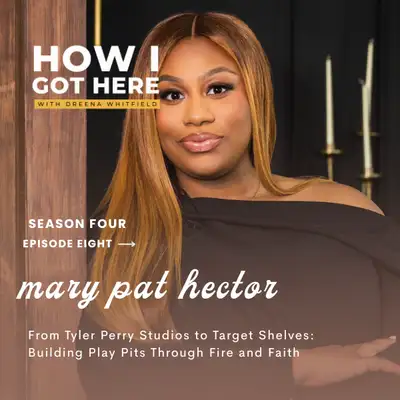
How I Got Here with Dreena Whitfield goes beyond the highlight reel with Black women founders, executives, and leaders. Real conversations about the pivots, the setbacks, and the purpose behind the work. From bootstrapping a beauty brand with $500 to leading a professional sports franchise, each episode explores the moments that shaped who they became and the cost of building something meaningful.
For women navigating leadership, business ownership, career reinvention, and the cost of ambition.
New episodes biweekly on Wednesdays.
Host: Dreena Whitfield
Executive Producer, Writer & Creative Director: Keena Williams / Struxa
howigotherewdreenaw.substack.com
HIGH_S4_E8_Mary_Pat_Hector_From_Student_Organizer_to_CEO_Mobilizing_Over_4_Million_Young_Voters
===
[00:00:00] Meet Mary Pat Hector: The Activist Who Started Organizing at 12 Years
---
[00:00:00] Dreena Whitfield: Today on how I got here, I'm sitting down with Mary Pat Hector, a woman who stepped into leadership long before she had her driver's license. She started organizing at 12, ran for office at 19, and was the youngest woman and person of color to do it in Georgia as CEO of Rise. She helped students fight for free college and student hunger and become powerful voters.
[00:00:20] Dreena Whitfield: She has mobilized millions of young people and helped reshape civic engagement across the country. In this conversation, we talk about growing up in purpose, the weight of. Being the youngest and often the only, and the legacy she's building for the next generation. This is Mary Pat Hector, and this is how she got here.
[00:00:38] Mary Pat Hector: The statistics are the statistics like when founders leave organizations, sometimes dollars leave.
[00:00:44] Dreena Whitfield: Mm-hmm.
[00:00:44] Mary Pat Hector: When founders leave organizations that are white male. And like black women step into those roles. There are other challenges and things that come with that because a lot of historically black colleges and universities can be completely free.
[00:00:57] Mary Pat Hector: 'cause a lot of them are pub private [00:01:00] institutions.
[00:01:00] Dreena Whitfield: Right.
[00:01:00] Mary Pat Hector: Beyond that, as a student who's an advocate for HBCUs, I know that like completely free college might like kill HBCUs.
[00:01:12] Dreena Whitfield: Mary Pat, my
[00:01:14] Mary Pat Hector: girl. I'm very excited about this podcast.
[00:01:17] Dreena Whitfield: Ooh, I'm excited to have you. I really, really am. 'cause I, you know, I tell you, I think you're amazing.
[00:01:22] Mary Pat Hector: Thank you.
[00:01:22] How does growing up in a service-driven household shape your leadership?
---
[00:01:22] Dreena Whitfield: So, uh, and I think you need to recognize that, but I want you to take me back to the first time you realize you are not just speaking up, you were organizing.
[00:01:31] Dreena Whitfield: Right. So, what do you remember about that moment and what did it wake up in you?
[00:01:38] Mary Pat Hector: For me, I think. I don't ever think I, I realized like there was a special moment for me. It was always something that was like ingrained in me. Mm-hmm. From my mom. So, I mean, literally just two days ago I was on a food truck for like 18 hours.
[00:01:55] Mary Pat Hector: 'cause my mom forgets that like, I have a job and she's like, [00:02:00] today we have to like go and feed the community. So like that's just stuff that my mom will randomly do on a Tuesday. But growing up my mom has always like told us, you know. Use your voice like never feel like, you know, you can't speak up when something's wrong, whether it's with you or someone around you.
[00:02:19] Mary Pat Hector: And so I don't necessarily feel like there's ever like a time where I'm like, this was the moment. Mm-hmm. I just kind of feel like it's always been something that it had been ingrained in, not only myself, but also my siblings to speak up. Like for as long as you have a voice, you can say or do something.
[00:02:36] What makes Atlanta a unique city for Black leaders and organizers?
---
[00:02:36] Dreena Whitfield: Growing up in Atlanta and attending, uh, later attending Spelman and then Georgia State put you in the heart of black history and black excellence. Right. And so how did that environment shape you into believing what's possible?
[00:02:51] Mary Pat Hector: That's such a good question. 'cause I feel like. People from Atlanta, one, you real.
[00:02:55] Mary Pat Hector: You rarely meet anyone from Atlanta in Atlanta anymore. Like once you meet [00:03:00] someone who's actually from here, it's like a unicorn. But I really never realized or recognized the privilege that you have being from Atlanta until it was actually my partner. Who was like, you know, Atlanta just doesn't feel like a real place.
[00:03:16] Mary Pat Hector: Like
[00:03:17] Dreena Whitfield: it doesn't,
[00:03:18] Mary Pat Hector: black people thriving in this capacity doesn't happen really anywhere else. Like yeah, you might have a few in New York, you might have a few in la, but like black people thriving in the capacity or in the way in which they do, and Atlanta just does not feel normal.
[00:03:33] Dreena Whitfield: Mm.
[00:03:33] Mary Pat Hector: Like you can call the mayor, you can text the mayor of Atlanta.
[00:03:36] Dreena Whitfield: Can you text the mayor?
[00:03:37] Mary Pat Hector: I can text the mayor of Atlanta. I can text the congressman. I could like, that's. But like, who, who doesn't have the mayor's number? That's like, you know, mean like, this is Atlanta. We all know everybody. Everybody knows somebody who knows something about it. So I, I really feel like we are spoiled and we don't recognize the, like, privilege that we have being able to be so connected and like, know this person or know that [00:04:00] person.
[00:04:00] Mary Pat Hector: 'cause we could put two and two together in this city. Oh, for sure, for sure. But I feel like it's just 'cause we don't know, like
[00:04:06] Dreena Whitfield: yeah,
[00:04:06] Mary Pat Hector: you're just so used to it. I do feel honored to be able to have like grown up around so many amazing people, whether that's like politically or you know, organizationally, like Elizabeth Oma from like Hosea Fi, the hunger and like now her work in this moment is more important now than ever because you have.
[00:04:25] Mary Pat Hector: So many people who are experiencing houselessness and food insecurity, not only in Atlanta, but also across the state of Georgia, or Helen Butler who like registers and mobilizes the most voters in the state of Georgia and has like eight offices across the state. And sometimes I use her. So I'm like, when I can't get something done, I'm like, you know what?
[00:04:45] Mary Pat Hector: If I call Miss Helen, miss Helen can get a yes. Miss
[00:04:48] Dreena Whitfield: Helen,
[00:04:48] Mary Pat Hector: out of so and so and so. So it's also an honor to be able to like have grown up under so many amazing black women.
[00:04:56] Dreena Whitfield: Mm.
[00:04:56] Mary Pat Hector: Who have kind of like chartered the way are [00:05:00] always there that I can kind of lean on when I need some kind of support or just.
[00:05:04] Mary Pat Hector: Direction.
[00:05:05] Dreena Whitfield: Hmm. I love that.
[00:05:06] What is it like advising the President of the United States at 18 years old?
---
[00:05:06] Dreena Whitfield: For you, especially in this space at 18, you were in the Oval Office advising President Obama on criminal justice reform. What did that moment shift for you? Not just in your work, but how you understood your own power?
[00:05:22] Mary Pat Hector: Wow.
[00:05:23] Dreena Whitfield: Because at 18, that's wild. At 18,
[00:05:25] Mary Pat Hector: yeah. Though, the funny thing is, I actually got the call to go to the White House when I was.
[00:05:29] Mary Pat Hector: At Spelman, I was literally like in an art class that I was required to take. I literally was failing art.
[00:05:36] Dreena Whitfield: How do you fail art?
[00:05:37] Mary Pat Hector: How do you feel art? I'm not like the artistic person. Like I don't want to journal with you. I don't wanna LLL, so you can imagine me. I'm like, why do we have to touch this grass?
[00:05:47] Mary Pat Hector: You know? But it's okay. We're getting there. And. I'm like in art class. I'm like, why this is so dumb? Like I don't wanna draw.
[00:05:55] Dreena Whitfield: Mm-hmm.
[00:05:56] Mary Pat Hector: And I got a call, I'm like, Hey, you need to be in Washington DC [00:06:00] tomorrow. And I'm like, for what? And they're like, you know, you're going to the Oval Office. Send over, send over your details.
[00:06:06] Mary Pat Hector: And I remember being in that room talking about gun violence prevention, talking about, at this time we were talking a lot around, I say like the Black Lives Matter movement. Mm-hmm. Policing in America, the impacts of black and brown people. But this was also the last and final year that the president was actually in the white.
[00:06:25] Mary Pat Hector: And in that room was CT Vivian, who is no longer with us. There was also Congressman John Lewis and a few others that aren't with us anymore. It was unrealistic 'cause one who had ever thought like the president of the United States would be quoting Chris Tucker and like yeah, like Chris Tucker in a, in an official meeting.
[00:06:46] Mary Pat Hector: But then also like, how do we even,
[00:06:47] Dreena Whitfield: did he,
[00:06:48] Mary Pat Hector: I don't even remember. 'cause at that time everyone's laughing and I'm thinking, I don't know anything about Chris sucker.
[00:06:53] Dreena Whitfield: Oh.
[00:06:54] Mary Pat Hector: I'm not that old, LOL. Oh, even they try to play me. I'm being a funny three [00:07:00] days.
[00:07:00] Dreena Whitfield: I know. I'm like, don't. I was like, don't
[00:07:02] Mary Pat Hector: do that and call me a millennial.
[00:07:04] Mary Pat Hector: I'm not a millennial. She's
[00:07:06] Dreena Whitfield: mad because she's mad because she's on the cusp of being,
[00:07:10] Mary Pat Hector: I am not a millennial. Okay? Like I was born in 97, but 97 is the Gen Z year.
[00:07:16] Dreena Whitfield: You're a millennial.
[00:07:18] Mary Pat Hector: Okay.
[00:07:19] Dreena Whitfield: She was not feeling a Forbes article. She was
[00:07:21] Mary Pat Hector: No, I love the Forbes article, but they, they're being trying to call me an auntie.
[00:07:25] Dreena Whitfield: No, they weren't
[00:07:26] Mary Pat Hector: that. If you speak to my brother who was like 19 and he was like, whoa, they called you a millennial. Like they were dragging me, but it's okay. And so, but that moment for me specifically was, it was unrealistic 'cause it really just validated for me the work that I had been doing for all this time.
[00:07:44] Mary Pat Hector: And I think oftentimes when you're a young person who does this kind of work, you know. The elders are always using your ideas, or they always have you in the room as like this prop to say like, this is my young person, but it validated my voice. It validated the [00:08:00] work that I had been doing, and it told me that, or it showed me that there was value in it, or that people did see the work, even when I felt like they didn't.
[00:08:09] What happens when you run for office at 19 and lose by 22 votes?
---
[00:08:09] Dreena Whitfield: You ran for office at 18?
[00:08:11] Mary Pat Hector: Mm-hmm.
[00:08:12] Dreena Whitfield: Again, crazy and lost by only 22 votes. What did that season teach you about resilience and who you were becoming?
[00:08:22] Mary Pat Hector: So again, y'all, I was a student at Spelman. First of all, shout out to all of the HBCUs because I feel like those were the only spaces for young black people that just seldom they can do anything.
[00:08:33] Mary Pat Hector: Yep. And at that time I felt like I really could. And so not only was I still a full-time student, but I realized that like talking about
[00:08:41] Dreena Whitfield: you were full-time, were you?
[00:08:42] Mary Pat Hector: I was a full-time student when I ran. I was a full-time student doing it all and during that time I realized that I needed to do more than just.
[00:08:53] Mary Pat Hector: Organized, like I had to have a policy aspect and that there needed to be a policy aspect in order for us to change [00:09:00] a lot of the issues that we were facing directly within my community. Specifically the east side of Atlanta, like East Atlanta, the east side. I think you, you always, sometimes you have to just specify for the people.
[00:09:10] Dreena Whitfield: What's the difference?
[00:09:11] Mary Pat Hector: Uh, okay, so like east the, we are in East Atlanta, like old fourth ward that kinda like, we're in East Atlanta, but the east side is more so like Decatur. Okay. Lithonia, stone Mountain, like, you know, okay. Deep, deep into the inside. So growing up in that particular area, I just knew that in order for us to see different change around like, you know, investing more into our communities addressing violence and gun violence prevention, like there needed to be a policy aspect and there was only one way to.
[00:09:43] Mary Pat Hector: Do it like just, let's just run for office. It was city council. It wasn't like I was running to be the president of the United States of America looking at things. Maybe I could run to be the United Run, to be the president of the United States of America and just. See what I could do in that [00:10:00] position.
[00:10:00] Mary Pat Hector: Mm-hmm. Uh, that was really one of the hardest seasons. I feel like that was one of the two hardest seasons I think I have ever been in, in my life where, you know, there was this talk of like, we want more young people doing this. We want more young people politically en engaged and involved. Every door I knocked, it felt like these people did not want young people to be politically about anything.
[00:10:22] Dreena Whitfield: What were they saying when you were knocking on the,
[00:10:23] Mary Pat Hector: oh my gosh, Trina. I literally, I, I don't even remember. I, one, I think I remember going to court 'cause my race was contested. Okay. So I remember going to court and there being like a whole bunch of people on the left side of the room. Like fighting for me not to even be able to run in general.
[00:10:38] Mary Pat Hector: And I just thought that was crazy because I could
[00:10:40] Dreena Whitfield: pay. Why? Because of your age?
[00:10:41] Mary Pat Hector: Yeah, because I could pay taxes. I could go and fight in the military. I can't just run for city council. Like if I lose, I lose. I win, I win. I remember that. But at the same time, there was like another whole side of the room that was like, no, like let her run.
[00:10:55] Mary Pat Hector: Like let's see what happens. But I just remember all of the dirty games that had been played [00:11:00] on the other side. Like I went to a meeting. With, uh, a very wealthy man in DeKalb County, and I remember him just sitting me down and I'm thinking he like, you know, wants to talk to me about my platform, all this stuff.
[00:11:12] Mary Pat Hector: And he's like, just, you know, you think that this is good for you, but I don't, you know, he starts bringing up mentors. Like it was just a very weird situation and I remember leaving that meeting, but this is Atlanta. After that mean, I remember leaving that and I remember calling Tommy Dortch, who is, who was a mentor of mine.
[00:11:30] Mary Pat Hector: He passed away as well. But I remember calling Tommy Dortch just crying. Like he brought me into that room and he just, whatever, whatever. Tommy Dortch picked up the phone. That man called me back and said, I'm donating $5,000 to your campaign. I said, wow, look at that. Look what the money. You. Okay. So I remember that conversation and I remember that time and it was really, really difficult.
[00:11:53] Mary Pat Hector: So I told my mom and everybody else, I was like, I don't ever think that I would really wanna run for office again.
[00:11:58] Dreena Whitfield: Really?
[00:11:59] Mary Pat Hector: I was [00:12:00] so depressed. I was so down after that time when the election was finally over. Her. I did feel like a large bit of relief, but I remember saying like, I just respect anybody who runs her office.
[00:12:11] Mary Pat Hector: Mm. Like Republican, Democrat, aggressive, like whatever. Anyone who puts their name on that ballot and runs. Campaigns and like deals with what I had to go through. I just like have the utmost respect for them because it is so hard to have like your life scrutinized consistently in a public way.
[00:12:30] Dreena Whitfield: And you weren't expecting that.
[00:12:31] Mary Pat Hector: I really wasn't expecting that. I honestly wasn't expecting that. But I did promise myself following that moment that like whenever a young person runs for our office again, like I wanna be able to support them in any way that I can. And this year was really big for me because a lot of the young people that.
[00:12:46] Mary Pat Hector: Had been in our organization or like, you know, recently left our organization are like running for mayor, running for school board right here in Atlanta. Before I even came here, one of our student organizers, Royce Mann, is running for school board. He just made it to a [00:13:00] runoff. Wow. So we'll see December 2nd, what happens with his election.
[00:13:03] Mary Pat Hector: But I've been very, very proud of the work that I've been able to do and contributing to other young people running for office and hopefully winning.
[00:13:10] How losing an election inspired the founding of Equity for All
---
[00:13:10] Dreena Whitfield: I was gonna ask, is that. You're a loss. Is that like the point where you were like, I wanna create something to help the next generation of leaders run, and that's where equity all came from?
[00:13:21] Mary Pat Hector: Yeah, that actually is. So I had the opportunity through an organization called The Highland Project to think about like what my legacy would be and you know. Imagine like what that would look like. And for me, that was ensuring that young people had support specifically in the south to run for office and gain access to power politically, whether that was.
[00:13:45] Mary Pat Hector: By running for office and winning, or by receiving appointments on like boards, like EMC boards, right? If you're a person who cares about climate justice or for me, I've been serving on a watershed board for DeKalb County for a few years now, but like [00:14:00] having those opportunities to lead and be able to influence policy change and seek equal representation opportunities is extremely important.
[00:14:09] Mary Pat Hector: And so for me, that was my legacy. That's what I wanted to contribute to the world. And so I had the opportunity to found equity for all. They've actually been doing some really, really good work, not only supporting young people in accessing web. Equal representation opportunities, but also by supporting young people, mobilize the vote and they do it in a really, really fun way.
[00:14:31] Mary Pat Hector: A way that I couldn't do it. Like the organization I'm in, like Rise. Like we would never do something like that. Well maybe now we would. Right. But at the time, like what? Oh, so they had this, they had this initiative called Bad Bitches Vote too.
[00:14:43] Dreena Whitfield: Ooh,
[00:14:44] Mary Pat Hector: yeah. And they would like go and they would have all of the baddies.
[00:14:47] Mary Pat Hector: And I remember I was very, very pregnant. But actually, I'm gonna give you a clip. Because I was like, there's no way. I can't go to one of the Badie 12 too. So I was very pregnant.
[00:14:56] Dreena Whitfield: Pregnant.
[00:14:56] Mary Pat Hector: I was very pregnant In the club? Yes. Being a Badie. [00:15:00] I went once
[00:15:00] Dreena Whitfield: though. Wait, it was in the club. It was once
[00:15:02] Mary Pat Hector: they did club tours.
[00:15:03] Mary Pat Hector: I only went once. It was like early pregnancy. The baby's fine. The baby's baby's fine. She's okay. She's thriving. But I was like, no, I wanna just see what this is about. So like the daddies would like just, I mean the girls were outside and baby, I'm sorry, in the section?
[00:15:19] Dreena Whitfield: Section,
[00:15:19] Mary Pat Hector: well just 'cause you know, the hook could smoke and
[00:15:21] Dreena Whitfield: Yeah,
[00:15:21] Mary Pat Hector: the baby's okay, but the girls would be in the section with the bottles and like talking to the dudes, like giving them information about voting.
[00:15:29] Mary Pat Hector: Talk to 'em about upcoming elections.
[00:15:31] I
[00:15:31] Dreena Whitfield: love that.
[00:15:31] Mary Pat Hector: Um, they would do like popups at like bike shows and I'm like, the shorts and the shirt, like they had the whole thing going on and I'm like, okay, this is what Eagle representation looks like. Like this is meeting the people where they are. And I think oftentimes in this work, people target voters that they know will show up.
[00:15:48] Dreena Whitfield: Mm-hmm.
[00:15:49] Mary Pat Hector: And mm-hmm. That leaves a lot of young people. Who feel like, you know, these organizations only want to talk to certain kinds of people. Yeah. Or, and so they have some really, really [00:16:00] fun, like cool initiatives and things that they're doing. And I'm just so proud that I was able to like plant that seed.
[00:16:05] Mary Pat Hector: And it's, thanks. It's thanks to Highland for sure.
[00:16:08] What does Rise do and how did Mary Pat Hector become CEO?
---
[00:16:08] Dreena Whitfield: Now, a CEO of Rise.
[00:16:09] Mary Pat Hector: Mm-hmm.
[00:16:10] Dreena Whitfield: You are leading a national movement of students that are fighting for free college financial aid and basic needs. When did it hit you that this work had grown into something bigger?
[00:16:22] Mary Pat Hector: So I actually started as a student organizer at Rise when I was a student at Spelman.
[00:16:26] Dreena Whitfield: Girl.
[00:16:27] Mary Pat Hector: I did it all at Pelman. So at this time,
[00:16:30] Dreena Whitfield: running for office, going to the White House, I led a hunger strike at Spelman. I know we were about to get to that.
[00:16:35] Mary Pat Hector: Okay. Well that's what brought me into Rise. That's what brought me to Rise. So I ended up leading a hunger strike at Spelman to bring awareness to food insecurity that was happening at historically black colleges, universities.
[00:16:47] Mary Pat Hector: And I got involved with the, but like what were you seeing that really made you like wanna do like start
[00:16:52] Dreena Whitfield: the congress strike?
[00:16:53] Mary Pat Hector: Yeah. So
[00:16:54] Dreena Whitfield: we, was it just at Spelman or was it at,
[00:16:56] Mary Pat Hector: so originally this was at Spelman.
[00:16:57] Dreena Whitfield: Okay.
[00:16:58] Mary Pat Hector: We ended up gathering [00:17:00] some, I ended up like starting a, a registered student organization on campus.
[00:17:04] Mary Pat Hector: And we ended up gathering some women entrepreneurs across Atlanta to monthly donate a thousand dollars from their business to students. So we would give away like a $10,000 scholarship a month to a girl at Spelman.
[00:17:17] Dreena Whitfield: You led this.
[00:17:18] Mary Pat Hector: Yeah. And so all a student had to do was like, do a video for like 30 seconds talking about what she would do with the money and like, it it shouldn't be about like school.
[00:17:27] Mary Pat Hector: Yeah. Because we wanted to support students like at. Oh, I just need 10,000. Girl, you might need $10,000 for your rent. Mm-hmm. You might $10,000 for a new car so you can make it to campus. 'cause you can't afford to live on campus. Like what would you use this, this money for? And a lot of girls would talk about like food.
[00:17:43] Mary Pat Hector: But our RSO was also registered at Morehouse. And so the more house students began doing like the same
[00:17:48] Dreena Whitfield: thing
[00:17:49] Mary Pat Hector: program.
[00:17:49] Dreena Whitfield: Oh wow.
[00:17:49] Mary Pat Hector: Just to kind of see like what were some of the needs happening at Morehouse College. And this time we also connected with like SGAA few other RSOs on campus.
[00:17:58] Dreena Whitfield: How does this spill into the [00:18:00] work you're doing at Rise?
[00:18:00] Mary Pat Hector: So, yeah, fast forward I ended up getting connected with the organization through Spelman.
[00:18:06] Dreena Whitfield: Through Pelman.
[00:18:06] Mary Pat Hector: Mm-hmm. And I realized that the organization was doing great work, providing students with like access to meals and stuff on campuses across the country. Fighting for free education, fighting for affordable education, and places like California, Michigan.
[00:18:20] Mary Pat Hector: But one of the things that the organization did not have was an HBCU specific arm. Or an arm that focused a lot on minority serving institutions. Mm-hmm. As we'll see in the free college and college affordability space. Right, because a lot of historically black colleges and universities can't be completely free.
[00:18:38] Mary Pat Hector: 'cause a lot of them are pub private institutions.
[00:18:40] Dreena Whitfield: Right.
[00:18:41] Mary Pat Hector: Beyond that, as a student who's an advocate for HBCUs, I know that like completely free college might like kill HBCUs. And so like how are we fighting for investments in minority serving institutions? How are we fighting for more college affordability and college afford affordable [00:19:00] options so that students can still choose to go to these institutions, but also on strength that our institutions are just around and like stronger investments from the administration into HBCUs.
[00:19:09] Dreena Whitfield: Mm-hmm.
[00:19:10] Mary Pat Hector: Uh, and so I literally reached out to Max, who was the founder of the organization, and I was like. Why aren't y'all doing anything around HBCUs and like minority serving institutions? And I literally had the opportunity to like create my own job description and that's how I came into Rise.
[00:19:25] Dreena Whitfield: I just love that.
[00:19:26] Dreena Whitfield: 'cause you are fearless,
[00:19:28] What really happens when a Black woman takes over from a male founder?
---
[00:19:28] Mary Pat Hector: literally. And then, uh, well, I will say I was not fearless in taking the job. Malow will tell you, he reached out to me and was like, Hey, you know, I'm thinking about stepping down. Like, have you ever thought about like leading your own organization? And I wanna say this conversation even happened before I asked.
[00:19:43] Mary Pat Hector: I had an opportunity to think and dream with like Highland. I was like, you know, max life for me is good right now. You know what I mean? Like, I don't think I'd ever wanna like think about paying. 200 people and like the sleepless nights that you have to endure and [00:20:00] like, I don't, that doesn't sound fun to me.
[00:20:02] Mary Pat Hector: Mm-hmm. I'm living my life right now. I'm going to Ghana every three months, you know what I mean? Like I'm, life is great. And I wanna say a few months later, I think he announced that he was actually stepping down. And I applied and I got the job. Yes, I applied and I got the job and, but what really pushed it over the edge for me was when I spoke to Maxwell, he was like, Mary, like I remember something you said to me when you told me you wouldn't apply.
[00:20:29] Mary Pat Hector: And that was like that. You were like, you didn't feel like raising money, you didn't wanna do this, you didn't wanna do that. But like, let's just be honest. If you don't do those things, then you'll always work for somebody else. Mm. Like you'll never be able to be your own boss. You'll never be able to lead your own organization.
[00:20:46] Mary Pat Hector: Like you'll never be able to grow.
[00:20:48] Dreena Whitfield: Mm.
[00:20:48] Mary Pat Hector: Like you'll be stuck in a position like this forever. And so it's either you decide that you want to like continue to do this forever and like be a state organizing director [00:21:00] or you wanna be a leader who can like lead a national organization who can raise money and prove that you can like raise money and like.
[00:21:07] Mary Pat Hector: Manage a staff and like do all of these things and he was very transparent. Like, you know, we'll be here to support you. We'll make sure you have a supportive board. We'll get you, you know, he sent you up for success.
[00:21:17] Dreena Whitfield: Yeah.
[00:21:18] Mary Pat Hector: I feel like, in a way, I also feel like I, I also feel like there's always this, the statistics or the statistics, like when founders leave organizations, sometimes dollars leave.
[00:21:29] Dreena Whitfield: Mm-hmm.
[00:21:30] Mary Pat Hector: When founders leave organizations that are white males and like black women step into those roles, there are other challenges and things that come with that, you know, and
[00:21:40] How does a young CEO fundraise with no prior experience?
---
[00:21:40] Mary Pat Hector: so I think that, you know, some of the things that I experienced when I first stepped into the role were. Things that happened.
[00:21:48] Mary Pat Hector: Like I, I looked into it before I took the job and I was a little afraid of failure. But I always laugh 'cause you saw me, Kiki and with Shelly, I think, uh, I remember Trina was like, Mary [00:22:00] and Shelly have been in the corner in Puerto Rico, Kiki and I laughing the whole week. But I remember being on a bus with Shell.
[00:22:06] Mary Pat Hector: No, I remember being in Highland. I don't know if we were in, I don't, I think we were like in, in North Carolina a year prior to Shelly had just been appointed CEO or like executive director of an organization called I Instituto At the time she was like 24 years old. I was younger than her, but I just remember like what she was experiencing during that time and like how our Highland sisters like really like.
[00:22:29] Mary Pat Hector: Supported her during that time. And I remember being on the back of the bus with Shelly and I was like, girl, I'm about to do this thing. I think I'm gonna get a job. I don't know, girl, I'm scared. And Shelly was like, girl, you're gonna be okay. Like, I'm gonna be there to support you. And Shelly is actually a member of our board now.
[00:22:44] Dreena Whitfield: Oh wow.
[00:22:45] Mary Pat Hector: Yeah. She's very, very supportive. But I just remember like just needing that kind of like push. Mm-hmm. Because like how crazy is it that now I'm sitting on the same bus on like on another Highland trip at 24 talking about how I'm about to like do this thing and. I am, [00:23:00] I feel like I'm, I've shocked myself as I've shocked everybody else about like what we've been able to accomplish at the organization.
[00:23:07] Mary Pat Hector: Like my first year and a half, we ended up scaling, going into more states. How
[00:23:13] Dreena Whitfield: many states are y'all in now?
[00:23:15] Mary Pat Hector: So actually, uh, our, I guess you can kind of say like our, how do I say this? Our programming looks a little bit different this year just 'cause like. Stuff is hard for foundations and organizations right now.
[00:23:28] Mary Pat Hector: Originally we were in about four states. When I became CEOA year and a half later, we were in about seven. So in 2024, we organized in all seven swing states. Mm-hmm. And did some organizing in California. Now we don't have the same like organizational approach this year, post 2024. Because the money is not money like it was prior to.
[00:23:50] Mary Pat Hector: And I think a lot of foundations,
[00:23:52] Dreena Whitfield: yeah,
[00:23:52] Mary Pat Hector: a lot of organizations are afraid to give to progressive organizations because of retaliation from the administration and just not [00:24:00] wanting to be like mm-hmm. Under that kind of scrutiny right now. Mm-hmm. Um, so we ended up. Minimizing the like staffing capacity that we have historically been known for, but like we have larger reach, so now we have a presence in over 10 states across the country.
[00:24:17] Mary Pat Hector: And going into 2026, we have a very, very big election year. And so right now we're in the strategic planning process to see like where does the organizing on the ground look like for Rise? Where does that work look like digitally for us?
[00:24:31] How are progressive organizations adapting after the 2024 election?
---
[00:24:31] Mary Pat Hector: Because in one instance, our funders are like, you gotta be online.
[00:24:34] Mary Pat Hector: Right? And that's like 20, 25. You gotta be online. But now. We're getting into 2026. And a lot of young people, or a lot of people in general are like, I actually wanna be offline.
[00:24:45] Dreena Whitfield: Yeah.
[00:24:45] Mary Pat Hector: Take me off of TikTok. I don't wanna see it anymore. Like I'm doom strolling at 3:00 AM I'm trying to figure out do I need to book a flight one way to Antarctica to like escape it all?
[00:24:57] Dreena Whitfield: Mm-hmm.
[00:24:57] Mary Pat Hector: And so a lot of them are like, well how do we get [00:25:00] offline? So we are still in like the re-imagining process right now. 'cause I think elections and like organizing voters. It will look so different, and not only just for us as an organization that mobilizes young people, but I think across the country, like if you're mobilizing any kind of voter strategies and things that you did before this year mm-hmm.
[00:25:20] Mary Pat Hector: Just, it's just never gonna look the same. Mm-hmm. I think 2024 showed us that, like how we organize voters. Not just rise, but like every organization in the progressive space, you gonna have to step it up a notch. And I think that's what everyone is currently in that like, what does this look like? What does this, you know?
[00:25:37] Mary Pat Hector: Yeah, what are we gonna do stage? But I think we're cooking up some good stuff and go through that process. But I'm excited to, to show or be able to let people see what we're able to do next year.
[00:25:46] Dreena Whitfield: What are you hearing from students today though? About how they really feel about power, democracy, and how they're shaping the future, though?
[00:25:55] Mary Pat Hector: I feel like young people are. Sadly, I feel like they're disappointed. [00:26:00]
[00:26:00] Dreena Whitfield: Yeah,
[00:26:00] Mary Pat Hector: they're disappointed in like the elected officials. They're disappointed in the political process because for so long they have been saying like, do I vote? I don't really wanna vote. We've been pushing them to vote, and then like everything that they said.
[00:26:14] Mary Pat Hector: It's happening. Mm-hmm. Like, you know, our elected officials really aren't gonna speak up for us.
[00:26:17] Dreena Whitfield: Mm-hmm.
[00:26:18] Mary Pat Hector: Our elected officials are bought by billionaires and like, they don't, you know, and it's like these things are actually happening in real time, and so it's like encouraging them or having them reimagine what.
[00:26:30] Mary Pat Hector: Showing up looks like maybe not on just the federal level, but on the state and local level. We've seen so much great things happen this past election.
[00:26:40] Dreena Whitfield: Yeah.
[00:26:40] Mary Pat Hector: With local elections and places like New York and places like Virginia. Uh, we also have other local and state based elections coming up, even in places like Tennessee, where I'm actually excited to see what could potentially happen in Tennessee.
[00:26:53] Dreena Whitfield: Okay.
[00:26:53] Mary Pat Hector: Like we know historically it's been read, but like based on what's happening, could it. Turn blue. I don't know. Okay.
[00:26:59] Why are young people disillusioned with democracy and what can be done about it?
---
[00:26:59] Mary Pat Hector: But [00:27:00] also the need to really invest in the south, I think for so, so long, people didn't look at the South until 20 20, 20 21, when Georgia was able to like flip and people were like, oh,
[00:27:11] Dreena Whitfield: mm-hmm.
[00:27:11] Mary Pat Hector: And then they started investing in North Carolina and they're like, oh. So if we actually invest in Georgia, if we actually invest in North Carolina, like we could probably get some wins. So what does it look like if we do invest in Tennessee? What does an investment look like in Louisiana and Mississippi?
[00:27:26] Mary Pat Hector: Elected officials supporting the administration.
[00:27:29] Dreena Whitfield: Yeah.
[00:27:29] Mary Pat Hector: Instead of holding their ground.
[00:27:31] Dreena Whitfield: Yeah, they're feeling like disappointed.
[00:27:33] Mary Pat Hector: Yeah, just disappointed and like the need or want to see equal representation. And so we saw. When they get candidates that they could believe in, like in places like, uh, Virginia, where not only, you know, they made a, any history with like the governors election, but also a, so a sorority.
[00:27:51] Mary Pat Hector: So of mine, Lieutenant Bryant actually became one of the youngest people to become a, a school board member.
[00:27:58] Dreena Whitfield: Mm-hmm.
[00:27:58] Mary Pat Hector: In Virginia. This past [00:28:00] election
[00:28:01] Dreena Whitfield: ville, right?
[00:28:02] Mary Pat Hector: Mm-hmm. Mm-hmm. Zoran mom who Mom Don, who won his election in New York and countless other elections. But then also I feel like what I am throwing to them is to put themselves out there.
[00:28:15] Dreena Whitfield: Yeah.
[00:28:15] Mary Pat Hector: Like try what Mary Pat did when she was 19 and like run for office and like, let's just see what happens. There was a young man in Georgia who was running for mayor in Marietta, who lost his election by 28 votes.
[00:28:27] Dreena Whitfield: Mm.
[00:28:27] Mary Pat Hector: At the same time, there was a young man in his twenties who went to Clark Atlanta University, who became the youngest mayor ever in Stockbridge, Georgia, in his early twenties and Oh wow.
[00:28:36] Mary Pat Hector: So things are happening, but I really want to see more of them putting themselves out there and like taking that power back because the numbers don't lie. Like young people are becoming the majority.
[00:28:48] Dreena Whitfield: Mm-hmm.
[00:28:48] Mary Pat Hector: And there's no reason why our electorate does not look like us. Mm-hmm. You know, and that's what they want to see.
[00:28:56] Mary Pat Hector: But the only way that we can change that is if they actually put themselves out there [00:29:00] in in room.
[00:29:01] What does it cost to be the youngest, the first, and the only in the room?
---
[00:29:01] Dreena Whitfield: You've been the, you've been the youngest, the first and the only in like a lot of rooms over your career path. How has that influenced the way in which you move through leadership? And what has it cost you?
[00:29:13] Dreena Whitfield: Because you're talking about telling young people just to like show up, right? And you've done that and you've done that. Being the young, the youngest, the only in the first, a lot of these times. So. Looking back over those lessons that you've learned, like how does that chart your leadership path forward, but also like what does it cost you during this time?
[00:29:34] Mary Pat Hector: I feel like as a leader, that kind of like is why I'm able to do the things. Mm-hmm. Or why I do the things that I do or the take, the approach that I take.
[00:29:42] Dreena Whitfield: Yeah.
[00:29:43] Mary Pat Hector: And or like managing my staff or the decisions I make and budget, ensuring that like all young people get paid. That interact with our organization to sustain and like take care of themselves.
[00:29:53] Mary Pat Hector: But I also think that there's still moments where I experienced things that I did experience [00:30:00] when I was 16, right? Where I'm still at this capacity or at scale. You know, when you think about all of the Gen Z young people who lead these large organizations, many of them are still run by young Gen Z, white males.
[00:30:14] Dreena Whitfield: Hmm.
[00:30:15] Mary Pat Hector: And you know, we are in community with one another, or if not, just white males. Males in general. And so oftentimes when you know they're having collaborative funder meetings. Together. We're never like a part of those conversation. Yeah. Girl. Like, right. And Act. Act. They
[00:30:30] Dreena Whitfield: having funder meetings.
[00:30:31] Mary Pat Hector: Yeah.
[00:30:31] Mary Pat Hector: They had to have, they worked together, they fundraise together, all of these things and like we're never a part of those conversations. And it's so funny 'cause I remember during a panel recently one of them mentioned, oh yeah, like me. And they mentioned on the panel like all of the top. Youth, gen Z organizations that are run by young men had been like working on this like strategy and like doing this whole like fundraising campaign together.
[00:30:55] Mary Pat Hector: And I was like, oh, like we weren't invited to that meeting, actually we're never invited to [00:31:00] those meetings. Oh, wow. So interesting. And they were like, oh, you're gonna get a call. Never got that call. But, so those things still happen. Right. And you know, we don't, you know, we have to make a way, but I think.
[00:31:11] Mary Pat Hector: Also beyond it in, in, I guess, impacting or, you know, impacting the decisions that I make and how I interact with my team, ensuring that their voices feel heard. When young people say, like, Mary, you know. We love the national strategy, but like this is probably what will work best in Virginia, or this is probably what will work best in Michigan or Pennsylvania.
[00:31:33] Mary Pat Hector: Ensuring that they know that their voices are being heard on that state strategy development, but also investing financially into their ideas like. I had the opportunity to have, like when Max was the CEO and I came to him with the HPCU strategy, I came to him with all of these ideas. It was very rare that I heard the word no.
[00:31:52] Mary Pat Hector: And I like to keep that same kind of like energy with my team as well, because I saw how impactful it. It was for me [00:32:00] as an employee who believed in this organization and work, but also just things that it cost me, girl, my mind. It's what is cost my mind. I remember when it was my senior year in college, I like went to a party,
[00:32:13] What do young civic leaders sacrifice in their twenties for the work?
---
[00:32:13] Mary Pat Hector: it was like senior week and I saw somebody and they like looked at me and they were like, girl, what are you doing here?
[00:32:21] Mary Pat Hector: We have never seen you at a party. Like ever. And I'm like, that has been my life. Like I've like, I've always kind of like put. Like the fun or like the other things aside and the name of the work. And it honestly hasn't been until like recently where I'm like, you know what, girl,
[00:32:38] Dreena Whitfield: I guess you're a millennial
[00:32:40] Mary Pat Hector: so you're not getting any younger.
[00:32:42] Mary Pat Hector: You might as well, you know, like really center fun too. Enjoy like, and also like relationships. Not only just like romantic relationship, but like friendship. Right, and like being able to like stop sacrificing moments in time with friends or like not going to their events or doing stuff with them or for them. [00:33:00] And so as of like recently, I'm starting to like take those things more serious, but I also think about the times where, like in your twenties when people say like, they did all these things. I didn't do that in my twenties. I was at work, you know, or I was, you know, doing other things. And so I think those are also sacrifices that we make too in the work.
[00:33:21] Dreena Whitfield: Yeah, I was gonna say, like, I think for you specifically, people see the numbers, right? The millions that you've mobilized, thousands that you've registered, but not the emotional, like baggage and weight of the work. And so I'm hearing now that like. Now you're like, I'm going outside, but what have you.
[00:33:40] Mary Pat Hector: Well, that was before.
[00:33:42] Mary Pat Hector: That was before I became a wife and a mom. I literally only had like a year. I had a year outside even. It was a good year,
[00:33:47] Dreena Whitfield: year. I mean, you, it was a great
[00:33:49] year
[00:33:49] Dreena Whitfield: outside. Periodically. It
[00:33:50] Mary Pat Hector: was a great year.
[00:33:51] Dreena Whitfield: The baby's gonna hurt, feel the baby's fine.
[00:33:52] Mary Pat Hector: I don't even feel like going outside anymore. My friend was like, gimme on my birthdays coming up and it's next week.
[00:33:58] Mary Pat Hector: And she was like, oh, like [00:34:00] let's do something for your birthday. I was like, girl. No.
[00:34:03] Dreena Whitfield: Do something for your birthday.
[00:34:04] Mary Pat Hector: I'm sleep. I'm going home in the bed. I'm tired. I don't want to, I don't want to. I might cancel the plans that we have. We're doing like a Friendsgiving. I might be like Y'all.
[00:34:14] Dreena Whitfield: I think you still should.
[00:34:16] Mary Pat Hector: So we'll see. We'll see. It was a great year. I had a run.
[00:34:19] It
[00:34:19] Dreena Whitfield: got me
[00:34:19] Mary Pat Hector: a run. It got me married and it,
[00:34:21] Dreena Whitfield: I had a run.
[00:34:22] Mary Pat Hector: So there that is, you know.
[00:34:23] How do you balance being a CEO, a new mom, and a wife at the same time?
---
[00:34:23] Dreena Whitfield: But going back to the emotional weight of the work, right. What is something that you've learned in those quiet moments? Where it was hard,
[00:34:31] Mary Pat Hector: again, like the importance of sisterhood and friendships at that time, I was able to lean on people that had been there before.
[00:34:38] Dreena Whitfield: Mm-hmm.
[00:34:38] Mary Pat Hector: Like I was able to lean on Tamika. Tamika Mallory, who was a mentor of mine, she actually gave me my first job when she was the executive director of National Action Network. It was her who was like, you know, want you to be like the, you know, the national director of Nan. But I remember when she had all these like moments, right?
[00:34:56] Mary Pat Hector: Mm-hmm. Ups and downs in her career that were very public [00:35:00] and I had been able to be there for her, but because she's been there, because she's like, had that experience, she's always been something that someone who's like, let's figure out how we can, like, make sure you win in this moment.
[00:35:11] Dreena Whitfield: Yeah.
[00:35:11] Mary Pat Hector: Or this is what I would do.
[00:35:14] Mary Pat Hector: You know, or, you know, let's take this approach. And it's so funny because she always encourages me to take like an opposite approach than she would
[00:35:23] Dreena Whitfield: Okay.
[00:35:23] Mary Pat Hector: You know, like I feel like she's like, Mary, this is not you. Because she's
[00:35:26] Dreena Whitfield: like, also lesson learned.
[00:35:28] Mary Pat Hector: Yeah. Like, don't do that.
[00:35:29] Dreena Whitfield: Yeah.
[00:35:29] Mary Pat Hector: You know, or, and then she'll, and she'll even say in some instances, like, maybe I shouldn't show up.
[00:35:34] Mary Pat Hector: Maybe my voice should not be in this room for you. Mm. You know what I mean? Like, mm. Maybe if
[00:35:40] Dreena Whitfield: I'm not the right person,
[00:35:41] Mary Pat Hector: yeah. Maybe I'm not the right person to like convene, like convey this message for you in this space. Maybe my voice would be better served in this other kind of space
[00:35:49] Dreena Whitfield: opportunity. People like that.
[00:35:50] Mary Pat Hector: Yeah, you need people like that. And so just the importance of like sisterhood or just friendship where I could just literally cry on the phone and say, girl. [00:36:00] We had three months runway and I don't know how we about to pay these people in three months. We gonna figure it out. And it always works out. It always works out.
[00:36:08] Mary Pat Hector: Or girl, it felt this all crumbles. I remember when I first became the CEO of Rise, it was like the first six months and like the bills were billing and like the money wasn't money. And I remember saying like, I literally am like in this thing for one, like not even a year. And if something happens. The only person these people are gonna blame is me.
[00:36:30] Mary Pat Hector: It's just gonna look like it's my fault.
[00:36:32] Dreena Whitfield: Ooh.
[00:36:32] Mary Pat Hector: That's all I can remember thinking. Which is also the statistics of like what always happens with young black women or black women in general.
[00:36:38] Dreena Whitfield: Yeah.
[00:36:39] Mary Pat Hector: Who take on these roles following a successful. White male founder or CEO, and it was friends that I just got to cry on, cry to, who were like, girl, we're gonna figure it out.
[00:36:51] Mary Pat Hector: You know, it'll work out and it always has. But those moments or those things have been what's honestly held me and also my family, [00:37:00] like my mom, my aunts, you know, just keeping me in good spirits when I really just didn't wanna be. Hmm. Yeah.
[00:37:09] How do you separate your identity from your work when service is all you know?
---
[00:37:09] Dreena Whitfield: There's Mary Pat, the leader. And Mary Pat, the person. How do you make sure you do not lose one while serving the other?
[00:37:18] Mary Pat Hector: I feel like they're the same.
[00:37:20] Dreena Whitfield: Mm.
[00:37:20] Mary Pat Hector: LOL drina. I literally
[00:37:22] Dreena Whitfield: LOL.
[00:37:22] Mary Pat Hector: That's myna hates when I say that y'all. She's like,
[00:37:25] Dreena Whitfield: I don't, I just think it's hilarious. I did Notand. I didn't understand. I didn't know what was happening when you started saying, to be honest,
[00:37:33] Mary Pat Hector: honestly, I feel like they're the same person. Again, like I feel like my mom has like really put like service and like the work in us.
[00:37:40] Mary Pat Hector: Mm. That is hone it is honestly always been very difficult for me to separate the two. 'cause I feel like they're so interconnected. Mm. And I've never really been able to differentiate the two. Like I was honestly talking to my mom and I was like, do I even have a hobby? What's my hobby?
[00:37:56] Dreena Whitfield: You have that farm?
[00:37:57] Mary Pat Hector: Yeah. I have a aeroponics farm, but it doesn't [00:38:00] feel like a hobby. Now it feels
[00:38:02] Dreena Whitfield: like, I mean, I don't know a lot of people that have that though. So like,
[00:38:04] Mary Pat Hector: yeah. But now it feels like a job because now I actually like have like invested so much into this thing that like, if it doesn't work out, I guess we have lettuce, you know?
[00:38:15] Mary Pat Hector: But now it doesn't feel like a hobby. I feel like hobbies for some people might be like fun, like, you know, I enjoy my farm a hundred percent, but I feel like my family enjoy it more than I do.
[00:38:26] Dreena Whitfield: So what do you enjoy doing?
[00:38:29] Mary Pat Hector: I mean. That's the thing. I feel like I'm just now to on that journey and that's why Forbes, I'm still young.
[00:38:35] Mary Pat Hector: Okay. I am still on a journey to find out what
[00:38:39] Dreena Whitfield: makes, they didn't say you weren't young.
[00:38:40] Mary Pat Hector: They said that I was an auntie. Oh my God. It's okay. It's okay. It's okay. But I'm still on that journey. I'm still trying to find out like what that is for me. Mm-hmm. And even now, like I feel like I am in a space where I'm like, do I even have the time to do that?
[00:38:54] Mary Pat Hector: Because now I have a whole other person.
[00:38:56] Dreena Whitfield: That's
[00:38:57] Mary Pat Hector: the way comes here. Well, I'm caring for that. [00:39:00] Literally. She is so, she's mean. She's mean to me. She's not mean to my mom though, but she is mean to me and she just keeps me together. She's like, mom, no. And she's only one years old. So it's a humbling experience every single day.
[00:39:14] Mary Pat Hector: But now I have this person who I'm like, okay, well yeah, I have hobbies, but now she has to have hobbies. Right? Like, what does she want to do?
[00:39:21] Dreena Whitfield: Mm-hmm.
[00:39:22] Mary Pat Hector: She's gotta go to swim class and I gotta go and make a million dollars tomorrow to pay the staff. And like all of these things are happening. And then I still have a man
[00:39:30] Dreena Whitfield: you gotta
[00:39:31] Mary Pat Hector: forgot to.
[00:39:31] Mary Pat Hector: And I, I gotta keep onto that man, because it's a drought. I'm trying to hold onto that man as possible. And my mom is like, girl, you're working. You're letting it yourself go. She's like, comb your hair. The motherhood is winning. My mom called me that day. She's like, motherhood is winning. Your hair is a mess.
[00:39:47] Mary Pat Hector: You need to go get your nails done. Your man looks good. He's fit, he jogs. She's like, you're getting weight again. Like my mom is like, girl,
[00:39:55] Dreena Whitfield: mom's keeping
[00:39:56] Mary Pat Hector: it real. Don't let it go. Let it go. 'cause you don't lose that good man. [00:40:00] So it's just a lot that I'm trying to like do all at at once. So while also maintaining, you know, this thing, this organization.
[00:40:08] Dreena Whitfield: Yeah.
[00:40:09] Mary Pat Hector: While also. S you know, supporting, you know, equity fall all in like other ways, you know, continuing to like nourish other seeds that I have planted. You're
[00:40:17] Dreena Whitfield: wearing a lot of hats.
[00:40:18] Mary Pat Hector: Yeah. So it's, we're just still trying to figure it out,
[00:40:21] Dreena Whitfield: but also give yourself some grace and, you know, accomplish what you can accomplish.
[00:40:26] Mary Pat Hector: Yeah.
[00:40:26] Dreena Whitfield: In that moment and in that day.
[00:40:28] Mary Pat Hector: Yeah.
[00:40:29] What legacy does Mary Pat Hector want to leave for the next generation of leaders?
---
[00:40:29] Dreena Whitfield: When a young leader you trained steps into their own power years from now, and they say your name. Uh, what do you hope they remember about the way you showed up for them?
[00:40:39] Mary Pat Hector: Hmm. I hope they remember that Mary Pat advocated for them.
[00:40:45] Dreena Whitfield: Hmm.
[00:40:46] Mary Pat Hector: That Mary Pat supported them in more ways than one, whether that was like, I've always wanted to be in pr and Mary Pat was like.
[00:40:57] Mary Pat Hector: Let's try to support you in like doing some [00:41:00] stuff with EFA on like, you know what I mean? Or like, I always wanted to be an ED of my own organization. So Mary Pat invested in like, us getting fundraising lessons, you know, all of my staff and I took on this role. Things that I wish I would've had before I take, took on this role.
[00:41:17] Mary Pat Hector: Like I made sure we poured back into them.
[00:41:19] Dreena Whitfield: Like what?
[00:41:20] Mary Pat Hector: Uh, like fundraising. Before I took on this role, I had never fundraised a day in my life. Um, that's crazy. And so being literally insane. That is crazy. Like no one's taught me anything. I probably like just did like two or three funder meetings with Max, maybe a little bit more than that, but a couple funder meetings with Max.
[00:41:37] Mary Pat Hector: But he prepared all the document, you know what I'm saying? Like, you know what I mean? I just listening to him flow. And he had done this for years, but when I got into this role, I had to learn how to like write grants. Full on like 10, 20 page proposals. Mm. I had to learn how to like develop my own budgets, manage my budgets, watch my financials every single day, you know, a lot.
[00:41:59] Mary Pat Hector: And one of [00:42:00] the things I realized was like when I stepped into this role, one, we always gonna meet the moment, but also was I super prepared to take on this role because I didn't have the knowledge on the different things that I needed to know. And even still, I think the mentors that I did have. They weren't even like in this space.
[00:42:20] Mary Pat Hector: Mm. What I mean was like Rise at the time was like a, a 70% white organization.
[00:42:27] Dreena Whitfield: Mm.
[00:42:28] Mary Pat Hector: You know what I mean? Their funders weren't the funders that were funding. Yeah. The organizations that I had worked in prior to, nor was the budget what the organizations that I had worked in prior to had. Right. And so I was in a whole different league to where even if I was like leaning on some of the people that I knew historically, like.
[00:42:46] Mary Pat Hector: They weren't used to doing or meeting with or talking to the people that I was talking to.
[00:42:51] Dreena Whitfield: Yeah.
[00:42:51] Mary Pat Hector: To ask for money or ask for things. And so me, I'm like, okay, all my, all of my estate directors, all of my [00:43:00] deputy directors, like, I wanna make sure that y'all know how to fundraise because when you leave here, I don't want anyone saying, you really weren't the deputy or state director of anything.
[00:43:08] Mary Pat Hector: You know how to manage a budget. You never raise the dime. And so supporting them and being able to do that, supporting them, and being able to like. Create their own budget, create their own state plans. Things that I knew a little bit about but did not know enough about to like lead a whole organization.
[00:43:23] Mary Pat Hector: And again, like it, it worked out for me because again, I still had that mentorship. I still had other people that I could lean on to, to ask for help, but everybody doesn't have that.
[00:43:32] Dreena Whitfield: Yeah.
[00:43:33] Mary Pat Hector: So when people say something about Mary Pat in 30 years, I want them to be able to be like, well. I didn't know this before I met Mary Pat, but like she hooked me up with that.
[00:43:40] Dreena Whitfield: Mm-hmm.
[00:43:40] Mary Pat Hector: I was down on my luck. I called Mary Pat and she said, well, let me see how we can, like, make something shake and figure it out. And I, I just want them to know that I'm like a champion for them or I was, if someone could say something about me, they would be like, Mary Pat was definitely a champion for me.
[00:43:56] Mary Pat Hector: I would hope that's what they would say.
[00:43:59] Dreena Whitfield: I think also [00:44:00] like, 'cause you just said it. We gonna meet the moment. Mary Pat gonna meet the moment.
[00:44:03] How did Mary Pat Hector's mother shape her into the leader she is today?
---
[00:44:03] Mary Pat Hector: Oh, we are gonna meet the moment. It might be hard. I might be in the bed crying at night. Throwing up. Sleepless not throwing up. But we are going to figure it out. We are definitely gonna figure it out.
[00:44:13] Mary Pat Hector: And I, I really credit my mom to that too, because that's just who she was. Don't say Rena. 'cause I literally was telling my mom that day.
[00:44:21] Dreena Whitfield: No, because, no, I was telling her that day. I was like, you
[00:44:24] Mary Pat Hector: literally, we could not lose with my mother. He like, we cannot lose.
[00:44:29] Dreena Whitfield: So it was fear of losing.
[00:44:30] Mary Pat Hector: It was just kind of like, if you don't win then you'll lose her.
[00:44:34] Mary Pat Hector: You know? Like my mom was very hard on us. She was very, very hard on us. So like, yes, we definitely meet the moment. And my brother, like for example, my brother's the youngest restaurant owner in Georgia. Like, it wouldn't, it would surprise people.
[00:44:47] Dreena Whitfield: How old is he?
[00:44:47] Mary Pat Hector: He's 19 now. He has like three locations.
[00:44:50] Dreena Whitfield: But at his restaurants,
[00:44:51] Mary Pat Hector: it's called me and it's literally seven minutes away on the belt line.
[00:44:54] Mary Pat Hector: One of his locations ISS seven minutes away on the belt line. It's literally, I dropped him off and came over here. That's why I was so early, but I'm like, [00:45:00] it sounds crazy. Yeah. But also you don't know my mother, like, you know what I mean? Like, you know, Mary's done all these things
[00:45:06] Dreena Whitfield: at the moment.
[00:45:07] Mary Pat Hector: Yeah. Like that's just how things have always been.
[00:45:11] Mary Pat Hector: It's been ingrained in us,
[00:45:13] Dreena Whitfield: so Yeah. But it's worked to your advantage.
[00:45:14] Mary Pat Hector: Yeah. I feel like it has, and I tell my brother all the time, hopefully. You know, he buys me that gwa. He's like the, he's like, hopefully he gets to that point. You know?
[00:45:24] Dreena Whitfield: He got three locations. He on his way.
[00:45:26] Mary Pat Hector: Yeah. Hopefully.
[00:45:27] Rapid Fire: Organizing playlists, dream career paths, and the quotes that keep her going
---
[00:45:27] Dreena Whitfield: I'm gonna do some quick fire questions.
[00:45:28] Dreena Whitfield: Mm-hmm. So I want you to think of the first thing that comes to mind. Okay. One song that is always on your personal organizing playlist.
[00:45:35] Mary Pat Hector: One song that's always on my personal organizing playlist. S this is hard. You, I listen to Afrobeat all day. I guess I'm just gonna have to just keep it basic and just be like, freedom with Kendrick Lamar and Beyonce.
[00:45:46] Mary Pat Hector: Keep it basic. No, like I feel like everyone, 'cause now that song had been played out because of, it was like Kamala theme song. Yeah. But that is definitely like one of my favorite organizing songs for sure.
[00:45:56] Dreena Whitfield: Um, a quote or phrase you return to when the work feels heavy, [00:46:00]
[00:46:00] Mary Pat Hector: it's like a quote, like, who am I to be?
[00:46:02] Mary Pat Hector: But like. It's a quote that I learned from Gabby, and there's like one hand holding the other. Who am I not doing by myself? It's like, it's a quote, it's like a poem.
[00:46:11] Dreena Whitfield: Okay.
[00:46:12] Mary Pat Hector: And it's about a black woman who literally had like no model. Like she just made it up as she went.
[00:46:17] Dreena Whitfield: Okay.
[00:46:18] Mary Pat Hector: But like she figured it out.
[00:46:19] Mary Pat Hector: And so hopefully, like she's that legacy for other young women so that they can like learn from it. Mm. And so they don't have to like recreate the will. I'm gonna have to find out what that quote is, but it's a poem that I say all the time. I actually used to have it screenshotted on my screensaver. You
[00:46:34] Dreena Whitfield: don't remember the quote?
[00:46:35] Mary Pat Hector: I literally, I don't even remember what day it is, but I literally don't remember like the exact quote verbatim.
[00:46:40] Dreena Whitfield: Okay.
[00:46:41] Mary Pat Hector: But I do know that it like speaks to me every time. Like I. I read it for sure.
[00:46:45] Dreena Whitfield: If you weren't organizing or leading civic work, what surprising path would you take?
[00:46:52] Mary Pat Hector: This is gonna be so surprising, y'all.
[00:46:53] Mary Pat Hector: I would've been an actress.
[00:46:55] Dreena Whitfield: Okay.
[00:46:56] Mary Pat Hector: I would've been an actress. So growing up I told my mom is [00:47:00] always like, whenever we would tell my mom like, we wanna do something, she's like, okay, let's just see. Let's see how it goes. Of course you can't be a loser when you do it, but let's just see how it goes. And if you can't, if you're not that good, we're just gonna pivot.
[00:47:12] Mary Pat Hector: So I actually used to, uh, be, I used to go to this acting school called like a GI, which is actually very popular now 'cause like everybody sends their kids to a GI. Mm-hmm. But I used to go to this acting, miss Natasha is the bomb.
[00:47:25] Dreena Whitfield: Okay.
[00:47:25] Mary Pat Hector: And Miss Natasha. So my mom, like three days a week I would acting.
[00:47:29] Mary Pat Hector: Singing. I could not sing worth a lick, but Miss Natasha would always say like, fake it team. Make it girl fake it. Team make it. So we used to go to like auditions and stuff and like LA and all these places really? I actually remember, yeah. And I actually, this was when I was younger, like okay, like elementary school, middle school.
[00:47:44] Mary Pat Hector: But I remember Miss Natasha took me to la. I did really, really good in audition, but I butchered the monologue and the guy in front of everybody was like. So is that what the monologue said? And I was like, yeah, that's exactly what the monologue said. He's like, well, I wrote that monologue and I was like, [00:48:00] well, I'm not getting this job.
[00:48:02] Mary Pat Hector: But that is exactly what I would do if I was not an organizer. I really do enjoy, you know, acting and like that's, well, I haven't done it in a really, really long, but
[00:48:12] Dreena Whitfield: maybe that'll be in like your next chapter. Mary Pat, thank you so much for joining me today.
[00:48:16] Mary Pat Hector: No, thank you so much and I really appreciate you for all the work that you do and ensuring that like you.
[00:48:22] Mary Pat Hector: People like my voice are actually heard because oftentimes, and I remember telling Drina that I always had the idea of like,
[00:48:29] Dreena Whitfield: this is not the point of this.
[00:48:30] Why it matters to platform the work of Black women in leadership
---
[00:48:30] Mary Pat Hector: No, listen, I have to say this. When people, when you do the work, people will see it, but that's not always the case. And there have been so many times where like black women's voices or like the work that they do is often not highlighted or seen.
[00:48:44] Mary Pat Hector: And people who really don't do the work are always like, just platformed out there. And so we actually need people like you who like care about the work, care about the like. What we are actually doing to like put it out there so that people can no longer continue to, to overlook the amazing things that we are [00:49:00] doing.
[00:49:00] Mary Pat Hector: And so shouts out to WhitPR, LLL. Should I do a, uh, you in this? Thank you. Literally, thank you for not only just this platform and like the podcast where we're able to see so many amazing people and the things that they're doing, but also just the work that you do on a day to day. To say that,
[00:49:20] Dreena Whitfield: thank you.