Subscribe
Share
Share
Embed
Since 1986, Convene has been delivering award-winning content that helps event professionals plan and execute innovative and successful events. Join the Convene editors as we dive into the latest topics of interest to — and some flying under the radar of — the business events community.
Convene Podcast Transcript
Burnout Isn’t About Doing Too Much—It’s About Doing What Doesn’t Matter, with Laura Gassner Otting
*Note: the transcript is AI generated, excuse typos and inaccuracies
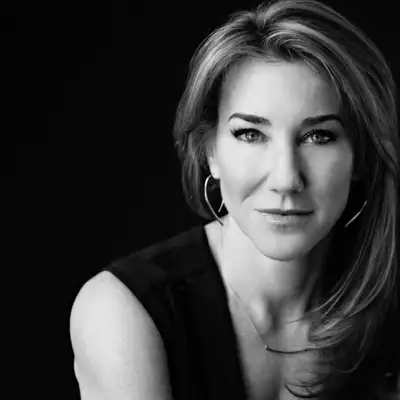
Magdalina Atanassova: Welcome to Season 11 of the Convene Podcast, brought to you by Destination Madison. This season we’re focused on wellness and designing events that don’t exhaust people. Today my guest is Laura Gassner Otting — a Wall Street Journal bestselling author, serial entrepreneur, and one of the clearest voices challenging how we think about success, burnout, and meaningful work. She’s the author of Wonderhell, Limitless, and Mission‑Driven, and her career spans everything from building and selling an international executive search firm to serving as a White House appointee on the team that launched AmeriCorps.
Laura is known for telling hard truths with warmth and clarity — what she calls a punch in the face wrapped in a warm hug. In this conversation, we explore why burnout isn’t about doing too much, but about doing too much of what doesn’t matter; how control and influence shape engagement at work; and how event professionals can rethink alignment, seasons, and what only they can do.
We start now.
Hi Laura, and welcome to the Convene Podcast.
Laura Gassner Otting: Thank you for having me.
Magdalina Atanassova: It's my pleasure.
In one of your recent newsletters, you address burnout, which really resonates with me, so I really want to chat about it with you.
There. You said that burnout isn't about doing
Magdalina Atanassova: too much, but about doing too much of what? Doesn't matter.
Magdalina Atanassova: What helped you get that realization that what you were experiencing wasn't too much
Magdalina Atanassova: work, but too little alignment?
Laura Gassner Otting: Well, you know, it's very interesting. When I wrote my most recent book, Wonderhell, I. I talked to a hundred different glass ceiling shatterers, Olympic medalists, startup unicorns, thinkers, creatives, philanthropists, people who have just done superhuman things.
And I was struck by the fact that these people who were doing so very much didn't actually feel burnout. They felt the stretch between what they need to do at home, what they need to do at work, what they need to do as a husband or a wife or a partner,
as a parent, as a sister, as a brother, as. As a friend. They sort of felt stretched between these things, but when they were actually in the work that was their work, the work of their lives, what they felt called to do, they never felt burned out.
They. They might have been tired, they might have had some, you know, some. Some fatigue, but they never felt exhaustion in that way that you're just like, I can't get up tomorrow and do this another day.
And so what I realized is that it's not that we're doing too much work. It's we're doing too much of the work that does. Doesn't actually matter to us.
And I think part of that is because we spend so much time just taking on new responsibilities, but we never actually stop and ask ourselves,
should we still be doing the things that we have been doing or should we be picking different things?
Magdalina Atanassova: That definitely resonates. I know that feeling all too well.
And for high achieving professionals, which I feel event professionals fit very well in that category.
Know who've done everything right, so to say, but you're deeply exhausted. What are the earliest signs that their burnout is actually a values mismatch like you said, rather than workload?
Laura Gassner Otting: Well, you know, a lot of times it comes down to I just can't do this another day, I just don't want to go to work, I'm not excited about what I'm doing.
And so they may feel interest and curiosity about the vision. I mean, let's take PCMA for example. You might feel interested and curious and compelled towards the mission of your organization,
but the everyday doing of the tasks in order to help that come alive,
maybe that's just not something that you want to bring your all to every day anymore. And I think especially with conference and meeting planners,
there are so many little details, but there's also this big picture that we have to be paying attention. We have to be thinking about the members of our associations, while we also have to be thinking about the mission of their companies.
You know, so it's not just our company, but it's their companies inside. So there's so many different levels that the members of PCMA have to be thinking about.
And when we start having that, well, I just, I just don't really want to do it anymore or like I did it good enough or you know, like I'll get to it tomorrow.
Right. Those are the moments where we're, we're no longer excited to bring our best. And when that happens, we start self sabotaging. And what I think is so interesting about the self sabotage piece is that the work still gets done.
It's just not getting done in a way that we're proud of.
It's getting done in a way that we're relieved it's done right. So like those two things, like I don't really want to do it, I'm pre exhausted before I even start.
And the I've now done it and I'm relieved and I'm onto the next thing. Like those are two big signs for me that you're maybe out of alignment and maybe you're not doing the right things for you at this moment in your life, in your career.
Magdalina Atanassova: That actually brings me into a book that I'm currently reading or rereading, I don't know for which time. The Art of Possibility and there. There is a passage that the authors explain how a member of the organization that looks like they're slacking back.
It may be that they're showing misalignment in a way just because they can't bring their all to what's being asked. You know, there is, like,
they're passionate about the work, but also they're kind of sitting back just because there is something that's in front of them, some wall that is preventing them to give their all.
I don't know if you see the same alignment, but it's like sometimes you just have to reach out to those members and ask them, is there something preventing you from doing your best work?
Or is it like you're saying in this phase that just the alignment is not there anymore?
Laura Gassner Otting: Yeah, and I think that we can ask them those questions because when we see those people, we think, oh, well, they're just lazy. They're just too fragile. They're bad at balance.
Or we say, like, they're broken, they're misaligned. They must have something going on at home. Like, we start creating stories,
and then we don't actually fact check to figure out those stories are real. And then in the absence of real stories, we create monsters.
So we start assuming that they're going to be even worse the next time. And then we don't give them the project that might excite them and might get the best out of them.
So I think it really comes down to asking what's going on with that person, how they're feeling. And, you know, if you. If you're feeling awkward about asking somebody, you know, is there something that's getting in the way of you doing your best work?
Another way to ask the question, because, you know, for me, that feels like confrontation, right? Like, I feel like I'm putting somebody, you know, backing them into a corner.
For me, the better, the better question is to ask what's exciting you about your work right now?
You know, what are you looking forward to in this next project?
What. What is something that you're curious about? What are you. What. What are you looking to learn that's different on this next project? And then watching how they light up.
One of the things that we used to do, I spent 20 years in executive Search, and for us, asking a question and then asking somebody what it is about that thing they just told you about, that's exciting, that's interesting that they learn that's changed them, that helped grow.
Maybe they tell you a story about a different person and you ask them you know, what are some of the things about them you'd like to emulate in yourself? And then you just kind of, at the end of their answer, you just count to three.
One,
two,
three.
Sounds like forever, right? But if you just wait in their mind,
it doesn't feel like forever because they're thinking and they think you're thinking, so you're not just jumping in. Worst case scenario, they think that they're being heard because you stop and you're listening before you respond, as opposed to just listening to respond.
Right? Which two very different things. Listening to engage and listening to respond.
And best case scenario, they actually start talking again, right? In the silence of the 1, 2, 3,
they start telling you all the things that they hadn't planned to tell you. And then suddenly you get this unguarded answer about what actually does excite them. I had a young woman who reached out to me a couple weeks ago.
She's a young woman who I've known almost since she was born. She was a very good friend of my son. And she was asking me about interviewing for jobs. She's coming out of college.
And she was like, I don't know, Laura. I'm just like, I'm getting to, like, the second and the third round of interviews, and I'm not getting the job. And they just keep telling me they want someone with more experience.
And I was like, well, honey, if you're getting to the second or the third interview,
they already know how much experience you have. They don't want someone with more experience. They just don't like you.
And she was like, what do you mean?
And I said,
tell me what you tell them when they ask you, so what do you like to do when you're not at work? And she gave this very perfect answer, like, well, I'm very interested in travel, and I'm interested in learning about cultures in this place and the other place.
And I like to, you know, I like cooking. And, you know, I, you know, it was just one of those, like, AI could have written the answer. Like, it was such a perfect answer.
And I was like, oh. I'm like, stop doing that. I don't want to be with you. You sound awful. You sound so boring. Like, don't. That's not you.
Go be you. And she was like, well, what do you mean? And so I said, has there been an interview where you got very uncomfortable in the interview and you just started blathering about something?
And she said, yeah, I did have one of those about six months ago, and actually Come to think of it, I got offered that job. She's like, I didn't. I didn't want that job.
And I said yes. I'm like, see, you were you. I was like, so it's not that they want someone with more experience.
They just didn't like the you that you presented because you weren't presenting you,
but when you suddenly started saying the things that you hadn't planned on saying,
they loved you. So here's the good news.
Magdalina Atanassova: Just go be you.
Laura Gassner Otting: And so, in our work,
asking our people what lights them up and then letting them blather on a little bit and then sitting and watching and listening to what they actually have to say can unlock the thing that is causing the burnout and actually make it the thing that lights them up.
Magdalina Atanassova: I love it. And that just feels so free. Right? Just be you.
Laura Gassner Otting: Just be you. And, you know, here's the good news. If you're being you and the place in which you are being you doesn't like that version of you, you should be somewhere else.
Because the other part of burnout is that you are working across purposes. Because I, like, I don't think that we're too busy. I think that we're too busy doing things that we don't actually care about.
Like, if you talk to artist, if you talk to somebody who is deep in that alignment, in that flow state, nobody ever says, oh, my God, I worked on a thing that I love for 10 hours today and I burned out.
Nobody says that. But, like, I worked on a thing that I love for 10 hours today, and I feel alive. Right? So. So if you can put yourself in that flow state, that alignment, that, that.
That space where everything you. You love to do is being brought upon to solve a problem you care about, and you're being rewarded for solving that problem in a way that is financially,
emotionally, karmically,
intellectually stimulating,
meaningful to you, you're never going to get to the end of the day and be like, I did so much, and I feel burned out. You're like, I did so much.
It was an awesome day. And it's our responsibility to try to bring that out in other people. But if you're in a place where you are constantly having to code shift and costume change to be one person at work and one person at home and one person with your spouse and one person with your kids,
of course you're going to be exhausted. So even if you are like, I want to be me and I want to be the fullest version of myself, you Also have to look around and figure out if the environment in which you are that person is there to bring that out of you and,
and stimulate it and reward it, or if it's there to quiet and quash it.
Magdalina Atanassova: And that brings me beautifully to the seasons that you also speak about and how we can maximize only one of three things in a season, which is profit, impact or freedom.
So first of all, can you explain a little bit more about how you define a season and then we can go to the other three.
Laura Gassner Otting: Sure. So in my executive coaching work, I have a, like a Venn diagram. And if you're sending this out in a newsletter or how you can use a picture of that Venn diagram if you want, it would probably be helpful for, for, for people to, to look at it.
I like to think that we can at any given time in our work maximize profit,
freedom and flexibility or impact,
but we can't maximize all three. I think it was very difficult to maximize all three. So at, you know, a certain point, if you want to maximize profit, you are looking to,
you know, what is the highest revenue that I can possibly make.
I find my purpose in the earnings statement that I'm looking at, like looking at that network worth at the bottom or looking at the P and L statement. I live on the road because I am just sacrificing everything I possibly can to maximize that dollar.
And that's the mogul, right? That's the person who is just, they are, they are fully in it. Then you have the person on the other hand who's maximizing impact. They're the one who like, they have a higher calling.
They find their purpose and service towards a mission or towards other people.
And they, but it also creates a fee ceiling because, you know, you're only, you're only working sort of towards service.
You're not selling your soul to make a lot of money. And so that's like the missionary, right? So you've got the mogul on one side and the missionary on the other.
And then there's the person who wants to maximize their freedom and flexibility and I call that person the nomad, right? They have full autonomy. They find their purpose in the like network of friends and family that I call framily.
And they've got a little bit of like a funky impact or cash flow. So that might be in the PCMA world, like a vendor or an independent consultant or somebody who's an event planner who like in a vet season you're super busy, but you want, you don't want to Go work for someone full time.
You want to just like, maximize the fall, maximize the spring, and like,
hold on steady through the summer. If, like, that's a quieter time.
So you can have one of those three. You can be the mogul, you can be the missionary, you can be the nomad, but I think you can also try to blend them and maximize two at the same time.
So if you're somebody who wants freedom, flexibility,
you know, look, it's like, it's like that old saying, like, do you want a fast, cheap or good? You can have two of the three. Like it can be fast and cheap, but it's not going to be good.
It can be good and cheap, but it's not going to be fast, right? Like you can have, you can have two of the three of these.
So at any given moment, if you are,
say you want to make a ton of money, but you want to maximize freedom, flexibility,
you're probably not working for the nonprofits that are closest to serving like poor kids in need, right? Like that's, they're just not going to pay you as much. And I don't need to go through this for each of them.
But the idea being that if we figure out what we actually care about in each phase and at each stage of our lives, then we can commit to that. So when my kids were little, I really needed freedom and flexibility.
So I left the big giant executive search firm. I created my own, I worked for nonprofit organization.
So I wasn't maximizing money, I wasn't maximizing my profit, but I was maximizing freedom, flexibility and impact in the world.
Now my kids are out of school, they're out of the house, they're. I, it's 25 years later and I'm able to travel anywhere, I'm able to do keynote speeches anywhere.
I can. You know, I can take a keynote speech in Las Vegas for $30,000 for a bunch of mortgage agents, or I could take a keynote on, in, in, in Portugal on a Friday afternoon for 10,000 because my husband can come for the weekend.
So I'm in a very different stage where impact is less relevant in my day to day work.
Because I want freedom, flexibility and I want to maximize the dollars because at this point I, I'm not serving on community boards in my neighborhood because I'm not really around as much.
But if I maximize the money, then I can write a big check to the nonprofit I care about. So it's all to say, like, they're just different stages and different ages that we find ourselves in our lives.
And in that moment, if you make decisions based on two of the three sort of avatars that you can be,
you're able to figure out who you are, and then all of those decisions move towards that. And P.S. the most interesting part about it is that if you make decisions based on two of the three,
the third one always follows.
AD: Planners are embracing tier two destinations for new attendee experiences—and Madison, Wisconsin delivers. With city lake scenery, green spaces, and a safe walkable downtown, Madison will leave your attendees feeling recharged and reconnected.
Enjoy urban amenities, a welcoming vibe, and coffee under forty-eight dollars a gallon. Learn more or submit an RFP at visit madison dot com slash PCMA.
Magdalina Atanassova: All right, so, but the goal is not to follow all three, because then we are burning out, right?
Laura Gassner Otting: Yeah. I mean, like, if I tried right now to maximize money, right, and, like, go to every possible keynote I could, and also maximize freedom, flexibility, I'm working for myself. I'm not working for somebody else.
I'm not working at a consulting firm and doing this on the side. But also at the same time, I only want to do work, work for organizations that are close to the missions that I care about.
That's an impossible task. Then you've got, you know, three. Three masters. You're being pulled in three different directions, and some of those are at cross purposes. So if I'm saying I want to maximize the money that I'm making from every keynote, but I only want to do it for,
you know,
hospitals and, you know, and nursing homes and shelters for abused children and not do it for pharmaceuticals or the mortgage industry or other places that, you know, pay more money for their speakers, that's very difficult to do.
But what I'm saying about if you do two. And the third one follows is if I do a bunch of keynotes for the pharmaceutical industry,
I can actually give money to the healthcare organization that I care about because I've made more money personally. So we can. You can be all three. You just can't be all three at work.
So if you do two, you can make the other one happen.
Magdalina Atanassova: I love it.
Laura Gassner Otting: So what likes to talk about over, like, a podcast, because you sort of. You sort of need the. You sort of need the visual. It's. So I guess the simplest way to think about it is, like,
why do you do the work you do?
What is. What are you trying to solve for right now? Right? What is the calling that you care about? And the calling can be,
do I want to, you know, make a ton of money and, you know, have my kids be able to make different decisions than I had to make because they don't have to have, you know, debt, Right?
Like, do I want to make a lot of money? Do I want to serve a leader who inspires me? Do I care about this mission? Do I want to build a business?
Right? Like, what is the thing? What Is the, the what is the reason, what's the why behind the work that you do? And then looking at your calendar, your email, your to do list and asking yourself, does this work actually connect to that calling?
Does being on this bake sale committee, does going to this meeting, does taking on this client get me closer to,
to that version of myself? Or does it get it far, gets me farther from it? And when you answer those questions, that kind of puts you in one of these, one or two of these avatars.
Magdalina Atanassova: You stole my question about what questions could we ask? So perfect.
Laura Gassner Otting: Yeah, I mean, I think we want to ask ourselves why we're doing the work we're doing. Does the day to day work actually get us closer to that? And by the way, in a survey of 10,000 people, I think when I spoke to PCMA a few years ago, I had 5,000 results.
And we now have 10,000 results. We have 10,000 results from 113 different countries.
Less than half of all workers can tell you what the long range goals of their companies are.
Less than half of all workers can tell you what their,
how their own work on a day to day basis actually fits into those long term goals. And less than half of all workers can tell you what they themselves need to do to fit to reach their own long term goals.
So we have to stop and ask ourselves these questions and,
and the reason why is because somebody handed us at 15, 16, 17 years old, a definition of success.
What school do you want to go to? What trade do you want to take up? What kind of career do you want to have? Who do you want to be when you grow up?
And we all decided something most likely that was palatable to our parents or whoever our caregivers were, or our teachers or our friends at the time. And then we never stopped to look back and say, is this really who I want to be?
Is this really what I want to be? And what happens is, you know, we're asked to make that decision when we're 15, 16, 17 years old, but we literally don't have a frontal lobe at that moment in our lives.
We don't have a frontal lobe till 10 and maybe 15 years later. And that's the part of our brain that helps determine good, logical, sound decision making.
So if we're asked to make this decision before, we're literally capable of making a good one. Is it any surprise that we make a decision and then we look back years later when we're like, well, I don't know, is this really who I am?
Is this really what it's going to be? Is this my life?
And then we have that, you know, quarter life or that midlife crisis. So asking ourselves this question of, like, who do I want to be? What lights me up? Where do I do my best work?
Last thing I'll tell you on this is that there's a great exercise that comes out of a Harvard Business Review article that was written in, like,
the late 80s or early 90s,
and it's called the Fundamental State of Leadership.
And in this exercise, you're asked to think about,
when were you at your best?
What were you doing? Like, you could be making it rain. You could be closing the deal. You could be wooing the girl. Like, it could be public, it could be private, it can be personal, it could be professional.
It could be loud, it could be quiet. Like, maybe you were helping a loved one through a difficult moment. You were sitting bedside by a dying relative. You were working ON A.
A PowerPoint presentation, you know, in the back room. Like, it doesn't have to be live and on stage and attached to lots of dollars coming into your organization,
but when were you at your very best?
And then it asks you, like, what were you wearing? Who was in the room with you? What kinds of muscles were you using? What parts of your brain were you using?
What was the vocabulary you were using? What was the energy? How did it feel?
And then the next piece of the exercises,
write those things down.
Write them all down on a piece of paper. Stick that piece of paper to your rear view, you know, mirror in your car, stick it to your bathroom mirror. Like, look at it every single day.
And every single day, try to embody that version of yourself.
And the more often you can embody that version of yourself, the more often that becomes your fundamental state of leadership. That's who you regress to, even in the worst of times, if you continue to try to inhabit that very best version of yourself.
And so my added piece to the fundamental state of leadership is to think to yourself, what was the work that I was doing and how do I try to do more of that work?
Because that work naturally brings out that part of you which never brings out the burnout. It always brings out the alignment and the flow.
Magdalina Atanassova: I love it. And by the way, I will include in the show notes a link to the Venn diagram that you mentioned so people can visualize it in case they're having a hard time.
Laura Gassner Otting: Yeah, it's. It's a lot. It's a bit complicated. And then. But when you see. See it anyone I've shown it to, like, when I work with my executive coaching clients, it's.
I usually bring it up in like the second or the third session that we have and they're like, oh,
I'm actually a lifestyle tycoon. Yes. I'm in between the Nomad and the Mogul. That's exactly who I am. And then it becomes very clear because it becomes almost like an operating system where they know it's okay then not to go after the things that might fit in the missionary,
that might fit in the Nomad. Right. That it becomes very clear what makes sense for them. And then everything else falls away. It doesn't become pressure,
it doesn't become noise anymore. It just becomes irrelevant.
Magdalina Atanassova: I love it. And speaking about decisions and decision filters,
your 4C's framework, which is calling, connection, contribution and control,
create a decision filter that, like, you've explained,
which of these do you see people most commonly out of sync with when burnout shows up?
Laura Gassner Otting: Control. It's always control.
So it's a combination of control,
like regressed against calling,
but it's always control. There are studies that show people will take jobs that give them more influence versus jobs that give them more power.
We think that we're all climbing to get to the most powerful position we can, the biggest title, the biggest office, the biggest salary, et cetera. But what we have Learned in the 10,000 results from 113 different countries, every possible demographic, every possible industry going back since January of 2019.
So before, during, and now after the pandemic, the number one driver of whether or not somebody is happy in their job is whether or not they feel like they have any influence at all over the prospects that they're assigned, the projects that they're put on, the teams with whom they work,
the metrics by which they're measured. So it all comes down to control. And we saw it,
we saw it magnified during the pandemic when people need, like, bosses were like, oh my God, just do whatever you can do to, like, keep the company afloat. Stay home, work from home, work from wherever, whenever you want to work.
Just like,
let's all just stay alive and keep the company alive.
And we confused working from home for control, when in fact what people really want is a voice. We want that influence. So it comes to influence. Now, the reason I say that it's regressed against calling is that the place where we see the most unhappy workers and is where people come to an organization where they think they're going to have calling.
Some sort of higher purpose, some sort of feeling of service, and they also then have no influence whatsoever. It's almost like that heartbreak in the chasm between, like, I want to serve something with purpose, but I feel like I don't have any influence whatsoever to even help do that better.
That's where the worst piece of it is.
That's the first. The second piece, I will tell you, is that because of the calling, where people want to work for somebody or something that inspires them, workers who work for a bad boss,
they leave. Right. We know that that's not rocket science. Workers who work for a quote unquote good boss, somebody who they respect and yet they feel like they have no relationship with that boss, are just as likely to leave as people who work for a bad boss.
So again, that's influence. They feel like they have no relationship, they have no influence, they have no engagement. So that whole area of control. How much control do you want?
How much control do you have? Is where we see the workforce engagement really dropping and people's burnout really poking. Poking its head up.
Magdalina Atanassova: I feel you touched a nerve for event professionals where control is the first and foremost.
Laura Gassner Otting: Absolutely. This is not it. This is not an industry of people who are not focused on details. Yeah.
Magdalina Atanassova: So if an exhausted event professional came to you today and said, I feel like I'm running on empty, where do I start?
Magdalina Atanassova: What's the first question?
Laura Gassner Otting: Yeah, here's the first question I would ask.
What can only you do?
What can only you do? Because every event professional I know is still doing the work of 17 people.
And I understand that there is not a budget to hire 17 people, but there's probably a budget to hire a couple. So you can do the work of 15 people.
Right. So, like, what is the work that only you can do? Because as we progress in our careers, we have a backpack of skills.
And from that backpack of skills, we do a lot of different tasks.
And as we progress in our careers and we get more skills and we are promoted and we're in charge of more things, we still have that whole backpack, and we don't hand the backpack to somebody else.
And so we keep doing all of the tasks that maybe were a job or two jobs ago in our career.
Now, obviously,
we're all understaffed, we're all under budgeted, so we're going to have to do some of those things,
but we don't have to do all of them. And so the question that I ask people is, what can only you do? Because the highest and Best use of your time is to do what only you can do.
Otherwise, you're wasting your time doing things that other people should do. And by the way, you're stealing from the people who are coming up behind you who need to do those tasks in order to grow in their own jobs.
So, you know,
it's hard. It's hard to give things up. People are going to get things wrong. It's going to create a few, like,
minor crises in the organization. But what can only you make happen?
Start there, do those things and delegate everything else you possibly can.
Magdalina Atanassova: Was there anything we didn't mention that we definitely should before we wrap up?
Laura Gassner Otting: Oh, gosh, no. I think we covered. I think we covered a lot.
Magdalina Atanassova: We certainly did. At the same time, I feel like we've only scratched the surface. So definitely redirect people to your books and to your work, to your newsletter and everything that you're putting out there.
Laura Gassner Otting: I mean, I guess what I would say is that if people are feeling burned out, they could go online to my assessment at limitlessassessment.com and it's a 56 question survey. It takes about 20 minutes.
So it's a little bit in depth. But, you know, it's your life, it's your career. You owe it to yourself to be a little bit in depth about figuring out what's going on.
And from that survey, what you'll get is basically a diagnosis about exactly where your life and career is in alignment and where it's not. And a very specific detailed PDF that'll help you with things that you can do today to help move into the season of your life that you want.
Magdalina Atanassova: I love it. I think that's a beautiful end to our conversation. Laurie, thank you so much for being on the podcast.
Laura Gassner Otting: Thank you for having me. I appreciate being here.
Magdalina Atanassova: Remember to subscribe to the Convene Podcast on your favorite listening platform to stay updated with our latest episodes. We want to thank our sponsor, Destination Madison. Go to visit madison dot com slash PCMA to learn more. For further industry insights from the Convene team, head over to PCMA.org/convene. My name is Maggie. Stay inspired. Keep inspiring. And until next time.