Subscribe
Share
Share
Embed
From Fort Peck, Montana to Tijuana, Mexico, the alternating current transmission network in the West oscillates in the narrow band of narrow band 59.97 and 60.02 cycles per second. On Frequency Band, the California ISO will host industry experts to talk about how the physics, economics, and governance of the grid come together to to keep the system in sync.
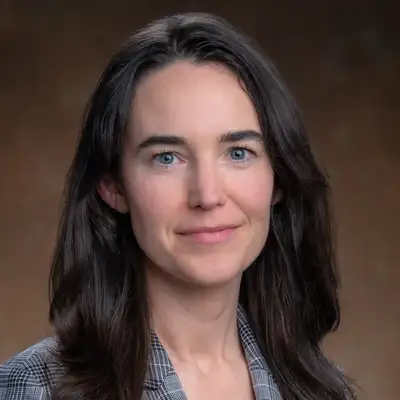
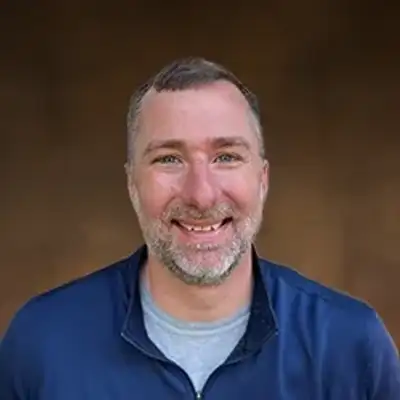
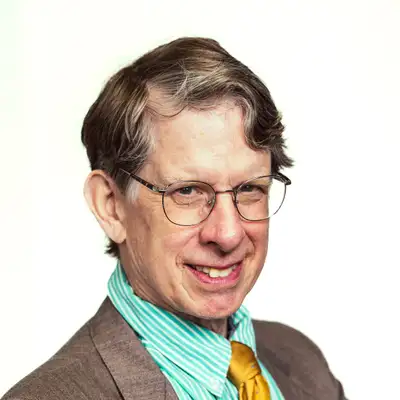
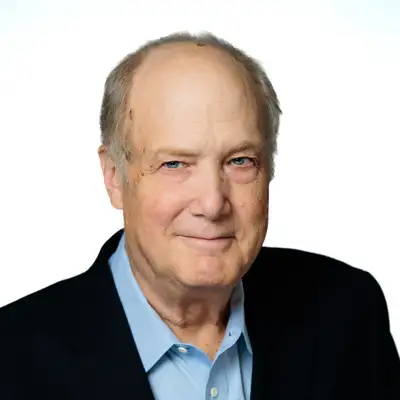
Thanks for tuning in to Frequency Band. I'm Paul Dockery. I have a short production note about this episode. In late April, Becky and I had the pleasure of sitting down for a conversation with Scott Harvey and Ben Hobbs about the issues we find most interesting in the market design space. Scott and Ben have an expansive understanding of the history of electricity markets and an interesting view of their future informed by decades of experience on the California ISO's Market Surveillance Committee.
Paul Dockery:As you would expect, we had a lot to cover, so much so that we're splitting the conversation into two parts. In this episode, you'll hear the topics Scott Harvey and Becky Robinson are enthusiastic about at the forefront of market design, specifically managing that load uncertainty and the growing pains of growing markets. The topics Ben and I brought to the conversation are in part two, which will come out in the next few days. We recorded this conversation while Ben and Scott were at the ISO to celebrate their retirement from the Market Surveillance Committee. It happened to take place in the days before the extended day ahead market launched on May 1, and you'll hear some references to EDAM in the future tense.
Paul Dockery:We aren't ignoring, the launch by load, by trade volume, and by the diversity of resources now coordinating in a single day ahead market, EDAM is the most consequential advancement in Western electricity markets since the Western energy imbalance market launched in 2014. And we are planning an episode dedicated to EDAM. Subscribe now so you don't miss it. If you want more timely updates, the ISO recently launched a new newsletter called Western Energy Market Observations that covers notable developments across both EDAM and the Western Energy Imbalance Market. You can find it on Western Energy Market's website.
Paul Dockery:I'm Paul Dockery.
Becky Robinson:And I'm Becky Robinson.
Paul Dockery:On Frequency Band, Becky and I explore the physics, economics, and governance of the grid from a system operator's perspective.
Becky Robinson:Today, Paul and I have the special privilege of recording an episode in person at the California ISO's headquarters with two long standing members of the Market Surveillance Committee. Here to share wisdom and expertise, with us today is Doctor. Scott Harvey. Scott served for fifteen years on the Market Surveillance Committee and is a widely and highly respected expert on various market design and policy challenges confronting the ISO and California and the rest of the country as well, I should say. Scott has significant experience and expertise on the issues, facing electricity markets throughout North America.
Becky Robinson:Hello. Good morning, Scott.
Scott Harvey:Thanks, Becky. I'm looking forward to this great opportunity to to talk about the challenges we face in the West. Yep.
Paul Dockery:Thanks, Scott.
Becky Robinson:Also joining us this morning is Ben Hobbs. He has served on the Market Surveillance Committee from 2002 until March of this year. He is a professor in the engineering school at John Hopkins University and a world renowned scholar, having held appointments at the Helsinki University of Technology, the University of Washington, the Netherlands Energy Research Center, the Electricity Policy Research Group at Cambridge University, Caltech, and last but not least, Comeus Pontifical University. Welcome, Ben.
Benjamin Hobbs:Thank you so much, Becky and Paul. It's going to be a lot of fun to reflect on the last quarter century how much power markets have changed and not changed, and the challenges they're gonna face the New Market Surveillance Committee that's being put in place.
Paul Dockery:Absolutely. We're here, we probably say, because all of the MSC references are in the past tense. You spent a lot of time together on the MSC and your tenures, your appointments ended. What's the right term for for what you your your terms?
Benjamin Hobbs:Don't get me crying again. Okay.
Paul Dockery:So how many years? How many years? Becky did the intro, Scott, how many years were you
Scott Harvey:in? Fifteen years of five terms.
Paul Dockery:Five terms. And how many meetings do you approximate that incorporating?
Scott Harvey:I think about five a year, but Okay. I'm not
Paul Dockery:And how many minutes of kind of time did you spend working on opinions and how many how drafts have you poured over in your time on the MSC? Any comment, any words? And do you word count it?
Benjamin Hobbs:No, well, okay. We can think like an engineer.
Scott Harvey:Okay.
Benjamin Hobbs:So if they're about five opinions a year and they average 20 pages, they were starting to get longer and longer towards the end of our tenure, which I think was a hint that they need to, you know, we needed to move on. So, that's 20, that's a 100 times another 20. So that's 2,000 pages of opinions. Somebody must have read them.
Paul Dockery:They're all saved. I think part of the job here is to go read them. All the early staff has to go read all of your opinions, I think.
Benjamin Hobbs:Yeah. Any of you out there in podcast land can go to the Kaiso MSC website and download every ones and enjoy reading them.
Paul Dockery:That's exactly right. Well, today's show, we're gathering some of that wisdom directly, so you don't have to go read all the opinions and sharing some enthusiasm at the frontier of electricity market design. In a segment, I'm calling, maybe a little cringey, To Thine Own Dorkiness Be True. Yeah. A little bit.
Paul Dockery:Sorry about that. So I asked each of you to bring a topic you find interesting or intriguing at the cutting edge of market design. Something that's true to your unique areas of enthusiasm. We're all doing it, all four of us. So you get some enthusiasm from Becky and I and some wisdom from Ben and Scott.
Paul Dockery:But we are pairing our enthusiasm with self awareness. So for each of the panelists in front of you, I have printed out a wonky rating rubric. We're gonna rate each person's topic on a scale from one, which is just straight up kitchen table issues, like topics that common sense hit the pocketbook. That's a one. Goes up to five is the wonkiest score.
Paul Dockery:That's dual space, where we're off wandering around with Lagrange multipliers, hoping that we can find have a plan for returning to the land of Primal. In between, okay, we've got so one is kitchen table, two is we're at the library. It's on our wonkiness rubric. We just have to do our homework, but there's plenty of information available. Three, I put in the middle at the regulator's office.
Paul Dockery:We're in 400 page filings, footnotes, and all of that. And then at the four, I put the Market Surveillance Committee. That's the wonkiness level four. Does that feel right?
Scott Harvey:Sure. Sure?
Paul Dockery:Okay. That's completely arbitrary. So sure is as good of endorsement as I need in order to do it. Everybody's gonna go around the table. We're gonna talk about a topic, propose what's interesting and what areas we have enthusiasm about.
Paul Dockery:And then we're gonna have to all agree on where people fall into this rating rubric. Are we okay with this? With that. You're a teacher. You've been rating people on scales your whole career.
Benjamin Hobbs:Yeah. You can tell when the class is not engaged.
Paul Dockery:Yeah.
Benjamin Hobbs:So there's always a moment in our MSC meetings, and it's about an hour before end and we're getting into the members' presentations, more often than not Scott's, because Scott has prepared an awful lot of great material. But it's getting into the wonky side And suddenly the pauses for questions, all you get back is crickets. I guess there are no questions. I guess we can continue over and over again. That's when you can tell that you're in number four land.
Paul Dockery:That's number four land. So then the number five land is, they've logged off?
Benjamin Hobbs:I I think they keep it on, but they're they're probably doing something else.
Paul Dockery:Yes. Okay. Okay. Well, we have a good characterization of what number four is. We're gonna start with with you, Scott.
Paul Dockery:What is the topic you find interesting in at the cutting edge of market design?
Scott Harvey:I think for the whole not just the California ISO, but the entire Western net, EIM, the challenge that's been really dominant for the last ten years is dealing with net load uncertainty associated with intermittent roofs resources and their growing importance. And the CISO has been at the the forefront in dealing with that. MISO and SPP have been working on it and dealing with some of the same issues. But California and the West are are really the the the cutting edge, and, it's got many complicated components. One is just forecasting that load uncertainty.
Scott Harvey:We don't wanna have lots of excess capacity on all the time. That's a lot of waste to break their dollars. Right. So how much, when, and where? Then we have challenges associated.
Scott Harvey:Well, if we put on extra capacity to provide balancing for that load uncertainty, will we actually be able to use it? Will it be behind the transmission constraint? And and then we have a diversity benefit that we take into account that that we need to estimate so that we don't buy too much because we're not at each region isn't gonna have high load and uncertainty at the same time, but then is the is the diversity benefit deliverable? And if we have a demand curve, do we procure the diversity benefit or we not not procure it? Like, to give you an example, talk about net load uncertainty.
Scott Harvey:And then we we the California ISO is is way ahead, I think, in terms of analyzing this with the mosaic model that takes a lot of data and forecast solar uncertainty and wind uncertainty and load uncertainty. But we need to recognize that we haven't we may have checked that box, we haven't solved the problem.
Paul Dockery:Okay.
Scott Harvey:And there's a lot of challenges still going on. One thing that we you know, it's a challenge in terms of estimating the tail of the distribution. We need a lot of data. So you but the the CAISO is a philosophy of not wanting to go back too far in time, but sometimes that creates tensions and problems. Like, right now, we go ninety days forward and ninety days back in the same you know, ninety days back this year and ninety days forward from last year, And it seems reasonable.
Scott Harvey:It gives you a 180 data points, but, like, in June 15, about half those data points are April and March and April. Well Yeah. Okay. You know, which is more like, you know, you know, two summers ago in June or March. Well, I don't think really we're, you know, we're on top of that problem, and it's it's complicated.
Scott Harvey:And then we have a mosaic model that and we need to recognize that. You know, when we have discussions with policymakers and evaluate it, we have to realize that the output of our model isn't perfect, that we got we got issues. And another I characterize another context to that is the a critical step of the MOSAIC model is taking the estimates of net load uncertainty and adding them together. And then and I've pointed out many times that when you take the 2.5% tail of three distributions and add them, that isn't the 2.5% tail. Right.
Scott Harvey:It's perfectly correlated, and it might be the 1% tail. You might be buying 50% too much capacity as your target. And so when we talk about and policymakers are upset about the cost like it's been going on during EDM discussions, we have to have in our mind, yeah, well, we're targeting two and a half percent, but we might actually be buying to to 1%. And these these we haven't got it perfect. So this is why it's a continuing challenge and balancing, and we always have to understand.
Scott Harvey:Even while we're continuing to make it better, we have to understand the limitations. So it's and all of these elements are make the the the balancing that load uncertainty, you know, very challenging. And we have the diversity benefit, but when there's congestion in the California, when we do the normal dispatch, well, the the diversity from the Pacific Northwest isn't deliverable. So we we actually don't have as much, you know, reliability as we thought. So maybe we have less than you know, we're we're procuring to cover less than two and a half percent.
Scott Harvey:And then when we have the demand curve triggered in California and we don't buy it all, well, that means that, you know, when there's an event in the Pacific Northwest, we don't have the diversity benefit from capacity in in California, and we didn't buy it anywhere else. So there's all these challenges, and I think the California ISO and the Western EIM are ahead of MISO and SPP. We're doing much more analytical things. We're you know, and and working on these problems. But the thing, again, that we always have to remember, we haven't checked that box.
Scott Harvey:We need to do better. DMM has published some great stuff about, you know, how the mosaic model works and so forth, and we have to we have to do it better. And we also have to, when we're thinking about problems, remember that well, we haven't actually got it whacked. You know? There's this isn't perfect.
Scott Harvey:We might have significant errors, and so that's why I find it really interesting and challenging in the West.
Benjamin Hobbs:So call us the Statistics Surveillance Committee rather than the Market Surveillance Committee. We love these confidence intervals and tail probabilities and so forth. But of course, the tail probabilities are the extreme events that cause huge costs and we need to guard against. So we really do need to analyze those carefully and correctly.
Becky Robinson:Right. This is a fascinating issue. It's very timely. Right? In terms of, you know, EDEM getting launched, We've made some decisions about how much to procure for our new Imbalance Preserve product in the day ahead market timeframe.
Becky Robinson:And we're sort of we've got a plan for how we're going to start. We're going to see what happens. We're going to look at the market results. We're going to say, does this, I'll say, for lack of a better word, does this feel like we're buying too much? Does it feel like we're not covering the tails?
Becky Robinson:We're trying to kind of find the sweet spot. But I guess my question to you is how will we know if, or what are the things we should look for in terms of whether we've, made the right decisions about how much to procure, how much of this uncertainty to cover, versus, you know, how much would be gold plating and and which is just, you know, not needed often enough to justify the cost of carrying that extra capacity on a day to day basis.
Scott Harvey:Yeah. And I think, Becky, that the the decisions that Kaiso made were were the kind you wanted that recognize that we it isn't necessarily 2.5% just because the model says that, that there's a lot of uncertainties in the model and things that are imperfect, so you gotta look at the the results of what we're running and what how it's coming out and just assess is this reasonable. Yeah. And then but for forward, it it's tough because this is a probability distribution, and it isn't like every time that we buy too much, we're gonna see that maybe Mhmm. You know, because we're we're gonna buy too much in a lot of times because it's not the two you know, it's not the tail event.
Scott Harvey:But you you need to sort of put that data together and look at what is the pattern. And what is particularly challenging is that the pattern is gonna be different for different times of day and different times of year. So looking at are we buying too much or too little is very challenging to sort out what's just the fact that, well, this doesn't occur all the time versus we're just buying too much, or are we buying too little, or did we just was this just one of those 1% tail events?
Paul Dockery:So being at, like, the front this, I think, is an issue that the California ISO and its markets are experiencing first, maybe not exactly first, but we're at the frontier of it because of all of the, behind the meter solar battery sort of stuff. Is that that's the nexus of this issue. You got a bunch of, resources behind the meter that drives a bunch of uncertainty in your load forecasting.
Scott Harvey:Well, that's yeah. That's one element. But there are three things. We got utility scale solar.
Paul Dockery:Okay.
Scott Harvey:Its output is uncertain, especially day ahead. Okay. And and during certain kinds of weather conditions, it's very it's more uncertain.
Paul Dockery:Okay.
Scott Harvey:And wind's uncertain. And we don't have as much wind uncertainty as places like SPP and Mesa where they have much more wind, but we still have wind uncertainty. And then the third is the the the real load uncertainty due to rooftop solar and then the traditional load uncertainty we've always had that, you know, we never get the weather forecast right, but it's more more uncertain with with rooftop solar.
Benjamin Hobbs:And data centers coming online.
Paul Dockery:Oh, is that adding some more uncertainty about
Benjamin Hobbs:how Yeah. They're gonna Definitely. They can they we've been observing them dropping off without warning, for example.
Paul Dockery:That seems bad. They have large loads.
Benjamin Hobbs:Yes. So big ramps and so and with and we're and we're just learning about them now and what that might mean.
Scott Harvey:Well, there's always been an issue of what they're called nonconforming loads in other parts of the country where they have large industrials. Yep. So you have to they some of them have behind the meter generation, and you can't predict them based on your load forecast because it's driven by what's the cost of their behind the meter generation versus the price. And it can be, you know, a different kind of model than our normal, you know, load and weather.
Paul Dockery:And the way I heard y'all talking about this, it does seem like it's there's like two sides to it, like, as we're out there. One is the uncertainty and the statistics around quantifying that uncertainty so you can procure the appropriate amount and the, I don't know, the epistemological problem of did I procure the right amount or not? Because how will I know that without a bunch of data around performance and metrics?
Benjamin Hobbs:That gets 10 wonkiness points just by itself.
Paul Dockery:Know. Epistemological. There we go. Becky and I, we learned we're we're both philosophy majors and undergrads.
Benjamin Hobbs:So that explains a lot.
Paul Dockery:Yeah, does explain a lot. Okay. So you have that problem of what's quantifying the uncertainty and judging whether it's the right value
Benjamin Hobbs:or not. The other Yeah. I'd like to mention under that, if the big costs occur when you're out at the 2.5% or the 1.1% level of the tail, how often are you gonna observe that? Well Right. The 2.5% has a one out of forty chance.
Benjamin Hobbs:So if if they're random, you may go by several months and observe nothing and be lulled into, yeah, we can get away, you know, being at the fiftieth percentile or ninetieth percentile. We don't need to be at 97.5. And then it hits you, and what often happens is that these events come in battalions, that you get a series of extreme days and if you've been lulled into complacency, may not be ready for those. And that's just the nature of trying to update these probabilities from real data from a system that is evolving and changing. So we do want to be cautious and not throw out the 1% or 2.5% criteria just because we haven't seen them for a little while.
Benjamin Hobbs:Okay. May be right around the corner.
Paul Dockery:You hit on something that I want to touch on because the distribution is changing. Also, the shape of the distribution is changing. How because that seems to me to add a lot of additional complications, but maybe not. Maybe we have statistical approaches where it's not dependent on the shape, but in a lot of ways, the shape of the distribution changing along with
Scott Harvey:it's No. That's what's hard is the distribution changing or you're just getting new realizations. And what, you know, you see in some of the data is that you get this pattern of, if you're if you're not using many data points to do your forecasting, you don't have those bad outcomes and you think, oh, our our our formula starts procuring less and less and less. We don't have a problem. Yeah.
Scott Harvey:And then, of course, then you have the four bad days Ben talks about, and then you start procuring all that much. And, of course, then that's way too much. You don't need that much. Okay. But they're in your sample for the next month.
Scott Harvey:So that's the the the the challenge of small samples versus large samples going back years or saying, well Mhmm. It's last month is the most informative. Well, maybe not. You know? And the the the if you might need to look back a period of time even though you can say, well, load growth in California or Spokane or whatever is is important, but is it it might not be that important that you you shouldn't be looking back and getting a lot of data to to get a sense of what the outlier is.
Paul Dockery:So the way y'all are talking about this, it seems like problems we've dealt with before. It seems like a very similar problem to planning reserve margins. It's like, the system changed, people maybe got
Benjamin Hobbs:complacent More planning about San Francisco's water supply, which they've been doing for January.
Paul Dockery:So can you help walk us through, in like this kind of we've dealt with this before. What are the types of solutions we but people are trying or that maybe what's the shape of a solution
Scott Harvey:set going forward? Haven't dealt with this before because we the the the context for reserves is the what's your the loss of your, you know, largest contingency. Right. And we have rules about, well, it's only it's gotta be a credible contingency. Well, you know the size of your nuclear plants.
Scott Harvey:You know the size along the largest transmission lines. You can study that, and you can get reserves for that. Here, there are no rules. Okay. You know, like, the MISO could lose 4,000 megawatts of wind over an hour.
Scott Harvey:You know? That's way bigger than their largest plant. We can have huge fluctuations in solar and and in behind the meter. And that's the the challenge. It isn't you can't look and say, okay.
Scott Harvey:Our largest nuclear plant is thirteen ten megawatts, and we need 10 thirteen ten megawatts of ten ten minute reserves. Well, no one's got that thirteen ten posted for us to look at. Yep. We gotta figure it out every day. Okay.
Scott Harvey:And what if you look back ten years, Ben and I were talking about FlexiRamp or the Kaiso, the early models were were looking at, okay. We're just gonna look at how much net load uncertainty there was in the past ninety days or a 180. And then utilities in the Pacific Northwest and others in the WIM were saying, well, you got this huge uncertainty requirement, but there's no wind output today. There's no uncertainty. I can't go down when it's near zero.
Scott Harvey:And it's a cloudy day. There's no solar. I don't need to protect against the solar going down. And that's why the Mosaic was the model model is a step forward saying, well, we gotta parse out these three things so that Okay. You know, we don't buy a whole lot of generation to cover solar uncertainty when it's a cloudy day and there is no solar.
Paul Dockery:Okay.
Scott Harvey:And so that's kind of the and that's the no rules part. You know? We got how much how much it can be. It can vary from day to day, hour to hour, and it isn't like a number we can look up on a table.
Becky Robinson:At the California ISO, like, we've adapted practices along the way to try and sort of, ride the wave, if you will, of, what's going on and what what are the challenges we're seeing that we can say, okay. Let's improve on what we've done until now. And we do that, but then, of course, we're we're sort of, it's not to say we've landed on a perfect method. Right? We've addressed, incremental challenges as they have arisen.
Scott Harvey:Yes. We've seen that things aren't working that great. You know, we've adapted and it but it's you know, we're never arriving at that station, at least not for a long time. We're still moving along it. And as you said, everything's changing around us in terms of the resource mix and loads.
Scott Harvey:And
Paul Dockery:And as far as, like, the solution sets going forward, it seems like there's two aspects to this. One is your modeling of the uncertainty and quantifying it, and the other is then the products to respond to it, to then acquire and procure. You've done some work across the country on other markets and how they're evaluating and trying to procure for this kind of stuff. Any lessons there? Any what are we the most interesting?
Paul Dockery:We're we're open to compliments, but, like, who what else is going on and what do you think the shape of those kind of procurement products needs to be?
Scott Harvey:I think, you know, the the the Kaiso is at the leading edge of that. You know, MISO was developing its flex you know, its equivalent to the FlexRigant product really in lockstep with you. Okay. And they went live in a few months before you in 2016, But that that product, did procure the same amount over the day, and it didn't have some of the sophistication that the Kaiso has. But some of that's they have different problems.
Scott Harvey:They didn't back then, they didn't have a lot of solar. It was more wind in their distribution. You know, they made And I did some of the early, you know, simulations to test the concept, and you're trying to do something that's better recognized you can't get it perfect. I think CISOs move further down that curve, but, yes, SPP and MISO are are moving down that road too, and and they're choosing the approach of a of a ramp product. You know, it's very similar to FlexiRamp, and they think some of the same challenges.
Scott Harvey:You know, on the supply side, the one we haven't talked about yet is the deliverability. And are we procuring our our supply behind a constraint? So we paid for it, but we're not gonna get anything. Yeah. Or we're not gonna it's only gonna be valuable one tenth of 1% of the time, not, you know, what as as often as we think.
Paul Dockery:So there's the ramp type of product. Mhmm. And then there's imbalance reserve products. Are those two addressing the same sort of uncertainty? Can can you help disentangle for, well, let's say it's for the audience, but probably for me, to conceptually parse out the difference between the flex product FlexiRamp product and, like, an imbalanced reserve product?
Scott Harvey:They're really the same thing in a different time frame because the FlexiRamp product is you're procuring it in real time on our software that looks out about two hours of, you know, RTPD to get really wonky. Please. But then the imbalance reserves is a day ahead, and that's trying to scale the amount that we commit for Okay. Schedule interchange for when in a longer time frame, which we've got more more room to to schedule resources than
Benjamin Hobbs:we more have. Knobs you can turn day ahead. In the end, when you're operating the system, it's sure one uncertainty how the load is moving around or where it is and having the flexible capacity that can go so you can match the resource with the the load. So they're very they're similar in the same respect. The same resource can provide both often.
Scott Harvey:But that's one of the things the embassy disagreed with the CAISO about, to be picky. Mine the CAISO started out saying we need all this to be rampable to cover the full whole 4,000 megawatts of uncertainty in fifteen minutes of ramp. And, you know, Ben and Gemini said no because it doesn't all materialize in fifteen minutes. You see this problem coming. You see the forecast changing.
Scott Harvey:And, you know, the CAISO did respond and moved from fifteen minute ramp to thirty minutes of ramp, but there's still only units that can be committed within fifteen minutes, and it's still only thirty minutes of ramp. And we said, you know, that's something that it may we may be paying more than we need to because we're not looking at what all the options are in terms of and other ISOs are looking more at products with longer start times and longer ramp times because they realize it doesn't all happen in fifteen minutes. And you some of it does. Some of it you really gotta have in that fifteen minutes, but a lot of it you see coming. And you can, you know, schedule interchange, even an hourly box to solve part of that problem.
Scott Harvey:You can start a thirty minute gas turbine. You can even start a combined cycle that that takes an hour or two. Mhmm. And that reduces the cost if you and that obviously gets more complicated Yeah. If we have some within two hours, some within an hour, some within thirty minutes.
Scott Harvey:But as we get more into this world and more intermittent resources and gas units that aren't online, aren't necessarily online, we may need to think more about breaking it up and, you know, how much can we get in an hour. And this solving having enough capacity to solve it all in thirty minutes and commit in fifteen minutes is might be a very expensive might make give the operators a lot of calm, but it might be too expensive that we might need to be seeing it further out and realize that and have a different mix.
Becky Robinson:We might can ratchet down how much we're buying, but but not in the sense of like what percentile of, weather events are we covering perhaps. That's a separate question. But in terms of how are we counting, how much we are
Paul Dockery:We really
Becky Robinson:need resource can cover, like, based on its characteristics and and how much it can ramp in fifteen minutes, thirty minutes versus maybe something like an hour. And I think that's something that we should definitely be sort of thinking about and when we see the market results and trying to analyze.
Scott Harvey:It isn't necessarily the total amount you're procuring, but what type are you procuring?
Paul Dockery:Are you Yeah.
Scott Harvey:If you say we have to solve this in fifteen minutes, you have to commit a lot of generation that's sitting at minimum load because if it's if it's thermal generation, and you don't really need to commit that much because you can actually ramp it up over an hour, over two hours as you need it. And you don't have to have a bunch of units that, you know, just have fifth that's what you need for instantaneous problems about when a unit trips off and it's an owl.
Becky Robinson:Yeah. Right.
Scott Harvey:But it isn't when it's a load forecast that you see early in the morning. Okay. Things are not going that great, and we we see that the the forecast is off. And a lot of times, you know, from what I understand, talking with operators in other places, they see when the their their new forecast by morning, and they know that, okay. What we had we you know?
Scott Harvey:And they can start committing the long start units.
Becky Robinson:It's a question of how does that uncertainty that we've calculated, how does that materialize? How are we seeing it materialize? Not sort of the yeah. Is it all at once, right, in the or or more gradual, such that slower ramping units or you can take more ramp range into
Scott Harvey:Or not even commit the units. You can count on, okay. I got a combined cycle that can come on in two hours Yeah. But I don't have to have it online because I don't need it right away. I'll need it.
Scott Harvey:I'll see it coming. Yeah. And as long as I've given it a financial commitment day ahead and they've scheduled gas so they can come online and they're ready, you know, we can reduce emissions by saying, okay. We we'll we'll we'll call on that when we need it and if. And when when we're talking about 2.5% probability events, well, lots of times, we won't need it.
Scott Harvey:So, like, we we never turn the unit on, but we've got it on the days we do need it.
Paul Dockery:Yeah. So as we're thinking about the net load uncertainty problem, what I've heard is we have complications on the volume, we have complications on the type of resources, and there's complications on the location of where that is. Those are the three things that you're dropping on our lap saying, go solve this.
Scott Harvey:Well, that's only where we started. We've Ben and I in our opinions have talked about even more challenges. Like, what's the cost of that resource? Is that resource that you're counting on for balancing demand response that drops off at $990, or is it imports that come in at $40? Well, right now, we don't distinguish between 9 and we spent time at the stakeholder process talking about that.
Scott Harvey:So Becky remembers the pain and Ben remembers the pain of going through that discussion. K. And we decided whether it's just too hard. We don't know how to solve that problem, but we gotta remember that's a problem. It isn't like there's no problem.
Scott Harvey:It's that we haven't figured out a good way to solve it. Keep adding
Paul Dockery:to my list of problems to work on this, and this is great. But, we probably need to score this topic. So I'm gonna go around. What do you think, Ben? Where it is there is pocketbook associated with this issue is around procuring more than is necessary, which ultimately flows into rates.
Paul Dockery:But where would you rank it on our wonky rating rubric? Is it about Where are you putting it? Kitchen table, MSC? Dual space.
Benjamin Hobbs:If there's somebody sitting at their kitchen table listening to their podcast, they've probably wandered off to check their Facebook by now. So it's definitely not at that end. It brings in two sort of wonkish things. One is statistics and how distributions can change over time and how you learn. And the other is, can we predict ahead of time what the need is, how often these things will be used and calibrate these things with confidence ahead of time?
Benjamin Hobbs:Or do we just have to wait and get experience? And that's very important to the engineers and market designers, maybe less out of the public. So I would put it maybe at the MSC level or the regulator's office.
Paul Dockery:Okay. Regulators office, MSC level, what do you think, Becky?
Becky Robinson:I was thinking this feels squarely in the land of, you know, number four at the Market Surveillance Committee. I think there may in fact, I'm sure there are, draft opinions on this topic. And and, right, we've maybe grazed the surface of of the issues that are covered in those papers here, but, but I think they are really kind of, like Scott was saying, you know, forefront, issues that are not going away anytime soon that we are going to have to work through and, you know, and and and work through the data. Right? And there's no perfect answers necessarily, but it's going to be challenges for us to, you know, that that we can't forget about, can't ignore, that we've got to probably keep in mind as well as we're doing other work too.
Becky Robinson:Right? I mean, when we're working on storage. Right? I mean, this all this stuff comes up because it's all about how, you know, how are how are storage resources in our fleet, which is a hugely growing, very fast growing part of our fleet. How are they getting awards in the market?
Becky Robinson:Right? What those day ahead awards look like, whether it's for energy versus saving some space on them, so to speak, with these imbalanced reserve awards, And then how are they getting used in real time? Right? And and how do we think about is the day ahead sort of, setting them up well and setting up the rest of the fleet well in terms Okay. Of
Paul Dockery:Well, I agree. It's a four. You're showing that even after you leave the MSC, you can still be an MSC level of wonky. So, I'm actually going to turn it over to you, Becky. What's your area of enthusiasm at
Scott Harvey:your topic?
Paul Dockery:All The cutting
Becky Robinson:right. Thank you, Paul. So my topic has to do with, you know, kind of the I've thought of it as the growing pains of market, but maybe it's just the growth of markets, right? And especially here, you know, with on the eve of EDAM
Paul Dockery:Which by the time this podcast goes out, will probably have been successful and wonderful and and will have launched. So
Benjamin Hobbs:Without a doubt. Without a doubt. Indeed.
Paul Dockery:This will probably be June before this comes out. So
Becky Robinson:Fair enough. As we've been, you know, talking about EDAM and getting it up and running, there's been a number of conversations about, well, it's not it's not a full fledged ISO RTO. Right? When people are joining EDAM, what are they joining and what are they not joining? And and it's not a full fledged RTO.
Becky Robinson:Right? It is a day ahead market as sort of a bolt on, if you will, to their participation already in our real time markets, which we're very proud about. Of course, you know, the growth of the EIM across the West. And so really excited to see, you know, EDAM sort of as the next step of of market participation there. But so, right, it's it's joining the day ahead market, but it is not joining a single balancing area, alright, for the market footprint.
Becky Robinson:So there's no ancillary service procurement that is involved with joining EDAM. That's something that the EDAM entities still handle on their own. It's also, there's no transmission planning and cost allocation across this EDAM market footprint. Again, that's just something that, folks are going to continue to think about. The transmission service providers, you know, they continue to be trans service transmission service providers and will handle that on their own.
Becky Robinson:And, and there's also no common resource adequacy framework across EDAM. But we do have the resource efficiency evaluation to make sure, to use the picnic analogy, to make sure everyone brings enough food to the picnic, to cover their own needs. But of course, then once you're at the picnic, you can share with your friends at the picnic. But so thinking about and I guess in some of the conversations about how EDEM isn't an RTO, isn't an ISO participation, it's it's come to light that, in fact this, you know, it's it's a smaller step forward in terms of, you know, what are you committing to by joining EDAM? But some things are more complicated, because we're, you know, just the the mechanics around it are more complicated to set up this, the EDAM structure than they would be if someone was just, say, joining the ISO.
Becky Robinson:And so there's been, I think, some a little bit of consternation in some of the conversations, about, well, why not just go all the way? Right? And so I guess my, I'll offer a a few veins of questions that I'd love to get your insights on. But so first is kind of thinking about our EDAM design relative to typical ISO RTO market design. What are the elements that can safely be left out, right, or that not selected?
Becky Robinson:And hopefully you know, EDM passes the test there. But just using that as a lens to kind of think through what we're doing versus what we're not doing and and why that is or isn't okay. And then, you know, as we as we think about the path forward in terms of potential future growth, you know, is there anything that's unique this time compared to the development of ISO RTO markets in the rest of the country or indeed across the world? And will will EDAM likely end up adopting some of those in the future, or not? And, you know, as and would yeah.
Becky Robinson:Would just love your perspectives and opinions on that, if we can do that, Paul.
Paul Dockery:Yeah. So it sounds awesome. What's your what's your takes? What's, standard market design versus ZDAM? What's in?
Paul Dockery:What's out? What's wonky?
Scott Harvey:Well, I'll jump in. And, I think first we have to remember when we say standard market design and markets in the East that there was the the New England power pool. Before we had any open access and ISOs, there was a New England power pool that was dispatching all the generation and the transmission tariffs. The New York ISO was preceded by the New York power pool. Yep.
Scott Harvey:They've been doing security constrained economic dispatch for twenty years by the time we got to the ISO, and the ISO actually started operation with exactly the same software that had been used to dispatch the the NIP generation for for years. And all we did was add a LMP calculator at the end and a couple of other little details, but it was the same thing. And same PJM. They'd been coming together for twenty years and developing as us. You know?
Scott Harvey:So it isn't like saying, oh, we're we're like them, and they did it all in one day and overnight. They didn't. They got to that stage where they were twenty years ago over thirty years. Okay. And I think it's more reasonable to look for analogies, to look at MISO and SPP.
Scott Harvey:And what was amazing about MISO is kinda like what is amazing about the Western EIM is here you had 20 or 30 control areas that the only thing they had to interchange energy was hourly schedules. And MISO set up a system where they were they were sending out security constrained dispatch instructions to all those generators in 30 control areas or 20, whatever it was back then, and that was amazing. Yeah. And it was a huge step, and it was a much bigger step than what the New York ISO took when on November 18 to November 19. And it was much bigger than, you know, what p the steps PJM.
Scott Harvey:This was a huge leap. And that's what you gotta look and SPP, same thing when they implemented in 2007. That that was a huge challenge. And that's what the Western EIM is. It's a huge challenge to to take an area that hasn't had any security constrained economic dispatch across the region.
Scott Harvey:And what is important to think about and keep in perspective is when MISO started up, they kept the balancing areas. MISO did not consolidate balancing areas for another four years in 2009. SPP, they kept the balancing areas for seven years until 2014. And I can bore you with going I was involved in some of the discussions in my cell, and I can I can tell you war stories, but there there were reasons for that conservatism? I'm getting rooms of remember the size of the leap.
Scott Harvey:It's, you know, like, jumping off that cliff into the water below at a thousand feet. That's what we were doing. And you you know, it's a it was a big leap, and you don't want extra challenges. And when you're making such a such a huge change, you wanna what do we really need to change? And that's in terms of operational, you know, risk, reliability, and then I'll put ERCOT at the other extreme where they instead of focusing on what they really needed to do, they did all the things that they might be perfect.
Scott Harvey:And I, you know, I did some work in developing software for them, and you couldn't get anybody to give me an answer. The management was just stressed beyond what they could manage in terms of implementation. So you there's a lot of Because they get
Benjamin Hobbs:off too much. They try to do Right. Ancillary services and energy and
Scott Harvey:Well, also when outdid scheduling and man all sorts of things that have nothing to do with switching to an LMP market and security constrained dispatch. But some and even though they're a separate thing, some manager had to be on top of that. Yeah. And you had to have people keeping all these pieces together, and that's a that's a challenge. But so I think the the separate balancing areas is a very rational decision.
Scott Harvey:And after a while in MISO, the the individual balancing area said, well, with this security constrained economic dispatch, there really isn't much point in being a balancing area. So the the balancing areas started talking about they started consolidating themselves and then people said, well, we should all consolidate. You know? There's there's all these additional benefits, and SPP did the same thing. So we're we're going down a known path, I think, and the next stage is to start consolidating balancing areas, but it might not be all into one.
Scott Harvey:It might be maybe some balancing areas consolidated in the Pacific Northwest. Well, you know, they're they're gonna, you know, participate in WEAM, but they're gonna consolidate those balancing areas and save money. It's you know, uprooting a balancing area and taking on those reliability burns is costly. So Yeah. That's that's a possible path that isn't, you know, collapsing into into one single balancing area.
Scott Harvey:I can see a possibility that maybe for the West, there would be several balancing areas, but, you know, hopefully, a broad based real time economic dispatch across all of those balancing areas that they just maintain ACE and and do that second by second balancing.
Paul Dockery:I got follow-up questions. But, Ben, I want you to have a chance to, like, talk about Becky's topic before I ask maybe distracting a follow-up
Benjamin Hobbs:I'll reflect back what Scott said, make sure I understand that basically there's a sense that's, say, 80% of the benefit of market consolidation, consolidating functions is gotten from the energy market and getting energy dispatch right. So don't don't try to co optimize ancillary services at first. Do all these other things like outage scheduling. That's the other 20% say, but it's also a lot of the risks. So just do the energy, it's less than half of the risk, but more than half of the benefits.
Benjamin Hobbs:Do that first, give people confidence and then you can take the additional steps. Is there an agreement on how big those numbers are? So, for example, in the case of EDAM, that is it 80% of the benefits of going all the way to an RTO would be just from energy exchange and the other 20% are these other things? Or what is the split based on experience with SPP and MISO and others who, you know, took this kind of stepwise? Or do we not know?
Benjamin Hobbs:It's just to understand it's something like that order of magnitude and it just makes sense to do things one piece at a time.
Scott Harvey:You know, part of it is just doing it one piece at a time so you don't have bad consequences. And, you know, the NISO almost reverted to the the PowerPull because of there were two were there were some things that were mixed in with the with implementation, and and that's a lesson. But for the benefits, you know, I had the I was working for the MISO back at the beginning, and in that period when the MISO was not running a market, but it was the security coordinator and observing all the flows on the lines, I did some analysis with my kids working for me at at LECG, and the MISO gave us the six second flows on constraints that had zero APC hour ahead, so there's nothing left to schedule. And then they they gave us the post con post contingency flows on the monitored element so we could all through the hour in a six second basis. So we could see that they were more than 20% below the limit all hour.
Scott Harvey:Yeah. And it and and lots of constraints and more than 20% below during a lot of the hour. Yeah. And why? Was it because we were stupid?
Scott Harvey:Was it because we're evil? No. It was because when you don't have a security constrained economic dispatch and each balancing area has to solve the problem with its generators, well, it can't solve the problem when you don't know exactly where the sources and sinks are gonna be, and you've gotta have a margin for error. Because the other thing we found out was there was also a certain percentage of time when flows were over the limit. Right.
Scott Harvey:Because they couldn't solve it. Right. And then the MISO came in, and, you know, we started running to the actual limit. And I think it was like, you know, getting a billion dollars of free transmission. Yeah.
Scott Harvey:Sometimes people say, well, you stop building all the transmission when these ISOs start. Well, guess what? Because we affect we were using all the transmission that the rate payers had been paying for for years, and we were we were fully utilizing it. And I don't know the the story in the West, you know, in terms of seeing similar numbers, but people I've talked to who have seen the numbers say the West was really much like that. Yeah.
Scott Harvey:That we were underutilizing the grid because we couldn't control. When something got overloaded, you know, you can't so you set limits conservatively. And now the WEAM has the ability to to fully use the grid. And the more as the the Western EIM got bigger and bigger and more and more of the constraints are within its footprint, and we got more and more benefits.
Paul Dockery:Yeah. Callback.
Scott Harvey:So that's a lot of you know, that's a big chunk to get that. And, you know, the the Western EIM is different from SPP and MISO because it happened gradually. It wasn't like, you know, we did it, then we we figured things out for five years, and then we take the next step. But, you know, some people are only joining the Western EIM in the last few years. It's been a continuing process.
Scott Harvey:So that makes you know, that's a thing that's different about us out here.
Paul Dockery:Callback to our first episode with Kyrie Baker and Rob Gramlich talking about bid based security constrained economic dispatch with locational marginal prices is a beautiful way to manage the grid because it does merge the physics and economics to get the most out of the grid in in real time as as you optimize. And I
Benjamin Hobbs:absolutely feel that one shouldn't be stringing new lines, three forty five k, v seven sixty five, whatever, across the landscape if you haven't figured out how to use what you already have effectively. It's like your kid, you know, does not, wants some more toys, but you say you're not playing with the toys that you have. And then we're seeing the resource the the transmission resources now being used more effectively. And that's going to mean that if you do add some more, it's you're more likely to get the benefits that you anticipate. As opposed to what is often seen in the East and as in the West is that sometimes you have systems too.
Benjamin Hobbs:They have system Lambdas where one one system has a high high marginal cost, but they're exporting power to the system that has the low system Lambda that, you know, just people talking to each other over the phone or whatever. Complete waste of resources. And I definitely don't believe in, you know, in stringing lines, you know, it hurts the landscape. I definitely don't like transmission lines if they're not giving us any benefits. So we're learning how to do that.
Benjamin Hobbs:And so what SPP and MISO have done, and now we're doing in the West, is learning how to use those more effectively. And then I think we can add more lines.
Becky Robinson:Yeah. I think this is a great, little snippet to to kind of characterize what is the incremental value that that, I don't even want to say ISOs, but, right, bid based security constraint economic dispatch, such as ISOs and RTOs practice. What is that incremental value over, over good utility practices? Real time, dispatch of the grid in the most economic, you know, to get the most out of the transmission system and to get the the least cost set of resources and the least cost overall, system costs, y'all just highlighted very naturally and and really nicely.
Paul Dockery:Absolutely. So where are we rating Becky's growing pains of the markets on the wonkiness scale? I I think we're at the regulator's office. I think we're we're talking about ancillary incremental value of ancillary services and and marketing. I think we
Benjamin Hobbs:can nudge it towards that end. It's not quite as wonky as the You did bring up
Paul Dockery:system Lambda.
Becky Robinson:I was gonna say that.
Scott Harvey:And we
Benjamin Hobbs:need to like, we need to,
Paul Dockery:we do need, like for the audience, system Lambda is the
Benjamin Hobbs:Is the marginal cost of energy within an area.
Paul Dockery:So we got a three of three. What do you say? Where do you write back
Scott Harvey:on it? Yeah. At some level, it might be an MSC level topic. You mean? Just you can peel this onion that Becky laid on the table even deeper.
Scott Harvey:We didn't even get into talking about all the resource adequacy and and transmission stuff. You know? It's a but I think the I you know, the bottom line is I think you these things, all of these things happen step by step in other regions. And even, you know, MISO is its resource adequacy isn't the same as New York and Yeah. Right.
Scott Harvey:They've still got room for states to have their own.
Becky Robinson:Mhmm.
Scott Harvey:And they don't have a resource sufficiency evaluation, but they've got a, you know, a shortage pricing scheme that goes up to 3 or $4,000, which, you know, provides an incentive to have enough resources.
Paul Dockery:Yeah. Okay. So you think four. You wanna do that. Yeah.
Paul Dockery:Yeah. Four. You know what? Four isn't better than a three. I don't wanna, like, give the impression, like, more
Scott Harvey:wonky isn't better. An average. Maybe it's 3.5, maybe some of those outlets. Can't. Averages aren't crazy.
Paul Dockery:Yeah. Three three or four, Ben. Should we has he argued for four?
Benjamin Hobbs:No, man. Yeah. Split the difference.
Paul Dockery:I can't split We're the gonna give you a four, okay, because I'm gonna round up your four, Becky. We we we rounded you up to the wonkiness level of the MSC.
Becky Robinson:Frequency Band is a production of the California ISO. It is produced and directed by Paul Dockery Paul Koliatich and Jeremy Lipps with writing by Paul Dockery and Becky Robinson. It is mixed, edited, and published by Paul Koliatich with graphics by Stacy Gibbs and Annabel DeGraff. Jamie Ackman is its editor in chief.
Paul Dockery:Its executive producers include Crystal Ball, Jacob Mays, Nicole Hughes, Aaron Bloom, Deborah Smith, Monica Gaddis, and Pam Sporbord.
Becky Robinson:The views expressed during today's recording are our own and not the official views of the California ISO or the organization of the guests also appearing on Frequency Band today. Any aggregation, quotation, or references to opinions shared in today's episode should be ascribed to the individual participants and not their respective organizations.
Paul Dockery:You can find additional information in today in the show notes of today's show, including where to subscribe. Frequency Band, celebrating the wonky charm of electricity markets.
Becky Robinson:Frequency Band, staying in sync at 60 hertz.