Subscribe
Share
Share
Embed

Margin of Thought is a podcast about the questions we don’t always make time for but should.
Hosted by Priten Soundar-Shah, the show features wide-ranging conversations with educators, civic leaders, technologists, academics, and students.
Each season centers on a key tension in modern life that affects how we raise and educate our children.
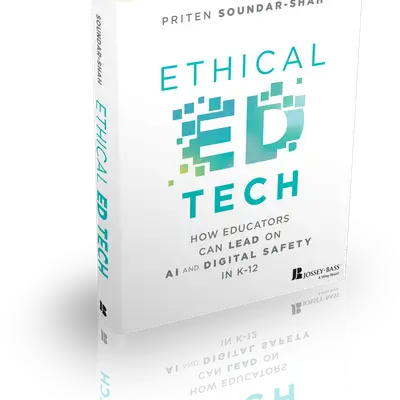
Learn more about Priten and his upcoming book, Ethical Ed Tech: How Educators Can Lead on AI & K-12 at priten.org and ethicaledtech.org.
Priten: Welcome to Margin of Thought, where we make space for the questions that matter. I'm your host, Priten, and together we'll explore questions that help us preserve what matters while navigating what's coming.
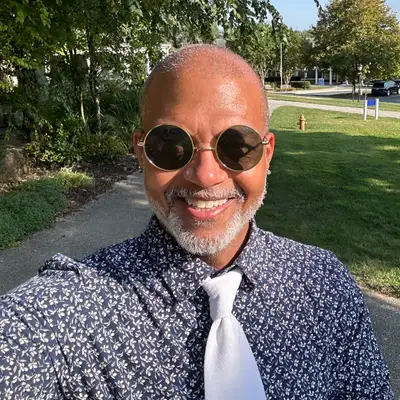
Today I'm joined by Melvin D Smith II, a digital learning specialist and computer science teacher at a private school in Maryland, where he also teaches a required ninth grade course called Digital Thinking.
Melvin works at the intersection of technology and communication, helping young people think more clearly about digital footprint, online behavior, responsible AI use, and the habits they need to navigate a world saturated with technology.
He brings a grounded perspective to the AI conversation because he's not treating AI as a standalone issue. The bigger challenge is whether schools are actually teaching students how to communicate, how to exercise judgment, and how to use technology with intention.
From no phone policies to the limits of the digital native assumption, Melvin pushes us to ask what students really need before any new tool can be used.
Well, let's go.
Melvin: Hello. My name is Melvin D Smith II. I'm currently teaching in Maryland at a private school. We are pre-K through 12. I've taught everything from pre-K up through the community college level in the sciences. I've always incorporated technology through STEAM.
Before I came to Garrison Forest, where I am now as digital learning specialist for ninth through 12th grade, I was teaching at another school. Now I teach computer science and computer programming to the upper school. The class I'm most happy with is Digital Thinking, where all ninth graders at our school are required to take it.
What we do is discuss their digital footprint. Not only are we discussing their digital footprint, but I'm also working with them on their soft skills in technology. We are a Google school, so I want them to be sure they can effectively use Google Docs, Google Sheets, and Google Slides.
We're currently undergoing a massive school-wide description of how we're going to be using artificial intelligence. The students are already using it, and it's not so much that adults need to catch up. Rather, adults need to catch up and we want to be sure the students understand that this is a tool that they should be using, and we as instructors should be teaching them how to use it effectively.
Priten: I really want to talk more about the structure of the class and how you approach it. But before we do that, can you share a little bit about the context of the school? Specifically, I'm wondering about one-to-one device programs and cell phone policies in particular, but just what role does tech play in the larger high school experience? For the nine to 12 grade level, since I'm sure it differs in middle school.
Melvin: In middle school, they started with a no cell phone policy. Students' cell phones are in their lockers. Each student has a locker, a device, and a laptop. They have the availability to use iPads that they check out from the middle school digital learning specialist.
In upper school, students are very highly encouraged to have their own device. The laptop doesn't matter as long as they have one. We have PC-based and Apple-based devices. We now have a no phone policy where students go to a centralized location, put their phones in a lockbox, and they're there until they leave for the day.
However, the students found that workaround in under a week. They're now using their computers and their pads as their larger phones, which has created some frustration for some instructors. Others are like, "You don't need it out. Put it away," and life goes on as usual.
For instructors who have embraced technology in general, it's not a problem. Yes, you're going to have students who are a little bit confused because they're playing Tetris. But that's incumbent on the instructor and more so on the parent to make sure they're aware of what they're doing and can focus.
The students have actually appreciated the no phone policy. I'm not sure if it's because it's one less thing for them to keep up with, but we have seen what appears to be an uptick in their availability to retain material and focus. That's something we'll be looking at this summer and particularly the summer after, just so we have enough data.
We are an upper school of a little less than 200 students. It's a nice data set, but it's not indicative of the entire population. What we're seeing is that students in middle school are now coming to upper school realizing, "Oh, I didn't need my phone." So it has made things a little bit easier.
Priten: I'm sure the students who get used to the no phone policy earlier are going to have an easier time in high school. Getting it taken away later in schooling must be a little bit more difficult.
Melvin: We have a student committee—I forgot exactly what they're called, but it's a group of students who actually came up with the idea. It wasn't the adults. We had been looking at what other schools in the surrounding area were doing, and we were seeing that more and more of them were going to no phone policies.
One great thing about our administration is that they actually went to the students and said, "You know, this is what we're thinking about. What are your thoughts?" The students said, "Okay, we use it because we're allowed. So if we're not allowed, we won't use it," and then they move on about their lives.
In my statistics class, I had to ask students to put their laptops down and use the desktop instead. They asked, "Why? So you can see what I'm doing?" I said, "Exactly, so I can see what you're doing." And they said, "Okay," and we had our lesson and it was fine.
Priten: Do you all have any sort of GoGuardian-type software where you're monitoring students, or have you decided against that?
Melvin: We do not. Some teachers would think that would be nice, but we don't have it. Part of what we're also looking to do is instill and build trust. We're going to trust that you're going to do this. Unless we need to monitor, we won't. A lot of the students respond to that. They think, "Oh, okay, so now is my time to prove that I can do it," and they have.
Priten: And they all largely have their own devices, it sounds like. So there's no school-mandated app control or anything like that on the devices either?
Melvin: The closest thing to that is through College Board for the AP exams. When they're taking any of the AP exams or the SAT or PSAT, it's their server that locks down everything else. But other than that, no, we don't have anything.
Priten: Tell me a little bit about the ninth grade Digital Thinking class. Were you part of the decision to start it? Did you take it over? And how has it shifted in the last few years?
Melvin: Yeah, I took it over when I came to the job in 2020. I was part of the COVID hire. I inherited the class, and it was a semester-long class. The upper school is on a 10-day cycle, so I would only see students once every 10 days. If the class fell on a day we didn't have class, it might be an entire month that I'd see the students.
It started off talking about the responsible use policy by the school—what you can do, what we hope you don't do. There weren't so much repercussions, but rather expectations for how you're going to use technology. We want to teach you to use technology in a positive way.
From there, we go through what's out there and how students might be coerced into staying on Instagram or Snapchat longer. Now, one way I incorporate that lesson is by showing them the non-disclosure policy that Snapchat and Instagram have. It's like, "Yeah, you're going to use our platform. We're not responsible for what's there. And guess what? Everybody can use your information that you put on there."
So students start to understand. They ask, "Oh, wait a minute. Is that what a cookie is when somebody wants to use the site? Or if I'm buying this and then I keep getting all these ads, is that a cookie?" So they're piecing that all together.
Right now, students are writing a script for a public service announcement about digital kindness. Our school has a week where we focus on how you can be digitally kind. You're on technology—what can you do to be positive while you are online?
I'm doing that because eventually I'm going to have them write a script for a podcast. A teacher before me had them record it, and I've talked to communications at our school about why not put it out on the waves? Our students have ideas. I would really want the general public to understand what these young women—we are an all-girls school—are thinking. What do they want out of themselves? What do they want out of other people? What do they hope for from other people?
We're now a year-long class because we literally cannot get everything into a 10-day cycle that may or may not meet. I really appreciate administration allowing me to do that because they understand that with technology, there are going to be changes and shifts. I get the opportunity to listen to the students and incorporate their questions and concerns into the class. We get to discuss where they're like, "Oh, okay, so this is how I'm using it now. How do I want to use it in the future? What's going to happen in my future if I use it like this right now?" That's wonderful. I love it.
Priten: You mentioned that you do actual tech literacy in terms of the how-to of using different tools. You talked about the Google Suite and helping them understand their usage of tools outside the classroom. Tell me about what you all cover in terms of the larger picture of civic discourse online. Do you get a chance to do that, and what does that look like?
Melvin: Well, thanks to you, we just started that. We go through the idea of digital footprint and understanding that once you put something out there, you can delete it, but it doesn't leave. What somebody else could see or has seen or has projected to somebody else—that's really the big part of it.
Because students do get to discuss civil discourse in a different class. We have a wonderful history department that allows for open dialogue, and I know the instructors go through it in detail. It's like, "We're going to have a discussion. Everybody's not going to approve. This is how we're going to have our discourse, whether you approve or not. It's something that needs to be done."
What I get to do in the Digital Thinking class is then incorporate that into, "Well, is this something you would say to somebody face to face?" Because again, it's one of those things that is lost. We're seeing not only at my school, but in discussing with other teachers, that students are losing the ability to have an effective disagreement. It's not even a dialogue because people will talk, but we want them to actually engage with something that's a point of contention.
I get to do that in the realm of, "Okay, you're typing this out, you're not seeing the person, but how do you effectively get your point across?" You know, a period is a period. It doesn't mean that you're being aggressive because students still think in terms of texting.
In my AP computer science class, when we talk about coding, we talk about dialogue within the code. Students wonder, "Why do we use this punctuation? Why do we use that punctuation?" And then they ask me, "Well, you know, when I use it when I'm texting, I don't use punctuation." I say, "Oh, okay. So how do you convey your emotion?"
They go through and let me know how they're using it, and then that translates into the Digital Thinking class. It's like, "Okay, how do you use this? How would you say this? So if you're feeling this way, what do you do?"
We actually have a class about dialogue through text, and it's always fun for me as the old guy in the room to see what they think of as aggressive in their comments and discussions online. A text is different from an email, which is different from a formal essay. Thankfully they understand those things, but at the same time, we're working to train them to be sure they're not taking that text mentality into their descriptive writing. Whether it be in English or social studies history, the teachers are working on that, and they're coming to me asking, "Could you help out?" And I say, "Yes, we will."
Priten: As you're talking, I'm thinking of the way youth today are talked about, especially in terms of tech. There's often this "digital natives" argument, and it kind of goes both ways. Part of the argument is that they're used to tech and need to be exposed to it in as many ways as possible. We can't try to take it away. Then the other side is that things that seem complicated to us are really simple and obvious to them.
It sounds like you're challenging both of those narratives, right? Like you all are shifting away from just providing them access to all technology, including their cell phones. But at the same time, you're noticing that you have to actually teach them skills that I think some people take for granted in youth who are entering high school. When you mentioned cookies, that's when I was like, yeah, if you don't ever learn what a cookie is, it's difficult to know what's happening. But I think a lot of people would think that everybody knows what a cookie is now because everybody's on the internet.
Melvin: Yeah, and they don't. I mean, they're like, "Oh, cookies," and then they're like, "No, not those cookies." Some of them understand it because thankfully parents have let them know, or they're on a site where it says, "Allow cookies." If you're asking me if I have to allow something, why would I allow you to do it?
Again, we've got the gamut. I mean, we've got students that don't allow any cookies, and we have those who say, "Oh yeah, I just let them in all the time." And I'm like, "Okay, alright. Let's find the happy medium."
I'm fortunate enough to be at a school where parents do talk to their students about it, and whether the student follows through is a completely different story. As the educator of this class, that's one of the things I take pride in—yes, I'm able to reiterate what your parents have said. So I'm that other voice. It's like, "Yeah, you've heard it a hundred times. Here's the hundred and first time, and maybe it'll click." And then we discuss what hopefully would have clicked earlier. If it didn't, maybe it will now.
It's all intriguing and fascinating how students incorporate those things because we are fortunate enough at my school that we reach out to alumni and they tell us, "Oh yeah, if they're not using these skills, they're going to be at a disadvantage."
The biggest one right now, of course, is artificial intelligence. But before the AI tsunami hit, it was all about, "How do you use the Google Suite? How do you present yourself? If you can't be face-to-face with somebody, even if it's not on Zoom, how are you gonna present yourself?" So we teach the students because this is what I wish I had known. We do have feedback, so we're able to incorporate that in. The students know that I'm saying this again and again—how fortunate I am that I could switch up my class based on what I'm hearing and what the students are thinking.
I've had alumni come back and say, "You graduated last year or the year before. You talked to the students about what they're doing in Digital Thinking. You said, 'Mr. Smith, we didn't do that.'" I said, "You didn't ask. You didn't ask, and it wasn't a big deal. But now that it is, I'm doing it." So the students know that as things progress, the class will as well. That's the advantage of it.
Priten: So 2020 to 2026 is a very interesting time in education technology as a whole. But a lot of the skill sets you're talking about are fundamental to all of these different shifts. I'm curious about what the differences are now. Like, how has the class changed? Let's start post-pandemic, and then let's talk about 2023 to 2026. What shifts have you had to implement in your class to adapt to the shift in AI?
Melvin: The biggest one is, do you understand what you're doing while using the technology? Because there's the school tech, then there's the home tech, and then there's the interface in between. You need to know where you can use something safely. If you're on a server at school, that's not going to be the same thing as being on a server at home.
Or, guess what? If you're buying something at the mall—and it makes me literally laugh out loud because so many students now don't buy things at the mall. They'll walk through the mall, but they're buying things online. I'm trying to draw a distinction between what it is that's being bought online and what you can get in person.
A couple years ago, I show a video of a computer scientist who is able to write algorithms based on what people buy. There was a 15-year-old who was pregnant and hadn't told her parents, but she was getting coupons from Target to buy things for a baby. They ask, "Well, wait a minute, how does that work?" And I say, "Okay, so let's look at that. When there's a history of a whole bunch of people buying things, and then it starts to click in their head: Oh, it's not just me and somebody else that's using this technology."
So I would say that's probably the biggest thing I've been able to work with students in understanding within that timeframe. One is because I'm still learning the material. I was a science teacher who incorporated technology, as opposed to someone who's like, "Okay, here's technology." That's been the biggest shift.
And then wanting to be sure that students understand how to use those items. Now that I have more time with them, that's really when the students have been able to get more time with the Google Suite, as opposed to just here's tech, here's our responsible use policy. It's a lot more conversational, and I get to hear what the students are thinking and how they're using the tech, as opposed to just please don't use it this way, or this is what can happen.
Priten: What do those conversations look like right now around responsible use of AI tools outside of school? All these surveys are coming out, and you're starting to see that students themselves are actually fairly critical of using it for shortcuts. Obviously, it's not every single student. Lots of students are using it in nefarious ways. But in your classroom, what is the general dialogue like about how they're thinking about using AI to replace some of their work outside the classroom?
Melvin: Most of them use it really for test question generation. They want to study, and they'll make flashcards by typing in questions the teacher has asked or some of their homework questions. Then they'll have it generate more questions for them, and they study from that. That's the main way it's been used.
There's the student here or there that we kind of have to look at and say, "Do you even know what this word means? Because you've never used it in class, and we've never used it in class." So that's when it's like, "Okay, try again."
We do have teachers that will have essays written in class only, so there's not the chance of it being used for an assessment. Then we also have teachers that require research to be done as a checkpoint. And then they ask, "What question can you come up with from the research you've done?" And they put that into Gemini—since we're Google, we're using Gemini now—and ask, "What does Gemini say?"
But we know the students outside are using it too. So we're getting the students to understand how to use it as a dialogue partner, as one person. Actually, Mark Mike Kent said that we want to train them to use it as a sparring partner as opposed to a butler. That's really where we are right now in getting teachers on board to use it and play with it.
We took a student board through a scale where zero is absolute no all the way up to four for full on use. The students have said, "Okay, this is a good idea, but when will we use that? How would we use that? And then do the teachers understand it?" So that's where we are right now—just making sure the basics are covered.
Priten: All over the country right now, I'm noticing one of the other interesting splits is that in some school districts, there are lots of parents advocating for more tech integration. They're worried about their students falling behind and want to integrate more AI training and exposure within schools. Then some schools are seeing massive backlash against screens in schools. They're pushing back against students being on screens all the time and want less time with devices. Where do your parents generally fall? Because it sounds like you all have a middle strategy, and I'm curious if you're noticing both sides coming at you.
Melvin: They're middle ground as well. It's a boring answer, but it is true. We've got parents who are thankful that we're taking steps to be careful about it, as opposed to just saying, "No, you can't use it at all whatsoever," which is kind of what we were saying last year and the year before that.
Now that it's been more prevalent and adults have more of a handle on what they want to use it for and how they can use it, it's just one of those things that you really have to put it out there for people to be comfortable with it in a way that's not a free-for-all.
That was really a lot of the big part of what we were going through in the upper school and with administration. We knew we wanted to use it. How are we gonna use it? Who's going to use it? Who's gonna instruct it? And then what is the end goal for the students in allowing them to use it? Because they need to.
As far as the parents go, when I explain to parents what the purpose of my course is—and again, it's only for ninth grade students—they're all for it. Some of the parents use it already, and the students are seeing that. But the students are also seeing how the parents are using it responsibly.
You know, it's not just like driving a car. But at the same time, you're not just gonna give your keys to a 13-year-old and say, "You've seen me drive a car. Now go for it." So it goes to the parents showing the students how they use it responsibly. Then it's up to us and the schools to show them how we expect them to use it responsibly.
Priten: So obviously you're probably the person everybody comes to when they're trying to navigate some of this. What has that meant for you? What kinds of things are teachers concerned about? And what are they excited about too? I want to make sure we hit that as well.
Melvin: Yeah. And funny enough, when I was listening to your conversation with Joe Carver, my knee-jerk thought was, "Okay, so in his school, was there a division within the social sciences and the natural sciences?" Because the natural sciences tend to have that inherent desire to use something new and tinker with it and put it through its paces. Whereas—and of course this is a blanket statement—the humanities are like, "Nope, not gonna use it at all. We want to be sure that they're thinking critically and it's their voice," and so on and so forth.
So we have had that where teachers of the natural sciences are like, "Yeah, I've been using it and this is how I've been using it." There's transparency with the students about how it's being used. Some students wonder, "Well, wait a minute, if the teachers can use it, why can't we?" And that's a valid question. But it's incumbent on the teacher to tell them how they're using it and be honest with it, as we're expecting the students to be honest with it.
As far as students coming to me, they ask, "Wait a minute, can I use it here?" And I say, "Well, yeah, you're not writing your dissertation. You're asking it a question to find something out. Or you know, I see your work, but you want to modify it a little bit in a way and in a voice that's more indicative of what you think will be smarter. So let's look at it in that way."
I get more questions from students than I do from teachers. For the teachers who want to use it, we're going through the guidelines and what will actually be within the school. There's a little blurb in our user manual, but that's being expanded on now that we're going through the integration at the different levels. So we will be extremely explicit: this is where we're gonna use it, this is our intended use.
Priten: I want to hear about your computer science class and how students are thinking about it, and if that shifted in the last few years. And then, how much of a role does AI play or doesn't play, and how do you teach it?
Melvin: Yeah, so in the AP computer science class, we use Code.org as our platform. We don't use AI in there because I really want them to be sure to understand how each line of code is going to influence another line of code. As I tell them, it's the perfect class if you like puzzles, if you like problem solving, if you can handle a little bit of frustration here and there. But it's a practical engineering class online, so there's no tactile result. But it's application- and project-based, so they're writing the code with which to get a product.
Now there is another class that I taught about applications of technology that was heavy into, well, I don't know how we're gonna do that. Let's look it up. The students would literally look up practical applications online.
I've taught a Python class using Replit, and before we knew it, the AI was finishing our code for us. We said, "Yeah, turn that off," because it wasn't fun. You know, that might be kind of a weird response to AI, but yeah, the students were not having fun because they weren't doing the problem solving. That's where a lot of it comes in—just how are you going to use artificial intelligence to do the job that you want it to do? Are you looking for the scapegoat, the easy way of doing something so you can do something else?
Time is a big factor for everybody, and that's where a lot of the students that have used it—whether it's for a class or just for something else—were curious about something. They didn't want to go through articles upon articles to figure something out. They put it in and get the condensed form.
We did have a laughable moment where a student called out another student. There was a half-page article, and a student asked, "Can I put this in AI so I can get a summary?" And one student literally turned around and said, "Don't ask that again. Take the time, read your half-page article, and do the summary yourself."
So we do have those funny times of students checking other students on, "Oh, well, I haven't read this, I don't know if I wanna read it, so let me just put it in AI," and other students are like, "Yeah, no, that's not its purpose."
Priten: I was gonna ask about pushback from students because, again, not all students are on the same page about wanting to spend all their time using and learning about AI. What are you hearing from them? Are they concerned about cognitive offloading? Like, where are they at in terms of processing their own criticism of the technology within your school?
Melvin: Honestly, the only thing I've heard is that it's being viewed as cheating. That's really it. One of the things that we want to incorporate—and it's actually one of the things that we're kind of scratching our heads about with Gemini—is that there's no log that you can physically have to put within your sources cited. Because right now, literally what you'd have to do is take a screenshot, put it in, take a screenshot, put it in. And that's not an effective use of time.
But because we are a Google school and Gemini does have the literal guardrails of what we're looking for within this first year of actively using it, it's like, "You know, how are we gonna do that? How are we gonna get the students to understand?" It's going to be one of those things where, within the teaching community, we'll be making those checkpoints and making sure that the students understand like, "Yeah, this is what we need you to do."
But yeah, as far as the students go, it's literally just, "I want to use it, but it's not being embraced right now, so I'm not sure if I should use it. Could you teach me to use it please? Because I want to use it because all these people are saying I need to know how to use it."
We do have students that have been affected by the job market because of what artificial intelligence has done. They've been able to morph their jobs into something else, but it's not exactly what they had intended to do. So they've either stayed and used artificial intelligence in a way that has changed their job, or they've gone somewhere else to get a different job.
So right now, that would be the other big thing. Not only is it, "Am I cheating with it?" but the thing I'm most interested in discussing is, "Whether it's in college or after college, will the thing I'm interested in doing still be there because of artificial intelligence?"
And I'm going to be teaching a class on artificial intelligence next year that got approved by the board, the student council, and administration. So that's gonna be interesting.
Priten: What is your vision for the course? I'd love to just hear how it differs from the Digital Thinking course.
Melvin: Yeah, so aside from the Digital Thinking course, this AI class will literally be discussing the advent of the computer. Where did it start? Then it's transition through time up to now. It will start off as pretty much a history of this thing we call working technology. We'll branch off into the different types of artificial intelligence. We'll look at how it's used in the workforce—what has it done for the workforce and what do we hope it will do for the workforce? And then we'll be using a couple of languages. Python, I believe, is the primary language that the course calls for, with students designing their own artificial intelligence. We'll then go from there and see what's out there.
Yeah, I'm really looking forward to it. That's why I was saying—my school will be buying a couple copies of your book because I told them I'm going to be marking mine and taking notes so I can use it in class.
Priten: I got a chance to teach an AI in Your Life course to adult learners last summer. Time goes by so quickly lately. It is fun to sit down and actually think through what the trajectory of the technology has been as a way to help them understand what it can do in particular. Because I think sometimes we just think that it appeared out of nowhere, or it feels like that. But obviously there's a massive history that went into the development of the tech. And so it's nice to be able to break that down, see where it came from, and where it might be going.
You've acknowledged multiple times that you're very lucky to get to teach this class with a lot of support. Obviously you're a rare instance of this at K-12 across the country. If you were to talk to a peer in a school district that didn't have the resources or the support for a course like this, what would be the most important topic for them to cover?
Melvin: Actually, it's not that hard. It's communication. I mean, everything we do boils down to how you communicate. And even with technology, whether it's searching something on a search engine or asking something through artificial intelligence, it's getting the question or the statement in a way that the response on the tail end isn't necessarily what you were looking for, but it's what helps you progress to the next step.
That is exactly what I would say to do, just like in the sciences or any relationship. If you're not communicating effectively, the idea isn't gonna get across. We as teachers, educators, and researchers go through that every day. Am I asking or presenting the material in a way that the student, parent, companion, or peer can go to the next step based on what it is that we had a dialogue about?
So yeah, communication.
Priten: Throughout the episode, Melvin made the case that technology use is never just about access. It is about communication and the habits students build while they're learning to navigate digital spaces. His insistence that schools still need to teach the basics—how to communicate clearly, how to read online environments, and how to treat AI as a sparring partner rather than a shortcut—pushes the conversation beyond policy and towards formation.
Keep listening this season as we continue to explore the hard questions about technology teaching and what we want education to become. And pre-order my book for more on how to approach ethical concerns in education at ethicaledtech.org.
Thanks for listening to Margin of Thought. If this episode gave you something to think about, subscribe, rate, and review us. Also, share it with someone who might be asking similar questions.
You can find the show notes, transcripts, and my newsletter at priten.org.
Until next time, keep making space for the questions that matter.