Subscribe
Share
Share
Embed
The pharmaceutical industry touches every one of us, but most of us don't understand how it works — or why. Why does it cost so much to bring a new drug to market? Who's actually setting the prices you pay at the pharmacy? Is Big Pharma hiding the cure for cancer? And why does the US lead the world in drug discovery, yet rank among the worst in affordability?
The Rx Files is here to answer those questions — in plain English, without the jargon and without the spin.
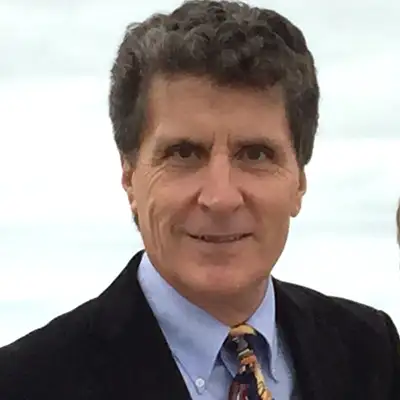
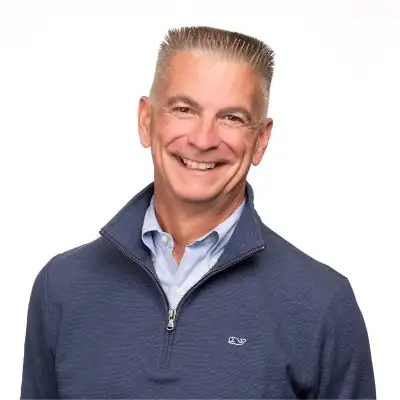
Hosted by Nancy Lurker, a 40-year pharmaceutical industry veteran who has worked across Big Pharma, the service sector, and biotech - including as a CEO - alongside veteran journalist Ken Stone, The Rx Files brings frank, informed, and often provocative conversation to one of the most consequential industries on earth. Nancy knows the industry's strengths and its warts, and she's not afraid to talk about both. Ken is there to ask the questions the rest of us would ask if we had the chance.
Each episode, they'll go deep on a different piece of the puzzle — drug discovery, clinical trials, pricing, regulation, the role of insurance and pharmacy benefit managers, and much more. At every step they’ll be joined by guests who are actually in the room where it happens.
And of course they’ll be tackling all the questions you’d like to hear answered! You can reach the intrepid team at answers@TheRXFiles.com or comment directly at the end of the episodes.
The Rx Files is produced by The Vanguard Network and made possible with the support of Syneos Health.
For the first installment of The Rx Files, Vanguard’s Ken Stone and former pharmaceutical CEO Nancy Lurker speak with Jay Galeote, President and CEO of Kallyope. They discussed why it takes drugs so long to get to market and where the money goes if a pharmaceutical does make it into consumer hands.
The following conversation has been edited for length and clarity.
Ken Stone: All right, Nancy, could you tell me again why we're doing this?
Nancy Lurker: We're doing it because there is nothing that's interesting to the average person on the internet about the drug industry, how drugs are made, why they're expensive. There's lots of technical know-how. You can run around, see all the podcasts about the latest breakthrough in this technology, usually with some scientists, but it gets very complex.
There's nothing that just says, why do we have this drug industry like we have it in the US? I wanted to be able to start to have some fun, bring this down to layman's terms, help explain what's going on to people, and give feedback from people who call in too. What could we be doing differently?
Ken: Here's some feedback, and this is from an old cynical journalist, which is slightly repetitive. Part of the problem is we don't trust pharma, particularly Big Pharma.
Nancy: Not at all.
Ken: So the average person might think, oh, is this just going to be a show for the pharmacy industry?
Nancy: Absolutely not.
Ken: So tell me why.
Maybe you should explain to folks who you are.
Nancy: Yeah, okay. So 40 years in the industry, a long time.
Came up through the ranks in Big Pharma, then switched over. Actually went to what's called the service side, which is part of the industry that provides services to the pharma industry. Did that for a number of years, and then went over to the smaller biotech side.
So I was CEO, and now I sit on a couple of boards. So I know the industry really well. I know its warts, and I know its strengths.
And I'm not afraid to critique it, and I think we need to be able to do that. Look, we're not here to say that we've got all the answers, but I sure as hell hope that we can at least start to get some answers and listen to people a little bit, and explain a little bit more why it costs so much to bring drugs to market, because I think there's misunderstandings on both sides, big pharma and the consumer, as well as biotech and the consumer. All right.
And let's not leave out the PBMs, Pharmacy Benefit Managers, and the insurance industry. They play a big part in this too.
Ken: Okay, we're not going to get to all of that, but we're going to get to some of it in the next 25 minutes.
Welcome to the inaugural podcast of The Rx Files. The Rx Files is produced by the Vanguard Network for Leadership. Vanguard's mission is unlocking high potential leadership by organizing events, publishing content, and connecting C-suite leaders.
More information is at thevanguardnetwork.com. And we are thrilled to recognize and thank Syneos Health, our generous sponsor for their support in making this podcast possible. Their commitment to advancing biopharmaceutical solutions helps drive meaningful progress in healthcare. Thank you, Syneos Health.
All right. A lot of stuff to cover in the next 25 minutes or so. Basically, we're going to talk about how drugs get from somebody's brain, somebody's idea for a great drug, to my bathroom medicine cabinet.
So a lot of things to talk about. One of the people here to help us talk about that is Jay Galeota. He is president and CEO of Kallyope.
And Jay, why don't you talk a little bit about, what does your company do?
Jay Galeota: Sure. Happy to. I am privileged to lead a company called Kallyope. It's my third or fourth company over my career, most of which began at Merck, which kind of gave me a different perspective than the one that you get in particularly in research-based biotech, which is where Kallyope is. So Kallyope was started actually by a bunch of people who I worked with at Merck many years ago.
The founding scientist is a person named Nancy Thornberry, who discovered Januvia. She was the co-discoverer of the drug that became Januvia and Janumet, which were two of the biggest drugs in the history of the industry, certainly in Merck's history. She and a couple of other top scientists, including the other co-discoverer, Ann Weber, started off with Kallyope years ago, thinking that the science had advanced to a point where really smart people could systematically map the complex neurocircuitry in the vagus and enteric nervous system.
Nancy: What is the vagus system? Explain that.
Jay: Like most complex things, there's a root of core circuitry that helps to keep the systems running. The body and the brain have to communicate extraordinarily frequently and with high degree of precision in order to maintain healthy living homeostasis, normal physiology.
It’s still really kind of a big, as most of science is, a big kind of black box into how this really works. But for the first time, Nancy and others believed that we could map these signaling pathways, like a circuit board, if you will, in the two main nervous systems.
Essentially, these are the two main highways of communication, so the scientists at Kallyope started doing the research. With a proprietary platform, they developed ways to elucidate these very discreet neurosignaling pathways. In the process of doing so, believed that they would identify novel drug targets.
Ken: So what drives the development of a drug? It seems that you have several people who got together and said, this is an idea. Does that drive it, or is it the market? Is it like, there's this huge problem we want to solve because we'll make a huge amount of money off of it?
Jay: Well, I mean, it would be great if it were that simple, right? It’s the most complex layered onion that you could ever imagine. Where layers are peeled back slowly and not even in the same order. Different bodies of research in one area reveal a layer of knowledge that has application to another area.
My experience in doing this for quite a while is that Mother Nature reveals herself to us at her pace and very, very discreetly. In many ways, drug hunters, as they are called, are detectives who are able to look for clues and piece these clues together and determine whether or not there's a pattern that supports a hypothesis. Most of the time, there isn't. Most of the time, it's a dead end. That's why you see these statistics that we see.
We've experienced this at Kallyope many times. The most successful biotechs that you can think of have gone through the same, the Regenerons of the world had with fraught with failure early on and many more, Vertex, etc.
So the idea of a one-hit wonder, it does happen. But to say that it happens in a programmed way, I would have a hard time believing. I think that it's luck more than anything when you have these one hit wonders.
Nancy: So, Jay, you don't think then that there's a conspiracy to prevent future successful drugs to come and cure diseases because that way, Big Pharma would lose out on profits? Because I got to tell you, there's a lot of people who think that, particularly when it comes to cancer.
Jay: There are a lot of people who think a lot of things and conspiracies are intriguing and they can be compelling for those reasons.
I can tell you that I'm not a subscriber of that in the least. I've seen how hard it is to do novel science. When you see people suffering and you want to do something about it, really the only tool we have on a large scale to really affect the health and wellness of humankind is science. It takes time. It's fraught with risk.
Ken: Why is the pharma industry so bad at explaining that story?
Jay: Well, I don't know. I wrestled with this for my many years at Merck and felt that we had a reputational disconnect between the energy and effort and resources that were put behind advancing truly novel therapeutics, drugs that work, not just sensationalized or marketing schemes, but therapeutics that were novel that advanced healthcare.
My litmus test for that always is, are our medical textbooks rewritten because of this science? Thankfully, over my years at Merck, they were many times. I was able to be involved in several of those new therapies that literally changed the way medicine is prescribed and medicine is practiced. So, legitimate medicines are gifts to the world and they are extraordinarily rare and they are extraordinarily hard to find, which makes them rare.
It’s not easy to be able to come up with new medicines, and that's why it takes so long. It's not because there's some concerted conspiracy to keep new medicines off the market. It's because it's really hard. It's bench research that occurs primarily at small biotechs. The big pharmas do it, but the majority of it is it's a diffuse model around the globe.
In academics, there are insights that come out of labs and almost every major research academic center in the U.S. has a technology transfer office to spin new companies out of their labs. But most of these companies are funded through venture funding, and the funding is the fuel for everything.
It takes forever and it's really expensive. So the economic model behind this has to work or else innovation will really suffer and dry up.
Ken: How long does it take to get to the FDA?
Jay: So we map these neurosignaling pathways. We create atlases first in an animal and a mouse and then in humans.
An atlas is a map. It's the circuit board. It's the road map, right, of these neurosignaling pathways, in our case. We did. We believe that by doing this, we'll identify novel drug targets. And we do. We've identified several. That's the very first step. Identification of a novel target.
Second step is validating it. First, it has to be validated in animals and in laboratory. So in vitro and in vivo, you have to know that the target does what you think it's going to do and you have to know that by engaging it in a certain way, you can get it to do something else.
You can imagine how many experiments have to be done to do that. In animals or in cells under microscopes or CM, whatever technology you're using these days. So experiments in the labs, wet labs, you validate the target. So now you have something to go after. Now you have to create composition of matter to actually engage that target.
So that means series of chemical structures that that are known to be suitable for living organisms. They don't kill you or they don't cause these terrible toxicities, and that takes months, maybe longer to armies of chemists. If you're doing it in a small molecule space, which is almost where you need to be if you want to have medicine adopted at scale, oral medicine, small molecule pill.
Eventually you narrow it down to a series, a series of viable chemical structures that you believe one of these could become a PCC, a preclinical candidate. So the compound that you're going to actually begin testing for safety and efficacy in animals [is] to determine if there may be a path to go into human beings.
Let's say you get through all of that preclinical work, which takes probably two and a half years to generate the amount of data that you need to support opening an IND, an investigational new drug application. That IND allows you to go into humans, healthy human volunteers for the first time to determine if the drug is safe, if it causes any side effects, toxicities, and those are done in domicile studies where patients are monitored very closely every 15 minutes during the period of time that they're given the dose.
Nancy: There’s a big complaint going on right now that China is beating us on getting to phase one because we make it too complicated in the US.
Jay: On one hand, folks will say that because the FDA requires such rigor, the chance of doing harm to patients is much lower.
On the other hand, folks will point out rightfully that in other countries, and China is the current example, but for some time, South America, Europe, even some European countries would allow more rapid access into human trials. There’s probably a belief that we're overly regulated in the US. Folks who make that statement [may be] a lot smarter than I am, but we don't want to throw the baby out with the bathwater.
We don't want to get to a point where safety is compromised. So what is the right balance? I don't know the answer to that. I just know how long it takes us to get from a validated target to a drug that we can test in people, and that's usually a two and a half to three years. Two and a half to three years,
Nancy: What does that typically cost? Give it just a rough range. I know they're wide, but what does that cost?
Jay: It really depends on the therapeutic area, so it is wide. But order of magnitude, you're probably in the study variable costs, not including the people who are doing the work or the occupancy costs for the labs and all the other things that cost to run a company, you're probably talking about 10 to 20 million dollars.
When you when you layer on the rest, you know, if you have to carry a company of, say, 25 or 30 scientists or more for two to three years, you're probably talking about 50 million dollars. So it's not cheap, and most of these things fail.
Ken: The percentage that fail once they get to human testing?
Jay: Well, it's very high.
Nancy: Five percent ultimately make it to market.
Jay: That sounds about right.
Ken: So why does anybody make that bet?
Nancy: Because we're crazy!
Jay: In a way you could argue that it's philanthropy. It is the only gift that we have to improve or eradicate disease, unfortunately. You know, the only when somebody has an illness and you want to help them and you can't help them, and there's a drug now that treats it.
Nancy: It’s wonderful. Let me just say most of my colleagues in the industry, we're in it because we want to be able to help human health and human beings get well. And that brings tremendous psychic pleasure and happiness when you can do that. But you have to have the patience of Job in this industry.
Jay: The thing is, these gifts, when we when we get them, when we're able to actually find one that works and advance it, these things are generational. I mean, they surpass all of the folks who worked on them and they improve life for generations to come. So it's worthy work.
It's really hard. It's really slow and it's really expensive.
Ken: The way I understand it is that if you do come up with a lifesaving drug or a life altering drug, you've spent all the money you've spent all the years, Big Pharma will come in and buy it up, right? I mean, it's pretty rare that a small sized company goes to the market.
Jay: It's rare, but I can give you a couple of examples off the top of my head in the last couple of years where that's happened. You said something a minute ago. You said, why do people do it if it's this expensive and it's this fraught with risk? Because when you're successful, it's extremely lucrative.
Those few successes cover the cost of all of the failures and then some. That's why investors invest. And that's why Big Pharma buys companies and advances and brings these medicines to the world, because it's like prospecting. If you drill a thousand wells and one hits, or dig a thousand mines and one strikes diamonds, it pays for the whole operation and then some. It allows you to invest in the future.
Nancy: I think that's where the public really struggles, because they see these companies getting rich. They think, okay, hold on, we're sitting here, we're funding the NIH. There’s a big misconception that the vast majority of discoveries come out of the NIH, which is not true.
But nevertheless, I understand if I'm the average, you know, fireman, policeman, teacher, whatever, and I'm getting by on a seventy, eighty thousand dollar a year salary and I go to the pharmacy and I've got to pay all this money for this drug. Then I see their record earnings, and the CEO just made a million dollars plus in stock grants.
I'm saying time out, I can barely pay my bills, and now this is going on? Because that's what they see.
Jay: I think that there are a couple of points here. There's money that is provided for funding in exchange for return. So there's a risk-return ratio on that money. And then there's money that is taken out of the system for very little risk. A lot of that comes later.
When you start getting into the wholesalers, distributors, insurers, et cetera, there's not a lot of risk relative to the risk that the discoverers, developers, commercial, the folks who take the drugs to the world globally, invest hundreds of millions or billions of dollars in doing that when there's a lot more risk on that end of the scale. It isn't really highly appreciated how many hands are in the cookie jar.
There are a lot of people who want a bite of that healthcare dollar who are taking a bite of that healthcare dollar and a lot more. There are a lot more who take little risk than there are who take large risk.
That might be a lens for us to look through a little bit more carefully. But I can tell you that novel drug discovery is extremely risky and it takes a long time and it takes a lot of money. That system has to work in order to continue to support innovation.
It is working primarily in the U.S., as we know, most of the innovations are coming from here.
Nancy: The vast majority of new drug discoveries are coming out of the U.S. China is starting to pick up the pace dramatically. How are they doing that and what is their system like?
I remember when I was coming up through the ranks and I was over in Europe all the time, Europe still had a lot of really, really important, viable drug companies and so many of them have left. The whole pendulum has swung over to the U.S. And so we do generate the vast majority of innovative therapies right now. Maybe you can comment on that some.
Jay: I'm not an economist, there are a lot of people who are more informed than I am around why this is the case, but from where I'm sitting, it kind of makes me think that the economic incentives and the regulatory incentives and the ability to get access to really smart people and key talent have all kind of coalesced in this country.
As a result, we've created something that's highly valuable for the world here. And it's been it's been very productive, albeit slow and risky and expensive. The majority of the world's new drugs come from here and the rest of the world benefits from that. That's a good model for us because it works for us and it works for everybody else. I just hope it continues.
It has to continue. If the innovation engine in the US slows down, who's going to pick up the slack? Is it going to be China? Some people might suggest they could, but I don't know that we've seen any real sustaining evidence of that yet. So there's a real imperative, I think. I think an economist is the right person to answer this fully, how much of the US GDP is tied up in healthcare? It's enormous. It's a quarter of the GDP, maybe 20 percent. It's expensive, but by being expensive, it's contributing materially to the overall financial health of the country.
Nancy: We sit here and we say it's lucrative and it's working, but it's not working for a lot of the average Americans. You get so many people who are filing for bankruptcy because of medical costs. A lot of that isn't just drugs. It's a lot of it is surgeries and hospitals, but it's not working for a lot of Americans.
They're going to sit here and say, yeah, it's great for you guys and it's great for whoever's getting all these medicines, but it's not working for me. I don't want to sit there over in Europe and go over there or to Canada and see these drugs at pennies on a dollar. And we're saying, well, yeah, but look at all these high paying jobs.
I'm not part of the high paying job economy. I'm part of a middle class or even lower middle class, and I'm certainly not benefiting from this. So I do empathize with that, and I want to figure out how can we fix that?
Jay: There are a lot of people who are not part of the healthcare system and they're not the beneficiary of the high paying, higher paying jobs that that healthcare creates. But there are a lot of people who are. That's my point about the majority.
The fact that such a large sector of the economy is supported by healthcare, I think, makes it harder to summarily lower costs, because in the process of summarily lowering costs, you're impacting GDP. You're impacting the ability to create jobs. A mid-sized pharmaceutical company will probably have the majority of its employees associated with research or quality assurance, quality control.
These are usually master's trained science people who generate a reasonably solid salary. It's very expensive to do that work here versus overseas. You can do it for pennies on the dollar in other countries that you and I can name readily.
But where it's still done in the U.S., it's creating high value jobs for people in the U.S. It doesn't make medicines more affordable. The other side of the equation is like, what's the retail cost of medicine to the average consumer? What I'm talking about here is the value that healthcare brings to the GDP, which makes it more complicated to just say we have to drive down the cost of healthcare in the U.S.
We really, I think, have to have awareness and a sharper eye on the costs in the middle, because the cost of the drug leaving the loading dock of the factory that makes it for the pharma company is a fraction of the cost that the consumer gets charged. There are a whole bunch of people in that middle space that have livelihoods that are based on their “contribution” to that distribution model.
I think we really have been slow to look to take that down. It’s a relative contribution. You'd argue that the person taking the risk has a more significant contribution.
Ken: We have three questions to ask. I'm going to ask the question. You have to give me a one sentence answer. All right. Therefore, lightning.
First question, direct-to-consumer advertising. The U.S. and New Zealand are the only countries that allow it. Is that insane? Nancy?
Nancy: No, it's not insane, I'll tell you why. It educates a lot of consumers, it gives them access to information without these gatekeepers everywhere.
Ken: One sentence. Good. Jay?
Jay: Not a fan. Too much baggage. I think it scares people as much as anything else. And most people don't get their information via TV ads anymore.
Ken: So AI, going to discover drugs. Is that really happening or is that hype? Nancy?
Nancy: Oh, no, it's not hype. I think AI is going to be a tremendous advantage in drug discovery.
Jay: I agree. I think it'll be an advantage in drug discovery. Whether AI can discover drugs remains to be seen, there's still an aspect of creativity that is nascent in most of the AI platforms.
Ken: Last one. Should drug patents be shorter?
Jay: I think that it goes back to the economic model. So my answer would be no to the extent that they jeopardize the return when you're successful because there's so much failure.
Ken: Okay. Nancy?
Nancy: No, because if you do that, then you're going to see drug prices go up even more because you got to have time to get your money back on all the hundreds of millions of dollars to bring a drug to market.