Subscribe
Share
Share
Embed
Passionate about modern feminist issues? Want to learn more about how today's political, academic, and cultural leaders strive for a future of universal equality and justice?
Join NOW in a podcast dedicated to intersectional feminist discussions in American society with leaders in entertainment, sports, politics, and science. From conversations on constitutional equality, to economic justice and reproductive rights, listeners will find new ways to learn, engage, and get empowered.
Listen for new episodes released every other Wednesday.
Christian F. Nunes (00:06):
Hello, welcome to Feminism Now. I'm Christian F. Nunes, the National President of the National Organization for Women. So we are talking to activists, leaders, and change makers who are on the front lines of fighting for constitutional equality, economic justice, and reproductive justice and rights. And we also want to hear from you and what's on your mind. So you can do that by sending us an email at feminismnow@now.org.
(00:40):
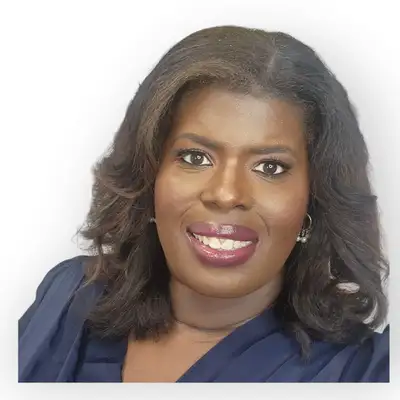
I have to tell everyone, I am so, so very excited to talk with our guests today, Latanya Mapp Frett. Latanya is the president and CEO of Global Fund for Women, which funds gender justice movements worldwide. Prior to that, Latanya was executive director of the Planned Parenthood Global Division. An attorney by training, she has lived and worked in more than 15 countries across four continents. So you know her experience she's going to give us, it's going to be great today. Her new book, The Everyday Feminist highlights change makers she has met in her travels, and it's an inspiring must read for activists everywhere. So we are so excited to welcome you today, Latanya, thank you for joining us on Feminism Now, do you have anything you want to start off by just telling our audience and our listeners?
Latanya Mapp Frett (01:27):
Thank you, Christian, it's such a pleasure to be able to be here with you. I think we were comrades in Washington DC not too long ago, really trying to figure out how to continue to lift up issues in spite of what seems like getting slaughtered in some ways day to day. But it's a good week, it's a good day, and it's a pleasure to be here with you and your listeners and I look forward to the conversation.
Christian F. Nunes (01:52):
I just remember when we met, I felt like we had this instant connection and so I was really thinking, I was like, "[inaudible 00:01:59] I got to have her on this show because she's going to give us some good things." I really, first of all, love the title of your book Every Day Feminist, because so often I think we always think of feminists as these major change makers, these huge historic leaders, but we all are feminists in our own rights. And so I love the fact that you celebrate everyday feminists in your book, and people who typically aren't in the headlines and who will never be household names. So this is so important. So tell me about why you started this journey with this book with The Everyday Feminist and how this journey and this wonderful book came about.
Latanya Mapp Frett (02:38):
Yeah, thank you so much. Listen, when I got to the Global Fund For Women, and I took this role after having seven plus years, I think, at Planned Parenthood Global and working in diplomacy with the US government. And before that working with the United Nations, I had already been convinced that if you want to figure out how to make something work, if you're new to a community, you're new to an issue, then you better find the woman that is working on the sidelines. You know the one that nobody's saying their name, but she's running around the room doing all the work and getting everything prepared. I was like... I learned early in my career, that's the one that I better talk to. And so that kind of concept came to me when I got to Global Fund For Women and just started hearing about and all of these stories of these activists who were doing work.
(03:30):
And I'm not talking about these sort of once in a generation, lightning in a bottle, charismatic leaders. We're talking about these women who were there for decades doing this work. And they may have had their moment in the spotlight, but it didn't start or stop there. They were doing this, they were struggling for justice and equality and transforming their communities all the time, every day, all day. They were using their voice, their resources, they were communicating what was happening from their lived perspective, but also from the perceptions from outside and how it impacted the work that they were doing. They're these relatable people. They're always happy to be in the room and to offer some advice, and not just advice, but always to offer some help. Also, the people when crisis happened, they're figuring out how to get to the people that nobody else knew was there to make sure that they're okay.
(04:28):
They're the nurses, the caregivers, they're these women and people usually who identify as women who are trying to make it right. They're trying to make things less hard, if that makes sense. And so I said I wanted to do something that would highlight the work that Global Fund for Women did, but a lot of publishers didn't really want a book about an organization. And so it made me think about, "Well, how do we talk about these women in a way that lifts up what they do, lifts up how Global Fund For Women serves them, but then also allows an opportunity for us to talk to some of these change makers and get their perceptions." And the book does all that, right? So it's like I tell the stories of when I was in different places in the world and the women that I met and how they helped me and how they help their communities.
(05:17):
But then I also pivot to women who are doing things right now, the ones we do know, like Tarana Burke and Loretta Ross, to the ones that we don't know, Leslie Obioro [inaudible 00:05:29] over in Ethiopia. So to try to get some understanding so it's not just me saying it, but that these women are like bad asses. And if you want to follow somebody, it probably should be them and not the politician that you voted in and hopefully will vote correctly. So that's what I was thinking when I did the book.
Christian F. Nunes (05:49):
And I love that because it really kind of goes back to that it takes a village mentality and thought process of if you really want to know what to do and how to solve a problem, talk to the community, talk to the people in the community. And a lot of times that matriarchal mothering that has been taking care of the community for so long that we often don't talk about. And they often don't consider themselves or call themselves feminists, they're surviving and they're doing what they need to do to survive and help their communities survive and thrive. So I love that you're saying, "Let's talk to them. Let's have their conversations and let's elevate their voices."
Latanya Mapp Frett (06:26):
And that's to the term feminist by using that as the title for the book, I wanted this conversation about what is a feminist and why are you calling yourself a feminist? Especially for women who are like, "Yeah, I'm not a feminist. I'm doing this work because I'm moved to do it because I have to do it. This is who I am." But I did want them to know that I feel like we need to take the word back because when I look at them, that's what I think of as a feminist. And I think there's a lot of young women in this new generation who also look to them as feminists.
(06:59):
And that word that I grew up with, my grandmother, my mom grew up with is what a feminist is has died. The women we're talking about today, and people who identify as women, how they're showing up in these spaces. So boldly leading movement work, driving change, growth, maintaining social movements. I don't know what else to call them. And that's why I wanted to take the word back because, and I don't care what side of the political aisle you're on, there's these women that's doing this stuff, and they are everyday feminists from my heart to theirs.
Christian F. Nunes (07:33):
And I love that you're saying that we're reclaiming the word because part of what you're seeing in your journey is that you often didn't even label yourself a feminist until you were an adult. I also can relate to that and relate to being raised with strong women who nurtured and guided. But if you were to ask what feminism is, they also kind of felt like that, "Well, that's for white educated rich women," and a lot of women of color don't resonate with that term. And a lot of that has to do with some of our history of being left out [inaudible 00:08:03] the suffragists, but also just feeling like they didn't fit in that place and what they did was something that was just part of their nature and their nurture and their community. So tell us a little bit, how do you feel that feminism has evolved? And where's the additional work that we have to do in this movement to be more inclusive?
Latanya Mapp Frett (08:20):
That's such a great question because I think all the way back when Sojourner Truth was like, "Ain't I a woman?" That's when it started to pivot. Not like in the sixties after the laws changed. I think her questioning this intersection of being black and a woman was the beginning of really interrogating what a feminist really is. And so for me, I think the challenge that we have is... I could probably give you so many examples, but let me just stay on the safe side and just say, the challenge we have is looking at women who are actually solving the social problems. The women who are interconnected with these issues, they understand the needs and the solutions at the same time because they're living them. I think that's the piece that we often sort of move away from. And I wish that I could tell you that we got it.
(09:12):
We understand that we should not forget them when we're at the tables deciding what resources go where, that we should not forget them when we're trying to determine what the actual issue is. And especially we should not forget them when we're trying to figure out what the solutions are and trying to innovate on how to keep social movements alive, innovate on how to even help emerging movements actually get to their success factors faster and easier. I have to tell you, I don't think we're there yet. So it's a challenge, but I think we're moving in the right direction.
Christian F. Nunes (09:47):
What do you think are the barriers that are preventing us from getting there? And just be honest, we're being unapologetic, we're being honest. We're truth tellers, I say. So our listeners need to understand what are the barriers? Because in order to move forward, you have to recognize your barriers so you figure out how to overcome them or how to disrupt them, more so disrupt them than overcoming them, right? So let's talk about that a little bit, it's like what you feel are those barriers that are preventing the feminist movement from evolving to a place where we truly should be and to be more inclusive?
Latanya Mapp Frett (10:18):
It's odd, but I think about things like why didn't the block of white women vote for Hillary who are probably identify themselves as feminists, but didn't feel like she could run this country and instead voted for Donald Trump. I think about the big mama effect. Many of us come from communities, and I'm sure, Christian, you and I do where there was always a big mama, there was always someone that was doing everything. The nursing, the cooking, the going to the deathbed of neighbors, sort of pretty much running the church despite not being the pastor or a deacon. So this is a soccer mom, the teachers, everybody just counted on them to be there to do that work, but often they weren't recognized as the leadership in that work. And so I think that those two factors are what part of our intersectional identities do we put forward?
(11:15):
So is it more important to be white and wealthy than a woman? And that's why Donald Trump was more attractive. Is it more important for us to give credit to the minister of the church than the woman who actually did all the work for the festival, for the health outing, or whatever. So I do think it goes back a lot to our cultural understanding of gender and certainly in some communities more than other, what makes you privileged? What do you want to own about your identity and what doesn't?
(11:48):
So I think those are all issues that I feel like in the book, I really try to point to women who have multiple identities and are able to live and breathe into them in a way that helps everyone. That's possible. It's possible to be many different things to many different people. And every single one of those women that are spotlighted are certainly doing that. And so when you ask the question, what is the trouble? I think that we have to get to know who we are ourselves, and we have to recognize the world we want. And if we have to face that challenge and really question and interrogate how much are we a part of the problem? And I mean that for everybody.
Christian F. Nunes (12:37):
I 110% agree with you on this, right? Because I think so often the first part we fail when we enter social justice movements or wanting to be an activist, is we have not done our own self-assessment first, and our self-inventory to figure out why am I here? What are my issues? What are my values? How do I identify things? How was I nurtured and raised? And how is that contributing to how I'm living my life right now? And we neglect to do that. A lot of times I think what we see is, even as women, we are contributing to patriarchy.
(13:14):
We're contributing to [inaudible 00:13:17], we're contributing to toxic masculinity behaviors subconsciously because it's happened, it's so deeply embedded in to our everyday living that we don't even recognize it sometimes. And so that's kind of what you're saying. It's like, "Why do these women vote for a misogynist who is also..." I don't want to get too far into [inaudible 00:13:39] about talking about him, but somebody who right now is facing multiple accounts for behavior that is not in the best interest of women or anyone. And we have to say, "Well, what connection are you holding onto that is harming you as well as harming everybody else in [inaudible 00:14:00]?"
Latanya Mapp Frett (14:00):
Yeah, what your role is. And I truly believe that, and I can safely say that there are women lots more who actually see their role. In the book I write about Innocent who's... She owns a braid salon, a braiding salon in Nairobi. And for most people that's like, "Oh, well, what does that have to do with feminist values and leading in a community?" Everything. Because her offerings went beyond beauty stylings and products. She was much more focused on how to give refugees from Rwanda and Burundi access to lawyers and medical care, including contraceptives, and to give counseling to women in situations of violence. So I also write about Marianne Miranda, who's currently a indigenous activist who grew up in a banana plantation in the Caribbean, and she's still wondering why so much of the territory was given to a foreign company to plant bananas.
(15:01):
But she's an advocate for the human and environmental rights of her community, the Garifuna people. I just love this woman because today she is now one of the premier climate justice activists in Latin America. It's like just watching her. So whatever the issue is in her community, she takes that up as her own and she is right there. And so I don't want to pretend like these women that we're talking about who sometimes have a challenge with interrogating and identifying with their own part and the dysfunction of our communities are not overbalanced by women who are doing such an amazing work in their communities to make sure that the next generations are profiting our own work, activism that we're doing today.
Christian F. Nunes (15:52):
Thank you so much for pointing that out because I think it is so important that we do acknowledge them and lift up their narratives because truly, like we're talking about in your book The Everyday Feminist, that these are the people that are creating safe spaces, and they're creating resources and access and kind of being the conduit to services and justice in some ways for people in their community. So I think it's so great that you're highlighting these stories and showing how your everyday life can be a place to encourage and uplift and support someone, get what they need and be able to survive and thrive in life. So I love that so much. I want to talk a little bit more about something that comes up quite often too when we talk about feminism and being an everyday feminist, but sometimes we hear this term going in the back between womanists and feminist. What are your thoughts about that in your journey with your interviews and stories? Did you have any women who identified more as a womanist than a feminist?
Latanya Mapp Frett (16:56):
Oh, absolutely. And the term and the philosophy from the term, I love it. A lot of my colleagues in Africa and... Before I moved to San Francisco to take the role with Global Fund For Women, I worked out of Nairobi. So the headquarters for Planned Parenthood Global was based there. And so was part of those conversations on what is a womanist and why it's so important to identify as such. And honestly, I was full in, to me, it's not an either/or. It's like, are you black or are you African-American? It's like, you know what I mean?
(17:29):
It's the same question, am I a womanist or a feminist? I'm both, and I'm leaning into both. So for me, it's been the process of self-identifying and coming up with some terminology around what you live and what you breathe and how you believe and how you spend your resources, honestly, I think is the important part of the womanist process that we've seen, not just in Africa, but I know also in other parts of Latin America as well. And so for me, it's very much about that process. I also have had this privilege of watching reproductive justice both as a term, but also as a lifestyle come into place. I've been able to watch these amazing women who have been working on this as a process, as a way of living. And so for me, all of these terms can live together in a beautiful way and produce this tapestry that allows us to work from different angles, but still come back together to be able to identify what's the same.
(18:35):
So for me, I don't quibble with it. I'm like, I'm a womanist when I'm among womanists who want to identify that way. I'm a feminist when I'm among who want to identify as feminists, and I'm all of that. What's important to me is that we own all of that, that we don't let people... Because I started seeing it, and I go into it a little bit in the book with reproductive justice where people co-op the language, but don't give credit to the people who actually went through the process to get to that language.
(19:02):
And so I think it's important for us to make sure if we're talking women, it's that where that comes from? We're talking reproductive justice, where does that come from? And it usually comes from communities living at the margin that feel like their backs are against the wall and that the verbiage and the wording does not represent them. And that is another reason why I want it to be like Everyday Feminist. It does represent you. You are a feminist, and nobody should take that away from you because you live those values every day. You live it sometimes better than those that actually call themselves that thing.
Christian F. Nunes (19:36):
That's the sermon for today. Latanya, it's so true because I think sometimes we get so attached to labels and so attached to trying to let everyone know for performative sake what we're doing and what we're about, that we're losing the actual meaning, the actual purpose and the work. And those who don't even need the title, need the label are those who are authentically filling the purpose 100% in their everyday living. So I love that. I love that we have to ebb and flow, that we have to be willing to meet the women where they're at, and go into it and seeing how do we build this relationship so that we can support and reach our goals and make sure that we are all working toward women's equality and equity and things like that. So I absolutely love that about being ebb and flowing and just going with it.
Latanya Mapp Frett (20:33):
And I got to tell you, Christian, one of the things in the book that I do talk... Because I am currently with a feminist fund that's a woman's fund. And so I've sort of been in these conversations where it's like, "Are we one, are we the other?" And watching funders actually silo that. So the women's fund over here, the feminist funds over here, and maybe you're in a society where feminist funds are frowned on or feminism generally, so you'll fund the women's... It's like, "Come on, you're trying to resource transformation. You're trying to bring in and birth new societies." Are we really going to quibble over whether we call ourselves women or feminists? Or are we going to look at the work that needs to happen and resource the struggle, support the work? So yeah. So for me, it's super important what you're saying that we are conscious of when people are trying to divide us with words when we know what we're doing is aligned.
Christian F. Nunes (21:34):
Absolutely. And when you talk about resourcing, let's talk about resourcing because there's all this... I was reading a article that was talking about the amount of money that is given to philanthropic giving, but amount of money that is gender justice work only contributes for less than 2%, 1.9%. And then if it's for a marginalized community, BIPOC, disability, LGBTQIA+, or any marginalized community, then it decreases even one percent of philanthropic giving.
Latanya Mapp Frett (22:10):
Less than one, right?
Christian F. Nunes (22:11):
Yes. Less than one. Exactly. And so you have probably witnessed this in the work that you're doing, and tell us more what you feel like is behind the funding gap.
Latanya Mapp Frett (22:24):
Writing a book is a interesting process. And a big part of what I was trying to say to the reader, or hope that the reader gets is that these women should feel comfortable to you. They should feel near and dear to experiences that you yourself have either had or want to have as a community of humans. Because what's real is that people fund what they're comfortable with. And so if you don't get comfortable [inaudible 00:22:51] everyday feminists and the work that they're doing, then you're never going to fund them. If you look at them as out there, being different as not being even feminist and look at them as being something completely different.
(23:03):
And when most of those resources live in a community that does not look like these everyday feminists, then we start having the challenge that you just described. So if I'm only going to fund things that I'm comfortable with, and we saw this in some of the... And I talked a little bit about it in the book about the research around, "Oh, African-Americans don't actually give as much." And then we saw a study after study showing that African-Americans actually give more percentage-wise than the majority community, it's just how they give.
(23:35):
So what we're looking at is this combination of people wanting to fund what their familiar, including literally their neighbors, which is not unusual, right? It's like, "I want to fund my church, I want to fund my school." And if you have large amounts of wealth like some of these foundations then it's, "I want to fund the people that I know, the people that I trust, the people that I'm in community with." And so an organization that's run by somebody like me or an organization that's maybe run by a white male that went to Stanford with the person who is the head of the foundation, then I'm probably going to lose out. That's the reality, right? So one of the things that I talk about is how do we get comfortable with the work that these women are doing because they're actually representing the kind of transformation that we need.
(24:24):
So I'm actually asking and tasking us with getting comfortable with these women by listening to these stories, because by getting comfortable, then you can see the difference in how you fund. Then you start funding something that looks different. It's not just about your homeboy that you went to school with that you talk to all the time. But it's more about funding those that are living in the margins and are actually experiencing the things that we want to change in our communities. And so I am sort of tired of just placing blame. I am more trying to look forward to an opportunity to introduce you to these people who are just amazing. And hope that you can love and respect what they do for all of us in the same way, and that you will put your resources towards that in their efforts.
Christian F. Nunes (25:14):
Well, that really says it right there, that you will love, respect, value, and appreciate them the same way you would do to your friend next door or your family member next door. This has been such a great conversation and I'm so excited to make sure that our listeners pick up Latanya Mapp Frett's book, The Everyday Feminist. It is so crucial, so important, and everyone can benefit from the stories of these amazing feminists in this book. So I want to thank you again, Latanya, for being on Feminism Now, and thank you for coming and sharing, and we wish you the best, and let us know how Now can support the work that you're doing as you continue.
Latanya Mapp Frett (25:57):
Thank you so much, Christian, for inviting me. It was a pleasure.
Christian F. Nunes (26:00):
Thank you. My listeners, if you are excited and want to hear more and find out how you can be involved with Now, read up on our core issues and our approach to advancing women's equality and get involved at now.org. Thank you so much for listening, and we'll see you back in two weeks.