Subscribe
Share
Share
Embed
Is Anything Real? is a podcast about questioning the things we've collectively decided are true.
Each week, executive coach and author Adam W. Barney sits down with founders, executives, authors, creators and other interesting humans to get underneath the assumptions, conventional wisdom and occasionally ridiculous rules we use to make sense of work, leadership, success and our lives.
The conversations are prepared but unscripted. No rehearsed talking points. No pretending there's a neat answer when there isn't one. Just curiosity, honest disagreement, lived experience and the occasional detour that turns out to be more interesting than the question Adam planned to ask.
Because sometimes the most useful question is the simplest one: Is any of this actually real?
New episodes every Wednesday.
[00:06.0]
I don't trust overnight success and I trust million-dollar brand claims even less. Unless there are receipts. Today's guest says he built a million-dollar brand off a $135 investment. That's either the most useful operating story you'll hear this year, or maybe ever, or a masterclass in narrative engineering.
[00:30.8]
So we're doing this reality-first. Inputs to actions, to outcomes, numbers when possible, and no theater necessary. Welcome back to "Is Anything Real?", the reality-first leadership show where operators test advice and publish the receipts so you can ship what works.
[00:48.4]
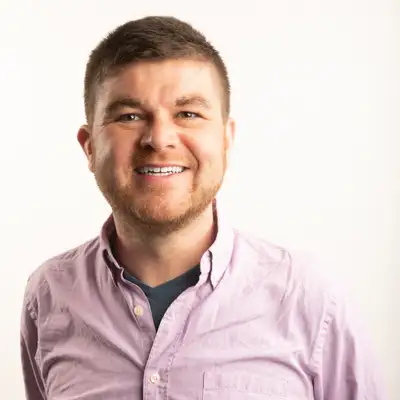
I'm your host, Adam W. Barney, founder of Scale Smarter, author of Make Your Own Glass Half Full, and I'm deeply uninterested in performance leadership. Today I'm joined by Corey Poirier, founder of bLU Talks, speaker, author, and a guy who's been in the arena of conversations, stages, and building trust for a long time.
[01:09.2]
Corey, welcome. Let's get into it. Well, thank you so much. I'm super excited to be here. Adam. Awesome. All right, Corey. Every episode we start with a 60-second reality check. Because most advice collapses the moment you try to run it. Corey, when you hear reality-first leadership, what do you think leaders are pretending is working that isn't?
[01:32.1]
Probably time management is a big one, I think. People, I feel, want to have everybody believe they've got a master on time. And I feel like most leaders that I talk to struggle every day with either how to get enough done, how to have enough time, and so on.
[01:50.3]
So I think probably time first, and then I think the second piece is, probably how well things are going. Like everybody wants to make it look like everything is organized, and systemized, and perfect, and on the back end, I mean I'm in a lot of mastermind groups with high-level leaders who share and it's like, if people heard this, they would never believe it.
[02:15.6]
I love it. The tough times bring us to the places where we are today. And it's not all easy. The road is not always up. And it's kind of funny because that's the way the human brain actually thinks, I believe. But before we touch on the $135 claim, what does proof actually look like in your world?
[02:34.4]
What counts as a receipt? I feel like, well, I'll say it this way because there's two, you know, two sides of it. There's the organizational side, and then for what we do, we actually help experts up level.
[02:50.5]
So in other words, somebody that wants to be a next-level influencer, somebody that wants to be taken as seriously as, say, Tony Robbins or Jay Shetty. And so what we do is we help people get the things that help Tony and Jay get there.
[03:05.7]
There's some charismatic points of view that you're never probably going to attain, or it's going to be hard. But there are parts, Adam, that you can build which is like you're "as seen on banner", like you know, if he says as seen on Apple, Roku, Amazon and if it's true, you automatically gain credibility. There's a reason why that's at the top of Tony's website.
[03:23.6]
So what we help is people get that stuff really quickly. And to me, when you asked about what are the receipts? I think the receipts are, with us, it's a public brand in the sense that you can go and see the videos, you can go watch the people that spoke at the events, you can see the books they were in.
[03:38.8]
So for us, we can't. Like, people always ask about guarantees, and I'm like the guarantee is you can look and see thousands of people we work with, and their stuff is right there. It'd be like asking TEDx to prove that you actually film speakers. They could just say go to TED.com and look.
[03:54.4]
So I think the receipts are the fact that, you know, we're working with hundreds of experts every year. Right? Yeah. I guess it gets into, Corey, applause is not proof, but the outcomes are where the proof actually is. Right? Absolutely. Yeah. All right, well, let's go straight to the headline though Corey, because I think that's why everyone here today pressed play.
[04:16.3]
You said a million-dollar brand on a $135 investment. What was the $135 specifically? Great question. And, in putting that headline out there, I basically it was, if I'm being full, totally transparent, it's actually was, you could argue It's a zero-dollar investment.
[04:36.2]
Where the $135 came in, it was literally the registering the business name. Before we incorporated, it was like the sole proprietorship business name cost $135. I literally went back and looked; it was like $134 something something cents. And so it's basically, what I did, as a bootstrap, is I started the company on the investment it costs to register the name.
[04:59.0]
And I mean we can go further into this but, how do you launch the company then? Well, what we did is we pre-sold the things that we deliver, and that gave us the first cash flow. All right. I mean, at that moment when you actually spent whatever the dollar amount was in reality, what did you actually have, though?
[05:17.3]
Was it time per week? Was there any audience that already existed, any network, any credibility, any platform? Or was it all just fresh? It was completely fresh. And interestingly, not to sidetrack us, but I used to have a newspaper for like, about seven and a half years monthly.
[05:35.0]
And I started it on the exact same amount of money, whatever. Well, it was probably a little less to register, so maybe $90. And we ran that for seven years doing the exact same thing. So in that company, we sold advertisement. And so we just didn't launch the first issue until we had two full issues of advertisement sold.
[05:52.3]
So I kind of did this twice, I guess you could say. But to answer your direct question, we had nothing whatsoever as a platform. And in fact, here's how I went out. I went to people and said, hey, we're thinking of doing this thing called bLU Talks. If you want a visual for it, It's like if you took TEDx and he took Chicken Soup for the Soul, they got married, had a baby.
[06:10.9]
That's what we're building. And the difference is their audience first or viewer first. We're going to be expert first. So we're going to help you as an expert, get all the things you need. And so what we did is we pre-sold 50 speaking spots at three different locations. And then, again, so, we had nothing at that point.
[06:28.6]
Then we went and filmed those, and then what we started having was content like TEDx says. And the plan was we're gonna start every week putting out one video. And what happened, I mean, we again, we can go deeper into this, but what happened, Adam, is we filmed those three events, late 2019.
[06:46.5]
And as we were editing our videos, ready to launch March 20 20, sorry, March 13, 2020, started and all of a sudden, the world. The date that we all know in infamy there. Yes. So the challenge we had, and we had to pivot, is now we're launching a live event company when the world says no more live events.
[07:04.1]
So, but to go to your question, that what funded us, starting with nothing, and start building that audience was those first 50 people that took a chance on us. And then at the same time, they were the ones that were promoting us because they were the ones that had the experience. I don't know, how long exactly did it take
[07:23.6]
to move from starting to this is real to me. Well, there's two times when it was real. I think when we first went on-site at those venues and filmed. That was real because we had people in the room, people getting filmed.
[07:39.0]
And by the way, our third event was at Harvard, so that's pretty wild too. But, you know, that to me is when it was real was filming those first talks. And then the second time it was real was when we said bLU Talks is officially a thing, which was September 2020. So we held off on our official "launch date" because of COVID, but September 2020, we launched with the videos from the live events.
[08:01.1]
We did a virtual platform, a podcast, and a book series. Okay, wow. All right. To me, you could pick whichever one of those two times you think it was real. But I think both times it was real. I would actually agree and I love what you're doing here because Corey, if you can't name the input, the story is just a spell.
[08:21.1]
Right? I mean, what were the constraints here, also? Was it money? Was it time? Was it location? I don't think it's confidence. Was it access? See, money, time, location, access?
[08:38.8]
Constraints. I mean, because we were starting small, like the idea that, okay, we have, let's say 16 people signed up to speak at this event and they're investing. Like the investment was required up front, so they're investing. So then we took that to book the venue and all that.
[08:54.7]
So I don't really feel... Money was only a constraint that we couldn't start bigger than we did. Time was always constrained. When we launched, it was my wife and I, and she was going to be editing the videos. That was it. And then we brought in the odd person, like we found a camera person that was kind of our first camera person.
[09:12.9]
And a friend of mine who had worked on Jack Canfield's live events, she came in and kind of managed the first three events for us, actually two. And then my wife managed the third one. So at that time it was like my wife and I basically. So time, yes. It grew, honestly, like you think about going from zero to working with 50 speakers in a month.
[09:32.7]
Like, it grew so quickly that, yeah, time was definitely a constraint. Access, to like where we're at now on the amount of platforms we're on. No matter what we did, that was going to take time, but that's still access, like getting out to the world, you know?
[09:48.4]
So now it's not abnormal for one of our books to be in Walmart, or we're on 20 some FM stations with 175,000 listeners a day. Like now we have access. But when we started, I think that was maybe a challenge. But yeah, I think it was more just, the challenge was never having done it before.
[10:05.9]
And I will say a big not mistake we made, but a big maybe, something we overestimated was how well we were going to be able to edit videos really quickly. So the first videos, we didn't have the experience. So we had like, the film person was filming some of the events and didn't realize the lighting was horrible.
[10:24.5]
And then we had pixelated video that we had to fix. That stuff was...looking back now, I can't believe we had to go through that. But, yeah, it happened. Well then that kind of gets into, you know, what advantages you had that people might miss. Right.
[10:39.7]
It sounds like you've got maybe persistence, a willingness to ask, an ability to host conversations. But what was the, what was the real lever there from the advantages you had to make this go from zero to what it is now?
[10:56.3]
I feel like, one thing, I mean I'll ignore the one that you just said, which is that, well, okay, I'll go back a step. When I first started my journey, I was scared to speak on a stage. I was scared to order a pizza from a restaurant. I didn't even like that feeling of calling.
[11:12.1]
Like that was my level of confidence. And what happened is, over time, I kept expanding my comfort zone. I ended up doing stand-up comedy, jumping out of a plane even though I'm scared of heights, surfing even though I can't swim. Like, I believe you can grow your comfort zone over time. And that's what I did. And so by the time we did this, I didn't kind of.
[11:29.4]
I went into it not going, what if it fails? I went into it going, what do we do once it succeeds? You know, like it was. I don't mean that as an ego way because I've had so many setbacks, and I've been that guy, like I said, that's been covered in sweat on a stage. But I just say that to say that might have been an advantage.
[11:47.4]
The fact that I'm a passionate person, I think helps. But realistically, I think two things really helped me the most. One was that I understood the industry I was getting into. I was trying to help experts, but yet, I had been a speaker 20 years. I had written books, I've been in Forbes, I'd done the things that I want, and I'm asking other people to do.
[12:04.6]
So I think understanding the industry, it was really important. Like, it'd be like, if I was launching an accounting firm, but I'd never done accounting. Like, I think that's a disadvantage. For me, like I said, I had, I already knew what I was getting into. Second piece, I think, is that I spent a lot of my time, and hopefully this is a takeaway for people.
[12:23.1]
What I do when I'm building a relationship is I look at a relationship like a relationship bank, and I look at it like I'm depositing into the relationship or withdrawing. And so I started building relationships going, okay, I need to put a thousand dollars in there before I ever ask for a hundred. And a thousand dollars to me was 10 gifts.
[12:39.1]
I gave 10 times before I ask once. And so I think what also happened when I helped, when I launched this, is that I spend all this time building relationships without asking for anything. So when we started doing our virtual event, we were booking people like Jack Canfield on it, Les Brown, Lisa Nichols.
[12:54.9]
Most people would have a hard time launching a virtual event and bringing some of those people onto the event. So I think me doing that has helped. And to be honest, not to get sidetracked, but I'm raising money now for my feature film out of my book, and I'm seeing the same scenario. I haven't asked in a long time, so I'm going to say, hey, would you be able to auction an item?
[13:13.7]
Hey, do you want a cameo in the movie? And people like, yeah, okay. I mean, so the takeaway for people from that is deposit into relationships before you ever need to withdraw. Oh, I love that. And I mean that gets into a, kind of, misunderstood or under-thought of repeatable action that helps make the system compound.
[13:34.8]
It wasn't just necessarily about consistency; it was about practicing the reps of learning over time and, you know, building off of that history. I mean, paint the week back in the early days of bLU Talks, if I looked, say, at your calendar or in your wife's calendar back then, what would I see you actually doing on a day-to-day basis, on repeat?
[14:00.4]
Wow, that's a hard one. Because if you didn't say on repeat, I could answer it easier. Because for me, every day is slightly, maybe even more than slightly different. But there's obviously commonalities. So I feel like the on repeat part, I mean, if I look at persistence, the on repeat part is I'm constantly always thinking.
[14:21.6]
I don't put a number on it. But I learned this from Jack Canfield, Mark Victor Hansen. They call it the rule of three. Ah, rule of five. In fact, I didn't even notice that when I was saying that I had this on my desk. This is their thing that they made. And I got this at Jack's retirement party. And basically, it's every day what they did for Chicken Soup for the Soul is they figured out what are the five things I can do today to move this forward.
[14:42.9]
And so what I think I did, Adam, is I was always doing five or more things, I still to this day do, always moving in a forward direction. So, I feel like that was one of the things that was common is every day I was saying, what else can we do to move this forward? A second piece is, I was in communication with the speakers and experts that put their trust in us.
[15:03.1]
Like, in other words, this is, even to this day, and this is a weakness. I'll give this, this is a strength and a weakness, or it's a weakness. It's not only a strength, for sure, is that if you're a part of our bLU Talks and you say, Corey, I just got selected for TEDx.
[15:18.8]
What do I do here? Or Corey, I don't have contract. What do I do? You email, or you messenger me, meaning we have 14 team members, plus suppliers, and other people too, and fractional people. What I'm getting at is, even at that size, it's still anybody can come to me and say, here's my issue help.
[15:38.2]
And I mean, I get those probably 30 times a day. Now, I learned which ones I can immediately say, hey, I'm going to connect you with so and so on our team, and they can help you out. But I'm still saying, Adam, that I think a strength is from the first day till this day, I don't ignore an email.
[15:54.0]
I don't just forward you without telling you I'm forwarding you. I don't ignore a Messenger message. WhatsApp. And so, I think that's been a strength, but it's also weakness when you're scaling. Like imagine if Tony Robbins was trying to say, okay, you gotta message Tony, do you have any questions?
[16:09.4]
And I'll get involved. And you know, his admin officer says, oh, we gotta book this appointment for so and so. A dental appointment. I better get CC Tony in. Like, you can't do that forever. But I think that's something that's worked well and also been maybe a challenge for me.
[16:26.2]
Right. Because I mean, I love to say, in my coaching practice there are a few things that level-set every human on this planet, whether you're Tony Robbins, or you, Corey, or myself, is that we all only have 24 hours in the day to get done what we need to get done.
[16:43.6]
Like, you can't add additional time, and unfortunately, even with the increase in AI tools, you can't replicate yourself fully. You can't replicate the tone and the voice that we bring to the conversations. 100%.
[16:59.5]
Yeah. So I say that's why I think, when you ask what's an advantage, one thing we had, I think that's a positive and a negative, and like, the good thing is it's been a slow burn. But that, let's call it delegating it, forwarding it on, that's gotten better over time.
[17:15.9]
And like right now, I would say, since when I started to now, I'm only doing about 10% of what I was doing six years ago. However, out of that 10%, 90% of it's probably they're replying to people. But everything else I've got off my plate.
[17:32.2]
Like with the books, I don't even see. All I do is see the cover, roughly. But like when we have a book with 30 authors in it, I don't see their chapter or nothing until the book's done. So, the good part is, I'm not sitting there. Like the first three years, I was literally the guy saying, send the chapter to me.
[17:50.1]
And then I would have to put it all in a Word doc, and then I'd have to send it to the editor. Now, I mean I don't even know how they do it, to be honest now, Adam, like our team basically says upload it here on a Google Drive and you can even make your edits on there. When I was doing them, like, here's your full Word doc, they would make a change, I'd send it back to the editor.
[18:06.9]
Have to understand what changes they meant. So yes, when I say that, I do want to clarify on the scaling side, the one last piece I haven't scaled out yet is me not replying to everybody. I mean, that is incredibly powerful though because, you know, scale also isn't that volume.
[18:28.9]
Right. Again, that scale is repeatable trust. Right? And that's what you build over time here. So Corey, every episode that I record here ends with one EnergyOS move, a weekly move that helps you lead, ship, and scale without losing your soul.
[18:45.7]
Can you give us one EnergyOS move people can run this week? And what's the action, how long does it take, and what does it unlock? Wow. Can it be one that it's not necessarily, I guess, like an organizational thing?
[19:02.1]
Yeah. And it doesn't have to be complex. It can be super duper simple. Okay. So the one thing I wish I would have known when I was early on, when I was starting, I think we all should have, for our company, if we're a founder, or a company owner, or CEO, or work at a company, we all should have a good mission statement.
[19:19.1]
But one of the things I think when I've studied people, and just for a backstory, I never shared this earlier on, but I've interviewed over 8,000 thought leaders. So this is research-based. It's not even just like, Corey thinks. And most of that is all documented through the newspaper I did, through the podcast and what have you. And the one thing I've noticed that a lot of thought leaders have, which almost any everybody else doesn't have, is a personal mission statement.
[19:41.6]
And so what I would tell people is if you don't have a personal mission statement, you need a personal mission statement. So for me, I mean, I'll go one step further as to why it'll impact your life. And I will say, I think it is a productivity tool. So for me, I'll give you my example. Mine is to be the guy that donates, motivates, educates, inspires, and entertains.
[20:00.1]
And so that's my five-point test. So if you say, Adam, are you willing to do this show? First thing I go is, is it going to help me inspire, entertain, give back, and your show's going to hit four out of five of those, or five. And so that's an easy yes all day.
[20:15.1]
Now somebody comes to me and says, hey, we want you to come on our cooking show and you're going to stand in the background and hand us stuff, utensils. Like that's an easy nom every day, all day. Right. Much like, I hate to say it this way, but much like depending on the level of friendship, if you ask me to help you move your couch, now that I'm 50, it's probably going to be a hard no.
[20:35.2]
But if you're somebody that bent over backwards for me, even if it's going to hurt my back, it's going to be a hard yes. So the point though, is still, what that does is it lets me figure out what a yes and a no is quickly. And honestly, most gets no'd out. So if I added in one caveat, after all my interviews, one of the top traits of the thought leaders I've interviewed is they say no 20-50X more than everybody else.
[20:57.9]
So having a personal mission statement lets you keep on track, know why you're doing what you're doing, for yourself, not just the company. But also, it allows you to go, this thing that I'm being asked to do, will it move my mission statement forward, keep it still, or move it backward? So that's what I would say, come up with a personal mission statement and then use it to decide what a no and a yes is.
[21:16.2]
I actually, actually love that. Because, you know, Corey, I talk a lot about energy, personal energy that we all have as leaders. And I don't think that people realize enough how saying no, from a broader standpoint, actually helps to build your energy. It's actually a powerful strategy.
[21:33.4]
It's not just a wall. It's not just a vibe to put up. Yeah, I'll add, people often ask me, and by the way, I was a yes person. Like, I struggle. And to this day, I still sometimes struggle. Like, I have a team that sometimes I'm like, can you just say no for me in a pretty way?
[21:49.1]
Like, I'm not saying I love doing it, but I know it's important and necessary. And so what I will say is, you either A: If you have a big enough infrastructure, hire somebody to say no for you. Like Tony Robbins probably could say no. He has that ability. But if you think about it, he has a whole infrastructure, probably 100 people you have to get through to before you ever get to that stage.
[22:09.9]
But if you don't have that, or you're just on your own, here's what I think I would offer, Adam, because I was that person that struggled with saying no. So what I would suggest is start saying no to the things that don't really matter. So what do I mean by that? In a business world, you probably get emails every day with people pitching you.
[22:26.0]
And if it's a pitch that you, out of nowhere, and you're not interested in it, like one that doesn't fit at all. Like, always listen to every pitch. But, if it doesn't fit, what I'm getting at is, instead of you ignoring that message because you're thinking, if I reply, I'll be in a conversation. Actually, just start that process of saying no.
[22:42.9]
Yeah, I mean if they get aggressive, you can block them or anything else. But what I'm saying is that's an easy no because you're not hurting the feelings of the family, a friend, or anything else. So what I found, is you need to work the muscle, and the easiest way is the things that really don't matter that much. So if you were going to ignore the message anyway, how much harder is to say nope, not a fit.
[22:59.8]
Right. And you'll eventually get, oh, I can say no. And look how much easier that made my life. I've actually gone through this so many times. I mean I've done some, you know, angel investing on the side over the years, and I still get people who see that and go, hey, I'm launching XYZ Co.
[23:16.2]
You know, we're raising a seed round right now. Do you want to invest? And my natural inclination would be to just ignore it and walk away. But what I've actually trained myself to do is go back and say, well no, I'm not doing any investing. I don't have the capacity right now, but my network is yours.
[23:33.0]
If I can help introduce you. And that gets into my own superpower. What drives me inside myself, of saying, I can't do this myself, but I will extend my network here. Love it. Awesome. So Corey, with everything you've built in this $135 to a million-dollar story we just put through the proof stack here, is anything real?
[23:56.7]
It's all real. There's, I mean, there's nothing that we talked about. I'm a transparent person. Yeah, it's all real, and it blows my mind It's real real. That's great.
[24:14.2]
Corey, this was fun and it's exactly what the show is for, you know, taking a big claim and turning it into something operators can actually run with. I I love it. Well Corey, what I'm taking away from this is the world is full of advice that sounds good, but if you can't name the inputs, the actions, and the outcomes, it's just storytelling.
[24:33.9]
And for our audience, the real value, Corey, you brought here today isn't the $135. It's the reminder that trust truly compounds when actions have a cadence and leadership has the receipts that come, so, if this episode hits send it to someone who's addicted to theory and allergic to execution.
[24:54.7]
And until next time, proof over theater, and keep shipping what works. But Corey, thanks for joining today. Thank you, my friend so appreciate it.