Subscribe
Share
Share
Embed
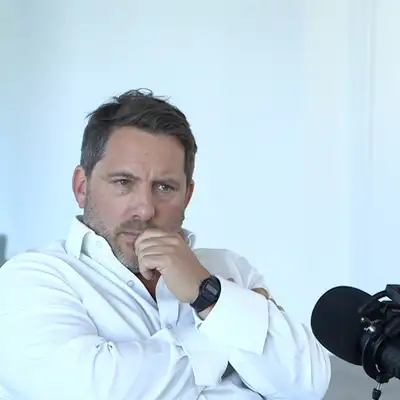
A Different Perspective is a Zeus podcast, hosted by Nick Searle, Head of Equity Capital Markets. In the different perspective podcast we speak to interesting characters within finance and business to understand more about their personal journey and ambitions. This is co-mingled with a discussion about their business. It’s more about the formation of the individual than the business per se; thus trying to gain that different perspective.
This content is issued by Zeus Capital Limited (“Zeus”) (Incorporated in England & Wales No. 4417845), which is authorised and regulated in the United Kingdom by the Financial Conduct Authority (“FCA”) for designated investment business, (Reg No. 224621) and is a member firm of the London Stock Exchange. This content is for information purposes only and neither the information contained, nor the opinions expressed within, constitute or are to be construed as an offer or a solicitation of an offer to buy or sell the securities or other instruments mentioned in it. Zeus shall not be liable for any direct or indirect damages, including lost profits arising in any way from the information contained in this material. This material is for the use of intended recipients only.
This content is issued by Zeus Capital Limited, which is authorized and regulated in The United Kingdom by the Financial Conduct Authority, the designated investment business, and is a member firm of the London Stock Exchange. Nothing in this podcast should be viewed as investment advice. Listeners should consult an investment professional before making any decisions regarding topics mentioned in this podcast. The views expressed in this podcast are those of the participants and not of ZEUS. Please note that participants in this podcast may have financial interests in the matters discussed.
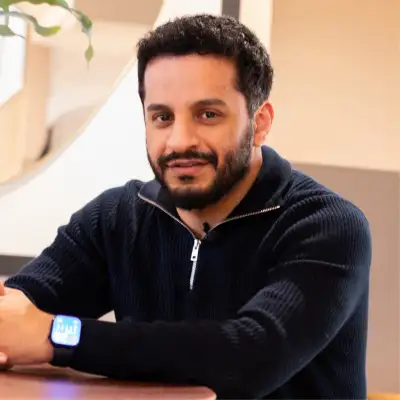
Nick Searle:It's Wednesday May 13. With me today I have Zaid Alfagih Zaid studied medicine at Imperial in London followed by a Masters in public policy at Oxford. Previously practiced as a medical doctor in the NHS, and was a first responder on humanitarian missions in Syria. Co founded Rahiz, an award winning AI powered virtual assistant transforming the way doctors work. Good morning.
Dr Zaid Ai-Fagih:Good morning Nick,
Nick Searle:how are I'm you very well, thank you very much for coming with us today.
Dr Zaid Ai-Fagih:Thank you
Nick Searle:As I like to start with a bit of background, we can go as far back as you would like, but it's quite nice to know how maybe what shaped you to want to become a doctor in the first place.
Dr Zaid Ai-Fagih:Yeah. So I could go all the way back. Was born in Saudi Arabia, but I came to The UK as a very young child. I interesting fact about me, which may or may not be relevant, is that I grew up undocumented, so I was legal but undocumented. And I ended up going to Imperial College to study medicine, and I was very fortunate to do that.
Dr Zaid Ai-Fagih:At Imperial College, it's a very, very vibrant place for tech innovation. It was something that you get hit with from your first year. And even though medical schools are traditionally quite separate, I was quite fascinated by the whole sphere and, you know, everything that was going on in in in the engineering departments and the computer science departments, and I had a lot of friends who studied there. And so I began to engage with that world from a very early stage in my medical career. And this kind of culminated in 2015, where I did an intercalated degree management, which is something that doctors and dentists can do, where you accelerated one year bachelor's degree.
Nick Searle:So in management or
Dr Zaid Ai-Fagih:In management, yeah. It was completely unrelated to medicine. And before that I Was that
Nick Searle:because you weren't studying hard enough to do medicine unless you had the capacity to do another degree on the side of
Dr Zaid Ai-Fagih:No comment, no comment. But I've always been fascinated by the world outside of my vocation. Yep. Because medicine's very narrow. I mean, you could study history and work in consulting.
Dr Zaid Ai-Fagih:Correct.
Nick Searle:Yeah. Not many doctors. We study history and become a stockbroker like I did. Yeah.
Dr Zaid Ai-Fagih:Of course. Yeah. Most doctors end up being most people who study medicine end up being doctors. Yes. So I mean, that's beginning to change, but that's a separate discussion.
Dr Zaid Ai-Fagih:So I I studied management, and that really opened my mind to the world outside of medicine. And during that year, we did some very exciting research on smoking cessation, funnily enough. And that became a business that is now generating around 100,000,000 in annual revenue. I jumped ship early on, but the founders are doing amazingly well in in in America at the moment.
Nick Searle:And that's technology business?
Dr Zaid Ai-Fagih:Yeah. Started off as a gamified smoking cessation app. Yeah. But then it became a digital addictions clinic several rounds of financing and things like that. Backed by YC, backed by some very big names in tech.
Dr Zaid Ai-Fagih:Moving on from that, finished my medical degree, started clinical practice, and clinical practice real clinical practice is very different to medical student.
Nick Searle:Uh-huh.
Dr Zaid Ai-Fagih:Kind of the medical student experience. But during my time in clinical practice I felt like I had an understanding or came to an understanding of what it's like to be an operator in the world of medicine.
Nick Searle:And where did you do your clinical practice?
Dr Zaid Ai-Fagih:Where I didn't. Because you get just around the country.
Nick Searle:Exactly right. Just for both of the listeners, you do get to move around quite a bit, don't you?
Dr Zaid Ai-Fagih:So I started off in Hereford, in a very small town near the border with Wales. And then I moved to Coventry, and then Watford, and then London.
Nick Searle:And when do you get to specialize, when did you specialize?
Dr Zaid Ai-Fagih:So I began specializing around two years after graduation. You do so the way it works is that you do Six months or four months in every rotation for a period of two years and then after that you choose the track I Chose the track and then I ended up jumping ship. I did a masters in public policy after around five years as a doctor And
Nick Searle:what did you specialize in?
Dr Zaid Ai-Fagih:I wanted to do internal medicine. Yep. I really like the generalist aspect. I'm a generalist.
Nick Searle:Yep.
Dr Zaid Ai-Fagih:I did quite a lot of academic work on the side. So we did research on applying maths and tech to problems in medicine. Mhmm. Had a few publications in that space. And then I I thought, you know, I've I've I've studied management.
Dr Zaid Ai-Fagih:I've worked as a doctor. I'd love to understand the policymaker's perspective on things. And I love the big picture. I love to understand what drives the processes that we deal with in our day to day life. And there's quite a lot of frustrating processes we have to deal with in medicine.
Nick Searle:I can imagine in the NHS as well.
Dr Zaid Ai-Fagih:Exactly. And in addition to my NHS work, also did quite a lot of humanitarian work. So I was a first responder, as you mentioned, in the Syrian conflict and subsequent trips after that to not exactly the conflict zone, but nearby. And I I came to understand the world of medicine from many different angles, so I thought the natural thing would be to study policy, learn to tackle things up their at their route. So I studied it.
Dr Zaid Ai-Fagih:I absolutely loved it. And then I thought I could go back to clinical practice, which I loved, or I could try to reshape, you know, I'm trying to say this in the least grandiose way possible, but try to reshape the way doctors work.
Nick Searle:So make a difference but in a different way?
Dr Zaid Ai-Fagih:Exactly, exactly. And that would be through tech, which is something that I understood quite well. And I felt like I understood the problems quite well. Now what happened afterwards is, whether that actually happened or not, is obviously a separate discussion which we can get into. Yeah.
Nick Searle:So so then how do you go from from being a clinical doctor to to an entrepreneur?
Dr Zaid Ai-Fagih:I think the starting point is frustration. You the scarcest resource in every health system is a doctor's attention or a clinician's attention.
Nick Searle:Yeah. So
Dr Zaid Ai-Fagih:I mean this has been backed up by studies, but most of your time is spent doing rote paperwork.
Nick Searle:Yeah. I mean there have been many companies listed on the stock exchanges that try to help that process of centralizing records or allowing different departments to see the same record, etcetera, etcetera.
Dr Zaid Ai-Fagih:Yeah. And the research on this has been quite extensive, and technology has generally made the problem worse. Interesting. Yes. Yeah.
Dr Zaid Ai-Fagih:So electronic records or users of electronic records spend more time doing paperwork than paper records.
Nick Searle:Unbelievable.
Dr Zaid Ai-Fagih:Yeah. In The UK, 73% of a doctor's time spent or resident doctor spent doing non patient facing tasks.
Nick Searle:That's unbelievable because that's not what you'd expect when you start as a doctor.
Dr Zaid Ai-Fagih:Exactly. It's not what you expect and it's it's what drove a lot of the frustration. The other thing is is that medicine is actually quite hard to practice. A lot of people think that doctors have memorized every single guideline there is, so you encounter a condition. Yep.
Dr Zaid Ai-Fagih:And then you immediately know what to do or you expect it to immediately know what to do. But that's not the case. Most doctors have to go and look up the guideline.
Nick Searle:Yeah. Far it's no different than a lawyer, is it? Exactly.
Dr Zaid Ai-Fagih:So I know how to treat a pneumonia, but then if someone's got a penicillin allergy, what do I do? So that's the second element. So it's it's the job is quite difficult. The third thing is is that Particularly in The UK. There's a growing sense of and you really sense this as a doctor is that patients are unsatisfied with the service they're getting and a Lot of this has to do with how much time they get with healthcare professionals.
Dr Zaid Ai-Fagih:There's the kind of two problems which I separate, are the perception of poor quality care and then actual poor quality care. A lot of the time what's driving patient dissatisfaction is actually the
Nick Searle:perception. Yeah, understand that.
Dr Zaid Ai-Fagih:And so I remember there was a book written by Eric Toppel called Deep Medicine. And in it he discussed how AI and tech in general can make medicine more human again.
Nick Searle:Mhmm.
Dr Zaid Ai-Fagih:Paradoxically. Yep. By freeing up doctors time and cognitive burdens. And that was the driving point that led us to to found Raisey's and we've learned a lot along the way. So in on this journey, we've we've come to an even better understanding, I think, the problems, which is the crucial part.
Dr Zaid Ai-Fagih:But also the barriers that prevent solutions from being implemented even when they're intuitive.
Nick Searle:Yep. Yep. Yep. Yep.
Dr Zaid Ai-Fagih:And the barriers are many, from regulation to culture to bureaucracy to procurement processes and so on.
Nick Searle:So how do you go about this idea of streamlining or assisting doctors to allow them to have more time to treat patients, which is a great application. How do you then practically go about starting to implement that and start the company and find your employees, etcetera?
Dr Zaid Ai-Fagih:You'd be I mean, everyone's story is different. In our case, what happened was we came up with the idea. It was a very different idea to begin with. We initially just wanted to help with one particular kind of document, which was called discharge summary, which is funny enough the NHS's pilots all focused on discharge summaries because they take up so much of it.
Nick Searle:Is that the fact the doctor has to sort of almost tick off why someone's being discharged?
Dr Zaid Ai-Fagih:Not just tick off, you have to write up everything that happened during the patient's stay.
Nick Searle:Oh, right. Okay.
Dr Zaid Ai-Fagih:And then write up all their medications. And tell them if there's any medications. If any medications have been started, you need to tell the GP why they've been started.
Nick Searle:I've got you. Yeah.
Dr Zaid Ai-Fagih:It's mostly raw paperwork because you already know the patient very well. It's just writing it up.
Nick Searle:The
Dr Zaid Ai-Fagih:The process is very long and tedious, so we thought that would be a good wedge for us to start off with. And then the other problem that we wanted to help with was misdiagnosis. So there's a lot of controversy around this data, I'll caveat what I'm about to say by saying that, but the autopsy studies have shown that up to one in ten patient deaths can be attributed to diagnostic error alone. That's just one kind of medical error. So we thought diagnosis and discharge summaries sounds like a good start.
Dr Zaid Ai-Fagih:What we learned very quickly was that, you know, user experience was an important part of this, and most people aren't really gonna log in just to get a second diagnosis or something. Yep. So that ended we ended up expanding our idea to the point where it became attractive enough to attract VC investment. We got our first investor checks in late twenty twenty three, and then it's been it's been pretty much on the same trajectory since then. I'd say the biggest pivot was around mid twenty twenty five in terms of traction.
Dr Zaid Ai-Fagih:So we we ended up generating quite a lot of traction on that point.
Nick Searle:So how did you go about building your own model, or do you have your own life language model? Or how how
Dr Zaid Ai-Fagih:So we built a architecture that is pretty model agnostic. So we benchmarked it across different models and seen how well it works on various clinical tasks. We've published quite a few papers on this. The reason we wanted it to be model agnostic is actually, a) because not every geography has the models
Nick Searle:Yes, yep.
Dr Zaid Ai-Fagih:That you would need.
Nick Searle:Just like the NHS.
Dr Zaid Ai-Fagih:Exactly. So a lot of the geographies we work in are in The Gulf. Yep. And a lot of them don't allow you to host models, host patient data or take a outside of the we've got model agnostic architecture that works in such a way that using an inferior model doesn't actually affect the efficacy that much. It's quite a complicated agentic system that's kind of tailored for the tasks that doctors do.
Nick Searle:So if you took me through, how does it work for a doctor? How was the user experience?
Dr Zaid Ai-Fagih:So I mean, what we aim to do is help doctors with every clinical task from before the patient walks into the room till after they've left. So before they walk into a room, the doctor wants to familiarise himself with the patient. We're integrated into the electronic health record so the doctor can get a summary of the patient or ask a specific question like what's this patient's past medical history without having to Snoop through. Yeah next is the consultation needs to happen so During the conversation the doctor has to take a mental note of everything the patient's saying as well as a physical note
Nick Searle:Can you not use a recording function for that?
Dr Zaid Ai-Fagih:So that's what we do. So we we use it, we transcribe what the patient's saying, and then that can be used to generate a note. Yep. So you don't have to spend your time writing up a long note. And then the next part is you need to make a clinical decision.
Dr Zaid Ai-Fagih:So that's usually diagnosis and management planning. Now diagnosis, we structure the thinking for diagnosis to help doctors. So this is what you should check, these are the differentials. And then for management planning we create a tailored management plan based on a guideline search function. This is actually much harder than it sounds.
Dr Zaid Ai-Fagih:We allow doctors to localise the guidelines so you can use your own hospital's guidelines or your own regions And guidelines and so then the final part is clinical coding. So this is the main bottleneck for billing and record We automate the process so usually take half an hour for example to code a long document.
Nick Searle:So you manually have to code a long document?
Dr Zaid Ai-Fagih:Yes, that's what previously
Nick Searle:That's what I mean, so and the codes for the benefit listeners are the numbers that allow the insurance to be paid, aren't they, procedures and the medicines?
Dr Zaid Ai-Fagih:Exactly. So every medical phenomenon, so condition, procedure, whatever has its own code and it's impossible to memorize all these things because there's millions of them. We help by essentially massively streamlining that process. We automate up to 90% of it. We just keep a human in the loop to check the answers, check the evidence.
Dr Zaid Ai-Fagih:And then after the patient's kind of left the room and left the building, you need to audit everything that happens. Doctors usually have to do one quality improvement project a year to keep their license. We automate the process of auditing. So you would put in the standard. Yep.
Dr Zaid Ai-Fagih:You would put in the guideline that you want adhered to and then you can bring in a huge batch of documents.
Nick Searle:So you can map your data against that and it will fill out what maybe you could do better or how Exactly.
Dr Zaid Ai-Fagih:So check against the standards that you've set. So it helps every step of the way. The other thing is that it's very customizable. So like I said, you can tailor the sources, you can tailor the documents, you can create your own templates. We make everything as user friendly as possible.
Dr Zaid Ai-Fagih:And we also allow organisations to integrate third party tools so they can access it from our single workspace via our API.
Nick Searle:Doctors don't strike me as people that like a great deal of change.
Dr Zaid Ai-Fagih:Yeah. I mean it's not just doctors I'd say most clinical professions are the I think there is a massive problem with trust in tech. Mhmm. And a large part of that has been because there's a lot of hype when it comes to any new technology.
Nick Searle:And certainly within NHS, it's not been implemented very well. Yeah. So there's been troubles with implementation.
Dr Zaid Ai-Fagih:Yeah. And I feel like regulation does hamstring a lot of Mhmm. Innovations. It means that you get a watered down version of what the Americans are getting or Yep. Yep.
Dr Zaid Ai-Fagih:So so it means that it's very difficult to get someone excited about something that's, you know, that's so watered down compared to what it could be, especially when you can I mean, you can easily access that same app just without using your NHS login? Yes. But
Nick Searle:if you step away from the NHS, then obviously you mentioned The Gulf and there must be lots of private practice and very large private hospital networks that I can imagine a streamlining of clinical interactions obviously creates the opportunity for increased revenue, I guess. So is there more adoption or easier adoption in the private sector?
Dr Zaid Ai-Fagih:Yeah. So I mean, it's not so much in The UK because private sector is dominated by big players who function in very similar way to the NHS. But the in The Gulf, there has been huge adoption. Interesting, I mean, Gulf has a problem of having a lot of adoption, but not much innovation happening there.
Nick Searle:Yeah. Interesting.
Dr Zaid Ai-Fagih:So a lot of the companies benefiting aren't from The Gulf. We would be one
Nick Searle:of them. Yep.
Dr Zaid Ai-Fagih:The The case the for AI in medicine has never been stronger. And I mean I touched on the fact that tech has been full of hype for clinical care, but I think that in this case we're seeing very strong adoption, particularly amongst younger doctors. Seeing
Nick Searle:of the
Dr Zaid Ai-Fagih:of or trying to regulate the health care applications because people are just going to use the Yep. The apps that don't protect patient data.
Nick Searle:And I guess I guess there's Morally is probably the wrong word, but ethically the whole idea of asking a computer for a solution or a diagnostic or a diagnosis does open up some concern about litigation or bad practice or bad diagnosis, I guess.
Dr Zaid Ai-Fagih:Of course, and that's why in my opinion intended use is the most important part here, which is the approach Canada has taken, which is that if your purpose is to replace doctors and replace their clinical judgment, then yes, you should be regulated as medical devices probably at the highest level of medical devices. If your purpose is to simply structure a doctor's thinking and help them have quick evidence linked suggestions, then that's a very different thing.
Nick Searle:So it's a workflow management tool Exactly. With some suggested options for, in other words diagnosis, so in other words not allowing the doctor to go to the books and have a look but it comes back with that data. Yeah. That will create a quicker diagnosis.
Dr Zaid Ai-Fagih:Exactly and a good analogy is I mean in aviation, so we still trust the pilot with the plane, pilot is still responsible, but a lot of what is being done is done by computers.
Nick Searle:Correct.
Dr Zaid Ai-Fagih:So that's the think that's the general approach that needs to be taken. I think a good balance is what's being done in Canada basically. Focus on the intended use rather than what the device actually does.
Nick Searle:And then how do you grow? How do you scale? What's the rollout opportunity?
Dr Zaid Ai-Fagih:So I mean there's two broad avenues for an application like us. So the first one is approaching doctors directly as individuals and selling them a consumer app. So that's one avenue and that's an avenue that's been followed by a few companies like us actually. And then the other avenue is to sell to healthcare organizations. Yes.
Dr Zaid Ai-Fagih:So the problem that's often faced by companies in our space, which often frustrates investors particularly, is that sales cycles are long.
Nick Searle:Yep. Yep.
Dr Zaid Ai-Fagih:So often the consumer app element kind of fills in the gap, the valley of death gap as you kind of start generating
Nick Searle:Or the adoption curve.
Dr Zaid Ai-Fagih:Exactly. So it's kind of like that two pronged approach is how you would scale in healthcare. Now a lot a lot of companies die before they get there. Yep. If you survive, then you survive well.
Dr Zaid Ai-Fagih:I mean, there's a a lot of the companies that do well are doing a lot of the kind of not so glamorous stuff, and a lot of the parts that we see the greatest adoption of in our app are the not so glamorous course. Of course.
Nick Searle:I I can understand that. It's natural, isn't it? If they're if they're the maybe more rules based or clerical admin based parts.
Dr Zaid Ai-Fagih:Exactly.
Nick Searle:And any form of solution should be adopted quite
Dr Zaid Ai-Fagih:quickly. Yeah. And the admin part is probably the least glamorous part of what we do, but it's why most people use our application. It's it's also the bit where probably you make the greatest impact on people's lives.
Nick Searle:And then how is the revenue model? How do you charge for your services?
Dr Zaid Ai-Fagih:So we have a very generous freemium model for our B2C, so our For consumer B2B, it's a subscription per doctor per month.
Nick Searle:And how large, I mean, the B2C merely a stalking horse to create some form of user base that then maybe to grow to the large healthcare organizations?
Dr Zaid Ai-Fagih:Partly that, but also there's an important point here which is that most doctors in the world don't use an EHR, don't have an electronic health record. So they would benefit from a standalone solution anyway. So we have a lot of users around the world who some of them even use our app as some kind of rudimentary electronic health record. Yep. Because they don't have one.
Dr Zaid Ai-Fagih:Because you have the functionality of being able to create a patient record. So so it kinda is both. It's it's both showing doctors the capabilities of this app, maybe they could bring it up with their bosses. But also, a lot of doctors and clinics simply don't have electronic health records, so they don't need an enterprise solution. They can just get an individual subscription.
Nick Searle:And you're finding that doctors are happy to pay for that?
Dr Zaid Ai-Fagih:Mostly, yeah. I think it's very geography dependent. Yep.
Nick Searle:So where are you globally? Where's
Dr Zaid Ai-Fagih:the A lot of our footprint is in Western Europe, The Gulf, North America. I'd say our top three countries are UK, Saudi Arabia, and then probably joint third is United States and Egypt.
Nick Searle:Is there a is there a lot of competition in The US?
Dr Zaid Ai-Fagih:There is a lot of competition in The US, and some companies there have taken very very unconventional approach. We we haven't gone down the enterprise route in The US to be clear. This has all been consumer. Open Evidence gives it for free, for example, to every every doctor providing you put in your I forgot what they call it. Their version of a GMC number.
Nick Searle:Yes.
Dr Zaid Ai-Fagih:Yeah. But they they banned it in The UK and Europe. As in, a skeptic would say that they did it because they don't want to waste tokens on in a country where they couldn't sell it as an enterprise I
Nick Searle:get that.
Dr Zaid Ai-Fagih:But the they've gone for a completely free model and they sell doctors data to ads companies and things like that, which is which would be a business model that's
Nick Searle:not Yes.
Dr Zaid Ai-Fagih:Doable here pretty much. Yeah. So there's there's there's there's a lot of very interesting stuff happening in The US. I think The US is have been trailblazers. I think one of the most exciting companies actually came out of The UK and moved to The US very shortly after.
Dr Zaid Ai-Fagih:It's called Anterior. So they do AI for health plans. Mhmm. So it's literally the most unglamorous part. Yeah.
Dr Zaid Ai-Fagih:So they do the insurance paperwork for doctors and insurers. So they'll do the medical necessity reviews and the, you know, the health plan paperwork. And it's probably where they're going to have the biggest effect on the health care system over there. Again, this isn't really a business model that could be implemented easily in The UK for example.
Nick Searle:But mind you, that's a big that's having one market and the largest paid market in the world is happening.
Dr Zaid Ai-Fagih:They don't need to. But then that's why they left The UK and went to The US. I think this is a I mean, there is a UK to US pipeline of health techs where very promising innovation happens here. It doesn't get adopted here. Yep.
Dr Zaid Ai-Fagih:And then goes to The US. So I think Hinge Health is another massive one that The UK lost out on to The US.
Nick Searle:And then talk to me about how you found your VC and how you chose your VC. I mean,
Dr Zaid Ai-Fagih:there's there's there's an element of this where the VC finds you.
Nick Searle:Yep.
Dr Zaid Ai-Fagih:Because you align with the thesis. And for us, we've had quite a few investors. Some of them Some A lot of them either I mean, I'll separate it into three separate components. Some of them believe in some kind of vision
Nick Searle:Mhmm. Yep.
Dr Zaid Ai-Fagih:That we've sold them or have given to them.
Nick Searle:Or they believe themselves.
Dr Zaid Ai-Fagih:Or they believe in a vision exactly. And then the second part is that some of them believe in you as an individual. Yep. And then the third category is those that believe in your product and they believe in your product as a something that's gonna make money, We have an interesting mix of VCs actually. So one of our biggest investors is for example the Qatar Development Bank and they invested because of a strategic motive.
Dr Zaid Ai-Fagih:So they want to see health tech being adopted in Qatar. But we also have American VCs who often invest that much earlier stage than UK VCs Yes, and for they often do that because they believe in the team or the vision. I think one of the big mistakes made by founders, which I've noticed and maybe experienced at different points of my life is that you you get excited about any VC attention. Of course. Which as you which is fine at the early stages because VCs aren't very
Nick Searle:And and it's validation, right? Exactly. Have some validation of what you're doing. Otherwise, someone else thinks it's gonna make money or of interest the
Dr Zaid Ai-Fagih:Exactly. Exactly. So I I was very impressed the other day where I heard heard the story from a fellow founder. He founded what is now a very popular CRM, British guy. He said that they I I won't name the VC, but he got he when he was at seed stage, he received, you know, the mother of all offers
Nick Searle:Yep.
Dr Zaid Ai-Fagih:From a very big name US VC. And his first reaction was, I'm just gonna take it. But then he actually did something which most founders don't do, which is you read the fine print. Yep. We need to move to The US.
Dr Zaid Ai-Fagih:Need to you need to do this. You need to focus. Yeah. And he chose not to do it, not because he didn't want to move to The US, but because the business imperatives that he believed in Yeah. Even though it was such an early stage.
Dr Zaid Ai-Fagih:He had confidence in himself to say, you know, I know better than what this VC wants. And he ended up making the correct decision to reject that deal. Two rounds later, they invested at his series b. Yeah. So they They
Nick Searle:were still there.
Dr Zaid Ai-Fagih:They were still there. They were still there. But after he had validated his thesis Yeah. So he he rejecting that kind of deal is a very brave decision. I think most founders don't do that.
Dr Zaid Ai-Fagih:I think for us, we wanted space, to go back to your original question, we wanted space to to be able to exercise our discretion Mhmm. To make business decisions for ourselves. And I think that's an important element. The other element is of course that you would want VCs to have connections.
Nick Searle:Yeah.
Dr Zaid Ai-Fagih:Yeah. So that can help you scale this thing, which is every VC claims to do this, but you never really know, unfortunately. But a good way of measuring is obviously is how are their portfolio companies doing. And that's what kind of the approach we tried to take.
Nick Searle:And then have they been good for follow on funding or how does it?
Dr Zaid Ai-Fagih:So we're I mean, we're at a point where one of them has been very good for full on funding. A lot of the companies that invest at seed don't invest at Series So it's mean, do they
Nick Searle:look for an exit then? Or is it very much they just roll their equity and hope things happen?
Dr Zaid Ai-Fagih:The Americans tend to roll their equity and hope I things think outside of the I I split the VC world into US and non US. I think US funds function very differently. Think they're a lot more they're a lot more comfortable with risk. Yep. They're And not size.
Dr Zaid Ai-Fagih:Yeah. And they're not so they're not so concerned about short term gains. Yeah. They're willing to kind of see it through. I think that's not the case with our non US investors.
Dr Zaid Ai-Fagih:I think a lot of them are looking for an exit. But some of them I mean, example, QDB, and I don't say this to disparage them, but their motivation is strategic. Yeah. So there you would need to take this all into account on your Yeah. But we've been very fortunate with our investors, I have to say, because, I mean, QDP, for example, has been very supportive.
Dr Zaid Ai-Fagih:But I'm assuming their strategic mandate would prefer an earlier exit than
Nick Searle:Is seeing this it very much first mover? I mean, you mentioned competition. There must be a lot of competition. So therefore, I'd imagine first mover must be quite important.
Dr Zaid Ai-Fagih:Yes. First mover is very important and I think scale is very important. So I mean, a lot of the companies that managed to get a lot of early adoption are doing very well because they've managed to raise subsequent rounds. I think AI has changed the way rounds are raised. Interesting.
Nick Searle:Well, how's that?
Dr Zaid Ai-Fagih:The traditional SaaS model doesn't really apply to kind of the way you assess growth in these companies. I think stuff like user retention and revenue are a lot more important than what the technology actually does. Yep. Very little patentable technology is actually being developed by companies, us included, and it's impossible to patent it.
Nick Searle:So Yes, the the the moat is the moat has changed, hasn't it?
Dr Zaid Ai-Fagih:The moat has become execution.
Nick Searle:Yeah.
Dr Zaid Ai-Fagih:And the technical complexity that you have is not as big of a barrier as it once was because people can kind of figure it out I mean, Jeff Bezos famously said that for five years he never had a competitor with Amazon. That was what let him succeed. I think no AI company is gonna have that luxury Yeah. Pretty much. For every one company that does something, there's gonna be hundreds that do this exactly the same thing.
Dr Zaid Ai-Fagih:So I think first mover advantage is extremely important, but it's not as important as it once was. I think the most important thing is, do you have an unfair advantage at distributing this thing? If you do, you will do very well.
Nick Searle:So then is that not just a race of capital?
Dr Zaid Ai-Fagih:To a degree, but then it's a bit of a chicken and the egg problem because you can't raise
Nick Searle:capital It's until you have self fulfilling. Exactly. You feel that are you on that trajectory now where proof of concept is over and you have subscribers and now is the time to accelerate that growth?
Dr Zaid Ai-Fagih:Yes. I think that's where we are now. We're at the point where we're able to raise capital with the growth that we have. And we are. The I guess the biggest challenge is beyond that is what does the world look like in five years time with all the change that are happening.
Dr Zaid Ai-Fagih:We're in a very interesting time, very exciting time, but also in a time where the traditional rules of tech financing don't apply.
Nick Searle:Yep. So if we were to roll five years forward, how do you build a roadmap for a business that is at the cutting edge of health tech?
Dr Zaid Ai-Fagih:I think one of the things that broadly there's three or four main areas you'd need to focus on. So the first one is the tech itself. So sticking to the frontier of the tech because that's where you keep your first mover advantage. The second element is I think the commercialization element. I think there's going to be a lot of new commercialization models that simply don't exist.
Dr Zaid Ai-Fagih:So I think stuff like enterprise commercialization in the traditional sense is gonna change quite a lot. It's particularly in healthcare because a lot of enterprise healthcare SaaS depends on stuff like EHR integrations and things like that. I think AI is gonna be able to bypass the need for APIs to integrate into EHR.
Nick Searle:But ultimately you're still going to get paid for service you deliver?
Dr Zaid Ai-Fagih:Of course, but how you're paid is going to be very different.
Nick Searle:Okay.
Dr Zaid Ai-Fagih:So it might be that you And so
Nick Searle:you mean no integrate, for instance, there'd be no upfront integration costs?
Dr Zaid Ai-Fagih:Yeah, so you could sell directly to doctors without needing to deal with their hospitals.
Nick Searle:Yep.
Dr Zaid Ai-Fagih:So even if a doctor wants to use your application as an you know with the HR integration they won't need to go through the hospital. So there's that. There's there's a lot of stuff that you kind of need to consider as a possibility, not necessarily that it's gonna happen. How do you monetize that? Do you monetize it as a B2C thing or as a B2B thing?
Dr Zaid Ai-Fagih:It's it's very it's a very kind of complicated question. The third element is regulation. So this is particularly a problem in Europe, to be honest. What is going to happen with regulations here? Are the companies that take regulatory risk now going to be better off in five So years' time or
Nick Searle:which what part of the regulatory landscape the hurdles or the barriers for you?
Dr Zaid Ai-Fagih:I'd say, not just for us but for many companies, the biggest hurdle is medical device regulation. So software as a medical device affects a lot of companies like us. The definition is very broad in Europe.
Nick Searle:Yeah. That medical device definition is very broad. Yeah. Yeah.
Dr Zaid Ai-Fagih:So it includes stuff that you wouldn't really consider a medical device. But broadly speaking, the definition is quite basic. It's anything that helps the doctor make a decision or keep notes or anything like that. So scribes for example are class one medical devices, even though all they're doing is transcribing. Clinical decision support tools are class 2a or 2b.
Dr Zaid Ai-Fagih:Now that sounds fine because you might think it's just some paperwork. It takes a lot of time Of course. Which is and time is money in the start up world. And then the second thing is that it's very expensive. So for an early stage start up, they can if they were a class two a device, they could spend around £200,000 on Mhmm.
Dr Zaid Ai-Fagih:Getting certified, which for the bigger companies isn't a problem. Yeah. And this is why I say, I mean, a rule that can't be enforced is a tax on people who want to follow the rules. Yep. I mean good analogies if you've got an open field and you've got a footpath that goes through it and then you try installing a toll booth in on the footpath.
Dr Zaid Ai-Fagih:People just walk around it, but then the people want to follow the rules are gonna pay for it. So I think that's what's happening now. So you have a lot of these yeah, there's ways around it. So I can just sell to consumers as in to doctors. Yep.
Dr Zaid Ai-Fagih:But then you're locked out of the b to b deals unless you do the medical device classifications. But then there's an incentive for private clinics to just kind of not tell the MHRA or whoever it is that they're using this software. And in a lot of cases, no one will ever know. And so it's it's it's genuinely a rule that can't be enforced and one that's actually holding back innovation.
Nick Searle:Yeah I mean it's problem is that it doesn't feel like regulation is getting less, feels like regulation is getting more.
Dr Zaid Ai-Fagih:Yeah I I'd say that's definitely the case in Europe yeah. It's a very big problem for health innovation, very, very big problem. Particularly with the change in technology that's happened, I don't think it's in tune with what's happening. I think the MHRA is trying to change, but I think there's kind of a bit of this of like a cultural inertia maybe.
Nick Searle:It would seem simple, wouldn't it? You go to policymakers and say I have a way of streamlining doctors' workflows or clinical technicians' workflows And ultimately, that could mean you see more patients in the day. It saves money for the NHS. Surely we should implement it. But I can imagine the barriers to all sorts of issues and thiefdoms and status quos Exactly.
Dr Zaid Ai-Fagih:You know it's
Nick Searle:Being a disruptor.
Dr Zaid Ai-Fagih:Exactly. And you know it's not just medical device regulation that you have to handle. So once you want to deploy in the NHS, there's a whole bunch of other Yeah. Yeah. Certifications that you need, which in fairness the current government has done quite a lot to streamline, But it's it's still nowhere near easy.
Dr Zaid Ai-Fagih:And a lot of exciting stuff happens in labs in The UK, and then gets implemented in The US also.
Nick Searle:It's very sad.
Dr Zaid Ai-Fagih:It's very sad. And it's And the business case unfortunately by default is a lot stronger in The U. So there's already a strong pull
Nick Searle:And also maybe as well if your funders tend to be there, they'd like you to be in their country of origin as well. There's that VC pull to The U. S. As well. So if you forward five years, what does your business look like in five years?
Dr Zaid Ai-Fagih:I think a solution like ours will be used, whether it's us or someone else, but I mean a solution like ours will be in the hands of every doctor, everywhere, in every level of care. I think the technology is moving in a very exciting direction, both terms of both in terms of the adoption, but also in terms of what this technology actually does. So the improvement in the current feature sets that we have is one thing, but then there's a whole new different way of working that's going be unlocked. Mhmm. By by products like us.
Dr Zaid Ai-Fagih:So, you know, Henry Ford famously never said that if if I asked my customers what they wanted, they would have said faster horses.
Nick Searle:Yeah.
Dr Zaid Ai-Fagih:Yeah. Yeah. I think there's gonna be a completely different way of practicing medicine, in a way that where a doctor is helped by technology at every step of the way. So an exciting jump will be multimodality.
Nick Searle:Yep.
Dr Zaid Ai-Fagih:So being able to assess a rash or a scan and write a note and make a diagnosis and search the guidelines all in one workspace, which is something that doesn't exist. So almost like a medical Jarvis, if you like, Do if you're a you
Nick Searle:see robo doctors? I mean is a
Dr Zaid Ai-Fagih:I think society is I think it's a bit like robo therapists. I think it's a bit
Nick Searle:Although although there's a lot of people that use chat GPT as their own therapist
Dr Zaid Ai-Fagih:at the moment. Yeah. With with often bad consequences. Oh, indeed. Indeed.
Dr Zaid Ai-Fagih:But I think a lot of people just would only trust a human.
Nick Searle:I I I get that. Really I agree with you.
Dr Zaid Ai-Fagih:Think we to a large degree we have robot pilots, but human pilots still play a massive role in flying a plane.
Nick Searle:I suppose maybe you show your rash to the computer, it does its diagnosis and you have someone at the end of the end of the queue who checks its work.
Dr Zaid Ai-Fagih:Exactly. And I think that you know, the capacity for example for asynchronous care is going to be huge. So I think a lot of companies like ours are going to become the service as well. Yep. Because a lot of software is going to take over more and more of the workflow to the point where you can start delivering the service as a software rather than software service.
Dr Zaid Ai-Fagih:However, I must caveat that by saying that there is still a huge role for human oversight, and I think the efficiency gains won't just be in in just, you know, this lets me write notes for us, but also in stuff like I can send a picture of a rash for example to the doctor now. Happens in traditional telemedicine is a doctor will pick up the phone, it's the same thing, it's just that the appointment is happening over. But then if I was to let AI do the intake, so ask the follow-up questions, because we know it's good at that and it's probably better than humans at that. So you make it ask an exhaustive set of questions. If I could then integrate with the patient's health record so I already have access to their past medical history.
Nick Searle:So it's like a super triage.
Dr Zaid Ai-Fagih:Exactly. And then, know, GPs have to see the patient, look them up, speak to them, whatever, all in ten minutes.
Nick Searle:To take their socks off to see the rash, know,
Dr Zaid Ai-Fagih:put
Nick Searle:their It shoes back all takes time.
Dr Zaid Ai-Fagih:And the conversation, and how you doing, and all of that, and how's Margaret doing? All of that takes takes, you know, easily ten to fifteen minutes in itself, and that's why we have a problem with GP appointments. What if we could the intake could be done by the AI Yep. Which software like ours can do quite well and we we could we could then have doctors review the information, helped by AI to make the decision, make the decision and then it could be I mean, this capacity to make care a lot more asynchronous is is something that really, really excites me personally, but also it has the I mean, there's the potential to massively reduce waiting times.
Nick Searle:Yeah. No, I get that.
Dr Zaid Ai-Fagih:And there's a company actually in The US working on something, know, least 70% of this idea called Lotus Lotus Health AI, Lotus AI, something like that. Where AI does the intake and then the doctor reviews it. They're only doing primary care at the moment, but I think it's mean, I I personally think a, they will succeed.
Nick Searle:Mhmm.
Dr Zaid Ai-Fagih:And b, it's gonna be potentially, you know, a lifesaver for the NHS as a model of delivering care.
Nick Searle:I mean, maybe you can make AI agents to make the receptionist a bit more welcoming at doctors' surgery in The UK. I mean, I suppose they would have to maybe maybe they're not such the Rottweilers that sit there guarding stuff this time.
Dr Zaid Ai-Fagih:Yeah. I mean, it's it's a it's a bit of a I mean, the receptionists often face the road, but I I feel like they're a symptom of a broken Correct.
Nick Searle:No. No. Absolutely. It's not their fault. It's a busy day.
Nick Searle:People people constantly phoning them at 09:00 to book the appointments.
Dr Zaid Ai-Fagih:But the system,
Nick Searle:I think ultimately, would come into the collision is the system is pretty broken. Yeah. And technology seems to be there as a solution. Yeah. To to flatten the issues that maybe make it a little bit more efficient.
Dr Zaid Ai-Fagih:Yeah, 100%. And I think we're gonna have to imagine completely new ways of working.
Nick Searle:Yep.
Dr Zaid Ai-Fagih:And completely new ways of training doctors actually. Because doctors are gonna be evaluators of a lot of this information. And so the risk of automation bias is real, and I think medical schools need to completely change their model of training.
Nick Searle:But we can see that already in the chat GPT models or your AI models that there is already some form of dominance or behavioral slant or however you want to call it. I think we have to be very careful of that data, which is why the human element I feel will always be important.
Dr Zaid Ai-Fagih:Of course, of course. And you know, there's industries that have automated before medicine with very good results and the sky never collapsed as a result.
Nick Searle:Well, exactly right. But I guess I guess a lot of those would have been very rules based. Yeah. So black and white in other words and which is why conveyancing for your house or putting in your accounts or those things I can see. But people are very precious about their health I feel and certainly families are very precious about their family's health.
Nick Searle:So I think you're right that there will always be some form of human interaction.
Dr Zaid Ai-Fagih:Which is why, I mean, the rules based parts of medicine
Nick Searle:Correct.
Dr Zaid Ai-Fagih:Can be automated. Correct. But the human role, I mean, like Eric Topol said, that medicine will be made more human by And that's my prediction. It's not just the hope, it's actually the prediction that I have. Because the human parts can't be automated.
Nick Searle:Correct. I think that's very important. My regular listeners know, I like to end in four questions. So if it's okay with you, I'll take one at a time. Your greatest inspiration or mentor?
Dr Zaid Ai-Fagih:So my greatest inspiration in my career is someone I've never met. It's professor Hans Rosling, who passed away a few years ago actually, unfortunately. He helped me to grasp many concepts, but I think the most exciting thing that he proposes is that most problems are better understood when you understand the underlying statistics and data.
Nick Searle:Yep.
Dr Zaid Ai-Fagih:A lot of his work was on global development. And he has this kind of inherent optimism based on the data about human progress Mhmm. And about the capacity for humans to address problems when they understand them. And understanding them means often collecting the hard statistics about the problem itself.
Nick Searle:So it's about the maths?
Dr Zaid Ai-Fagih:Pretty much, yeah. So breaking down problems into units that you understand basically.
Nick Searle:Yeah. No, I get that because it's no different than our business when we're analyzing to invest in a business. The numbers are what we look at and the numbers are what show the true story. And I guess if you take that to a wider view, then I mean, maths is everywhere, numbers are everywhere. Actually, that's the data.
Dr Zaid Ai-Fagih:And the optimism is very inspirational. So for example, when he talks to you about global poverty and how things are improving as a result of this, this, this, and this, it's super exciting. It inspires you to be part of that journey. The other thing is as well is that it helps you actually understand the nuances of the world's problems. So I remember his his famous thing of analogy that he gives where he says if you're standing on top of a tower and then you look down at all the houses, they all look the same size.
Dr Zaid Ai-Fagih:Yeah. But some of them are, I mean, have four floors, some of them have one floor, some of them are shacks. And it it kinda masks a lot of the progress that has been made by humans Yes. Over the last hundred years. And for me, that's a huge paradigm shift that I think is It makes you believe in doing things even when, from your perspective, it can only look like a marginal
Nick Searle:Yep. Very interesting. Now you may have already mentioned it, but I'm not not taking a guess. But your, a book or books that has inspired you?
Dr Zaid Ai-Fagih:I'd say the most inspirational book I've read is I mean I would split this into like You
Nick Searle:can have more than one. It's very difficult, it's very difficult. But you can have more than one.
Dr Zaid Ai-Fagih:I would split this into fiction and non fiction. Yep. So the fiction book that I'm most related to, not really inspired, but I love David Copperfield by Charles Dickens. Yep. I've read it twice.
Dr Zaid Ai-Fagih:I
Nick Searle:What specifically, why Copperfield versus other Dickens? What
Dr Zaid Ai-Fagih:I like the idea First of all, I like the the basic premise of the book, which is you follow someone's journey from there. That was a very enjoyable part, that's not I mean, the bit that It's the way his life is portrayed as a series of lives. Mhmm. Yeah. Which is something I relate to obviously I've done.
Nick Searle:Yeah, exactly, you're the same. You're the sort of I think that's quite right. In a modern world, you shouldn't just be pigeonholed as one thing. Exactly. It gives you the opportunity to do many things.
Dr Zaid Ai-Fagih:Exactly. And I I I've I mean, I've lived in different countries. I've I've worked in different professions, and I have, you know, experienced many different worlds. So I I relate it to that quite strongly. I think the non fiction book that I most inspired by will be mean, it's Jarrod Diamond's Guns Jones and Steel.
Dr Zaid Ai-Fagih:The reason I was actually inspired by it is not so much because of the thesis that it portrays, but because of the ambition that he had in explaining, know, the whole of human history. Mhmm. In one theory. But why some societies succeed, why some societies fail, why why writing popped up here and not here, why agriculture started in the in this region, and why, for example, why did why did England colonize Africa and vice versa. A lot of these fundamental questions
Nick Searle:Mhmm.
Dr Zaid Ai-Fagih:He answers in one thesis. And I've I've read it and reread it actually. And it was a very inspirational book because of that. Not necessarily because I agreed to everything that the book said. Yeah.
Nick Searle:And then a piece of music or a track that's played a seminal part in your in your life. And again, you can have one more than one because we all know what made you into.
Dr Zaid Ai-Fagih:I would say, I mean, I've I've kind of grown up in two cultures. So I'd say, I'll give one again. I'm gonna have to give you two. So I'd say the the Arabic one is called the Nahr Al Khalid by Mohammed Al-fagih. It's it's called the Eternal River in English.
Dr Zaid Ai-Fagih:I like it because it has a sense of being connected to something that was the result of you being connected to something that was there forever. Yep. It talks about a sailor going down the Nile, and he notices, you know, all the civilizations that have gone through Egypt
Nick Searle:and things
Dr Zaid Ai-Fagih:like that. And then the English song is Don't Wanna Be Happy. I mean,
Nick Searle:very very simple song, but
Dr Zaid Ai-Fagih:You need it when you're when you're going through the roller coaster of founding a tech company.
Nick Searle:Oh, I can imagine. I can imagine. And finally, what piece of advice would you give to a young person starting out on their career?
Dr Zaid Ai-Fagih:I'd say two things. First thing is really make an effort to understand the world around you. Mhmm. I'd say being a generalist is is underrated. I mean, obviously, you'd want to specialize in something, but having a general understanding of, you know, what processes drive our world.
Dr Zaid Ai-Fagih:So understand a bit of finance, understand a bit about politics, understand a bit about history. And then the second thing is, it sounds very cliche, but fortune favors the bold. Agree. I think that a lot of the times we assume that our impact on the world is constrained by, you know, where we grew up. Mhmm.
Dr Zaid Ai-Fagih:But often, if you're bold enough, you end up in the right circles. And this has been shown, I mean, you see a lot of people who appear under qualified but take on very, very powerful positions.
Nick Searle:Absolutely. I mean, if you don't roll the dice, you'll never know.
Dr Zaid Ai-Fagih:Exactly. Exactly.
Nick Searle:And then lastly, how can listeners get in touch with you?
Dr Zaid Ai-Fagih:So I'm on LinkedIn. My name is spelled zed a I d, and then my surname is spelled a l hyphen f a g I h. I'm I usually reply to DMs only, so I'll I'll say that. We will
Nick Searle:put that in the show notes. This has been a great conversation. Thank you very much for your
Dr Zaid Ai-Fagih:time. Thank you very much for having me.
Nick Searle:Thanks for listening to A Different Perspective, a Zeus podcast. If you'd like to feature on the podcast or get in touch, you can contact me on live at zeus capital dot co dot u k. Don't forget to subscribe wherever you get your podcasts. See you next time.