Subscribe
Share
Share
Embed
In this episode of the Maffeo Drinks Podcast, host Chris Maffeo welcomes guest Philip Duff, a renowned bar industry personality and brand owner.
They engage in a vibrant discussion about the complexity of creating and managing a brand in the drinks industry, drawing from Philip's diverse experiences.
Chris emphasizes the importance of learning and adapting in the ever-evolving beverage industry and the importance of never being afraid to take risks.
The discussion touches on brand creation, the demographic approach, and the significance of brand uniqueness. The conversation delves into identifying market gaps, consumer demographics, the evolution of drinking occasions, and how brands like Cointreau and Fireball succeeded by seizing opportunities.
They explore how timing and adaptability can be pivotal in making a brand successful, citing examples of industry giants who were once small players.
Throughout, Chris and Philip share insights on the significance of pivoting and continuously engaging with the evolving landscape of the drinks industry.
00:00 Welcome to the Maffeo Drinks Podcast
00:27 Introducing Philip Duff
01:40 The Journey of Brand Building
05:19 Navigating the Liquor Industry
07:48 Targeting the Right Audience
24:56 The Importance of Timing and Trends
38:13 Conclusion and Final Thoughts
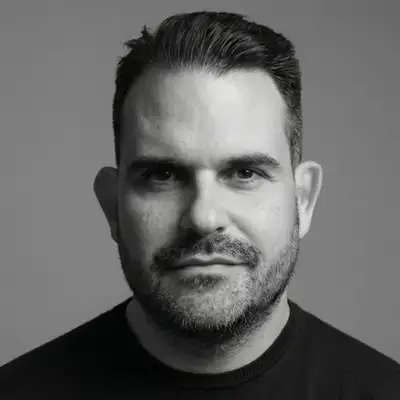
About The Host: Chris Maffeo
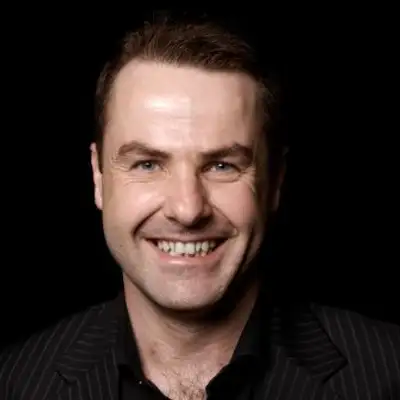
About The Guest: Phillip Duff
In this episode of the Maffeo Drinks Podcast, host Chris Maffeo welcomes guest Philip Duff, a renowned bar industry personality and brand owner.
They engage in a vibrant discussion about the complexity of creating and managing a brand in the drinks industry, drawing from Philip's diverse experiences.
Chris emphasizes the importance of learning and adapting in the ever-evolving beverage industry and the importance of never being afraid to take risks.
The discussion touches on brand creation, the demographic approach, and the significance of brand uniqueness. The conversation delves into identifying market gaps, consumer demographics, the evolution of drinking occasions, and how brands like Cointreau and Fireball succeeded by seizing opportunities.
They explore how timing and adaptability can be pivotal in making a brand successful, citing examples of industry giants who were once small players.
Throughout, Chris and Philip share insights on the significance of pivoting and continuously engaging with the evolving landscape of the drinks industry.
00:00 Welcome to the Maffeo Drinks Podcast
00:27 Introducing Philip Duff
01:40 The Journey of Brand Building
05:19 Navigating the Liquor Industry
07:48 Targeting the Right Audience
24:56 The Importance of Timing and Trends
38:13 Conclusion and Final Thoughts
About The Host: Chris Maffeo
About The Guest: Phillip Duff
The MAFFEO DRINKS Podcast is a leading drinks business podcast delivering actionable insights for drinks leadership.
For founders, directors, distributor MDs, and hospitality leaders navigating the tension between bottom-up reality and top-down expectations.
20+ years building brands across 30+ markets. Each episode features drinks builders: founders, distributors, commercial directors, sharing how the drinks industry actually works. Not the conference version. Honest conversations.
Insights come from sitting at the bar.
Beyond episodes: advisory for leadership teams, subscription with episode deep dives and principles to navigate your own reality.
Beer, wine, spirits, Low and non-alcoholic.
Bottom-up Insights & Episode Deep Dives at https://maffeodrinks.com
Welcome to the Maffeo drinks podcast. I'm Chris Maffeiro, your host and fellow drinks builder. I'm really honored to have you as one of our listeners from 111 countries. A small ask, if you enjoy the show, please leave a review and share it with others in the industry. Visit mafelldrinks.com for free resources, premium content and episode transcripts.
Chris Maffeo:Now, let's dive into today's episode. Hi, Philip Welcome to the MufferJinx podcast. How are you?
Philip Duff:I'm great, Chris. Thanks for having me back on. Always a pleasure to have a chat with somebody like yourself.
Chris Maffeo:Oh, fantastic. It's a great honor. I think you were, to be honest, what if not the first one or probably the first one or maybe the second to invite me on his podcast, you know, the Philip Duff show. And that was, I think, one of these things that kinda like sparkle and said, okay. Now it's time to start my own.
Chris Maffeo:And, you know, now I I I use it as an excuse. And so I I owe you that.
Philip Duff:No. Not at all.
Chris Maffeo:No. No. That's that's great. It's long overdue. Finally, in the meantime, we managed to meet at Barconvent Berlin last year.
Chris Maffeo:Just randomly bumped into each other, and we managed to have a drink or two together. And so finally, you know, like, we don't only know each other from voice or video, but at least we had some hugging and and drinking together to connect more.
Philip Duff:That's the best way to do Barconvent Berlin because that show will break you otherwise.
Chris Maffeo:Oh, fantastic. So let's start. I mean, like, what is interesting about the conversation I want to have with you is that, I mean, you are not only Philippe Duff, the legendary personality that is going across all continents, but you're also a brand owner. So I like to, you know, have a few kind of like back and forth and bouncing ideas and learn from from your experience on how it is to navigate working with brands and still being behind the bar and having your own brand, you know, like you have so many hats that you can play with that brings you so much experience and keeps you learning and iterating this wonderful world of of drinks.
Philip Duff:Yeah. I mean, after you've been in the industry for a while, like, you know, Chris, it can get very safe and nice and easy. But if you're not constantly learning, you're gonna be left behind, and you won't be left behind in one year or two years or three years, but after five years, you'll sit down and be like, what is all this stuff that that young kids are talking about? So certainly, when I was a young bartender, I was absolutely convinced I knew everything about running a bar. And then I opened my own bar and I suddenly realized, oh my God, had no idea.
Philip Duff:And it's really the same. When I was a bar owner, I thought I knew absolutely everything about liquor brands and how to run liquor brands. And then I started my own one and I was like, oh, so it's the, it's the instant MBA in liquor brand ownership, and it costs about the same. It costs a 6 figure sum to get started as well. So that's something that I really would encourage all my peers to do, which is to never stop taking risks because it's an even bigger risk not to take any risks.
Philip Duff:You have to keep learning and staying up to date, and you have to keep panning out with the young, and coming bartenders and new styles of drink making and actually new up and coming city for cocktails and spirits like Riga and Zilnius.
Chris Maffeo:It's a fantastic reminder, and I I I think I hear it very often from you, if I'm not mistaken on your podcast, the the famous quote from Mike Tyson. You know, everybody has a plan until they get punched in the face. And this is like what it sounds like to start anything. I mean, it can be, you know, from a podcast through a brand, from a consulting business, to, you know, like their own brand bar and everything, you know, it's like continuous iteration. And and actually, like behind me, you see a lot of books and many of them actually are from a tweet I wrote many years ago and you were kind to reply and you gave me a list of books and I bought, I think all of them.
Chris Maffeo:And it's this kind of like back and forth and taking notes. It brings you all this kind of like sideways connections between things that make you really ahead of the curve because otherwise it's like an I I always say to myself, it's like it's not that I know more than people, you know, on my topics. It's just said that's all I do all the time. You know, I keep going to bars. I read books.
Chris Maffeo:I talk to people like you, you know, like I keep challenging my own thinking. And the moment I write it down, then that's the moment that I say, let me ask Philip, let me bounce these ideas with him and let let's get a challenge. And then if I can adjust it and tweak it a little bit, then that makes it more bulletproof at least for the next couple of months. So let me start from my, you know, famous question. I haven't been asked in the latest ones, but I want to ask you again.
Chris Maffeo:Does it start with a brand or with a liquid? You are a liquid guy and you are a brand guy as well. So what what's your take on that one?
Philip Duff:I think that the discipline of creating brand is a positive thing. By which I mean, if you're a consultant like me, a company might come along and say, Hey, Sale, we're thinking of doing a whiskey or a gin or something. And then I've got something to start from, or I've got my own brand, old Duff Geneva. I'm like, maybe we do a special relief. Maybe we do a barrel aged or something like that, but it all has to start from somewhere.
Philip Duff:And the key to me is whether you're talking about liquids or brands, you have to find first a gap in the markets, and then you have to hope and calculate a little bit that there is a market in the gap. Right. That you're going to sell more than a 100 bottle of the air. And then, and this is really, really, really, really, really important. You have to have something distinct.
Philip Duff:Like if you're going to make a Tennessee whiskey, it had better taste different to Jack Daniel's because you can't compete against Jack Daniel on its own territory. Right? Another famous saying, I think it was the Chinese general, Sun Tzu, he said, the army that chooses its battlefield seldom loses. You can't compete against the big guys on their battlefield, but you can if you pick the battlefield, and that is both the liquid and the brand universe. And to be perfectly honest, it's gonna make me very unpopular with a lot of people, but for new listeners, nothing new for me.
Philip Duff:Liquids is not easy, but it's straightforward. The world is full of amazing liquids. Amazing, amazing liquids. It is not full of amazing brands and people who know how to sell them. There's a lot more incredible distillers than there are Chris Maffeios out there who know how to sell the product.
Philip Duff:So I don't want to minimize their incredible skill of distillers and production managers and all that kind of thing. But their job is a lot more straightforward. Whereas the brand universe, the rules are changing sometimes it feels like every single day. I like to start with a demographic of people. I don't just take urban professionals aged 25 to 35.
Philip Duff:I think, okay, they live in Brooklyn, but not just in Brooklyn. Where did they live in Brooklyn? Do they live in Greenpoint or Bushwick or Inwood? If they vacation, do they go to Bali or Goa? If they're going partying, do they take ketamine or DMT or Ayahuasca?
Philip Duff:I want to get as clear a picture as I can of my absolute bull rye customers. And from that moment, I'll say to myself, okay, what do they want? What are the things that they value in a brand? And then I'll create that brand and don't ever let anyone tell you difference. There's a lot of guessing here and it doesn't work.
Philip Duff:If you have money and the smartest people in the world, you're still only reducing the risk to fifty fifty. It's always fifty fifty in the best case scenario. Nobody knows anything in the drinks industry, but fifty fifty is not bad. So that's my answer to that question as to how a brand begins. Somebody asked somebody else to think about this thing and you then go away and create something distinctive, both from a liquid point of view, but maybe even more importantly from a brand point of view.
Chris Maffeo:Yeah. Right.
Chris Maffeo:On on this one, I think we have a little bit of a different take on because I tend to discard the consumer in that sense, you know, like the demographic because I like to think much more in target occasions. Know? I always give the example, you know, it can be me in a Czech pub, you know, having sausages and beers or me at the embassy having champagne with the ambassador. And it's it's still me, you know, one day I'm wearing a suit. The other day I'm wearing shorts and and t shirts.
Chris Maffeo:No? How do you complement that from your perspective on because I like that thing that it's, you know, it it is about closing the gap for one type of consumer. It's just that for me, it doesn't belong to a certain demographic. It belongs to a certain need on that moment. It's like I want to have something refreshing or, you know, and that's from the liquid point of view, you know?
Chris Maffeo:Then when it comes to the brand, then I agree with you that, you know, you need to take a kind of like a route on, okay, which kind of person is it? Is it like the the upper side type of person or is it the green point type of person? No. What I like about what you said is that is is the geographical element that I love playing with, you know, when launching a brand in a city because it's like I always talk about own neighborhoods before expanding now, because that's where you win and then you become like we used to call it like local bigness now that you are perceived bigger than you are, because it's just like where Philip goes, You know, there's the five, six places where he goes every week or every month. And if I manage to put the Mafeo or whatever bourbon in it, then he will see the Mafeo bourbon everywhere.
Chris Maffeo:How do you connect the target occasion, which could be a little bit more, let's say, wider than that demographic into?
Philip Duff:Yeah. Listen, these all lead back to the same point of view, actually, just different ways to look at it. And this concept of bull's eye target consumers demographics actually stemmed from an old boss of mine, a Canadian gentleman named Michael Wheeler. He's the one who hired me to train bartenders at what was gonna be a chain of bars in Rotterdam and in Lebanon about a years ago. And he came up with the concept of a dart board, obviously, and a dart board has a bull's eye, and the bull's eye is very small.
Philip Duff:95% of the dart board is not the bull's eye. But the bull's eye for us as consumers in this bar was at single ladies 25 to 35. Now I have to give some background information there. At the time, you could legally drink in a bar in Holland at the age of 16, though a 25 year old lady had been going out for almost ten years. So she was done.
Philip Duff:She didn't need to go out anymore. She'd had all the partying and and whatever. So she was a discerning consumer. She's probably been to college. She's few years into her job.
Philip Duff:Maybe she's already bought an apartment. She's doing well. Right? Price of the drinks doesn't really matter. Price of the food doesn't really matter.
Philip Duff:But these ladies were such a tiny percentage, but they were the most exacting customers. The drinks had to be cold, the food had to be harsh, the toilet had to be sparkling plain, the bartenders had to be attentive because these ladies had quite frankly done it all. Right? And in a bar of 600 people on a Saturday night, we might only have had 20 or 30 of these ladies, but we paid a lot of attention to them. And again, not for the cliched reason like, oh, wherever the ladies are, the guys follow.
Philip Duff:No, very often these ladies weren't out to meet guys. We paid attention to them because they were our ultimate bull's eye customer. If it was good enough for them, it would be perfect for everybody else. So if one of these ladies complained about something or suggested something, we literally wrote it down. Right?
Philip Duff:And then the next written outside the bull's eye, also quite small, you had single men and women, 25 to 40. Also, experienced drinkers, but now it's a bit broader. Now you're listening to the men as well. Men have lower standard, which you understand you've ever been in a men's toilet compared to a women's toilet. We would still listen to suggestions from this demographic, not as much as the bull's eye, but we wouldn't ignore them.
Philip Duff:And then outside the second ring was everybody, people who just came into the bar because it was attached to a shopping center or near the train station or near the shopping district. And these are the people who say, oh, you know what? You guys should get a Red Bull fridge in here. And we kinda didn't listen to their suggestions very much at all. So when I'm talking about, you know, the young urban professional who drives an Audi and lives in Bushwick and vacations in Goa is willing to try Geneva or Bijo or Aquavit, that's really what I'm talking about is having a really clear view of your ultimate target market person.
Philip Duff:That doesn't contradict your theory of the drinking occasion. You can create drinking occasions, of course. It more complements it And that the demographic I just, gave an example of, these tend to be the leaders in their social group. They're the people that everyone else asked for restaurant or bar recommendations. Oh, I'm going to London.
Philip Duff:Where should I go to dinner? Which bar should I go to? And they themselves are curious. If you've ever read Malcolm Gladwell's book, he would call them connectors. These are the people who know more people in different world than any of their friends.
Philip Duff:Right? And that's why certainly with a new brand, a craft brand and unusual brands, these are really important people to target. And one thing talking about drinking occasion, I think that almost becomes more of a commercial strategy rather than a brand strategy. You're trying to capitalize on the brands already available. The bottles on the back bar in the warehouse, the wholesaler will deliver, the distributor will deliver, maybe it's in some liquor stores.
Philip Duff:So now how do we get it moving? And you can of course jump onto existing occasions. As you see, every brand in the world is now saying, let's let's have a spritz with brands XYZs. Many brands now that aren't even gin or vodka are like, let's have a martini. In fact, super Bueno, the number one bar, actually, according to some awards in New York City has an amazing tequila martini on its menu with green chili oil in it.
Philip Duff:So I think that drinking occasion's almost more of a commercial strategy than a brand strategy, but clearly, one comes from the other.
Chris Maffeo:I I really like it. It's basically, like, just to glorify for the listeners is that that's why I wanted to ask you that question. It's like it's what I call people that blah blah blah, you know, and you you put a name and surname on it. I like to call them more like generically about, you know, like people that like travel and experience new things and look for this kind of taste and so on. It's it's anyway good to put a name and surname on it, you know, like to really visualize them and say, okay, in this city is that kind of person because those are the ones that are more likely to experience new things.
Chris Maffeo:They were the ones that are less kind of like traditional. And I think it also depends on the kind of category you are playing with. You know, like there are more traditional categories. There are more like innovative categories. And, you know, then when you want to get people out of the usual path, then you need those kind of people to really bring people along and approach them as a bull's eye example.
Chris Maffeo:I love that. What I'd love to hear is that in terms of target occasion, you touched on upon it earlier now, all these aperitivo kind of things or the dining with cocktails or the after dinner and coming from beer myself, you know, like the usual thing is that when I work with beer brands or when I was, you know, in the corporate world, the beer, it's always like the what you start with and then you want people to stick to it, you know, later on during the evening. So you want to fight, you know, like, why don't you have why don't you keep drinking Peroni during that dinner at Ciccone's instead of ordering that, you know, bottle of Amarone? But for cocktails, it's the other way around. You know, they usually like the the after dinner type of people, either the the digestives or the, the high energy, the whiskey soda, the, the, whatever you name it in the club kind of thing.
Chris Maffeo:And they want to get earlier into the evening, you know, and then they start to play with the spritz and the tonics kind of thing. No. But what is your experience when it comes to target occasion? How do you see it? Do you see it as a a moment in the day, like on consumption?
Chris Maffeo:Or do you prefer, for example, like to really stick to a certain cocktail, like the Cointreau, you know, with the Cosmopolitan or Margherita or the, you know, Campari with Negroni, you know, like those kind of signpost cocktails that are making these brands famous. How how do you see that play?
Philip Duff:Well, again, I think that works most effectively if you're a big company with a big brand in a big category, and you've got a lot of money to reinforce your message with advertising, whether that be social media, billboards, TV, or whatever, you know, like it's Quantro time or it's Cosmo time. And you could just repeat that message so many times that people just absorb us. Historically, of course, cocktail were pre dinner drink. In fact, Ian Fleming for his James Bond character, Erosion, one of the Bond books, that Bond said, I never have more than two drinks before dinner, but it must be very large, very cold, and very well made. And what I've noticed, and this is actually driven by Barton by my people as it were.
Philip Duff:You now have people, they go out and they drink cocktails all night or they try to. They start in cocktails. They could go in the cocktails. It doesn't change to after dinner drinks after dinner. They might at a certain point.
Philip Duff:I certainly do actually switch to beer because I'm here to tell you, you certainly can't drink cocktails all night, not big strong ones anyway. So there's the time of day like, oh, it's 6PM. I'm gonna have a big cold pint of beer or I'm going to have a freezing cold martini with my colleagues from the office. Then there's the mood. Right?
Philip Duff:The most famous example obviously is champagne. As Winston Churchill said, in defiche, I need this. In victory, I deserve this. But most people will drink champagne to celebrate rice. You drink it.
Philip Duff:You're celebrating. It's champagne. No one's like, let's celebrate with tea. So those things exist as well. And I think people have latent awareness of them.
Philip Duff:And that's something you can really capitalize on if you have the budget for a marketing campaign. And it can really work if you're an ingredient too. Like for instance, Cointreau have done that brilliantly well with the margarita. Every few years, they do big margarita campaigns, encouraging everybody to use Cointreau in a margarita. It makes a lot of sense because it's so confusing now with a million and one tequila brand as to which one you should use in your margaritas.
Philip Duff:But a really easy way to premiumize it is to use Cointreau instead of just a regular triple sec or something else. And that's why it's really a clear, simple message for a consumer. Use Cointreau with your margaritas. They will be better is essentially what you're saying to them. And that reduces the friction for the customer.
Philip Duff:The customer doesn't need to learn about mixology or history or which is better or this or that, just like Cointreau is better. At the same way, people who don't know a lot about whiskey will just walk into a bar and they'll say, oh, do you have McCallan? They they know that McCallan is a safe choice. Nobody will really laugh at them. It's a nice premium.
Philip Duff:Most bars or many bars will have it. And that's how I see the intersection of moments and occasion.
Chris Maffeo:I agree with you that it works best with brands with big budgets because they can really go out of home, you know, ATL campaigns and so on. But back in the days, I always like to think like big brands back in the days were small brands, you know, when they started. And sometimes it was kind of like a fortunes, kind of like random game. They started to get picked by a random bartender and they ended up into a drink, you know. You know, they most probably never had that in mind.
Chris Maffeo:It's like, let's focus on margaritas to build our brand kind of thing. But I always like to think, you know, test and learn. Your liquid will guide you on what most likely it's going to be about. You know, you cannot be 100% sure, but you can be, are you, I don't know, botanical forward? Are you that kind of, you know, elements?
Chris Maffeo:What kind of like a BV do you have? What kind of things you play with in your liquid and taste profile and flavor profile profile? And then test it out in the market to a few bartenders, like let them play with it, you know, explain the characteristics and then leave it up to them and then they will come back to you and then that becomes your little focus groups and then you can roll it out in another 10 bars and then try it again and then you roll it out in 20 bars. And then you will understand if your, I don't know, your vermouth is made for, Meggeronis or for for something else, for example.
Philip Duff:And and the reason why I'm
Chris Maffeo:asking you this question is because I listened to the episode with Robert Simonson. And after listening to your podcast with him, I bought his book. I mean, I had already like a few of his books, but I bought a proper drink because he was mentioning that there's a lot of history in there. And to that example of the control, like it made me think because I was always thinking, what's the connection between the cosmopolitan and the and the Margheriza? And then I read in the book that, and correct me if I'm wrong, if I misunderstood that, basically the guy, I can't remember his name, who invented the cosmopolitan, he had kind of like he was looking at it with the ingredients he was using for the margarita and Cointreau was part of that.
Chris Maffeo:And then he basically sneaked in the Cointreau in the Cosmopolitan and that created the connection between the two. My point here is that how does it start with the brand that, you know, at scale, we now know that there's no Meggironi without Campari and that there's no proper Margarita without control and there's no Cosmopolitan without control. But how did that start when they were smaller brands?
Philip Duff:Well, you it's the mayor on the head, Chris. Every big brand is a small brand once. Like Diageo did not just appear as the world's largest drinks company. And this comes back to our earlier discussion about constantly seeking new things, getting uncomfortable, learning new things. Like the old saying, the ship is safe in harbor, but ships aren't built for that.
Philip Duff:Every liquor salesman is an opportunist and should be. And we're now in the second golden age of cocktails. It started in 1995 in London. The first one started around 1820 in, let's say, New York, and it ran right the way up until the start of the prohibition, call it 1919. So it had a good run.
Philip Duff:You know, it had almost a century, so maybe we'll have another seventy years of cocktails here. But let me give you an example from liqueurs. I did a great deal of work for the liqueur companies, Bald and to a lesser degree, the Kuiper, and later for Remy on brand like Cointreau. So it was very deep in the liqueur world. And in terms of exports, they didn't export a vast amount outside Europe, right, to this cocktail Mecca of America in the late eighteen hundreds.
Philip Duff:But after world war two, they began throwing all their efforts into cocktails because they knew the tradition of drinking after dinner liqueurs was dying, and I think it really continues to die. The idea of, you know, an after dinner liqueur is I don't think it's really there anymore. Maybe a whiskey or a brandy possibly, but Koffels are definitely enjoying a high moment. And that's something that you should see as an opportunity as a marketer. Another example I like to give is the story about Jagermeister.
Philip Duff:Though, Fiddney Frank set up an import company, and he had argued with his former father-in-law who owned and ran the biggest drinks company in America. So his father-in-law blackballed him. He told everybody in the industry, don't deal with this asshole, Sydney Frank. Otherwise, you'll never deal with me. So he couldn't get any brands to import to America, only ones nobody else wants it.
Philip Duff:And one of them was Jagermeister. So he was selling hardly any Jagermeister. Right? But he noticed he was selling a little more in New Orleans for some reason. So he traveled down to New Orleans, and he went to a German jazz bar called Fritzl on Bourbon Street.
Philip Duff:And there, he found college students, Louisiana State University students, daring each other to drink Jagermeister, saying this stuff, it's so disgusting, it's so bitter, etcetera, etcetera. You know, you can only drink it if you're a real man. And he saw that and he thought, that's
Chris Maffeo:not a
Philip Duff:And he switched all his marketing to catering for young people. He personally designed the machine to chill Jagermeister, so it wasn't quite as bitter because Sydney Frank actually used to be training aeronautical engineer before he had to drop out of college because he didn't have He enough hired all the Jagerettes who were beautiful young women in tidy uniforms. And he also hired a lot of Jagermeister dudes, which is like muscular dudes in little shorts as well. And before you know it, they were sponsoring music festivals, etcetera, etcetera, etcetera. So took a brand from being something that traditional, very old German hunters drank into a completely youth oriented brand and built it into a billion dollar company because he was able to see that and pivot.
Philip Duff:So that pivoting is absolutely key. And again, I cannot emphasize enough. The longer I'm in this business, nobody knows anything. In fact, I think I said the last time I was on your show, if you had asked me ten years ago, what's gonna be one of the top three cocktails in The USA? And you asked me to write a list of 10 cocktails that could be in the top three in The USA, then a grolli would not even be on my top 10.
Philip Duff:No way. I did not see that coming. And that's, that's the joy of this business. Really? You're, you're never going to get bored.
Philip Duff:Just to answer your question about the, the cosmopolitan, the trader of it, Toby Cicchini. He heard about this shock that people were drinking in South Beach in Miami that was called a cosmopolitan. And it was like shitty vodka and roses lying juice, maybe some triple sec or something. And he looked at me and he's like, well, look. This is in cocktail terms, technically a daisy.
Philip Duff:A daisy is a class of cocktails. In fact, a margarita margarita, which means daisy in English, is a daisy. So he said, okay, well, you make better margaritas with Cointreau. So I'll send a triple sec. I'm going to use Cointreau instead of shitty vodka.
Philip Duff:I'm gonna use this brand new absolute. Of Rose's lime, I'm gonna use fresh lime juice, and I'm gonna change the proportions with the cranberry juice. And if you make a cosmopolitan according to Toby's proportions, it's a remarkable drink. It's five parts of lime, five cranberry, four Cointreau, four Absolut Citron. It's an incredibly delicious, balanced, lightly sour drink.
Philip Duff:Most people make it wrong, but that's really where it came from. I think being able to pivot, being able to spot emerging trends and jump on them is where little brands have an almost unfair advantage over big companies. Like a big company Yeah. Will still be having meetings a year after spotting
Chris Maffeo:Big your time. Big time. And probably, I mean, like to your previous example of Jagermeister, and I I work I work with the brand as well, is the fact that it's a family owned company. If it was probably, you know, listed and having like zillions of directors all over the place, it would have been back then, you know, with the Sydney Frank story. It would have basically said like, no way.
Chris Maffeo:Let's have consumer research. Let's have focus groups and let's do this kind of thing. So it's super interesting. And I love what you say about, you know, not nobody knows anything because it's true. It's like if it wasn't true, there wouldn't be any ex Diageo people, ex Perno people, ex Bacardi people launching their brand and not screening to a multimillion brands in a few years time because, you know, in theory, they know everything about it, you know?
Chris Maffeo:But the thing is that it's so local, you know, like I'm a big fan of Pareto, my old Italian friend, and it's 80%. We know it, you know, more or less. I mean, everybody knows that it starts from entree. It starts from, you know, bartenders. You should put effort on them because they are the one that set the trends and everybody more or less know the theory.
Chris Maffeo:Is the 20% that it's it has to be adjusted to the local habits, the local needs, the local consumers. And that's where people mess it up because it's the same thing, you know, like if you don't go single mindedly on that occasion with, you know, the ice cold shots for Jaeger or the margarita. And I've for control, for example, you know, like the, the West sometimes in which there was like cuantrophies instead of margarita, it's like, you know, stick to the margarita, you know, like it works. Margarita is booming. Tequila is is taking you on on a ride, you know, just stick to that, you know, instead of like having a market in the garment, like trying to change things because, you know, Margate is boring because we've done it for the last five years.
Chris Maffeo:And so this is the, this is the very interesting thing about testing and learning because you can get these opportunities and 100% agree with you with the Negroni. Tell you a funny story. When I lived in Stockholm, my old friend, Salvatore, old, like, not Napolitan friend of mine. He introduced me to the Americana and the Negroni. I mean, I knew them, but not to the extent that he was drinking it.
Chris Maffeo:And we used to drink Americano because in in, you know, in Sweden, you know, you pay every single spirit separately. So, of course, it was it was much cheaper to have an Americano than, than a Negroni. And we asked Americanos and we were getting Americano coffee. And we asked for Negroni. And our tenders in Stockholm, which now is deemed that, you know, one of the mechas of cocktail culture, you know, we were going to cool places where no idea what a Negroni was, let alone be the end of the day.
Chris Maffeo:And we're talking like, what, fifteen years ago, you know? So to your point, I mean, now, like, if I tell people and when I when I do some keynote, I bring this example of the Negroni that fifteen years ago, nobody knew how to do it. And people laugh at me. I remember when when I could see ads from Campari, like there's no there's no Negroni without Campari. And I was thinking like, wow, this is bold because nobody drinks Negroni.
Chris Maffeo:So why why are they spending money on ads in a magazine saying this thing that nobody's drink anyway? You know? But it's because you stick to it and then you get at some point it will tick if you really believe in in that.
Philip Duff:You know, again, another Winston Churchill quote, you should try, try and try again. But if that doesn't work, you should give up. There's no point being an idiot about us.
Chris Maffeo:Agree.
Philip Duff:I think apart from getting out there and trying to stuff is actually timing. You cannot overestimate how important timing is. Like there are a lot of brands now. Very good example recently acquired by Brown Forman, my friend Simon Ford's gin, Ford's gin. And he launched us more than ten years ago now, but the landscape then was not what the landscape now is.
Philip Duff:It was very difficult for them in the beginning. In fact, it was difficult on their whole journey, but if they had launched even three years later, it might not have worked.
Chris Maffeo:A 100%.
Philip Duff:Right. And anybody can give you an example of timing. I remember quite some time ago, maybe six years ago, I was speaking to some flavor scientists about Fireball. You know what Fireball is?
Chris Maffeo:Yeah. Yeah. Yeah. Yeah. I do.
Philip Duff:Yeah. So this is a brand. It was created from a range of liqueurs founded in Canada called doctor McGillicuddy's Schnat. And one of them was a cinnamon Schnat, a cinnamon liqueur. And the Sazerac company bought it the whole range.
Philip Duff:And they saw this and they said, okay. We're gonna just concentrate in the cinnamon liqueur. We'll call it fireball because on the original labels, the label devil and fireball for gall. Millions and million and millions of cases. Right?
Philip Duff:It sells in college town. It's shot. I mean, Fireball is an incredible success story. But I was talking to these flavor scientists, and they're like, one of them said, oh, I developed a cinnamon Jim Beam twenty years ago. So we're talking maybe twenty six years ago in total.
Philip Duff:And she said, look, I don't mean to boast, but it was way better than fireball. But that was not the time. I do think that's why it's important as a liquor brand owner, as an entrepreneur, you have to try a lot of stuff and it won't all work. And again, that's why it savers entrepreneurs who do not have to satisfy endless oversight boards and boards of directors and bosses and whatnot. Like, the major success story of the last twenty three year in liquor is Cheetos Vodka from America, which is now, I think I think it's maybe the fourth best selling international vodka in the world.
Philip Duff:Right? It's still privately owned, and a major part of those successes that the owner, whose name brilliantly is Keto Beverage, he could jump on any trend because he owned the company and ran the company. So he saw that people really liked dogs, so he said it was a dog friendly vodka. He saw that college students in Austin, Texas were beginning to be very aware of gluten. So he was one of the first to put gluten free on the label, so he could jump on every little bandwagon.
Philip Duff:And if it didn't work out, he could jump right off again.
Chris Maffeo:Yeah. Yeah.
Philip Duff:That kind of decision making would have taken two years in Diageo or Perneau or Bacardi. Like, these companies are like cruise ships or like container ship. They can ship so much, but they can't turn. They're not agile. They can't invent stuff.
Philip Duff:Little brands are more like speedboats.
Chris Maffeo:That's all for today's Mafare Drinks podcast. If you found value in this episode, please leave a review and share it with others. Don't forget to check maffeirodrinks.com for all our resources, including episode transcripts. This is Chris Maffeiro, and remember that brands are built bottom up.