Subscribe
Share
Share
Embed

Explore the people, programs and partnerships that make Northeast Iowa Community College (NICC) more than a campus. From student success stories to behind-the-scenes of athletics, innovation and industry collaboration, each episode answers the question: What’s happening at NICC? Energetic, informative and always evolving, this is your inside look at the impact of community-driven education.
Welcome to The Catalyst, an exciting and insightful podcast produced by Northeast Iowa Community College. I'm your host, Lasack. Together, we'll explore the people, programs, and partnerships that make Northeast Iowa Community College unique. From student success stories to behind the scenes info about athletics, innovation, and industry collaboration, each episode dives deeper into your community's college. Get ready for an inside look at the impact of community driven education at NICC.
Amy Lasack:All right. Hello and welcome to another episode of The Catalyst. One of the things I think sometimes we take for granted at NICC is just how incredibly talented our faculty are. When students walk into a classroom at NICC, they're not simply learning from someone who knows the subject matter, they're learning from people who have built careers around their craft and who continue to practice it every day and contribute to those real life experiences back into the classroom. So today's guest is a perfect example of that.
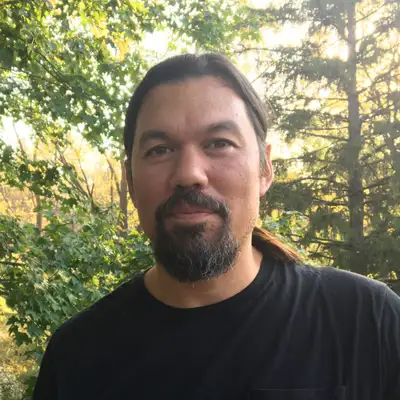
Amy Lasack:Today we have Keith Lesmeister. I think I got that right, Keith, right? He's a communications faculty member here at NICC and his work extends well beyond the classroom. He's a published author and literary editor and someone who not only teaches students how to communicate and tell stories, but he's doing that work himself. So today we're in a little bit more about his journey and his work as a writer and editor and how those influence his work in the classroom.
Amy Lasack:Welcome,
Keith Lesmeister:Thank you for having me. Appreciate it.
Amy Lasack:So excited to learn a little bit more about you and the work that you do both in and outside of the classroom. So let's just start a little bit more about you. Tell us about your background and how you capture some of the essence of the Midwest in some of your work.
Keith Lesmeister:Yeah, thank you. Well, the Midwest is where I grew up. It's very much a part of who I am. I was actually born in North Carolina, but I was raised in Cedar Rapids, Iowa. And I've lived for the past, I'd say twenty five plus years now in Decorah, Iowa, which is Northeast Iowa, part of what we affectionately refer to as the Driftless Region.
Keith Lesmeister:And so, when we're thinking about stories, we're thinking about settings for stories. I sort of naturally gravitate around what I know very well, very intimately. And that is the Midwest. Not just the setting, but also the people who inhabit these spaces as well. So, most of my students, in addition, most of my students are from the Upper Midwest.
Keith Lesmeister:And so, we share in common this sort of sense of place and a sense for the characters who inhabit these spaces. So, when we're talking about writing, we're talking about writing each other's or when we're talking about writing stories, I think it's I wouldn't say easy, but it's definitely a way for us to connect in terms of what the students want to talk about in their own
Amy Lasack:work. Yeah, you raise a really good point about how we are in the Midwest, not just as people, but our environment, the culture. And I don't think we always remember that until we have people from outside the Midwest coming to visit. I have a lot of family that grew up in the Northeast and when they come to the Midwest, they talk all the time about the beauty of the Midwest, how kind the people are and just different characteristics that we just know it's part of our fabric.
Keith Lesmeister:Absolutely. Think, stereotypically, this place is all corn. It's nothing but a flat concrete slab. I mean, it's flat as a concrete slab. But once you get here, you realize that there are just so many beautiful mysteries embedded in the landscape.
Keith Lesmeister:The hills and the valleys and the bluffs and the rivers and the creeks and the steep ravines and everything else. Majestic, I think.
Amy Lasack:Yeah, majestic is a very good word.
Keith Lesmeister:Do want to touch on a
Amy Lasack:new coming short story collection called Ask Me About the Money. Can you tell us a little bit about that?
Keith Lesmeister:Yeah, it's a short story collection. It's coming out this November with the University Press based in Wisconsin. And the stories coalesce thematically around our relationship with money. And I'm not talking about banking, I'm not talking about, you know, retirement accounts or anything like that. I'm talking about people who, you know, cut coupons, who have to find side hustles to make ends meet.
Keith Lesmeister:I'm talking about DIY construction projects. So, I think more or less, all of the stories coalesce around characters who are struggling with day to day decisions regarding money. And so, money very much informs the entire book. There are of course, other thematic elements in the book, family relationships, that sort of thing. But by and large, the stories revolve around our day to day decisions with money.
Keith Lesmeister:For instance, one of the opening story is about a guy well, about a father and son duo who tracked down a guy who wrote a bad check from forty years ago. So it's kind of an adventure story. There's also a story about a guy who is from Iowa but wants to drive out to the Bakken oil field which is out in Western North Dakota. But he gets waylaid in Fargo because he's got substance abuse issues and he finds more interesting things to do in Fargo. Another one is about a guy who employs the help of his 13 year old neighbor to drive him 10 miles, so he can use like a 50¢ coupon.
Keith Lesmeister:We all know those people who will drive 30 miles to use a 50¢ coupon. So, those are some of the examples of some of the stories that are in the collection. And back to the first question you had asked about setting, about place, about the Midwest. All of the stories take place almost exclusively in this region.
Amy Lasack:So, how do you come up with your characters?
Keith Lesmeister:It's a good question. Some of it is born from real life experience. Growing up, my grandmother would pick me up and drive me across town to her house. But on the way to her place, if it were, you know, spring, summer, or fall, We'd stop it at least two or three garage sales all the way from my house to her house just to see if there were any deals that she could capture. My mother was an avid coupon cutter.
Keith Lesmeister:I lived in a home as a child that was under constant construction, exposed insulation, don't touch the insulation, you know, floorboards, unpainted sheetrock. I mean, there was always something going on in our house because there was a phrase that my dad often used, which was I have more time than money. And that was a way for him to sort of sit, you know, tell us like, look, we're living under this constant construction, but that's because I can do the work and I have more time than I have money to hire somebody else to do it. So, I'd say some of the stories certainly are a product of my upbringing and what I knew as a child. And then, after that, one of the fun parts of being a fiction writer is allowing your imagination to sort of take a character or situation and take that little kernel of what we might call real life or truth.
Keith Lesmeister:And then expanding on it in some fictional way to achieve maybe a greater truth or some kind of emotional resonance that you're hoping for as a as a writer. That imaginative part of it is actually, at least for me, the key to being a fiction writer, which is to say, when I start writing a story, I don't know how it's going to end until I start writing it, until I start exploring that space with the characters on the page. And it's only then after sort of getting to know the characters and their situations that the story starts to, I guess, could say write itself. Character starts to do and say things for which I might not have otherwise preconceived. And that's a wonderful place to be for me as a fiction writer who's allowing these characters and situations to sort of process through my imaginative they are conjured through my imaginative process.
Amy Lasack:I love that. That sounds like a lot of fun to be able to have an idea of a character, but that character develops as you are developing them.
Keith Lesmeister:So glad you used the word fun. Because it's so much fun for me. And my goal as an instructor and as a teacher of writing, not just in creative writing, I do teach the creative writing class here at NICC. But in all sense, in all scenarios, in all writing scenarios, my goal is to sort of capture this sense of fun for the students. That writing isn't I mean, it is labor.
Keith Lesmeister:Don't get me wrong. I don't want to fool anybody to suggest it's not labor. It's very intense labor oftentimes. But I also want there to be some sort of fun, some sort of discovery, something that can be exciting on the page for the students to explore. Because that's how it is for me as well.
Amy Lasack:Oh, that's fantastic. So, I'm definitely writing it down because you gave me enough of a taste that I want to read this book. So, if others want to read it, remind us again when it's coming out and how they can get it.
Keith Lesmeister:Yep. It's coming out on November 3 officially. It is actually available for pre order right now. Wherever books are sold, your favorite independent bookstore or your favorite online retailer, wherever that might be. You can purchase the book really anywhere at this point.
Keith Lesmeister:In addition to that, I do have events lined up all throughout the area. So, I have a launch party on Monday, November 2. It's actually the day before the official pub date. Monday, November 2 at Pulpit Rock Brewery in Decorah. I will be at River Lights in in Dubuque at some point.
Keith Lesmeister:I'm still working on those details. And, I'll be at Prairie Lights in Iowa City on Monday, November 9. And then, I'll have a handful of events in addition to that, most likely Des Moines, Cedar Rapids, The Twin Cities, a few other places around here.
Amy Lasack:Fun. You are going to have a busy fall.
Keith Lesmeister:I will.
Amy Lasack:Yeah. Well, another side of the work that you do includes editorial type roles. I know I read that you do it with Cutleaf, an Eastover Anthology of Rural Stories. Tell us more about the work that you do there.
Keith Lesmeister:Cutleaf is an online literary journal that a few friends and I started in December 2020 is when we talked about it and conceived of the idea, although we had been talking about it in some variation for many, many years. Our first issue came out, and I wanna say, February 2021. And, we publish an issue every other week. And it consists of typically one short story, one essay, and a set of poems. In addition to that, we have a publishing arm, which is called Eastover Press.
Keith Lesmeister:We publish approximately four titles each year. And one of the titles that we publish on a somewhat regular basis is an Eastover Anthology of Rural Stories by Writers of Color. And in my editorial role, what I love more than anything is being that sort of distance from the page, being the person who can help guide and shape a piece to what I think the author is attempting to do. And so, it's a very rewarding experience to work closely with a writer to shape their work, whether it's in an anthology or an entire book length collection or if it's just a single short story for our cut leaf issue, the editorial process is more or less the same.
Amy Lasack:That's great. So, you have the experience of an author as doing the editorial process. And then, like we mentioned earlier, you are also instructor in the classroom with students. But how does your experience as an author, as an editor, how does that translate to the work that you do with our students in the classroom?
Keith Lesmeister:I think it informs almost every aspect of my work as an instructor. I think the simplest way I could answer this is that I'm a practicing writer who teaches writing. So therefore, I'm also doing it. I'm reading as much, if not more than the students. I'm writing as much, if not more than the students.
Keith Lesmeister:I'm in the practice of it as well. I understand the joys of writing. I understand the painstaking labor of writing as well. And in addition to that, think that being somebody who works in the industry as an editor and a publisher, I feel like I can I have access to new and interesting work that the students might be interested in reading? I'm constantly looking for work that I like certainly, but also work that might entice the students.
Keith Lesmeister:Not necessarily work that we would publish at Cutleaf or Eastover, but just generally speaking, I'm an active reader of online work, partly because of my role as a writer and an editor. I like knowing what's out there. Probably equivalent to this would be like a football fan who might cheer for the Iowa Hawkeyes. But, they also like watching Big Ten football in general. Because it's fun to know how Penn State is doing or it's fun to know how Washington is doing.
Keith Lesmeister:It's nice to know what those other offenses and defenses are like. So that when the Hawkeyes play them, they have a sense for what they can expect. That's the same as what I'm doing as a writer out there actively reading, finding work and bringing fresh new ideas to the students.
Amy Lasack:That's great. I know a lot of the work that I do is working with businesses and talking to them about what their needs are And inevitably, doesn't matter what industry we're talking to, skills always gets brought up and the need for communication and how this generation with AI and social media and texting communication has dropped. What have you seen with students that are coming to you in your classes and how has things changed?
Keith Lesmeister:That's an interesting question. AI has certainly changed things. But, what hasn't changed are students' attitudes toward writing and reading. They're very resistant to it is what I would might generally speaking. I mean, if you're a student who in my classroom who is going to be an English transfer major, oftentimes, those students are already sort of naturally interested in reading and writing.
Keith Lesmeister:But for me, most of my students, the general body of students are not English transfer majors and have sort of a deep resistance to reading and writing. And so, my goal as an instructor is to I don't want to use the word convince, but really to show students, I guess, the importance of what you just mentioned that, you know, reading, reading closely, reading effectively, reading critically, and writing effectively are lifelong skills that they're going to use across any job that they're going to have throughout the course of their lifetime. I also talk about a couple different aspects that aren't often talked about within the job setting, which is creative thinking. We often talk about critical thinking, but I like to think about how can we generate interesting and creative ideas? How can we think about things in a new and creative way?
Keith Lesmeister:How can we come at them from different angles? I think that reading and talking about literature or writing can give us a way to act can help us access that creative part of ourselves that we might sometimes ignore. In addition to that, I try to foster team oriented writing projects in my classrooms. And, the reason for this is because it's very rare that a person works in an isolated situation. They might for a little while, but not for their entire life.
Keith Lesmeister:And so, how we relate to one another, how we communicate with people, how we treat one another, these are all important aspects that even though they might not be embedded in my course objectives, I find them personally to be important aspects that I try to teach in not every assignment, but in a lot of the assignments we do in the class is sort of this team oriented approach to reading and writing.
Amy Lasack:Oh, I know our employers are going to love hearing that you're incorporating that. That is another thing that we hear quite a bit. And I really, really appreciated your comment about creative skills and how that really is an emphasis or gets built out of the work that they're doing because that's another piece that is so critical. Once you close that part of your brain of being creative, it gets really hard to get outside of that box. That's fantastic to know that's part of your strategy within your class, right?
Keith Lesmeister:Absolutely. Absolutely.
Amy Lasack:Well, we have a segment of the show that we call fact or fiction. I'll give you a couple of statements and you let us know whether that statement is fact or fiction in your mind. Are you ready? I think so. Okay.
Amy Lasack:How about this first one? Writing a short story collection takes less effort than writing a single full length novel.
Keith Lesmeister:Oh, that's definitely fiction.
Amy Lasack:That's I a double imagine with all the different characters.
Keith Lesmeister:And it works as a double entendre. I mean, fiction, it is fiction, but it's also fiction that it's easier to do. I think writing a short story is very difficult. At least for me, it's very difficult.
Amy Lasack:Yeah, I would imagine it would be. What about most NICC students walking into an introductory communications class feel comfortable with public speaking on day one?
Keith Lesmeister:Oh, that is definitely fiction. Yeah, I think I think
Amy Lasack:that are there too.
Keith Lesmeister:I think everybody would I think everybody would be in that camp. It's public speaking is tough for everybody.
Amy Lasack:Yes. How about developing strong creative writing and communication skills benefit students in technical or non literary career paths?
Keith Lesmeister:That's a 100% fact. 100% fact. For some of the reasons we've already talked about, especially the developing sort of that creative part of our brain. I think it can help in those ways for sure. And that is good in any field.
Keith Lesmeister:That's a benefit in any field, I think.
Amy Lasack:Writing is a skill that can be developed with practice, feedback, and revision.
Keith Lesmeister:That's 100% fact as well. How
Amy Lasack:about successful authors only sit down to write when inspiration strikes?
Keith Lesmeister:That is fiction for sure. Think of writing often times as sort of, this doesn't sound very romantic, but I often think of it as a job. You know, if I don't show up to teach a class, I'm going to get fired rightfully so. If I don't show up to write, you know, I'm going to get kicked out of the writing community because that's what it means to be a writer is to write, you know. And, I try to write every day.
Keith Lesmeister:But, I don't always feel like it. I try to sit down and give myself the space to create and often times good things come from that.
Amy Lasack:Okay. That's interesting. You just put this time aside and you are going to try to write and see what comes out. That's really fascinating. All right, so last one.
Amy Lasack:I think I know the answer to this one, but a communications class can be useful no matter what career you're going into.
Keith Lesmeister:100% fact. Absolutely.
Amy Lasack:Well, Keith, I want to thank you for joining us today. I am really looking forward to reading your short story book, and we'll keep an eye out for all of the wonderful things that you'll be doing this fall. If you are interested in getting Keith's book, Keith, us again about the name and when they can expect that to come out.
Keith Lesmeister:Yeah, I actually have it right here. It's Ask That's About
Amy Lasack:a fun cover. Yeah. Ask Me About
Keith Lesmeister:the the Money comes out November 2026, this year, in just a few short months and it's available at your favorite independent bookstore. It's available at really anywhere books are sold. It's available at your favorite online retailer as well for preorder right now.
Amy Lasack:Great. Well, thank you, Keith. It's a great reminder of the incredible talent that we have in our NICC classrooms every single day, and the impact that you are having on our students is incredible. So thank you for all that you do at NICC, and we are so lucky to have talented faculty like Keith. So thank you all for listening to another episode of The Catalyst.
Amy Lasack:We will see you next time.
Amy Lasack:Thanks for joining us on this episode of The Catalyst. If you enjoyed the conversation, make sure to follow or subscribe on your favorite podcast platform so you never miss an episode. Want to learn more about NICC and the many ways we support our students, partners, and community? Visit nicc.edu for more resources and upcoming opportunities. This podcast is produced by Northeast Iowa Community College and hosted by me, Amy Lasack, with executive producer, Tessa Hill, producer, Travis Hunt, and graphic designer, Ashley Konzen.