Subscribe
Share
Share
Embed
The history you think you know, with women in it this time
[00:00:00]
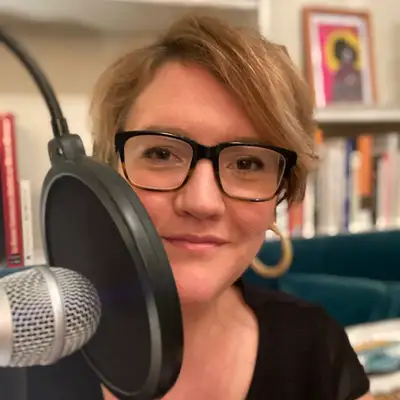
Isabelle Roughol: Hello, and welcome to Broad History, a podcast about the history you think you know with women in it this time. I'm your host, Isabelle Roughol.
Here's a stat I'm gonna insist on you knowing in this episode and next week's. Just as the Founding Fathers and many patriots were talking about freedom from tyranny and writing such self-evident truths as "all men are created equal", the transatlantic slave trade was at its peak.
The slave trade to the Americas started in the mid-16th century, and famously the first arrival to Jamestown was in 1619. But it is between the years 1780 and 1806, 1807, when the slave trade was abolished, first in England and then the United States, that historians estimate nearly half of all people transported from Africa to the Americas arrived on the continent, mostly to the Caribbeans, but also many to [00:01:00] North America.
Some were transported, like Phillis Wheatley Peters, who we'll talk about next week. Others were born into slavery in what would become the United States, and today we will talk about one such person, Elizabeth Freeman.
Arguably, and I will argue, and you'll see why as you listen to the episode, the most impactful woman of all the women I've introduced to you in this series.
Because while Elizabeth's life starts in slavery, it certainly does not end there. And the grit and smarts and strength that she's able to demonstrate and the impact that she has, well, you'll just have to see
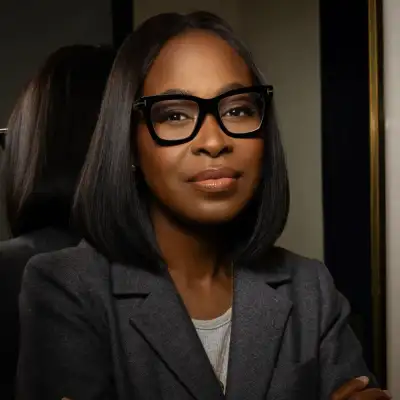
To talk about Elizabeth Freeman, I'm joined by the wonderful Errin Haines, the co-founder and editor-at-large of this incredible American news site called The 19th, which covers women in politics. Definitely check them out.
Errin writes her own series about the 250th anniversary of the United States, in [00:02:00] which she featured Elizabeth Freeman, and we had a wonderful conversation about Elizabeth's life, her legacy, and what she means to America today.
Without further ado, here's Errin Haines.
[00:02:12] Why Elizabeth Freeman matters
---
Isabelle Roughol: Errin Haines, hello and welcome to Broad History
Errin Haines: Oh my gosh, Isabelle, thank you so much for having me. I'm so excited
Isabelle Roughol: Me too. We met on social media, the, the magic of Instagramwhen I had this video go crazy viral and you reached out to tell me about your own series about the 250th anniversary of the United States and its significance. And you told me that you started with Elizabeth Freeman, which amazing coincidence 'cause she had been on my list of people I definitely wanted to talk about.
So I'm curious what made you think, "You know what? This is the woman that I need to start with if we're gonna tell the story of America and the 250th."
Errin Haines: Yeah. Well, listen, Isabelle, first of all, thanks for going viral because it gave me a chance to find you and to find Broad History and the wonderful work that [00:03:00] you are doing. And, I certainly h- I had to reach out because I felt like Elizabeth Freeman absolutely fits into, just kind of the narrative that you were trying to tell around America at 250, and frankly, the people who were left out of that history, which is obviously what your work is all about and so much of what the work that I do at The 19th is all about.
And that was something that I was thinking about kind of going into our country's 250th anniversary. We know that there were people who the Founding Fathers did not mean t- to be included in those founding ideals, specifically women, right? Enslaved people, Indigenous people. But all of those people were present at the founding of our country.
All those people have been the people that have been helping to shape our democracy to be more free and more fair and more equal ever since. And I knew that, that we c- I couldn't start, um, you know, just to try to, to start unpacking that without telling the story of Elizabeth Freeman, because she was one of the first people to really [00:04:00] see the Declara- that she hears the words of the Declaration of Independence, and she knows that even though these Founding Fathers did not mean to include her, she knew that those words absolutely applied to her, and that she was somebody who tried to make them real not only for herself, but what she did laid the foundation for so many other people to also assert their freedom and equality in our new nation.
Isabelle Roughol: Absolutely, yeah. I mean, she, she saw that there was like a giant asterisknext to, you know, all men are created equal, and she was like, "Well, I'll show you."
[00:04:31] When Mumbet overhears the Massachussetts Constitution
---
Isabelle Roughol: It's incredible. And so we're going to get into all that, somewhat chronologically. So let's start with who is Elizabeth? What do we know about where she comes from and her childhood?
Errin Haines: Yeah. So Elizabeth Freeman, she is enslaved. She's in Sheffield, Massachusetts, and by-- at that time she was going by the name of Mumbet. She is an enslaved woman in Sheffield, and she's working for the family of Colonel John Ashley and Hannah [00:05:00] Ashley. So they own Mumbet. She's doing work in, in, in her, in their home as an enslaved woman. And, because she's doing that, she is somebody who is kind of moving around this house. She's hearing things. She's seeing things that are happening in the colony of Massachusetts, in thistown of Sheffield.
these patriots that are talking about the, what is happening, how they're being taxed but not represented. How they are wanting-- they're feeling oppressed by, the British regime, and they want to do something about that, right? And so she is hearing talk about this Declaration of Independence.
She's hearingnot just in 1776, but a few years later when the Massachusetts Constitution of 1780 is written. She's also hearing those words. and the Massachusetts Constitution borrows heavily from the words of the Declaration of Independence, saying, "All men are born free and equal, and they have certain natural, essential, and unalienable rights, among which may be reckoned the right of [00:06:00] enjoying and defending their lives and liberties, that of acquiring and possession and protection of property, of seeking and obtaining their safety and happiness."
Sounds very similar to the words of the Declaration of Independence, right? And so Mumbet, this is somebody who can't even read or write, but she understands that those words, "All men are born free and equal," that should apply to her. Even as an enslaved person, she understands that those words have meaning in her own life.
[00:06:26] The heated shovel episode
---
Errin Haines: And so while she is an enslaved person, as the story goes, there's also another, there's an enslaved girl on the property. Her name is Lizzy. And, Hannah Ashley, the mistress of the Ashley home, is known to be, somebody who was a pretty violent,slave owner. she, was not kind to, to the enslaved people in that home.
And Lizzy is accused of stealing a piece of bread. And so in retaliation for that, Ashley attempts to [00:07:00] strike Hannah with a hot shovel, like from the fire. Mumbet puts herself in between that child and her mistress, and as a result is wounded. she gets hit in the arm with this hot shovel and has a wound that she has for the rest of her life.
But as a result of that incident, that is when she decides... 'Cause she's been the words of the declaration, the words of the Massachusetts Constitution are in her mind at this point. That incident happens and that is, that along with those words prompts her, because the thing about her overhearing these conversations in the Ashley home...
[00:07:40] Theodore Sedgwick
---
Errin Haines: The Ashleys had a friend, Theodore Sedgwick. He's a lawyer. He also lives in the town of Sheffield. He is one of the people that helps to write the Massachusetts Constitution. He is one of the people that helps to write those very words that Mumbet hears and understands have meaning for her own life, right? And so what does she do in that moment after that [00:08:00] exchange with Lizzy and Mistress Ashley?
Mumbet walks to the h- the office of Theodore Sedgwick, which is a few miles away from the property that she is enslaved on, walks to Mr. Sedgwick's office and says to him, "Listen, based on what you wrote, would you plead my case for freedom? If the words that you wrote are true, if you believe those words, I want you to help me."
Now, this is something that she's doing. I mean, there's extreme risk in that, right? Theodore Sedgwick is friends with her master.
Isabelle Roughol: He could have gone to the Ashleys and be like, "Hey, like, get this under control."
Errin Haines: He could have told on her. She could have been sold away or worse. Who knows what could have happened as a result of her going to Theodore Sedgwick's house and asking him to take her case on and to ask him to help her gain her freedom. But what happens instead is that Theodore Sedgwick says, "Yes, I will take your case." Right?
He goes to court and he [00:09:00] argues, that slavery is unconstitutional under the Massachusetts Constitution on Mumbet's behalf. And on August 21st, 1781, Mumbet becomes the first enslaved woman to have her independence validated in a court of law. This is huge. This is huge. She even changes her name, from Mumbet to Elizabeth Freeman to reflect her new status.
[00:09:24] The hypocrisy of Massachussetts slavery
---
Isabelle Roughol: Mm-hmm. So there's a lot to unpack there. That story of the, of the heated shovel, I read that as well, and there's something I love about it, and it really shows her character, is that she never hid the wound on her arm. And when people would ask her about it, and what had happened, she would just say, "Ask missus."
Errin Haines: Yes
Isabelle Roughol: And that is, like, the cheek on her. I love it, and, and it shows, what a strong woman she is I think it tells us something about that sort of revolutionary era Massachusetts society, because that is humiliating [00:10:00] to her enslaver, because there's this we- it's this weird society where people are still keeping other people in bondage, but at the same time, it's quite uncouth to be seen to be violent or to be seen to beoppressive towards the people you enslave.
It's, like, such a hypocrisy. So, so yeah, you have to be the nice, the good master. And so she is like, "I'm not gonna shy away from telling you how horrible this is."
Errin Haines: Yes. And Isabelle, you're making such a good point because I do think, there, there is this narrative, right? That enslavers in colonies like Massachusetts, right? Those northern colonies where they absolutely also did own slaves, that those slave owners were somehow, more genteel, kinder to their slaves, as if that is a thing, right?
Keeping people in bondage. that, that is wrong on every level, full stop. But, but yes, there was a, there was this idea that slave owners in Massachusetts somehow were different, were somehow better, so to [00:11:00] speak. And so, for Mumbet to have this visible evidence that was not the case for her,I think that does, contradict...
it exposes the brutality of slavery no matter where it was happening.
But you're right, Isabelle, it also exposed Mumbet's revolutionary spirit. She was no less revolutionary than any of the patriots that were involved in, you know, forming this country, of signing the Declaration of Independence. What she does is as patriotic, is as brave as anybody else who was present at the founding of our country, if not more so, because she had so much more to lose, right?
[00:11:41] Her separation from her parents in childhood
---
Isabelle Roughol: Mm-hmm. Yeah. And speaking of the cruelty of slavery, yes, even in the North,even earlier in her life, so she's actually born in New York, not in Massachusetts. And she is given as a present, by her sort of original enslaver, who is [00:12:00] Hannah Ashley's dad. And they live in New York, and she's 12 years old, and her younger sister is, I believe, 9, when they are sent to live in Massachusetts with her owner's daughter and separated from her parents, who, as far as we know, she will never see again.
Talk about cruelty.
[00:12:20] Elizabeth's thriving life after slavery
---
Errin Haines: Yeah. Yeah. This is somebody who begins as property and is property for much of her life, but that's not how her story ends, right? She gains her freedom in 1781 and is a working woman in the same community where she had formerly been enslaved for the rest of her life.
She actually goes to work for the Sedgwick family. She's a midwife. She's taking care of the Sedgwicks and their family. She's delivErring the children, right? This is how much of a part of that family she becomes.
She's able to buy her own home, right? she gets married and she's able to acquire things. and, what's really remarkable [00:13:00] about that is, that by the time-- she becomes a distinguished member of the Sheffield community, especially the Black community in Sheffield, because they all know her story. Her story was news, at the time, what happens to her. And so she is a respected member of the community and by the time Mumbet dies in December of 1829, she leaves a will that shows us that despite the fact that she never learned to read or write, she is able to accumulate property and she has a will, where she is bequeathing her things, to,to, to family members and to the Sedgwick family.
So, she bequeaths her land to the, estate of Charles Sedgwick, who is Theodore Sedgwick's son. She dictated that she wanted half of the, her real estate, because again, you still, at this time, you would need a, a white person to help facilitate things on behalf of Black people who,slavery was still the law of the land in much of the, in, in the country at this time, right?
So [00:14:00] she dictates that one half of her real estate goes to Lizzy, who,was regarded as her daughter, and Lizzy's heirs, and then the remaining half was designated for her great-grandchildren. So she's thinking even beyond her immediate family that is here now. you know, her children's children's children
Isabelle Roughol: Mm-hmm
she's
Errin Haines: thinking about as inheriting, as, as, as being part of her inheritance.
And then,she's talking about her debts being paid. She had,she, she had personal items that,that she gets to list in this will. And so this is somebody who, you know, sh- she acquires things over the course of her life because she is able to work. So you think about life, liberty, and the pursuit of happiness.
This, these are things that Elizabeth Freeman is able to have as a result of her freedom status that she fought for and won. There is no more American story than that to me.
[00:14:53] A true founder
---
Isabelle Roughol: Mm-hmm. Absolutely. So I want to go, I want to go back a little bit, i- in her life into, the moment of that, that famous case that [00:15:00] she wins, and, the way that,she stands up for herself, but she's really a protector of others, right? As we hear in the story, with Lizzy and the shovel.
But, as we hear throughout her life, and I read that actually a big motivator for her to go to court to get that, that freedom. I mean, there's a famous quote from her, that if she could have a second of freedom and then die in the next moment, she would take it just to taste freedom.
but the big,thing that really motivated her is that she's actually already a mother. She has a daughter. We don't know anything about her husband, unfortunately. We just know, it seems like he, he might have been a free man actually, because he went and fought actually in the Revolutionary War, sadly never came back.
And so she is a widow with a six-year-old child, and we know, that in slavery, you know the famous saying, "The child," the, "The child follows the womb," so a child born to an enslaved woman is enslaved. And so she's also fighting for her [00:16:00] daughter, right? Which so beautiful.
Errin Haines: Yes. She absolutely was not only thinking about herself. She's thinking about, her daughter. She's thinking about other people in the Ashley household, who are also enslaved. You think about the idea of a founder, right? The people that we usually regard as, as the founders are the people that signed the declaration.
We know that those were white male landowners, but those were not the only founders of our democracy. it's not just about declaring, equality or the right to freedom. it is about holding accountable anybody that claims to believe in those words and to compel them to go beyond just making a declaration.
Like, you have to make those words real in word and deed. And so that is what, Mumbet is doing in that moment, on behalf of herself, obviously yes, but also because she understands what her victory could mean, not only for her, but for everyone [00:17:00] that is in, that, that is in her same, living under the same conditions
Again, the Declaration of Independence, when that is signed, much of these colonies, many of the people that were living in these colonies, th-they also can't read or write. And that's whether they are, enslaved or not. Like, a lot of the country was was not, literate.
And so what that means is that you have the declaration being read in town squares, in public places, all o- all across the colonies. And so that means that pe- all kinds of people, whether they were meant to be included or not, are hearing those words. And that included many enslaved people who heard those words and immediately asked, "What does that, what does this mean for me?
Th-th- these words, don't these words apply for, to me too? They said all men are free and equal. That means that I should be free and that I should be equal." But Mumbet is somebody that goes, not only sh- does she declare that for herself in her own heart, but she [00:18:00] goes to Theodore Sedgwick and says, "I need you to make this real for me.
I need you to help me to argue that these words should apply to me also."
[00:18:09] Elizabeth's double whammy as an enslaved person and a woman
---
Isabelle Roughol: Mm-hmm. And she is doubly,limited in her rights, both as an enslaved person and as a woman, right, as we've seen in several of the conversations in this series.
What I find fascinating about her legal case is her lawyer, Thomas Sedgwick, ends up adding a man to the suit, another enslaved person, an
Errin Haines: From the Ashley home
Isabelle Roughol: o- on the Ashley Home, right?
Because the suit would be too weak if it was fought by a woman alone because of the limited rights that a woman has. He also has her declared a spinster, which means... She is probably actually married, but her husband is missing, and so she's declared a spinster, which makes her not covered under the laws of coverture, so she actually has legal rights that a married woman wouldn't have, including the right to sue, which is also a right that [00:19:00] apparently,it was, it's somewhat lucky, which is a weird word to use, but somewhat lucky that she was moved to Massachusetts, right?
She wouldn't have been allowed to sue as an enslaved person in New York, but in Massachusetts she could.
Errin Haines: Yeah, I mean, first of all, the number of circumstances that have to come together. But and not to undermine Mumbet's agency whatsoever because, I mean, she has, she has to initiate, this act,at great risk to herself. But to your point, Sedgwick does have to get creative, right?
In, in, in how he is able to even, make this case viable,in a Massachusetts court. It is very interesting to think about that. and also to your point about,the, two things that are working against her, right? Her enslaved status, but also her being a woman, which we also know at the founding of this country is some-- women are also thinking about their status and what the founding ideals are going to mean for them.
In your viral post, I mean, you're talking about Abigail Adams, somebody who says to her husband, [00:20:00] right, John Adams, one of the signers of the Declaration, "Remember the ladies," right? She's thinking about women as being part of this new nation, this new idea of America that is being formed, because she knew, she understood what it would mean, for women to not be included, what that would say about their ability to participate fully and equally in this democracy.
And so, Mumbet, somebody who, to your point, is a mother, somebody who, but for her spinster status, may not have even had rights because of coverture,to even advocate for herself. It is remarkable to think about, her still kind of asserting her rights in challenging the contradictions of our emerging democracy even in that moment.
Isabelle Roughol: Mm-hmm. There's something else that I find, very powerful and very typical and symbolic in her life in freedom, her life after the court [00:21:00] decision. So she is freed. Her daughter is freed. interestingly, Hannah Ashley asks her to work for her, and like, "N- no, thank you."
Errin Haines: The Ashleys want them, want her to come back and, and, know, Colonel Ashley had initially considered appealing that ruling. But eventually, he ultimately decides not to do that. But yes, they wanted Mumbet to come back and obviously the woman that wounds Mumbet pretty badly, asking her to come back and work for her.
She's a free woman now. She doesn't have
for Hannah Ashley anymore. Exactly. Exactly. And if anything, she's going to go and work for the family that helped her to gain her new status.
[00:21:36] Raising the Sedgwick children
---
Isabelle Roughol: And the incredible thing I think about that second half, or actually two-thirds of her life 'cause she lived to quite a, quite an old age, is her life with
the Sedgwick family. And so there's something, that we see then and throughout American history, because Pamela I think is her first name, Pamela Sedgwick, has debilitating depression. And she's, like, very disabled and unable to care for her family. [00:22:00] And so, Elizabeth steps in.
And so Mum Bet is actually the nickname that the Sedgwick children gave her because they called her Mum, essentially. and so you have a Black woman raising wealthy white children, which we see again and again in, in American history, right?
Errin Haines: Yes. No, listen, the history, caregiving in America, y- traces directly back to slavery, right? But now, Mumbet is Elizabeth Freeman, and she is working for this family. She's being paid for her caregiving labor, and I think that is also something that's important to name.
She took, by all accounts, excellent care of Pamela Sedgwick. and not only of Pamela, but because of the care that she's able to give Pamela, th-this makes, Theodore Sedgwick, you know, he's able to work and, carry on with his career because Mumbet is taking care of this home life with,his debilitated wife, but also these children, that, that need someone to take care [00:23:00] of them.
And so she's doing all of that work in this home. Her work makes his work possible. It makes their lives possible, because of what she is able to do for that family for many years, to your point.
Isabelle Roughol: Yeah. While also raising her daughter and children, and even her great-grandchildren that, that she gets to me- meet, and they all live on that, on that farm that she,
Errin Haines: Yes, the farm
Isabelle Roughol: Yeah. And the Sedgwick children, I mean, absolutely revere her and love her. When Pamela dies, one of the boys just starts calling Elizabeth Mom, and she just becomes the mother.
[00:23:36] Catharine Maria Sedgwick
---
Isabelle Roughol: And I think there's something that's incredibly poignant also. One of the children that she raises is Catharine Maria Sedgwick. She is one of the most popular bestselling novelists of, the first half of the 19th century.
So you have this illiterate woman who freed herself from bondage, who ends up raising this incredible female [00:24:00] novelist, who by the way, writes novels with very strong female characters who are said to be inspired by Elizabeth.
Errin Haines: I was gonna say,
Isabelle Roughol: lives on. Yeah
Errin Haines: yes. I was gonna say she abs- I mean, Mumbet absolutely inspires, Catharine to y- some of Catharine's characters, and I, I believe Catharine is one of the main people that's, that, captures Elizabeth Freeman's story for us, for the rest of us to know uh, which, which also feels very, very important
Isabelle Roughol: Yes, Catharine wr- writes a biography.So most of what, we're sharing now, most of what we're, we know of Mumbet because she was not able to write, and because there were so few, even, records besides the court case is, Catharine Sedgwick that wrote a book. And then also there's, I, I'll put that in the show notes,
there is actually a, a, a full book biography of Elizabeth Freeman fairly recent, and that's all through the correspondence of the Sedgwick family mostly that she is seen. Thankfully seen through the eyes of people who really loved her, [00:25:00] because often those stories are hard to tell because the people who write about them don't like them.
So you don't get a sense of a real person.
Errin Haines: Right. and I believe-- I mean, Catharine's asking Elizabeth Freeman about her life as well. It's not just,
you kind of telling her story for her. she is part of that storytelling, even though she,is not somebody that can read or write for herself, but she's telling her story, and Catharine is capturing that story.
That also feels really important to name, and again, is k- is kind of proof of her, using the agency that she has, and Catharine recognizing that her story is something that is important and one that needs to be documented.
[00:25:40] Buried on the Sedgwick family plot
---
Isabelle Roughol: Mm-hmm. And so at the end of her life, which is well into her 80s, good genes that family, her daughter also lived into her 80s, Elizabeth is actually buried on the Sedgwick family plot. She's the only non-related person, non-genetically, I guess, related person who [00:26:00] is on the Sedgwick family plot.
If people are curious, by the way, Sedgwick is, is Kyra Sedgwick is a descendant, the actress. It's the same family.
Errin Haines: Today I learned. That's incredible.
Think about this though. This is somebody who She is enslaved. She is the property of one family that, abuses her, treats her badly. She gains her freedom and goes on to work for this family that pays her, that sees her dignity and humanity, literally helps her gain her freedom. She is indebted to the Sedgwick family, but they are also absolutely indebted to her, and she truly does become a member of that family, right?
Like we see that. That she is buried on the familial plot shows just how much she also means [00:27:00] to the family. It's not just that they mean a lot to her because of what Theodore Sedgwick is able to do on her behalf, right? But she also means so much to them. She plays such a role in the lives of each and every one of them, from Theodore Sedgwick to Pamela Sedgwick to their children, and the children that she helps them deliver, right, as a midwife.
She is a part of this family, in, in every way
[00:27:28] Everybody should know her name
---
Isabelle Roughol: Mm-hmm. I, I'm ready to say, uh, and, and people can fight me on it, I'll say it that, of all the women I'm profiling in this series, I think she's the most impactful. Easy. And she's from, you know, she's from the poorest background. She is probably the least known of all the women that I talk about.
But in terms of the impact she had, both through the court case, very obviously, 'cause she inspired then generations of abolitionists, and the impact she had in the [00:28:00] community
Errin Haines: Massachusetts eventually, abolishes slavery because of this case.
Isabelle Roughol: Mm-hmm
Errin Haines: One of the, first states to abolish slavery because,so what, she's able to do, as far as I'm con- I'm with you, Isabelle. As far as I'm concerned, Elizabeth Freeman is a founder.
She's a revolutionary. Everybody should know her name. Everybody should know. People like Elizabeth Freeman, Black women in particular, have challenged America to become her truest self, have claimed freedom that was denied, not just for themselves, but for other people.
that is the, that is really,the promise of this declaration. It's not enough that the declaration exists, right? But for us to claim the declaration for ourselves, that the founding words be made real for every American, like that's Elizabeth Freeman's legacy. She insisted that our founding words be made real, and she didn't wait for permission to belong.
She claims her place by testing the idea of our [00:29:00] country against her reality. And so that's what all of us can still do today as, we think about where we are as a democracy 250 years later. She gives us that language. She gives us those tools.
Isabelle Roughol: I want to read actually the inscription on her tombstone because it is beautiful. It tells us who she is. It tells, It tells us how loved she is.
I, I just wanna read this. Um, "Elizabeth Freeman, also known by the name of Mumbet, died December 28th, 1829. Her supposed aged was 85 years. She was born a slave and remained a slave for nearly 30 years. She could neither read nor write, yet in her own sphere she had no superior or equal. She ne- neither wasted time nor property. She never violated a trust, nor failed to perform a duty. In every situation of domestic trial, she was the most efficient helper and the tenderest friend. Good mother, [00:30:00] farewell."
Errin Haines: No superior or equal
Isabelle Roughol: Yeah, I mean, if people could talk about me like that when I go, that's a life well-lived
Errin Haines: Absolutely.
[00:30:10] Errin's 250th series
---
Isabelle Roughol: I want to talk about your series a little bit just to, to conclude. Um, tell, tell me about it. Tell me what it, what you're writing, who else you're writing about.
Errin Haines: Yeah. mean, so listen, like I said, I came into this country's 250th anniversary really thinking about America being on this journey from exclusion at our founding to belonging, which is where I hope we are headed, in, into our next 250 years. Like I said, I start with the story of Elizabeth Freeman, but, there are others that I'm talking about who help to make the promise of America, the promise of democracy, more real for more Americans.
And that has really been the responsibility of so many of those people that were initially, [00:31:00] initially left out, right? So, I talk to, a woman in Philadelphia, right? the crucible of our democracy, the birthplace of our democracy. 250 years later, there is a woman who came to this country as a caregiver, becomes a US citizen, and then becomes an activist on behalf of caregivers who we know are so essential to not only American democracy, but really the fabric of our society.
They do the work that makes all other work possible, and she is doing the work of democracy on their behalf. And so her story, really just feels so, so important.
I talk about the resilience of Black women as revolutionary. Not only, again, to Elizabeth Freeman's example, that resilience is not just for themselves, but it is on behalf of all of us.
and their resilience is what has made our democracy more free and more fair and more equal. and that is community by community, state by state, and across the [00:32:00] country. So I tell that story through the story of a librarian, that is in South Carolina who is doing that work, under sometimes very challenging circumstances, right?
I talk about the-- I mean, you can't talk about the people that were excluded from our founding without talking about Indigenous people, Indigenous women, right? "The 19th" is named for the 19th Amendment of the Constitution, right? Which we know guaranteed the right to vote for white women, but Native Americans were not even recognized as citizens in 1920 when the 19th Amendment is passed.
And so what does it mean to think about the role of Native Americans? I mean, Native Americans had democratic societies even before we have a Declaration of Independence, before we have a Constitution. Indigenous tribes in this country were operating democratically.
Isabelle Roughol: Yeah, the rights of women, Indigenous women in indigenous, nations were s- had so much more autonomy
Errin Haines: They were matriarchal
Isabelle Roughol: American women.
Errin Haines: matriarchal societies. And [00:33:00] the,colonists who came to this country, they see how these indigenous tribes are operating, like them operating democratically. That helps to give them some of the ideas for how we want to run this country, and yet they were excluded.
We know that Native Americans have fought in every war in this country, including the Revolutionary War. They were there. And so for Native American women, like what thinking about their role is also kind of, I, I just felt like I couldn't write this, write this series without addressing that.
And then obviously, as I was writing, "Revolutionary," that's the project,the name of the project,that we did at The 19th, the Voting Rights Act was gutted in the midst of, those few months. And so, I knew that I had to kind of bookend as we are looking ahead towards where we go from here as a democracy at our 250th anniversary.
Voting is the thing,it's the so- soul of our democracy. And so, if the future of voting rights for every American, can still be in [00:34:00] question at our 250th anniversary, what does that say about the health of our democracy? What does that say about the future of our democracy and peoples, those same people, same kinds of people that were excludedat our founding?
the idea is that we are attempting to perfect the union, and that has to mean, making sure that more and more people are, are y- that the promise of citizenship is there for more and more, Americans, and voting is central to that promise in so many ways.
[00:34:27] The next 250 days
---
Isabelle Roughol: Mm-hmm. And as we're talking, and we're talking on the 17th of July, this will go out probably in a week. And so as we were talking, we heard a, I don't even know how to qualify it, a speech from the president last night.
again, questioning election integrity, and seems like setting the stage for interference in the midterm possibly. Yeah, it's easy for me to comment as a as an outsider. I, I have... breaks my heart, but I have less skin in the game than, than you do and a lot of my majority American listeners do.
So I wonder how do you [00:35:00] feel about the, the next 250 years or the next 250 days for that matter in-
Errin Haines: Y- uh, hello. I mean, I think that that is where we are, right? The next 250 days are in question. I mean, you hear a speech like the speech that we heard last night where the President of the United States is literally, questioning the integrity of our elections. I mean, this is a system that was put in place at our founding, right?
And 250 years later, that system, as complicated as it is, is still secure. We know that. We know that our elections are safe and secure, and they are accurate. And so, for the president to continue to raise the unsubstantiated claims of voter fraud in this country, that undermines, the, the covenant that we have as Americans in, in the process of voting.
The thing about Election Day is that everybody is supposed to be equal, and everybody gets to participate. And if people are [00:36:00] feeling less confident in their ability to do that,what does that mean for the future of our democracy? not just the future of voting or the next election.
Like, what does that mean for the health of our democracy if people do not believe in or can have less confidence in, the very system by which our democracy is built on
Isabelle Roughol: So with, with that in mind and with that fight ahead, what is the message you wish people would take away from Elizabeth Freeman's life and fight
Errin Haines: Look, I, I, I thinkthat we are in a moment where we do still see, like, this tension between freedom and power and equality that is still shaping and defining our democracy in a lot of ways. The Declaration of Independence, our Constitution, these are not fixed documents. I think we're seeing that more than ever.
But how they are continuously interpreted to either force [00:37:00] inclusion or, or exclude people,that, that just feels like a struggle that we are still grappling with as a nation. I like to remind people that the American Revolution is not a fixed event in our history. Like, the American Revolution is playing out every single day.
It's playing out across our democracy, whether that's in courtrooms or classrooms or, movements, in communities. Like, the American Revolution is ongoing. And at no point in our 250 years have people not been repeatedly excluded from our promise, but they are also people who are continuing to insist on what their rightful and equal place is in our country based on the founding ideals that were put to paper 250 years ago.
So, I also say that, our country has had many foundings. Our country is still being founded, not by people, who invoke the declaration, but by the people who are testing its meaning over and over again every single day.[00:38:00]
Isabelle Roughol: Thank you so much. They're beautiful words to conclude on. Thank you so much for your time today, Errin.
Errin Haines: Isabelle, thank you again for having me.
[00:38:09] Outro
---
Isabelle Roughol: This was the wonderful Errin Haines, editor-at-large at The 19th. You can actually read her article about Elizabeth Freeman on the Broad History website right now, and if you're signed up for the newsletter, you'll have already received it. Make sure to sign up so you get more great stuff like this in the future.
Hopefully, this will give you a taste for Errin's wonderful writing, and you can sign up for the rest of the series on her newsletter for The 19th. All the links will be in the show notes as always. There is also a biography of Elizabeth Freeman if you wanna know more about her. Again, link in the show notes and in the Broad History Bookshop.
As always, this show is produced, researched, edited, hosted, everything by me, and it cannot exist without your support. If you wanna receive the episodes early and ad-free and support me in making the show, you can sign up at [00:39:00] broadhistory.com/membership for a small monthly membership or a one-time donation. All help is greatly appreciated.
Welcome this week to new members Elizabeth, Mojra, Jennifer, and Cindy. Thank you so much for your support. Join me again next week for a conversation on Phyllis Wheatley Peters.
Until then, this has been Broad History, and I've been your host, Isabelle Roughol.
Music by Aaron Kenny. I'll talk to you next week. [00:40:00]