Subscribe
Share
Share
Embed
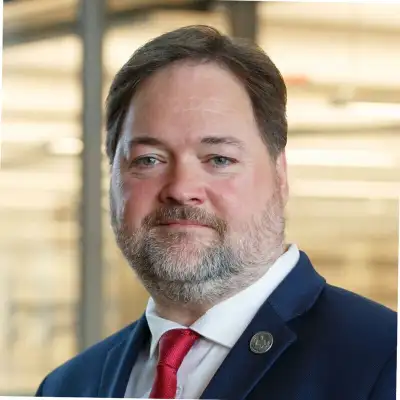
Hosted by food safety industry leader and consumer advocate Dr. Darin Detwiler, "Trust Bites" examines the challenges of ensuring food safety in a complex global marketplace and maintaining brand reputation.
With the rise of global food trade, consumers, retailers, and producers alike are increasingly concerned about the safety and quality of the food they buy. Many existing validation systems are outdated, bureaucratic, and expensive, creating inefficiency and allowing vital information to slip through the cracks.
"Trust Bites" delves into the validation process, discussing the challenges and limitations of current systems and exploring fair and equitable solutions.
Dr. Darin Detwiler: Hello, everyone. Welcome to Trust Bites. I'm Dr. Darin Detwiler and Trust Bites is brought to you by My Trusted Source, your digital solution for validation in our global supply chain. With us today we have Dr. Hal King, someone I've known for a long time, I have many great opportunities to interact with and now the pleasure of being able to serve with him on this advisory board.
Hal, welcome.
Hal King: Thank you, Darin. Nice to be here.
Dr. Darin Detwiler: Do me a favor: for those who have no idea who you are, maybe they're meeting you for the first time or they have a vague idea of of who exactly is Dr. Hal King, can you share us a little bit about what you do and your background?
Hal King: Yes. At a very high level, right now, I lead an advisory services firm called Active Food Safety. And we work with companies like My Trusted Source and other vendors. We work with all the major brands in food service. Our primary mission is to help these businesses develop programs to stop foodborne illnesses.
So, we really don't take on quality type projects. We just look at how can we help your business. You might be a multi-chain business, a supplier to multi-chain businesses. How do we help you ensure the controls are in place to prevent food from being contaminated and causing illness? So, that's how we look at everything as it relates to our contract type work or consulting work in the business that we're in.
Before that I was, going way back, I'm a public health scientist. I got my PhD in infectious diseases. I worked at CDC for many years doing outbreak investigations of mainly environmental type pathogens. They are like foodborne diseases. They're like Legionnaire's disease and other diseases you can get from the environment. So that was a lot of fun, but I really wanted to get more into the research side of things.
So I left CDC and went into emerging diseases with Emory University School of Medicine. I worked there for about eight years doing infectious disease work for emerging diseases, mainly in West Africa and Australia and other countries. These were diseases, kind of like orphan diseases. Nobody's really working on them, but they're still causing a lot of death in children and things, so, my passion was that.
But right in that time when I was really having a great career as a professor at Emory School of Medicine, I got called back into the service. I was a U. S. Public Health Service Officer. After 9/11, I got called back into the U. S. Army. So I did about six years in the US Army doing food defense, of all things, just looking at bioterrorism and terrorism threats to our food supply way before Homeland Defense was set up. And as I kind of phased out of that work, because they didn't really need us after they moved everything into Homeland Defense, I went back on an active reserve and I took a job at Chik-Fil-A of all places because I just felt like, you know, I've been out of my research labs for so long. I'd like to just go somewhere and apply the things I know in public health to food safety.
And so I went to Chik-Fil-A for about 11 years. I got an opportunity to apply public health principles into the management of food safety, from helping our suppliers ensure they were following processes and procedures according to specs to prevent anything from bones in food to pathogens in food. And then also I really love the aspect of working with restaurants because, you know, at the time, restaurants were really kind of relying on a health inspection and that's not really enough to ensure safety of food. We all know that, I know you know that, Darin. And so I really loved working out new ways and new systems to develop at Chik-Fil-A to prevent, you know, cross contamination and, and the proper hand washing, those type of things. But even redesigning restaurants and facilities to prevent issues with raw handling of foods and things like that.
So, as I got through that, I, long story short, decided to go back into public health, and leave Chik-Fil-A. I wrote a book at the time to kind of share with the industry what I'd learned. I felt like I needed to share what I learned as a business person. Cause I was going to go back outside of that. And I ended up deciding to start my own advisory services firm to just teach other chains and other restaurant businesses how to do what we learned at Chik-Fil-A. Cause I learned so much.
So now I am a business person, but, my background is public health. So, like you, Darin, we're all kind of in the same business, trying to just ensure we help businesses and vendors and others just collaborate to work together to prevent foodborne illnesses.
Dr. Darin Detwiler: Well, thank you for sharing that with me and our audience and I truly appreciate the work that you do. You know, there's a lot of things we could talk about here. I see something that kind of connects it all. Even if you, like, you were talking about the idea of an inspector, you know, a county inspector, state inspector, whatever is, is not enough.
We have to look at the things that we do internally as well, as part of the bigger package of efforts that are put into building trust. You know, essentially trust in, trust in what we do, trust in the labels, trust in the processes, trust in the partnerships, all these different things. So I'd like to focus on that word 'trust' and just ask you a very simple question.
Obviously within this context:
What does trust mean to you?
Hal King: You know, trust means that to me that whatever you're doing yourself, that you have integrity and you also have credibility. As a person receiving, what I might tell them to do or help them do or whatever, they have to actually understand and see that integrity and witness and experience that credibility.
And so, you know, really great example of trust in a restaurant: We talk about food safety culture all the time from a corporation and down to the restaurant. Do we actually feel and see culture of food safety in an employee that just took my order or just dropped a load of fries or whatever you're doing back in the house, back of house?
And it starts with that employee. If the employee doesn't trust the restaurant manager and doesn't trust the business, say the brand, they're not going to actually practice trust. They might be very trustworthy, but if they have to work a job for, you know, long hours and it's a difficult job in the kitchen and serving customers, if the business is giving that employee the worst of themselves, in other words, not well trained managers, not good products that actually work and when they clean and sanitize, they actually do clean and sanitize, not giving them the things that they need to do their job, then they lose trust in their business. They lose trust in their manager and they're not going to give their best. It's just human nature. And eventually they might just leave, right? Because they're not able to work with a company that doesn't have integrity, doesn't have trust. So trust is really just a contract between people that we're signing through integrity and our belief system and how we're gonna act. So, when we say we're gonna do something and we don't, and we lose that trust, the contract's void. And so you get what you pay for, right? in these types of circumstances. And you could apply it all the way up to suppliers, right? If, if you don't have the same level of standards and expectations for everybody, but some people get different ones because of whatever reason, then you lose that integrity, you lose that trust.
So, Darin, trust to me really is a contract between two people, two businesses, different entities, a customer and the, and the buyer or seller. It really is a contract. And when we sign contracts, they have to have integrity or they have no value. And so trust to me is just that when you say you're going to do something or expect you're going to do something, you actually do it.
And like I said before, it goes all the way down from an employee working in a restaurant to make the food safe, following the procedures and processes, to the customer wanting to come back to eat at that restaurant because they trust that and they see that. And all the way back up to, like, supply chain. Do you trust your suppliers? Do you have suppliers that are demonstrating integrity through the following of specifications and food safety requirements? You know, many, a few years ago, I wrote a book in collaboration with Wendy Bedell from the University of Wisconsin. Because I, it was really right after FSMA came out with the new rules for food safety plans for suppliers. And I just felt like, you know, a lot of companies come to us and they say, "We want to get started on a supply chain, food safety program, and management of suppliers. What do we do first?"
I go, "Well you know the first thing you need to do is make sure they're compliant to FDA requirements." FDA FSMA requirements are probably one of the best ways to start to ensure a supplier is making food safety a priority and they're actually generating evidence to show that the product was made safe, which is in the FSMA rules and requirements.
Unfortunately, the FDA doesn't inspect those food plants, but once every two years. So in order to have trust, you can't just say, "Well, we know FDA might be there in a couple of years." I just need to see the evidence of this now, but there's a tool and a system out there already that you could use to just go and use that as your foundation when you're starting to go see if your suppliers have integrity and you can trust them. So to me, the importance of all this is that evidence that you're complying to the contract.
Dr. Darin Detwiler: I'm really glad you mentioned that idea of, you know, people want to see evidence of this now, in terms of trusting. I mean, after 9/11, probably one of the most obvious and visible examples is, like, TSA at an airport, or metal detectors going into buildings.
During the pandemic, we saw places that were, like "We need to make sure that people don't just 'take our word for it' that we cleaned, we need to have our clients, our customers, our consumers, whatever, see that we are cleaning this, and see that we are doing that."
We see a lot of that very visible element, but what if we were to flip the conversation a little bit?
What happens if we lose trust within the food industry? What are some examples of losing trust? How can this impact businesses? How can this impact consumers? How can this affect many different stakeholders?
Hal King: Well, I can give you a really good example and I'll just give it as a business-to-business example where lack of trust or even a small amount of loss of trust leads to loss of business. And we all know loss of business is not a good thing in our industry.
When I was sitting in my seat at Chik-Fil-A and I was responsible for certifying suppliers and making sure suppliers were safe-- and that's a big responsibility because you don't know what they're doing, how they're doing it. You ask them to follow a specification, for example, testing for allergen on equipment before they run your product so that you have less likelihood of having your product get contaminated with allergens that they might be using in their processing plant. And when you go check, you can't check every single day, every single lot. But when you do surveillance checking and you find out they're not doing that, how do you think me as a buyer responsible for telling a big restaurant business whether to do business with this supplier is going to react? Well, with integrity and trust, I'm going to say "We can't do business with them because they didn't demonstrate, number one, that they were complied to the contract, which was us trusting them to do this."
And we would periodically check it. And once we find that we're, when we just periodically check it statistically to capture, you know, what's going on and we find they're not doing it, that they're going to lose business. Probably all the business if they're a big supplier, maybe a large percentage of the business.
So I think, you know, business of business is really huge. Customer to business? You know, we all know what that is. A restaurant does really bad or has poor cleaning in their dining room, it's dirty, the employees are not dressed well, they're using rags to clean tables? You know, we start to lose. Okay, the brand equity there is just, they don't care. Right. So if they don't care, I'm not going. You know, so customers will see that and observe that. So trust they lose sales, you know, specifically for their customers.
So why, you know, in this world of business-to-business with sometimes thin margins for, like, produce, supplying to a restaurant business or chain or anything else related to the supply chain in our business, why would you want to not follow what's best in class, do the specifications and always be found complying to them and doing them? Because you're going to lose business. And you must either be stupid or you have a lot of money to handle the things that are going to come at you. It just makes perfect sense to actually use trust and contract and get evidence of your trust to prove your business. And what comes positively out of that is more business. Cause if I'm sitting in that seat and I'm going to say, "Yes, let's bring on this other supplier." And I've got that evidence every time we pull product from the DCs. They're exactly the way they're supposed to be. We're going to grow our business by 300 restaurants. Who's going to get that business? They are.
Okay. So it's just on the positive side. They're going to get more business by just doing that. And the same thing with sales of the customer. Customer comes in, the dining room's clean. The employees are clean. They're courteous. They have courtesy and the respect. The food's hot. You can tell that things are being done the right way. You can just see, you can see in the back of the kitchen. I'm going to come back more often! I'm going to bring my family there more often. I'm going to grow yourselves, not from you spending money to advertise and market to new customers. Me coming back more often is going to grow yourselves faster and cheaper than you having to advertise for someone else to come into your restaurant. So to me, it just, it has a huge impact. So why not start off from the very beginning and just put the foundation and trust and working with only trustworthy businesses.
Dr. Darin Detwiler: well, it's so easy, I would imagine, for someone to go, "Okay, well, you know, a breakdown in trust for this, that impacts, you know, one diner's experience or whatever," but when you start looking at it in terms of, well, now you have an outbreak involving 30 people across state, you know, two state lines or whatever, or, you know, you look at the dollar store issue we had recently, the idea of, you know, here's a distribution center in one location impacting over 400 stores across six states. Everything regulated, not just food, not just human food even, but everything regulated by the FDA was recalled. All those, you know, employees that were laid off, stores that were closed and, of course, we know that here.
With the dollar store issue, I wrote about how food safety should not be a premium. And we know that dollar stores and things very much like that, they're one of the largest growing sectors of food retail in the United States.
We can even look at the Peanut Corporation of America and how there were so many companies. They had 3,900 different types of products that had to be recalled. And all those companies had put a lot of trust into the people at the Peanut Corporation of America to find out that they are falsifying records, but, you know, you, you open talking about yourself and how you were in the military.
I, too, is in the Navy and I was on a nuclear submarine. I was a nuclear engineer and the father of the nuclear Navy, Hyman Rickover, you know, he said something about about responsibility, and I think that trust is a responsibility. But he said something about responsibility many decades ago that I think is applicable today.
The idea that responsibility, and again I think trust is a responsibility, it can't be outsourced. Once you have it, you cannot just give it to someone else and it's not something you have to take care of. So these companies that put their trust in a distributor, a supplier, a warehouse, a manufacturer, whatever it is, they don't technically relieve themselves of that responsibility. They need to continue to play an active role. And all the different stakeholders that they partner with in terms of making sure that that responsibility of trust is carried through all the way through that last mile to, to the consumer.
And I think far too often we're seeing that, well, I trusted them. Okay, but that didn't take away your responsibility to be involved in that trust.
Hal King: That's such a great example, Darin, because so often I come upon medium size and even large chains that are just trusting their suppliers because, maybe they say they're GFSI certified. Okay, GFSI certified is a great certification scheme to ensure that there's somebody looking to see if that manufacturing plant can. The word here is CAN make the food safe, doesn't mean they ARE making it safe. They were audited one time. And then they made a corrective action and they were checked and then they don't get audited again to get certified another year from now. It does not mean they were, it means they can. But so if a company just relies on just that, they're trusting that, but they're not really verifying and ensuring that they, and they had that responsibility.
And I'll hear small, medium chains and large chains come and say, "Well, we don't need to do that because we're getting it through this broad line distributor. They do that for us." Well, when you check to see if they are doing it, no, they're not doing it. Or if we go back and say, "Okay, you are checking to ensure that they have FDA FSMA compliance, right?"
"Yeah, we would, they let us know if they didn't."
No, they, like I said, the FDA doesn't get in there for every two years in high risk environments like listeria monocytogenes and ready to eat foods.
So, when you trust only without, like you said, the responsibility to ensure and verify, then you are not really trustworthy because you're relying and giving your responsibilities to others and when they fail, your cust, your customers fail because they get hurt and they get harmed, there's foodborne illnesses and your business is harmed and hurt. And so, you know, the first thing we always tell clients is, "What are you doing to ensure food safety from your suppliers?" Because it starts there. Like you said, you have to make sure you're verifying the specifications. If you want to just do minimum standards, just make sure every day they're making the food, they're under FDA compliance from the food safety controls that should be there.
And they can prove that, right? And preventive controls on those food preps during manufacturing. But you can't just trust that you got to know. And I'm just still shocked today to find buyers, retail and food service buyers, just relying on GFSI only, or just relying on the trust that the suppliers never had any problems, you know. Maybe not with you, but they probably have with others.
And so, you know, I think McDonald's, you know, all these chains, and I hate to call out names, but, you know, historically, a lot of companies that as they grew really pushed a lot of weight back down onto the suppliers way before FISMA was enacted to, to require them to show evidence of HACCP, to require them to show evidence of things they wanted. And that was new, you know, it came out of the early days of NASA ensuring that When we send astronauts, you know, up in space that they only have the food that's with them in the capsule. And so we really need to make sure that it's not going to kill them, you know, otherwise the mission's over. So, you know, that HACCP came out of that need. We cannot just trust to have the food because we're going to have people eating it, you know, in a capsule and, you know, in space. Well, we need to have the same level of trust and responsibility for the food we serve everybody, you know, here on earth, not just, you know, in the HACCP up in space.
I agree with you a hundred percent, I think it's a great example of the nuclear sub, you know military side of things where we don't just trust and, you know, and make sure. I know in the military, in the army, we didn't just trust that the gun was gonna shoot, you know? We made sure we went and practiced and every time we picked it up and after we cleaned it and put it back together, it shot. And they made us take that gun apart and put it back together and shoot it every single time we touched it, because the day that you put it together wrong and push it up and really get it to shoot and it doesn't shoot, you're not going to be with us for very long. So it's always about that.
Dr. Darin Detwiler: Well, it's always about, I think, the idea that, again, trust and, and you've really supported this notion here. Trust is not a one time thing. Trust is not a one party thing. Trust is this continuous responsibility of multiple partners that has to be checked and validated over and over and over again. And it never ends. And once you say that we're good, you know, it's, it's kind of like the painting of the Golden Gate Bridge in San Francisco. As soon as you're done, you got to start all over again. It's not a quick process. It's a long process that involves many actors and many stages and steps.
Look, I want to thank you. So many great points you brought up here. And we're going to continue this conversation on some other episodes, but I think it's important to make sure that people understand: trust is not easy. Trust is not a one person thing. Trust is not a one and done or something to rest your laurels on some piece of paper.
It is a very complicated and lengthy process that never ends. And it's extremely important, even if your end customer just rests on assumptions. We want to make sure that we can have consumers that can feel that they can assume that we are doing what has to be done behind the scenes to maintain the trust. Hal, thank you very much. For My Trusted Source, this has been Trust Bites.