Subscribe
Share
Share
Embed
Retailgentic, presented by the ReFiBuy Media Network and hosted by Scot Wingo, is where Agentic Commerce meets retail innovation. We help retailers and brands prepare for the future of agent-driven shopping with actionable news, expert insights, dxis, forward-looking predictions, and practical guidance on Agentic Commerce Optimization (ACO).
Some of this is where, like, to
me, the true definition of agentic
commerce is full automation, right?
And a couple use cases which we see,
one is inventory replenishment, right?
And in stores, your agent,
your replenishment agent
should just do the job.
Knows the inventory levels, it
knows the order volume, it knows
the historical trend analysis.
It should just place the
replenishment order for you every
Friday or every Sunday night.
Like, it should be just fully automated.
Like, you need very
little human intervention.
So that's an example of
a truly agentic system.
Welcome to the Retailgentic Podcast,
where we explore the intersection
of retail, e-commerce, and AI
agents, which we call Retailgentic.
Our mission is simple.
We are shining a bright light
on the new agentic AI shopping
megatrend, which will disrupt the
trillion-dollar digital retail market.
The stakes are high.
Google, OpenAI, Microsoft,
Perplexity, Amazon, Apple, Meta, and
Anthropic are all fighting to be the
consumer AI shopping agent winner.
There are gonna be some tough decisions
for online brands and retailers to make.
What happens to checkouts?
How should payments work?
Should you continue to invest
in retail media networks?
What does the world look like when
over half of your traffic is not
from humans, but from AI agents?
These existential questions
are the tip of the iceberg.
On this podcast, we're talking to industry
experts, analysts, and influencers
to get answers to these questions,
identify trends, and best practices.
This is Retailgentic, your
podcast partner in navigating
our AI shopping agent future.
And now here's your host, Scot Wingo.
Welcome to this episode of Retailgentic.
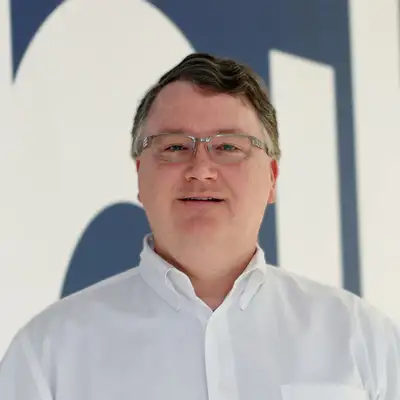
Today we have Nitin Mangtani, SVP
and GM of Salesforce Commerce Cloud.
I've had the pleasure of working with
Nitin and knowing him for over 15 years.
We met when he was the group product
manager for Google Shopping, also known
for you old-timers, Froogle, if you
remember that, your e-commerce history.
Well, he left Google, s- started a startup
called PredictSpring, did some pivoting
and some other interesting things we'll
learn more about, and then that company
was acquired by Salesforce in 2024.
He quickly rose through the ranks as
part of that acquisition, and boop, now
he is running, via being the SVP and
general manager, uh, all of their various
e-commerce initiatives, which are under
the umbrella Agentforce Commerce Cloud.
In this interview, we'll go through his
career in detail, his startup adventures
at Pre- PredictSpring, and then we get
into some really great updates around
what Salesforce is doing, their renewed
focus and energy coming from agentic AI,
uh, and a little Marc Benioff in there.
Uh, and then we'll dig into how all
this relates to e-commerce, what
Nitin's big plans are for Agentforce
Commerce, what they're doing with
ChatGPT, instant ech- instant
checkout, uh, and all those things.
So, um, it's gonna be fun to
see where Nitin takes this.
I think they've got a great leader there.
I'm a huge Nitin fan, if you
haven't already picked up on that.
And at the end, we talk a little bit about
where he sees all this going, so I, I
really enjoyed this interview with Nitin.
Without further delay, here is my
interview with Nitin, the SVP and general
manager of Salesforce Commerce Cloud.
Nitin, welcome to the
Retail Gentic Podcast.
Thanks, Scott.
Thanks for having me.
Uh, you and I have known…
I was trying to figure this out.
Is it '07?
Some- somewhere in that era.
I think it was '07.
I was thinking when I was coming here,
I was like, "I think it was 2007."
All right.
We'll round up and we'll say 20 years.
So we've known each other for a while.
Um, and, you know, you, you've had
a really fun career in e-commerce.
We've had different careers in
e-commerce, but they always kind of
like intersect each other at inter-
interesting points, and we're back
at an intersection, so we'll…
Well, let's start there.
So we, we, we're both kind of
now involved in agentic commerce.
How about that?
Yeah, it's fascinating.
I mean, you know, uh, and Scott, like,
it's, first of all, fascinating to see,
uh, the leadership role you have played
in commerce, and I started my career in
retail and commerce when I was working
for I2 Technologies, uh, in early…
It was 2000.
So kind of really traditional retail,
supply chain Then digital commerce,
uh, at Google, and then starting
my own company focusing on, uh,
modern point of sale and unified
commerce, and now agentic commerce.
So it's kind of just nice
to see the full circle.
And it's interesting, a lot of the
core tenants of how do you deliver
a delightful consumer experience,
um, those haven't changed.
I'm really excited by the
agentic world 'cause…
And I don't know if you share
this, but I feel like it's gonna
accelerate everything, and I, I
think it's gonna be kind of a…
There's some…
You guys have talked about some of
the new experiences you're delivering.
Um, I don't know how many of
those are powered by agents,
and we'll get into that.
But, but I think it's just gonna
create an elevated experience
for consumers, and that's…
I feel like, you know, back in those
seven days, it was like we were
growing 30, 40% above retail, and now
we've kinda come in line with retail.
And I would love to see
us, like, accelerate back.
By us, I mean the digital
cohort versus the, the store.
And I, I know in your world they're
all unified and harmonious, but I,
I- I'm a digital, digital person, uh,
lesser than the store person, so I, I
do think it's gonna accelerate things.
Do you, do you think
that's what's gonna happen?
I think it will.
And I think to me, like, uh, there's
kind of two lens to look at it, right?
One is every time there's a
new innovation, you take-- you
reduce the friction, right?
So every time you reduce friction
in commerce, the overall pie for
commerce becomes bigger, right?
And, and to me that's, like, fascinating
to see, like, what percentage of GDP.
I mean, already the, you know, retail
is one of the biggest vertical, right?
Uh, and, you know, however you
look at the numbers, whether it's
15% or, you know, more, but it's
a, it's a massive part of GDP.
And the more you take the friction away,
uh, co- the pie of commerce increases.
And yes, d- digital will
continue to increase.
In store is phenomenal.
Stores are back now.
The consumers really
are back in the stores.
But also there are areas where commerce
did not flourish before, right?
And agentic potentially
allows us to go there, right?
And, and a, a classic example is,
like, publishing websites, right?
We have talked a long time, said,
okay, how do you go from simple ad
formats to transactional ads which
are fully conversational and you can
just make a purchase right there,
uh, when you're reading an article
about outdoor living and you loved a
tent and you can just buy it, right?
And I feel like that's where
you would see the overall pie
just increase for commerce.
Yeah.
Okay, cool.
Well, we're kind of
starting it then, the story.
Let's go to the way back machine
or the, the time travel hot tub,
which- whichever one you prefer.
And then, um, uh, as I was kinda
doing research, uh, I've always just
kinda naturally gotten along with
you and, and I, I realize why now.
I saw that you got a computer
engineering degree, um, as a
undergrad, so we share that in common.
I…
Here in the States we had EECE, so I
had to take a couple electronics classes
and I realized that that is not for me.
Com- computer engineering all
the way How did you know…
Were, were you always
in a technical family?
Like, what, what put you
on this, this, uh- Road,
this journey?
Um, I think it's combination.
Honestly, it took me, it took me a bit
to fully realize what I wanted to do.
Um, I, I definitely was fascinated
with the work that was going
on in computer engineering.
And yeah, I'm like you.
I, I'm not a hardware guy.
It's actually very hard.
Even simple things at, at my
home, if I were to fix, it's
actually, uh, challenging for me.
So I'm very software logical guy, and
that helps me to think through, um,
math kind of being really the foundation
of all the algorithms and equations.
And especially with gen AI, you really
see the power of math coming into it.
So that's what kind of
really, uh, got me excited.
But also, like, throughout my career,
and it's so, so like you, I, I…
Like, you have such a strong acumen
on consumers, and I think the consumer
psychology, um, and human psychology
more broadly, is so foundational
no matter what products you build.
And it really makes you
a, a better technologist.
And a lot of times I tell my team that
be, be a, you know, shopper before you're
being a coder or a product manager.
It's ki- you know, Elon always talks
about first principles and stuff,
and when you're building rockets,
physics is your first principle.
We're fortunate that we can live
outside, I mean, we live in the world
of physics, but, but, but in our day
jobs we're kind of outside of that.
And, and basically our first principle
or physics is consumer behavior.
Like, everything we do in our
world has to end in a consumer
buying something, and you kinda
have to walk backwards from that.
So that, that's good advice.
So, so you mentioned i2, so
that was, like, one of the
first early gigs that you got.
What, what was i2 and, um,
you know, what was that?
There was an i2 that did cybersecurity.
It's a, is that, this a different one?
No, this, this is a different one.
I, this is, uh, this was all supply chain.
Um, so this is like, um, uh, pre-machine
learning, pre-everything, but, uh,
there was some really phenomenal
work i2 did back in the days.
And, uh, very modern and innovative
company, and a lot of the alumni
I see, they have done extremely
well, uh, you know, over the years.
Um, but yeah, primary focus was
really- Factory planning, supply
chain, like all the core prediction
and planning models around moving goods
Yeah.
Kinda like a Manhattan Associates
today kind of a thing, or?
Um, different, different.
Manhattan, like yeah, more
around warehouse management.
This was truly around
predictive planning, right?
So you're doing forecasting, you're like
really helping, like move the goods around
a factory and how do you do procurement
and how do you do planning around it.
Gotcha.
And then you d- went to BEA?
I went to BEA.
In fact, I was with somebody just
now at a, a meeting and, uh, I met
this old friend after 22, 23 years.
Yeah, BEA was amazing.
WebLogic and those were the Java
days, and Java is still one of my
favorite programming languages.
Yeah.
And then tell us, how did
you get from there to Google?
Uh, I was at BEA during, uh, the early
days and, uh, it was, it was fascinating.
And at the tail end of, um, you
know, my career g- I was there a
little over five years actually.
Um, the f- Google was, obviously
Google was still like early days.
Like, when I joined Google I
think we were 4,000 employees.
So not, like, 20 employees, but
not also, like, 100,000 employees.
It was still, like, you
know, smaller company.
And then I had a friend of mine,
he had joined, and he's like,
"You know, you should just come
and talk to a few people here."
And I was very happy with BA.
I had a great relationship with, uh, uh,
the team there and the founders there,
uh, Bill Coleman and, uh, Alfred Chong.
They were amazing founders.
Um, so it was like a family and, uh,
you know, the Google appeal really
was pretty high and, uh, you know,
just things worked out, so it was
more like, you know how sometimes
things just come in your path and it's
fascinating how, how your paths change.
So you didn't have to do the wacky
interview and all that stuff.
You kinda had a more of a
industry connection of some kind?
No, the interview process was
still pretty rigorous, Scott.
It was-
I'm not saying you didn't pass a hard-
Yeah.
But, you know, right out of
school they do all this kind of,
you know, kind of crazy stuff.
Like, uh, yeah.
Back in the days, like, uh, so
this is, like, so when did I…
So I, I joined Google, like, early 2006.
So I was interviewing with them,
like, tail end of 2020- uh, 2005.
And it was, like, you know, pretty long.
Like, they had, like-
You always meet, like, 15
people on a Google interview.
It's nuts
Yeah, and I think they were really,
like, when I was there then, you know,
after I was there for all these years.
Yeah, back in the days I think
there were eight people who
interviewed me and, um, you know,
it was a pretty prolonged process.
Like, end to end between hello
till the day I showed up at Google
campus, I think it was, like,
three, three and a half months.
Just go on an interview where
you're on that, uh, that bike
that they travel around in.
I didn't, I didn't try the bike.
I did have lunch.
I did enjoy the lunch.
They, one of the interviews was,
uh, lunch at this Charlie's cafe.
So back in the days
there was only one cafe.
I mean, obviously now Google,
I think they have 40 cafes on
the campus, but these were…
By, by the way, Scott, these were the
original Silicon Graphics buildings.
Yeah.
Building 40, 41, 40- Before the
Plex.
Mm-hmm.
Yeah, a- and those, like, the
numbers they kept it same.
So there were only four buildings
back in the days, right?
The campus was still,
like, pretty much those.
And there was one cafe, Charlie's Cafe,
named after the first chef, Charlie.
And, uh, you know, during one of my
interviews, yeah, I had lunch at Charlie's
Cafe and it was a great experience.
Do you have any, um…
So there you, uh, you did, uh, I
think you did Enterprise Search,
which was where you guys…
It was an appliance, right?
Wasn't there a hardware component?
Am I remembering that right?
It was very interesting for Google.
Yeah.
And I quickly, uh, moved that entire
business to cloud, and that's where
kind of I started in retail, right?
So kind of me with such a strong
background retail, I, I saw a
huge potential with e-commerce.
So, uh, I launched this product, it
was called Google Commerce Search.
It was the first, uh, hosted
e-commerce search from Google.
Uh, fully hosted, um, and
I had a lot of customers.
I think I partnered with, uh,
Birkenstock and, uh, you know, several
brands actually which went live.
And my biggest innovation back in those
days when I launched this product, I
think it was 2007, was search as you type.
So that was a big deal at back, back then.
Like, if you can build a search
engine where you're just typing in
and the PLP page is just dynamically
loading before even you have
finished the, you know, keyword.
And so we launched the search as
you type, and, uh, you know, we,
we worked with Brooks Brothers, we
worked with Birkenstock, we worked
with, uh, um, several brands, uh,
L'Occitane, uh, to power their
e-commerce search, uh, experience.
And that's where kind of-- I kind of went
from Enterprise division to fully kind
of on the shopping side, uh, of, uh, of
Google, and that's when you and I met, uh
Yeah.
But, but, but Enterprise was
like this hardware appliance, and
it was very horizontal, right?
Like a news org could have it, a fintech.
Any company could have…
It could just power your search
engine, but it had this appliance.
So you, you took it, got rid of
the hardware, which is obvious
the way it was going, and then
you, like, made it super vertical.
Did you have filtered nav back in
the day or, or you guys didn't really
need it 'cause the search was so good?
No, no, no.
I mean, faceted search or f-
you know, faceted search was
foundational even back in those days.
I, I actually launched two products.
So there was Google Commerce Search,
who, whose focus was e-commerce,
so highly structured metadata.
And then another product I launched,
which was also hosted product, called
Google Site Search, which was the
horizontal product to power any, any
news website, you know, any .com.
Like, we were powering Cisco.
Uh, actually, even NVIDIA was my customer.
I still remember going to NVIDIA at
their Santa Clara office in 2007.
Uh- You should've
bought stock.
Yeah.
Load up on stock.
Uh, yeah, uh, you know, back in
the days when they were doing
primarily graphics cards, they
were actually one of my customers
back in the day, so I, I remember.
But anyway, so we, we had two
different products because…
And I think people still, like, I
mean, you, you understand this, Scott.
Like, people sometimes mix search,
and I think search has three flavors.
There's, like, the highly, you
know, unstructured web pages, right?
And there is search for that.
Then there is the e-commerce search,
and then there's the truly enterprise
search, which is security and…
And obviously, all this is merging,
and there's interesting technologies.
But back then, my focus was to have, you
know, these two as very distinct products,
uh, commerce search versus site search.
Then you get involved in Froogle, the,
the r- artist previously known as Froogle.
I, I still call it, uh,
Froogle when I meet people.
I was like- … "You
guys remember Froogle?
And do you remember Google Base?"
Mm-hmm.
Yeah.
Mm-hmm.
Yeah, so Froogle was base-built on
Google- I remember the Froogle thing.
It had, like, uh, six zeros
in it or something, or Os.
It had, like, a lot…
It was like Froogle.
It was really cute.
Yeah, the logo, logo and, uh, the
brand- Yeah, very
whimsical back in the day.
It was fun.
Yeah, I got involved in, uh,
2007 then as I was doing this,
um, uh, Google Commerce Search.
I kind of, um, started l-
uh, working with the team who
was, uh, building the Froogle.
And we were kind of at an interesting
juncture where this product was slowly
starting to move from being a hobby and
a fun project to, like, a multi-billion
dollar commercial project, and, and
that, the transition was fascinating.
Um, back then, like, you know, it's
kind of a similar wave that we are
seeing with agentic AI right now, right?
Like, everybody wants to be
part of the commerce that will
happen on ChatGPT, Perplexity.
Back in the days, uh, you'll remember we
had comparison shopping engines, right?
become.com,
I'm trying to recall, Find My…
Like, there were a few comparison
shopping engine back in the days.
And when Google launched-
MySimon, that's a good one.
Yeah.
Yeah.
Old but a goodie.
That's right.
No, I remember that.
I remember that.
Yeah.
Yeah.
Um, and so when Google
launched, everybody…
There, there were a few people who
didn't wanted to participate on Google
Shopping too, and I won't name th-
them here, but there's some few large
ones who were, like, a little bit
worried that, what's Google doing?
And they, they, they, you
know, s- s- stood out of that
initial kind of participation.
But majority of the other
brands were really motivated
to participate, uh, on Google.
And the big challenge, which is your
company played a huge role, was,
uh, how do we reduce the technical
barrier for somebody to really give
us their entire product catalog?
And that's where your company played a
huge role, and I kind of, you know, worked
on the initial Google Shopping spec.
By the way, uh, you know, I…
Like, I'd spoke to a lot of-
So you're to blame for, for the Google
Shopping feed spec In a way you've,
uh, you created a wild opportunity for
my new company, so I appreciate that.
I appreciate you, you know, having
such a minimum number of required
fields, which has made it, uh, now
everyone has a lot to catch up on with
the, the new feed spec from ChatGPT.
Did you see the new feed spec and
you're like, "Oh my God, people,
people are gonna have a really hard
time getting there from, from the
old, the, the, the G-Shop spec."
Yeah.
And they borrowed also a lot of things,
like even like, you know, like the co- the
core tenants of like how we thought about
modeling variants, how we thought about
really understanding, uh, the taxonomy,
uh, and also respecting that there's
not gonna be one canonical taxonomy.
There's always gonna be variances, so.
Uh, and, uh, you know, that was the
first machine learning, uh, project
we did, was how do you take like all
these products you are getting catalogs
across different companies, and how
do you harmonize their taxonomies so
that when somebody's searching for
jeans- That's a
very hard problem.
Yeah.
It's a, it's a huge problem, right?
Like in-
I call it the canonicalization.
We, we call the whole
thing canonicalization.
So, so, you know, taking all
these data feeds and mapping
them into this thing is, is hard.
It's a really hard problem.
And so we, we did a lot of work.
Actually, we had an amazing team there,
uh, in Pittsburgh, and we had, um,
uh, one of our executives, he, he was,
you know, he's very well-renowned.
Um, and he was at CMU and, uh, uh, Andrew
Moore, and he did, uh, he and his team did
some phenomenal work back there to really
canonicalize the, uh, product catalogs
and, uh, and then, then it took off.
Like, I remember like we had like
less than a few hundred merchants.
By the time I left the shopping team,
we were, um, I think it was like, if
not a million, definitely high end of
several hundred thousand merchants.
And I'm sure your company played
a huge role in, you know, really
helping us to reach that scale.
So then where'd you go
after Google Shopping?
So I left Google in, uh, 2013 to
start my own company, PredixSpring.
Yeah, let's talk about that.
So you've been working for
big companies all this time.
What gave you the- The impetus
to start your own company, did
you just have a great idea?
You had a co-founder?
Like, what was the, what
was the light bulb moment?
Yeah.
And honestly, the, the biggest one was,
uh, the drive to be an entrepreneur.
It was less about the idea.
Uh, it was really…
And then, you know, I'm not just saying
because you and I are here together, but
I'm always inspired by entrepreneurs.
I saw you build your company, and I saw
you in action, and I saw your drive.
And you may not remember, I
came to one of your, uh, uh,
conferences, uh, and, uh, you know.
Yeah, Catalyst, that's right.
I think it was 2009 or something,
I came, uh, and, uh, presented in
one of your conferences back then.
So I was always inspired, and there
were a couple other founders who
I, you know, came close to and, um,
obviously we're lucky, like, you know.
I had seen several founders, so like
Itu, you know, I saw Sanjiv Sidhu
in action, I saw Bill Coleman and,
uh, Alford in action at BA, and then
Larry and Sergey in action at…
And those guy- those guys are
like gods, so you cannot even
compare yourself, you know?
So like, you know, meeting other
founders and seeing them build
companies from scratch was very
inspiring and I f- you know, I felt
the moment was right to take the risk.
It was a big risk, and I always say
that, that if I knew how hard it would
be, I would have never left, uh, Google.
But n- now that knowing how rewarding
it was, not from a money point of view,
but just from an accomplishment and
just like sense of building something,
the only question is why, why it
took me so long, uh, to take this
kind of, you know, y- year to jump.
And anyways, to answer your question,
it was really the drive to be an
entrepreneur, and I had two or three
ideas actually, and I then honed
on the one idea and then I had to
pivot actually, uh, which by the way
happens in majority of the companies.
You, you refine your idea, you pivot.
Um, but literally, uh, I left Google,
I think it was like- Thursday, took
a flight, uh, and I, you know, I had
planned that I would start the company.
Took a flight, spent a weekend
at South by Southwest in Austin.
And actually that year, 2013,
so this is 12 years ago, uh,
Elon Musk was doing the keynote.
Ooh, that's a good one.
Yeah.
That would be…
That, that's inspirational.
Yeah, and I, th- by this time I'd already
made up the mind that, you know, I'm
leaving Google, mostly starting a company.
But you hear him and you're like,
"I- I'm not aiming high enough."
Oh, no, no.
Those guys are the gods.
I don't know
what he talked about, but that's,
like, always what I'm left with.
I'm like, "I gotta aim higher.
This is crazy."
And then, you know, so I spent the
weekend there, and then came back
Monday, and then, uh, worked with, uh,
one of the law firms here in Silicon
Valley, and then we incorporated
the company, uh, Tuesday morning.
Um, so it was literally, I had,
like, less than a weekend break
and then, uh, you know, we…
But I, I had not done any work
or any homework, so i- I think,
but still I did the right thing.
So kind of I went from, like,
you know, like, just like a jump
from the cliff, and no- not much
prep, not much homework, nothing.
I kind of started from scratch,
started the company in my garage.
I put my own money in the company.
The first check was my money.
I didn't take salary for three years.
So ended up being, in some ways
you can say that I was highly
unplanned, which now as I matured,
I have, like, perhaps I was crazy.
But on other side, I think
entrepreneurs are crazy.
Like, you cannot go and get an
MBA degree on entrepreneurship.
Like, you s- you sometimes have to
just cut the cord and just do it, you
know?
Yeah.
The analytics part of your MBA actually
is, like, kinda counterproductive to
being an entrepreneur a lot of times,
'cause you can analyze a market and…
Whenever I meet a lot of MBAs
that wanna do this, they spend all
their time on pricing and stuff.
I'm like, "Guys, just, like,
pricing will come later.
Like, you'll figure that out.
Go create something that there's a demand
for, and then you can worry about."
They're like, "Yeah, but what
if I don't price it right?"
I'm like, "You're not going to."
Like, I can guarantee you, you can do
all your analysis and you're gonna be
wrong, so just, like, start it wrong.
Yeah.
No, that's a good point.
That's a really good point.
Like, monetization will, will always
follow, and you will figure it out, or
you'll hire some amazing people to figure
it out if you have a great product.
The customers will kind of tell you, too.
They're pretty, uh, they're
pretty good at that.
Um, so you decided to do, uh, you know,
you call it unified point of sale.
So, you know, in my mind, and I
don't know much about PredictSpring,
so I'm kind of green on this.
So I'm imagining software as a
service, point of sale hosted.
So, um, and then, you know, what's,
what's fun about point of sale is
you suddenly have to interface with
like printers and cash drawers and
all that stuff, but then you also
have like a store to interface with.
So you're, you got one leg in the
digital world and one in the analog.
What was that?
But I guess you had had a
little bit exposure to that
from the supply chain side, so.
Yeah.
It was, you know, like you, you
always connect all the dots that you
have learned in your life, right?
As you're doing…
The next thing you do is accumulation
of all the hard work and pattern
analysis and the domain knowledge
you've built up over the years, right?
And so it was really connecting the dots.
And initially, so I, I did pivot just
to kind of give you full story there.
So when I started PredictSpring,
my focus was trying to build the
best mobile commerce platform Uh,
because back in the days, 2013,
mobile was still a hard problem.
The conversion rates on mobile
were still lower, even though
iPhone had launched, uh, in 2007.
And so I was trying to build a no
coding, uh, no code, uh, platform to
build both mobile apps and mobile web.
That was the focus of the company.
And over a period of time, and it
took me a little longer actually to
pivot, I realized that that standalone
business became a feature of platforms.
It didn't make sense to just
have a standalone business.
Al-also, like the adoption of mobile
apps kind of, you know, changed,
like the curve kept changing, right?
It wasn't like for everybody.
So it was there for the
really large head merchants.
The top 20% of the brands and
retailers saw the value of
having a native mobile app.
Others, the f-friction of
getting consumers to download
the app was pretty high.
And so all these observations kind of,
you know, made me think harder with,
you know, discussing with my board
and everyone that we should pivot.
We're doing very well financially,
so, you know, it's wasn't a
question of, uh, you know, I…
Oh, this is a thing I tell, uh, you
know, remind everyone, including
myself, is that startups don't
fail, they simply run out of money.
Uh, right.
And so luckily, like I was like
fiscally very conservative in how I
was running the company on money side,
so that wasn't an issue, but I knew
that this is not a massive TAM, right?
And one lesson I learned is that
while your drive and passion is
foundational as a founder, but if
your TAM is not big enough, uh, it's
hard to build massive companies.
You have to, you have to take a step
back and make sure the TAM is big enough.
Um, and I realized the TAM was not
big enough, so I took a step back and
I was like, "Okay, what's the most
adjacent market to go after so I can
capitalize on all the work that has
already gone in this company, right?
So we don't start from scratch again."
And I looked at the point-of-sale space.
It wasn't…
There was no innovation for last 20 years.
Square had, was the only company
which had done a phenomenal work,
but they were not focusing on retail.
They were doing long tail, and
they were doing very well in that.
And so I took the mobile-focused product,
which was already digital first, so the
omnichannel part, the customer 360, all
was already there because we are building
the mobile loyalty apps and everything.
And then I pivoted to a point of sale,
which was the best decision because
our POS was the only POS which was
customer-centric, had the best mobile
experience, and was omnichannel.
Yeah.
And Shopify didn't get into point of sale.
They acquired that, right?
Later, like 2018, 2019.
Like it's pretty new
Yeah, it's relatively…
Yeah, and we compete with
them, Shopify, as you know.
Uh, but like a lot of the Shopify
customers are still using and will
continue to use, uh, PredictSpring
or now Salesforce, uh, POS.
So our POS product is
definitely a lot more mature.
You know, it's deployed in 30 countries.
We work with some of the biggest
brands from Crate & Barrel, Under
Armour, some of the largest- It could
probably handle multi-store and the,
the old one was like, I think the
Shopify one's just like a guy in an ice
cream cart is kind of how it started.
It matured into more mature
single store, maybe like two,
but not beyond regional for sure.
Yeah.
Yeah.
And we are definitely a lot
more mainstream and enterprise.
Uh, but yeah, anyways, that was kind
of the story behind, uh, PredictSpring.
There was this guy and
his last name, David.
His last name was his company.
He had…
It was weird.
He had website and point of sale.
Do you remember this?
It'll come to me
Uh, yeah.
All right.
Uh, I think Oracle bought that
one, and then they bought…
Before they bought ATG, they bought
this other one, and then they
kinda, like, tried to combine them.
It was kind of a mess, but anyway.
Micros?
You're not talking Micros.
Micros was a big acquisition Oracle
bought for, like, 10 billion or something.
And we still compete
with Micros, by the way.
That-
It was David something, and
the company was his last name.
I, I know AT- obviously I remember
ATG very well, and I remember, uh,
all the, you know, acquisition.
Endeca, ATG, uh, uh, yeah, it's,
it's, uh, you know, definitely
crossed paths with all these guys.
Through that journey, so that went,
that journey went from 2013 to 2024.
So that's a, that's about right, right?
You know, like, 11 years is kinda like,
that's the other thing they don't tell
you when you watch movies like The
Social Network, that you're signing
up for a 10 to 15-year-old journey.
In my case, ChannelAdvisor was like a, you
know, like a 21-year-old journey, um, to,
to the, kind of, the ultimate endpoint.
And, um, I guess you're still,
you're still involved, so you're
still, you're still on the journey,
but you had a big milestone there.
Um, you raised 32 million.
I, I kinda did a little research
on that, so that was good.
So you must have done, did you do a, like,
an A and a B, and you didn't get to C?
Is that…
Or did you d- get to C?
We did a seed, a A, and a B.
That's right.
How did you get to the
point where you decided…
Did, did someone inbound to you?
And I don't wanna know any specifics,
um, but just like, you know, it's always
interesting to me, like, did you guys
kinda, you and the board decided it's
time for us to kinda like run a process?
Or, or was there just kind of,
people started to realize that,
that this kind of, you know, what…
In my world, we always called it
omni-channel, and then now they call it
harmonized, and then you had unified.
But this kind of, this…
You're kinda early in this concept.
The first retailer I heard talk about
this was a Nordstrom, where they're
like, "The customer's gonna come wherever
they want, and we just need to make
sure, you know, if she comes to us in
a store or online, we need to know that
she loves red shoes," "or she likes
flats or, you know, whatever it is."
And I, I, I just thought that customer
centricity really appealed to me,
and it seems like you had kind of,
like, read the tea leaves on that
pretty early, and it took a little
while for the market to catch up.
Yeah.
And by the way, I used to use this example
back in the days, and I would still use it
today, is, like, the best store experience
is the minimalism of an Apple Store
meets the hospitality and the customer
service-centric experience of a Nordstrom.
Um, and that marriage, you know, if you
can build a platform where technology's
there to help associates, right?
At the end of the day, you are there for
human, uh, help, and technology's there,
um, to really enable that human, right?
The associates to be more
effective and productive.
Uh, in fact, we, we, this is before,
uh, joining Salesforce and Agentforce,
we actually built a voice-enable,
um, you know, system in our POS.
So you can say, instead of like
going through multiple clicks
and navigation, you can simply
say, "Show me Stacy's profile."
And it understands that you're
trying to look up customer's, uh,
profile, uh, and it'll bring like,
you know, the entire customer 360.
So it was always key to it.
Um, on your previous question on
Salesforce acquisition and was, yeah,
so like just like walking back to the
comments you made, I agree with you.
Even when I left Google, I
thought this is a two-year movie.
Ended up being 11 and a half years, right?
And so people like, you know, uh, like
it- it's like the entrepreneurship
looks very glamorous and, you know,
amazing, and which it is, it is
beautiful, but most people don't
realize that this is a very giving role.
Like you need to be, you need to first
of all do it for the right reasons.
Uh, and, and it's, you know, you, it's
a very giving role on, you know, how you
think about your customers, your team,
your investors, and, uh, you're serving
all these three constituents every day.
Um, and so when I, you know, looked
at 11 and a half years, and, and
here's the other philosophy I have,
which I might, I might correct or
improvise at some point, but so far my
philosophy has been that companies are
not sold, companies are bought Right?
So i- you know, in our case, yeah,
I mean, Salesforce approached-
The,
the best outcome is when they're
bought, when they're sold, it's
usually not as good an outcome.
Yeah.
That's true.
That's, that's, that's a, that's
a fair, that's a fair point.
That's a fair point.
So yeah, Salesforce approached us,
um, and we were great partners with
Salesforce, so it was very complimentary.
And it was serving our customers, right?
We were able to provide a better, uh, uh,
solution to our joint customers, right?
We were able to give better value.
Um, so it all made sense.
But also, like as I said, I was serving
all three constituents, which is, um,
my investors, my team, and my customers.
And when I looked at all three of them,
and I felt it was the right answer.
Salesforce is a great home.
You know, they, they have a long history
of taking these things and nurturing them
and not just kinda, you know, like not
integrating them or just like, you know.
So they seem to have made it a
core part of their DNA to, to
be able to, you know, do this.
Yeah.
So it, it, it was kind of, you know, those
kind of factors led to, led to the, uh,
eventual accumulation of the acquisition.
Uh, the acquisition closed, uh, so
we signed the acquisition in August,
and we closed it in, uh, September.
Yeah.
Was that a good outcome for you
and the investors, everybody?
Yeah.
Were you happy?
No, it was good.
Yeah.
All right.
We're, we're happy.
You know, we- Yeah.
You're still working, though.
I, I lo- I mean, you know,
you're working still.
And you, you took the company public.
I, I, I, you know, highly admire you.
And I think, you know, I, I'm, like I
think we all are like, I, I want to work
till the last day, but I, I also have
a different s- like style of working.
So I'll tell you, like I- You know, for
me, like thinking is working, right?
So like, whether it's a weekend or
whether it's like an evening or, or
any time, I- I'm thinking, right?
Like my, my head is like, you
know, on the, uh, on the job.
But there are areas where
I try to balance, right?
Like, like I like, for example,
a little bit time to myself,
uh, in the mornings, right?
Like, it helps me ground my day.
Uh, also like health-wise, like I, I
have this chronic backache, so I have to
like just make sure like I'm, you know,
doing some, uh, exercise in the morning.
And so like there are some things, like
even when I ran the company, unless
there was something important, which I
totally respect, or there was something
urgent, I, I like to at least like start
my meetings, if possible, like at a
slightly reasonable time in the morning.
So that's kind of how I think about
it, is that if you're running a long
game and if you want to work till
literally last day of your life, you
need to find out like what drives you
so that the work doesn't feel like work.
Jeff Bezos calls it his putter time.
He likes to putter in the morning.
Kinda like just work on what he's gonna
work on or do whatever he's gonna do.
Um, okay.
So, so you did the deal with Salesforce.
Um, and then during that process, did
you get to meet, um, y- Benioff and, and
that kind of thing, or were you dealing
with more like a corp dev team or did
they bring him in to seal, seal the deal?
Seems like he'd by- be the closer.
Uh, I did meet, I did meet
Mark at the, um, uh…
I- I'm trying to recall b- b-
before or after we signed the…
Before we closed the deal, definitely.
Uh, but I did, uh, did meet Mark.
Um, but the deal was obviously
it's a combination of, uh, our
M&A team here as well as the
executive leadership team, right?
Because eventually this is part
of the product team, right?
So the product team is
involved, uh, in all M&A-
Seems like once you're signed,
then you can start thinking about
integration and not doing anything.
But the…
just kinda like, that's like a little
bit of a, like let's seriously date,
we're kinda committed to each other as
we work out the details kind of thing.
Yeah.
We, we didn't talk integration
till actually, honestly,
till we closed the deal.
But, you know, as part of due diligence,
product team is involved, right?
Because the product team has to
see the fit, uh, on the product
and, uh, make the right decision.
But yeah, Mar- just talking about
Mark, I have gotten to know Mark
much better now in the last-
Does he always wear really cool shoes?
Whenever, you know, whenever
he's at Dreamforce, he has
like these really neat shoes.
Mark loves shopping, right?
Mark loves retail.
I mean, he, and honestly,
Salesforce, we have s- many vertical-
It's a bless- a blessing and a
curse to be the head of shopping at
a place where a guy likes to shop.
Uh, Mark is like, I, honestly,
he, he inspires me so much.
Like first of all, s- you know,
founding the company in the late '90s,
you have the same energy with Mark.
Scott, you meet Mark,
he's supremely tuned in.
Like a simple message to him with like,
just like two lines context, not like a
three-page document, he gets it, right?
And he's able to help you, he's
able to make a decision on it.
That's how he's tuned in with
every single business, right?
So we have different businesses,
marketing, commerce, Slack, um,
MuleSoft, like, you know, your,
uh, Agentforce, Data Cloud, right?
So obviously I'm running the commerce
business for Salesforce, but he's equally
tuned in with all of these businesses
and, and he's just a good human.
Like it's just, he, he leads
with a high degree of empathy.
He obviously challenges you, right?
Like he has a high bar, you know,
he's building a performance culture,
but the fact that he's so responsive
and so empathetic is truly a
leader who leads by inspiration.
And for me, like, uh, that, that
just gives me such a good energy.
From the outside, it looks like they
acquired a point-of-sale system, and then
suddenly you were running everything.
Like, uh, I'm sure that's not how
it worked, but, but was that part
of the negotiation, or did you
just kinda like work your way…
Yeah.
Was there like a…
It was in a year, so something
very fast had to happen in there.
No, honestly, there was
nothing pre-planned, right?
So I, you know, Salesforce
acquired PredictSpring September.
And my first focus, honestly, the day
I closed the deal, uh, or s- yeah,
I mean, you know, I called all my
customers even when I signed, because
when you sign the deal, you have to
announce it, and then you have to wait
for all the regulatory approvals, so
you can't do any integration or there's
no work that happens in that timeframe.
But on the day you sign,
we do put a blog post out.
So it's, the news is public that
Salesforce has signed a definite
agreement, uh, to acquire PredictSpring,
pending regulatory closures, uh, you know.
And so I, first thing I did is,
obviously after telling my team, I
called every single customer, right?
To ensure them that I'm here for
them, which is, by the way, true.
It's now 15 months.
I'm here for them.
'Cause, you know, their first
concern was like, you know…
And I said, "Look, it's a great company.
Salesforce take cares of customers, and
they absolutely believe in their product."
So my first focus going into
Salesforce was just making sure that
PredictSpring, my team, product,
customer just lands well, right?
Because it's a big company and, you
know, we had tremendous support,
and that's what I did for first,
you know, three or four months.
And then, you know, um,
there were a couple…
It just happened.
This is, there's no pre-planning,
nothing, um- Things happen and it
made sense to bring all products
which were commerce related.
So we had B2C commerce, B2B commerce,
order management, um, point of sale,
which I was anyways running, and
then we are building Agentforce for
retail, and we should talk a little
bit about it, uh, on that because
it's one of my key focus areas.
And actually I've gone back to
being like a PM for, uh, that
because I'm so excited about it.
And then we had a payments,
Salesforce payments.
So we had like, call it six or so
products, and they were a little
bit distributed, and it made sense
to bring all of them together.
And so I think I took on this
official role, um, it was
like, um, around late February.
Mark called me and he said, "You
know, Nithin, uh, we, we want
to really, uh, rethink agentic
commerce and unified commerce."
And that's like, you know, it's a, you
know, for me it was the biggest honor.
When you get that call and, you know,
I'm like an all-in guy, so like,
you know, I, I don't pace myself.
It's all about just going all in.
And so the passion that I had in
this space, it kind of made sense
to bring all these products under
one team and really unify it.
So that was kind of the
events that led to this group.
And, uh, you know, you don't
really toot your own horn, but a,
a product leader that can kinda
like see across it all, right?
Because it's hard to be the PM of
something or like be the person of
something, but then al- also able to kinda
come out of that and see the bigger field.
So, so I think your prior Google
experience allowed you to kinda
like be an entrepreneur and a,
and a, you know, bigger company
PM allowed you to kind of both…
As a founder you have to be
myopic, and then you were also
had the wide lens as well, so
you're the obvious choice in my…
I'm a l- I'm a, uh, o- obviously
biased and I wasn't there, but
it's like if someone's gonna
run all this, it's, it's Nithin.
So yeah.
You have to have like the history too.
You can't…
This industry, there's many failures
that happen for startups that bring in
CEOs from, or, or, you know, leaders
of whatever degree from outside of it.
Like you couldn't just bring in A
pure CRM SaaS person or something
like that, because this industry
has details that are very hard for
people to pick up quickly or, or the,
the learning curve is substantial.
It's hard.
It's hard.
Yeah.
No, I'm with you 100%, Scott.
Uh, it takes time and, and you get
then really good at pattern analysis.
Otherwise, you know, you, your
intuition, which is basically
pattern analysis, right?
Like, uh, you could be off by a big
margin, you know, if your intuition and
pattern analysis is not right here, so.
Yeah.
And then, uh, while we were chatting,
I did look this up, and it was
Micros, and the, the thing that
messed with my head all the time was
the guy's name was David Merchant.
I'm like, "Your name's Merchant?"
He's always like, "No, it's Merchant."
And I'm like, "Okay, it's Merchant."
It's spelled Mer- So it always blew
my mind that this guy, David Merchant,
was doing point-of-sale software.
Um, so let's talk about agents.
So, so, uh, you know, at Dreamforce,
uh, you guys announced that you are
rolling out support for, uh, the
ChatGPT Instant Checkout and ACP.
Um, tell us about that.
Where are we to the extent…
You know, give us an update,
anything you can share.
People, I'm sure…
You know, we're recording this something
like, you know, less than 20 days
from Black Friday, so I'm sure, sure,
sure you're getting some phone calls
and people asking what's going on.
Yeah.
So we, we announced the
partnership, uh, at Dreamforce,
um, so just a few weeks ago.
It's a new protocol.
Um, Stripe and OpenAI have co-authored it.
It's an open protocol, so
anybody can implement it.
Uh, we are working very closely
with, uh, with both of them.
Um, it will really enable, you know, a
full transactional experience on ChatGPT.
Obviously, discovery is
happening even right now.
You can go and ask question
to ChatGPT or a- any Gemini or
Claude or, uh, Perplexity, right?
Like I'm looking for sneakers
or I'm looking for dark jeans or
I'm looking for, um, a, a watch.
And so the discovery's already
there, and that traffic, you know,
the referral traffic customers are
already starting to see, right, uh,
coming from, uh, the, the agentic.
But, but the thing about, uh,
the ACP is like it completes
the full checkout funnel, right?
So not only you're able to do
discovery, but also checkout.
We're working with them.
There are, you know, a few things like
just both parties are working together.
A- as you know, like discovery, I
wouldn't say it's a simpler problem,
but it's just, it's, it's much
simpler than doing the full checkout.
I mean, even at Google, we…
Google we tried, I don't know, six
times doing a buy on Google, right?
And it was hard.
I mean, I was right there, right?
It was hard.
And, and you know, just
setting expectations, like we
are amazingly excited and…
But I think these things, when you
try to do checkout in a syndicated
way- Uh, it's much harder, right?
The referral traffic moving
to syndicated way is natural.
That's happening even right now, and
every brand is investing, and I know
your company's doing great things.
Um, the, the checkout will
take a little bit kind of till
all the machinery comes in.
And when we think about agentic, we think
about agentic from three different lenses.
The first lens we think about agentic
is owned and operated properties This
is your website, your mobile app, your
stores, so when your associates need
agentic experience, and your call center.
And so that is our phase one.
That's already live in production.
We have customers like Pandora,
Williams Sonoma on the retail side
already using our agentic experience
on owned and operated properties.
Yeah.
At Demand, um, at DemandForce
you had some really good…
You know, the Pandora people were
talking about how, you know, it's made
some pretty dramatic savings for them
having the, the on-site service agent.
I, I can't remember, I think it did both
discovery and it could do some services.
It could suggest, yes.
Those.
Yeah.
So that, that was a, you know,
that was a very pow- powerful…
It's always good to have a brand like that
stand up and it's better to have them sell
for you than, than you sell when they talk
about how it's impacted their business.
It was, it was a good one.
And th- th- they both, uh,
Alexander was the CEO and, uh, David
Wansley, uh, was the president.
They both are strong visionaries.
They really want to rethink,
uh, the experience, the unified
experience, the digital experience.
Um, so it was just
great working with them.
They, they, they pushed
the envelope with us.
Um, so anyways, going back to,
like, you know, when we think about
agentic, we think three form factors.
There's owned and operated properties.
That's already live in production.
People are using our technology,
Agentforce for Retail.
Then there is syndicated commerce.
On syndicated commerce,
discovery is already happening.
Checkout, you know, is, is under
development as we speak, right?
The spec is out there.
We are working, uh, with, uh, OpenAI as
well as our partners to get that live.
And, and obviously Claude, Gemini,
like all of them will fast, like, you
know, they'll have their own versions.
Like, some of them will adopt, um, ACP,
some of them may create their own version.
But it's gonna happen.
Syndicated commerce on agent will happen.
The third thing is, um,
syndicated commerce on messaging
channels, WhatsApp, SMS, right?
So as messaging becomes conversational
instead of one way, right,
commerce is a natural place to do.
When you get a text message from
your favorite brand about a new
product or a promotional thing, you
should be able to buy it right there.
So we are investing in all three
legs of this agentic str- uh, story.
Do you think the messaging
companies will have checkouts there?
Or it'll be, it'll be up to the, the
retailer and their technology partner
to provide that, that, that piece?
Uh, it, it, it might be both eventually.
Right now we are investing in it, so
once you are authenticated, you can
give a prompt and say, "Yeah, let's
go ahead and purchase this, uh, pair
of shoes through a text message."
It's like, you know, basically
taking a prompt and then completing
the transaction on their behalf.
Yeah.
Well, they've had this
in China forever, right?
We've always said it was coming.
But it kind of took, oddly enough,
it took ChatGPT to kinda like get,
bridge the gap and then, that for
people to kinda like see that that,
that could be a way to do things.
Not consumers, not, you know,
obviously we could just, we've--
I think Zuck's tried it, you know,
you guys tried it like six times.
I think they've tried it six
times and at Facebook, and
they couldn't get it to take.
Because we s- also had
it happening in China.
We're like, "Why is
this not working here?"
And now it kind of finally is.
It's, it's pretty wild.
Yeah.
The c- conversation with
commerce, I, I agree.
Like, if, you know, everything moves
to conversation, uh, the consumer
expectation goes up because they're
like, "Well, why can't I just do it in
couple prompts instead of 10 clicks?"
Right?
And especially on a mobile device, it's
so much easier to send a SMS or WhatsApp,
uh, than clicking on multiple web pages.
Yeah, and if you buy something, it's
kinda like ordering breakfast, you know?
Like, once you know what you want,
you can be like, "All right, uh,
scrambled, bacon, wheat toast."
So you could, like, you, you could
imagine you'd get to this shorthand
where the first one's like a four,
you know, kind of a four, um,
threads or whatever, uh, four turns.
Uh, and then the next one, you're just
like, here's, you know, you know, men's
this size, shoe this size, blah, blah,
blue, and, and you're ready to go.
Yeah.
And you're absolutely right.
And some of this is where, like, to
me, the true definition of agentic
commerce is full automation, right?
And a couple use cases which we see,
one is inventory replenishment, right?
And in stores, your agent,
your replenishment agent
should just do the job.
It knows the inventory levels, it
knows the order volume, it knows
the historical trend analysis.
It should just place the
replenishment order for you every
Friday or every Sunday night.
Like, it should be just fully automated.
Like, you need very
little human intervention.
So that's an example of
a truly agentic system.
Similarly, like things like grocery
Like we had talked a lot about
this in the past, but like grocery
can be fully agentic because you
generally know what you want,
and maybe you do one last review.
So like, it's kind of like the human is…
Like, the agent is doing
95% of the legwork for you.
You do a quick eyeball, they're like,
"Yep, you put the milk there for
me, eggs, bread, blah, blah, blah.
I like this kind of a sourdough."
And you just quickly look at
it and you, you just give a
prompt saying, "Yeah, go ahead."
Yeah.
Or you, you know, I don't do
whole milk, I prefer skim.
You know, so, so some little nuance.
But what's nice is with the memory
the, the, these systems have today,
you don't have to tell it every time.
I just feel like at Instacart,
you know, you know, not to pick
on them, but, but kinda 1.0,
you're just like constantly
having to restate your
preference and it's exhausting.
Now you just state it once and you're
like, "Oh my God, why has this not
happened in the last 20 years?"
Same thing with talking about
that, Scott, like context.
And as the context windows get
bigger and are getting bigger, we
are able to do much better, right?
Because to, to really do a better
agentic thing, you need full con-
Same thing with airlines, right?
Like every time you book a flight, you
have to, uh, place your meal order.
Well, you know, like, you know,
just let the user tell you,
like are they a vegetarian?
Are they a vegan?
Do they have any other
dietary constraints?
That should be right there in their
profile, and you by default select a meal
for them so that if I forgot to select
a meal, and then I'm an airline and they
always run out of the meals that you want.
Like it's a classic.
This is like not a one-off problem,
it's a everyday problem that can
be simply solved by just having
the right user profile and context.
Yeah.
Yeah.
Uh, so we're at the top of the hour.
I wanna make sure…
You're a busy guy, I don't wanna
jam you up because you were
so generous with your time.
Are, are you…
Do you need to go?
We could wrap up.
I- Nice … no, we should, we should wrap.
I know it's late for you.
First of all, you have taken- I-
… evening call, which I'm very thankful.
Oh, my evening's getting started.
Yeah.
So you
know how it is.
Um, any last thoughts you wanna…
You know, so this has been,
uh, super helpful, so it's
been great to hear your career.
Um, and you know, I hadn't heard the
PredictSpring part, so I appreciate
you sharing that, and then your
journey so far at Salesforce.
I, I guess, uh, you know, one question
I'll wrap up with is how important is the,
the commerce to, to, you know, the company
and, you know, uh, N- Mark Benioff?
Very, very important, right?
I mean, you know, the fact is, uh,
first of all, as I said, Mar- Mark
is highly tuned in and he's … He,
he loves retail as a vertical.
But also, equally importantly, we
have some of the biggest customers.
Like, we power L'Oreal, we power
Birkenstock, we work with…
You know, as I said, we just went live
with all the Crate & Barrel stores.
So if you go this holiday season to
any Crate & Barrel store, uh, and
you see the point of sale, that's us.
Um, so we have some of these most amazing
brands that, uh, we use every day.
And, you know, the, the focus we
created, um, on agentic commerce,
uh, has been phenomenal this year.
So I think we are, like, in that
mode, like, where we feel like we not
only have an amazing, uh, portfolio
of products and commerce, but we are
also, like, in the day one mentality
of reinventing agentic commerce here.
It's exciting and, um,
you know, stay tuned.
I'll have to have you on in,
like, another year and, you know,
maybe you'll be running some,
some other big chunk of something.
So we'll, we'll…
It'll be fun to watch what you do
in the next year, um, and then the
various innovations you guys bring out.
Um, if, uh, I know you're not, uh…
Well, if people wanna fol- the…
So Salesforce has, you know,
tons of resources on this.
We had Kayla on earlier,
and you guys are…
You know, we're heading into
the Black Friday/Cyber Monday.
You guys will publish a lot there.
That's not your bailiwick.
Um, but I, I know you s- occasionally
put some little nuggets on LinkedIn.
Is that kind of the best place
for people to follow you, or
are you a, an avid Twitter/Xer?
Yeah, yeah, that's a good point.
Uh, I'm definitely lot…
I'm a much better publisher
on LinkedIn and a much better
consumer of information on X.
So that's kind of my…
So if you want to see my postings, yes,
you'll definitely follow me on LinkedIn.
You can look me up, uh,
Nitin Mankani, Salesforce.
And, yeah, please, uh, you
know, I try to publish at least
once a week, uh, you know.
A lot of times it's
nothing to do with product.
It's more just industry
insights or my just thoughts on
leadership or entrepreneurship.
Awesome.
Well, thanks for coming on.
We really appreciate it and, um,
you know, uh, good luck for have
a, have a, uh, knock on wood, have
a very strong holiday season, so.
Thanks, Carl.
Uh, great meeting you as well,
and thank you for, again, for
having me on your, uh, podcast.
Follow, rate, and share to stay
up to date with RetailGenic,
your guide to the future of
AI shopping agents.