Subscribe
Share
Share
Embed
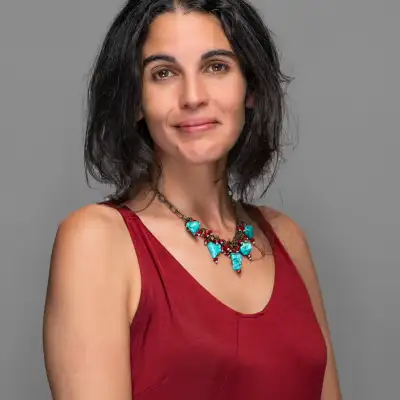
Welcome to Chattering With iCatCare, the official monthly podcast of International Cat Care, hosted by Yaiza Gomez-Mejias (Veterinary Community Co-ordinator). Each month, we chatter about cats and cat-friendly practices with industry experts and contributors to The Journal of Feline Medicine and Surgery. If you would like access to our members episodes become an iCatCare Veterinary Society Member and get in touch.
Hi.
Thanks for joining us and
welcome to another episode
of Chattering with iCatCare.
I'm Yaiza Gomez, iCatCare
veterinary community coordinator
and host of this podcast.
This month we will start with Severine
Tasker talking about her new role as
iCatCare Veterinary Strategic Lead.
Then I will be interviewing Sam
Taylor, first author of the new
iCatCare Diabetes Guidelines.
Let's start with Severine, speaking
about her first impressions after only a
couple of months within the organisation.
What inspired you to move into the
iCatCare vet strategic lead position?
I'm obviously a vet that went
to vet school loving cats.
So that was a first love for me and
I eventually was very lucky to do a
residency in feline medicine at the Dick
Vet School in Edinburgh and that was
funded by Feline Advisory Bureau back
then, that is now International Cat Care.
So I've had a very long affiliation with
the charity, sometimes watching it from
afar rather than being directly involved,
but always admiring what it does.
Who would not want a job that
involves thinking, breathing
cats all day and every day?
So that was a big, a big call for
me being able to focus on cats.
I've always tried to do that to
a certain extent, but I've never
worked in the charity sector, so
it's gonna be interesting to do that.
I've learned that you can try new
things even though you might not
feel that qualified to do things.
Have a go and if you feel that the purpose
is aligned with what you want to do, what
makes you tick, what gets you up in the
morning, then that was another big reason
for leaving to International Cat Care.
The other bits, just the fact that it is
International Cat Care and more recently,
I've been so privileged in my last job
to visit different parts of the world and
visit clinics, speak to vets, speak to
vet techs and nurses, speak to owners
and caregivers and just understand
how much of an opportunity there is to
sort of shape some of the cat friendly
care and the care cats get worldwide.
I love to learn and thinking about
the mental wellbeing of cats is
something I want to learn more
about, that holistic approach.
The other bit that attracted
me was the population work.
Again, unowned cats and balanced
populations is something I
follow a little bit that I've
not been directly involved with.
This is a post that is strategic to try
and inform what we do from a veterinary
point of view and it's just incredible
to have all those different opportunities
to hopefully have an impact and work with
amazing people in international cat care.
Thank you for that.
I agree that having this holistic
perspective of cats and everything
we can do for cats is great.
What are your main priorities
within the charity at this point?
I'm still obviously still quite new.
I am blown away by how much this small
mighty team that is International
Cat Care delivers and does.
It's incredible.
You know, I feel like I knew the charity
before, but until you are working within
it and you realise there's a variety
of things that are done and how much
care and effort is put into those.
So I think I'd love to
learn about all of that.
But also the hardest thing is gonna
be prioritising because I think
there's so much that we do that
could have more impact worldwide.
When there's so much going on, it can be
quite hard to stand back and just think
so could we do this a bit differently?
Or what's working brilliantly?
What could we try and tweak?
Let's think about what are those
things that people really need?
So I'm also trying to get a little bit
of informal feedback as well from people
and trying to create that space for
them to be able to be honest with me.
One of my priorities is learning
how to prioritise, which in itself
is quite an interesting concept.
That's where I am at the moment, learning.
What do you see as the biggest
current challenges in feline
healthcare, both in clinical practice
and in how we educate cat owners?
You can think about this at a sort
of worldwide level, can't you, in an
individual sort of practice level.
But I think overall, there's a couple
of things that stand out for me.
Getting cats to the vets.
There's so many cats that are not
visiting vets at the moment, some
of which definitely need to visit
a vet so that access to care.
Be it because there aren't any vets
in the area, be it cost, be it concern
about getting the cat to the vet. There's
so many different aspects to enabling
cats to get to a vet and also thinking
about those preventative healthcare.
So some of us, since some of the practices
that we work in, in the clinical work
that we do, that is not an issue in the
certain populations of cats it isn't.
There's always gonna be elements that are
difficult but when we think of the bigger
picture, being able to neuter cats, being
able to vaccinate cats, is not the norm or
not available in some parts of the world.
So I don't think we should ever
forget the foundations of what we
could impact at a bigger scale.
I'm certain iCatCare is working
in those areas brilliantly.
I think helping vet professionals
to communicate with owners when
there is little time, and sometimes
you need clients to be receptive
to some of that information.
Being able to spread the
cats friendly word around.
In terms of healthcare the cats, what
is the biggest challenge?
It's, to a certain extent, it's getting
the healthcare to the cat in the right
way that's right for where that cat is
and the environment it is, et cetera.
So that might not be the
question you were looking for.
I don't know if you were thinking we
need to be able to do this amazing
medical procedure or what have you, but
I think those sorts of things will be the
things that we have the biggest impact.
And vaccination rates, there's parvo
outbreaks at the moment in the north
of England with a disease that we
can absolutely vaccinate against.
So it's, it's those sorts of things
that are, to me, the biggest challenge.
Now I will be interviewing Sam
Taylor about the new 2025 consensus
guidelines on the diagnosis and
management of diabetes mellitus in cats.
Remember that all articles published
in the Journal of Feline Medicine
and Surgery are open access, and you
can find the link for the guidelines
in this episode description.
The last consensus of management of
feline diabetes was published in 2015.
Which new aspects of feline diabetes
do these new guidelines cover?
If you look at the downloads for that
previous diabetes guidelines, lots of
people have read them, which is fantastic,
but over 10 years diabetes is an area
of feline medicine that has had a lot
of research, a lot of publications.
We often talk about research in cats
lagging behind dogs, but actually
in diabetes, there's been so many
developments in, specifically
about cats, which is really cool.
So the main one is the use or the
availability of the SGLT2 inhibitors,
which is, if any listeners' not
familiar, read our guidelines.
But this is the, the oral treatment
for feline diabetes and that was a big
development that obviously hadn't been
covered in the previous guidelines.
And the other thing is the use
of continuous glucose monitoring.
So the Freestyle Libres.
Brilliant development, but of course
weren't really around at the time, 10
years ago when that guideline was written.
So I think we've tried to bring
in the, all of those new aspects.
And we have included a section on
DKA, which wasn't in the previous
guidelines, and I thought quite
carefully about, because I know it
makes them longer guidelines, but I know
that I struggle with DKA in practice.
I get anxious when one's coming down.
I know they're difficult cases, and I
think we tried to focus on, now we've
got choices, which is super cool.
We've got insulin and
we've got oral treatment.
Brilliant.
But then we've got to
decide which one to use.
So we wanted to be helpful to people
in how they made those decisions.
The more therapies available, the more
difficult is the clinical decision making
and the more complex it all becomes.
Yeah.
Talking about these SGLT2 inhibitors
and diabetic ketoacidosis as well,
which you also mentioned, bearing
in mind the possibility of diabetic
ketoacidosis in a small percentage
of cats treated with this drug.
What should we monitor during
the initial treatment period?
So as many people know, this is a serious
adverse effect potentially of these drugs
and depending where you are in the world,
there will be manufacture guidelines
of monitoring ketones in particular in
that first two weeks and we can monitor
them in the blood or in the urine.
But what really came from our
communication and writing these
guidelines was how important it
was to look at the cat clinically.
I'd been obsessed with
measuring the ketones, which is
appropriate, don't get me wrong.
But what we really learned and
talked about was how important it
was to look at whether these cats
are eating, whether they're bright,
how they are in themselves, because
that's such an important reflection
of what's going on internally.
So I think that that's really important.
Since 2015, we have also learned
new things about comorbidities.
So the guidelines recommend that screening
for hypersomatotropism should now be
discussed with caregivers of all diabetic
cats rather than reserving it for those
showing a poor response to insulin.
What is the rationale behind this
shift in recommendation, especially
when SGLT2 inhibitors are an option?
We know that cats with
hypersomatotropism are perhaps more
prevalent than we previously thought.
Historically, you'd only test for
that if you are escalating doses of
insulin and not getting a response.
But we know that it is there in the
background and it could be affecting
quite a few of our diabetic cats and
so it makes sense to know that early
on in your process of treatment.
And then the other problem, of course,
with using SGLT2 inhibitors is that you
use a set dose, we don't adjust the dose
and so we wouldn't know in the same way as
we would know with using insulin and what
that might mean is that we've got a cat
with that condition undiagnosed and that
condition is progressing in the background
and we know that condition can, in the
long term cause organ failure and all
sorts of things as well as the diabetes.
So I think the thinking is actually, hold
on, if this is affecting a good proportion
of our diabetics does it make sense to be
a bit more proactive in looking for it?
That doesn't mean that practitioners
have to do it in every case.
Of course it's gonna depend on the
individual and finances and all
sorts of other questions, absolutely.
But it's bringing it a little bit
into our minds a bit earlier, perhaps,
than we would've done previously,
because we do see people going for
further treatment of that condition.
Yeah, definitely.
And we have to give the option.
I agree.
Another popular topic
is diabetic remission.
Have the main recommendations
about remission changed since the
last guidelines were published?
Yeah, I think probably
not massively changed.
What I'd like to emphasise is the
importance of things like early diagnosis.
We certainly know that if we diagnose
diabetic cats earlier, they're
more likely to go into remission.
That's definitely something that's
been shown in those studies.
Another thing that has become much
more popular or so I perceive it in
my environment is the Freestyle Libre
sensor, but they keep falling off the cat.
So are there any tips you would
like to share to increase their
lifespan, especially when trying to
achieve stabilisation or remission?
Yeah.
They're not perfect.
They're designed for humans.
They're not designed for cats.
I still hope, and hear in the
background that someone might
design one made for cats.
They often fall off because of
hair regrowth, actually, because
we shave the cat and then the hair
regrows and that dislodges them.
So we can't do much about that, can we?
And they certainly fall
off for me sometimes too.
So I think one thing is to say
to people, if they fall off,
you're not probably doing anything
wrong, like they're not perfect.
In some situations they do
fall off, but there are a few
tips that I would give people.
One of them is clipping.
Obviously clipping.
We're gonna do that, cleaning and
drying really well 'cause I think if the
coat is greasy, the skin is greasy at
all, then they don't stick very well.
If it's still wet, they
don't stick very well.
It needs to be really dry.
So sometimes, I mean we're impatient
but actually we've got to wait for it to
properly dry or that glue won't stick.
I then do put a little dot
around the edge of tissue glue.
So I do a few little dots at the
edges 'cause if you'll notice when
they fall off, it's often 'cause
they're peeling up at the edge.
Don't go mad though if you put a lot
of glue on they can be really sore or
they don't fall off for ages and owners
don't particularly like that either.
I've got one cat and it ended
up with two on because one of
them just wouldn't come off.
It was the opposite.
It wouldn't fall off.
Oh my God.
I know, so then it looked ridiculous.
And then when you put it on, don't
do what I did and pull straight away.
Make sure that you do hold it on for
a second, and then you might need to
almost tease it out of the applicator
because if you pull the applicator
straight off and the sticky hasn't
set, you'll pull it off straight away.
So I usually have a pair of forceps or
tweezers or something that I can just
almost peel it out, just make sure
it's gonna come out of the applicator
properly, and then I will use those
forceps just to stick it down so it's
really nicely stuck down at the edges.
But a tip I learned from a colleague
recently, which I confess, I've only tried
on one cat, you can buy these little skin
wipes that are designed for humans with
stoma devices that are essentially, they
look like wet wipes, but they're sticky.
So you've shaved it, you've
cleaned it, you've dried it.
You then use one of these wipes to
just outline where you're gonna put the
device, and it quickly becomes slightly
tacky and you then put the device there
and I've no evidence that that helps.
But I hear from colleagues that's
helpful and they're very cheap.
But yeah, it's a bit of a process
and some of them will still
fall off and don't feel bad.
That just happens.
Those are really useful tips.
Thank you for that.
Thank you so much for joining us.
If you’re an iCatCare Veterinary Society
Member, don’t forget that you can access
all member benefits, including the full
version of this podcast episode and
other recordings at portal.icatcare.org.
If you’re looking for more free CPD
from International Cat Care, keep
an eye on the portal because on the
4th of December Dr Dana Connell will
discuss early diagnosis of common feline
neoplasia in a webinar sponsored by IDEXX.
We will be back again next month
with more interviews on cats and the
Journal of Feline Medicine and Surgery.