Subscribe
Share
Share
Embed
Welcome to Catholic Education Matters the podcast that celebrates the beauty of Catholic education, highlighting excellence in academics, athletics, and the transformative power of faith. Join us as we share the stories of those making a lasting impact on Catholic education.
[00:00:01] Intro: Welcome to Catholic Education Matters, the podcast that celebrates the beauty of Catholic education, highlighting excellence in academics, athletics, and the transformative power of faith. Join us as we share the stories of those making a lasting impact on Catholic education. Let's begin.
[00:00:26] Troy Van Vliet: Okay. Good day everyone and welcome again to Catholic Education Matters.
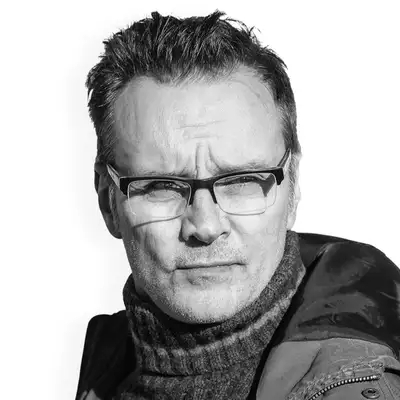
[00:00:29] My name is Troy Van Vliet and we are happy to be here today with a good friend, Banovich. John, welcome. Thanks for and thanks for thanks for joining us here today. It's great to have you. We've got lots of really interesting stuff to talk about today.
[00:00:46] And now, I'd like to let everybody know that John is also a parent. He's got actually, you've got a son graduating this year at Saint John Paul the second Academy. And you also have a daughter in the younger grade.
[00:01:04] John Banovich: Correct? Absolutely. Grade eight.
[00:01:06] Troy Van Vliet: Grade eight. Yeah. So you got bookends there. And so that's great. So you've been you've been part of the Saint John Paul the second academy community for a long time and has been a great promoter of the school, and we're we're off to the races here.
[00:01:23] So but today, we're not here to talk a whole ton about that. We're gonna talk lot about you and what you're doing and your background and what you have been doing outside of our school life here. And if I may, John, I wanna read a quick bio, if I might. And and then we'll get and then we'll get into it. So first
[00:01:49] John Banovich: of
[00:01:49] Troy Van Vliet: all, John Banovich, the world renowned natural history photographer and award winning film director. John is celebrated for his breathtaking imagery, capturing the beauty and majesty of God's creation. His distinct gifts sorry. His distinct gifts and with a profound appreciation for the natural world, John's work transcends mirror photography, offering viewers a glimpse into the divine artistry of nature. Born into a devout Catholic family, John has always been deeply connected to his faith, studying theology at Redeemer Pacific College at Trinity Western University.
[00:02:32] This passion can deeply be seen in his work. His photography is not just a profession, but a vocation, a way to honor and share the glory of creation with others. And as a family man, John balances his professional pursuits with his commitment to his wife and children, finding inspiration in both his faith and his loved ones. John has been a cherished member of St. John Paul II Academy community for several years, contributing to contributing his talents and passion to enrich the lives and those around him.
[00:03:08] His work not only showcases the beauty of our world, but also serves as a reminder of the responsibility we all share in preserving it. Once again, John, thank you and welcome. And there's there's a lot more to you, though, than photography and filmmaking. You also have a really interesting history, with MAD being mothers against drunk driving. And maybe we can start our chat today talking a little about that before we get into whatever he's gonna wanna hear about is all your photography.
[00:03:48] But I find this fascinating. You've got a a great story to tell. Do you mind telling more about it?
[00:03:56] John Banovich: I can summarize it really quickly. Almost thirty years ago, I was hit head on by a speeding impaired driver on King George Highway in Surrey. He died. I died. Obviously, I didn't stay dead because here I am in you know, live.
[00:04:17] But I went through a very long, rather cumbersome recovery process, and it was very difficult. Think we can maybe chat another time in another podcast process, but there there was a lot that happened, and there was a renewal of faith through that process. A lot of miracles happened not just to me, but people around me in in that time. And it was, at one point there, a little concerning because I didn't think I would be walking again. At least that's not what they thought.
[00:04:56] The experts, the doctors, the surgeons. So to get back out into nature was a very strong undercurrent for me. I had that unwavering desire, and I worked with Mothers Against Drunk Driving for a number of years as a spokesperson for them, speaking to high school students across British Columbia and even across Canada. Worked as a spokesperson for the media as well whenever we had a story or we had an opinion to share or request, you know, from the public. And I wrote, produced, and directed a whole series of award winning commercials for them.
[00:05:41] So was was in pretty deep for a number of years.
[00:05:46] Troy Van Vliet: Wow. Now you left us hanging there a little bit. You had said, okay, that you were the the driver the impaired driver was killed, and they said you died. You said you died as well. What happened?
[00:06:03] You obviously came back. What can you can you walk us through that a little bit?
[00:06:09] John Banovich: Yeah. I I like to say that our dear lord had other plans for me, and and I think I can look now at my life and understand. Of course, at the time, I didn't, but, you know, I see my wife and my two children, and I see the life that I live and understand the necessity that he pulled me through. The impact was head on. It was a combined speed of about 230 kilometers an hour.
[00:06:39] Wow. And, yeah, it was it was pretty difficult situation. I was, you know, severely damaged, especially my my face. My vehicle at the time didn't have airbags. They were just sort of coming becoming a thing, airbags, that time.
[00:06:56] And so the steering column, you know, did a lot of damage to my face, and, you know, my my eye was smashed in. My nose was peeled over. My head was split from, you know, my upper cranial area here across my nose down. My chin and my palate was split open, and I underwent over 40 surgeries in three months while I was in the hospital. I stayed in a critical unit care for a quick some time.
[00:07:27] My legs were in air compressors, and my hips had surgery. My right wrist had surgery. My right elbow had surgery. A lot of pins, a lot of steel, lot of plastic. I like to call it aftermarket equipment with limited warranty, unfortunately.
[00:07:46] That was the life I I lived. And, unfortunately, my jaw was smashed in, so my mouth had to be wired shut. I lost my front teeth in the process, and I lost a lot of weight. I left the hospital at ninety one pounds three months later in a wheelchair. So not great prospects looking forward at, you know, at that time.
[00:08:10] But on the on the other side of the equation, I think what's really interesting is that my best friend and all my close friends, in fact, my my family, most of my family were there in the room regularly, and my best friend was was I think it was two days out of three months where he didn't make it in, and they had prayer available for me. They were praying over me constantly. Father Craig Scott came in from he was the priest at Our Lady of Fatima in Coquitlam. He came in to bring the Eucharist to me and to give confession, and, you know, that had a huge impact on everybody in the hospital and everyone around him. So it it it wasn't all bad.
[00:08:54] There was a lot of positives that came out of that experience. And through the process, I learned that, you know, we could take two different paths when these things happen. We can choose to make it negative and and and be angry, or we can choose to see the positive and do good with it. And so, you know, I looked at Christ on the cross, and I thought, you know, my lord, you you've suffered there. You're innocent.
[00:09:21] I'm not. You know, let me take this pain, this suffering, and let me put it on the cross with you. Let me give you this as my offering in atonement. And so there there was an evolution. And and from that, looking to try to explain my death experience, I, you know, explored a number of avenues, one of which was Redeemer Pacific College at Trinity Western University.
[00:09:52] I studied theology there and and looking for deeper meaning, a broader language to describe that experience. Wow.
[00:10:04] Troy Van Vliet: Did you ever you must have gone through some times of why me or why did this happen to me, or was that you know, that that these are quite typical of people, you know, suffering any kinds of trauma or tragedy in their lives. You know, you look it could have been anybody. Why did why why was it me? Because you said, I mean, this had a positive impact on your faith at the end of the day.
[00:10:33] John Banovich: Yeah. You're right. That's a question that I was asked quite regularly in high schools when I spoke to high schools and colleges. I suppose it challenges your faith, a situation like this. You know?
[00:10:48] Why did it have to happen to me? How come it couldn't have happened to someone else? But no matter what the case, you know, it it happened. That I couldn't avoid that. Yeah.
[00:11:01] And what I had to do was trust. I had to give it up to our lord and just trust and say, you know, I at the time, I didn't know. I you know, what do you wanna do with me, lord? You know, I'm I'm a cripple in a bed, and and I'm severely disabled. What, you know, what what does this mean?
[00:11:19] And so through the process, I stopped asking why me, and I started asking, well, what's your will? You know, how are we gonna do something with this? And as I say, you know, mothers against drunk driving, know, turn to the Western University theology. You know? And now I'm involved in in the community at Saint Pope John Paul the second academy, and that's been amazing.
[00:11:48] And I'm involved in, you know, regional politics and and trying to make a difference in my community that way. And so, you know, you stop asking why, god it's just a it's a little bit of a for me, anyways, it was a little bit of a hurdle. It was a little bit okay. This is, you know, so unfair. Right?
[00:12:08] Mhmm. And I'm upset about it. But, eventually, I came to the realization that I'm gonna put it in your hands. It's your will, and good good things have come from it. Right?
[00:12:24] Troy Van Vliet: Yeah. That's incredible. And how many how many talks or presentations do you think you did, like, to to schools and universities high schools and universities, you said. Correct?
[00:12:35] John Banovich: Yes. Absolutely. Roughly about a 100,000 students that I've
[00:12:40] Troy Van Vliet: spoke to. A 100,000 students. Wow.
[00:12:42] John Banovich: Roughly. Amazing.
[00:12:44] Troy Van Vliet: God bless you for that. And you you must believe that you made a difference telling your story.
[00:12:50] John Banovich: Absolutely. So the you know, what was happening at the time, the first few matter of fact, I went to the the regional youth day that we had here in Vancouver. I'd been right before my accident with a friend of mine, Moe McGee. We hosted it, and then I went the year after in a wheelchair. And you could hear a pin drop when I rolled up on the stage because these youth had seen me the year before riding in on a Harley Davidson with my big white cross on the back of my leather jacket.
[00:13:21] I was part of the Christian Bikers Association. And and the next year, I'm in a wheelchair, and I don't look anything like that person that was there before. So, you know, there that was kind of a a a wake up call, if you will, a knocking at the door.
[00:13:41] Troy Van Vliet: That's incredible. So do and did you use in your talks going forward, did you show any video of you before and after the accident? And what I mean by that is, like, okay. You you had this big impact in that one particular group where you were riding in in a Harley, and then the next year, you came in with a did you use that? Is it because quite often when people see somebody that's gone through tragedy and that if that's how they meet them in a wheelchair or something like that, that's how they can't even perceive what they would have been like before.
[00:14:17] You know? They just think that's how they've always been. So did you manage to use that in your in your talks at all? The
[00:14:25] John Banovich: Oh, yeah. Definitely. There was all this multimedia I brought in, you know, commercials that I'd shot, a little documentary I'd put together. I would sometimes do a side by side. You know, here's me running a marathon in Germany coming through the the big stone wall there, the gate, and and, you know, here's a picture of me in the wheelchair.
[00:14:46] Oh, and by the way, here's a three d x-ray of my face and all those little white things. That's wires and, you know, steel pins and all the implants. And so that has an impact for sure. And and that's what it took. It it you know, sometimes to get their attention, the the youth can disconnect pretty quickly.
[00:15:06] I mean, you know, I think we both have you and I both have had that experience. Yep. Teenagers. Yep. But, to you know, we have to reach out and grab them, I suppose, and and not to get too graphic.
[00:15:20] Obviously, that, you know, that that's not necessary. But to bring images to them that are that are very real, very tangible, and and force them to to think about it and and reflect on it, get get some emotion from them, you know, get that conviction from them that that this is not something that, you know, they they wanna encounter. And and for me, I I knew that it was working because I was getting letters. I was getting letters from you know, and emails years later from students who had heard me speak
[00:15:54] Troy Van Vliet: Mhmm.
[00:15:54] John Banovich: Ten, fifteen years prior, and and even letters from students. You know, they graduated, and they'd write a letter, and it would go to the Mothers Against Drunk Driving Regional Office, and I would get it. And that helped me a lot. I was going through a lot of surgery. I've I've had a 149 surgeries over a span of about thirty years almost.
[00:16:15] And when you're in recovery, it's tough, especially the bigger stuff that I was doing fifteen, twenty years ago, and it's nice to have those letters. It's nice to have something positive to reflect on while you're going through the pain. I mean, scripture's there always. The Bible's at my disposal, my friends and family are there. But just to know that, hey, look at this.
[00:16:45] This has a purpose.
[00:16:50] Troy Van Vliet: It it has a purpose and you're turning it into something that yeah. And and God works in strange ways. That's for sure.
[00:16:59] John Banovich: Absolutely. You
[00:17:00] Troy Van Vliet: never know what you're going through. It might seem like the end of the world at the time, and and all of a sudden, there's a reason that something that just some growth that comes out of it. So and it's a shame because there's you know, with tragedy becomes opportunity for growth, and some of us don't aren't able to see that, you know, and you end up, you know, dying internally in that tragedy rather than than growing from it. So it takes a true champion to be able to do that, and you did that with your faith. So I'm I'm I'm happy to see how you turned out.
[00:17:34] And you also you also went, had some time in the military. Correct?
[00:17:40] John Banovich: I spent a little time in Croatia, during the war when when Croatia decided they didn't wanna be part of Communist Yugoslavia anymore, where my family is from. And we my brother and I did a mission of mercy initially in '91 helping out, and then I went back in '92, and I worked recovery, and it was a horrible experience.
[00:18:10] Troy Van Vliet: That must have been really tough.
[00:18:12] John Banovich: Yeah.
[00:18:13] Troy Van Vliet: Really tough.
[00:18:14] John Banovich: Very
[00:18:14] Troy Van Vliet: How did you grow from that?
[00:18:18] John Banovich: Just you know, there's there's a very primal without getting in too deep and getting too emotional. Yeah. There's a there's a very primal way of of thought in life. You don't really care about much. You know, food, hygiene, none of it matters.
[00:18:41] You're either alive or you're dead. And and this was prior to the, you know, my collision with an impaired driver. So I'd already had that opportunity to witness it and and, you know, just see the the savagery of of mankind upfront and and, you know, personal and very difficult very difficult. But, you you know, through it all, we had priests present. We had many burials, so many funerals, and and, you know, the bishop came out for one series of funerals, which was great.
[00:19:25] So God God's with you. You know, I I wore a I don't have it on me anymore, but I wore a silver cross, and, you know, always had that with me that was blessed, and I felt like that, you know, brought me hope. Mhmm. You know, knowing and and I wasn't deep in my faith at that point, but but definitely the fallback position, I suppose, for, you know, many Catholics that are cradle Catholics, that that you go through life and then you get to your teenage years, later in your teenage years, and, you know, the world's out there, and and you start to lose touch with the core root, the innocence of the faith, and that, you know, that that visceral deep rooted belief, and war is something that reactivates that in a very formidable way, I suppose. You're surrounded by death, and any minute it could be you, and and, you know, you're you're not you're you're a participant.
[00:20:37] You're not just an observer. It's not on a and what I mean by that, it's not on a TV screen. You're not watching the news. You're Yeah. You're engaged in it.
[00:20:45] And so that's where your faith comes into it. And, you know, we would at night when we weren't able to get back to our village, we would pray the rosary Oh, wow. Together. Right? With it it it it's like a men's group.
[00:21:02] It's kind of a Yeah. Good to know. Kind of men's group.
[00:21:07] Troy Van Vliet: Yeah. I'm I'm I'm glad you had that when you were there, you know, that that support. Because that's not always the case in, you know, when a country goes to war. Quite often, it's it's you've got soldiers from all different walks of life, and not everybody's gonna get together and say the rosary rosary with you. So you were fortunate to have that.
[00:21:32] And didn't the bishop the bishop said something to you or that I thought was quite profound. You we were talking about that the other day. Yeah. He You know what I'm you know what I'm alluding to?
[00:21:46] John Banovich: Yeah. No. He came and he he spoke to all of us. He talked about that you can't go to war with hate. You know, you can't go fight with hate, with vengeance, with revenge in your heart.
[00:22:02] You can't. You've gotta go with mercy in your heart and and that, you know, murder sorry. It's not murder that we would look at in terms of what we see here in our community, you know, where it's somebody gets an innocent person gets killed. We're going there knowing full well that we're going to engage an enemy who has every intention of doing the same thing to us. And, although I didn't you know, I wasn't on the front line directly all the time, doing recovery, certainly, we, you know, we did engage our opponent a number of times.
[00:22:45] And the, you know, the Catholic instruction by the bishop was to to not look at it that way and to not let it penetrate your heart. And he would say that if if you give yourself over to that evil, to that darkness, if you if it becomes revenge, if it becomes, you know, anger and hatred, then we're no better Mhmm. Than than anyone else. And and that we have to be merciful and and to send them to meet our lord Jesus and allow our lord to, you know, pass judgment to sort it out. Right?
[00:23:28] Yeah. Just put it all straight. No. Wow. So it's it and being a young man in my early twenties, that was that was very heavy.
[00:23:38] It was very
[00:23:41] Troy Van Vliet: Very tough words, Steve. I can't I can't even imagine. I can't even begin to imagine. So I'm a thank you for sharing that for sharing that with us. I don't think we I don't think we realize how fortunate we are for being able to reap all the rewards of a free country, living in a free country.
[00:24:06] And so often, don't appreciate it, and we don't appreciate what others have gone through for us to be where we are today. So and I thank you for for doing that. And I want to on that heavy, I wanna change gears, though, because you have done some great things in your life since then, the mothers against drunk driving, and also you've got your own family now, and you've done some great things in film and photography. Can we can we start talking about that?
[00:24:42] John Banovich: Absolutely. Yeah. I've been waiting.
[00:24:44] Troy Van Vliet: You've been waiting. I thank you for inviting me. Thank you though for sharing that with us. That that is very special and really quite honored that you're willing to share to share that with all of us. So we have there's an art show coming up.
[00:25:03] On the thirteenth? Thirteenth? Thirteenth. And it's being hosted in our dining hall at our school. And and it is your art, your photography.
[00:25:17] And I'm gonna let I'm gonna give you the floor, and I want you to tell us all about it. Like, you got into photography. I don't know that story, how you got into it, what interested that in you, and then you got into some kinds of photography. So and you've got this incredible book that's behind you in your background there, a coffee table book, and which I've had the yeah. I've had the privilege of seeing.
[00:25:44] And so tell us about it, John. Let us let us know what you've what you've been doing for the last how long? Thirty years?
[00:25:53] John Banovich: Thirty years. Yeah. Three decades. It wow. Time goes by so quickly.
[00:26:00] It's one of the, I think, most precious commodities that any human being can have is time, and I really am grateful for it considering the path that I've come from. And I was in the film industry prior to to my crash, and and, you know, this is something that just evolved
[00:26:23] Troy Van Vliet: over
[00:26:23] John Banovich: time. My best friend is a is a wilderness photographer and a wildlife biologist, and there was some inspiration from him, obviously, influence. But you know? So so Graham, you know, had an impact on me, and and my other really close friend too, Chris, Chris Kulichinski, he he's a artist, know, I I highly respected artist, and I would probably consider him to be the most talented artist I know, and and a lot of inspiration from him. And I went on this journey of know, you're you're in wildlife, and I'm enjoying our backyard effectively because Canada's massive.
[00:27:12] It's huge. And there's very few roads that lead us to where, you know, all of this beauty is. So I went on this journey, you know, like everyone else does, camping and hiking and and sort of localized, if you will, you know, six, seven hour drives, eight hour drives at most and in into BC and a little bit into Alberta, but that was really it. You get on a plane, you fly to Toronto, you see Toronto, there's another city. You fly to Montreal, there's another city.
[00:27:44] You know, Calgary is another city. Vancouver is a city. They're all cities. And and what's beyond that? Right?
[00:27:51] What's over the wall? That was kinda my mentality. And then, of course, that really solidified itself when I was stuck in a wheelchair and stuck in the hospital in a hospital bed. You know, I've got one eye. The other eye's all closed up.
[00:28:05] I've got my arm in a in a sling, and it's all pinned together, and I can't move it. You know, I got these big pumps around my leg and a steel cage around my hips, and and, you know, my mouth is wired shut. I'm talking like this because, you know, it's all wired shut. So, you know, I wanna go to a bush. And, of course, you know, nobody really understood what the heck I was talking.
[00:28:28] Troy Van Vliet: I wanna go see the orb like the bears.
[00:28:29] John Banovich: And they're like, you know, what the heck are you talking about? There I mean, there's some really funny stories that happened in the hospital, and that's, I think, another podcast. But Mhmm. Know, that was anxious. And and to get out of that that bad to get out of the wheelchair, to get out there, and and and at first, it was really difficult because I couldn't I couldn't walk very well.
[00:28:52] And and I still have, you know, limited mobility and limited endurance. But I train for it. Right? I I work at it and make it part of my routine so that I can go do this. And what happened along the way was, to me, was remarkable.
[00:29:09] I got a chance out there filming wildlife, and, I mean, I'm filming everything. Moose, bears, every kind of species of bear, every kind of un ungulate, you know, canines and, like, everything. Right? Felines, whatever whatever rodents and birds, the different bird species, water fell. Just everything that was available, I got an opportunity to put a lens on.
[00:29:39] And I started to have these almost out of body experiences in a way. I don't know how to describe it other than to to say that I met the Holy Spirit. I I rarely met the Holy Spirit here. Even in adoration, you know, with Clay back in the day at CCO and and those guys or, you know, at Good Shepherd Parish. I I rarely had that experience.
[00:30:06] But out there out there in in Canada's wild, I I met the holy spirit many, many times, and I've been asked the question, well, how do you know it's the holy spirit? Because you're in the moment, and the world fades away. There's no time. It doesn't exist. There's no thought about a cell phone or an email or gasoline at the gas station or a Tim Hortons or Starbucks or anything like that.
[00:30:36] It's all gone. It's me and all of this creation. This is god. This is his work, and it's untouched for the most part by man. And there's these animals in front of me, whatever species they are.
[00:30:50] And, yes, sometimes it can be very dangerous, and they're incredibly powerful, but I'm in awe of it. I'm in awe of all of this, and I'm just a little tiny part of it. And then the wind would come up. This warm wind would break across my face, this gentle wind, through my hair. And I'm like, yeah.
[00:31:11] I recognize this. I I know this. I know who this is. Holy Spirit, you're here. Right?
[00:31:19] And and and the the fur, and my that's what my daughter calls it, the fur. My hair on my arms would stand up, and I I would have that sort of sixth sense reaction. And I would forget sometimes to turn the camera on. I'd be lost in that moment with the holy spirit, in prayer, in awe, just being one and and being at peace. You know?
[00:31:45] There's this intense peace that comes over you. There's there's no bother. There's no pain. There's nothing. It's you're there.
[00:31:52] It it's tranquil. Oh my goodness. Look at the bear. You know? He's he's brought down the the the moose and, you know, is is gorging on it.
[00:31:59] I completely forgot to turn the camera on. You know? Like, this this was something that occurred more than once. And, of course, after the fact, it's like, okay, Lord. Yeah.
[00:32:08] I get it. I get it. I didn't need to see that. I need to spend time with you. Absolutely.
[00:32:14] But next time, you know, can I get that first before you show up holy spirit? Like, I mean, can we work something out here? You know? So that that is, for me, what has enriched my life and my family and friends' lives is is being able to go on these experiences and and and have that. And I'm trying to take those experiences through images and through some of the text in in my book and and with my artwork and trying to bring the viewer into it.
[00:32:49] I want the viewer to be able to experience that tranquility. I want them to see and and my images are not processed in any way. I don't go into Photoshop. I I don't add anything or take anything away or enhance it in any way. As a matter of fact, I like to work with sort of a film emulsion approach, you know, having come from that world, film emulsion, and and moving forward as as the technology's evolved into digital.
[00:33:20] But I still reflect on a look that I I have in my mind, you know, color palette, saturation, gamma curve. And I wanna be able to apply that to the image while I'm taking it so that it's very real. It's very tangible. In other words, if you're looking at an image in my book, you can go to or, you know, one of my prints or one of my my documentaries. You can go to that exact place, that location, and experience the same thing.
[00:33:51] The mountains look the same. The trees look the same. The animals that are there look the same. It's not surreal. It's not hyper real.
[00:33:58] It's not synthetic or processed. It's very tangible, very real. And it's very much the way God intended it to be.
[00:34:08] Troy Van Vliet: Wow. I love that. Just the purity of your photos and as you're describing them, they are as they are. Like, that's it. No touch ups.
[00:34:18] No no what is it called? Airbrushing. You know, none of that kind of stuff. It's all just in the raw, which is beautiful. And you've you've got behind you so pictures of your book or your you we can see the the the front the cover of your book.
[00:34:37] You have, I don't know, probably hundreds of thousands of photos that you've taken. How did you pick that one for the cover, or did you just have to have a lottery and then pull
[00:34:52] John Banovich: one out pull one out of that? So I'm incredibly blessed because I went to, you know, buildings library of of video footage, stock footage, and and images, and, you know, we're approaching a 100,000 now, I think, in my image library. And
[00:35:10] Troy Van Vliet: There you go.
[00:35:11] John Banovich: Yeah. It it accumulated. And and, of course, I've spoken with publishers in the past, but never really had a connection. And then, you know, just by God's divine intervention, literally, I met this Catholic man who wanted to represent my artwork, Neil and his wife, Charice, and at Shepherd Sterling. And it just felt so different right off from the very beginning.
[00:35:38] And it was to me, you know, humbling experience, because we began our meetings with prayer, in the name of the Father and the Son and the Holy Spirit, let's pray that God is here present in this meeting. Let's pray that God is, you know, pleased with with the way that we're representing his creation in in our in our print and in our books. And so that that to me was a huge part of this. And so Neil and Charisse were the ones who decided on this image on the front. And, you know, I I I mean, again, I once I I saw it laid out digitally, I went, wow.
[00:36:25] Like, that looks really good. Well, John, that's your image. I I know, but, like, that looks good. You know, removing myself sort of as the artist and just looking at what they did in the layout and and, you know, all the people on the team that came together to to make this happen. So, you know, really, it I have a small part in it.
[00:36:50] It There's a whole group of people at Shepherd's Sterling who done a lot more to get it to this point.
[00:36:59] Troy Van Vliet: How many images would be in your book?
[00:37:02] John Banovich: It's around 300.
[00:37:04] Troy Van Vliet: Around 300. Wow. And your book, you're gonna be showcasing that on the thirteenth as well. Right? And that'll be for sale?
[00:37:15] Absolutely. And then how many images did you I've I've seen their shipments coming in to the school. Big shipments too. Big prints, it looks like. Do you know how many will be on display on the thirteenth?
[00:37:31] John Banovich: I think pardon me. I think there's 10 of them in total, 10 images. And then they're all exclusive images. So these are award winning images, images that I've won multiple awards for, and and they're part of a very exclusive group. There are very few of them that are ever gonna be printed.
[00:37:51] So our hope is that, you know, they find good homes. I'm happy to sign them, of course, for people. Mhmm. They'll be cataloged. You know, there's a there's a a registry, a database of of each image.
[00:38:05] So that's kind of interesting, you know, how how that process works. And, again, it's something that I want to try to inspire whoever the owner is, that, you know, has this image. I want to try to get have them inspired by it. You know, maybe they're not gonna make it up to Tuk Tuk Tuk, but that's okay. You know?
[00:38:34] And I'm happy, by the way, if somebody decides they wanna go to Tuk Tuk Tuk, I'm happy to help you plan the roof and tell you what you're gonna see along the way and, you know, I mean, you can certainly bring, one of these, but you know, and and get some amazing memories. But, I'm happy to to walk people through that process because it what good does it do me? You know? I'm not I don't wanna be selfish in any way. I wanna share, because this is God's.
[00:39:04] It's not mine. So I just wanna share. You know? If people wanna go up there, I'm gonna be here for them to help them experience it. And the book itself is interesting because the this particular book that I'll have at, at the art show is, proof copies, so they're collectors.
[00:39:23] Beautiful. The formal copy will be dramatically more expensive than than these will.
[00:39:30] Troy Van Vliet: Well, I'm looking forward to seeing them, I think, because what's in your book is so impressive, and so I'm looking forward to seeing some of the larger prints there on the on the thirteenth. That's 06/13/2026, and we'll have this in the notes, of course, in the podcast as well. But 06/13/2026, we don't normally do stuff with dates because these are always prerecorded, but we're gonna get this one out real quick so that it's in time before before your event date. So that that we're so looking forward to.
[00:40:11] John Banovich: And, you know, Troy, I should point out because there's there's always a little bit of confusion. I'm John Banovich. There's another John Banovich that people quite often mistaken us for each other. It's spelled exactly the same. He doesn't even live that far away.
[00:40:28] He's just down across the border North of Everett up there in the Cascades.
[00:40:32] Troy Van Vliet: And he's a career criminal? And no. How do we know him? What is he known for?
[00:40:40] John Banovich: Well, I do look behind bars. You know, the shadow kind of effect. Right? I mean, kind of poking through there. Hey.
[00:40:48] I went to a communist country. You know?
[00:40:49] Troy Van Vliet: What can I
[00:40:51] John Banovich: John Banovich, the other John Banovich is almost the same age? He is a rule renowned wildlife painter. So he does natural history, but he paints it, and his his work is absolutely stunning. I've been to his gallery down in Montana and and spent a little bit of time with him, and we we we did a little bit of family lineage. It turns out we're fifth cousins.
[00:41:18] Great great grandfather came from Dubrovnik, which is where my great great grandfather came from, from that area, that region, so we're we're related. And so one of the cool things about John is, you know, I always really enjoyed there's a number of paintings he has that I've really enjoyed because from a distance, it looks like it it's so accurate. He depicts it. It's so believable. It's it's real.
[00:41:53] It's alive, that it looks like a painting or sorry. It looks like a photograph. Some of his paintings, you know, even up close look like like photographs. So I took it upon myself a challenge, and you'll see one of these images at the art show of trying to photograph in such a way that it looks almost like a a painting. And and from a distance, it's going to feel like a painting until you get up close and you realize it's a photograph.
[00:42:24] So I've had to develop some new strategies and techniques to do that. I'm not gonna share anything with anyone. Yep. That's between the Lord and and myself. Yep.
[00:42:33] But, you know, I'm very pleased about some of these images and how we were able to get them created in camera. This isn't something photoshopped. This is you know? And I can I can show people the original raw file, you know, capturing intentionally capturing images to feel like photographs so that there's a depth to it? There's a little more of a almost an art element, you know, and and and being a purist, as you pointed out, I mean, that's really how I envision all of this, you know, being a purist, going back to the traditional art form of photography and cinematography.
[00:43:16] It's harder to do these days because there's just so many tools, and there's a lot of amazing natural history photographers out there and artists, but I've I've avoided taking the path that they've taken, you know. Mhmm. I've tried to keep it very true to what God created and what, you know, what I'm experiencing so that you can hopefully, you and and everyone else that's looking at it can will enjoy it in that way.
[00:43:44] Troy Van Vliet: Yep. See its natural beauty for what it is. That's great. Well and it's so it you get to go and see God's creation firsthand out there in the wilderness. There's something about being out in the wilderness.
[00:43:59] I mean, it's it's absolutely it's absolutely stunning. And when we're bringing in Catholic education in our school, we're bringing the Catholic liberal arts in, which captures some of that and shows in nature there's mathematics, and in mathematics there's nature, and how all of these things overlap and intertwine. And it can only be through a divine creation that this has all come about. You know? You need you need a lot more blind faith to be an atheist than you do to me.
[00:44:46] You know? That all of this just came from chance. Well, that's true faith. That's true belief. You know?
[00:44:55] So and you I I I would imagine that's you're inspired by that every time you get out there.
[00:45:02] John Banovich: It's bigger than any of us. You you get into the Rocky Mountains or the Coastal Mountains or up in Ploani or Nohani or the Cariboo Mountains, I mean, any of them. And then you get down into the valleys and it's just such a plethora of of of life. You know, everything's alive, and it's vibrant, and there's an element of danger, and, you know, those are questions you get asked all the time. You've been trapped on a logging road, an FSR.
[00:45:29] You know, there's torrential rains, and the side of the the road collapses, and now I'm stuck on the other side, and I can't get through. That's happened. Wow. You know, a helicopter drops me off, and and the helicopter crashed, and now I don't know where the helicopter is. I'm stuck out there in the middle of nowhere.
[00:45:48] I've gotta hike out for three days. At least you weren't in the helicopter. No. No. And in this particular case, nobody nobody died.
[00:45:55] They just were were injured, unfortunately, but nobody nobody perished. And so, you know, these sort of things happen. I I, you know, get charged by bears all the time. You know? I've learned to speak bear, and I'm not kidding.
[00:46:10] I've learned to speak bear. There's a line they have their own language, and and it works quite well. You know, there's even walleye that I see regularly. There's there's, specific grizzly bears, specific caribou bulls, that I'll I'll encounter year after year after year. I'll go back, and and they know the sound of my voice.
[00:46:35] Troy Van Vliet: And,
[00:46:36] John Banovich: you know, there's a recognition. I I'll I'll probably at the show talk a little bit about I named them. They've got names. I I've given them names, because, you know, I see them every year, and the names are typically based on their character and their personality. Because every just like human beings, every animal has their own distinct personality, their distinct character.
[00:46:58] It requires time. When we're driving by and it's just a quick, you know, click, click, click, click, click as we drive by, we don't really get a chance to experience them. But when you spend days out there observing them, you know, I got an opportunity to photograph a young, white grizzly, a sow, and her family, her her two siblings and her mother. And it it was an enlightening experience because day after day, I got a little closer and a little closer to them and, you know, never never approached them within that safety, that 100 meter safety range. Never got closer than that.
[00:47:36] But but they they became quite familiar with me and quite comfortable, and there was never a threat on anyone's part. You know, it it was really cool to coexist, to to be, as I like to believe, at least in my heart, that this is how god intended it. God didn't, you know, intend the world that going back to the creation story, you know, Adam and Eve, he I don't think he intended it to be as messed up as it is. In fact, I like to believe he he did not. So there's there's these little gems that come out, you know, in in this process where there's moments that you you have a relationship with an animal, and and you you get to see their character, you know, the the humor that the animal has, the defense mechanisms, you know, even some of their curiosity.
[00:48:27] It's it's truly amazing. Absolutely.
[00:48:30] Troy Van Vliet: It must be. Are you gonna say something in bear for us? Oh, that sounds kinda bearish. Little little grizzly for you. Do you know what do you know what he's saying there?
[00:48:48] Is that, like, back off or Who are you doing? Yeah.
[00:48:52] John Banovich: It's a warning.
[00:48:53] Troy Van Vliet: It's a warning.
[00:48:54] John Banovich: Yeah. You yeah. I and I just came off the road literally hours ago. Yeah. Still sort of on the road here, you know, today encountering a number of moose, including a young bull and a couple of females, just a couple of cows encountering So where
[00:49:12] Troy Van Vliet: are you? What neck of the woods are you in right now? Pun fully intended there.
[00:49:18] John Banovich: Where are you? Sort of along the Kokohala.
[00:49:22] Troy Van Vliet: Oh, okay.
[00:49:23] John Banovich: Yeah. Yeah. I'm coming in from the Okanagan and beyond actually over in in Boundary, but the Boundary area. So
[00:49:32] Troy Van Vliet: Okay.
[00:49:33] John Banovich: Selkirk Mountains just in that valley, Christian Christian Valley, and and the hills around surrounding them there, the Mangiches. But, you you know, there's this there's a grizzly sow up there and and two year yearlings that I got a chance to, you know, encounter very briefly and some, mountain goats this morning and, you know, these these moose, this afternoon. It was it was a great experience. Just, know, every time that happens. And I'm always surprised, you know, going down the road, Troy, that I'm always surprised.
[00:50:05] I don't think the general population realizes sometimes you're you're in such a hurry to get from a to b. I mean, everybody's passing me because I I'm the slowest guy on the road, literally. You'll know it's me. Number one, I'm driving some kind of crazy looking four by four, and I might have, you know, a sleeping rooftop sleeper on top or a canoe or something. Number one.
[00:50:27] Number two, I'm gonna be going slow. I'm gonna be the guy that's kinda hugging the the shoulder there, and you might even see a big giant lens sticking out the window periodically. I'm that guy. But that's, you know, that's the way I work. And and for me, I I don't wanna miss it.
[00:50:42] Everybody's trapped by. They're in a hurry. They gotta get somewhere. No. I'm I'm gonna slow down and look, and it's amazing what you see right off the highway sometimes, you know, in the interior.
[00:50:53] And I've got a bad habit now of going, I have been down Highway 3. Been down Highway 97. I've been down Highway 5. I've been down Highway 1. These these are boring.
[00:51:03] There's gotta be a road that, you know, I can take in between here that'll eventually get me home. I don't care how bad it is. You know, four wheel low, climb over the mountain. I don't care. You know, winch my way up.
[00:51:13] Let's go. And and this is part of the journey. Right? It's part of the adventure. It's and to me, it's not really an adventure until, you know, you have to overcome some hurdles, some struggles.
[00:51:26] Now it's an adventure. Now it's worth writing in a book.
[00:51:29] Troy Van Vliet: And And we're so fortunate where we live because it's so close. You know, you don't have to drive very far to to get into the wilderness here, And and real wilderness as well. Like, real mountains, real wilderness. You don't have to go very far. And it is sad.
[00:51:44] We I drive through the mountains sometimes with my kids, and I'm pointing things out. Look at this. Look at this. And then, you know, I was, you know, I have to get them off their phone. And I'm like, just look around.
[00:51:54] See where we are. You know? Here is the glory of God surrounding us. And so but anyway, John, I think we're gonna wrap it up, and I hopefully we've said enough to entice some some people to some some people that tune in here to come out and see us and see what you've got to offer there on June 13. And that's from what time to what time?
[00:52:20] Three to six? No. Five to eight, I believe. Five to eight. There you go.
[00:52:24] Five 05:00 to 08:00, 06/13/2026. So be sure to come on out and meet John. See his beautiful artwork. Maybe pick up a book or a piece of art. And, yeah, you that you can take it home.
[00:52:43] So you'll have you'll have supply here. So if people do wanna come and if they're in feel enticed to to grab one of your books, they'll be they'll be available here for sale.
[00:52:53] John Banovich: I'm happy to sign it and have a conversation and looking forward to meeting everybody.
[00:52:58] Troy Van Vliet: Love it. Alright. Okay, John. Well, thanks for thanks for coming out today and jumping on here with us. And so far, we are so much looking forward to the the thirteenth.
[00:53:12] Thank you everybody that watched, joined us here today. Be sure to like and subscribe and share this with your friends. Anybody that you think could be interested. Thank you for joining us here today in Catholic Education Matters. Everybody, have a great day.
[00:53:25] Thank you for listening to Catholic Education Matters. If you enjoyed this episode, please follow the podcast on your favorite listening platform, rate it, and also leave a review. Don't forget to share this episode with your friends and family to help spread the word about the impact of Catholic education. Be sure to listen again.