Subscribe
Share
Share
Embed
“The best that we can do is continue to be visible, continue to organize, and continue to take action to secure our own space within our own culture.”
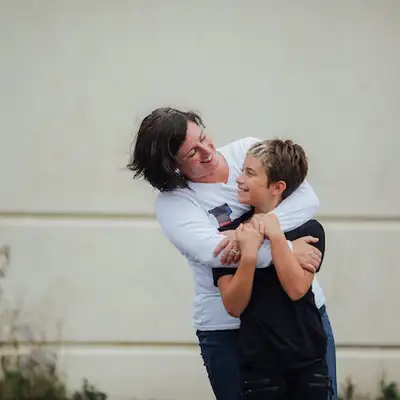
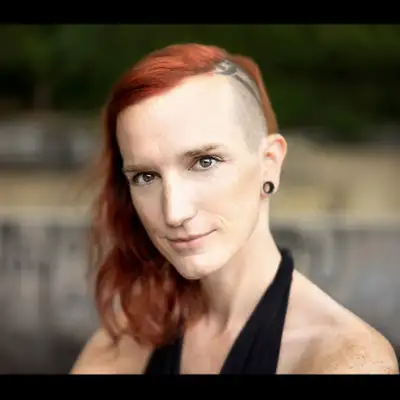
A Simply Good Form podcast exploring transgender inclusion, gender diversity, and inclusive leadership — one bold conversation at a time.
Hosted by award-winning advocate and proud mama bear Cyndi Sweeney (she/her), Simply Beyond amplifies the lived experiences of trans, non-binary, and 2SLGBTQIA+ voices across Canada and beyond.
Through real stories, candid conversations, and practical insights, we go beyond the binary to build connection, foster belonging, and inspire allyship at home, at work, and in our communities.
Whether you're a curious ally, a parent of a trans kid, or a leader working to create safer, more inclusive spaces — you're in the right place.
Because every voice matters. And every story counts.
Hey, cis. From coast to coast, we're bridging the gap between the cisgender and transgender community, creating meaningful dialogue and space to learn and grow.
Cyn Sweeney:Join us as we connect with our community, break down tough conversations, and get comfortable being better humans.
Isaac Cook:Welcome to Hey Sis. My name is Isaac Cook, today I'm joined by the ever so amazing Emma Stanley. Sin and I had the pleasure of being joined by Emma back in December to end the twenty twenty two year. And she also spoke about her journey as a world traveler in season three, episode twenty nine and thirty.
Emma Stanley:Hi, I'm Emma Stanley. I'm an inclusion consultant and the director of program development with Simply Good Form. We're a Halifax based inclusion company. I use sheher pronouns, and I have been in the education industry and then more recently in inclusion training for about ten years.
Isaac Cook:Welcome back to the show, Emma.
Emma Stanley:Thanks for having me in again, Isaac.
Isaac Cook:Always a pleasure. So, International Transgender Day of Visibility, or TDOV, is an annual event occurring on March 31, dedicated to celebrating transgender people and raising awareness of discrimination faced by transgender people worldwide. It is a day that is very near and dear to both of our hearts, as you know, as we are trans people. But I wanted to toss the question your way first and foremost. So for you, what is the biggest payoff of TDOV and events and celebrations similar to TDOV and trans visibility as a whole?
Emma Stanley:Oh, wow. Okay. That's a big question. But I think it does boil down to a couple of points. When trans people who are already out and living their authentic lives are able to see others like themselves and connect with that community, the support is unbelievable.
Emma Stanley:The change in your life when you move from being someone who is alone or isolated to being someone who is a part of a community, even if that community is dispersed worldwide, is profound. It changes the way that you view yourself, your future, your ability to thrive wherever it is you are. And that affects your ambitions as well, your life plans. Certainly, in my case, finding my community was not just a sort of social or support aspect, but it allowed me the confidence to make my ambitions bigger. And so it ended up changing my career path.
Emma Stanley:It ended up changing where I lived. And all of that basically stemmed from feeling like I had a support network.
Isaac Cook:Yeah.
Emma Stanley:And that's the case for for other trans people as well. When you talk about it in terms of people that aren't out yet, that that haven't been able to find that safe space to live authentically. It shows people living their lives as their authentic selves and and doing it successfully and without an enormous amount of drama. Yeah. The visibility of people living without drama.
Isaac Cook:A lot of times when, in particular non trans or non queer people talk about trans experiences, it's probably 90% of the time overdramatized and focusing on the struggles of being trans, you know, what are the experience like to transition, the hardships, the relationship struggles, things like that. And we don't often get to celebrate a trans CEO, or like a trans woman excelling in her career, or, you know, just the mundane things of like being able to go to a grocery store and not get misgendered, like, little things like that give people hope and give people comfort. And it's easy, especially in the day and age that we currently live in where everything is on social media or put on the news, it's easy to only focus on the stuff that's gonna get people either angry or sad. Like, those those two emotions are what kind of fuels that fire. But for myself, I love seeing those kind of like more mundane, and I agree with Zoe, kind of like not normal people experiences, but like the average Joe going out in the world and being like, you know, I'm just living.
Isaac Cook:I'm just doing me, you know?
Emma Stanley:And it's it's interesting you mentioned angry and sad. I think I would add victorious to that. There are just as many sort of clickbait emotions that that feel good. But, again, they get focused on so heavily. We ignore this the after the happily ever after part of it where it's just you're just living your life.
Emma Stanley:You just wanna go to IKEA or whatever. So when trans people who are in the mundane part of their lives, where it's not necessarily the the focus of their existence anymore come out and say, hey. I'm I'm out. I'm living my life. I don't really have amazing story for you, but I do exist.
Emma Stanley:It gives that visibility and that representation that we're usually missing in entertainment media.
Isaac Cook:Yeah. Well, it also brings up that idea of like what comes next, right? Like, say you're a trans person transition and also socially transition. So you socially transition, you get your support people, you're comforted, you go through that, the systems in place and the barriers, and then you medically transition, you go through those steps, and then it's like, what next? Right?
Isaac Cook:Like, you're going into those stages of your life. And I know both kind of me and you are kind of in those stages now at our inner lives where we're not necessarily needing to put so much fuel into into being like, Okay, I need to get like my name changed, or like those like key parts of the transition. Like afterwards, we're like, Okay, like, now we're in our careers. Like, now we're just trying to buy a house or move or like find roommates or, you know, buy groceries, like things like that. And it's interesting.
Isaac Cook:Like, it's an interesting, unique experience that I think all trans people go through. And there's so much intersectionalities as well, intertwined with that, that that makes that what's next so unique.
Emma Stanley:Yeah, I think the focus is so laser targeted on the coming out and the initial experience and the interesting part, basically. Yeah. The dramatic part that we lose that. So it's good. I mean I mean, look at the holidays that we do have.
Emma Stanley:We have other than, the day of visibility, we have national coming out day or international coming out day and the Trans Day of Remembrance. So it's like coming out and when we die. Those are the interesting bits that the rest of the world is actually interested in. The rest of it is just like going shopping and no one cares. For people who are still struggling with it, still questioning, still trying to find their moment to to be themselves, I think that showing that you can just live your life in a way that is not dramatic, it's not an inspirational story, is incredibly important.
Isaac Cook:Yeah. And I and I think on that too, like there's there's always a tricky idea that everyone wants to be an advocate and everyone wants to be their own advocate, but some people like aren't good at advocating for themselves and people automatically assume like, if you are a trans person, then you should be like the key go to for like, everything and anything related to this idea. But there's also the fact that like, when you're trans, like you don't just come out once, you don't just come out twice, you come out in multiple different stages of your life. And a lot of times people transition more than once. Like, it doesn't just happen that, you know, you identify as this, and then, you know, twenty years down the road, you're going still be identifying as that same thing.
Isaac Cook:Like, your identity fluctuates and changes. Like, I guess, I think the best way for me maybe to explain it to people who maybe aren't as intertwined with the trans community is that, for instance, for myself, When I first came out as a as a baby, I was I think fourteen twelve maybe and I was like Okay, I have this like preconceived notion of like who I want to be when I'm like older. And that was comprised of being like, basically as close to a cis man as I possibly could as someone assigned female at birth. Because when you're younger, and you're taught about, or maybe not taught about trans identities, you automatically think, if I'm X, I have to be the complete opposite of that.
Emma Stanley:Yeah, very much.
Isaac Cook:And then when you get older, you're like, Okay, no, I don't actually have to subscribe to very cis heteronormative ideologies about gender identity and sexuality, things like that. So, you know, like when I turned 16, I started hormone therapy. And then I was like, Oh, I really don't want be a cis man. Like I identify more with being like non binary or like gender fluid and like your identities change between that. So that's another really important aspect of visibility for people to consider is that feelings of yourself change over time and the way that you are going to make yourself visible to others or even visible to yourself is going to change over time.
Isaac Cook:It's never going to be like a one and done event.
Emma Stanley:I always get a bit sad when people talk about phases because there's the classic line. Oh, it's just a phase and then the classic retort. It's not just a phase. And I mean, it's a tricky conversation because the word phase is kind of silly. Everything is a phase.
Emma Stanley:I was born a baby.
Isaac Cook:That's a phase.
Emma Stanley:Sounds really fun. Funny to say, but like I am no longer that thing. Everybody, everybody has many identities over the course of their lives.
Isaac Cook:Mhmm.
Emma Stanley:Adding the aspect of gender to that mix, whether it's you're a parent of a young child, a parent of a teenager, a parent of adult children, those are three different phases of a life. But they're deep and they're meaningful. And as we grow and change, we go through different identities. And yeah, so adding gender to that mix is just one extra aspect of a process that everyone already does. It's not a unique process.
Emma Stanley:It's just an added component.
Isaac Cook:Yeah. And the concept of phases, at least to me, almost seems like there's like an expiration to something or, you Yeah. Know, like I think people become too muddled up in that idea that like, it's exactly as you said, like the stereotypical, like, it's not a phase mom kind of thing. Like, like, we're not technically, yes, they are phases, but it's more of like an evolution. Like, for instance, like, you're in use like the job or like career example is that like if you're in one role and then you get a, you know, promotion, you're in a different role.
Isaac Cook:Technically, that's a phase of your life that's now changed, but you're still growing on those, like steps that you then built up to that position. And it's similar with like gender identity, sexuality, your all the different identities that you might identify with religion, things like that is that you learn things and then you also unlearn things about yourself and the world and other people around you. So then you use those, all the mix of those experiences as you evolve into hopefully being a better person for yourself and the people around you, to create yourself and to make yourself.
Emma Stanley:Yeah.
Cyn Sweeney:Hey, Sis is all about connecting communities and thanks to support from TD Bank Group, here is this episode's Connected Community Moment.
Isaac Cook:So we are thrilled to announce that for those located in Nova Scotia, in partnership with the Mental Health Foundation of Nova Scotia, Mount Saint Vincent University, the Halifax Public Libraries, Dalhousie Legal Aid, and Gender Affirming Care Nova Scotia, we are offering a name change and gender marker clinic on March 31, which is the day of TDOV, from 12PM to 4PM at Mount St. Vincent University. There will be two fabulous volunteer lawyers on-site with thanks to Dalhousie Legal Aid to witness and sign pre prepared documents.
Emma Stanley:If you check out the website, you'll find a link that will allow you to make an appointment. We are able to process walk ins, but it will be a lot smoother if you can make an appointment before you come in on that was March 31. We will have volunteers there to take you through the paperwork as well. If you are just wanting to gather information, that is absolutely allowed and recommended.
Isaac Cook:You can learn more at simplygoodform.com/name_ gender _ marker underscore change underscore pathway or by checking the link in the show notes. We look forward to seeing you there. This has been a Jesus and TD Bank Group Connected Communities moment because inclusion matters. So what's the value of having a gender marker name change clinic, especially for our community?
Emma Stanley:I don't know how many of the listeners have interacted with Canadian bureaucratic systems, but they are labyrinthine. The name and gender marker change process has come a long way, but it is still a lot of steps, a lot of forms and a lot of very anxiety inducing spaces. One of the first steps is having to go to a police station to get fingerprinted, and that alone makes a lot of people so anxious they will not want to continue with the process. So there are significant boundaries for the community in accessing this and accessing the ability to live your identity legally is a profound part of a human's experience.
Isaac Cook:Mhmm.
Emma Stanley:Name, your legal name affects almost every area of your life. It determines, in part, your access to Medicare. It determines how you're addressed by official sources. And not being able to live under your own name is a deeply frustrating experience. I had to do that for many years before I was able to legally change my name, and it was incredibly frustrating.
Emma Stanley:Because every time you walk into a hospital, which if you're transitioning medically, you do a lot. Yeah, they have to check your legal name. And every time you walk into a bank and every time you have to interact with police and that one gets even more terrifying than the others are certainly much more anxiety inducing because the last thing that anybody really wants to do is stand out to police. Yeah. So it's a thing that people who have or I I want to say people who own their own name rarely see, and that is perfectly understandable.
Emma Stanley:But when your legal name is not your real name, you quickly become aware of how often you are required to use your legal name and how demeaning it is to have to sort of wear your story on your sleeve. It's it's frustrating. And access legal access to your own identity is something that a lot of people need. And because of the process for getting it, it is again confusing and a bit scary. So we're trying to give people a softer path towards just simply getting access to a service that is already available and a lot of people need.
Isaac Cook:There's a lot of barriers that people don't recognize in terms of like finances of changing your name. And also kind of jumping back again to like geography. You have to go to vital statistics in Nova Scotia in particular. There's only like one office and that is in Bears Lake in Halifax, which, you know, is not the easiest to navigate, even if you're in Halifax trying to get there by bus. I did that when I was changing my name and it was awful.
Isaac Cook:It's tricky on those sides. And then also on the finance side, you know, these are legal documents. Therefore, they need to be legally verified by someone. Therefore, you have to find someone to notarize things or to sign off on them. Finding the people to be able to support you in this journey, because it is it is a journey, is one step of this.
Isaac Cook:And people like don't realize too, like how many IDs do you have with your name on it? Or if you're, you know, an older individual and you have an apartment, you have to change all your names on those documents, your credit card, your debit card, your license, your passport.
Emma Stanley:Going back and getting every certification you've ever gotten. So your degree, your diploma. Yeah. Every license that you that you have under your name, the permanent ones that you haven't thought about in twenty years, you have to go back and get all of those changed because you use those certifications whenever you're applying for a job. And then that comes up.
Emma Stanley:And we are still living in a world where when your documents don't match your introduction name so if I introduce myself as Emma, but all of my old documents are in my old name, That comes up in the interview, and it's really frustrating because you can't just extend an interview most of the time. Right? You have you have your twenty, twenty five minutes. And if I spend fifteen of those minutes explaining why my documents are in a different name, I only have 10 to sell myself to a prospective employer. And that is a huge barrier.
Emma Stanley:That is a problem. One last point on the gender marker clinic is that if people just want to come in who have already gone through the process and make absolutely sure that they got every single step, I have a tiny personal anecdote here. I changed my name to two and a half years ago now, and I only very recently found out while we were building this clinic that I completely missed an important step. And my SIN number is still in my old name. So I have more paperwork to do.
Emma Stanley:So in terms of just giving people some peace of mind, if they do want to come in and just check to make sure that they have in fact completed every step, we can help with that.
Isaac Cook:If folks are not Canadian or are from another country, Cindy has a lot of experience with, you know, the process for individuals who were born in Ireland and we're always keen to learn more, you know, about where are the barriers that exist in other countries, You know, how can we help support that? Obviously, don't be expecting to be signing paperwork that day, but we can at least help you understand that process a little bit better. So I wanted to really jump back a little bit because we spoke really quickly kind of about like safety and security with identity. And there's one quote that I've carried with me ever since I first heard it, and hopefully I am citing this properly. We'll include it in the show notes, I have a link to the tweets where it was posted.
Isaac Cook:But it goes, to be visibly queer is to choose your happiness over your safety. And that's from DeShaunLH on Twitter. And when I heard that, I was like, shit, that's pretty true. And I mean, there's a lot of we hold a lot of privilege here in Canada, especially as we're both, you know, white trans individuals, but there's still significant transphobia, in particular towards like trans women and trans misogyny throughout Canada and North America that is growing to degrees that I would have never imagined. To date, we'll also include some more of the links down in the show notes in hopes who want to learn more, but Florida recently, down in the in The US, became the eighth state to restrict transgender care for minors, so individuals, I believe, under the age of 18, but in some states, I believe it's under the age of 25.
Isaac Cook:So it's becoming increasingly more important to be visible, but in the same breath, it is becoming increasingly more dangerous to be visible.
Emma Stanley:Yeah.
Isaac Cook:Just curious kind of your your takes on all this, Emma.
Emma Stanley:The world is becoming a scarier place and or the world is becoming a scary place again is maybe the better phrasing of that. And while we have as a community this ability to see each other, this visibility and this representation, it is really desperately important for us to form as many networks of support as we can and organize in the ways that we are able to think defensively, quite frankly. Think about what happens if that comes here, because it's so easy to say that happens somewhere else. Because years ago, we said, Oh, that only happens outside of North America. That only happens in this specific culture or that specific culture.
Emma Stanley:And now it's knocking at our back door.
Isaac Cook:And
Emma Stanley:that is a little bit terrifying. There is a part of me that is still saying, well, that's America, and that's simply not the case. The culture war that is happening right now has us dead center targeted, and that is terrifying.
Isaac Cook:Mhmm.
Emma Stanley:And the best that we can do is continue to be visible, continue to organize, and continue to take action to secure our own space within our own culture. Yeah. It's frustrating because I know that those are very vague terms, like what is organizing to secure our space within our own culture. The fact is, I don't know. And I don't think any one person can know.
Emma Stanley:You have to look around you, see what problems you can solve, what structures you can build and act on that.
Isaac Cook:To that exactly, I think it's really looking within our own communities and recognizing like where are the barriers that exist? Where do we need more visibility? Where does there need to be more trans informed decisions? And everyone can rip on Canada and Nova Scotia's healthcare, but I think that's one of the biggest, like, prime examples of areas that need trans informed care. And school systems, there's so many spots that need to be collaborating working closely with actual trans people, not, you know, legislatures that say that they're representing the trans populations, but actual trans people, particular, you know, like BIPOC and indigenous trans people who can also help support those pieces of intersectionality that so often get missed.
Isaac Cook:Trying to convince people, I think, is one of the most trickiest things right now in Canada, and I'll speak specifically to a Canadian lens, is because a lot of folks in positions of power fall under that same mentality. I suffer from it too sometimes. It's very easy to be like, that's a US problem. You know, whenever we talk about the news, like, as I just said, like, we're talking about Florida, we're talking about Southern states, we're talking about areas that historically haven't been the safest for trans people. But people don't realise how quickly these ideologies trickle up into Canada and how, you know, yes, while Canada and The United States and The UK and like France, we're all, you know, we're all different countries and regions and our own government systems, but everything is very intertwined.
Isaac Cook:And just because something is happening 5,000 miles away doesn't mean it can't happen in your own backyard. And I think we need to become more aware of who is at risk in our backyard, and who we can do better to protect when they are visible.
Emma Stanley:It is an interesting thing with Canadian culture that we, I think, are more careful about what we project into the world as opposed to Americans. And this is not a criticism of Americans, just a difference in culture. Canadians, I think, are better at optics, but not necessarily at all better in action. We get caught in the trap of seeing representation and assuming that means things are okay, and that is not the case. I had a really interesting time.
Emma Stanley:About a year ago, I went home to my hometown, and it is fairly rural. And while everyone was extremely good to me because, of course, it's my hometown, they recognize me, so I don't need to, tell people my story. They can see it. While I was in public, everyone was incredibly nice. And then after about a week, I started looking up old friends and.
Emma Stanley:They said, yeah, absolutely. We'd love to hang out. You can't come by the house, though. And it wasn't the people. It was their families, their partners.
Emma Stanley:People who had known me my whole life were great about it. And and, you know, that shows how far we've come. But they were not as sure about their families. And so we could hang out, but I couldn't visit. And this is in a town that is fairly rural, but but the again, the people there are are great in public.
Emma Stanley:Mhmm. And I do think that it's easy to get caught in the trap of seeing all of the diversity and mistaking it for inclusion.
Isaac Cook:Yes. Oh, 100%. I think to a kind of as you said, like it's a very it's it's a worldwide issue. Don't get me wrong, but Canadian Canada in particular has the issue with being like, here are the numbers. Here's the data.
Isaac Cook:We're good. Like there's trans people here. There's indigenous people here. There's black people here. We're good.
Isaac Cook:You know, we don't have to
Cyn Sweeney:do anything else they exist.
Emma Stanley:We're Canadians. We're so great.
Isaac Cook:Yeah, we're so nice. Are you though? Yeah. I'm like, I yeah, Canada is very good at hiding things. We do a lot of covert, like transphobia, racism, things like that, and not a lot of it's overt, and you kind of have to, you know, peel away and open the book to really to really see what's actually going on behind the scenes in a lot of these places.
Isaac Cook:And a lot of times, you know, it is those small towns like I also not as small as you, but I did grow up in a smaller town. My high school was way too big, but it's it's interesting when you when you have a lot of that small town mentality and then you kind of are perceived as like you're like the only trans person
Emma Stanley:in
Isaac Cook:the area or you're like the go to resource for your family or you know, you can you can tell the rural versus urban trans experience. Like they're very unique in their own kind of subset.
Emma Stanley:Absolutely. And that's where you get into intersectionality and the options and challenges that you face in a rural setting are so different from in a larger city. And a lot of that, bringing it right back to the beginning, is being able to find your community.
Isaac Cook:Mhmm.
Emma Stanley:Small towns are isolating and Yes. That is not fun.
Isaac Cook:Well, I remember there was someone recently did a surveys. Everyone loves surveys this time of the year. I don't know why. Maybe, you know, end
Emma Stanley:of fiscal I love three days or surveys in the morning just for fun.
Isaac Cook:I know. Listen, I literally I think I was sent like at least three or four today. Anyways, a little off topic, but there was a survey being done for like a rural community in Nova Scotia and they were like, what can we do better? What other resources can we provide these people? And these people as in trans people, queer people as in myself.
Isaac Cook:Not to other myself,
Cyn Sweeney:but crazy. I
Isaac Cook:know, I know, I know. Anyhoo, what we can do to help queer people in general in the in the community. And one of the biggest things that I flagged that I was like, there's literally nothing. If you ask anyone for like, where can I go for like, queer support? They're like, go to Halifax.
Isaac Cook:It's like, where can I go to see a doctor that is at the very least informed of what HRT is for a trans body? They're like, Go to the sexual health clinic in Halifax. I don't know. There are no resources in rural areas, so then everything is sent to this one area, which then puts so much pressure on those resources in that one specific area because they're not geographically spread around, nor are they supported if they try and start up. I know I'm getting on a little bit of a side tangent, but everything kind of relates back to the idea of visibility and if we don't have resources in these areas, how are you expecting people to be comfortably visible in these geographic if they have to go, like in Nova Scotia to Halifax to be properly visible and to be properly Why are we turning around and being like, Why aren't there any trans people here?
Isaac Cook:Meanwhile,
Emma Stanley:They said they put them in a truck and ship them to the city. Yeah, exactly. Isn't that weird?
Isaac Cook:Yeah, this is weird. But it's like I just like I look at like Sydney, Cape Breton, for instance, which is four or five hours away from Halifax. I know people who used to have to drive like, biweekly to monthly to get like testosterone shots or, you know, estrogen pills and stuff, they could only get it prescribed in Halifax. We're slowly getting better at teleconferencing and stuff, but it's still like, it's not there yet. That's why
Emma Stanley:they're Health not there care is an issue. Yeah. And we're starting. I don't think I mean, I would love to see the healthcare change and and become more accessible. Of course, we're Canadians.
Emma Stanley:Health care is is pretty much an issue for everyone and and rural health care in particular. We are trying to get more support programs out to rural areas. For example, Thrive. Shameless plug. I run a program called Thrive that is in partnership with the Mental Health Foundation of Nova Scotia.
Emma Stanley:It is a program to try and introduce queer youth to the skills that they need to find a job. And one of the explicit focuses of Thrive was to get it out to the rural areas and not have it entirely be contained within HRM. And that's been more challenging than anyone on the team had expected at the beginning, and we're trying to remedy that now. But the momentum of everything already rolling towards the city is really hard to fight against.
Isaac Cook:Yeah, it's trying to find the right individuals or the right groups to be able to then perse that. Like just thinking of like a marketing comms lens for myself, like being able to tap into those rural communities and find the individuals in those communities who then feel comfortable opting in. You know, if it's a younger individual living at home, maybe they're not out yet because there's not the resources of the community to get the support, so then they would have to, you know, to partake in a program like this. I mean, obviously we don't require people to be out to everyone around them. They just have to simply self identify.
Isaac Cook:But in a lot of instances, you know, if they're sitting in a meeting or talking to someone online and the parent or caregiver comes in and asks, know, what are you doing? And you have to like, you know, explain that to them. It can get into some tricky conversations. So it's trying to find the right ways to deliver programs to these individuals meet them where That's they're definitely like a universal struggle, I think, for anyone trying to deliver programs, and especially those that are not just in Nova Scotia but across Canada at large, is that it's always typically the city centres or those larger urban locations that, you know, get the most uptake in terms of, you know, 2SLGBTQ programming, because there's just more people who will opt in in those areas. You know.
Emma Stanley:And it's a vicious cycle. They get the funding, so they get the people, they get the funding. Yeah.
Isaac Cook:And they get the numbers so that they can keep the funding. And
Emma Stanley:goes and it and it goes.
Isaac Cook:Yeah. And it's just this continuing cycle. And it's trying. It's it's trying to find ways to also represent these communities appropriately to funders to be like, hey, like there's a huge, huge gap that we need to be recognizing and then putting funding into supporting. Kind of as we've been talking about for the past thirty minutes is that it's like an iceberg, right?
Isaac Cook:Like this is like the problem we're having. But at the underneath there's like, you know, health care, school, education.
Emma Stanley:But we put pronoun pins on. You're fine.
Isaac Cook:Oh yeah, we're fine.
Emma Stanley:Haven't you seen the pronoun pins?
Isaac Cook:We do the rainbow
Emma Stanley:sidewalks. We're good.
Isaac Cook:Yeah, we did the rainbow sidewalks in June and then they wash away by August. We're fine.
Emma Stanley:Because deep systemic problems are always solved by sidewalk
Isaac Cook:chalk. Absolutely. So jumping back to thrive because I think this is kind of a perfect opportunity to be able to talk about programs like this and also shameless plug because I think it's a really great program that like I think more people need to know about is so kind of as we said, target demographics obviously are, you know, 2SLGBTQ plus individuals under the age 25.
Emma Stanley:Yeah, 16 to 25 is the group we're focusing on. So sort of end of high school and beginning of your career.
Isaac Cook:Gotcha. And then what are the goals of like what folks partaking in the
Cyn Sweeney:program learn out of it? Like, can you maybe give people like a quick run through of like
Isaac Cook:what they can expect?
Emma Stanley:Thrive is a free program. It's five weeks long. It's entirely online and mostly asymmetrical. So that means that the lectures are pre recorded and the assignments are graded when you finish them. It takes a couple hours a week to do.
Emma Stanley:And what it does is give the participant the skills and confidence they need to get through their first interview. So we take it right from building a resume with new algorithmic hiring in mind. We have a surprising number of participants who mentioned that their parents are still telling them to like a go in and ask to speak to the manager or bug them every day until you get a job, which is like I'm I'm sure it was maybe in rural towns. Yeah, it's it's the kind of advice that was absolutely relevant and it's being given in good faith, but it's unfortunately just not the case anymore. More and more hiring managers aren't actually allowed to see applicants until they get through an algorithmic process.
Emma Stanley:So we're building with the modern world in mind. And again, we take it right from resume building, researching your company all the way up to a live interview, which will be with volunteer hiring managers from around the community. So when you leave the program, you have a certificate of completion, you have a work reference from Simply Good form, and you have finished a live interview for a realistic but not real job. And it just gets those first day jitters out of the way so that when you go into your first real interview, you have one under your belt. And you don't have to be as nervous about the process because you'll have done it before.
Emma Stanley:And that's been really useful for our participants so far.
Isaac Cook:Yeah. And maybe just for folks who might not be aware, and I'm going to take this from kind of your perspective, is why the focus on 2S LGBTQ plus individuals? Like what would you say are kind of the unique struggles that queer individuals face trying to find employment? Like maybe just give a quick kind of overview of why.
Emma Stanley:Yeah, absolutely. You actually I forgot two super important parts and they answer this question, so that's perfect. When you are a queer and you are in your late teens, the fact is it is more difficult to build networks. Networks are what get people into their careers and advance their careers more than any other part of your life, including your qualifications, including your training. It really very much still is not what you know, but who you know.
Emma Stanley:And this isn't to say that it's all nepotism. It's opportunity. If you don't know that someone is hiring, then you can't apply for the job and you find out who's hiring largely through your networks. So a large part of our programming is teaching queer youth how to build networks that are available to them as they are typically, especially for trans and non binary youth, locked out of a lot of the traditional means of building them. And that is a huge challenge for queer youth.
Emma Stanley:And because of COVID, because we all love talking about the after effects of COVID, the more traditional means of building networks and experience like volunteer opportunities dried up for two years. And we have a large cohort of young people who have not had the opportunities to socialize and network build that people have had in the past. And we're trying to fill that gap. The second large barrier that queer youth find is finding an inclusive business to work for. So part of the program is and I hope businesses are out there are listening to this because I am training them to figure you out.
Isaac Cook:Are
Emma Stanley:teaching them questions they can ask specific pointed questions they can ask in interviews to find out if an employer is actually inclusive or if they just put a pride sticker in the window once a year. That's been honestly an extremely rewarding part of the programming. It's questions you can ask a little bit of reading body language, and researching the company and seeing what their actual credentials in inclusion are before you even apply.
Isaac Cook:Yeah, I personally love that so much because no one talks about it like at all. One of my favorite things to say to people, because I've done quite a few interviews my myself, but then also like supporting other people through like the interview processes. Interviews are not just for the interviewer to learn about you. It is also for the interviewee to interview the interviewer. This is going be a tongue twister to learn more about not only the role, but also who that individual is.
Isaac Cook:Are you going to be reporting to them directly? If so, what is their teaching style? What is their learning style? And then also, it's exactly as you said, like, is this company a safe space for me? Is this company going to respect me?
Isaac Cook:Is this company going to create more barriers in the job? And as I said, like, no one really talks about that. They're just like, if you're queer, get a job, take whatever first job you can get and then run with that. But, you know, in modern day, and this kind of goes back to the idea of pride and queer inclusion. It's three sixty five days a year, 20.
Isaac Cook:So if you're, you know, saying you're inclusive, and you might have a diversity and inclusion policy, how often do you actually use that policy and implement it into your everyday practice, including hiring practices, and not just have it as like a footnote on your website?
Emma Stanley:Very much.
Isaac Cook:Yeah. If anyone is looking to support the Thrive Program either as a participant, as a volunteer, or simply help support the program as it is, growing, you can learn more about it at www.simplygoodform.cathrive. So to kind of end this episode, as we've focusing on a lot of pretty So heavy topics, especially for you know, listeners who who are members of the community, in particular, the trans and non binary community, is that to understand that there is community out there, regardless if you're in rural or not, you know, Emma and I, I think are pretty good representations that there things do get better if you're in a rural area. But regardless of where you are, where you're at in your journey, where you are at in your evolution and not phase of your life, is that there are people out there who hear you and they see you and you may not hear or see them, but they still acknowledge that you exist and that you're valid in whatever stage of your journey that you're on. And that one experience doesn't represent the experiences of all.
Isaac Cook:You know, as Sin and I have said many times on the podcast is that I speak to only my own experiences, and I always encourage others to share their own as we're reflecting on TDOV is to really recognise who in your community is visible, applaud them, celebrate them, but also look and see who isn't visible and who isn't able to be visible, and recognising what we can do better to support those people in making them visible or safely visible.
Emma Stanley:And I just want to add that it is incredibly easy to get overwhelmed by the amount of scary news that is coming in. But try to keep in mind that if you are out there and you are feeling afraid, you do have a community at your back. Reach out and find them.
Cyn Sweeney:That's all the time we have today, folks. Thank you for joining us for another episode of Hey Sis.
Isaac Cook:The conversation doesn't have to stop here, though. If you would like to get in touch with us to ask us a question or share your story on a future episode, you can email us at connectsimplygoodform dot com or visit us on our website at www.heysis.com.