Subscribe
Share
Share
Embed
Taproot Edmonton presents a weekly discussion on key stories in municipal politics. We pay attention to City Council so you don't have to! Join us as we delve into conversations about the context surrounding decisions made at City Hall.
Stephanie:
Talking about Rossdale. This week, I did a deep dive on Indigenous engagement in Rossdale and across the river valley.
Mack:
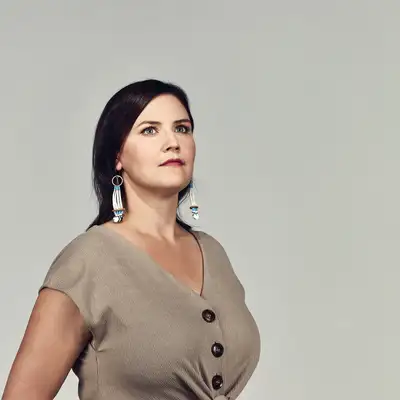
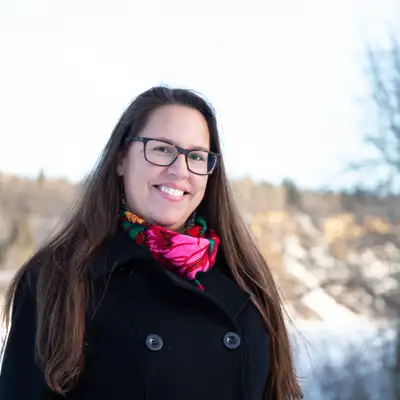
We're joined by an archaeology expert and an advocate with experience in Indigenous relations.
Stephanie:
Hi, I'm Stephanie.
Mack:
I'm Mack.
Stephanie:
And we're...
Both:
Speaking Municipally.
Mack:
Welcome back to Speaking Municipally, episode 366. Well done, Stephanie, on the title and intro. We changed it up here a little bit this week.
Stephanie:
Ha ha ha.
Mack:
You've done the heavy lifting. I'm really looking forward to this interview that we've got for our audience this week. But—
Stephanie:
Mm-hmm.
Mack:
Before we do that, I feel like we should address the topic that seems to be on everyone's mind these days, which is these restaurant closures downtown. And I think it's worth bringing up for a few different reasons. I think you and I both have thoughts about it. People might want to know what we think about that. We pay close attention to food and business in the city at Taproot, so we've got some insight that might be useful to share. And then the third one is kind of a weird one, Stephanie, but I just feel like every summer there's some kind of controversy. There's some kind of thing that happens—
Stephanie:
Ha ha.
Mack:
—that people just can't get past. And it feels, at the moment at least, that this summer it's gonna be restaurants. So for those of you who maybe aren't aware, several restaurants have closed downtown, in particular, over the last couple of weeks. This has caused people in the business community and others to raise concerns and say, what are we gonna do about this? What do you think, Stephanie? What's your take when you've been reading all of the news about these restaurant closures and the reaction from people online?
Stephanie:
It's complicated. I don't necessarily want to immediately draw a line to, like, a trend. A coincidence doesn't necessarily mean there's a common cause behind them, right?
Mack:
Yeah.
Stephanie:
There are lots of reasons why a restaurant might close. And not all of them are Andrew Knack's fault.
Mack:
In fact, most of them probably are nothing to do with city council or the mayor.
Stephanie:
There's so much here. I think it's unfair to completely put the blame for these things on Edmonton City Council decisions because, on the one hand, a lot of these decisions were made more than four years ago, four to eight to ten to twelve years ago. Like Imagine Jasper Avenue Vision and the Valley Line LRT construction. Like that is not on the current council's hands necessarily. And also, when people say, you know, attendance is down at a restaurant because of construction or because of parking, I genuinely have a hard time understanding that. And I'm not trying to be snarky at all. I genuinely have a hard time empathizing or sympathizing with this because never in my life have I wanted to go to a restaurant, gotten a roadblock literal or metaphorical in my way, and turned around and went home. I simply problem-solve. And again, I'm not trying to be snarky, but like if I was driving somewhere and the traffic was really bad, I'd be like, darn, well, I want to go to this restaurant, so I'm gonna push through the traffic. And never in my life have I gone somewhere, not gotten a parking spot directly in front and said, I guess I can't go to this restaurant. I simply drive two blocks away. This is gonna sound so snarky, but like if I want to go to a restaurant badly enough, I will figure out how to go. And so that is why I say it's a multifaceted issue and like maybe some of these restaurants weren't drawing enough customers on their own merits, maybe.
Mack:
I think you're dead on. And on that point, I agree. I think there's lots of evidence that restaurants like Daniel Costa's restaurants—
Stephanie:
Yeah.
Mack:
Range Road, others—people are gonna go there because they wanna go to the restaurant. It's the same thing. You know, there's that really famous column from probably more than a decade ago now. It's like, nobody comes for the parking. If you want to go to—
Stephanie:
Ha ha ha.
Mack:
—something, you're gonna go, whether or not there's free parking. It's not the parking that you're going for; it's the other thing—in this case, the restaurant, right? So I think you're right. I will say, places like Khazana have been just ridiculously inaccessible over—
Stephanie:
Yeah.
Mack:
—the last number of years because of all the construction. And I do think it's worth asking hard questions of the city and council about how we can do a better job of that. Like, I think you're right. If you want to go to Khazana, you're gonna find a way, but we could still make it easier. We still don't have to make it so difficult—
Stephanie:
Mm-hmm.
Mack:
—to get to those restaurants, right?
Stephanie:
And I do want to kind of clarify my point because I am an able-bodied person who's very tuned into city council stuff and construction.
Mack:
Yeah.
Stephanie:
And I can name off the top of my head, like, everything that's going on downtown construction-wise. It's really easy for me. I'm a young person, really good with technology. And again, I'm able-bodied. So if there's, like, a traffic thing blocking the sidewalk, I can just hop around it and go on my merry way. So I 100% understand that for people who aren't as good with technology, older folks, or folks with mobility impairments, it is way harder. So I just want to say I understand that. But for the vast majority of people who are able-bodied and can figure out how to drive two more blocks and then have five minutes of exercise, that's where I sort—
Mack:
Yeah.
Stephanie:
—of start to not understand the problem.
Mack:
Totally. What do you think? You know, would it make a difference for these restaurants if we had a few hundred more people working at Edmonton Tower on any given day? Because the drumbeat around return to office for City of Edmonton employees has gotten louder again as a result of all of these closures.
Stephanie:
I think it's something that wouldn't fix it, but it would add to momentum downtown because, you know, if you get a few hundred more people going for work, a small percentage of those are probably going to go out for lunch, go out for dinner, go out for happy hour drinks. And then it just adds to the vibrancy and the momentum, and then maybe more people are likely to move down there because it's not a ghost town. And, you know, it just kind of all builds on each other. But I don't know if it's like the number one thing that will fix downtown.
Mack:
Well, I'll go further and say that it's absolutely not, right? If we get some more people working in Edmonton Tower, they are not going to start going for lunch at Greta Bar on 109th Street. That is—
Stephanie:
Yeah.
Mack:
—just not gonna happen. I think there is circumstantial evidence that the return to office mandate for the provincial government had a positive impact. So Nate Box, for example, who runs District among other coffee shops and outlets in the city, has talked about the positive effect of return to office for the province. There are a lot more provincial employees than city employees. And a coffee shop that is steps away from their office towers is quite a bit different than, you know, the suggestion that if we got people back working at the City of Edmonton, that Greta Bar might have been saved or something, right? And in all the reporting that I've seen so far, I've yet to see the question put to the restaurant owners directly. Mayor Knack has said, you know, mandating all of those employees back to work in City of Edmonton towers would cost $5 million to $10 million and would also mean abandoning the sale of those buildings. Let's say it's 10 million bucks, because I think his estimate is low. That turns into about half a percentage point on the property tax increase. If you're a restaurateur, would you rather take a guaranteed half-percentage-point decrease in any potential property tax increase? Or would you rather roll the dice, pay the extra 0.5%? And probably not benefit all that much because there aren't that many employees that are gonna come, right? And there's lots of evidence that, you know, provincial employees who've been mandated back to work now have increased costs for commuting and parking. They're not going out and spending money, right? So I think the return to office thing just remains a total distraction and not something that is gonna help. We should probably move on from restaurants, but just a few more—
Stephanie:
Ha ha ha.
Mack:
—things that are on my mind, Stephanie, that I feel like I want to mention. And I think Taproot will do some further work on this over the weeks ahead, so stay tuned for that. But we write about restaurants every week in the Food Roundup. And I can tell you there have been way more openings than closures in 2026. There always are. Our listings are not complete. They're not comprehensive. It's impossible to get all of them. But I think we get the vast majority of things that open and close. And on any given week, there are, you know, half a dozen or more openings. And usually none closing, except for over this last little stretch here. So lots more openings, right, than closures. I think there's something about the restaurants that have closed, like you said, maybe those are just the kind of businesses that weren't doing a good job of attracting people. Some of them might have other factors. I think about all the time that we've covered restaurants in this city over the last decade, one of the biggest reasons why restaurants succeed or fail is landlords. Bündok and KB and Co., two of the high-profile closures, are both in the same building. And that dessert place closed in there, what was it, six months ago or something? That suggests to me that maybe there's a landlord thing going on rather than anything else. They've not said that. We can't confirm that; I'm speculating, but it seems a safe bet to me that there's some, you know, rent or landlord or lease kind of aspects to these closures. And then another thing: just try to step back from Edmonton. Is this really unique in Edmonton? You'll hear people talk about how this is, you know, happening in other places. The Bank of Canada might not say we're in a recession, but ordinary people do. Costs are up, people don't have as much money to spend on things, the inputs to those restaurants are up. Food businesses are just not high-margin businesses. I'm frankly surprised there haven't been more closures, actually, given the way that the economy is going these days and the amount of money that people have to spend on things. So I try to keep that bigger picture in mind too. And again, city council and Mayor Knack, they're not gonna do anything about the cost of oil. They can't, right? It's out of their hands. All right.
Stephanie:
Yeah. How dare they? I want Andrew Knack in the Strait of Hormuz now.
Mack:
Yeah, yeah. Make that oil flow. All right, we'll probably have more on this in future weeks, but for now we've got to get to the main event for this week's episode. Right before we do that, though, we've got an ad for you.
Stephanie:
This episode is brought to you by Edmonton Opera, which wants you to know that opera is for everyone. Here's artistic director Joel Ivany with more on that.
Joel:
Perhaps there's a stigma that is associated with the word opera that you need several degrees or masters or doctorates to understand what the art form is. But this company's been around in Edmonton for over 60 years. We've always been presenting works unapologetically, meaning you don't need to do your homework. You can dress as you are. So in some ways, mainstream culture doesn't help us at times because it helps create that stigma, but I'm here to tell you that all you have to do is show up. You're gonna hear some beautiful music, and you'll be surprised at how relevant the themes are. They're human stories that we're putting on stage, and just imagine what you're feeling, whether it's love, loss, excitement, marriage, and it all is just amplified by a 50-piece orchestra, a 40-person choir, and incredible soloists who are pouring their talents out from their tiny little vocal cords into thousands of ears in the auditorium.
Stephanie:
Your next chance to see Edmonton Opera in action is at Opera Alfresco. This is an outdoor concert at the University of Alberta Botanic Garden on Aug. 26. It will be a lovely prelude to the season, which features The Barber of Seville and The Magic Flute. Learn more about Opera Alfresco in the show notes, and subscribe to the 2026-27 season at EdmontonOpera.com.
Mack:
Okay, Stephanie, we've got a really interesting interview this week. A few weeks ago, we talked about the proposed rezoning down in Rossdale. Council delayed that a little bit because they wanted to have this conversation about Indigenous consultation. We were talking on the show before about how maybe the city doesn't have a legal obligation to do consultation with Indigenous communities, but certainly we've made commitments. We've signed up to the TRC calls to action. There are things that suggest the city should do more than just put the call out and report that nobody wanted to engage with them. So tell us why you thought it would be good to dive into this further.
Stephanie:
Well, I think that it's just so cloudy, and maybe journalists are a little bit scared to dive into it because it's so important and they don't want to get it wrong. I've certainly felt that way. Speaking from experience, it's really hard to dive into it because you don't want to get it wrong. And just based on the nature of it, it's hard to report on something that doesn't exist. And if Indigenous engagement doesn't really exist, it's hard to report on it. I don't know if that—
Mack:
Mm.
Stephanie:
—makes sense. But these, you know, memoranda of understanding and the legal duty to consult, it's all very cloudy to me, at least. So, selfishly, I was like, I want to speak to some really smart people who can explain this to me. And I thought, hey, maybe we'll make it an episode so that the listeners can understand too. So I talked to two really smart people, Dr. Kisha Supernant, who is the director of the Institute of Prairie Indigenous Archaeology at the University of Alberta, and Miranda Jimmy, who has done everything. She has a long history of working in Indigenous relations with many orders of government, including the city, the provincial government, and the Confederacy of Treaty Six First Nations. They were just really able to lay out to me, you know, from that Indigenous perspective, especially, like, what the legal, moral, and ethical requirements are, what should be done, what could be done better, and sort of how, you know, municipal governments—or all levels of government—can find it really hard to engage with Indigenous governments. And yeah, I'm really like proud to bring this information to the listeners. So I really hope that everyone enjoys.
Mack:
All right, let's dive in.
Stephanie:
All right, we're here to talk a bit about the Rossdale rezoning that went to a public hearing a couple of weeks ago and how it actually really wasn't just about the Rossdale rezoning at all. It kind of represented a lot of things across the whole city, definitely in the area in the River Valley and across the whole city. And yeah, so I'll just talk a little bit of background first. So council approved a rezoning application for a parcel of land in Rossdale. I don't want to get too into the weeds here, but essentially it was an application for one parcel of land that is part of a broader redevelopment of the neighborhood through what's called the River Crossing Business Plan. That would see the redevelopment of about 18 hectares of land in Rossdale, of which about 80% is city-owned and much of it currently does not have much or any development on it. Part of it is used for the parking lot for the River Hawks. Part of it is used as a field around the Ortona Armoury Arts Building. So, you know, this on one hand represents an infill opportunity right in the heart of the city, right by the River Valley. However, Rossdale is also a very important neighborhood to the history of amiskwacîwâskahikan. Of course, Indigenous people use the area as a gathering place and travel route since time immemorial, before contact. Post-contact settlers established several forts in the area. So to put it extremely simply, development in Rossdale is a sensitive topic and we're definitely going to get more into that. The decision to rezone that smaller parcel of land was supposed to be made in late June, but it was delayed because kind of coincidentally, council was supposed to receive a presentation about Indigenous engagement in the River Valley the very next week. So then they postponed it until the week after that so they could have that discussion. Okay, now that we got a little bit of that background out of the way, here's what you missed at City Council. Miranda, you spoke at that Urban Planning Committee meeting. You spoke a bit about the legal duty to consult as well as moral and ethical duties. Can you tell our listeners a little bit more about what you told committee?
Miranda Jimmy:
Yeah, so that report came back to Urban Planning Committee as a result of a follow-up motion to the River Valley area redevelopment plan that went to council last September. And so missing in that new area redevelopment plan was specifics around the responsibility of the City of Edmonton for Indigenous engagement in the River Valley and adjacent ravines and connected waterways and natural areas. And so I had worked with my city councillor to put forward that motion, and that motion resulted in that report that came to committee a couple of weeks ago. What I felt was missing in all of the conversation related to the river valley is this huge grey area that exists for municipalities in their responsibility to Indigenous rights holders in the place we now call Canada. And so treaties—and, you know, the province of Alberta existed before the City of Edmonton existed, and these agreements and responsibilities were in place long before City of Edmonton bylaws were. And so if the city is actually committed to this idea of reconciliation and is committed to operationalizing and working within their memorandums of cooperation and dialogue with the rights holders in this city, then what does that look like in practical terms when they adopt rules that impact communities and spaces that have been in existence and continue to be used and important to Indigenous people in this place? So that was the premise behind putting forward that motion and getting that report. I got a sneak peek a few weeks ahead of the report coming out from a conversation with a member of administration of what was going to be included in the report. And if I were a cartoon character, there would have been steam coming out of my ears when I heard what the report was going to say. And so that's why I was compelled to take a day off work and sit in committee and use my five minutes to maybe raise a perspective that was missing both in the report that was provided to council as well as in the dialogue that happened as a result.
Stephanie:
Yeah, so you mentioned that the report had some glaring misinformation. And also, listeners, Miranda, you posted a version of it on your website, so I'll be linking to that in the show notes if you want to go see the full text of what Miranda said at the meeting. But you mentioned that the report had some glaring misinformation. Can you tell us some more about that?
Miranda Jimmy:
Well, I think so there have been situations in the last few years where administration has brought legal counsel to council and committee meetings seeking guidance on their role and responsibility to rights holders. And ultimately the legality says municipalities have no responsibility in the duty to consult and accommodate. That relies on the Crown—in this case, the federal government—and some of that responsibility is put down to the provincial government. And so it's been challenged in court and the court decision has been made that municipalities have no role, no legal responsibility to Indigenous rights holders. So if legal counsel of the City of Edmonton is saying that to their governors, saying we have no legal responsibility, then why even say you're committed to relationship, cooperation and dialogue with these rights holders if you actually stand behind this idea of no legal responsibility? It's handshakes and photo ops, it's not actually a commitment.
Stephanie:
I want to give Dr. Supernant a chance to chat a little bit here too. We'll definitely get more into this legal duty to consult and engagement generally. Dr. Supernant, I want to go to you for a little bit. So, like I said earlier, Rossdale is a very important area, not only for Edmonton but for all of Alberta. And there are surely many archaeological artifacts there. But I think archaeology is something that not many people fully understand. You know, they think it's like Indiana Jones or finding dinosaur bones, which is different: paleontology.
Dr. Kisha Supernant:
Mm-hmm.
Stephanie:
But I mean, I guess they probably overlap. But anyway, Kisha, can you talk a little bit about what archaeological monitoring actually looks like here in Alberta?
Dr. Kisha Supernant:
So this is a really important question because there's a lot of archaeology that happens throughout the province of Alberta, and there is no formal mandate to require Indigenous monitoring of archaeological sites or areas where there is high potential for archaeological material. In practice, some municipalities and companies will involve monitoring when, you know, the potential for archaeological material is present. And I would argue that of all of the places in Edmonton, Rossdale has one of the highest potentials because we know already a lot of that history from previous disturbance where proper care was not taken with the Rossdale area. This does raise a question that actually builds on something Miranda said, which is there is no legal obligation to involve monitoring. There is a legal obligation, however, should archaeological materials be found to follow due process. You cannot undertake archaeology without a permit, for example. If archaeological materials are found, there is a system to alert the provincial government who manages and regulates archaeological material, but there is no obligation to notify any Indigenous community. So it is done in practice, perhaps by some municipalities and organizations, but it's not something that is required across the board. So there's a danger in that, meaning that if people don't see it as a legal obligation, then it's easy to get around it. It's easy to not take that step in terms of notifying affected Indigenous communities. And really, they should be on the ground. They shouldn't have to be notified in the first place. They should be able to be present. Now, I know with some of the previous projects in the Rossdale area, for example, the Walterdale Bridge replacement.
Miranda Jimmy:
Yeah.
Dr. Kisha Supernant:
There were Indigenous monitors on site while ground disturbance was happening. But I think there would need to be very clear reassurance that those monitors are going to be present, well-trained, and that there are mechanisms in place for those rights-holding communities to be able to then act on anything that might be found, and that there are trusted experts to be contacted to make sure that nothing is being disturbed that shouldn't be.
Stephanie:
Yeah, and I think another kind of misconception is that archaeology is only for finding ancestral remains, but there are also very likely other artifacts like tools and items. And in previous stories, I know we've talked about finding like hundreds of little tiny beads, which I think the average person is going to see the beads and go, oh, whatever, and carry on with the construction project. So can you talk to me a bit about what else might be found there?
Dr. Kisha Supernant:
Absolutely. I think there has been a fair bit of focus on burials, and we know it is a burial ground. That is not currently in the footprint of this rezoning change. That doesn't mean there aren't burials there, but it's—
Stephanie:
Mm-hmm.
Dr. Kisha Supernant:
Not over the known burial ground. There is great potential for many other types of materials there as well. It has been a gathering place by archaeological reckoning for at least 8,000 years, and of course, as Indigenous people know, since time immemorial. So there's that deeper pre-contact history. And that is usually a little bit more recognizable within archaeological processes. I have significant concerns about any of the historic material that might be found there that is post-contact, because we know this is also a very important place for many of the disenfranchised nations and Indigenous peoples that called Edmonton home. And we heard from a number of them at city council. I'm descended from and connected to many of them myself. And I think this is an important area to consider, which is they're not considered rights holders because they're not recognized nations anymore, because they've been disenfranchised. But many of those people returned to Rossdale to live, to do ceremony, to gather. And that's all in the post-contact. And the materials from the post-contact are more easily seen as garbage, right? So pieces of glass, pieces of metal, those beads that you mentioned. Now, a trained archaeologist should be able to distinguish between them, but there is a challenge in that a construction worker or someone doing the work may think, 'It's just some old glass.' But that is literally the belongings of our ancestors and our relatives that got discarded there. And we know it was a gathering place really, you know, up until they were no longer allowed to gather in that place, too. So I think there's a lot more there than people realize. And it might be very small, might be very fragmented. But the material's still there. In addition to the material, though, the meaning and the connection is still there. Not all heritage is tangible, right? Regardless of whether you find a belonging or not, it's still a very significant and important place. And that hasn't, I think, been adequately communicated beyond, of course, the significance of the burial ground, but it's not just the burial ground that makes that place important. There are so many other historical connections that I don't think have been well told. The previous land-use work has never really brought that forth because it hasn't been Indigenous-led and Indigenous engaged in the ways that it needs to be. We now have a group of us who are Indigenous experts in these fields who could do a much better job of actually narrating what the significance of Rossdale is. And I worry that might happen down the line when they're already developing. But if it doesn't happen prior to that development, then there's a real danger of disrupting and disturbing those stories and that knowledge.
Miranda Jimmy:
Just to add to what Kisha was saying, so to inform the River Crossing Business Plan, prior to that was the River Crossing Heritage Interpretive Plan, which I was involved in. So more than 10 years ago, that was intended to form the basis for any business decisions in that area. And so the city at that time recognized all of these diverse histories that overlap not only pre-contact and post-contact Indigenous relations, but also sports and ceremony and food sovereignty and all of these other things that are signs of daily life that happened there. So it is bigger than burial sites and it is about recognition of place and the responsibility of Indigenous people to steward the land in a good way and about informing the people who now make that place their home. And I think those values were ingrained in the Heritage Interpretive Plan, which was the first time that the City of Edmonton brought tangible and intangible heritage together to inform a business decision. And I feel like that piece has also been missing in this conversation because we've jumped now to, you know, the selling of land and the building of buildings and have missed that really important foundational piece.
Stephanie:
Yeah, I actually wanted to talk about that too, because I've been following all this going on in Rossdale for months now, and I hear people mentioning this heritage interpretive plan, but it's genuinely just hard to find online, and it's hard to understand where in the bureaucracy it fits. And I read it, and it sounds so cool. It says, quote: the plan represents a new way for the City of Edmonton to consider heritage in the river crossing area. It is a unique interpretive project that goes beyond acknowledging existing historical buildings and seeks to illuminate the area's layered tangible and intangible heritage. The overarching aim of this plan is to integrate heritage interpretation into the area through landscape and built environment like parks, infrastructure systems, urban design and buildings, as well as active and passive programming like formal and informal events and activities. So I'm guessing this doesn't necessarily mean like we're gonna put a new Fort Edmonton Park in Rossdale, right? Like that's not what that means. It's looking at it a different way.
Miranda Jimmy:
Yeah, like the story I was told when I was involved in the engagement for that plan and the writing of the plan was that this was actually supposed to set a new precedent for all planning in the city, specifically in the river valley, because the river valley from end to end within the municipal boundaries shares a very similar history. This is not unique to Rossdale. And so how does this start to create a new way of working when the city is planning a park? Like they did with the Northeast Park, or a renaming of a park like they did with the Jan Reimer Park. And all of these would have been opportunities to think about this work in a different way, but it didn't have that impact. And so, part of the business plan and part of the North Saskatchewan area redevelopment plan was this idea of co-governance with Indigenous communities. And those conversations have continued. I've been in the room when those conversations have happened and I've heard the commitment saying this should be a new way of working with the city. When opportunities like this give the city a chance to demonstrate its commitment and it falls flat, those promises become see-through and almost unbelievable for the rights holders that have been involved in these conversations now for decades. So again, thinking
Stephanie:
Mm-hmm.
Miranda Jimmy:
—back to the early 2000s, when there were protests related to the Rossdale Cemetery and commitments to move the road and put up the monument. All of these are in living memory of every one of those activists who hear and watch all of the news stories today and have seen how those promises have not been fulfilled and the commitments have not set a new precedent. The city is working the same way it did two decades ago.
Dr. Kisha Supernant:
This is one of the big challenges when people talk about reconciliation, because reconciliation has to be based first on truth and on telling the truth of these places and those histories. But second, it has to be based on trust. And I think one of the biggest issues that we face is that when there are these commitments and these photo-ops and these plans, and then they don't make any substantive difference to practice on the ground or to the decisions that are being made by city council, for example. Then it's really hard for Indigenous people to trust when they're told, we'll continue to engage or we'll make sure that this happens. Why would there be trust if that hasn't been played out over the past 200 or 300 years? And we're at that place again where there's just not that trust because it hasn't been earned.
Stephanie:
So I wanted to move a little bit back into the specific Rossdale rezoning, and I think that if we just zoom right in on this, this is an example of city council moving through what I refer to as like a very imperfect bureaucratic system. And there's lots of like policy and legal requirements and all this that we've kind of touched on already. But technically the rezoning of those two lots or the little parcel of land north of RE/MAX Field is just aligning them with what was already approved years ago through the River Crossing Plan. And then the city said that the wider plan has been developed with engagement from Indigenous representatives. But then we had Indigenous folks showing up at this public hearing for this small rezoning saying that they haven't been consulted. So maybe Miranda, we can start with you. What do you make of this disconnect?
Miranda Jimmy:
Well, I think fundamentally if you rely on a document that was created more than a decade ago to make your decisions, you're discounting the relationship building that has happened in that time, the changes in policy, the changes in practice, the changes in societal norms and values. Again, think about this. This was pre TRC. This was before the calls to action became a commitment that every order of government has made. So a lot has changed in that time. And so if we go back a decade ago and say we're doing things that way, we're ignoring the progress that's been made. So I think that's fundamentally problem number one. The second problem, and this was brought up in the Grand Chief letter that went to a rezoning application a while back related to the Nordic spa. So there is a disconnect between colonial ideas of land use and saying, you know, one side of the fence equals this and the other side of the fence equals this. But what about that tree that grows on the fence line? It is impacted by the decisions on every side of the fence. What about the watershed that feeds that tree? What about the mammals that walk through that field? So there's a difference in kind of ideas about the right decision to make for a given parcel of land, which is the colonial process says we're gonna draw boxes and we're gonna say this box does this and this box does that, without considering the interconnectedness and the overall impact of the ecosystem. And so there's just a difference of worldviews when you think about land as boxes as opposed to pieces of a bigger picture. And so I know we're talking about the example in Rossdale. And I've brought this forward a number of times, both in private and public conversations, that there are three examples in Rossdale right now that are complete disconnects, even though each is following city process. So, one: you have the River Crossing Heritage Interpretive Plan and River Crossing Business Plan that sets out a line and a boundary for this particular site to do this particular thing based on a plan made 10 years ago. Then we've got the city doing neighbourhood renewal in Rossdale. And that requires zero Indigenous engagement, even though it's ground disturbance and it's impacting vegetation and mammals, just like the River Crossing project will. Then you've got something else within the same neighbourhood, which is the rezoning of the brewery site. And that again required zero engagement because it's private land use. And so the rules should be the same, even though the use and ownership are different, we're talking about the same place. It doesn't matter if I'm talking one side of the street or the next, but the city sees it as these definitive boundaries that don't impact each other. And so if you think about only River Crossing as being required to have Indigenous engagement and a look towards Indigenous governance, but across the street, a private owner and builder can do whatever they want as long as it falls within the boundaries.
Stephanie:
Mm-hmm. I mean, even I think the River Crossing Business Plan is doing the street and then the neighbourhood renewal is doing the sidewalk next to the street. You know what I mean? And, like, it changes based on that. Yeah, this is a nut that I've been trying to crack forever now, not just with Indigenous engagement, but with engagement more widely with the city, with bike lanes, with infill, with everything. Like, how do we determine whether people have been engaged and consulted? And I think that lots of people—you know, councillors, administration, regular people, including me, I get this way sometimes, I get really caught up in policy. I am a policy wonk, I will say that. So if the policy says you need to do X, Y, Z for engagement, you know, administration, that box is checked. It's not that simple, right? Like for the Rossdale rezoning, the report said that there was no feedback received from Treaty Six governments, Treaty Seven governments, Treaty Eight governments, and the Métis government and Métis community associations. Something tells me that doesn't necessarily mean that they were a-okay with it, you know? So if Indigenous governments or communities don't respond to a city's outreach, how should administration interpret that? What should they not assume? Dr. Supernant, you look like you want to say something. Do you want to jump in?
Dr. Kisha Supernant:
I'd be happy to, because I think this is a real problem. And it's often used as an excuse to sort—
Stephanie:
Mm-hmm.
Dr. Kisha Supernant:
—of saying, we tried, right? We reached out, we didn't hear anything back. One issue is that Indigenous governments—and the people who work within them—are often extremely overloaded with so many other things. And knowing how to like even route the right requests to the right people can sometimes be really challenging. It's often on timelines that are completely unworkable for Indigenous people. And I think that assuming that non-response means compliance or means support is really problematic, right? And especially this question of engagement and consultation, I think is such a challenging one because there is a tendency for governments to work with other governments, right? And there's a reason for that, right? We talk about nation-to-nation relationships, we talk about that, but the structures within First Nations governments and Métis governments are forms of colonially imposed governance, right? Like, and we know that. This is a well-established fact. It doesn't necessarily mean that it's always getting to the grassroots people whose connections are directly to those projects and may have been working on them. I think we saw this in the people who were speaking at city council and the public hearings on this. People who've been engaged in this for sometimes decades, they're not necessarily the ones at the table because the way that the governance structure works, you sit down at a table with the government of a First Nation, for example, or the Treaty Six Confederacy, things like that. Now, that does need to happen. I don't want to undermine the necessity of that, but that can't replace also some of that grassroots engagement as well, the sort of spaces for people who have been working in this space for so long to actually have their voices heard as well. And this comes back to the point I made: that a lot of those folks are also disenfranchised. So they're not part of a nation. And they would never have the opportunity through that nation-to-nation relationship to be represented, because our nationhood has been taken away from us by the federal government for various purposes and through the past colonial policies. So I think that it's a very challenging situation. I just worry when governments sort of say, well, we did what we did—you know, we did this thing and that's enough. People are very clearly saying it's not enough. If someone's saying it's not enough, then you need to do more, right?
Stephanie:
Yeah.
Miranda Jimmy:
Well, I want to call back to something Kisha said earlier about trust. Because if you think about every time those governments, those nations, have responded and their feedback has gone unheard or has not been incorporated, that means the next time you call, how likely are they to respond? And so, if you add up all of those important opportunities that have happened over decades and lifetimes, where there has been a voice and a perspective provided that has gone nowhere, then how likely is a request to engage to rise to the top of the to-do list? So—
Stephanie:
Mm-hmm.
Miranda Jimmy:
—the more times it goes nowhere, the more times promises are broken, the less likely there is to be a response and a willingness to educate and engage in meaningful dialogue.
Stephanie:
So do you think that it's kind of gotten to a point, maybe specifically in Edmonton, but also across Canada, where Indigenous nations don't really feel like there's a point to, you know, responding to those calls? Do you think it's gotten to that point?
Miranda Jimmy:
I can't speak on behalf of every Indigenous person in Canada or their governments—
Stephanie:
Yeah, I guess so.
Miranda Jimmy:
—but I think, again, just put yourself in that position.
Stephanie:
Mm-hmm.
Miranda Jimmy:
And you could say that maybe for citizens of Edmonton too, who feel like they respond to those surveys and show up for their five minutes at council and don't feel heard. How likely are you to take a day off work or an hour of your time to send a message to your city councillor or the mayor? It becomes less and less likely, or you start to pick and choose your battles. You decide when your time and energy are worth the fight, knowing that it may not result in any change, but also knowing that at least putting it out there is really important.
Dr. Kisha Supernant:
Miranda's really identified a systemic problem, which is the more, you know, consultation happens and no meaningful change happens, the harder it is to get meaningful consultation or meaningful engagement. Because why would you? Like why would you respond?
Stephanie:
So another kind of bureaucratic issue that reared its head at the public hearing is that council can't discuss the potential sale agreements for a plot of land during the public hearing. They just, like you said, have to focus on the box, the land use and whether it's appropriate for the area. So then after it was approved, councillors were able to talk a bit more freely about a proposal from the Confederacy of Treaty Six First Nations to turn parts of the vacant land in Rossdale into Alberta's first major Indigenous-led redevelopment. Again, a link in the show notes to a little story about this that I wrote. But the Confederacy said it is drawing on examples of Indigenous-led redevelopment from across Canada, such as the Sen̓áḵw and the Jericho Lands projects in Vancouver and the Naawi-Oodena urban reserve in Winnipeg. Councillor Aaron Paquette said, now that the public hearing is over, we can openly speak about the fact that we're actively pursuing partnerships with Indigenous nations in order to safeguard this area, and to ensure that the Indigenous perspective remains and in fact becomes prominent for these very important historical lands. Maybe I'll go to Miranda first. What do you think about this proposal?
Miranda Jimmy:
Well, ultimately, I think that the land should be in the hands of Indigenous people. And that does not mean the sale of land or the approval of a redevelopment plan. It means stewardship of land that has been ours since time immemorial. And so unfortunately, we're in a colonial governance system that dictates how those decisions can be made, who can make the decisions, and what the process is for making those decisions. And so again, that's not co-governance. That's not making decisions together. It's requiring Indigenous governments to work within systems that already exclude them and having to make decisions based on financial benefit, not necessarily responsible land stewardship or thinking about that intersection of ecology and heritage and stewardship of a place that is important to many people, not only Treaty Six members.
Stephanie:
I mean, when I saw this, it kind of seemed like the most capitalist possible solution to this issue. I mean, as a reporter, I will refrain from an opinion on capitalism, but like that was just my observation: it seems very capitalist and, like, exactly as you said, it's fitting within the colonial system. Kisha, did you have thoughts on that?
Dr. Kisha Supernant:
Yes, I agree that, you know, it should be in the hands of Indigenous peoples, but basically having to follow the same bureaucratic processes and having to operate within the same systems doesn't really do that holistic work. I would also say that the Confederacy of Treaty Six First Nations absolutely has connection, and many of the member nations do, but they're not the only ones as well. And that comes back to that question of how then will, for example, Métis folks be represented, or the Edmonton Stragglers, or others who are in that disenfranchised space. Will there be the necessary engagement with those of us who have relatives who are buried down there and whose, you know, the historical records very clearly show members of our families living in those areas on the flats and other things. So it doesn't necessarily mean that the process is going to be what it needs to be just because it's being Indigenous-led. It doesn't guarantee it. If it remains within the colonial systems and structures, it's still likely to do some similar harms. And there has to be great care in place to make sure that those harms are not perpetuated. And not just to the land, as Miranda says, but also to our plant relatives, our animal relatives, our ancestral relatives, and the waters and other things that flow through there. And that approach, I mean, I'm slightly more hopeful if it's an Indigenous-led thing, but it's not a guarantee. When the system still puts those various boxes around everything, here's the sidewalk and here's the road, you know, a lot of that's gonna continue to exist within that same space.
Miranda Jimmy:
I think that there's sometimes a disconnect between history and present-day. And I just want to point to this being a complete example of terra nullius. So this idea of empty land is not seen as real unless it's put to good use in Christian, European ways. And so that's being applied to Rossdale and River Crossing right now. It's a field. It's useless. Unless we make money off of it, unless we put it to use for human consumption, it's useless. And that is the belief and that is the kind of precedent, the foundation of modern land use planning.
Stephanie:
Okay, so I want to look a little bit forward to what's next here. So at that rezoning, at that public hearing after the rezoning, they passed a subsequent motion saying that city council endorsed continued implementation of the River Crossing Business Plan approved in 2019 with rights-holding governments having direct involvement in this implementation, as guided by the River Crossing Indigenous Involvement Approach and that administration provide updates on this involvement at each future decision point related to the project. So basically, as I understand it, council is endorsing the River Crossing Business Plan and they want the rights-holding governments to have direct involvement. What do you think about this path forward?
Miranda Jimmy:
Well, I thought that debate on including or excluding rights holders that happened with this motion was really interesting. I also thought it was interesting how administration piped up with its opinions on this. Ultimately, administration is responsible for upholding the MOUs that the City of Edmonton signed. So it puts them in a sticky situation if they're making friends that they can't keep promises with.
Stephanie:
Mm.
Miranda Jimmy:
One of the challenges I have is that there is this hyper focus on Rossdale and this particular redevelopment, and we're not thinking of the River Valley as a whole. And just because bones were found, all of a sudden it's become a hot topic. But I'm sure if Kisha and her crew were doing digs at many sites across the River Valley and connected ravine system, the same situation would happen. So the City of Edmonton, going back to the Urban Planning Committee, should be putting on the public record their commitment to involving Indigenous people and rights holders in every decision that affects the river valley and ravine system. It should not be a case-by-case basis. It should not be private room conversations. And there should be the opportunity for anyone who has connections to this place, has historical or present-day connections through cultural practices to these places to have a place in the conversation. And unfortunately the city has pitted people against one another. And even with their three MOUs that they hold with Indigenous rights holders, even getting those three groups to agree to a decision is going to be a challenge. I would encourage the city: okay, if they want to stick to those rights holders, get all three of them in the room. And if they can agree to something that satisfies all of them and their members, then I think other people would come along with that, but good luck.
Dr. Kisha Supernant:
And this is another hallmark of a colonial system, which is the way these relationships are often developed through MOUs, through arrangements where these things are done individually; they can often create that kind of divide and conquer mentality, right? And this is another example of that potentially playing out. And also that lack of ability to come to consensus is another excuse to not have to listen deeply and not have to actually change. So it can be one of those ways to say, well, they can't really agree. So we're just gonna do it this way, right? As opposed to maybe we shouldn't do it. And I think that point about the fact that the river valley and related waterways are deeply interconnected is really, really important because I think Rossdale does become the kind of flashpoint for a lot of these conversations. But there needs to be Indigenous engagement across the entire river valley. As an archaeologist, there need to be Indigenous monitors on every archaeological project across the lands we call Canada, right? And certainly within the river valley and the related systems, it's rich in history. People do not understand the depth of history of this place. And, in fact, because it's in the middle of an urban space, those present-day connections and traditional knowledge are often less considered, even though I know many people who pick medicines or berries or have relations with the animals in the river valley. Those are still very real, tangible connections to that land. They have lasted and persisted since time immemorial. And we can't, you know, think about one point on the land as somehow separate, right? Boxes again. We need to break down those boxes and think more about connections, webs, and relations.
Stephanie:
All right, I'm going to ask a couple of last questions here because we're just about out of time. But I think Miranda, I'll go to you first. If you were designing a better process for Indigenous engagement in Rossdale and throughout Edmonton more widely, what would that look like?
Miranda Jimmy:
Well, first of all, it would mean a publicly available accountability document. The city of Edmonton should publicly state these are the commitments we're making and this is the way we intend to work. That becomes a document that people can refer to and hold the city accountable to. A lot of this is behind closed doors and a lot of wishes and mights and maybes. And so I think that is the starting place. And once there is that public accountability, then we can start talking about improving it from where the city is right now and where we can go. And how does that need to evolve? And what's the process for evolving that? So I think then it comes back to you said you're a policy wonk, but I want to see a policy. I want to see something that exists, that's been thoughtfully created. And you know, as I said in my five minutes to council, 'Your morals are not up for someone else to determine. So state what your moral line is here.' What is the actual commitment you're willing to make? And then let's work together to achieve that. Ultimately, I think that it is possible to think about co-governance of the entire river valley. I think that there is a place for Indigenous people to supersede bylaw, to supersede colonial boundaries and to build in these ideas of relational decision making that makes space for and includes all of our relatives, the finned, the flowing, the rooted, and gives them a place in every conversation. So the question isn't just who can show up for five minutes to speak at council, but also who speaks on behalf of those living entities that sustain us and provide us with life and are not included in these conversations. Who is standing up for them and who is actually giving them space to influence decisions.
Stephanie:
Mm-hmm. Okay, and then my last question for you, Dr. Supernant, you know, for listeners who walk through Rossdale, maybe go to a baseball game or cross through that area without knowing much of this history, what do you hope they understand about the land beneath their feet?
Dr. Kisha Supernant:
I hope that they understand that the land that they're on is not just Indigenous land, but it is a land that has been trodden by thousands and thousands of feet before them. Even though they can't see a building or a monument or a plaque, that under their feet is this deep, layered history. This is true wherever they walk in the lands we call Canada, and certainly true everywhere we walk in Edmonton. Archaeology is under our feet; history is under our feet. But not only is it there, it still lives in the hearts, minds, and spirits of living Indigenous people today. And it's not something that is separate from how we understand ourselves in place. Archaeology in my own journey has been such a powerful way to understand my ancestors, to reclaim who I am as a Métis woman, and to understand the kind of future I want to build for my daughter. This is very powerful. And when you disrupt that, when you destroy those sites, when you undermine or erase those histories, it does real lasting harm to our communities. We are still here and we will continue to be here, but we need to remember that history is a very important part of our story and needs to be cared for by us for future generations.
Stephanie:
All right, well, that is gonna be all the time that we have. So thank you so much for sharing. What an amazing conversation. Thank you so much.
Mack:
Wow, you guys covered a lot of ground in that interview, Stephanie. Well done.
Stephanie:
Yeah. Thank you so much. Yeah, it was just an amazing interview. I could have gone on for, like, two more hours. They're so interesting and so smart and well-spoken. And I could have just left, got a coffee, and they could have just—
Mack:
Ha ha ha.
Stephanie:
—talked between the two of them because I didn't really need to be there. But anyway.
Mack:
They both made some important points that they agreed on. They built on some of their views in some interesting ways, I thought. What stood out to you? What should we clarify for listeners now that we've had a bit of time after your interview?
Stephanie:
Mm-hmm. So I wanted to just clarify something about Indigenous monitoring, which is, you know, when the Indigenous representatives are on site, sifting through—because I was getting a little bit of conflicting information about when they are actually required. So I talked to the city, and this is what they said: due to the historical nature of the area, the project team is being very intentional about communicating and engaging with the partners covered by memoranda of understanding and local interested parties. They're working to ensure that all voices are heard. And during construction, all city projects within the river valley are required to conduct Indigenous monitoring under the province's Historical Resources Act. At this time, the project is in contact with the province about Indigenous monitoring needs during Rossdale neighbourhood renewal construction. I mean, this kind of almost reinforces what we said in the interview about boxes being drawn because, you know, Rossdale, a lot of it is technically outside the boundaries of the river valley, though clearly Dr. Supernant and Miranda Jimmy would disagree with that because—
Mack:
Yeah.
Stephanie:
—all of that land there is super important. So that's kind of, you know, the distillation of the whole episode is that there are boxes drawn that don't necessarily reflect everyone's worldview. Yeah.
Mack:
The land in question that kind of kicked us off, the rezoning that was before council, that was all approved, right, on July 6. So what's the next step here from council's point of view?
Stephanie:
So they approved the rezoning of that land, which again was just bringing it in line with what's already been approved. So it wasn't like before it was completely protected land; you couldn't do anything on it. You could still build something on it if you wanted to before the rezoning. But now that it's been rezoned, city council is a little bit freer to talk about what is planned for the land or what might be in the works for the land. And one of those proposed developments is that the Confederacy of Treaty Six First Nations says that it wants to turn part or all of the vacant land in Rossdale into Alberta's first major Indigenous-led redevelopment. So there's been no land sale that I know of yet. Everything would still be in the works, but, you know, likely the next step is selling the land to someone. And it seems like council and the city really want to work with an Indigenous proponent. But again, they will be very tight-lipped about that until the actual decision is made.
Mack:
Well, you were very curious and that's kind of what led you to do this interview. So do you feel like your curiosity has been satisfied? Like is there a sort of a key thing that you felt like you learned through this interview with these really smart folks?
Stephanie:
Yeah, I mean, I think that being a settler, a white person, and someone who follows city council very closely means that I'm a policy wonk. I know everything about policy and zoning and economic development and all this stuff, and I get really bogged down in certain concepts. And I think one thing they brought up in the interview was the highest and best use of land. And this is—
Mack:
Right.
Stephanie:
—a term that's used a lot in rezoning applications to be like, hey, is this plot of land getting its highest and best use? And the technical meaning for that is basically are we making the most money out of it?
Mack:
Are we gonna get the most tax to benefit from this? Yeah.
Stephanie:
Yeah.
Mack:
Yep.
Stephanie:
And I mean, I think if we look at things with a bit more of a generous view, it can also mean like, take one of the pits, the many pits through Edmonton that are being highlighted on that Instagram page. Those are definitely not the highest and best use of land because think of all the better things that could be there. Basically, anything would be better than an empty pit. However, in this interview, Miranda said something like, you know, there's this idea that empty land is not real unless it's put to good use. And I thought that was interesting because objectively, under, you know, a capitalist society, this parcel of land right in the middle of the city is super valuable. And the highest and best use would be to throw some apartment towers on there. But should we maybe take a look and see if there's a better use for it and maybe it doesn't have to be all housing all the time. Maybe it doesn't have to be a mixed-use development. I don't know. My curiosity led me to a place where my beliefs were challenged. And I love that.
Mack:
I think there was a good reminder in there too. I think it might have been from Dr. Supernant: sometimes it's not a physical thing. It's not necessarily just a burial. It's not even necessarily just the tools and things that might be found there, but the stories and the, you know, that aspect of a place is really significant—
Stephanie:
Yeah. Intangible.
Mack:
—too. Yeah, the intangibles. I thought that was a really—
Stephanie:
Yeah.
Mack:
—good reminder as well.
Stephanie:
Yeah. So anyway, I hope that you guys enjoyed listening to the interview because I sure enjoyed being a part of it. And I hope that it taught you something and opened your eyes a little bit, the way it opened mine.
Mack:
Well, and as is our approach generally, this doesn't have to be a one-and-done. We can continue to explore—
Stephanie:
Exactly.
Mack:
—this in the future. So if you are curious about something, maybe the interview prompted something for you that you'd like to share, get in touch with Stephanie or the Taproot team. You can always send us an email, hello at taprootedmonton.ca, or you can find out other ways to contact us on the website. All right, that's it for this week. We do have just a programming note for you, but also I know you're dying to say something else to our listeners, Stephanie.
Stephanie:
Yes, we've had all of these pre-scheduled episodes for the last few weeks. So if you don't—
Mack:
Yeah.
Stephanie:
—listen to the podcast, or if you don't read The Pulse, you might not have heard the news that the scrambles will be staying in place for the rest of summer 2026. So scramble funeral has been delayed till next year. Only because the city cited construction timelines or whatever. So it looks like they're still getting taken out, but at least we'll have one more summer of scrambles. Mm-hmm.
Mack:
That means our scrambled egg party has to get delayed a little bit, which I know you're not really keen on, so you're not sad about that, but—
Stephanie:
Yeah, yeah, till next year. Yeah.
Mack:
Well, it is summer and Taproot traditionally takes a two-week summer publishing break. So we do two weeks in the summer, we do two weeks over Christmas. The Christmas holiday break is because nobody's paying attention anyway. The summer one is a best practice that we've adopted from some other independent news sites around North America who encourage this practice of, you know, getting off the treadmill. News does have a way of sucking you in, and it's a bit of a treadmill that you've got to continually run on. So, as part of our efforts to make sure that we have a healthy, happy, productive team, we take a summer publishing break. So we're still working, we're kind of doing some planning, some team togetherness, some thinking about the second half of the year. And so we'll be doing that over the next two weeks while you are probably all out enjoying the summer festivals and all the great things that Edmonton has to offer. Hopefully, not too much more rain or smoke this summer. And then we'll be back after that publishing break. So that publishing break starts on Monday, July 27 and finishes on Friday, Aug. 7, which means the next episode of Speaking Municipally will be Friday, Aug. 14.
Stephanie:
Yes.
Mack:
And you can find that everywhere you get your podcasts. Thank you so much for watching and for listening. Tell a friend if you enjoy the show. Hopefully you found this interview useful. If you think someone else could benefit from Stephanie's curiosity, please send it to them. We would really appreciate that. Have a great summer, and we'll be back in a couple of weeks. Until then, I'm Mack.
Stephanie:
I'm Stephanie.
Dr. Kisha Supernant:
I'm Kisha.
Miranda Jimmy:
I'm Miranda.
Mack:
And we're...
All:
Speaking Municipally.