Subscribe
Share
Share
Embed
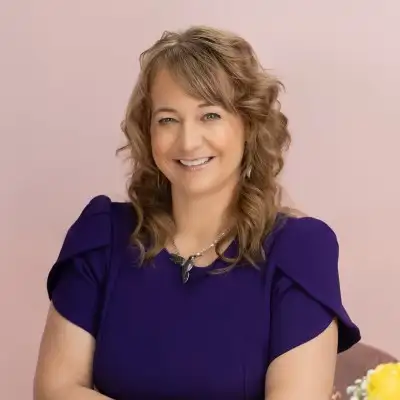
Welcome to "The Hummingbird Effect," a podcast dedicated to uncovering the subtle yet powerful ways that small innovations can transform your business. Hosted by Wendy Coulter, CEO of Hummingbird Creative Group, this show delves into the stories and strategies behind successful brand building.
For over 25 years, Wendy has helped CEOs and business leaders redefine their brands through innovation and compelling narratives. In this podcast, she shares the insights and lessons learned from her extensive experience, exploring how a strong brand orientation can significantly increase the value of your business.
Each episode features engaging conversations with industry leaders, business advisors, and innovators who have harnessed the power of branding to make a substantial impact. Discover how focusing on core values, mission, and vision can drive your brand beyond mere marketing tactics, fostering a culture that resonates with your audience and enhances your business's reputation.
Inspired by the concept of the Hummingbird Effect—where small, adaptive changes lead to remarkable outcomes—this podcast aims to help you understand and implement the incremental innovations that can elevate your brand and business.
Join Wendy Coulter on "The Hummingbird Effect" and learn how to evolve your brand, attract more customers, and ultimately enhance the value of your business through strategic branding.
028 - HBE - Kedma Ough
===
[00:00:00]
Wendy Coulter: I'm Wendy Colter, president of Hummingbird Creative Group, where we help CEOs and marketing leaders unlock the hidden power of their brands. For years, business leaders have focused on marketing tactics, but what truly matters is building a strong brand. Have you ever experienced a hummingbird effect, like the co-evolution of the hummingbird and the flower? This is when small innovations in branding or marketing can lead to surprisingly big results in other unrelated areas of a business, like an increased [00:01:00] valuation, a stronger culture, or an operational breakthrough. Today I have hummingbirds marketing strategist Hannah Jernigan with me. Hey Hannah, how are you doing this morning?
Hanna Jernigan: I'm doing good. How are you?
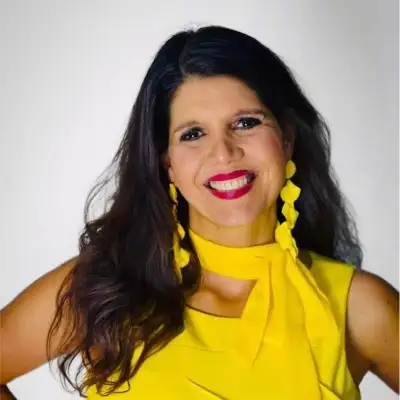
Wendy Coulter: I am great. I'm great. I'm so excited about today's guest, Hannah. This guest got introduced to us by someone else that we had on the show. Her name is Kedma O with Ninja va, and she's going to dive deeper with us into the world of brand building and how seemingly small innovations in branding, marketing, or sales can lead to big wins in other areas of the business.
Hannah, I know you always do a little research ahead of time, so tell us, do you have any fun facts today about Kedma?
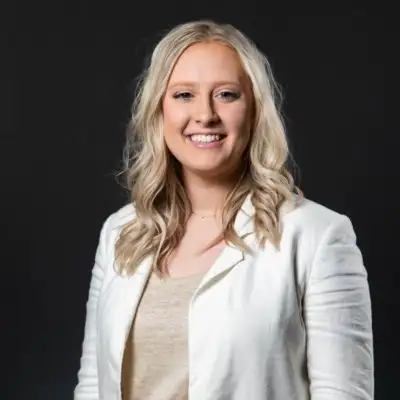
Hanna Jernigan: Yeah. Um, it's more of just the quick synopsis of what I was able to learn from about her. But at 18, Kedma got out of a really tough situation resulting in her needing to lay low. For many [00:02:00] years in doing that, she lost everything twice. But each time she rebuilt by working hard and staying focused on helping others.
So now she's known as a small business superhero, which is a nice way to say she's all about rising up and leading with her heart, and she has a Ted Talk. Um, so Kid Mill, welcome to the show. Can you tell us a little bit more about you and your company?
Kedma Ough: Yeah, absolutely. And actually behind me if you're watching is all my capes. So I do have a purple cape
Wendy Coulter: Oh.
Kedma Ough: my purple
Hanna Jernigan: look at you.
Kedma Ough: Yeah. So I, I do wear capes on stage. Um, it is my uniform. Um, and it does really speak to the work I do in the world. Um, yeah, I'm privileged to be the COO of Ninja va. It is actually a virtual assistant placement agency for the home service space.
So thank. Window cleaning or pressure washing, hvac, electrical. And so day in, day out, um, these business owners are working so [00:03:00] hard in the front line and they really need a team a lot of times behind the scenes to help them build. So it's kind of like building a new hybrid workforce where you have people in the US and then you have people abroad helping to build the vision of a business.
Wendy Coulter: So
how did, how did you come up with this kedma? What, what background led you to do this?
Kedma Ough: So let me share a little bit about my background. See, I've been in, I, I'm a serial entrepreneur. So when you meet a serial entrepreneur, they are like in multiple things doing multiple businesses. Um, where Jen and I met, who was one who referred me was through an organization originally called Conquer, and I was the integrator.
I helped build basically one of the fastest growing coaching companies in the home service industry. And in three years, we got acquired by an amazing company called Housecall Pro. And House Call Pro is [00:04:00] one of the largest software CRMs in the country for home service. So during that time, um, I've had the privilege of coaching some of the best coaches in the entire industry.
Through that, I met a gentleman named Brandon Lazar, and Brandon became a certified coach with us, spent years working with us, and then he sold his window cleaning company and then started Ninja VA because he was having a hard time. During, you know, the whole transition of sometimes finding people or sometimes being able to, you know, bring on someone at the US right?
And really started to build a whole, um, platform around virtual assistant. So Brandon Le Star started Ninja va and then 18 months later he wooed me to join as a partner in crime and really help Nin build Ninja va. So that's a little bit about the dynamic.
Wendy Coulter: I love it. It's all about [00:05:00] those connections and
Kedma Ough: always about the hummingbird effect. Yes.
Wendy Coulter: Yeah. That's fabulous. Well, let's transition into that then, Kedma. Um, let's, um, let's see what kind of like specific instance you can think of and share with us where seemingly small change in your company's marketing or brand strategy led to a significant and positive outcome or results for the business.
Kedma Ough: Gosh, I love that question. Um, well, I'll ask both of you before I answer it, so that both separate Wendy and Hannah, um, have you either of you ever worked with a virtual assistant before? Someone from abroad.
Wendy Coulter: I have not worked with one directly before, but I know a lot of ladies who are CEOs and presidents of their companies who do, and I've actually considered it. Okay. Okay. And Hannah, same question.
Hanna Jernigan: I have not,
Kedma Ough: Okay, well the [00:06:00] reason I bring it up is before I answer that question, um, 15 years ago, so I am a mother of three boys, two of them are autistic, and 15 years ago I was managing a full-time business. I am happily married, but as a mom I was managing the children and I was so overwhelmed that I got, I received a book called The Four Hour Work Week with Tim Ferriss, if you've read the book.
Okay. So I read the book, and in reading the book I was like, wait a minute. You mean I can really hire a VA like they actually exist. You mean someone can really help me. And that's what started my journey. And so now, you know, fast forward 15 years later when you asked this question, you know, was there something seeming that really sort of sparked a new way of thinking about, um, you know, marketing or branding?
When I joined nva, we were a placement agency, which is why I asked the question because most. Virtual assistant companies or placement agencies. So what they say is, Hey, Wendy, do you [00:07:00] need someone to help you? Great. Tell me who you need. Tell me what the profile is, and I'm going to go out and try to find that person.
Essentially Headhunt if they're go, if there's somewhere there or we're gonna recruit and we're gonna place someone like a Hannah, right? We're gonna pretend Hannah's a virtual assistant. We're gonna put Hannah in your company and you are gonna be super happy. Now it sounds so great. Like philosophically, and that's a nightmare.
Why? Because Hannah comes from a different culture. Hannah thinks and operates differently. Hannah May not be used to your leadership style. Hannah has no idea what Wendy really does except for what she says she does. And so we get the culture leadership clash because most agencies stop at placement. So the one Aha, Wendy, to answer your question is when I came in, I said, we are no longer a placement agency.
coaching company. [00:08:00] That's a big difference. The reason why we're a coaching company is because the magic is not in the placement. The magic is in ensuring that once we place that the relationship stays solid, long term. So that's why we train and coach the pros at no cost to, it's built into the formula, so no additional cost, and we train and coach the VA so that it's harmonious hummingbird effect into the relationship once that match happens.
Oops.
Wendy Coulter: Awesome. Um, so let's, let's talk about that mind shift within. The ninja VA space. Right. So going from a staffing company to a coaching company,
Kedma Ough: Yes.
Wendy Coulter: what, how did you implement that change? Um, did you use some innovation as you were [00:09:00] implementing that change? And how did you get buy-in from the talk about culture shift, right?
Like how did you make that culture shift within the
Kedma Ough: Yeah. You know, I think one of the things I want to encourage is we are, in some ways we handicap ourselves with all these tools. The chat gpt of the world, the process of the world, and sometimes we have to go back to basics. Just meaningful conversation, creating imagination.
And it's really interesting to note that if you, if you empower a small group of people to see what's possible, you change the entire organization. And so many organizations don't understand that. So when I went back and I asked very simple questions. What is the friction happening once? And, and, and the team would say, well, this [00:10:00] pro was upset because, you know, Hannah doesn't understand what it means to actually meet the key performance metrics.
Or, sorry, Hannah, I'm picking on you. Or Hannah doesn't understand, you know, um, that. You know, she has to be assertive when she's working with us customers or Hannah doesn't understand that. Um, you know, the language and wording she uses not appropriate. I realized, and they realized, well, wait a minute. Why are we expecting the leader of these organizations to know what the heck they should do?
What is wrong with us? We're the experts. We the experts, not them. And so it was an easy culture shift. We did have to change titles. So the biggest titles that were changed were HR managers are now called Success Coaches. That was a big shift. So, um, and then Director of Sales is now Director of Client Success, [00:11:00] so that was a big shift.
And, um, can I, I mean, the truth is honestly, Wendy, team was so excited.
Wendy Coulter: Yeah. Well, so talk about that impact, like how did this small shift change the projectory of the business?
Kedma Ough: Yeah, so the first thing we started noticing is immediately low retention. So we were having fewer people who wanted to transition out because now we were involved as partnership. The second thing, which was very delightful and very interesting. Is when I onboarded, the average customer was only taking on one va.
But with the introduction of the idea of coaching and supporting and being there, we were seeing them say, can I have a second va? Can I have a third va? Can I have a fourth va? Because now they were introducing them in different departments. Oh, let me put one in finance. Let me put one in branding. Let me put one in customer service.
Let me put one in sales. And so what happened was this [00:12:00] beautiful hybrid where. It wasn't like they were, um, you know, it wasn't like they were shrinking. They were actually expanding their organizations as a result of the support we were doing. So we weren't, it's not, you know, we were, we were, you know, again, coming alongside them saying, listen, we want you to grow, but let us take on some of that burden of that relationship.
Because honestly, Wendy, and you know this as well as I do, relationships are tough.
Wendy Coulter: Oh yeah. Very tough. Right. People Well, and I think.
Kedma Ough: because money. Yeah.
Wendy Coulter: I think the fear with va, um, at least a fear that I've had, so I'm assuming that other people will have it. Um, one, I'm at the top of my organization, so how much do I need to share? This person is offshore. What, what do they need to know? Am I going to be able to trust them?
Um, and then beyond that, how, how much time is it gonna take me to bring them up to [00:13:00] speed? And are they really gonna understand and get it? And are they gonna be able to do everything I need them to do? And it feels like a lot of work. And what if it doesn't work out? Which, it's the same problems that we have when we are looking just to hire a person on staff.
Um, but it feels more risky. So talk about that a
Kedma Ough: Let's talk about that. So first of all, I wanna surprise the audience. English is my second language. While I was born in the US I actually grew up in the Middle East, and so I had to learn English at age seven. And, um, you know, my husband, and I've been happily married for 21 years, Wendy, but when I am angry. He's getting it in my language. Okay. So, you know, and if he hears in my language, oh boy,
Wendy Coulter: Oh boy. Right?
We're in.
Kedma Ough: go. Right. So, you know, we are wired as we're wired. So let me answer the first question. The first question is [00:14:00] a really valid one. You know, how can I trust these people, right? I mean, if I, if they're not here, how can I trust them?
So I don't tell everyone everything I have done because you wouldn't believe me. But you can fact check me, Hannah. So I was. I was head of innovation for an amazing college here in Oregon, and I, I actually seeded the first ever cybersecurity business program, um, business, small business clinic program out of the college.
And because of my background in cybersecurity, I will tell you that, um, inherent inside threat is not going to be the va. It's going to be your partner or your sister or brother or someone in-house that just. Is going to retaliate. Okay? And if you want to be really cautious, we'd have things called administrative controls, right?
We have check and balances and there are things we can do to build trust. But a lot of times, you know, the hackers out there are like everyday people. You know? It's not gonna be someone who is [00:15:00] working really hard in another country and it's their livelihood. Like they're not going to screw that up. Having said that, um, at Ninja VA we actually do mandatory screenshots. So you can see at every point what's going on. Now, I don't believe in micromanaging, so I say trust but verify. But there've been situations where, let's pick on Wendy. Now the Wendy's of the world call and say, Hey, you know, I'm on. And I noticed that, well, I'm not a church, but this person's online and doing church things.
And so, yeah, of course, immediately we wonder, well, are they doing something like, you know, are they working a second job? And in this actual true case situation, we pulled it. We had a meeting with the va. And you know what really happened, Wendy, what really happened was the VA in the Philippines, his computer broke.
He was too embarrassed to tell his employer, so he was saving money. To try to get a computer. So what was he doing in the meantime? [00:16:00] He was barring his wife's computer, and so his wife had to get on because his wife worked at the church, so him and his wife were working, and it just broke my heart that he didn't have enough confidence and safety to tell the employer, which is why we became the coaching company, because I said to my team, we will never be in that situation again.
I wanna create a safe environment where my, our VAs know that we are the employer. And even though we have a third party where they're going placement, we are the employer and we're gonna create a safe environment. So that screenshot happens. The second thing you say is, oh my goodness, how am I gonna train them?
Do I have time? You know, like, there's so much to cover. Wendy, welcome to entrepreneurship. Everybody's, there's nobody, Hannah, that comes to me and says, you know, I just want you to know I own a, a, a company and I, I have so much time a Elba, I have so
Hanna Jernigan: Well, Wendy said that yesterday. It's [00:17:00] weird that you said that.
Kedma Ough: so, so, we know no one has time. So what we do is we set people up. So I, so I would work with you, Wendy, and I'd say, great, before you even think about training. Show me your training plan, and Wendy's gonna say, I don't have a training plan. Great. How about you and I work on a training plan so I can streamline what you are about to do.
So we're not doing this on your, we're doing it with you. And then what I would do is I would work backwards, I would say, Wendy, what are the KPIs? What are the key performance you wanna meet? Well, I wanna have an empty email box. Great. What's your email look like right now? I have 3000 email. Oh, okay. Well, let's set a goal for that.
Hanna Jernigan: How many, how many emails do you have, Wendy?
Kedma Ough: Wendy, how many emails do you have?
Wendy Coulter: Um. 340,000.
Hanna Jernigan: Oh.
Kedma Ough: no way. No way. She's just playing with us. No, she's kidding.
Wendy Coulter: I'm not kidding.[00:18:00]
Hanna Jernigan: How does your computer run?
Kedma Ough: So, so one day, yes, we would set that goal
probably would not be done in a week. Like, you know, we'd probably have to negotiate
some,
Hanna Jernigan: if you just push control,
Kedma Ough: we don't wanna push the leave, but we would wanna put it in a nice folders and have you review it. And
Wendy Coulter: Well, I didn't mention the ones that are in folders, info.
Hanna Jernigan: Yeah,
no. Leave them there hidden. You haven't needed them yet.
Kedma Ough: I guess not. Um, and the third one is will, you know, will it work or can I trust? Or you know, you know, is it worth it? Um, it depe again, look at your finances. I'm working with a landscaping company who has 25 VAs and I said, if you, he's he's, he's doing about 7 million. I said, um, could you, could you afford 25 VAs in the us?
He said, absolutely not. I
couldn't afford it. Couldn't afford it. And so, you know, [00:19:00] and then there may be some disparity here where people say, well, are you stealing money from, you know, us, um, teams, no, absolutely not. A lot of times the VAs are coming alongside the administrative coordinator, so they're not gonna be the, the, they may not necessarily be the virtual assistant for Wendy, they're virtual assistant for Hannah, because if Hannah's getting paid $40 an hour or $50 an hour.
Why would she want to do or should do seven or eight or $9 task work? That doesn't make sense. That's not efficient. So again, it's more about how do we buy back time that's more efficient to do the things that we can do better than no one else.
Wendy Coulter: So let me ask a question, Kedma, when you came into the organization, can you give us kind of a snapshot of the number of employees, like full, full-time employees working for the company? And then, and then contractors, when it was a staffing company, and then [00:20:00] kind of where you are today. And then talk me through the positive consequences that this had on the people and their morale
Kedma Ough: Love that. Um, yes, so, so a couple of things. One is all of our VAs are full-time, so we have 200 of them currently. Um, but we are scaling very fast. On average, we're placing anywhere between 15 to 20 a month. So, um, that's a pretty progressive way of, you know, our movement. Um, and, um, as a result of that, actually this week we have just onboarded our director of franchise partnership.
So he will be exclusively working within franchises. I own actually a franchise, um, superb Mates in Portland, Oregon is, um, an extension of franchise, so I buy into that process. So we have 200, and then in our internal team, meaning managing the day-to-day operations, it's a relatively small team.
Um, we have myself, um, director of success [00:21:00] Christopher, and then we have another person onboarding soon, um, Rebecca, who will be joining us in, in the same capacity. And then we have two success lead. We have a lead success manager, and then we have a success coach, and then we have an assistant success coach.
So it's, um, under 10. And one of the reasons, um, we do it that way is I don't believe in inflating, you know, the workforce unless it's necessary and as we need it, we bring on more people. So so I think I answered that question.
Wendy Coulter: Yeah. So,
Kedma Ough: contractors? No contractors currently?
Wendy Coulter: okay. [00:22:00] So how did your culture like really change What, what were the positive consequences and the change when you went from
Kedma Ough: Yes, yes, yes. Um, so one of the things that's important to realize is the dynamics of other. So a lot of the team, um, first of all, let's talk about the VAs in general and then let's talk about the internal team. Many of them have come worked in other call centers or other va, VA firms, and it's very transactional and it's very, um, there's a hierarchy where the power is very, um, prominent.
So because of this power play, what happens is in [00:23:00] certain cultures, especially in cultures, Asian cultures with the power play. It becomes very difficult, difficult for there to be true, honest conversation because the power play is almost the antithesis of having true, powerful conversations because someone in a lower rank is not gonna challenge Wendy.
Wendy Coulter: Right.
Kedma Ough: not going to, let's be real now because of my background and my sensitivity culture. And actually I come from a part of the Middle East where women are very assertive because we are required to go into military for two years. And I don't wanna disclose the country, but you can figure out which country that is and you can understand, you know, we, you know, we don't have an issue challenging, but in a lot of the cultures it is.
So the first thing I did when I came on Wendy, because I knew that was the culture, I said, nobody gets credit [00:24:00] here. If your voice isn't heard, the second thing I said is, I expect you to challenge me. I expect you to challenge me because to assume that I know everything is, is, is false. And even I have inherited blind spots where I may not see everything correctly. So you need to come in. And you need to say, no, Ms. Kama, here's what I see. No, Ms. Kama, here's what I understand, or I disagree. And we need to have a safe environment to have agreements and disagreements. That's what I need. And if I want a robot, I will hire Chad, GPT, or an AI agent. But so long as you're a human here, you need to be able to have your voice.
Now, Wendy, that was very hard. I just spoke to someone yesterday that we just gave them a raise and [00:25:00] I said, listen, my feedback to you is I need you to have a voice in the conversations we have, and your voice has to be heard. And he said, Ms. Kedma, I'm really working on it. I'm really working on it. Right?
Because what's happening in the brain is they're not used to it.
Wendy Coulter: Right. Culturally, they're
Kedma Ough: Culturally like you are asking me to go, you are asking me to challenge the boss.
Wendy Coulter: Yeah.
Kedma Ough: But in challenging the boss, you realize that all the boss cares about is what's best for the company.
Wendy Coulter: So Kevin and I, as you moved from. Staffing to va seems to me you must have changed the name of the company. Is that
Kedma Ough: Nope. Nope. Still Ninja Va Still fell. Yeah. Still fell right in, in, in Mark.
Wendy Coulter: Okay. So even when you were the staffing company, it was Ninja va. Okay. Okay, that makes sense. so tell me what you learned from the [00:26:00] Hummingbird Effect that maybe you. Having you approach to your branding and marketing, um, or maybe it even affects you in your other businesses, can you talk a little bit
Kedma Ough: Um,
well,
Wendy Coulter: this?
Kedma Ough: I think what I've always learned is and what I continue to learn, and yes, I operate like this in other, my other businesses, my cleaning company is in the same. Same follows the same philosophy. Um, what I find the most rewarding is when an employee tells me how happy they are to show up to work.
One of the people who works with us, um, lost her husband at a very young age and has to care for her kids and just got promoted. And when she said to me, I read my promotion letter five times. I couldn't wait to go and celebrate with my kids. What I consider [00:27:00] that in my mind, Wendy, is something I call generational wealth.
That we are changing that environment. And when people walk into their office, whether they're at home, um, or, you know, they say to me sometimes, you know, I need to take a break. I say, I don't care. I don't care if you're on the beach doing the work. Just, you know, I'm very results driven, but I don't care how it's done, when it's done, where it's done. This kind of freedom, they say to me like, I feel like I'm in a company where I have freedom. And so I would question, um, the companies you're interviewing, that when they talk about benefits, when they talk about health benefits, when they talk about compensation, how many say do you provide freedom as one of the benefits?
Wendy Coulter: Love it.
Kedma Ough: yeah, that would be it.
Wendy Coulter: Love it. So that, that freedom, um,
Kedma Ough: the freedom to live your [00:28:00] life in a way that has joy in harmony be compensated for it is freedom.
Wendy Coulter: So how do you feel other companies can adapt?
Kedma Ough: Great question.
Wendy Coulter: Yeah.
Kedma Ough: question. So let me speak to leadership. There are multiple types of leadership, but I'll speak to five. All right. And then as I speak to it, I'm gonna ask Wendy, which leader are you, so that we can understand? And Hannah, I'm gonna ask which leader are you?
Okay.
there we go. So you get to participate in the experience.
The first leader. Is we call the democratic leader. They don't make any decision without interviewing every single person on the team. What do you think? What do you think? What do you think? My goodness, I am not a democratic leader. Nothing gets done with democracy that way. Maybe in the government, but not in business.
Very tough. The second kind of leader is very task [00:29:00] driven. It's like, did you get this done? What is this? You know, task oriented, task driven, bureaucratic. No emotional connection. It's like if the task is done, that's all they care about. The third type of leader is what I call laissez-faire leader. They're actually hands off.
They're more of a mentor because they expect the person in the role is gonna drive the project. They're gonna own the project, they're gonna own the department. They're not gonna be micro mounting them. They are the kind, the laissez-faire leaders hire people who they would work for. So like there's this relationship of you're smarter than me in this role.
What do I need to do to support you and mentor you? The fourth kind of leader is, um, charismatic, inspirational. They somehow can bring magic where people will follow them. Just like hairdressers. I'm like, I tell my hairdresser, if you ever leave. It's just to let me know, I [00:30:00] don't who cares about the damn salon?
I'll just follow you wherever you go. And I do, right? Because there's something powerful about leadership, right? So if you are a charismatic leader, you create such a dynamic setup in the environment that people will follow you wherever you go, right? Um, and then there is, um, there's a last one and I can't remember it because I don't, obviously I don't practice it.
Oh yeah, I do practice it actually. Autocratic leadership, but I do permissive autocratic. There's a difference. So autocratic leadership is very military style. This has to be done. You have to do it this way. I operate permissive, autocratic in certain situations, which means, Hey, Wendy, this needs to get done.
Do it however you want. But I get the final review, or I get the final say, or I get the final moment. And that way I give you permission to run with it. But the final decision sticks with me. Usually in situations where there is financial [00:31:00] potential financial loss or something like that, I could play there.
Okay. Wendy, what kind of leader are you,
Wendy Coulter: It might depend on the day, but I would say,
yeah, where I, where I try to be, I think is actually that permissive, autocratic that you're
talking.
Kedma Ough: Autocratic, great.
Wendy Coulter: Yeah.
I think there's a piece of charismatic and a piece of laissez-faire. But I think that comes together in autocratic in some ways. So that would be where I think
Kedma Ough: yes. So I think permissive auto credit is great. Then I would encourage you that as you build your team, try to find people that you would work for. That means that they're smarter than you, and then you can have be more laissez-faire than more than and less permissive autocratic Hannah.
Hanna Jernigan: Huh. My initial thought was, she's not gonna like my answer because I
feel like it, I feel like it's the, the different tasks of how I a [00:32:00] approach them. I like
Wendy Coulter: You get it
Hanna Jernigan: that I.
Wendy Coulter: That's why I love you. You get it
Hanna Jernigan: Yeah, I'm, I don't know though, but I also feel like it's, it just depends on what it is that needs to be done of how I
Kedma Ough: Sure.
Hanna Jernigan: tend to manage it.
Wendy Coulter: So think about though, take it away from what you do every day and think about Leadership.
So how you are leading Nicole on the team, how you're leading our intern, how you're leading, not necessarily the client project work that you do. The tactical.
What
Kedma Ough: It's very different.
Correct.
Hanna Jernigan: Yeah. and how, where do you
Wendy Coulter: think you are there?
Kedma Ough: you Yes.
Hanna Jernigan: Where's like the cheerleader at?
Kedma Ough: That's Where's,
That's charismatic. There you go. Yeah. Those are the, that's the cheerleader, the inspiration, the one who creates a space where people are inspired to become the best version of themselves.
Hanna Jernigan: I hope I do that.
Kedma Ough: We can ask your [00:33:00] intern afterwards.
Hanna Jernigan: Yeah, yeah. Yeah.
Kedma Ough: So I would say, Wendy, um, you know the answer to how can companies do it, find out what their leadership style is first, and then everything works on the top. Get very clear on what their mission is and what their values are, and make sure it's embedded into everything they do. And the last thing I would tell you, which they're not gonna want to hear, but I don't know if you guys know how many people I have consulted over the course of 25 years, 30,000 businesses.
And the number one issue I see when I go into companies is that they allow toxic leadership to stay. It is. Unbelievable. It's ab boring to me and I cannot under understand it, but I will watch people leave after one person, two people, five people, 10 people, 30 people, and they will keep the toxic leader in place.
Get rid of them.
Hanna Jernigan: Mm-hmm.
Kedma Ough: Get rid of [00:34:00] them. It is cancer in the company.
Wendy Coulter: So I wanna take us in a little bit different direction now with another question, CDMA, around innovation and experimentation.
How do you see that playing a role in creating breakthroughs in hummingbird effects?
Kedma Ough: So I told you I didn't wanna disclose everything I do. But you know, since I was a former innovation director, um, I have been in inventor for 20 years. Um, I actually created an organization called Mi o many years ago, which was all around helping inventors go from ideation to commercialization. I worked with one of the Sharks for many years to help inventors go.
And I'm an inventor myself. I invented. A product called Lolly Good when my son was very young because we would argue when he was very, very young because he always wanted candy, and I always told him to have his peas and carrots and we would have this argument back and forth. And then one night I [00:35:00] went to bed and I woke up at two in the morning and I was like, oh my gosh, I finally have it.
So I called my sister and she's like, is everything okay? I'm like, I have this idea. She's like, it's two in the morning. I go, when do you think ideas happen? You think it's in two in the afternoon. It's always around two in the morning, and the idea was, what if I could create a candy that provided probiotics and protein and fiber so I wasn't fighting with my son?
And that? What was that? That idea birthed a concept called lolly goods, which was actually the first lollipop to infuse probiotics, protein, and fiber. So that when I was handing him that candy, it was healthy candy. And so I have worked for years working with inventors and for years around innovation. And my fifth grade teacher said in my yearbook, KMA, keep believing in leprechauns and fairytales and angels.
And actually I found him [00:36:00] five years ago and I said, you know what? I am still believing in that. So let's start with what innovation looks like. The first thing we have to do is we have to go back and think about where does imagination begin and end. Unfortunately, there is more imagination in a three-year-old than there is in an average adult.
Why? Because as an adult we have been taught to not imagine, to not think out of the box, and how many times do we come up with a crazy idea and someone says it's not gonna work? It doesn't make sense. That's a stupid idea. Why would you think about that? And yes, most of the craziest ideas have made millions of dollars. So the first thing you'd have to do if you wanna get into the art of innovation is you have to set the scene to say everything on the table is open for conversation. Everything. There is no [00:37:00] bad idea. There is no bad thought, there is no bad imagination. You have to create a safety net, and the second thing you have to do is you have to force your mind to actually restart that part of your brain.
That really is dormant for most of us, not for me, but for most of us. Um, and. I would say that we create a sandbox. So I like the idea of an idea sandbox. This is what I introduced at the university level, and the idea sandbox looks like this. Everyone in the organization cannot come up with a really cool idea.
We look at the idea as a committee every single month. If we take that idea on just to even test for feasibility, that person gets paid for feasibility. If we move through the phases and it goes to, um, first stage market, then that person gets compensated again, and then if it goes to commercialization, then that person gets compensated again because it was the person with the idea that [00:38:00] brought up the opportunity for it to commercialize.
So you have to incentivize everyone in the organization. And so I would say that would be a fun way of doing it. Just create an idea, sandbox and incentivize people for great ideas.
Wendy Coulter: Love it. Love it. What do you think Hannah?
Hanna Jernigan: I mean, I love that. I love having the time and leaders that give you the time to.
Kedma Ough: Yeah.
Hanna Jernigan: To think and to process things. And they don't always go in everywhere. And I think that that's the harder thing from the leader's perspective is watching me spend time and then I'm like, okay, I'm done with this. But it is really nice to have that.
And you find out different processes that work rather than just being stuck in the same
Kedma Ough: Exactly.
Hanna Jernigan: Things you've always done.
Kedma Ough: Yeah. And then the other thing I do is what I call the upside, upside down pineapple cake. So you're gonna take any department. And you're gonna come into work and you're gonna turn it upside down and you're gonna say, okay, we're gonna do [00:39:00] everything backwards today. We're gonna make everything upside down because Yeah, I know.
Isn't that crazy? Because we want
to find, yeah. Nope. We're gonna find the holes, we're gonna find the gaps. We're gonna find the inefficiencies. It is the smartest thing you can do. Switch everything upside down and have fun with it. Work backwards. Do something odd. Create something different. 'cause the problem we have is our brain seeks comfort,
Hanna Jernigan: Mm-hmm.
Kedma Ough: but in comfort, innovation never is born.
Hanna Jernigan: Yeah. And it's having people on your team that are willing to do that. It's, I mean, it's a good way to also find people who are just. Not going to ever make a change. And that's, you can't your business like that all the
time.
Kedma Ough: then, right Then. Then you have to look back to the culture. Mm-hmm.
Hanna Jernigan: Ken, I really learned a lot from you speaking today, but what really stood out for me, um, is that you didn't change what Ninja VA does.
Instead, you changed how it [00:40:00] thinks and how you all think. Shifting from a staffing mindset to a coaching mindset sounds simple in, in theory, but it completely transformed your culture, the results, and the confidence of the people that you support. Um, I really loved hearing how you spent time empowering teams by asking where's the friction, as you mentioned earlier, and then you really listened.
To what their answers were and found a solution from that. It was just a good reminder that innovation doesn't always come from the top down. Sometimes it comes from creating that open, honest communication and being willing to challenge even your own leadership style. And also hearing how you encourage your team to disagree with you, um, to challenge you.
That takes a lot of courage as a leader and as a person in general. No one really likes to be told. That they're wrong or question, but it also creates a kind of culture where people thrive and feel safe and bring their best selves and their whole selves to work. Um, so that's really the hummingbird effect in action.
It's [00:41:00] a small shift in your language, your mindset, your approach, and it ripples outward and makes everything out better. So thank you for being so real with us today and showing us how to have heart and strategy and how those two things can really go hand in hand.
Wendy Coulter: So Hannah, I wanna tag on, um, here at Hummingbird Creative Group, we work with our clients some just about every time. Time that we do strategy with them, we're writing a positioning statement and the piece of the positioning statement that almost seems the most obvious is frame of reference. So we are an architectural firm, we're an engineering firm.
We are this, we're that. Right? You shifted frame of reference, which is at the top of the positioning statement as opposed to shifting. The explanation of what it is that you do,
which I think is really, really interesting. Um, so [00:42:00] I just wanted to throw that out there. 'cause this is a very minor shift. Like in a strategic point where a lot of companies don't even think about it.
They're just like, we are an architecture firm. We're this, we're that. We're a staffing company and that's what we're doing. You know, you stopped it at a really significant point and said, well, what if we. Did this shift, you know, so I think that's amazing. Um, that definitely rippled out to everything and, um, it has been so wonderful to spend time with you this morning.
We appreciate your time and your energy. This has been an awesome episode. Um, and I just wanna say to the listeners, we also appreciate your time and energy. Um, this morning, and I hope we have brought you some joy. I think Kedma used my favorite word today. Um, and go out and take in all of what she has shared with [00:43:00] us and find your own hummingbird effect.
Thank you, Kedma.
Kedma Ough: Thank you. Thank you. Bye.