Subscribe
Share
Share
Embed


One of the most essential ingredients to success in business and life is effective communication.
Join Matt Abrahams, best-selling author and Strategic Communication lecturer at Stanford Graduate School of Business, as he interviews experts to provide actionable insights that help you communicate with clarity, confidence, and impact. From handling impromptu questions to crafting compelling messages, Matt explores practical strategies for real-world communication challenges.
Whether you’re navigating a high-stakes presentation, perfecting your email tone, or speaking off the cuff, Think Fast, Talk Smart equips you with the tools, techniques, and best practices to express yourself effectively in any situation. Enhance your communication skills to elevate your career and build stronger professional relationships.
Tune in every Tuesday for new episodes. Subscribe now to unlock your potential as a thoughtful, impactful communicator. Learn more and sign up for our eNewsletter at fastersmarter.io.
Let's say somebody says something
that is just the wrong tone
and it brings the room down.
You have two choices at that moment.
You can say, oh god, that was terrible.
That just ruined everything.
You can dwell on that or you can
say, well, we got thirty more minutes
of show and that can still be good.
I'm Matt Abrahams and I teach
strategic communication at Stanford
Graduate School of Business.
Welcome to Think Fast
Talk Smart, the podcast.
Whether it's introducing a colleague,
speaking up in a work meeting or making
small talk with a cashier, most of our
daily communication happens in the moment.
And yet speaking on the spot is
something that terrifies so many of us.
The good news, spontaneous speaking,
is a skill and like any other
skill, it can be learned and honed.
This is the third episode in our three
part miniseries on spontaneous speaking.
Our talented team of coaches is made up
of people for whom talking on the spot
is integral to what they do for a living.
Their jobs vary.
High stakes auctioneer, game show host,
UN interpreter, FBI hostage negotiator,
and more, but they have a lot to teach us.
In our last episode, we focused on the
art of being present and how it can
allow us to better adapt to the moment.
But there's still an important piece of
the puzzle that we haven't covered yet.
What do you do when things
inevitably go wrong?
With spontaneous speaking, mistakes
and mess-ups are par for the course.
So in this episode, our coaches will
cover their most important lessons
for how to deal with and manage the
challenges that come from mishaps.
We'll be sure to go through some
case studies from their real lives
to see their advice in action.
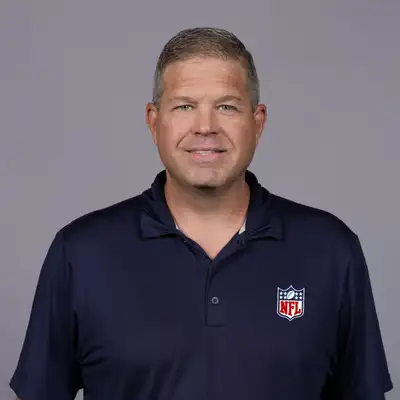
Brad Rogers, who is an NFL referee
and was also one of our coaches
in our first episode, has a whole
career's worth of experience of
what to do when things go wrong.
We've often said in officiating, if you
ever work the perfect game, you need
to retire because it's never happened.
And funny enough, I had a college game
a few years ago that we got eleven plays
into the game and we had a lightning
delay that eventually canceled the game.
And we all jokingly said, hey, we
might have worked the perfect game.
And so the evaluator came back with grades
for those eleven plays and had downgrades
and comments and we're like, we couldn't
even work eleven plays and do it perfect.
So we know that there's gonna
be mistakes made in life.
And if you do make a mistake, you
have to move forward, and in football,
you have to focus on the next play.
You can't allow yourself to dwell in what
happened in the past 'cause that's gonna
cloud what's happening in the future.
There's nothing that can be
done about that previous play.
The only thing that matters
now is the upcoming play.
And so I look at life the same way.
I've made a mistake.
Tomorrow's a new day.
I've got to learn from that mistake
and move forward so that I don't
create the same problem again.
That notion of next play is
something that I have really adopted.
When I try to help people
speak better in the moment.
A lot of us can get anchored
in the past and ruminate.
And that prevents us from moving forward.
So that advice I think is very
well taken for any of us who
have to speak in the moment.
The idea of next play is one that
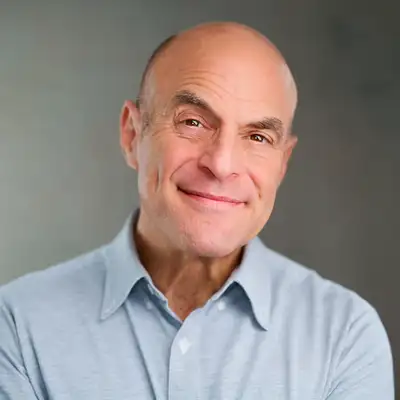
our next coach, Peter Sagal, also
uses in his job as the host of
NPRs Wait, wait...Don't Tell Me!
He explains how this mindset prevents
him from allowing one small mistake
to define his entire performance and
helps him move on with confidence.
And let's say like I
do a joke and it dies.
Or let's say somebody says
something and this happens.
I've done it, my panelists have
done it, everybody has done it.
You say something that is just the
wrong tone and it brings the room down.
And you have two choices if
you're me at that moment.
You can say, oh god, that was terrible.
That just ruined everything.
And you can dwell on that.
Or you can say, we got thirty more minutes
of show and that can still be good.
So let's get back on it.
Let's put this aside and let's
proceed with the expectation that
from now on, everything's gonna
be great, because it usually is.
One of the things I've come to learn
about baseball players is the ability
to shake off a mistake, say, okay, that
happened, but now I'm going to pitch well.
From now on, I'm still the player
that I always knew I was, and I'm
going to put that aside and move
on with the same confidence that
I had before I threw that pitch.
And one of the things I've learned
about elite athletes is that their
mindset is such that if something
goes wrong, it's an anomaly.
Maybe because the ref got it wrong, or
maybe because just a stroke of bad luck or
whatever, but it doesn't reflect on them.
And in a weird way, that's delusional.
Like you hung a curve and he just hit it
outta the park for a three round homer.
But in other ways, it's
absolutely necessary.
The, the approach and the mindset
really makes a big difference in
terms of success in these moments.
Now that we've tackled mindset
and know that making mistakes
is just part of the game.
We can get started at looking at some
of the lessons our coaches have to move
us forward when things don't go our way.
We thought it would be helpful
to pair each lesson with a real
life case study directly from our
coaches, which will hopefully give
you a chance to see how they apply
these skills in their daily work.
Our first lesson comes from Chris
Voss, a former FBI hostage negotiator.
Are there ways in which you quickly
adjust and adapt, or do you just
stay the course and keep things going
forward even if it didn't happen
or occur the way you wanted it to?
How, what do you do when things
don't go the way you planned?
You know, you've actually inadvertently,
I think, hidden on the dilemma.
The first thing is to realize there is
no course that's easy to say, but as
human beings, we think of everything in
terms of duration, path, and outcome.
Where do I wanna be?
How long is it gonna take me to get there?
How am I gonna get there?
The course, if you will.
And if you only imagine there's one
course, then you're gonna stick to it when
all the data's telling you you're wrong.
So in kidnapping negotiations, I'd
show up in an embassy and they'd
say, how's this gonna work out?
I'd be like, well, you know, it's
gonna take one, it's gonna work out
one of five ways, and we gotta go along
for the ride, see which one it is.
That would keep me from
getting married to a course.
Colin Powell, the famous American General
and Secretary of State, said, never gets
your ego so tied to a solution that if the
solution collapses, your ego goes with it.
That's people thinking of a course, and
that's not a, somebody who's not as smart
as other people, that's human nature.
So to recognize that it's your desire
to want to think of one path, you're
already limiting yourself because
never be so sure of what you want, that
you wouldn't take something better.
So there are all these little ways
where you gotta stay curious, you
gotta look at it an adventure.
You gotta realize there's another
path that's gonna be better.
If you can maintain that flexibility in a
moment, then you're gonna do really well.
Our next coach, Annabelle Williams,
exemplified that flexibility in not
getting tied down to a single course of
action while she was recently speaking on
TV for her job as a sports broadcaster.
I was doing a live cross, so I was holding
a microphone and a particular athlete
was going for a four-peat in a race.
This was their fourth Paralympic games.
They were going for their
fourth gold medal in this event,
and I was doing a live cross.
I thought it was live.
In hindsight, it was called a look live,
which means you do it right before you're
meant to be live, and they turn it around.
So it goes live a minute later.
And as I was holding the microphone, I
said, blah blah athlete is going for a
four-peat and I held up my four fingers
and I dropped the microphone to the floor.
So I went down and I picked up the
microphone and I said something
like, I guess that's what happens
when you've got one hand and you
try and lift four fingers at a time.
You know, the risk of
dropping microphone is high.
And then I sort of moved on and
kept talking for another ten
seconds or something and wrapped it.
And the person said to me,
it was actually a look live.
We can do it again.
We're gonna do it live.
And so we did it live.
So that bit never went to air.
And I remember thinking that
bit should have gone to air.
People think, oh gosh,
what if I make a mistake?
What if I make an error?
It's a disaster.
And in reality in the moment I
thought, this is live, I just
have to rise to the occasion.
I just have to carry on.
You know, what can I think of saying?
And I, fortunately that sort of came
to my mind, but that stuff makes
television gold a bit, you know?
It makes life gold, really.
Because it's in those moments
of vulnerability and awkwardness
that our true humanity comes
out and we learn a lot.
You have one hand, and I don't think
about the consequences of that, right?
I mean, the consequences are, yeah, you
can't signal four fingers and hold a
microphone, but that also opens the door
to lots of other questions like, but how
do you do this and how do you do that?
Which is part of what you're trying to do,
which is open up people's conversations
about disability and seeing you manage
through that with aplomb is, is awesome.
So I appreciate you sharing that
story in, in the typical way
you do with a sense of humor.
In fact, incorporating humor and not
taking things too seriously can be an
incredibly helpful way of dealing with
mistakes, which not only humanizes
you to an audience, but as NFL
referee Brad Rogers tells us, it also
allows you to connect more with them.
When I've made a mistake,
I've laughed at myself.
I'm like, okay, I'm sorry.
And I go back into my announcement.
That kind of helps me reset in my
brain, hey, look, I made a mistake.
I didn't mean to add confusion to that,
but let me start over again with it.
And it's funny, whenever you
get into something that you're
so familiar with, sometimes the
words can roll off your tongue and
you're like, what did I just say?
I can tell you a funny situation I
had in Denver a couple years ago.
I was talking to a player in a timeout
and the weather was absolutely stunning.
It was a seventy degree night.
There wasn't an ounce of wind
and you could see stars a
little bit up through the sky.
And he and I were talking
about where he was from.
He said, I'm from San Diego, and
I said, oh, I love San Diego.
It's beautiful.
This feels like San Diego kind of weather.
And we were talking through San Diego
so much that the next time there was
a timeout, which was the very next
play, they were preserving the clock.
I stepped out and I
said, timeout San Diego.
And the crowd in Denver, they, it
was so funny because they all started
booing me and I laughed and I said,
I'm sorry to the fine people of Denver.
I meant to say timeout.
And I said the team.
And they called a timeout
again on the very next play.
And as I stepped out, I walked a
few extra steps 'cause the crowd was
waiting for what I was gonna say.
And I held my hand out and I smiled
and chuckled and said, time out.
And I held my finger up, you know,
kinda like I've got it this time.
And I said the correct town.
And they all laughed and it was funny
'cause it made Twitter and social media.
So if you can humanize this thing
a little bit that we're not just
robots standing out there, it does
go a long ways with the crowd.
They may make fun of you,
but they'll laugh with you.
I think there's a really important lesson
there, beyond knowing your geography, is
to not take these things so seriously.
When we're in a moment where we
have to speak spontaneously, where
something's happening that we have
to respond to, it might not go
exactly the way we had intended.
And if we can recognize that,
and essentially say take
two, we're gonna do it again.
It humanizes it.
People can connect to it and it allows
you to move forward so you're not
ruminating and stuck in the past.
Onto our third and final lesson, which
we'll hear from UN interpreter Giampaolo
Bianchi, keep calm and carry on.
I am sure you are human, that you
have made mistakes or you've been
less accurate than you intended.
How do you recover in those moments?
The first thing that you have to do
when you make a mistake, is if you're
able to correct it immediately, then
you can just correct it immediately.
Because yeah, people make mistakes.
So, obviously you want to do
it as elegantly as possible.
If you make a mistake, don't stop
and start stuttering and going,
oh no, what I meant to do was.
And just, you know, if, if you got a
date wrong and it was in the year 2025,
uh, or rather 2024, things like that.
Above all, you just need to keep calm
and correct the mistake if you can.
If you can't at that specific moment,
then keep it in the back of your head and
try and go back to it whenever you can.
And if you do that, then
I think you'll be okay.
Excellent.
Well, yeah, and I think that's true
for any of us when we make a mistake.
You have to make an in the moment choice.
Can I correct it now or do I
have to come back to it later?
Or maybe it's not significant
enough to even matter.
Well, that's the thing.
You tend to notice your mistakes
a lot more than others do
because you're in your own head.
If you make a mistake, it's very
easy to say, oh no, everyone noticed,
and I'm making a fool of myself.
And then you'll realize that nobody even
noticed that you, that you made a mistake.
But staying calm when something
goes wrong is easier said than done.
To see how that principle plays out in
action, we'll turn back to Annabelle.
You and I have known each other
for quite a while, and I truly
appreciate our friendship.
It's so much so that you were kind
enough to share a very personal
and stressful story that ended
up as the epilogue to the book I
released Think Faster, Talk Smarter.
I'd love for people to hear that
story from your mouth directly.
Do you mind recounting a bit of what
happened when you were called into
action for the Commonwealth Games and
how you had to speak spontaneously
before a million plus people.
Absolutely.
I had been asked to commentate the
swimming to the Commonwealth Games, so
I had done a huge amount of research
about the swimming, which meant that
I had done absolutely no preparation
on any other sport, and also hadn't
had an opportunity to watch any of
the first six days of the Commonwealth
Games except for the swimming.
The day the swimming
program ended, I went home.
I thought I was all done, and I woke
up the next morning to like fifty
thousand missed calls from the executive
producer and she basically said, look.
We want you, or please need you, to
fill in for the primetime segment.
It was, of course, an
incredible opportunity.
I had never hosted a primetime
segment before, but I had five
hours to get my head around all of
the content and the other sports.
Plus I had no childcare for that day.
Anyway, we walked on set and as we
were about to go live, the producer
said, have a look behind you and we
have this big LED screen behind us.
There were four images of different
athletes, and we decided that I would
speak about two athletes, and my
co-host would speak about two athletes.
And typically in live sport you don't
use an auto queue, but on this particular
occasion, I thought to myself, I've
got so much in my head, I'm just
for this opening segment, because I
wasn't super familiar with the four
athletes on the screen behind me.
I'm going to put what I
wanna say about them on the
teleprompter, on the auto queue.
And we had the count down, ten,
nine, eight, and we were live.
I was welcomed onto the set and then
my co-host read the parts that I
had put on auto queue for myself.
So the two athletes I was meant
to covering, he read those scripts
that I'd put on the auto queue.
And I remember standing there thinking
to myself, if somebody said, I will
give you ten million dollars to
remember which other two athletes are
on the screen behind you, I couldn't.
I remember I thought, I have absolutely
no idea what the, what, which other two
athletes are on the screen behind me.
And so I thought either one
of two things is gonna happen.
He will either just speak about all
four athletes, or he will throw to
me after he's read my two athletes.
And the latter happened.
So he threw to me.
And I had to turn around and look
at the screen behind me, and I
saw that it was, from memory,
beach volleyball and a hurdler.
It was the men's beach volleyball.
I knew that our women
were doing very well.
I didn't know exactly how the men
had performed, and so I made some
statement about how well were women
had done and how like I was excited
to see how the men were gonna go.
And then with the hurdles, I knew we had
this one hurdler who's quite well known,
and she has this really interesting way
that she warms up, she does this dance.
And I spoke about that, not
actually knowing whether
or not she was in the race.
Thankfully she was.
Then I thought I knew that the
next segment we were throwing to
the commentators at the athletics.
And so I remember saying something
like, let's get to some people who know
far more about athletics than I do.
And I threw to them and I remember
just thinking, oh my goodness.
Like it felt like this total blur.
So how was it exactly that Annabelle was
able to pull off this Herculean feat?
I don't know what it is, but in really
high pressure situations, especially live
television, when you know there's really
no choice, I actually become really calm.
I don't know if it's because I
have been an athlete and been in
lots of high pressure situations.
Or my upbringing.
To those listening, I have a
disability, I'm missing my left arm.
And I've grown up with, you know,
having to deal with certain challenges.
But in that moment, I just thought
to myself, there's no choice here.
You've just got to do the best you can.
It'll be over soon.
Just go for it.
And I was proud in hindsight
how I handled that.
I think you should, well, one first,
thank you for recounting that story.
When you first told it to me, I
was blown away and I think you
remember I said, oh my goodness.
That has to be the way I end my book.
Because a book about spontaneous, I
cannot imagine a worse situation of
being in front of millions of people
on live TV with nothing to say.
What I find so amazing about that
is in that moment what you did
is you got centered when many
of us would've gotten flustered.
You were able to pull forward some
things that you did know and articulate
it well, and then move forward to
a point where nobody could tell.
I mean, if you're watching that segment,
you can't tell you didn't know what
you were supposed to be saying, which
is a true testament to a professional.
Okay.
So now that you've heard the lessons
and case studies from our coaches,
it's time for some homework to help you
put what you've learned into practice.
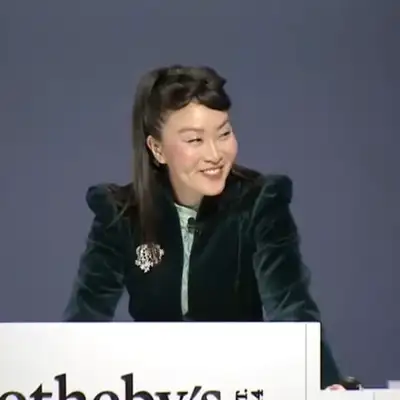
We'll hear from Phyllis Kao, a Sotheby's
auctioneer, who we first heard from in
the previous episode of our miniseries.
If you missed episodes one and two, we
encourage you to go back and listen.
In them, our coaching team tells us how
we can prepare to speak spontaneously and
the art of meeting the present moment.
Phyllis's exercise takes us full
circle by helping us reflect on
how we did and recognize what we
can improve on the next effort.
I think a really helpful exercise, that
I was forced to do and now I force myself
to do, is to watch video of myself and
really just sitting down and I take notes.
I critique myself on all the
little things that bug me.
I find it really helpful when you
watch yourself because you think
you're coming off one way and
you realize you really aren't.
I also will watch myself.
It was very hard for me to
get comfortable doing that.
I imagine that I am somebody else and that
helps me not cringe, but you're right.
We are not the best judges of
our own communication because
of our perspective on it.
While we're saying it, it's
hard to see how others see us.
I am often relieved in what I see
that it's, you know, I felt really
nervous and it doesn't come off
that way, or I felt I was speaking
too quickly and maybe I wasn't.
But sometimes I'll see things
that I'm doing that absolutely
I have changed as a result.
So I, I will take that
homework and double down on it.
And it's great to hear that
you employ that as well.
Congratulations, you've completed
our spontaneous speaking training.
By now, you've hopefully learned the
importance of preparation, ways you can
better engage with your audience in the
moment, and how to turn the inevitable
mistakes and mishaps into moments of gold.
Although our training has ended, I
hope you'll think of this as just
the beginning of your journey to
improving your spontaneous speaking,
whether it's in social situations
or meetings with your boss.
I invite you to continue practicing
these skills and techniques from
our wonderful coaching team.
For even more resources and
guidance, you can check out my
book on spontaneous speaking.
The title might sound a little familiar.
It's called Think Faster, Talk Smarter.
This episode was produced by
Aru Nair and me, Matt Abrahams.
Our music is from Floyd Wonder.
With special thanks to
Podium podcast company.
We'd also like to thank all
of our incredible coaches
for their help and advice.
Annabelle Williams, Giampaolo
Bianchi, Brad Rogers, Chris Voss,
Peter Sagal, and Phyllis Kao.
Please find us on YouTube and
wherever you get your podcasts.
Be sure to subscribe and rate us.
Also, follow us on LinkedIn and Instagram.
And check out FasterSmarter.io for
deep dive videos, English language
learning content and our newsletter.
Please consider our premium
offering for extended Deep Thinks
episodes, Ask Matt Anythings and
more at FasterSmarter.io/premium.