Subscribe
Share
Share
Embed
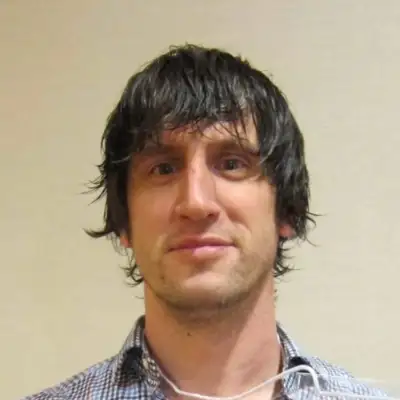
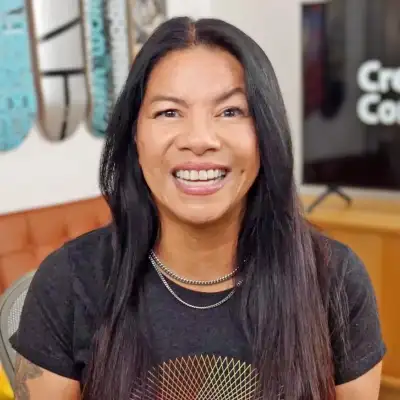

Cheers & Tiers welcomes you into a circle of design leaders whose bonds were forged during iconic AIGA design leadership retreats and conferences. These gatherings were more than just strategic sessions with the nation’s chapter leaders—they were moments of shared growth, laughter, and camaraderie that shaped careers and lives, blending organizational development with celebratory toasts and even the occasional human pyramid.
Fellow design leaders Erik and Rachel as they reconnect with friends about shared experiences, memorable lessons, and transformative moments gleaned that defined this extraordinary group. Join us as we honor the relationships and memories that continue to shape design and leadership today.
Chapter two.
Erik Cargill:I'm Erik Cargill.
Rachel Elnar:And I'm Rachel Elnar. And this is Cheers and Tiers
Erik Cargill:Design Leadership Tales Retold.
Rachel Elnar:Hey, Erik.
Erik Cargill:Hey, Rachel.
Rachel Elnar:Erik, today's guests are the sister duo behind Visual Asylum, a San Diego design studio they've been running since 1987, and honestly, two of the design community's biggest champions the city has ever seen. MaeLin is an AIGA fellow, incoming president's council chair for AIGA National, founder of Urban Discovery Schools, and the woman who helped San Diego Tijuana win the bid for World Design Capital twenty twenty four. Oh, and she was part of the original team that dreamed up the Y conference, which is what brings us to her sister. Amy took that torch and ran with it, serving as Y conference chair while also being past president of AIGA San Diego, a typography obsessive, which I love, and the studio's resident expert in making spaces actually talk to people. She teaches advanced typography and wayfinding and has a gift for design that you can walk around in.
Rachel Elnar:These two have spent decades proving that showing up for your design community and doing great work aren't mutually exclusive. Welcome MaeLin Levine and Amy Jo Levine.
Amy Jo Levine:Thank you.
Erik Cargill:Thank you. Wow. Welcome.
MaeLin Levine:Can we just take you with us wherever we go
Rachel Elnar:to do that intro? Every time before we before you walk in the door, I will do the intro.
Erik Cargill:Okay. Rachel's good at those. She's great at those intros.
MaeLin Levine:Very good.
Rachel Elnar:Thank you. Oh, thanks. Well, I'm really excited to talk to you today, not only about leadership, but also just leadership retreats and some of the history and get into some of these stories. Yeah. I don't even know where to start other than let's talk about AIGA San Diego Tijuana.
Rachel Elnar:Maybe we can start with how you got into the chapter, how you got into leadership. Sure. Well,
MaeLin Levine:when I moved here in 1987, a group of folks actually broke away from the art directors I forget what it was called. It had some other name. And they decided that that group just didn't, you know, didn't reflect who we all were at the time. And so they looked into starting a chap chapters were fairly new back then, and so we were one of the first apparently. So anyway, I was lucky enough.
MaeLin Levine:Amy wasn't here yet in San Diego. She was still in Denver. But I was lucky enough to be in the room when they all voted to start a chapter and elect the first board. And then I got involved because someone on the board, Dave Conover, reached out and called me and said, hey, we are going to be framing these posters, the Soviet poster show Ron Murielo had initiated. So this chapter, I guess, its from the get go has been known for just being kind of fearless.
MaeLin Levine:And, you know, they started this Soviet poster show, brought these posters organized, bringing posters from the Soviet then the Soviet Union. So anyway, I got invited to help frame the posters and work shoulder to shoulder with, you know, basically the who's who in the San Diego design community. Just literally working together, physically working. And I love that story because it's so it's so emblematic of the community. And with AIG and their leadership retreats, you realize is that the things that you're experiencing locally actually are shared experiences happening kind of concurrently, simultaneously in all these cities around the country.
MaeLin Levine:And so, yeah, I mean, I think we're both really proud to be a part of a group of people that just isn't afraid, has been known for taking on things bigger than ourselves and encouraging each other to just go for it, just do it. So yeah, that Soviet poster show was the first big toe in the water, I should
Rachel Elnar:say, So for inspiring.
Erik Cargill:Was that your toe in the water in a leadership position or did that come later?
MaeLin Levine:Yeah, that came later. So I think like all of us, you know, you get sort of baptized by fire and thrown into. It was just, I think looking back, it's so easy to understand or to see the connection, but, you know, being in the room with the people who cared so deeply about a something and that the something had relevance, not just in our community, but actually around the world. And it turns out that this thing that Ron Mariano, you know, birthed, this idea of collecting posters from the Soviet Union, happened at the exact moment the Soviet Union fell. And so we, the chapter yeah.
MaeLin Levine:We're in possession of a collection of posters from the Soviet Union at the time it fell. And, you know, it's great story because it turns out there was no place to send them back to. So they were on loan. Were supposed to send them back. And there was nowhere to send them.
MaeLin Levine:So we actually kept that collection. It toured the country. It made a lot of chapters, a lot of money. It was the thing that fueled this chapter for seven years. We lived off the coattails of that Soviet poster show.
MaeLin Levine:And so, you know, when you come into a thing, and that's what the predecessors did. So myself and Bennett, Candice Lopez, a lot of us who came sort of after that first group, we had big shoes to fill. So
Amy Jo Levine:No pressure.
Erik Cargill:No pressure at all. So what happened to that collection? Where is it now? Do you still
MaeLin Levine:have Ron bought it back from the chapter. We paid to store it for twenty five, thirty years. It toured again a few year What year was that, Amy? Not that long ago. It was at City College.
MaeLin Levine:There was another opening.
Amy Jo Levine:In another exhibit.
MaeLin Levine:We showed it again. Amy was a part of that. And then Ron, I think he sold it to a gallery in LA. Oh. We were trying to get AIGA National actually to take it.
MaeLin Levine:Should have been there. That's where it should have resided. But anyway, yeah, that's how we got that's how we got started. Big I a big idea.
Rachel Elnar:And then, Amy, did you come into the chapter right after that?
Amy Jo Levine:Yeah. So I was actually I had just moved out to San Diego and was working for Dave Conover, who apparently is the seed of all trouble. And so I was also dragged into framing these posters and that would be my career long obsession is moving the posters, reinstalling them, getting them shipped. It was like I was on the board seventeen years and I think I had to actively deal with them about 15 times. I mean it was just like, please let the posters go somewhere.
Amy Jo Levine:I don't want to move them again. But yeah, it was amazing to be a part of. And the first, my first entry into this design community, really getting to meet everybody and, you know, a great way to start for sure.
Rachel Elnar:Who was on your board, Amy, just so we have an idea of, like, timeline?
Amy Jo Levine:Oh, for seventeen years. Everybody,
Erik Cargill:start with a.
Amy Jo Levine:Yeah. Gosh. I should have brought a cheat sheet because I know I'll leave out people. Let's see, when I joined, it was under Ken Miracle was the President at that point, Don Hollis was Vice President and then President. John Dennis MaeLin was just stepping off at that, she was on the executive board.
Amy Jo Levine:So, gosh, Charlie Van Vechten, I mean, it's just those Those dozens.
Rachel Elnar:Yeah, so a lot of the same names that are kind of involved now. It feels like what a tight community.
Amy Jo Levine:Yeah, yeah. Well, that's been the beauty of it is that through AAJA, we've got lifelong friends. Mean, this is their family now. They're not, it's, you know, it's not business, it's family, so, yeah, that's been the best part of all. It's just the relationships that have not only here in San Diego, but, you know, we have really close friends in LA, Seattle, you know, it's just wherever we landed and had cocktails, seemed to be.
Erik Cargill:Who are some of the characters in Seattle, do you know?
Amy Jo Levine:Well, Jesse Tequilo and Laura Zak, we were met them at multiple retreats or conferences, and then up there for their wedding, which was was epic, which should have been like a national
MaeLin Levine:It wasn't.
Amy Jo Levine:Much everybody there was AIGA people. But, so yeah, that's the beauty of it.
Erik Cargill:That was a selfish question. I'm up in Seattle, so I
MaeLin Levine:We love Seattle. Yeah, so Jesse, Terry Marks,
Erik Cargill:Terry.
Amy Jo Levine:Gorilla soup and all.
Erik Cargill:So funny story about that gorilla suit. He has photos of him in the gorilla suit with the head off.
Amy Jo Levine:Yeah.
Erik Cargill:And we did an event just this last November, and he brought the gorilla suit.
MaeLin Levine:Awesome.
Erik Cargill:And he asked somebody to wear it and went around from booth to booth and took photos of this Paulo, this young kid that comes to our events. The gorilla suit, excuse me, is still there.
Amy Jo Levine:Well, and what was funny in the early years, he was a photographer friend of his, had taken a whole bunch of photos of him, and it was part of the first stock photography that got utilized. And his image became with was it sexually transmitted diseases?
MaeLin Levine:-It was everything inappropriate, you could think, because his face was the poster child.
Amy Jo Levine:For VD or some You know, so it was like that became the running joke at every Every time we saw him at every AAJA national, it was like, So, what have you caught lately? You know? And it just It was unmerciful. But, you know, anybody could take it, it was Terry Marks, for sure.
Erik Cargill:So I wrote a note here, Ask Terry about STDs. Yes. So I'll
MaeLin Levine:in case I'm gonna save. Think it was like Oh, I can't even remember. It was just hilarious.
Amy Jo Levine:Oh, then it was erectile father. Yes.
MaeLin Levine:That's what I was trying to figure Yeah. Perfect. He was like the poster child.
Amy Jo Levine:Yeah. And then he couldn't remember He couldn't imagine why he wasn't getting dates. He just it was a shocking situation for him. He just, I don't know why. No one will go out with me.
Amy Jo Levine:I'm like, I don't know. It could be your images are all over billboards.
Erik Cargill:Oh my god, I love I
Amy Jo Levine:love It their was also the challenge of people finding his images that are in use then taking Circulating copies of
MaeLin Levine:to everybody, yeah.
Amy Jo Levine:Making sure that he was you know, notified. Oh,
Rachel Elnar:poor guy.
Amy Jo Levine:That's what friendship will get you.
Rachel Elnar:That's true.
Amy Jo Levine:I know.
MaeLin Levine:And a national network of people.
Rachel Elnar:The national network. Yeah. Yeah. Nothing is safe. No.
Amy Jo Levine:No. No. It's all open.
Rachel Elnar:Speaking of nothing is safe, let's talk about leadership retreats.
Amy Jo Levine:Yes. Shall we?
MaeLin Levine:Sure. Yeah, some of the most fun times. I mean, honestly, we still, like, we get together for dinner. We just had dinner a week or so ago with Candace and Rafael Lopez, also figureheads in San Diego Tijuana. And we were talking about Toronto and how much fun we all had in Toronto.
MaeLin Levine:You know, it was just, it was so fun to be in another country for one thing. But we still laugh about, so Bennett is notorious for, he was the leader. I think he was president at the time when we went to And he's famous for finding new restaurants, like that's his obsession. And so he's like, No, no, no, you guys, I found this place. No, we can walk there.
MaeLin Levine:We're just gonna walk. It was like, it was hilarious
Amy Jo Levine:That because was Green Man Trail. Yeah. It was so far away.
MaeLin Levine:I mean, it took forever. And we were so we started off with this huge group of people. Like 40 people are walking.
Amy Jo Levine:People were dropping like flies. It was, yeah.
MaeLin Levine:They're dropping like any restaurant, you know, they walked for twenty minutes, thirty minutes, they dropped off. So anyway, it ended up, I think it was Candice, Raphael, Jesse, Bennett, and some other, somebody else, somebody else was there. Anyway, we were the only ones that made it to the end, to the restaurant.
Amy Jo Levine:Which is probably a good thing because it was a really off, you know, it probably only held about fifteen, ten people anyway. Yeah, could accommodate it. So, yeah, that 70 people he started out with on this, you know, trail of tears, it was classic Bennett. Yeah, he should come with the warning whenever he says, Oh no, it's not far.
MaeLin Levine:No, it's just a little walk, just short distance. Not far,
Amy Jo Levine:yeah. But run, do not walk, run to the nearest taxi and just
MaeLin Levine:meet him there.
Erik Cargill:I would imagine this was pre Google Maps
Amy Jo Levine:and Oh, no cell phones. No cell phones.
Erik Cargill:No cell phones. You
MaeLin Levine:I couldn't even told you, Rachel, the olden days. Yes.
Amy Jo Levine:Yes. We had to park our horses and head up on the trail, following our leader, Bennett.
MaeLin Levine:Then I remember being in Minneapolis. And the only thing I remember about that was that we thought that the food was terrible in Minneapolis. From Southern California, because, you know, we're used to a little more flavor and spice. And it was like, Oh my God, the food is so bland. How do these people survive here?
Erik Cargill:Lots of casseroles.
MaeLin Levine:Yeah, just a lot. Midwest, yeah. Land,
Amy Jo Levine:yeah. Which was not my experience when we went to another retreat there. It was fabulous. But
Erik Cargill:Yeah, how many I'm looking How many times was it in Minnesota?
Amy Jo Levine:I only remember the one when I was So I went to Miami, then Omaha, which almost killed us, then Minneapolis and then Chattanooga were the four I went to. So
Erik Cargill:Yeah. Omaha is legendary. Feel like I missed out on that one.
Amy Jo Levine:Know. Me too. Well, it's because there wasn't much else to do.
Rachel Elnar:That's right, yeah.
Amy Jo Levine:But drink. So we pretty much drank the city dry. Taxi to go to the airport and the driver said, Yeah, it's probably a good thing you guys are leaving. I think we're out of We're out of alcohol. We're out of alcohol.
Amy Jo Levine:And we're like, Well, then our timing is good because we're crawling back to the airport now.
Rachel Elnar:And that was pre phones too, Amy. So I was in Omaha. I remember communicating to where the after parties were by writing on with Sharpies on everyone's arm. That was how we communicated to each
Amy Jo Levine:high-tech. How did
MaeLin Levine:we do it? How did we get anywhere? Right?
Rachel Elnar:I don't know. I mean, so at that time, I think Omaha had maybe a 180 people, maybe 200. MaeLin and Toronto, was it as big of a group, or was it much smaller?
MaeLin Levine:I honestly don't remember. It they were all for me about the same size. And oh, you know what? I went to one before Rick Raffet. Went to one
Amy Jo Levine:uh-huh. Okay.
MaeLin Levine:Where Carolyn Hightower was still the executive director.
Rachel Elnar:Yep. Mhmm.
MaeLin Levine:And where the heck was that? I don't remember where it was. I just remember how freaking intimidated I was because when I walked into the room, I was like the only normal person there. All of the Michaels were there. Jennifer Morla, Jennifer Sterling.
MaeLin Levine:Like, it was just the rock stars. And I felt like And me. But I'm sure there were other mes, I just didn't know them yet. So I just felt like, oh my God, they're all here. The Michaels.
MaeLin Levine:And so when people talk now about how AIGA is elitist, I'm like, You have no idea. Right. It is so not that, and hasn't been for a really long time. I mean, you can't, you couldn't go to, in my day, you couldn't go to a retreat except for that one, and not feel totally warm and, you know, instant friends. Mean, instantly.
MaeLin Levine:People just pairing up like, oh, do you want to go for lunch? Didn't know these people. I mean, was just so welcoming and so warm and you just instantly made friends, like Amy said, for life sometimes. Bonded over, you know, I mean, Candice and I fell in love with Terry Marks And and his his diseases. They were there to present LINK.
MaeLin Levine:Oh, really? And their relationship with the Coyne Family Foundation. And they had just started LINK. And we just, we were like groupies. We just followed them everywhere, trying to glean as much as we could from them about LINK.
MaeLin Levine:And then we came back and Candice started our LINK program, which is now in its thirty plus something year. Oh wow. We just did exactly what they did. We followed, we just, you know, and they were so gracious and they, you know, they've just always been there for us follow in their footsteps. And I think that's, you know, that is really those retreats and the conferences, but more of the retreats where you got to be inspired by what other people were coming up with and how they did it and their willingness to just share, share, share, like everything, just whatever you want.
MaeLin Levine:Here's, you know, here's the roadmap, you do it yourself. I don't know. I mean, it's hard for me to sit on calls in rooms with people who are brand new to the organization and didn't have There's a ton of people who've never gotten to go to a retreat. So their experience of AIGA is so So different. Completely different that it's heartbreaking to me because they, I don't see how they will have lifelong friendships and go to people's weddings and be people's children's godparent.
MaeLin Levine:I mean, that's the kind of relationships we have because of those experiences. That is just so, I don't know, it's sad in a way, and I'm hopeful that somehow we can bring that back so that, you know, more people can feel the love that we all got out of it because it was
Amy Jo Levine:Yeah, and I think, I mean, that's the connection of why you'd be part of a national organization. Otherwise, I could be in Jim Bob's group here and be perfectly fine. Like 90% of what we did has nothing to do with National or from National or anything. But without that connection and without those friendships, that's what puts you in the bigger pool. And I think that's a shortcut we need to get back to, you know, otherwise there is no point to have a national.
MaeLin Levine:Well, we were just so proud to go once we start. So that first group of folks did the Soviet poster show, then there was seven years of living off that, right? And then my generation, Bennett, myself, Candace, and others started the Y conference. And it was born in our president's backyard, Bonnie Schwartz at the time, bless her heart, who's since passed away in the last couple of years. We're very sad about that.
MaeLin Levine:But in her backyard was born this idea when we had a board member who was like a big picture thinker. His name was Guy, so we called him the guy, that guy named Guy. He challenged our board at a retreat because at that time we'd run the funds, we only had $500 in the bank. We were just mired in like, what we can't do, and it's depressing, and this and that. And he just said, okay, take money off the tape.
MaeLin Levine:Money's gonna come. Think, what would you wanna do if you could do anything? And it was actually Candice who said, started off with a conference for students. She said, I think we should do a conference for students and dah, dah, dah, it started to build. And then we were talking about, well, not just students, it should be for everybody.
MaeLin Levine:We should do this, you know. And then at some point during the day, were trying to, you know, the how was out there. And we all said how we would never go to the how, because we don't care about the how, we care about the why. And then Dave Conover said, Yeah, but it should be not just the why, it should be the letter why. Like, why is it a why?
MaeLin Levine:Right? And so it was kind of born out of, you know, just dreaming big, being given permission to do that dreaming. And I'll be damned if Guy didn't figure out how to do it. And his big idea, because he came from bigger business, he had an agency and he just wasn't afraid and he was creative. And he said, No, no, no, we're gonna set it up so you're gonna sell sponsorships that will pay for the conference, And then any tickets you sell, that's going to be your profit.
MaeLin Levine:We'll all be damned. We just did what he told us to do, we did that. And every year we made money. Until the last few years, it became really, really tough after post COVID because all the things. Venue costs, food costs, Amy can attest to just how challenging that part became.
MaeLin Levine:But I think that the lesson in it all was there was somebody willing to not get stuck down mired in the minutiae of, Oh my God, what are we going to do? We only have $500 Oh, should we? And the last straw was someone was talking about, Oh, at the next thing, we should auction off these lawn chairs that got donated. And I remember being the person who like lost my shit, and just went, I went ballistic, saying, we are not about auctioning lawn chairs. And if that's what it's about, like I'm out and I'm sure everybody in this room is out.
MaeLin Levine:We gotta stop talking about that level, right? We have to be up here thinking big, dreaming big, and figuring out how to make shit happen.
Rachel Elnar:Yeah, ideas. Yeah. MaeLin, can I ask you to pull your mic away from your necklace? Yeah.
MaeLin Levine:Sorry. I let it go in my fervor.
Amy Jo Levine:Yeah, I mean, think that's the white conference was we were the first chapter outside of New York to do a conference.
MaeLin Levine:And
Amy Jo Levine:I think, I mean I remember going to the retreats and everyone would just clammer onto us and go, Okay, do you do this? I'm like, Oh, no problem. Let me tell you, do this, this, this and this. I mean, I think where it got really hard, and I think where the numbers started slipping, is that everybody was doing their conference. There were great design conferences happening in Austin, in Minneapolis, like, there were great places, there were alternatives, is good, but it meant there was a smaller pool for us to pull from.
Amy Jo Levine:Plus sponsorship dollars were getting harder and harder to come by. You know, a lot of the paper companies were consolidating so that had been a huge source of income. And then Adobe started doing their own conference and that was $15,000 worth of sponsorship that just disappeared. So I mean, there's a reason that it's kind of shifting and we have to find where our ground is now and what's important to people. I know that once people came to the conference, they had the best time, but it was hard to get them.
MaeLin Levine:Butts and seats, yeah.
Rachel Elnar:Butts and seats.
Erik Cargill:You know, you bring up a great point that I hadn't even really considered until now, I might be just completely off my trolley. The leadership conference, the AIGA Leadership Conference was such that I wanted, when I got back, wanted to share it with everybody, share what I experienced with everybody. But on top of that, there was like this high that I had to come down from. And so it was this constant pursuit of, okay, let's try our own thing. You know, we had Into the Woods, it was like chapters wanted their own thing to kind of build up their people and you know, here's what you could be a part of yeah, that's interesting.
Amy Jo Levine:Well, there's a lot of growth that comes from that experience of pulling something together. Like it's okay, I'm dealing with contracts, I'm dealing with budgets, I'm dealing with which are a lot of things that I wasn't doing on a daily basis in my own business. So I mean there was huge learning opportunities for a person. You know, how do you talk to people, how do you get people, how do you find the people that intrigue you and get them to give three days of their lives to us for free, other than a ticket, plane ticket. And so, I mean, was, it was great opportunity.
Amy Jo Levine:I loved every minute of doing the WISE for sure.
Rachel Elnar:And how long did it last or how long did it run for?
MaeLin Levine:Twenty six
Amy Jo Levine:years. We did twenty six years.
Erik Cargill:Oh my gosh. Oh, wow.
Amy Jo Levine:Wow. So, and that was consecutive except for two years during COVID. Wow. So that was the only respite, which is hell on earth, but yeah.
Rachel Elnar:Well, congrats to you. My gosh, what a run.
Amy Jo Levine:To the group, yeah.
Rachel Elnar:Yeah. Oh my gosh.
MaeLin Levine:When we came when the chapter so in 2021, Amy came back from a board meeting and said, Yeah, well, so everyone's leaving the board. But myself and one other gal are gonna stay. That meant the president, the vice president, the treasurer. And I don't know how many other board members had either already left or were just planning to roll off. And so it was kind of like, oh my God, so wait, what's that gonna mean?
Amy Jo Levine:That was my, oh my God.
MaeLin Levine:Yeah, she comes home like sheet white, back to the office, oh my God, what are we, you know? You know, COVID just sucked the life out of everything, right? And especially the AIGA, just because, whatever. And I thought, wow, well, is this it? It's going to just die like this?
MaeLin Levine:It's just going to close its doors? What are we going to do? And actually the chapter had quite a bit of money in the bank. And so I asked to just see like what was going on in the books and whatnot. And then I sent out an email to all those people we talked about from earlier, all the previous board members that I had either worked with or Amy had worked with.
MaeLin Levine:And I just sent an email and said, Hey, if I throw my hat in the ring to be president, would you either step up and be on the board, be on an advisory board, or do something to help? Not a single person said no that I sent that email to. Oh, wow.
Rachel Elnar:Oh, wow.
MaeLin Levine:So that told us, okay, it matters still to people, right? At that point, I wondered, does anyone even care anymore? Like, is it worth saving or do we just let it go? And that told me, well, no, people are not willing to let it go. And so we, yeah, we put together a really great team and we were able to do a couple of big, big events.
MaeLin Levine:Again, we did, we partnered with Grafise in 2022 to be the inaugural show of their poster exhibition Supporting the Designers for Peace. Oh, So I love it toured, apparently it's touring around, I hope still. But anyway, we spent a lot of money and did a big ta da around the poster show and two fifty people showed up. Everybody had a great time and everyone said, Oh, AIGA's back. This is what we've been missing.
MaeLin Levine:Yeah. So we realized that, okay, there's also people who want that kind of thing again, right? And we all knew how to do that kind of thing because of our history. And then a group in town called the Design Forward Alliance had been discussing going after the World Design Capital designation from the World Design Organization and asked if I would be interested in chairing that. And there was another person.
MaeLin Levine:And so they interviewed both of us and they selected me to be the chair of that. So yeah, I got that designation 03/09/2020. Oh, Well, we all know what happened on 03/13/2020. The world ended right as we knew it. So little did I know what a painstaking experience that was gonna be.
MaeLin Levine:Oh, wow. To try to put together, you know, a world class You can't compete with anyone. Yeah. Just learning Zoom and all that. So anyway, but it was because I said yes to the challenge because of my AIGA experience and my AIGA connections.
MaeLin Levine:And I just felt like, World Design Capital, we could do that. We've done, you know, we've done the Soviet poster show, we know, well, why conference? We can do this. It was a big challenge, and we were successful in winning the bid, and then I bowed out of It became such a cluster political thing. But it gave AIGA Diego an opportunity.
MaeLin Levine:We changed our name. We incorporated Tijuana into our fold. Yes.
Rachel Elnar:I thought that.
MaeLin Levine:Yeah. We had always been connected. Thanks to Bennett and others. Created anyway, I feel like I'm just going on and on.
Erik Cargill:Oh, please. Is it okay? Please. This is a history lesson,
MaeLin Levine:and I love it.
Amy Jo Levine:Point of the podcast. Okay.
MaeLin Levine:Well, it's significant because that gave us the onus to really change to the name of the chapter to represent the community at large and to incorporate our friends from across the border onto the board and into the membership. And when we got the designation, it became really clear that design, the practice of design was taking kind of a back seat in the planning of the World Design Capital. So, you know, a lot of jibber jabber about design thinking and not design doing, as So Bennett likes to I just realised if anybody's gonna deliver on the promise, on the premise of the bid that I helped create, it was going to have to be AIGA. AIGA could deliver the goods in terms of what people would feel, it would look and feel like design was present in the community. And so we did a rebirth of a conference, so to speak.
MaeLin Levine:It was labelled the International Design Celebration. And so we had a leadership summit where Doug Powell helped facilitate that. And he and Rookie did a leadership day. So, and we did a celebration, a huge party. We collected nowhere, no one in San Diego Tijuana had ever done a show, a comprehensive show of design of the region.
MaeLin Levine:And that was part of our phase in the bid was to show the design that's happening. So we did a showcase that we invited everybody to submit. And so we have a document, a documentation of the design happening in San Diego and Tijuana at that moment in time. We gave out design awards, scholarships we created during that to give out. So I feel like we delivered on that promise and yeah, so that's our legacy too.
Rachel Elnar:I love it.
MaeLin Levine:The design community.
Rachel Elnar:May I ask you a little bit about the Y conference? From what I remember, that was the only programming that AIGA San Diego was producing or were there more? There's more? Oh, yeah. Okay.
Amy Jo Levine:That was the largest, but we had probably two or three events happening every month. Oh my gosh, you guys. Yeah. So we had a whole I had a whole group that just focused only on the Y conference and then everyone else kind of took over the other programming. So yeah, we were very busy.
Erik Cargill:How many people did you have in your chapter out of curiosity?
Amy Jo Levine:Well, highest was three fifty. Wow. And that was not that long ago before, yeah.
MaeLin Levine:2014, I think was the hype.
Amy Jo Levine:Amazing. And we had a lot of people, really active member board, you know, that just stood up and delivered time and time again. So yeah, actually it easy to do all that because everybody pulled their own weight.
Erik Cargill:If,
Amy Jo Levine:If it's only down to a few people and trying to beg people to, know, would you please, please show up, you know, and it gets really hard. And I think that's been since COVID, it's just like nobody wants to spend any money. They get a lot of content for free and they don't have to put on grown up pants. You know, and believe me, I love my comfort as much as anybody, but I'm like, please, for the love of God, put some clothes on and let's, you know, can we do that just for a few minutes? Everybody had a problem with, no matter how inexpensive we got our programming down, they still were like, Well, I don't know.
MaeLin Levine:It's the $25.
Amy Jo Levine:So it got really hard and I think I'm sure anybody who's put on events, costs have gone through the roof. Any kind of catering, any kind of food is just astronomical. So at some point you cannot do anything for $5 You'd want to. I'm not, you know, we weren't just trying to profit off of everything. But at some point, the cause just became overwhelming.
MaeLin Levine:Yeah,
Rachel Elnar:that makes sense.
Amy Jo Levine:I don't know how to fight that. I mean, I can't, we can't control venue cause, we can't, I just, I feel like it finally reached that critical level where it's just not doable for most smaller organizations. So hopefully that has, there's some kind of, they regroup a bit and come back down to reality. You know, and it was always hard to find venues like for conferences that we, there's plenty of places or a few places for up to 300, three fifty, and then the next venue up from there is 1,500. It's like, okay, well we're not quite there.
Amy Jo Levine:So we kinda, it gets, it's a difficult challenge. But it was always fun. I mean, I think we were really lucky with our venues. You know, we were at La Jolla Art Museum for the first three or four years. And that was spectacular.
Amy Jo Levine:Then we were at USD for fifteen or twenty years.
Rachel Elnar:Wow, nice.
MaeLin Levine:Yeah, they were very reasonable So to work with
Amy Jo Levine:I mean overall I think it's, I'm hoping that the community kind of misses what they had and realize they have to step up and be a part of that. Because some of us are getting a little old to be carrying all of that, you know, slapping the bottles of water. You know, so I hope that they find that.
MaeLin Levine:It's their turn.
Amy Jo Levine:Because there's so much they can get out of it, but you've got to want it. I can't, you know. What is the saying? You can lead a horse to water but you can't make them drink. You've got to want something you're not getting.
Amy Jo Levine:And hopefully they realize, yeah.
Rachel Elnar:Let this be the call to leadership.
Amy Jo Levine:Hope. And so
Rachel Elnar:people are listening right now.
Amy Jo Levine:I hope.
Rachel Elnar:Yeah, most definitely. Let me ask you one last question before we wrap up here. What has been part of AIGA and AIGA leadership in general? How has that contributed back to your studio, back to your firm?
MaeLin Levine:Oh gosh. Mean, so Should've been starting things there. Yeah, so many things, Rachel. I mean, it's a great question because I feel like, look, at this point in my life in particular, I can only speak for myself, I can draw a direct correlation to things and successes that are directly tied to AIGA and leadership. I'm going to sound like a commercial, but it's so true.
MaeLin Levine:Ron Muriello told me really early on, anything that you give to this organisation, you're gonna get back tenfold.
Rachel Elnar:A 100%.
MaeLin Levine:Don't be afraid, you know. I think that it has, being a part of leadership has just built confidence in both Amy and I that we wouldn't necessarily have gotten without it. And so I personally was so thankful to go to the second iteration of the Harvard Business School experience. Was, you know, it literally changed how we did business. When I came back, yeah.
MaeLin Levine:I feel like I was in the room when Debbie Millman, I don't know if she knows this or not, but she talked in one of our sessions about how designers needed to change the perception of what graphic designers are and what they do. And she said, you know, like, we need to have a new television show. There needs to be a television show that doesn't show the graphic designer as the goofy sidekick, irresponsible, flighty, like, you know, and wouldn't you know then a couple of years later, she starts the podcast Design Matters and this really does matter what she's done. Bill Grant went on to be a mayor of a city. Bennett is now the director of the AIA San Diego.
MaeLin Levine:I mean, and on and on. The launch to people's career that's tied directly to that thing in particular, the Harvard school experience. I would love it if they do a reunion or a where are they now kind of thing about that in particular. But I feel like I can also say that being in a room of, I adopted two kids, the school was about to close, I went to a meeting, I was not an involved parent, I wasn't, you know, involved at all. Like I never went to anything.
MaeLin Levine:But I went to a meeting with the parents in the room and listened. And so that's the skill that I think that we as designers, but beyond the designer skillset, having the confidence to not be afraid to step forward or be the one that doesn't step backward when everyone else does. To lead a school, to start, you know, I helped lead the group to start a charter school in San Diego, K-eight charter school, and we're in our, I don't know, sixteenth year of operation. That I directly tie. I would have never thought that was possible or would be a part of a group that would want to do that.
MaeLin Levine:But again, I came from this group of people who were fearless, like didn't ever say no to any challenge. So that's my answer to that.
Rachel Elnar:Thank you, Amanda. Thank you.
Amy Jo Levine:No, I feel like our story is so connected because we're both involved. Because I was involved in that school more than I probably wanted to at sometimes, but, you know, because that's the conflict of these huge dreams, It's balancing that with actually our business. And, you know, there were hard choices made to keep going down that path. It ends up being the absolute perfect choice to do, but I had doubts along the way. But I had faith in our process and us, in that we have done some amazing things because of AIGA that we never would have even thought to do before.
Rachel Elnar:Aw, I love that. Thank you so much for sharing these stories.
Amy Jo Levine:Thank you.
Erik Cargill:Thank you.
Rachel Elnar:Thank you. I got some insights that I never thought I would. Thank know, this, like, vision of Terry will not escape my mind for a few days. So I should No,
MaeLin Levine:it won't. It really Especially when you see Yeah.
Amy Jo Levine:And I know he'll appreciate that being revisited. Yes, I'm sure he will.
Rachel Elnar:He'll eat Thanks. You
Amy Jo Levine:With love from us.
MaeLin Levine:Yeah, exactly. It's our contribution.
Erik Cargill:As soon as this is done, I will contact you.
Rachel Elnar:Yeah, there you go. Thank you again, MaeLin and Amy. Appreciate having you on podcast and cheers to you. Really appreciate. Thank you so much.
Amy Jo Levine:Have a great day, you guys.
Rachel Elnar:Have a good one.
Erik Cargill:You too.
Amy Jo Levine:Thank you. Bye.
Erik Cargill:Bye bye.
Rachel Elnar:Cheers and cheers. We'll be back next time with more Design Leadership Tales Retold.
Erik Cargill:Please subscribe, rate, review, and share this podcast with your creative community, design leaders, and friends.
Rachel Elnar:Cheers and Tiers Design Leadership Tales Retold is a production of chapter two and hosted by us, Rachel Elnar and Erik Cargill. This episode was produced and edited by Rachel Elnar. Podcast graphics by Erik Cargill. Animation by Verso Design and Megato Design.
Erik Cargill:The theme music track is Loose Ends by Silver Ship's Plastic Oceans. Follow Cheers and Tiers on Apple, Spotify, or YouTube podcasts, or wherever you get your audio and video podcasts. Subscribe to our email list at cheersandtiers dot com so you don't miss an episode.