Subscribe
Share
Share
Embed
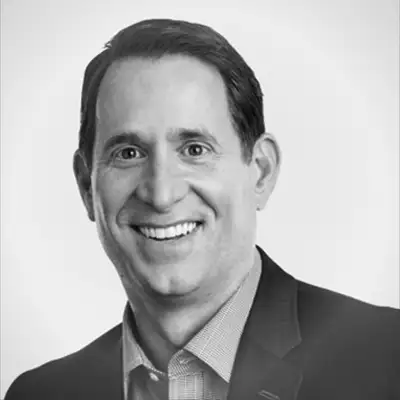
Reframe is the podcast about building sustainability.
Commercial and public buildings are among the biggest producers of carbon emissions. It’s a problem of massive scale. But, for building owners, engineers and contractors, solving it may actually be more of an opportunity than a challenge. That’s what the “Reframe” podcast is all about. Join host Jeff Nichols on an exploration of the forces driving sustainability in our built environment. And meet the people who are leading the charge.
Reframe Ep14 - Ash Awad Transcript
Jeff: [00:00:00] Welcome to Reframe. I'm Jeff Nichols. Nearly 40% of global carbon emissions comes from buildings, more than every car, truck, ship, and plane on earth. That means the built environment isn't just part of the climate problem, it is the climate problem. But here's the surprising twist. The solutions already exist.
We have the tools, we have the talent, we have the funding. The challenge isn't invention. It's execution or so my next guest believes. So the future of buildings won't show up automatically. It has to be built deliberately, creatively, and at scale. And over the next decade, the built world is going to change faster than any other time in our lifetime.
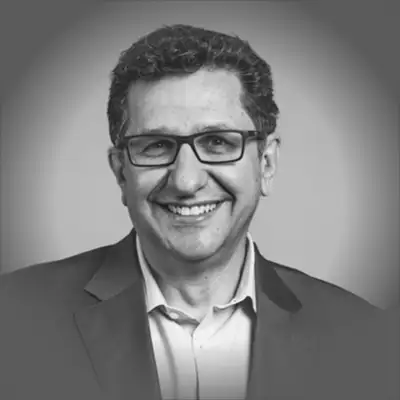
So my guest today, Ash Awad, is the Chief Market Officer at McKinstry, one of the most influential mechanical contractors and energy innovators in the US. Ash, welcome to Reframe.
Ash: Yeah. Hey Jeff. Thanks. Really excited to be here with you.
Jeff: It's a absolute pleasure. Before we kind of look forward, I wanna learn more about you and kind of your background.
I know you spent two decades at the intersections of buildings, energy policy, and climate. But, uh, tell us a little bit about how did you get to here? What's your story?
Ash: Well, I, you know, been a geek my whole life and continued to be a geek. Um, went to school inevitably in Massachusetts to be a mechanical engineer, and then thought I would be designing airplanes, like entire airplanes.
And I realized that instead, I'd be designing a little doohickey on an airplane for five years. I did not find that to be exciting, so I moved over to the energy space when the energy space, particularly in the built [00:02:00] environment, was not really a big thing. In the early nineties that got me to do some grad studies at University of Washington actually in mechanical engineering.
And I stayed, you know, in the northwest, focused, uh, on this idea of making buildings more energy efficient. I was an energy engineer at the start of my career. But inevitably I've moved in, uh, to the business side, really working with customers and working with policymakers to think differently about the way buildings consume energy and the types of innovative projects that could be delivered with a team of engineers and, and even operated afterwards.
So that's been roughly three decades of my life, uh, at least professionally. And then I've spent 25 years at McKinstry. The best people in the industry to help innovate and think differently about the way the built environment should be designed, build, operated, and maintained over
the life of the building.
Jeff: When you think about your career to date, what's one pivotal moment or project that you think really influenced your perspective?
Ash: Well, there's so, so many different ones. I've been very blessed to have worked on a lot of different projects. You know, one thing, talk about the crucible of learning how to do efficiency in the Northwest, energy rates have always been low.
Um, so generally this idea of doing energy efficiency in the Northwest meant that every project needed its own reason and rationale. And to be blunt, innovation. To drive the project to actually proceed. So there are a number of different projects that I'm really excited and proud of. For instance, one of the first projects I worked on was a retirement home project that actually retrofit lights.
That doesn't seem like that big a deal. Um, but this was during a time period where we were still doing. Fluorescent to fluorescent and energy rates were still low. So the rationale for doing that was to actually improve the lighting in this retirement home so that those that were in this community actually felt better [00:04:00] about the lighting quality as they were living out their days.
So it, it taught me something, it really taught me that efficiency was so important, but you really had to do the work for more than just efficiency's sake. You had to do it for multiple purposes, and that was relatively young. Uh, in my career, you know, as I continue to embark on different projects working with universities, I learned the importance of making sure that the work that we did also enhanced the physical mission of research or learning.
As we work with rural school districts, it was about dealing with deferred maintenance that taxpayers in the area did not have enough tax base to actually help improve the physical learning environment. So actually doing efficiency projects replaced, uh, wall units with more efficient wall units, but really caused there to be an improvement in comfort.
So I've got a lot of different projects that range from super complicated, big chilled water plants, solutions, all the way to lighting retrofits, and. Unit ventilator replacements in schools, but they've all taught me something, uh, about what it takes to actually get a project moving. Efficiency's important, but usually, particularly in areas like the Northwest, it has to be efficiency plus something else.
It's gotta be a co-benefit. So Jeff, that's been something that I've just learned through my entire career. It
Jeff: definitely rings true from my experience. It's, it's not just a financial equation. There's so many other, you know, things that really get people to, to actually move. So, Ash, we met at an industry conference the other month, and you did something I haven't seen, uh, in quite some time.
You gave an hour long presentation with, without a single PowerPoint slide about really. The future. And so I thought what a great way to kick off 2026 and having a conversation to kind of build on, you know, some of what you articulated at that conference and really, you know, dream a little bit [00:06:00] and look out.
Not just the next couple years, but really, you know, the next decade plus to kind of really try and figure out, you know, where are things moving? You know, what are those immutable truths that you believe today that will be true, you know, a decade from now. And always a little dangerous when you try to predict the future.
None of us have a crystal ball, but um, I thought you had some really interesting perspectives to share on this. So the first question I wanted to ask was, you know, as you think about buildings, what do buildings in 2035, what do they look like? How would you describe them?
Ash: Well, lemme lemme just say broadly that instead of trying to describe some physical aspect of a building, let me just start by saying that.
Buildings themselves have gotten a pass. In other words, you know, they, they've been built to do the things that I think are most important at the start. They've been built to meet the mission that the building itself houses physical learning, physical places of healing. Productivity research, um, data centers, you know, they've, they've been built to house these missions.
If you'll, and you said it earlier when you talked about this idea that the built environment consumes three quarters of the electricity and produces about. 40% of the harmful gases, and yet somehow we look at the built environment, and at least in my career, up until relatively recent, relatively recent, in the last five or 10 years, we really have given buildings a pass.
We've always thought that it was either, you know, not optimal to make buildings consume less of the energy. Uh, because maybe we might affect the mission of the building. In other words, you know, if you make a building too efficient, then you might affect the comfort and therefore kids will be cold and they can't learn.
And I, I remember much of my career was having those types of dialogues that [00:08:00] even lighting retrofits, really basic lighting retrofits were this idea that you would take out these glorious, bright lights and you to make things efficient would have to actually compromise the mission. The doctors or those that were learning, or those that were working by putting in dimmable lights that, that were dim and therefore it wasn't gonna be optimal for people to be in these physical spaces.
You were taking something away from them, but now we recognize something that I think is really, really important. Jeff, to answer your question about the future of buildings, buildings need to do more. They, one, we know buildings have to. Be in balance with the natural environment. That is critical. It's not.
It's not an if, it's a must be. They have to be in balance with the natural environment. The second thing that we need buildings to do is the buildings themselves. The demand of buildings has to be balanced with the grid. Imagine this, the power goes into a building, stops at a meter. It's blind. The supply is blind to the demand.
Imagine any other situation where the supply and demand are not in lockstep, that the actual relationship between supply and demand is so disconnected that we really. If you're the utility, you actually don't even trust that the demand side is gonna operate in a way that's even beneficial to the supply.
So therefore, you, you build your infrastructure for these peaks that happen every once in a while, and therefore that becomes the place that you peak out and when actually everything doesn't work. Very well in terms of power management during hot and cold times of the year, we have brownouts, we have power problems.
Imagine that. Just imagine how much imbalance the buildings cost. So buildings are gonna have to be balanced with nature, balanced with the grid. They're gonna have [00:10:00] to behave better. They're gonna have to actually take in, unfortunately, bad things that are happening outside of the building. Wildfire air.
Have to clean that air and they're gonna have to act as trees or actually have to be more regenerative. So not only do you need buildings to be neutral, you're actually gonna gonna need buildings to be net positive to the environment. You know, there are many things that today buildings do that are, uh, really just focused on, again, the mission.
But if you're asking me in the next decade, we need our built environment to do multiple things, to behave differently, not just a widget that makes a building smarter, but we need buildings to behave. A that adds positive net benefit to those things that are causing us the most challenge relative to the environment, relative to the grid, relative to extreme weather moments.
That's what we need to count on buildings to do for us.
Jeff: It's so fascinating whether it's grid interactive or you know, demand response. Your point about supply and demand being totally disconnected. I, you know, we wonder why utilities kind of seem to, I don't know my opinion, they just kind of are, are late to the conversation a little bit, but part of it is 'cause they're blind to it, right?
They, they, they don't. Get to see necessarily exactly how, you know, what they are providing is being used in, in, uh, I guess a more sophisticated way or at scale? Well, it's, it's the
Ash: ecosystem of the way buildings are operated and the way the utilities operated. You, you could not find two different modes of operation.
Utilities are operated for full resiliency. They're. Although we do see power outages during [00:12:00] extreme weather situations, there's a lot of resiliency and a lot of expectation that our grid won't go down. So therefore when you hear about the grid going down, air caught or rolling brownouts in California, or different things that happen, um, even in the northeast or any, any place in the country nowadays, we are shocked by that.
It makes like national news, and yet if something happens in a building. It goes down for some reason, we don't actually hear about it except for those that are told to stay home for the day because the power went out in the building or the power or the, the heat is off in the building or something.
Right? I mean, think of it like we don't have that same level of expectations in our buildings. So if you're the utility and you need to count on the supply and the demand to work in unison. You don't have a partner there that actually is working and operating at that same level as you're operating.
There's not that same level of confidence that's not a slight to those that are operating buildings. That's just the nature of the way buildings are operated. They're operated to maintain a mission to maintain comfort. But not necessarily always to maintain resiliency or to create optimization on a regular basis.
That's where the disconnect lies. It's actually built into decades and decades of building and operating buildings, and likewise, decades and decades of operating utilities. You see the disconnect. That's what has to change. We have to move to a place where AI, for instance, is changing and transforming the way buildings operate so that now you can have more, uh, reliance on different decisions that are made, even proactive decisions that are made.
So therefore, these systems that like power grids. Do their things without a lot of human interaction, can work with the supply side in more of a nice, balanced way and not believe that some human's gonna create an override simply because someone's cold on the 30th [00:14:00] floor.
Jeff: How do you see that shift happening?
I mean, what do you think the stages of that shift will be?
Ash: Well, one of the big stages that's gonna have to happen is that right now in buildings. There are these multiple different local systems, and again, remember I said earlier I was a geek, so lemme just geek out. You know, we have control systems that control temperature that are single network systems.
Then we have lighting control systems that sometimes connect to the environmental control system, but not always. We have card access systems that really just grant you access, but very rarely do they actually direct any other local system to do anything. And then we've got other systems depending on what's going on, for instance, in a particular.
Facility. For instance, schools have scheduling systems so that the school district gets to schedule its gym, but those scheduling systems sometimes work or don't work with these other local systems. My point is, if you look at a building, if you think of a building like a human, you have these separate networks, but all of this information isn't actually shared, nor is it available to share openly.
So the thing that's gonna have to happen in the built environment is we're gonna have to work to unlock mass amounts of data. We're very clearly how to change the ontology of how systems and data are named. It's a mess right now. The last person in decides how to name everything and that the different systems have different naming conventions, and you actually can't make rhyme or reason of all that.
But let's pretend for a second that we unlock all this data in a very efficient way. Then we create some miraculous ontology. Then we democratize all of this data. To the fourth thing, which is we now can have action. That's differential. You follow what I'm saying? Now you have [00:16:00] access to all this information.
Now you can apply some very advanced analytics and even some advanced AI techniques against that. If you can do that, you can then hit the holy grail, which is you can change the behavior of a building. Much of what I'm sharing with you is available or quickly coming to avail itself. So if we can apply ai.
In many complicated situations, I mean, uh, AI being applied to reading medical images, they could not imagine a more complicated use of unlocking data to actually be able to review these complicated images of the human body and rendering what is going on that may be differential than what a human can, and if we're applying it.
At that level, why can't we apply it in our built environment? If we can do the same thing, map it out and have something look at it, and then in that setting really change the separation of networks and systems to the unification of all that, against a really large block of information leverage with AI and AI agents.
I mean, that's the journey that we have to be on. It's not negotiable. That's not, by the way, I, I'm, it may, may, maybe an ash view, but that's, I don't think, it'd be hard to imagine that anybody else wouldn't be able to use the same logic and get to the same place relative to what happens in the built environment.
That's what I meant by, yeah. We've gotta change the complete way of how we think about buildings, building operations, systems and buildings. This is the transformation that has to happen. We can't just wish it, we just have to go to work on it very differently than we've ever. On correcting the A of the built
environment.
Jeff: Yeah, there's been all this focus on just connecting right. Things, right? We, we now have, with iot, we have connected [00:18:00] buildings, but we don't truly have systems that are taking in all this data and information and making intelligent decisions. You know, this philosophy of, with every challenge, there's an opportunity.
I very much believe that, that as we, you know, we've thought about buildings as kind of this, um, you know, it just sits on the L side of a p and l or like, you know, it's a. It's this degrading asset that we just have to keep, you know, pouring CapEx to, to get our, you know, monthly rent checks. But, you know, if we could manage it differently, we're, we're waiting till something happens to us.
There's a level of proactivity that I think just doesn't exist today. Well, the asset
Ash: ownership side, the facility management side, the utility side, the policy side. You know, this, this, sometimes there are things that happen, Jeff, as you know, in, in an industry where you can see the truth coming, but you know that it may be a ways away, but then when it happens.
It happens all at once. Not my statement, but the statement of those that particularly work in technology, that is what's happening right now in the built environment is that if you look at some of the things that have changed in buildings over, well, let's just say 30 years, but whole revolution of what's happening and happen in technology and with technology in the built environment is staggering.
It's just staggering and, and I think that the next wave is gonna happen ever faster. So I think that the reluctance is maybe there because of the statements that we all are prone to, which is this is the way we do it. But the reality is that the changes afoot. It's being driven by policies. It's [00:20:00] being driven by needs.
I mean, the power capacity issue that's happening right now cannot be built fast enough. We cannot spend $1.3 trillion of capital to build our utility systems fast enough. We're gonna have to manage supply and demand very differently. I mean, these things are inevitable. They're inevitable. The question really then is, how will we eat this elephant?
What then goes first? What then goes second? And does it happen in a decade? Does it happen in five years? Do you know? Do do we move slower than a decade? Do we move faster than a decade? I, I think we move faster than a decade, but.
Not necessarily state a prediction on the future, but I would just say that when you look at the collection of all the changes that have to happen and that are happening, seems like not an unreasonable bet to make.
Jeff: Let's maybe unpack that a little bit more on kind of, if it's not a matter of whether it's gonna happen, it's just a matter of kind of the order in which it happens.
How what? What do you see? Well, I
Ash: mean, I think that a couple of things, you know, are happening right now that are gonna cause there to be a, a shift in this relationship between supply and demand. Um, you know, utilities have come to terms with, and that's gentle way of saying that in the last couple of years, they, uh, realized that they were short on power.
They just can't. See their way to meeting new demands the same way they were meeting the old demands. Maybe that's the most simple way of putting it. So now those innovation engines are kicking on at, on the utility front. They're now starting to imagine, okay, can we build our way out of this thing? Um, in other words, can we start to cause there to be [00:22:00] a faster deployment of renewables because renewables are significantly more cost effective.
Albeit not as consistent, but can you marry those with battery energy storage and can you do something there and can you go fast enough? Well, let's just say that they start to build renewables. Some will try to do it with fossil fuels, but that's not a winning bet for the long term. So what's gonna happen then is it's gonna come, they're gonna come to terms with this idea, which they're right now, that they're gonna have to change the way they're thinking about their current.
Supply their current way of delivering supply. They're gonna have to think differently about how they allocate their critical resource. If someone says to them, I need a hundred megawatts, they're probably gonna look five times and then they're gonna do a long study and then they're gonna figure out, when do you need this hundred megawatts?
Do you need it all the time, or you just need it during the summer? Or do These are questions that I think they normally. Don't ask, but they're gonna have to start to become more sophisticated about their downstream planning. That's gonna run them right into what I think a lot of utilities are seeing right now, which is, okay, we gotta do something different with the existing demand.
So therefore utilities will be the first. They'll start to deploy more sophisticated demand flexibility and virtual power plant requests and requirements. They'll do that because they recognize that if they can go through and actually create this relationship, like they have tried to create with homes by putting a thermostat, if they could do the same on the commercial.
They're gonna be able to create some sort of relationship that they've never had before. And because it'll be more related to when they need the flexibility and when the building can actually flex because of the digital continuum that they'll [00:24:00] create between utilities and buildings. That'll be the start of starting to change the way buildings are gonna have to think about their operation.
That makes sense. In other words, the moment that utilities understand that, that buildings have gotta act as batteries, not add batteries, but that buildings must act as batteries to create the buffer that they need, which they're coming to terms with, that's gonna create a very, very different relationship that's gonna unlock this opportunity to change the way buildings think about their data.
Think about how that data is collected, democratized, and then inevitably used to act and maybe even change building behavior. I think that's the tsunami that's building. In the meanwhile, you will continue to see buildings adopt different ways of thinking about their own building operations. You'll see some that will be on the forefront of micro griding and campuses in particular.
You'll still, you'll keep seeing the decarbonization effort that a lot of campuses are going through. All of this stuff will also play, so you'll have the one e evolution of what the utilities realize they need. You'll have the two evolution of this electrify everything, which is a decarbonization strategy that's gonna require those buildings that are decarbonizing, or campuses, I should say, to recognize that they can't decarbonize without changing the way they operate, even at a localized supply and demand.
I think, Jeff, that's what we're gonna see in five years. We're gonna keep seeing that movement, utilities innovate. Campuses innovate. That's gonna be the thing that starts to create the transformation that I'm articulating around how buildings are gonna behave differently.
Jeff: I, I find that really interesting, at least for if I'm sitting at a utility, that is a very [00:26:00] different mindset.
It is.
What do you see as the obstacles, um, you know, as this shift happens?
Ash: Well, you know, I think a couple of the obstacles to maybe consider are that, you know, to give utilities a lot of credit. Um, and sometimes I pick on utilities. So maybe I'll start with credit and then I'll, I'll, I'll give you a compliment sandwich here.
You know, I, for utilities, I mean, I would just say that, you know, utilities have very, very difficult. Jobs, and they have a lot of stakeholders. You know, they're, they, they, depending if they're investor owned, they have stockholders and they've got rate payers or consumers, and their, their consumers are not monolithic.
You know, they've got big consumers that are. Wanting low rates, but they're big, complicated companies and data centers and smelters or whatever. And, and you also got the whole end of the spectrum that they have to serve, which is, you know, our, our poorest, our poorest people have got to be served. Our elderly have to be served.
They, they have quite. Responsibilities that I think are so critical to the reason that a utility is also a community asset. So they also have regulators that they have to appease, and sometimes those regulators are formed by a state and sometimes the, if it's a municipal utility, the regulator is the city.
Or some sort of municipal board. So they have a lot of people that they've gotta appease at the same time. Everybody says to them, innovate, come up with new ideas. And, and you gotta feel for them, right? I mean, you know, it's like they're so critical to the future, but yet somehow we, we pick on them and tell 'em, here, let me make sure your hands are fully tied behind your back.
And now innovate, you know. I don't know. It's, it's a difficult thing, but I do think that there's a lot of, lot of importance that we must put to the idea that we need to unshackle utilities and make sure that we're [00:28:00] thinking about how to help them get through and really start to think differently and not have regulations that are supposed to allow them to come up with better ways of serving their.
Rate payers. We don't want that to be disabling because we can't say on one end, serve them better. But by the way, keep using the tools you used 50 years ago. So we're gonna have to, we're gonna have to work on that front now. Now let me complete the sandwich by saying that, you know, the belly of a utility is predicated on a lot of, this isn't how we do it.
This is how we've always done it. We don't actually things that are different, and they find that the things that I just said to be a ready set of excuses. Does that make sense? Yeah. So in some ways they're not wrong, but yet on the other end of it, if the entire kind of construct and ethos is really predicated on this idea that we want to, but oh God, we just absolutely can't.
And when you share with them different ways of how together you might be able to convince a regulator to do something different or, or a legislator legislative body to do something different, they're not really always there as willing innovators either. You know, they, they find all kinds of reasons why the thing that you're trying to get them to see the light on.
Is probably not good or not right or not likely to happen, or where somehow those of us that might be looking around the corner and imagining the innovation that should come are missing some secret things, some secret handshake that only utilities have. But if you knew the secret handshake, you could help us.
So there's that thing that's kind of a challenge. You know, it's like it is true that they have a lot of [00:30:00] limiters. It is also true that they place a lot of limiters on themselves. But the finish, I would say that, and I think that the utilities have the capabilities within their leadership ranks like they've never had before.
In my entire 30 plus year career, I've never seen. A more innovative class of executives and utilities across the country. Never. So if, if there's any opportunity to make a real big difference, this is the time. And we gotta remember, you know, um, they have rate payers or they can decide that they have customers.
I'd advise them to think of them as customers, and since they have all the customers. None of the innovative services. They also have a real business opportunity to take a, to, to, to take innovative ideas and bring them to their customers as really monumentally. Critically important, best of class solutions.
You're a utility. You've got all the customers, but none of the solutions. Time to innovate the solutions so you can cross the meter and bring those to your customers. Seems like it's a foot, but we're gonna have to keep nudging it forward.
Jeff: It's interesting 'cause it does feel like we're in this, this messy middle right of, of transition with, you know, even the energy systems from natural gas to, you know, all electric kind of future.
I'm curious to hear your thoughts on like what will surprise us. You know, every transition has technological policy, behavioral kind of things that are very hard to predict. So what do you think the surprise will be in this industry as we navigate this transition? Let's see. I would say that,
Ash: I think the stuff that will probably surprise me, you know, we'll, we'll, we'll be, um, more on the ownership side.
Assets. I think that right now most of the [00:32:00] institutional energy assets, both outside of buildings and inside of buildings, are owned by those building owners, but I, I'm prepared to be surprised by how much of that switches over to be owned by a completely different entity over the next decade. I think that the dilemma that I articulated relative to the way buildings operate, the expectations of buildings, the guarantees on performance of these systems, I think that the current constructs of risk and reward are gonna completely change how those energy infrastructure pieces are owned.
I think we're gonna see many more intermediaries in play. Step in and actually take responsibility for these in-building systems or near building systems in a way that today is hard to see that changing rapidly. But I, I guess I would just say that that's one thing that I'm not ready to say that's going to happen.
Uh, but I, I, I would look forward to being surprised by that and see a. Ownership and risk from current asset managers to completely different asset managers to fulfill the energy transformation, particularly the built environment. Um, I think a lot of that has happened in other industries where. Shifts have happened.
You know, consumer products, for instance, industries have come where the big thing that consumer products industries, uh, owned 50 years ago were the actual plants that made the products. And they completely shifted away from owning the plants to just owning the actual brands and products and had somebody else be the manufacturer.
Same thing happens in electronics right now at a wide scale. You know, apple does not make of their [00:34:00] devices. You would based, um. You know, their love for their technology and the way that they, of course, launch new products, that those products were made somewhere in California by Tim Cook himself. And yes, you know, we know that those, those were just designed by Apple, but built by somebody else.
I think that's what I'm prepared to be surprised by, which is all new business models, both on the utility side, but also in particular on the built environment side.
Jeff: Yeah, I, it makes total sense to me, right? It's, it's kind of like about just, uh, the, you know, geek out servers, you know, used to be you had these huge server rooms, you owned your own servers.
Now it's, you know, an Amazon, Microsoft can operate that 10 times more efficiently. Than you, you ever could. So it really is about figuring out who are you serving and how do we get better at the core of what we do to make that a great experience, right to the Apple thing. And then everything else is just ancillary why, you know, pick the experts that are expert at that so you can focus on the thing.
You truly are expert.
Ash: Yeah, that's a brilliant example, Jeff. I love that example. I'm gonna steal that from you around servers. 'cause I think you're right on, this is one of those topics where I know that when I think about it, I usually go, well, I'm not ready to say that that is absolutely gonna happen in a decade.
So I'll put it in the, I'll be, I'll be surprised. Although I think that it should happen in different ways. Uh, I'll reserve it to my surprise list.
Jeff: Well, Asha, I would love to wrap up with rapid fire questions, kind of short answers, whatever kind of pops top of mind. Okay. So what is one thing you wish every building owner understood that
Ash: they could do more with their buildings and their currently doing?
I wish they understood the importance of how their buildings need to behave differently than just meeting the mission of what the building has been built for.
Jeff: What's a climate or building myth you'd love to [00:36:00] retire forever?
Ash: Well, the buildings themselves are static and their impact on climate is not as critical as vehicles are not as critical as other sources of pollution and emission.
Jeff: What is one word to describe the future of buildings?
Ash: Hmm. Is regenerative a word
Jeff: that's not a made up word that is an acceptable answer. What's a skill that future engineers will absolutely need?
Ash: Engineers need to really embrace AI and leverage AI to make their jobs better. So theirs working on the.
Jeff: Okay. And last thing, you know, as we think about the future we're building toward, and given everything you've seen over your career, what is the future you hope we achieve by 2050? What gives you confidence that we can actually build it?
Ash: Well, I look the thing that gives me confidence, and again, I'm serious.
I don't wanna be sappy, but I gotta just tell you that you. You meet this current generation of engineers and you see the kids that are, excuse the term kids, but these young adults that are coming outta colleges and the way that they're processing and thinking, and the way that they really care about these topics in a way that we relate to the game on, relatively speaking.
You and I and others that are in our generation, they care about this topic in a way that. Will allow them and maybe even it created expectation that the organizations they work for will need to solve for these problems, not just as a for-profit idea, but for the greater good. I am very confident that that itself by itself, [00:38:00] by itself, will drive the type of change that we need.
And, um, I. I, I don't mean to be sappy about it, but you've gotta, you gotta think of this, in my humble opinion, that way the ideas themselves are there. They're sitting on the shelf. Now the question is who's gonna pick up the mantle that we started to move as we work to do the best that we can? But this is a generational change.
So you've gotta have, not just hope, but you have to have a deep observation of will. The next generation pick up the mantle and move it significantly further together than we've been able to do. And my view is absolutely they will. So I have hope by 20, 30, 40, and 50 we're gonna solve problems in ways that I think we cannot even imagine solving for them.
But the next generation will.
Jeff: Well, I cannot thank you enough for your time, for your insight, your perspectives. I love listening to you and I'm just so impressed with not only what you've done at McKinstry, but how you're looking to kind of push an industry forward and, and just so grateful to have your leadership and appreciate you sharing your insights today, Ash.
Thank you.
Ash: Yeah. Well, thank you, Jeff.
Jeff: I love talking to Ash. I just love his candor. His strong grasp of the moment had a clear vision for the future of the built environment. Here are three of my takeaways from our conversation. First, buildings need to do more by 2035. They must give back to people, to the grid and to the planet. Second is that the energy system has a fundamental flaw.
Supply is blind to demand. This is an anomaly unique to the built environment. Power flows in without knowing how, when, or why it's being used. [00:40:00] Forcing utilities to plan for the worst case peaks instead of real needs. Today's buildings may be connected, but they're still blind. So the real breakthrough is unlocking data across systems and then using AI to anticipate, not just respond.
So buildings actively align demand with supply and behave as intelligent grid assets. And finally, the future is a new pact, utilities and buildings working in sync where demand becomes flexible and buildings act like virtual batteries. Which leads me to the reframe. We need to think differently about buildings.
Buildings can't just be buildings anymore. Passive structures are no longer enough. The buildings of the future must act not only as places we occupy, but as active infrastructure. They must operate in balance with the environment, align with the grid, and contribute more than they consume. When buildings behave this way, resilience becomes embedded in the system and the built environment becomes part of the climate solution itself.
Thanks for listening. Until next time
Announcer: you've been
listening to Reframe the show about building sustainability presented by pilot Life opinions shared by the reframe guests aren't necessarily the views of their companies. If you'd like to learn more about the podcast, the show's host, guests, or topics, check out this episode's, show notes, or visit pilot light.ai/podcast.
Got a question for the reframe team. Drop us a note at reframe@pilotlife.ai. The reframe podcast features original music by Dyaphonic. The show's produced by Robert Haskitt with Eric Opel and the show's host Jeff Nichols. Before you go, this would be a great place to hit pause on your podcast app and then hit that little [00:42:00] plus sign up in the corner to follow the show.
That way you'll never miss an episode. Thanks for joining us.