Subscribe
Share
Share
Embed
The Hydrocarbon Engineering podcast: a podcast series for professionals in the downstream refining, petrochemical and gas processing industries.
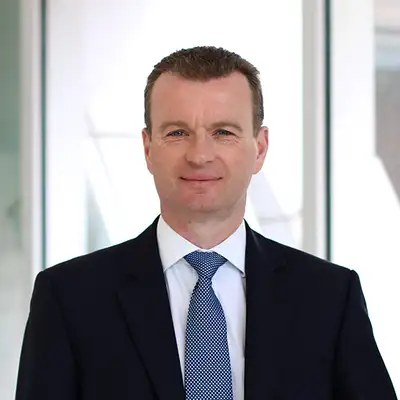
Hello and thank you for joining us for another episode of the Hydrocarbon Engineering Podcast. I'm your host Callum O'Reilly and for our first episode of the year I m delighted to welcome back Alan Gelder, Senior Vice President of Refining, Chemicals and Oil Markets at Wood Mackenzie. Alan will help us review developments over the past year in the downstream sector and look ahead to what 2026 may bring. Our conversation follows on from a recent article that Alan prepared for the January 2026 issue of Hydrocarbon Engineering magazine titled the roller coaster ride of '25. Now I'd encourage all of our listeners to read this article if you haven't done so already and I'll be back at the end of the podcast with some more details on how you can do just that.
Callum O'Reilly:Now before we begin, a quick note that this episode was recorded at the January 2026. So let's talk to Alan.
Advert:This episode of the Hydrocarbon Engineering Podcast is sponsored by Rockwell Technical Insulation. Designed for durability and sustainability, Rockwell's high performance stonewall insulation helps control process temperatures, reduce energy loss, mitigate corrosion under insulation and enhance fire and acoustic protection. The result? Safe operations, improved asset integrity and long term performance across critical process industries. Learn more at https://rti.rockwool.com.
Callum O'Reilly:So hi, Alan. Welcome back to the hydrocarbon engineering podcast. We're really delighted to have you join us once again to review downstream developments over the past year and to pick your brains on what we can expect in the year ahead. So thanks for joining us.
Alan Gelder:Callum, it's a pleasure. Thanks for the invitation. It's always interesting, isn't it, in terms of how the world continues to evolve quite quickly.
Callum O'Reilly:Yeah, I'm not really even sure where to begin this time Alan, it's been quite some years. So when we spoke back in January 2025 there was a lot of uncertainty surrounding demand growth and what Trump's second term in office might look like for the sector. So you were also anticipating a tough year for refiners but margins surprised to the upside. So were there any other unexpected outcomes And can you give us a summary of your key takeaways from 2025?
Alan Gelder:2025 refining surprised us to the upside is probably if I think across our view on oil markets, refining and chemicals, it was that refining jump to the upside. We were forecasting weaker oil prices as we went through 2025, largely because of supply growth outpacing demand growth. The good old liberation day tariffs and the tariffs that were imposed delivered that early really because it caused concern, consternation around demand growth. In hindsight, the economies were probably stronger than many feared as we ran through 2025 because tariffs were paused, the pausing allowed manufacturing to reschedule, get ahead of the trade tariffs, and then we got to the second half of the year there was a raft of things that supported the refining sector, really around diesel distillate shortage. Had demand growth relatively modest.
Alan Gelder:We had change in the ECA regulations around bunker fuels in the Mediterranean that supported gas oil. But the main thing was around Ukrainian drone strikes on Russian refineries, because at certain points during September, October, there was about a million and a half barrels a day of Russian refining capacity was out of operation and that just tightened the global diesel market. And then we had sort of sanctions on Rosneft and Luk oil, which caused people to get concerned about which Russian crudes they process. And then there was the EU legislation around products imported to Europe must not be from Russian crews. The way you proved that was sixty days not processing Russian crew before the export cargo, which meant that kicked in towards the end of last year, which again just drove diesel prices quite high.
Alan Gelder:So we had a refining industry in the second half of year had a very strong year, more driven by supply loss than strong demand. Oil market did broadly as we expected sort of weakened, chems was quite was quite ugly really.
Callum O'Reilly:Yeah. So I was going to mention Alan, you mentioned in your recent article that features in the January issue of hydrocarbon engineering that the global refining sector will look back on 2025 with fondness, but can the same be said for the petrochemical sector?
Alan Gelder:No, had an awful year last year. Steam cracker margins were very weak, utilisation was low, there were closure announcements effectively. Facilities in Italy, facilities in Germany, also Moss Moran in Scotland announcing they're going to close in 2026. So it was very much a year of very difficult news for many of the facilities in Europe. Very, very different picture for the petrochemical sector compared to the refining sector in margin terms and in terms of the number of sites that are being closed and probably remain under threat of closure.
Callum O'Reilly:Salon, you already have touched upon the Liberation Day tariffs, so let's dive into those a little bit more. How did they immediately impact the sector and how will they continue to do so into this year and beyond? We've seen in recent weeks that with the evolving situation in Greenland, tariffs never seem to be completely off the table with the current US administration. So how much consternation is this causing in the downstream sector?
Alan Gelder:Well firstly it makes trade very difficult because you never quite know the cost of what you're buying. Energy largely is exempt though in terms of those trade tariffs but they basically are impacting the global economy where people are able to source materials from the overall cost so it just adds a huge layer of uncertainty, adds a huge layer of complexity, uncertainty. Mean, they seem to be part of a general US policy. We're towards the January and soon the US Supreme Court is supposed to provide some opinion as to the legality, validity of what the Trump administration has done. If they go against that probably doesn't mean the tariffs go away, they'll come back in some form, but it just adds complexity, uncertainty.
Alan Gelder:So anybody buying equipment, it's very difficult and very challenging. You just think of the refining sector in terms of all of the things that are bought and procured and used as we go through the maintenance and projects and turnarounds, it just makes budgeting and planning really quite complex. And it's one of the drivers for us as to why we're expecting global oil demand growth for this year to be low and even lower than what we had last year, because our economists, you can almost call them the traditionalists, they believe that the tariffs ultimately get paid by the consumer so that reduces their spending elsewhere and they're gritting the wheels of global trade. It just slows things down. So it just means actually for us GDP growth for 2026 is going to be weaker than 2025 and our oil demand growth is relatively low.
Alan Gelder:It's between 600,700 barrels a day. We're quite low this year and that just puts downward pressure on oil prices but also it just limits refining margins as well if there's demand weakness for the products that the sector is producing.
Callum O'Reilly:Moving on to refining Alan, what is the broad outlook for the sector in 2026 And will recent developments in Venezuela have any material impact with the prospect of heavy crude flowing into Gulf Coast refineries?
Alan Gelder:So aggregate global level view is that we're expecting 2026 to be the low point for global refining margins going forward. There's a couple of reasons why we've touched on one already and that we've got relatively weak oil demand growth this year. We've also got a number of projects that are being completed in Q1, a big chunk of them, one or two in China, a big chunk in India. The evidence to date is that those refineries are largely completing to time and their commissioning is going well because they're largely being built by existing refiners, expansions or additions. We're also The Das Bocas facility in Mexico is ramping up slowly, and we're expecting Dangote, the issues with the ROCC to get fixed.
Alan Gelder:So we've got a year of weak demand growth and capacity coming on, which actually suggests there was that the tightness that we saw in the second half of last year of eases. So margins are then relatively weaker in '26 and '25. And then as we go forwards, things start to improve because there's not much more capacity additions coming on and we've still got a world of continued global oil demand growth, in which case the existing refining system needs to work a little bit harder, is just a bit more supportive. The big uncertainties for the refining sector is just around Russian export of crude and how that works, but you come down to the geopolitics uncertainties around the Russia Ukraine conflict, and that's around sanctions on what is flowing out of Russia, and also how effective the Ukrainians are in impacting damaging the Russian refineries. That could provide upside to our view.
Alan Gelder:Venezuela is a fascinating one because it's changing quite quickly. So at the moment, towards the January, using the vessel tracking and cargo tracking that we have, what's coming out of Venezuela is actually a bit lower than what it was before the blockade was imposed towards middle December. And that's because 600 KBD used to go to China often to the independent teapots. That's largely stopped because that was mainly shadow fleet vessels that are choosing not to run the blockade. And so what we're seeing is exports dropping.
Alan Gelder:There's always been exports to The US Gulf Coast because Chevron had a waiver. They've now got Vitol Trafigura acting on behalf of The US authorities. They're trying to facilitate and market the crude globally. We're seeing more volumes than what previously Chevron was taking flowing out to The U S Gulf Coast, but the aggregate is down. It's going to sort of Caribbean islands.
Alan Gelder:So we're expecting some of it to be reverse lighted to put into VLCCs and shipped to India and perhaps the state owned enterprises in China. But at the moment, Venezuela production is down prior to December, but we're expecting it to recover as that offtake gets more formalized. You find different groups of buyers. What that should do is then be able to deliver more heavy sour crudes into The U S Gulf Coast and other markets. And so that will benefit U S Gulf Coast refiners because their crude diet could be much heavier than what they've previously been running because there's been a shortage of heavy crews because the Venezuelan production has been down and it's also not been permitted to go to The Us.
Alan Gelder:We've seen lower volumes come out of Mexico because production is declining and also Dos Bacchus has ramped up and that's been replaced to some degree by Canada. But there's still not as much heavy oil being processed in the Gulf Coast as they've done in the past. So it's an opportunity for The US Gulf Coast refiners. But if we think back, there were significant volumes of Venezuelan crude that used to go to places go to India because the way they valued it. So we're expecting that flow to be reestablished.
Alan Gelder:We're also seeing lots of interest from some of the oil field services companies and some of the private sector companies in The U. S. To go in and rehabilitate the upstream sector. We think there's a bit of a period of a couple of months while things stabilize. The hydrocarbon law is being amended in Venezuela.
Alan Gelder:So we're expecting Venezuelan production to creep up. So by, if we take the 2025, we'll say about 800,000, 850,000 barrels a day, probably by the '27, it'll be over a million barrels a day. So it's 200 to 300,000 barrel an increase. A big chunk of that will go to The US. A big chunk will go elsewhere.
Alan Gelder:So that will benefit the global refining sector because they will see more crude that they're configured for, but we're not expecting a ramp up, a significant ramp up of Venezuelan production anytime soon because the fiscal regime needs to change, the country needs to be stable, but the oil majors need to be confident that they can get sort of invest and not have expropriation again. We think that takes a lot of time. Chevron will be the one and Brian Repsol who are operations there, that probably would be the quickest to respond. But the challenge for some of The U S heavy oil fields is under our understanding of the current fiscal regime, they need high oil prices to make them economic. So the fiscal regime needs to change, people need to be comfortable, that's sustainable, and they need to be comfortable they can make significant investments that will take many years to come to fruition.
Alan Gelder:And we think that that's unlikely to be quickly. So that's something that we're working on. We think it's a number of years before we get materially higher volumes out of Venezuela. The other thing where people will understand once they get people on the ground is what state of repair are the existing facilities in, how much needs to be done just to rehabilitate what's already been there because Venezuela has not had access to U. S.
Alan Gelder:Dollars for a couple of years now and so our understanding is lots of kids have been cannibalized, means things just need to be replaced just to provide a stable foundation. That'll become clear over the next couple of months.
Callum O'Reilly:And petrochemicals in 2026, capacity growth continuing to outpace demand?
Alan Gelder:The thesis we have, the China investment wave continues, and so we're looking at Chinese capacity additions over the next couple of years, again, that largely outpace global demand growth, which means we've got continued rationalization of closure of assets in Europe, some in China, the older facilities, but also less competitive sites in Southeast Asia as well. The environment stays challenged for the next few years. We are hoping for, or our view is, is that the Chinese fifteenth five year plan when it's announced moves away from commodity chemicals because the fourteenth one largely drove this investment plan. But I think of our outlook now, a lot of companies, our investments are being delayed and paused because margins are being so weak, but they're not being canceled. They're just not rushing to do a project that's going to be challenging economics wise.
Alan Gelder:We're China to change its investment focus for the next five year plan, in which case it'll move more towards specialties, in which case global demand growth for petrochemicals will then start to erode this overhang that we've got towards the end of this decade. It's going to be a very difficult period for the next couple of years and that's why we're seeing actions like SABIC effectively leaving Europe because the market is not going to solve the challenge we've received very quickly and so people have to work out how they can deal with the current financial situation if it stays for a number of years which is prompting some of these closure decisions. It's a difficult place.
Callum O'Reilly:So, Alan, your article that featured in hydrocarbon engineering included a list of key things to watch out for in 2026, one of which was rising tensions in Venezuela. Now there's obviously been some significant development.
Alan Gelder:Got that one, I was gonna say we kind of got that one right, but that was when it was written that there was a naval blockade being put into place.
Callum O'Reilly:And that's typical Alan, that you would put that together and then a couple of weeks later things really moved. But what else should we be considering in the year ahead? Lots of eyes on Iran at the moment?
Alan Gelder:Yes. We'd love to know what president Trump was going to do and when he was going to do it. I'm sure everybody would do that because we're dealing in a wonderfully unpredictable world. January, probably the concern the oil market is looking at the moment mostly is around Iran. What happens there?
Alan Gelder:The protests seem to have largely stopped from what we understand though news flow is fairly limited, but The U S has a carrier group off the Indian Ocean that's well within striking distance. Will that just stay there? What will that do? Will they start to follow what they did against Venezuela and start to impose a blockade on Shadowfleet? Or is it just purely there just in case?
Alan Gelder:So there's an awful lot of uncertainty around the political situation in Iran, whether the role of The US, say Israel, whether they'll strike the facilities. I think it's going to be much harder to decapitate the Iranian regime compared to say the Venezuelan regime. But there's an awful but just given the nature, the significantly larger production, the straits to Hormuz, the ability or the threats that would go along if Iran was attacked, it just adds a layer of uncertainty there. So it's really what are The US policy requirements that could come into play this year? Does peace break out between Russia and Ukraine?
Alan Gelder:Because now there's currently negotiations in The UAE. Could that be a vital source? Which case sanctions on Russia may well ease? They may well tighten initially and then could ease. So again, that could change how Russian volumes are treated and considered.
Alan Gelder:The big uncertainties for us are global GDP growth and what that does for oil demand. And then the geopolitics around supply loss is that supply is lost through Ukrainians hitting Russian export infrastructure and Russian refineries, or does supply come roaring back if peace agreement is reached that everybody is comfortable with and all of a sudden The US sanctions are eased and lifted. It's those wonderful geopolitical aspects and there's probably a raft of things we have not thought of. And that's that's often the Monday morning challenge given a lot of what the US administration does tends to be over the weekend when the markets are closed. My hope for this year was 2026 would be quieter.
Alan Gelder:It's proven not to be so far. It certainly hasn't started off that way, so my hope for a quiet year have faded. I remain hopeful but I've not done too well so far in this month's span.
Callum O'Reilly:So finally Alan, your article for hydrocarbon engineering concludes by suggesting that market participants should plan cautiously in the year ahead as the dynamics of surplus against or they suggest lower oil prices in combination with weak refining and petrochemical margins. So what would be your key piece of advice to our listeners going into the new year?
Alan Gelder:It is to remain cautious. Things may well, in terms of margins and oil prices, may well do better than we're modeling because of supply, because of supply loss and then the geo and the geopolitics. So there's the element of being cautious. We're looking at a world where international rules don't seem respected to perhaps the same degrees they were. Probably a largest theme though actually, and it's easy to say but difficult to do, is to probably look through the events we're looking at '26 into 'twenty seven, 'twenty eight and beyond, because despite all of these headwinds that we've got in the global economy, which are largely geopolitical rated, we're still seeing demand growth.
Alan Gelder:That demand growth will need to be satisfied. There will be the opportunities for investments in the sector, and that depends on where they are. Competitive assets capacity could be grown. We've still got an energy transition underway. There's still going to be growing demand for liquid renewables, which will provide opportunities for others.
Alan Gelder:So those overarching themes still remain. We're seeing the energy transition probably that transition be a little bit slower, particularly in The US, but it continues to happen in China and Europe to a degree that challenges some of the fossil activities, but gives opportunities elsewhere in co processing liquid renewables or converting to bio plants. Be cautious, but also establish those long term trends that are happening despite current events and see if there's an opportunity there to not be missed because those fundamentals, the world is turning and continuing to evolve and just need to be conscious of that and not be surprised not be surprised when we come out the other when we come out of the other come out the other side.
Callum O'Reilly:Thanks, Alan. I think that's really sound advice. As always, a real pleasure to have you on the podcast and to capture your thoughts on what's in store for us in the year ahead, even if it's a tricky environment in which to be doing so. So really interesting stuff. A lot to keep an eye on.
Callum O'Reilly:So thank you very Alan.
Alan Gelder:Alan, pleasure. Don't hold me to what I've said too much. If we do this in '27, we'll find out how the world did play out.
Callum O'Reilly:We'll get you back on in a year, Alan, and we'll we'll we'll see how you did.
Alan Gelder:I look forward to that, though. Thanks.
Callum O'Reilly:Great thanks Alan. So that wraps up our conversation with Alan Gelder from Wood Mackenzie, a timely look at the key developments that defined the downstream sector in 2025 and what companies should be preparing for in the year ahead. Now if you would like to take a deeper dive into Alan s thoughts you can access his article from the January 2026 issue of Hydrocarbon Engineering Now. If you already have a subscription to Hydrocarbon Engineering, simply log into your account over at our website hydrocarbonengineering.com and if you don't, you can pick up a free trial subscription to Hydrocarbon Engineering magazine now by visiting hydrocarbonegineering.com/magazine and following the simple on screen instructions. Thank you for listening and if you found this episode useful make sure to subscribe and join us for the next conversation.
Advert:This episode of the hydrocarbon engineering podcast is sponsored by Rockwell Technical Insulation. Designed for durability and sustainability, Rockwell's high performance stone wall insulation helps control process temperatures, reduce energy loss, mitigate corrosion under insulation, and enhance fire and acoustic protection. The result? Safer operations, improved asset integrity, and long term performance across critical process industries. Learn more at https://rti.rockwool.com.