Subscribe
Share
Share
Embed


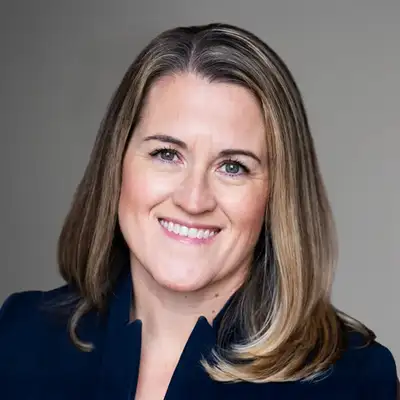
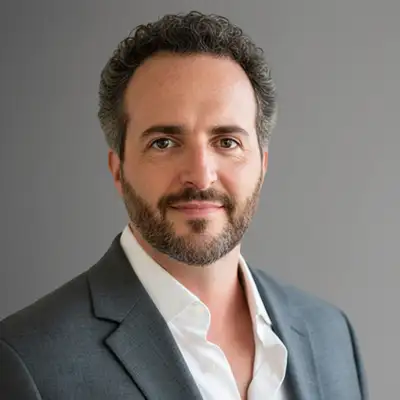
Meet the Insiders rewriting the rules of influence. Pulitzer Prize-winning journalist Brody Mullins and veteran DC strategist Lisa Camooso Miller interview the leaders who shape perception, move policy, and win when it matters. Not pundits or commentators – these are the operators driving some of the most critical strategies and outcomes in today's Washington.
Scott The Democrats have 45 votes, the Republicans have 45 votes, and a couple of us have the ten in the middle. And you learn the power of getting 86, 90% of what you want and then banking the win. And moving on.
ANNCR Behind every major policy decision, every corporate strategy, every Washington power play are the insiders shaping the game and the new rules to win it. The Deciders with Pulitzer Prize winning journalist Brody Mullins and veteran DC strategist, Lisa Camooso Miller.
Brody Welcome to The Deciders, where we speak to the insiders, rewriting the rules for effective advocacy in Washington. Today we're joined by Scott Mulhauser, partner and global public affairs lead at Bully Pulpit International. Scott, thanks for joining us.
Scott Thanks for having me.
Lisa Scott, you've got a great career and a Washington, D.C. native. So the travel wasn't quite as thought. Right. But talk to me a little bit about your first foray into the business at the Democratic Senatorial Campaign Committee.
Scott Well, it's funny being a local, particularly when you're not of this town. So we grew up here, but my mom was a social worker. My father was a doc. It is local news becomes national news when you live here, but you really you really can just get caught up in it and it becomes so much to become such a part of your day that when I realized this is what work could be, who could sort of say no, right? And I think there was no better proving ground for me, no better training ground than working at the DSCC. It was a, campaign committee. You are really spending your time, as you both know, talking to campaigns about what they need. So it's it's ten, 12, 15 individual campaigns. And it was a cycle where there was a lot in play and you really got to learn. It was phenomenal for a young communicator, learn when to parry well, how to push back, what voices to use when a thoughtfully staged op-ed would land, while when it really was a quote that needed someone or or I mean, I like that you really wanted to pull in. It really was a thoughtful learning experience for me to be in my early 20s, talking to campaigns across the country and realizing that what played in Montana was not would play the main role played in Michigan and that Tommy, each candidate and each campaign needed different things. Some of them were long and tenured House members. Some of them were mint farmers learning to run for office for the first time. And that difference meant you learned how to adapt to the moment, to the state, to the campaign. And we landed some big wins that cycle.
Brody You also worked for two of the giants of the Democratic Party in the Senate, John Breaux and Frank Lautenberg, two very different people. What do you learn from them for so long?
Scott It was about being a bulldog. It was there was a tenacity that just taught you push, push, push and you'll get your results. He just pushed and he pushed until the world yielded and he bent it in his direction. It wasn't always easy, but man, did it work. Conversely, Senator Breaux taught us the value of when to strike that deal, when to land that deal, just how to make the thing work. He used to famously say that the Democrats had 45 votes, the Republicans had 45 votes, and a couple of us have the ten in the middle. And he could drive the eight guys to where the outcome could should go. And he could recognize when to cut that deal. And you learned the power of getting 86, 90% of what you want and then banking the win. And moving on.
Brody Can you tell us about a mentor who maybe helped you along the way in your career?
Scott I was a 25 year old, precocious, cocksure young White House intern. I had no business being there. But apply them. They kindly let me in and we were prepping for a meeting with five governors on education, a host of issues, and I knew everything about that meeting. I had written the memo. I knew what each governor cared about, what mattered. And in the middle of the meeting, I got back in the over by a senior staff when I was 21, and I sort of stood straightly and thought to myself, this is amazing. I was prepared on X and Y, and they came over and they said, listen, Governor Romer is thirsty, so he'll need a Coke. Can you go to the Mess and get a Coke? I was sort of crestfallen and thought to myself, this isn't the substance I come here for, right? And they said, but you can't just get Governor Romer a Coke. Everyone needs a Coke. So can you go to the Mess and get 20 Cokes and sprites and come back? And I thought to myself, you do what you need to do to get it done. And famously, after one of the the senior staffers who I'm still very close to, a woman named Mona Mohib said to me, listen, you could be going places and it's going to come and come fast for you, but it's not coming today. So keep your head down, work hard. You will land in great places. It just can't all come at once. Be focused. And that desire to sort of do and be a part of big things matters. And it's something I spend a lot of time thinking on, but doing it the right way matters to me.
Lisa You also, after that moment were at Ex-Im Bank, you were at the Commerce Department. You've been in places where you probably saw some early signs of what is now that populism movement inside of the Republican Party. Talk a little bit about the shift inside the pro-business center from your point of view, from that experience.
Scott Candidly, was stunning. I mean, based on assumption for years had been that Republicans were going to stand with the business community and to watch companies from a small pickle company into giant manufacturers go to southern states, for example, and say, we're going to build a huge factory in your community and have those members say, there's a heritage scorecard that says, I should vote no on this because it's a purity and government test, and I will eschew these hundreds of jobs in my state or my district. It was seemingly bonkers, because every lesson you learned is the lesson that the three of us grew up in is if you could tout jobs and economic growth and factories and all of that, and of course you would do it and you would run on that and win on that. And I think to your point, previews the populism we're seeing today. It just it went against a lot of the cardinal rules of the road we'd seen in traditional Republican politics.
Brody You were the chief of staff to the US embassy in China. What did you learn being overseas about the United States in its power?
Scott It is both remarkable to see the line outside the U.S. Embassy in Beijing every day. You saw people waiting for hours upon hours just to want to come to the U.S., called the city on the hill, called the beacon, but sort of that despite daily Chinese propaganda pilloried in the U.S. and Japan, watching how much they wanted to come here and be a part of this was special. And it meant something. And you saw it every day. And we actually had an interesting side. We called Disney and we said, listen, we have a many, many hour line outside our offices. No one knows lines better than Disney. Do you have advice for us? And to their immense credit, they sent over folks and they said a bunch of tips like keep your lines moving. They give a sense of progress. Always have your estimated time be somewhat longer than the actual time. A state of things to help that line move more.
Brody Because our Fastpass.
Scott There was not a Fastpass, nor was there a Space Mountain which would have made the line much quicker. But it was great. But you got to see how zealously they were interested in everything that we do, and how they wanted to bend the world to put themselves on equal footing. Too often they would be happy to put leaders on equal ground, have the theater of the two sides appear on equal footing to implicitly and sometimes explicitly say, this is a dueling great power relationship with two leaders. Equal ground. Well, we would often say, yes, you have to eat your spinach to get your dessert. You have to do your homework to get your dessert. And thus that meant every visit included progress on cyber or climate, where rules of the road are norms or tech, and you get real things when you push them. Look, it was fun. I had dumplings in 18 provinces. I went with everything from Leader Pelosi to Tibet, to a bunch of right leaning and Tea Party members to Xinjiang and everything in between. We sort of said yes to learning and doing business leaders galore. It was phenomenal and interesting. But while you see how singularly focused they are on us, well, I think at times we were really insufficiently, as a country focused on the competition.
Lisa We'll be right back with Scott Mulhauser.
Brody Welcome back to The Deciders. We're here with Scott Mulhauser.
Lisa Scott, is there a story from the Affordable Care Act debate that stands out for you?
Scott It was the hardest thing that we've ever done. And the stories abound, right from the snowfield popping up to have 100 members tell you why this vote mattered in conveying how and what it would do for their state. But I do remember in one of the negotiations, the House Democrats, Senate Democrats were negotiating with the president, his senior team, and the president said to the two sides, listen, said folks, you go to your respective corners, come back with the number, House Democrats, you do the same. We'll work on it for more, and we'll see if we can come to the middle. So the Senate Democrats come to the table and they offer up a number. The White House pushes it further toward the center, and everyone looks to the House Democrats and said, sort of, where are you all at? What is your final piece of the puzzle to achieve a seven decade in the making, historic accomplishment while we still can. One of Pelosi's leading committee chairs looked at her look in the room and to Mr. President, but I don't speak for the House. But I want to say I'm proud of the Senate Democrats for coming up with a number that really I know is not everything they wanted, but it matters. I appreciate you and the effort you've put forth, and I think there's really a chance we can get that, we can get this done and we can make history. Speaker Pelosi holds up her hand and she pauses and said, look, the chairman is right about two things. One, you all put forth a number. And two, you know, I didn't speak for the house. And she shut it right down, and she shut the entire negotiation down because it wasn't the House getting what they wanted. Now, it made the negotiation longer. It also yielded some more that they wanted. So it is it is. Yet the 463rd example of Nancy Pelosi as a remarkable leader who was driven, knew what she wanted, knew what she needed to do to get there. And the result was she got a little more because of that. They took a little longer, was a little harder, but she got more of what she the House and we as a party wanted an end to the time.
Lisa When Donald Trump was elected. You were at the Georgetown Institute of Politics speaking of power and changes, talk a little bit about what that felt like and what kind of impact that change had for the Democratic Party in general.
Scott It was the biggest of gut punches. There was utter paralysis for months where no one knew what to do. No one knew. You know, you had Greg Norman, the golfer, as the connectivity between the Australian, prime Minister and and the White House, you had anyone who knew anything about how to get to him became a public affairs player or your lobbyist. Oh, does Washington need shaking up? It sure does. Is this what we needed? I'm sure everyone would agree.
Lisa But it opened up some opportunities for you.
Scott It did. I mean, as someone who was zealously on the other side of that, suddenly the things you cared about took root in a way. You had to defend everything you care about and worry about the vulnerability of things that matter to you. So I spent three plus years helping runs in finance bill. That meant health care was front of mind for everybody as they attempted to repeal Obamacare. Tax and tax issues were front of mind as the Trump tax cuts were front and center. Father's trade was front of mind given the tariff fights. So suddenly the world was in my corner a little bit. While the macro political moment wasn't necessarily the issue, environment really was. So suddenly, if you wanted to push back or you wanted to make a campaign, our case for anything, and particularly in the health tax, trade or oversight spaces, it was I got a bunch of phone calls. I was sitting at Georgetown and suddenly I, you know, from Coors to Brand to philanthropy and suddenly had 4 or 5, 6 or 7 clients. And I woke up one day and said, I guess I don't need to join the firm. I guess I am a firm.
Lisa And so there was born Aperture Strategies for strategy.
Scott So I launched a public affairs firm. It threw me in the middle of everything, and it let me jump in in a way that I didn't know I really wanted to do and needed. But it also gave me the opening to to really push on a lot of things I felt steeped in, invested in.
Brody After a few years, you just had to sell the firm. Tell us about that process.
Scott I felt like for all the chiding I get for going to a million events and being out there, I felt like I couldn't do that without furtively checking my phone to worry about which client needed which thing. I felt like we were growing really well, and I had a choice. And the choice was hire three or 4 or 5 real folks and really grow the thing, or talk to all the people who said, when you're ready, let's talk. Bully pulpit said to me, come here and let me launch and run a public affairs practice. And that was fun because it wasn't there. They were really smart comedy, and they had a super smart research team, you know, the best digital team in DC, but they weren't known for public affairs. And so it was a perfect marriage. And, you know, seven years later, every promise made has been a promise kept. The well, the practice has grown. We've grown internationally. We've grown three fold. It it's it's been so much fun and it's been great.
Lisa And the firm talk a little bit more about the way it's structured. So it started as a digital firm. They acquire you. You build their public affairs practice. What other, competencies just bully pulpit offer?
Scott One of the particular competencies that that has has been a real success is this culture change program we run, which is a guy named Greg Propper in L.A. and now Miami, too, has a firm of about 25. That's sort of the premise of which is, okay, a lot of what we do in town is sort of downstream from cultures. If you can change the culture, you can change. What we do is you can make smoking feel differently on TV. It can make the work for mean for tobacco, for kids feel different and better. So what Greg does is an array of things with that team that's really thoughtful, somewhat. But they convene, for example, every year, something called A Day of Unreasonable Conversation. And that is 300 TV and movie writers with chosen active production, 300 influencers with real followings, and then just panel after panel on topics that need to be sort of thought about a little differently. And it's a great way for brands and causes to get in front of folks. It's a great way to sort of change the culture. So everything we do that's downstream that flows from it's been great.
Brody I never heard about culture change before it. Tell us more about that. Do you have an example?
Scott When you look at the modern public affairs universe, too many people are fighting the last battle tuning. People are saying, what's the long term story I need to lead? What's the op ed I need to drop? What testimony? And what tips do I need to do? Well, the reality is social drives so much, right? We talk to one company, a notion that the top five stories they spend the last year caring about had about 4 million eyeballs on them. They spent week after week, month after month battling these stories. The top five short form videos about them they spent nominal attention on garnered 43 million views.
Lisa Wow.
Scott So that's a ten, almost 11 fold difference. That's the kind of thing you need to be in front of, not behind. So you got to be in a place where that be in the conversation, where you're driving the news to folks, where you're not in the conversation. Long.
Brody Scott, you spent decades cultivating deep relationships with reporters. You and I go a long way back. Puck recently referred to as the most omnipotent guy in DC. What's that about?
Scott Look, I love Jon Kelly, Peter Hamby, and the whole squad of puck. They are good friends. I think their their work is deep and interesting. And I love is, you know, for sport to sort of spar with and pay with reporters. I think look, it's it's a nice compliment. I think for folks like the three of us who like to be in the big rooms where big things happen, I like to drive that change. I like to think about how to further things in Washington and beyond. It was a lovely joke from a from a friend, but hopefully is illustrative that deep relationships, the friends you've had for 20 years become the folks who work with the folks that help you solve problems. And it's been fun to parry. And sometimes that has turned into great stories, and sometimes that is turning into fixing and solving problems. And I remember doing with you over the years and it it's you do it 95% of the time with zero impact. And then the other comes from it organically is pretty good.
Brody We'll be right back on The Deciders.
Lisa Welcome back to The Deciders, Scott.
Brody Democrats are widely expected to win the House, maybe the Senate. How are you preparing clients for that?
Scott Wow. Is it seem like it's coming? And obviously it takes hard work to get there, but it's coming in a big way. What we're saying is understand where you are today. Understand, use a benchmark. Understand what you need to be thinking about where your vulnerabilities are. Sort of the smart folks are planning out. They are building campaigns. They are researching what they need to say. They are understanding their vulnerabilities. And they also understand that oversight moves much more quickly than litigation does, as you well know that the subpoenas are already being teed up and you're already getting signal. Leader Jeffries is saying it's about costs, about care. It's about corruption. You're getting the signals on what's coming. And the circles obviously start with the president on through the family and on through the cabinet, not outward, but they'll be this vice that I think folks are going to attempt to put brands in. And then the vice get tighter and tighter on those brands. And I think a lot of them think they have a legal defense, but the legal defense isn't sufficient in this moment to whisper to the subcommittee chairman, it's just insufficient. There has to be an outside game, too. There has to be thought about your reputation. There has to be a zealous driving of who your leaders are and what you stand for. There has to be a why you've done whatever the endeavor is. Because, look, people are going to know what's on the mat. They're going to know who the donors are to the ballroom and to the inaugural. A lot of brands want to just point in. They say they asked us to do it, but that's candidly not good enough, because the question is going to be, what do you get for it? And if you don't have not just a legal defense, but a, structural message driven defense on why you did it, why it's good not just for your bottom line, but for the brand, for the country, for, you know, for economic growth, you name it, you're in a vise pretty darn quickly.
Brody I think what's so interesting about this is, in your careers, in your industries of managing corporate risk, a lot of the oversight is not going to go over things that were illegal, but things that were legal. Donating to these committees, doing a library, they're all legal activities, but they're going to get hammered. Just as much.
Scott Emerges as much that hammered in new ways. When I think a lot of us think about prepping, leaders for for hearings or for big oversight moments, and you think to yourself, well, I know how this works. I'll link the testimony to a tip sheet a day or two before, you know, prep a statement. Maybe I'll have, you know, a voice or two of the company, maybe IRGC at the ready to parry back when you need your allies lined up. You need your social at the ready. You need your other voices and their social at the ready. You sometimes need to think internationally. There's so much more than sort of prep the statement. Oftentimes the videos, the leaders are precut. They're just we are in a universe where CEOs are moving to DC and they're not buying in houses in DC to just sell them in two years. They're buying houses in DC because they are spending an inordinate amount of their time proactively thinking about this place and then reactively responding to the next take up. So yes, it matters now where you can show the president you've done this and the audience of one and all the rest, but they are here with properties here because this is a CEO first in Denver and a lot of brands and a lot of causes, a lot of philanthropies, a lot of nonprofits, I think of themselves, okay, I need to be in this in a visible way longer term, and we need to do that in a way that really endures because we need to do it in this administration. And the next. We need to in this congressional moment and the next. And that's hard.
Lisa BPI has actually done a fair amount of research on resilience. Specifically, talk to us about the 2026 Reputation Resilience Index.
Scott The question to us is sort of how's your favorability? It's can you endure when the swing comes? Trust in public institutions. This is an all time low. Only 27% believe in the power of institutions and what they can do. And conversely, any measurement of corruption is through the roof. And you're seeing it every day, right? You're seeing from the painting of of reflecting pools onward, sort of all the ways in which people think this town is working for those in charge and not for them. So how do you take that on? You take it on, on by proving how resilient you are in moments like this. There was a remarkable yield from the research, which is that 81% of people felt like AI made it harder for them to do in specific. It made it easier for rumors to proliferate online, and only 15% felt like they had a way to deal with it. And so if you were telling your story, if you were proactively driving your message, if your head is not in the sand, if you're doing it across channels, not just with the occasional interview, but you're telling your story, if you're doing it thoughtfully and well, it lands and people get it. You get a bank of goodwill in this town among consumers and not just us, but also sort of not just in states, but globally. When you stand for something and when it's clear who you are and what folks know about you, that's a bank of goodwill you can draw down when you're making decisions. Because those folks say, these leaders know what they're doing. That's resilience. And it's to us far more important than anything from risk and favorability.
Brody Scott, we ask every Decider the same three questions. And the first one is, what's a decision from the past year that you're especially proud of?
Scott Watching this firm grow has been remarkable, growing this culture change team to be sort of ahead of where there's like taste is growing internationally. Well, having one of the biggest public affairs shops in Germany has meant we can be there and we can commit our clients how much that stuff matters. But staying a step ahead with some smart, growth and acquisitions matters. And personally, I'd say we as a firm spend a lot of time thinking about efficiency and how can we do our jobs better, more thoughtfully and well. And my question has always been kind of, what should I use that efficiency for? And so, you know, we joked about the omnipotent piece earlier, but I try to be out there in all the ways. But I also really have made it a priority to spend time with the family, sort of like carve out getting home every night and horsing around with the kids and playing soccer and reading books and a family meal. And so using that time not only for the good of the firm and for the good of for some clients, we think really matter, but also for the good of the family matters. I'll try to answer that personally and answer professionally.
Lisa Scott, what's one thing you would do over?
Scott It's a good question and it's not an easy one to answer, but I thought back to a recent pretty big win we had, and us winning as a firm meant another firm lost in a big way. And it was pretty palpable that our push and our campaign and our work had steered a big success, and that they had flopped. And they sent some shots across the bow, and we ignored them to be a graceful winner. And then finally, after the fourth or fifth shot, we swung back a little bit and just gently, just to them, just to make sure we heard it. And we knew what had happened and we all knew where it landed. I looked back and I thought to myself, you know, we won. We won with grace. We had artfully conveyed that we'd won without spiking the football. I didn't need to do the last piece of that puzzle. Take the win, move on in this town, relationships and towards a lot of what we've talked about today, I'm someone that treasures 15, 20, 25 relationships I've had with reporters and friends and Hill staffers and clients and all the rest. And that works because you're sometimes on the same side. You're sometimes not. And we're back and we're fine. But at the end, if I could show a little more grace that I did.
Brody What's something that Washington is not thinking about, but should be?
Scott I think too often Washington spends its time on a narrow sliver of the universe, and that stuff matters. But there's also a lot that matters in everyday lives, you know, thinking. And you're seeing it in sort of the ideas primary for 28. But folks talking about parental leave, maternal health, child sort of things that matter in everyday life, you're watching, you know, what governor is doing in Pennsylvania touting a bunch of vo tech, you know, opening up state government jobs to to folks in, in with vocational and other degrees. You don't necessarily need a college degree. Sort of. I think we in Washington insufficiently think about the broader span of things that can really have an impact on everyday lives. And I listed a handful and I've certainly a dozen more, but that's the stuff that matters. That's the stuff that change minds. That's the folks that that's the stuff that convince, like our health care win, that convinces folks that Washington can work and does work. So that's what I'm hoping for, that we get to spend time on a broader span of things and things that really have an impact on everyday lives.
Lisa Scott, thank you so much for joining us on The Deciders.
Scott Lisa Brody, thanks for having me.
Brody Thanks. So that was Scott Mulhauser. Lisa, what do you think?
Lisa I am fascinated by this reputation resilience index. I want to know more about what they found, because I think that it's the kind of information that's going to be really valuable for companies to understand, not just after midterms, but going into 28 and really how Washington works. He talks about CEOs living here. That, to me is a really important and powerful way for us as communicators and, public affairs people to understand how Washington really works.
Brody Yeah, I learned so much from that conversation. I love the idea of corporate CEOs moving to D.C. as you said, we see that more and more, which is shows the political risk to companies is higher than it's ever been before. The other thing I found fascinating was the culture change. You know, that changing the culture is upstream from lobbying and advocacy. I mean, what a smart way of trying to change the hearts and minds of D.C. if you start with the culture.
Lisa Absolutely agree. Thanks so much for joining us again on The Deciders.
ANNCR The Deciders is hosted by Brody Mullins and Lisa Camooso Miller and produced by Dave Tobey. Subscribe wherever you get your podcasts. Find more online at deciders.show and follow The Deciders on YouTube, LinkedIn and X.