Subscribe
Share
Share
Embed

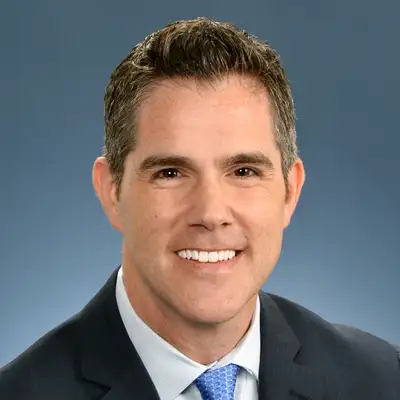
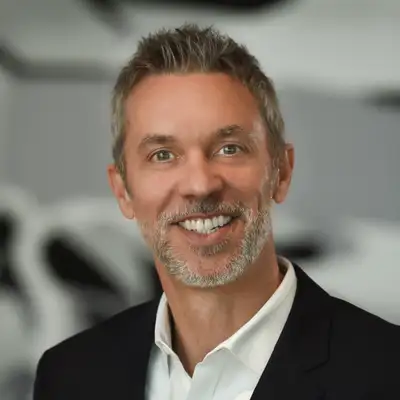
The Auto Market Brief, powered by Cox Automotive, breaks down the latest trends and forecasts shaping the automotive industry. The show is hosted by Cox Automotive Executive Analyst Erin Keating, coupling years of experience translating data and trends with the data and industry insights of the largest automotive services and technology provider.
Joined by other Cox Automotive experts and outside guests, you’ll get data-driven insights and industry outlooks from some of the industry’s leading voices.
It is the most dynamic time in the automotive industry in the history of the industry. There's more things changing. There's more uncertainty than there's ever been.
Erin Keating:Hello, everybody, and welcome back to The Auto Market Brief. I am Erin Keating, your, host here and executive analyst with Cox Automotive. I am so excited. This is one of our bonus episodes, and I get to speak with two really wonderful humans, guys that I really enjoy talking to, but also excellent leadership, part of the leadership team over at Toyota North America. So we've got Dave Christ.
Erin Keating:We've got Mike Tripp. I'm excited to talk through sales and marketing. You know, we talk a lot about product innovation and how that's changed, and I could certainly have your pal Cooper on here to talk about all the rigmarole that he's had to go through in the last two decades of designing products because of regulation, etcetera, etcetera, right? We could certainly talk about consumer changes. But really, when I think of the under discussed topics is how much innovation has happened and technology has really come in and disrupted marketing and sales and how we reach customers and just the wide distribution and ways to get in touch with customers these days.
Erin Keating:And yet Toyota keeps killing it. So big congratulations to both of you. But I welcome you to the show so we can kind of talk through what has that looked like over the decades that you all have been working for this company. So Dave, Mike, welcome.
David Christ:Thanks, Erin.
Michael Tripp:Yeah. Thanks. Thanks. It's it's great to be here. Absolutely.
Michael Tripp:Thank you for having us, and thank you for calling us good guys.
Erin Keating:You are... I mean, you are, you know, at least to the best of my knowledge.
Michael Tripp:I'm not gonna be able to really
Erin Keating:go stand up in court and say it. Yeah. Yeah. And, know, Dave's an Eagles fans. I can't, you know, deny him.
Erin Keating:He's he's gotta be good material if if he he rules for them. So why don't we at least quickly start off with... And I'll and I'll just say, Dave, like, how about you start? Tell us a little bit about just brief history of of your work with Toyota and the Lexus groups and what your position is now. And then Meg will go to you just for the audience's edification.
Erin Keating:So Dave, take it away.
David Christ:Great. Well, thanks, Erin. Great to be with you. I'm Dave Christ. I run the Toyota division in The United States.
David Christ:Been with the company thirty two years, it's been a great run, a lot of great people and dealers along the way. About half of my career was spent in our field offices working directly with Toyota and Lexus dealers, and the other half at various headquarters roles in the Toyota and Lexus brands. And it's just been a great opportunity to work in the best industry in the world.
Erin Keating:Absolutely. And Mike, what about you?
Michael Tripp:Yeah. Thanks also Erin for having me. And a little similar to Dave, although one year less, so thirty one years with the firm. Again, half my career, maybe a little bit more than half in an operational role with our Toyota and Lexus field teams in The US. And I also have had the privilege of really spending in the better part of the last decade working in a marketing or comms function, including a couple stints overseas in Europe and Japan.
Michael Tripp:And currently, I lead the marketing team on the Toyota brand side here in The US.
Erin Keating:Awesome. That's the reason I wanted to talk to you too. So again, you know, as I set it up in the beginning, there's been a lot of talk in the industry, you know, I think it's the reason that all three of us love this industry, is that there's so much always happening. It's really not a day, you know, one day doesn't repeat. But we've talked a lot about the innovation, regulations, everything that's come into play around actually manufacturing vehicles.
Erin Keating:But a lot has changed over the thirty one, thirty two years you all have been in the industry, from even just marketing to consumers and dealing with sales and how do you actually keep a brand like Toyota really just on such a great trajectory. I So thought maybe we could kind of go back and just have you two help me understand over your time with Toyota, and we don't need to get into the secret sauce of Toyota specifically, but just how have things changed and evolved from a sales perspective, working with the dealers, but then also reaching consumers? So whichever one of you wants to take that question first, just to tell me a little bit about how you think it's evolved.
David Christ:Yeah, thanks, Erin. I'll jump in here. This is Dave. So to begin with, I think the sales and marketing functions are much more collaborative now than they were when Mike and I started in the company. A lot more frequent interactions, conversations, a lot more integration between what we do in sales and what we do in marketing.
David Christ:And I think, you know, and before the two kind of operated separately with some level of integration and now they're fully integrated.
Michael Tripp:Yeah. And I mean, I'll just comment that it's I think one of the things we're passionate about is not letting the org chart dictate how we function or operate. I mean, there's a reason that we have an organizational structure like all companies. But as I like to say, we play in each other's sandbox a lot. And I think it's a combination of the frequency of communication and the structure around meetings that we have.
Michael Tripp:But also, if you look at Dave Damon, who's our wingman in sales and my team, there's really this set your ego aside and what job needs to get done. And I think the other thing we're passionate about is making sure we start with what our consumers and our dealers want and communicating across the group effectively. So a lot's changed, but we still have a lot we can do better too.
Erin Keating:Sure. Well, I mean, you know, we know one of the biggest things that's changed over time is how individuals shop for vehicles, and, you know, the glowing role of data and market intelligence. I mean, the amount of companies that have sprawled... You know, I've been in the industry just a little smidge shorter amount of times in you guys, years than you have, but man, it's changed even over the last ten years, just how much, you know, the iPhone changed things and how much data intelligence really comes into play. And to your point, I think it has, from my perspective, almost required, in a good way, sales and marketing to become more interconnected.
Erin Keating:Tell me a little bit about, I mean, Mike, you're really especially in it to win it right now in the marketing function. How have you seen the change of the consumer shopping journey and what it's meant for how you've had to adapt technologically with data, etcetera?
Michael Tripp:Yeah, obviously, it's evolved a lot really in our collective career, right? I mean, it used to be much more of a in person linear journey. And if you look at today, and this isn't unique to the auto industry, I think all of us as consumers, it's the same, right? It's digital first, very much research driven, and what I would call nonlinear, where all of us, and certainly we see our customers in the auto industry, they jump across platforms. They're extremely well researched before they reach out to Toyota or reach out to their local dealer.
Michael Tripp:And so I think it's really understanding that the way consumers and all of us as consumers interact with brands, we're getting information from a lot of different sources. We're cross checking those resources. We're jumping from social media to websites and really informing ourselves. And then we're picking up what I would call a more traditional journey. Although the journey's also changed.
Michael Tripp:I know Dave can talk a lot about SmartPath. I mean, really, we've also embraced this omnichannel experience where after consumers do this research in a very nonlinear way, then how do they interact with the Toyota brand? And I think that's where for us, we're not only excited about what we do in marketing, but with the great digital retail tool we have in SmartPath.
David Christ:Yeah, so a little bit about SmartPath, Erin. About 15 ago, we brought together a group of dealers that we considered to be innovative and forward thinking. And we challenged them to say, Hey, how can Toyota help all of you be better for the customers and be better for the industry? And one of the ideas that came out of that resulted in our SmartPath initiative. So what is SmartPath?
David Christ:SmartPath is a proprietary software platform that allows dealers to easily integrate all of their systems and provide a seamless experience for the customer from the couch when the customer's first investigating products all the way to delivery. And it was built by us for us. And we like to say it was built by dealers for dealers, meaning all of the enhancements to the platform have come from dealer input. And we feel like that is a serious competitive advantage. We have over 800 dealers on SmartPath and growing.
David Christ:And what the dealers love about SmartPath and what the consumers love about SmartPath is it integrates all these disparate parts of the shopping and purchasing journey. So in the past, a customer would spend all this time researching cars and then show up at the dealership and have to start all over again. Well, now we like to say we give the customer credit for the work they've already done. So when they walk into a dealership, this salesperson knows that they have equipped a RAV4 in their digital garage and that the time that was wasted before explaining what the customers want is already prepared and done. So on top of many other enhancements to the customer experience, we think SmartPath is a great way to integrate and streamline and just make the process easier and faster.
Erin Keating:Yeah, a 100%. I mean, and I think that's something we at Cox Automotive talk about all the time, this omnichannel experience, but yeah, there's nothing more annoying than when you do all that work online and then you get to the dealership and they feel like they've never even seen you before, right? We all know it. Even just calling through the phone lines when we're trying to get to the doctor's office or something is like, You need the birth date again? Are we sure we need that again?
Erin Keating:Know? So I love that you guys have really innovated in that way. You mentioned that you worked on this with dealers. You know, we know in the industry there's tier one, tier two, tier three, and both of you have been out in the field and in headquarters. How do you see either that morphing changing?
Erin Keating:I mean, there's been a lot of people who are saying like, hey, does does tier three go away? Does tier two go away? Does tier one go? You know, is there one of these tiers, quote unquote, that's gonna start to evaporate based on the new technological advances that are coming and the disruption? I'm curious how you all see that interaction between those three tiers.
Michael Tripp:Yeah, I... So... Well, go ahead, Dave.
David Christ:No, go ahead, Mike.
Michael Tripp:Yeah, you know, I'll jump in and just say, look, you know, our answer is we don't see them going away. There is a role and a defined role for each. And I think what a lot of people don't realize is that we have here in headquarters on my team, two dedicated teams that work on the integration across tiers one through tiers three. We have extremely talented cross tier media team, where not only do we align strategically, but also on the tactics on how we go to market, who plays what role and how we can leverage one plus one plus one doesn't equal three, it equals five in our case. So, we have a team dedicated to communicating and coordinating across our 18 TDAs, where we share everything from our year long strategy to what are the tactics, and even playbooks for when we go into the market with some of our sponsorships like the NFL and NASCAR, how we can leverage that locally at the Tier two level and at the Tier three level.
Michael Tripp:I mean, a lot of people don't realize when we bought the NFL or we partnered with the NFL and we have use of the NFL mark, is we actually... Our contract allows us to have that at the tier one level. So for me, it's not either or does one go away. It's making sure you're more coordinated, aligned, and the communication. I mean, from quarterly meetings to monthly one on one meetings with each of the AT and TDAs, and there's a tremendous amount of asset sharing that we do across those groups where, as an example, for our latest national campaign, we captured almost ninety minutes of additional running footage that we then make available to our tier two and our tier three partners, and they can use that either in showroom for the dealer's case, or they can re carve up creative content to push at the tier two level.
Michael Tripp:So for us, there's no question. All three have a role, but it really comes down to coordination and communication. Yeah.
David Christ:And I would just add to that, you know, Mike hit on the key point in my opinion, which is they each have a role. And probably twenty years ago, each was a muddled role, meaning that each of the three tiers were just throwing media and marketing against advertising. And today we're much more scientific in how we define the role of each tier and how we execute the role of each tier. So that coordination and collaboration has gotten better. We're better than we were five years ago, but we still have more work to do.
David Christ:I think we can get even better and we'll be better five years from now than we are today.
Erin Keating:Yeah, absolutely. And I mean, it is true that a lot of people, you know, for those that are listening to the podcast and don't really know the difference between tier one, tier one is typically considered to be the automaker and what they're responsible for from a national perspective. And when you get all the way down to tier three, obviously we're talking about dealers specifically working within their area, their DMA, or I don't know what you all refer to it as. But it's a lot because we've also seen so much growth in channels for customers to find you, right? So it's almost like out of necessity, you have to bring those together and start being more collaborative because the inefficiency of the spends, the inefficiency of the data use, and even just resources in the field would be astronomical, right?
Erin Keating:So, I think...
Michael Tripp:Yeah. And, you know, Erin, I would say even more important as you see this migration to more AI search, right? I mean, you know, because for us, for example, as we've, through our SEO efforts and and SEM efforts, we've aligned on keywords. And again, this is all part of making sure we haven't bid against each other in the past, right? We're coordinated.
Michael Tripp:But now as you move to more of an agentic platform on how discoveries, you know, how we as consumers discover brands or vehicles in our case, then there's even more need to have alignment. But I mean, even small things like our social... All of our social publishing, everything we do at tier one, we make available to tier three and tier two at no cost. They can click into what we call TSP or Toyota social publishing, and anything we push on tier one can automatically be pushed to the social channels at tier two or tier three if the dealers in tier three case or the TDAs choose. So it just really comes down, and I've said this in the past, look, tier two and the relationship we have at tier two, tier three is the foundation on which Toyota Marketing is built.
Michael Tripp:I'm super proud of what we do at the tier one level, but the foundation for what we build our marketing activities on is really the relationship with our dealers and our TDAs.
Erin Keating:Yeah. And from an operations perspective, I mean, we all know that, you know, Toyota dealers and Lexus dealers specifically happen to be some of the happiest dealers out there for good reason, and it sounds like this is a big part of it. You mentioned agentic shopping and AI, etcetera. So I've gotta push into that a minute for just a a second. Our our friend Larry Valiquette just just recently quote you talking about this and then called
Michael Tripp:And you. He quoted both of us, by the way, in that article.
Erin Keating:Did. He did. And obviously, you know, we're looking at it from a marketplace perspective and from the dealer website perspective. But how are you thinking about that? Because that disruption is certainly also coming and interesting to consider what that might change.
Michael Tripp:Yeah. First of all, shout out to Larry, who I know we both love so Thank in that article. But, yeah, I mean, first, I think the one thing we can't lose sight of is still always comes down to the user experience, the guest experience. Right? And I think there was somebody who picked up that article and ran with it and said Toyota's advertising to AI or something.
Michael Tripp:I'm like, no, we're not. We're trying to make sure, just like you do with keywords in in SEM, we're trying to make sure that our customers easily have accurate information about our brand and our products, so that they can then make the decision they want to make, hopefully with Toyota, and continue on the customer journey. So it still starts with the user experience, but the facts are the facts. Reports show that if you go onto Google and you search and the AI mode comes up, 93% of people never leave the AI mode and often don't check the citation. So where we've seen we win is because of the strength of our brand and the, you know, the shoulders of the giants David I stand on who's helped build this brand over the years, is our brand shows up.
Michael Tripp:But what we see, and I think most brands see, is then when it goes one step further, when customers go one step further, we may lose them because the reference or the resource that's being cited are often earned media or maybe Reddit or maybe other places, which again, for us is fine. We're proud of our product power. So what you and other talented independent companies say about our products, we stand by that, but we just want to make sure that information is accurate. So our big push is not migrating from SEO or SEM. It's making sure that whatever we do in, you know, generative engine optimization, it complements it.
Michael Tripp:And for sure, the way technology crawls a website for SEM or SEO is different than the way your content has to show up to be successful in the geo environment. So, are focused our efforts to make sure we're doing both. We have an extremely talented, also an Eagles fan, a guy by the name of Mike Schifrin, who leads those digital efforts for us. And we have a lot to learn and go, but we are committed to making sure that our customers get content that is accurate and relevant that's from Toyota, regardless of the technology that they use, including ejectic agents.
Erin Keating:Sure. And Dave, are you seeing, you know, where are you seeing AI sort of pop up in your day to day interactions and thinking about strategy for the brand?
David Christ:Yeah. So I think from an AI perspective, obviously we have a lot of initiatives from everything from when the customer calls us, how we ingest that information and data to how we analyze it and study it, all the way to things like our quality efforts to improve our quality. AI is being used and improved upon. I don't know if any of us could predict how AI is gonna shape business over the next few years, but it's certainly an active part of what we do today.
Erin Keating:Yeah, absolutely. And again, that's a topic that goes through the entire process of automotive. So it's with what we're doing all the way here at the front, you know, talking with the customers. But, you know, we love hearing from the automakers how it's being integrated into manufacturing, how it's being integrated into product decisions, etcetera, etcetera. So but man, it is still a wide open field and and so much more to to be happening.
Erin Keating:So I think it's hilarious that someone picked up from the article, Mike.
Michael Tripp:Yeah. We're always trying to reach customers. I mean, it's like saying if you build your website so that the crawlers and search engine find that you're you're marketing to the crawlers? No, you're not. Just trying to make sure you create the best, most efficient, effective guest experience regardless of where they interact with your brand, and making sure that you don't miss out because the technology's changing.
Michael Tripp:That's it.
Erin Keating:Well, and it's funny because I've even been questioned on my side. Well, well, then why the need to advertise a car ever? Where do you think the AI gets the information? Like, what are you talking about? Like, we seem to have lost our mind and forgotten that the AI is essentially climbing through data that is available and servicing you with results.
Erin Keating:If it has no data to climb through, it is not going to service you with results. So it's a it's a silly sort of
Michael Tripp:Well, and I think the other thing that we often lose sight of, and I think the longer you're in the industry or the closer you are to our industry, you forget the fact that there is no action without intent. There is no intent without desire. There is no desire without consideration, and there is no consideration without awareness.
Erin Keating:Right.
Michael Tripp:So when you look at our role as a marketing team, first, we're obsessed with solving problems, identifying clearly what the problem is you're trying to solve. And then the second thing is never forgetting that there is no action unless there's awareness and consideration, which is where we play in tier one. And then as we move from consideration down to desire and intent, that's where we go tier three. And then our dealers do as good of a job, the best in the industry, at delivering the experience when it comes to the intent actually walking in and buying a car. So, yeah, I mean, and I have this discussion.
Michael Tripp:We also, we won't get into it, but our big proponents and users over the last five years of marketing mix modeling, which I always say is money ball meets marketing, but identifying what our base level of sales would be without marketing and then making sure that everything we do in marketing can be tied back to the right investment from a channel standpoint so that we are efficient and effective with our resources.
Erin Keating:That's actually a good point because, you know, if I do say so myself, because we do report on sales, you all are killing it. You have killed it for quite some time now. You got a lot of things right with Powertrain. You get a lot of things right with having products at every part of the brand, every part of the, you know, every segment that the customer's looking for. You know, there's only a handful of manufacturers that are doing that and doing that well right now.
Erin Keating:You amongst the top performing. Dave, as you think about the brand as a whole, with a company like yours that is successful, that does have that, you know, consistent low days inventory and desire, why do it, right? Let me just provocatively ask you, why do you need to pay attention to that top of the funnel, if you will?
David Christ:Yeah. You know, I think in all of our operating philosophies, strategies, plans, we keep it really simple. We focus on the customer and we listen to our dealers. I mean, it's as simple as that. And we feel that if we listen to our customers and we listen to our dealers and we execute on what they tell us, not just let it go in one ear and out the other, We're going to stay on the market and we're going to be fast to move on trends, on customer needs, and we're going to win.
David Christ:And that's kind of how we operate. And I think another really important part of our company is humility. I mean, we don't think we know it all. We're constantly looking for how can we get better? How can we improve?
David Christ:And that's just a core philosophy of our culture.
Michael Tripp:Sounds like you're trying to put me out of a job, Erin. I'm just saying for that question. Hey. For the record, I can't retire yet, so let's take it easy with those questions.
Erin Keating:Yeah. Exactly. Right. Well, I mean, trust me, you know, I I spent a lot of time on the OEM side.
Michael Tripp:Yeah. You're on the marketing side too. Yeah. You got a good
Erin Keating:marketing. Know how much it sucks to be on the expense column. Right?
Michael Tripp:My line is super simple. There is no bottom line without the top line. And don't... As strong of a brand as you may have, and I won't even talk about ours, which is Dave said. We're we're blessed to be strong, but we don't act like we're number one.
Michael Tripp:We aren't... We act like we're number three trying to be number one. At least that's our But there is no bottom line without that top line. And when you look at how we, as human beings, engage with brands, we are emotional beings who make decisions based on that emotional connections, and then we justify it with logic. We are not logical beings who then...
Michael Tripp:And I think when you look at the logic of it, it's easy to say, Hey, when you're so successful... But what really gives us a tremendous amount of confidence is our brand strength, but we tie everything we do in marketing back to business and brand KPIs to make sure that anything we get is plus alpha. It's not just relying on the strength of the brand. And history has shown brands that decide that they're so big and so strong that they're gonna decide to back way down on that emotional connection at the top of the funnel. Eventually, you hold your...
Michael Tripp:You erode your brand brand strength, and you're gonna have to spend more down the road. I think the other thing for us we see is we haven't talked about it, but we, Dave and I, and our team works closely on the incentive lever. Because if you create enough awareness and desire at the top of the funnel and the throughput continues to be good, then if you do it successfully at the top of the funnel, with marketing activities, then you should have to spend or you should spend less when it comes to the incentive because that's the second lever. When you pull that lever, it usually is, much more significant from a cost standpoint.
Erin Keating:Right. And that genie can't go back in
Michael Tripp:the bottle all that easily. Yeah. Once you jam the needle in the arm, you can't pull it out when it comes It's to tough to do, right?
Erin Keating:Sure. Yeah. Well, I don't want to take too much of your time. I want to respect that, and I so appreciate having a conversation with you. And, I know to the audience, it will sound like I have favorites, but, know, okay, you might be some of my favorites.
Erin Keating:Really, I think we think a lot alike. And what you were just saying, Mike, there, you know, I work on a team in our economist team, and I'm constantly saying, like, at the end of the day, we all have to remember, we're dealing with And us humans, we are incredibly predictably unpredictable and emotional and everything else. You know, given what we've got coming up, maybe just some parting thoughts from both of you. You know, we've got FTC breathing down dealers next right now trying to figure that out. We've got AI disruption that's really putting a lot of people into a tailspin to figure out what to how to leverage that and what to do with it.
Erin Keating:We've got regulatory environments and administration and tariffs and blah, and I mean, I could go on. What would be your best advice for our audience, which is mainly, you know, dealers and individuals in the industry? Like, what are you looking forward to? What are you critically thinking about for the next quarter and into 2027?
David Christ:So a great question. You know, it is the most dynamic time in the automotive industry in the history of the industry. There's more things changing. There's more uncertainty than there's ever been. So I think that it's easy to get caught up in that.
David Christ:Autonomous vehicles, are they going to put the car business out of business? Is the government regulation is going to be so overwhelming that car manufacturers can't profitably make cars? There's so many uncertainties in the future that are somewhat out of our control. So to me, it's about really executing on what today's customers want and trying to predict what tomorrow's customers want.
Michael Tripp:And
David Christ:if we do that and we stay focused on the customer, I think that gives us a North Star, a focus area where we can all execute around.
Michael Tripp:Yeah. I mean, Dave said it, right? I mean, it's all about the customer. I think it's easy in this day and age because we're all inundated with information to get distracted. I think one of the things we try to do is say, okay, even with all the noise outside, can I really control it?
Michael Tripp:The reality is a lot of what you just said and what's going on externally, we can't control anyway. So, not only stay focused on the customer, but I would say our obsession is modernizing the Toyota marketing operating model, which is really about our people. It's about upskilling our team so that they can be not only prepared and being experts from the marketing discipline, so that no matter what happens outside and whatever business model as a mobility company we move into, maybe beyond automotive, that we can be prepared to support from the marketing standpoint. And I mean, look, it's still a people business. We get caught up in what's going on externally.
Michael Tripp:We get caught up with what's going on product wise and all those things are important. But I think when you look at all of us, it's avoid the distraction and make sure you have the best people and you're investing in those people. And then you're not always gonna get it right, as Dave said earlier, being humble. And when you get it wrong, you learn from it and move on. And, so for me, it's about really focusing on our people.
Erin Keating:Yeah. Well, you're right. And for me as well, it's what keeps me in this business, people like you two, those that are listening. So I really appreciate you both making time. You guys have very busy schedules.
Erin Keating:I know this was difficult to cram us in there, and I really appreciate you taking the time to touch me. It's always good to catch up with the both of you. So thank you for being here today.
Michael Tripp:Erin, thanks for having us. I mean, I'm gonna say for you, Dave, fly eagles fly, but let's keep an eye on the Steelers too.
Erin Keating:No. No. No. No. Fly eagles fly.
Erin Keating:Come on. We gotta focus.
David Christ:Thanks, Erin.
Michael Tripp:Well, thank you
Erin Keating:for the episode. You can find more of our insights at coxautoinc.com. And if the conversation was useful, please like the episode, subscribe, you know, share the Auto Market Brief with your, network, and check back in next week as we have economic high notes and industry headlines that matter and really fun conversations like this. Take care, everybody. Thanks for joining us on this episode of The Auto Market Brief.
Erin Keating:To stay up to date with all the latest news and perspectives from our team of experts, be sure to visit our insights hub at coxautoinc.com.