Subscribe
Share
Share
Embed
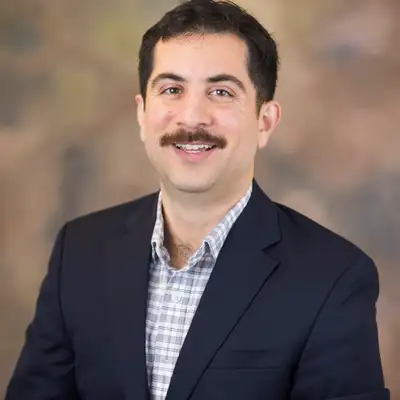
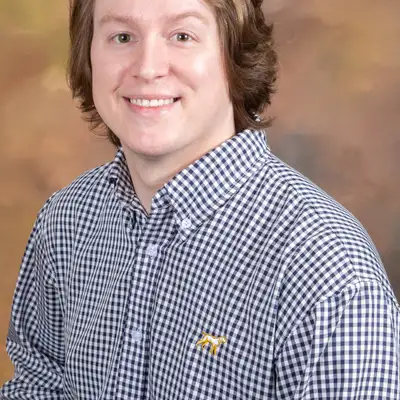
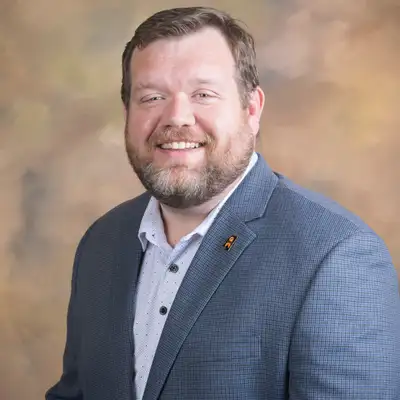
Tune in to The Extra Mile presented by the Mississippi Department of Transportation. Co-hosts Paul Katool and Will Craft take listeners inside the world of transportation infrastructure in Mississippi.
MDOT presents the Extra Mile podcast.
Welcome into another edition
of the Extra Mile
podcast presented by the Mississippi
Department of Transportation.
I'm Paul Katool and as always,
I'm joined by my co-host, Will Craft.
And today we've got a great guest for you
for the legislative session,
State Representative Steve Massengill,
he represents district 13.
That's Benton, Lafayette, Marshall and
Union counties, and very important to us.
He chairs the House Transportation
Committee.
And look,
we just had to skip an entire episode
because we were just in the thick of it
with Winter, winter storm Fern.
And he was really, like,
literally in the thick of it.
So how has how things been with,
with, the aftermath of this storm?
It's been very fun.
But first of all, I've got to add my
other county that you left out, Pontotoc.
Pontotoc? Yeah, that's always the one.
I did that again, writing it down.
The website's wrong.
That's right.
We've not forgot about you.
Yes. Right. Exactly.
Yeah.
We, Luckily last night,
my wife text and said
she got power back on in the house
for 15 days without power.
We were seven days without water,
which was worse than not having power. So.
But you know, we're making progress.
I know when I left Sunday evening,
there was still ice on my front steps.
Two weeks later. Wow. Yeah.
Yeah.
So it's just amazing
how thick the ice was on the trees.
I mean, that Saturday night,
Sunday morning
when the storm hit, you know,
it was raining.
It was 28 degrees.
It was thundering.
It was lightning and just coming a flood.
And when you got up the next morning,
the smallest little branch
you saw outside
had at least an inch of ice on it.
So you during the night the trees were pop
and lay for fall and trees were falling.
And then you got up the next morning and,
you know, like a bomb went off.
So I had to get my kids
live one mile from me.
I got on a four Wheeler because I couldn't
get through on a side by side, or a car
or truck or anything to get to their house
because they had no electricity,
no heat or anything to get them
to bring them to my house.
So, yeah.
Yeah,
it was flames and power lines on the road.
And, you know, it was look like a warzone,
I believe it.
Yeah, I hear him talk about 94, a lot
that's been talked about.
I was obviously I mean, I was alive,
but I don't remember that.
Do you remember?
I do remember it. I was pretty young.
My granddaddy was actually
a supervisor there.
And so we of course, I couldn't
get to work.
So I helped him a few days,
cut trees off, roads,
you know, because all the county roads
was his responsibility.
So we went and cut trees a couple of days,
you know,
just trying to get them out of the way.
So, yeah, it was bad.
I do not remember
it being this bad. Really?
Yeah. Yeah.
And I heard lots of things, you know,
throwing around facts and figures.
But one of them, they were talking about,
you know, a
half inch of ice accumulation
on that power line snaps.
Yeah. I mean, you talking about
I bet we had every bit of three
plus four inches we had.
Oh, yeah. Definitely even even.
Oh no phrase that I looked at.
It was over an inch on those, you know,
just on a little bitty limbs and twigs.
And so, I mean, I just,
I just couldn't handle it.
I'm amazed. Morton. Right. I am too.
You know,
so we were lucky. On to that part.
It could have been a lot worse. I guess.
You know, being without power for long
days is bad, but, you know, you survive.
We played dominoes, and we played cards
and put puzzles together
and all that fun stuff at night.
So when nothing else today,
that's absolutely wild.
I am, I'm just, Yeah.
Amazed there's still ice down.
And after that much two weeks.
Yeah, I was so I mean, it was pretty
shocking, really, that there's
still ice after that and a couple of days
that got in the 50s, you know.
Yeah, that first week was brutal.
It was, you know, a couple of nights
it was like right on windshield.
So nothing went anywhere.
Those days though,
when all these conversations were going on
as it was leading up to it
and it was about to happen,
did you expect it to be,
you know, I,
I remember 94 and I was hopeful,
but that Saturday when we got sleet
and all that, probably had
an inch of slate, may have half an inch
to an inch of sleet.
And we went sledding.
You know, we were sledding
and you talking about you could go
you could go on a sled that day.
But during the day
when we were doing that,
it started raining,
you know, still below freezing.
It was raining on us.
And I was like,
oh, this this is not going to be good.
We got back to the house
probably about four that evening.
And my power line, I could see it
accumulating on the power lines,
and I knew then that it could, you know,
it probably was going to be really bad.
We lost power about 1230 that night.
So yeah. Then you heard the trees and the
pop and then
break in and fall
in, and it's a very eerie sound to hear
while you're laying in bed at night
and you can't hear anything
other than that,
and there ain't nothing you can do.
And, then you be glad
they're not close to your house.
Yeah, yeah.
Well, personally,
that was a large fear for me.
I did have a couple of pine trees
that they should have been gone
a long time ago, but I hadn't got to,
you know, money's tight.
We haven't babies, but, Yeah.
You know, I definitely
was a little concerned about that.
Thankfully, it did not dip
the freeze did not quite dip
into the Jackson Metro like we thought.
Yeah. Yeah, sure. Hey, I got one more.
So you're under, Lafayette
County Falls underneath.
You said it does, but obviously Ole Miss.
What's the.
Have you heard the latest?
I know they're back in school.
They're back in school.
I know the mayor's doing a fabulous job.
They are, you know, cleaning up.
And I know they spent a ton of money
already cleaning up down there.
I mean, it was, you know, all of, like,
all of my counties were hit hard.
I mean, you get a lot more.
No, no, you know, just more notice,
I guess, because Oxford is I,
you know, in Lafayette County and.
Oh, my house.
So it was get a little more attention
just because of the people in the school
and all that.
So all of the that area,
all of Benton, Marshall, Tipp,
you know, Union Lafayette,
all of them were hammered.
And, so it's just not good anymore.
I'm sure sure.
Certainly feel for everyone up there.
That's that's nothing fun to go through.
No it's not.
We ran chainsaws all day
Saturday and Sunday afternoon.
You know, just cut lambda out of people's
yards.
And, so, I mean, you know,
even us thinking about Mdot forces,
I would have never,
you know, I, I think ISIS coming.
Okay, we're going to do our branch
and pretreat and plow and,
you know, do everything we can.
But, I mean, we went through
hundreds of blades.
I mean, it was so bad,
you know, we were ruined and.
Yeah, plow blades and things.
And I mean, I'm sure that's not uncommon
necessarily, but,
you know, just some of the,
the depth and thickness of the ice
that impacted some of these areas.
I've never seen anything like it.
Yeah, certainly wouldn't have had
I know they like pretreated
all the roads are sure.
You know, I'm, I live off highway five.
They had pretreated it and I saw more
roads, you know, interstates and all that.
But I mean it was just so much ice.
I mean, you just you can't deal with it.
Yeah, unfortunately.
You know, then then it got so cold
it didn't go nowhere.
You know.
And it doesn't come back,
you know, packed in so good. It was
it was brutal.
It was.
We were, we were a little hairy there
for a couple of nights.
We want to make sure everybody got home
safe and, you know, everything open
and maintained safety out there.
But, yeah, I don't want to do it again.
I say that,
and I think there's a lot of things that,
I, I think there are some things.
Sure.
If you come out of some type of event
like that or a disaster
and you think we did everything perfect,
we wouldn't change a thing.
Well, then I don't know
if you're the probably the best leader.
You know,
there's always going to be things.
Hindsight's 2020,
I think I don't know how much better
things could have gone,
but I think things could have gone
a lot worse.
You know? And so just thankful that,
some of the fears and things that we tried
to alleviate and accomplish out
there did work and were successful,
and certainly, again,
like I said, still keeping those
in our thoughts and prayers are still
without power and water.
I can't even imagine.
I think talking about water specifically,
I think Oxford was one of those
that had so many pipes burst.
Yeah, you know, some of their water
and probably similar to others.
But yeah, 15 days at least.
Yeah, yeah.
I really want to shout out or give it
a, give an opportunity.
Shout out our crews.
I mean, I'm still working for,
you know, over
two weeks, 24
seven away from their families.
These are really dangerous conditions.
So just shout out to them.
They're, you know, doing the Lord's work.
You think about our guys, you know,
especially the ones that live up there.
I mean, we dispatch folks from the coast,
you know, all other jurisdictions
up to North Mississippi to try and help.
But you think about those guys over north
Mississippi, they're in the same shape.
You know, they didn't have power.
And our water then nerve,
you know, going out and working all day.
Then they come on and try to,
you know, either
get gas for generators or get,
you know, take care of their stuff.
It's I, it's it's tough.
That's what I mean.
At one point we were just sending folks up
with, with, you know, bread,
sandwich meat and pizzas just to be able
to feed folks, you know, and,
well,
I know that Thursday I, came down and,
I picked up gas and generators from here
to take back because I couldn't
even find gas, you know, close to home.
So that was kind of.
They were talking about bread.
I mean, you guys.
Oh, yeah.
You know,
we literally taking groceries up there,
just trying to feed, even trying to get,
you know, some of the restaurants,
like they don't have power cook meals,
you know. Oh.
It was a trying time.
And I know again, folks
still going through it up there, but, oh.
The other thing I want to mention on that,
I know you and I have talked
about this already, but,
obviously we're
out there blowing and go and trying
to get everything cleared on the highways.
And to my knowledge,
all of our, emergency ops are closed. Now.
We've got all the roadways fully open.
We don't have any trees or limbs blocking
fully across roadways,
but there is still some debris out there.
And we've we've started that process
with the federal government,
as you might imagine,
in dealing with government
and dealing with multiple levels
of government, that does take some time.
Sure.
Certainly.
If we could do anything faster,
we're all for it, you know, but,
probably, hopefully in the next month
or two, you're going to see a lot of crews
out there getting the rest of that,
getting all that debris and all the trees.
I mean, I,
I haven't been to North Mississippi,
but I've seen so many pictures and videos.
I know it's probably
a lot stacked up on this very lot.
I live on a scenic road, and, it's it's
I mean, it's just nearly nonstop trees,
especially if it's a little pines.
I mean, a lot of pines just now, then
luckily, they're not
as hard to clean up as of big oaks, but
there's there's big oaks or little pines.
There's all kind of stuff just littered,
littered the roadway, you know,
and unfortunately, it's not off the road
much, but it is off the road.
So, and I know. Yeah, yeah.
So hopefully, you know, like,
like can get it all up in the next few.
And I know, you know,
when you're dealing with fame and mama,
you had to document all that.
You get paid back.
You know, where it comes from and where
you're taking and all that stuff.
So all that takes time.
People just have to be patient,
you know? We'll get there.
It's all going to get there.
I mean, you know, if you live through it,
you're going to survive.
And we're going we're going to make it
better when we get done.
We want to go on just as much as anybody,
I promise.
Yes, yes, no.
We want to get back to regular operations,
you know,
and get the paving roads out there.
So again, thoughts are with you guys
and thankfully we made it through.
This too. Shall pass.
Moving right along here, though,
as, as you could guess out there
to our listeners,
this is a podcast about legislation,
especially this time of year.
You're in the thick of it over there.
We're in February.
You got some deadlines coming up,
which hasn't been thus far this year.
Well,
it's it's been very interesting as always.
Luckily, we, we moved early on on the
doing away
with the sunset on the lottery money.
The first 80 million of the lottery money
goes to transportation
for two lane maintenance.
And, that has been a huge success
since 2018, I guess 2019,
probably when we really got going with it.
But, so that was going to sunset in 2028.
So in order for us to keep planning ahead,
we wanted to go in and get
get the sunset it gone
so we could keep getting that 80 million,
you know, last year we were able
to get a low fuel tax increase,
but had we lost 80 million,
then we would have lost more than half
of what we eventually
are going to get. The fuel tax.
And we don't need to be
losing any money, especially
money.
That's easy, I guess.
Easy to come by on the lottery.
So that was a big, big win.
Me and Senator Younger, we're able
to get that passed on both sides.
And, Yeah.
It's waiting.
Yes, it's waiting on the governor.
He he took, my bill
and sent it on to the governor.
So, hopefully the governor will sign
that shortly.
And, that is, a big win for Mdot.
And, all the people that work with roads,
no doubt about it.
So two years ago, we have had really good
success, probably really unprecedented.
You know, I would agree,
at least in my ten.
Well, in my 15 years too,
I mean, we've we have tried and tried
to figure out ways to get money for roads
other than one time money.
You know, we've we've been able
to do a lot of one time money,
but as you know, one time money's good.
But if you can get that dedicated stream,
it just means the world to,
to the future of our roads,
right to that point.
I mean, not just in and our planning,
but the industry,
all the industry folks out there that are
that are actually doing the job,
the construction groups,
I mean, they need to see
that forecast of funds
to staff up properly
to be ready to to keep mine
equipment and, you know, hiring people
and all that kind of stuff.
So all of that has been a huge success.
That was that was my number one priority
going into this.
And, we're lucky enough to get it out
early before anything bad happens.
We greatly appreciate it. Yeah,
absolutely.
Excellent. Excellent.
Certainly been a very popular, program
for everyone.
And then I know, we were just talking
about our crews there.
Safety is of the utmost importance to us.
I know you've done a little bit of work
on some work zone safety
things over there across the street.
We have looked at it, this summer,
we had a hearing on it.
I think asphalt actually did that.
One of the studies
just going through work zones.
I had an eight hour stretch on, ten and,
55, eight hour
stretch on both of those on
just just monitoring the speed of vehicles
coming through the work zones.
And when we presented it at the hearing,
it was very frightening.
It was like 120, 126 was a top speed
going through the one on 55
and 125 was the top speed
going through one
on ten, numerous over 100.
And I think less than 10%
that are actually were at speed
limit when they went through.
So and those were active work dumps.
I mean, they were,
you know, bodies in the,
in, you know, people in the road working.
So it's almost hard to believe.
I mean, I guess it's something
we talk about so often, but go pull up.
I mean, general folks in the public,
please don't pull up
and stand on the job site, but, you know,
there's liability involved there.
But I mean, if you've never stopped
and had an opportunity
to be around the work zone,
and it was kind of like being
when they opened Talladega,
you know, all the cars take off
by. You're right there.
I mean, it's like being on the fence.
It's exactly like being at taller
than you've ever been to.
Tall, like, I mean close to the fence.
It's a lot like that at time. You know, we
you have a flat or something.
You had to get off the interstate,
and it's just it's frightening
when trucks are rolling by you
at 70 alone.
Imagine something.
Not not any trucks would be running
at speed, but any kind of vehicle
coming by you at 120 would be,
it'd be a blur, pretty much, you know.
So, you know what you have worked on
that we're going to continue to try.
I've talked to Department of Public
Safety, on trying to get more troopers.
And we're an active work zones.
We haven't got we had to be always
just could never really get to the point
to where we were comfortable with it.
But we are going to continue
to work on it.
And I have talked to the new colonel
over there, retired, and,
he's promised me we're going to do better
and or zoned for the troopers
and we'll we'll see where we go.
Yeah. We appreciate it very much.
So and again,
I want to make sure that the folks
listening know, I mean, this stuff
that you and I and you've been asking
for information on for,
for several years now.
But you wanted to help us
with getting these work zones safer.
We have the fallen worker
memorial ceremony every year out here.
And thankfully, we have not
had to add any names to it, but
we have absolutely had some very near
misses.
Well, I know, the last week,
I guess it was they sent me pictures
from my Tishomingo county
where there was a Mdot truck.
I got over by a big truck.
Oh yeah. Yeah.
So some of that was during the ice, and
I guess it it was actually before that.
So it's been three weeks ago I guess.
But yeah, that was actually before that.
But and we did have some photos.
So I think I have no doubt
there was yeah, I'm no doubt
there was some during that.
Just I'm sure that was not maybe
not speeding, but so all that but yeah.
Well we're going to continue to work on
that hopefully now.
Thank you, chairman.
And, hey, listen, the public
you can help us out.
It's awesome.
We're getting some trying
to get some legislation going,
but please put the cell phone down.
Just slow down. Really.
I mean,
it is their their, this is their office
is out there, so slow down for them.
It is.
We need to do
one of those ESPN commercials
where, like, Larry Fitzgerald
was sitting at the ESPN office or,
you know, catching the ball in the office
somehow to translate that.
It is.
I mean, think about some of these work
zones, too, like, Tony, I mean, it's
it's you're almost going,
you know, 20 or 30 miles an hour.
And we always have accidents out there.
We can do a lot
and we can put up 100 blue lights.
But if you're not paying attention
when you're coming through there,
not a whole lot
we can do to help out at all.
And again, know appreciate
all your hard work on work zone safety.
And we're with you moving forward on that.
Last one we kind of really have here
is capacity projects obviously
been a huge topic of conversation
for Mdot for ever.
But especially with you guys
and the funding stuff been going
on, I think there were some conversations
about a one time funding again
for this year. Have you heard anything?
Yeah, there's there's been some talk about
I know the next two projects, I believe
on the list are,
55 and DeSoto and then Madison.
So I think some of, 25 and Rankin.
Okay. All right. Yep.
So those are definitely
if there's capacity money
that we have, or if we can find it
some other way,
those would be the next projects
we would be looking at.
So I know we've got, you know, seven.
Go on and what was it, 30
or 15 highway for going.
Well, let's say a lot of progress there.
Seven just getting going.
You can see progress already.
So those are, you know,
those have been great,
capacity project money.
So hopefully we can come up with some more
if we don't.
And not all somewhere else. Yes. Right.
No. And and so, you know,
you mentioned this before just talking
about the cost incurred through the storm.
Some of the counties,
I mean, the FEMA memo process
and the match that might be required
going through, you know,
there's there's a lot of money
in state government.
And but it's not it's some of it's
kind of like when I get paid, it's
not actually my money. It's already owed
somebody else.
And I was just going through. Exactly.
You do run out of dollars at some point.
At some point, you know, so, you know,
you got to try to spend it
wisely and put it to the best places
we can use it.
But we we will have to have some money
for the clean up and or Mississippi.
Oh, yeah. I mean,
no doubt about can't predict a 30
plus year storm.
That's that's
absolutely wild for sure at all.
I do think, you know,
the last thing we'll say about the storm.
And then Brad mentioned this
in a press conference.
You know, Hurricane
Katrina totally changed
how we as a state responded to
to disasters of that magnitude.
And, I mean, I think it'll be the same,
foreign will be the sort of catalyst
that that changes totally how we respond.
And we've,
we've staffed up and and equipment up and,
and supplied up as much as possible.
But I think you'll even see
a doubling of those efforts.
Yeah. Yeah.
And they'll but again
I mean Paul, anything else from you
know, unless, chairman,
if you have anything else for the,
your constituents, the viewers, listeners.
But we're, you know, we're working hard
for trying
to come up with more money for,
you know, the storm recovery and
just working on that.
So hopefully we'll get to that.
But I do want to give a shout out
right here if that's okay.
Guys, I have a special guest with me here
and she's from Germany now.
I also know over here
watching like on flash too.
Yeah I think no did something.
So yeah.
Noel, as has been with me
three different times.
So, she has,
become part of our family. So.
So now she's live with the announced,
storm with us.
So she's really part of the family, man.
I've been part of the curriculum.
That was not part of her plan, but she.
She adapted very well, thank goodness.
So glad to have her with me. That's right.
And shout outs
we were talking about before the show,
the different areas around the world
she's visited
been to a lot, but Mississippi,
the only place that she's been three times
now since, right?
Shout out
we love it here too. And apparently so.
Yes, she she does love it
here, which I'm proud and proud.
She does love it. Absolutely.
There's just something about the city
for sure.
Chairman Markell, thank you so much
for everything you do for Mdot
and for all your constituents during this,
tough time and year round.
Appreciate you coming on the show.
Thank you all, sir.
All right. We'll wrap things up there.
Thank you to our listeners, our viewers,
for tuning in to the Extra Mile podcast
so you can watch and listen to episodes
by visiting Go Macomb forward, slash
the extra mile.
Follow us on social media
at Mississippi Dot is the handle.
We want to thank our editor
producer Drew Hall,
for holding things down behind the scenes.
And remember to drive
smart out there on Mississippi highways.