Subscribe
Share
Share
Embed
Behind every launch is a business story. Dallas Campbell meets the founders, engineers, and policymakers shaping the UK space industry.
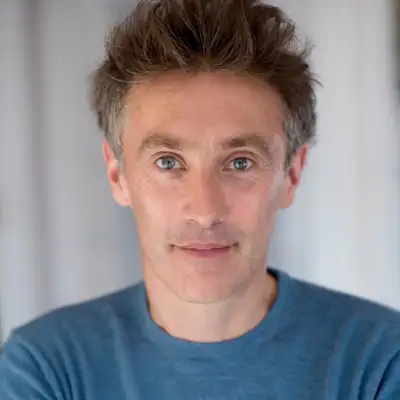
[00:00:05] Dallas Campbell: Hello and welcome to Outer Orbit. Now then, in these short bonus episodes, we're gonna be continuing the conversation from our main episodes, focusing in on a particular topic or point of view and today, I'm joined by Tom Adeyoola. He's the Executive Chair at Innovate UK, amongst other things and I just wanted to ask him why the US space industry might move faster or spend more or take bigger risks than its UK counterparts, and what that contrast means for Britain's place in the new space race.
Tom, so much of the narrative about space is centred around America, particularly about SpaceX and Elon Musk.
And I thought I just wanted to make a comparison between that space story in the UK or the business of in the UK and how we compare it here in the UK with that and I'm just interested in what your thoughts are. But historically as well, it's like movies and it's like space has always been an American thing.
[00:01:05] Tom Adeyoola: Exactly. Whereas you think about the UK and it feels like a hobbyist.
[00:01:08] Dallas Campbell: Exactly it. That's exactly it.
[00:01:11] Tom Adeyoola: There's 2000 companies but you struggle to to feel that any of them had real salience. We have lots of launchpads. But we don't have launches yet, but they're coming. It's a sense of how do we actually focus the attention, focus the mind in the UK? And really start to think in this emergent space economy which is coming, like SpaceX have dramatically changed the game in terms of getting mass into orbit, as you said on the podcast.
So off the back of that, what are our core strengths and what parts of the chain, supply chain and part of the ecosystem actually should we now start focusing on as places where we can generate real value for the UK?
[00:01:53] Dallas Campbell: It does seem that we're punching above our weight in lots of areas. But again, it's that thing of, I just think people don't really hear about it or maybe this, the way that we're telling the story isn't landing.
[00:02:02] Tom Adeyoola: They don't hear about it yet. Everybody has a mobile phone in their pocket which is reliant.
[00:02:06] Dallas Campbell: I think the way we talk about it is wrong. People just think that somehow because it's really useful and we all rely on mobile phones that's a good enough story. That's not how stories work, unfortunately. And I think human brains, you know, we are story addicts. We perceive the world through narrative. We were talking about the Odyssey earlier on and, you work at Channel Four. I spent a long time working at the BBC Science Unit. It's all about how do you tell the story? How do you shape the story?
[00:02:32] Tom Adeyoola: How we can shift away from, growing up for me, space was about astronauts and going to the moon. Whereas actually if I think about my 13-year-old daughter, she's got quite interested and she really loved The Martian and Hail Mary, right? Project Hail Mary, which was the stories which were linked to real science. And just even just in my role at Innovate UK, I think we don't spend any of the time on that. And this comes back to the cultural question. So in terms of the US, I always think that they are masters of sales and marketing or hype sales and marketing, I would say, and we do the technical technology bit and go, "Tada, here it is." "Figure it out." And it's like I need a PhD to actually understand what I'm looking at first. You haven't explained it to me.
[00:03:18] Dallas Campbell: Maybe it is a cultural thing though. Maybe it is that British thing of like, we don't want to blow one's own trumpet, we do amazing things.
Oh well, it was nothing, you know, I split the atom or whatever, I invented rail. Oh, it was nothing. I don't know. Do you think that has something to do with it?
[00:03:31] Tom Adeyoola: Yeah, I think so. But we also don't count our chickens, right? So we want to have proved that we've done the thing before we try and sell the thing, whereas the US fake it till you make it position. They sell the vision. It's like the, here's the vision of where I want to get to and there is an element of, okay, you're selling this vision, then who are you? And from an American investor perspective, it's who are you? What's your background? And do I trust you with a certain amount of money and the people you are that you could possibly achieve that vision?
[00:04:02] Dallas Campbell: That's interesting.
[00:04:03] Tom Adeyoola: So whereas here, there's an element of I don't really wanna sell that idea unless I know I can achieve it.
[00:04:09] Dallas Campbell: That's really interesting. I, this is a, a personal story. A long time ago I had an idea for a TV series, a science TV series, and I knew nothing about science. And part of the show was who would be the worst person to present a science show? And I'm like, "It's me. I'd be terrible."
You know, trying to get it off the ground in the UK was really hard. Like nobody was interested. Nobody was interested. And I ended up getting on a plane, going to LA. No one gave a damn who I was there. They were like, "It's funny. We like you. Let's go make it." There was that sense of, "We don't care who you are. It's a good idea. Let's go." It was a shame that I had to go to America to do it. And, eventually I sort of came back to the UK and it was fine. But I don't know, there does seem to be a cultural difference, particularly when it comes to risk.
[00:04:50] Tom Adeyoola: I do think there are elements of you need basically that critical mass of people with the right risk profile to do something. There are pockets of the UK where you do have it. So I would say in our financial sector and within that ecosystem, that sense of risk and reward exists. So it's bottled up in that ecosystem, which is why we're pretty dominant in terms of a being a global player in financial services.
I actually think back to the internet era, and that was the last sort of big technology boom, and we didn't get any companies away. So the Americans did. And because we didn't get any big successful companies, I think it was just lastminute.com, which is why Brent Hoberman and Martha Lane Fox are the doyens of today and we didn't have any venture capital companies that made money. So we had a decade of not building momentum in the right sort of risk reward structure.
So all of that, so in my head, all of the sort of expertise in financial investing went into private equity, which was more linked to profitability rather than growth. And so we're rebuilding that. And I, when I started my own tech startup in 2008, there were basically only three venture capital companies in the UK. Whereas now, that has grown exponentially. And now I think this year as well, you've seen, for me, the first examples of 20-somethings raising several hundred million pounds, and that's in AI fabulous chip design. So something which is quite technically difficult, but yet we now have a sense of we are growing an emergent class of founders who are technically gifted and can tell that story.
[00:06:33] Dallas Campbell: So it is changing. Actually, there's a really good example actually because suddenly I thought, okay, Tim Berners-Lee invents the World Wide Web. But then again, it vanished to America and others to really scale it up and make it
[00:06:46] Tom Adeyoola: And I think do go in cycles. You win a cycle, you lose a cycle, you win a cycle, you lose cycle and we're in an AI cycle right now. I think the emergent technologies, again, if we think about particular parts of space. These are emergent technologies. If you think on a long enough cycle, a 10-year cycle, which is how Silicon Valley emerged originally, right? So there was that sense of Fairchild Computing, you had to go somewhere else and get patient investors who would invest in them to deliver because you needed a 10-year timeframe.
That's what we're starting to think about around these emergent technologies and I think we are getting the beginnings of enough critical mass of investment thinking and ex-founders who can help those new founders to push through those difficult times on their journey.
[00:07:32] Dallas Campbell: So America, good at hype, good at stories. UK, brilliant technology, brilliant inventions, brilliant creative minds need to get maybe a little bit better at the...
[00:07:42] Tom Adeyoola: At the next stage. Bring the swagger.
[00:07:45] Dallas Campbell: Bring back the swagger. I'll sort that out. That's gonna be my mission now. I like it. Tom, thank you so much for staying a little bit longer. You've got important things to do. A great pleasure.
[00:07:53] Tom Adeyoola: Take care. Great talking with you.
[00:07:55] Dallas Campbell: Now then, whatever your role is in the space ecosystem, get in touch with the Satellite Applications Catapult to see how they can help you go even further and if you want more conversations like this, don't forget to subscribe wherever you get your podcasts and of course, you can watch the video version of this on YouTube and don't forget to follow us on social media to stay in orbit.