Subscribe
Share
Share
Embed
Retailgentic, presented by the ReFiBuy Media Network and hosted by Scot Wingo, is where Agentic Commerce meets retail innovation. We help retailers and brands prepare for the future of agent-driven shopping with actionable news, expert insights, dxis, forward-looking predictions, and practical guidance on Agentic Commerce Optimization (ACO).
So, I mean, look, I, you know, I
try to be a little bit more, I would
say, creative in my thinking, right?
To think outside the box.
And when I look at e-commerce websites
today, I largely think they look like
e-commerce websites from 25 years ago,
from the time that I got started, right?
We're still drilling
down taxonomies, right?
And you know, some…
Maybe the lipstick, maybe on the edge
you see a little bit of creative,
you know, em- you know, enhancements
over the years, of course, as
technology continues to evolve.
But ultimately, when you look at the
underlying structure and foundation,
it looks and behaves very much
like it used to do 25 years ago.
And, and that kind of bothers me, right?
Because we're seeing all this, all
these advancements in the, you know,
other areas and in other verticals,
yet here there's, there's something
that keeps us boxed into this model.
Welcome to the Retailgentic Podcast,
where we explore the intersection
of retail, e-commerce, and AI
agents, which we call retailgentic.
Our mission is simple.
We are shining a bright light
on the new agentic AI shopping
megatrend, which will disrupt the
trillion-dollar digital retail market.
The stakes are high.
Google, OpenAI, Microsoft,
Perplexity, Amazon, Apple, Meta, and
Anthropic are all fighting to be the
consumer AI shopping agent winner.
There are gonna be some tough decisions
for online brands and retailers to make.
What happens to checkout?
How should payments work?
Should you continue to invest
in retail media networks?
What does the world look like when
over half of your traffic is not
from humans, but from AI agents?
These existential questions
are the tip of the iceberg.
On this podcast, we're talking to industry
experts, analysts, and influencers
to get answers to these questions,
identify trends, and best practices.
This is Retailgentic, your
podcast partner in navigating
our AI shopping agent future.
And now here's your host, Scot Wingo.
Welcome to this episode of
the Retailgentic Podcast.
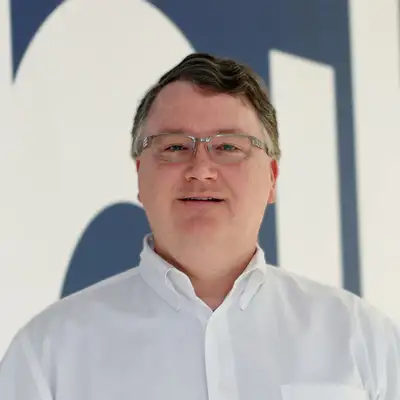
Today, I'm excited to welcome Roy Rubin,
co-founder of Magento and general partner
at venture firm R Squared Ventures.
Sometimes you meet people who
have an uncanny ability to spot
trends and make predictions.
For those of you that follow my
work on the Jason and Scot Show,
one of our most popular traditions
is our annual predictions show.
If you followed that, you
realize how hard predictions are.
Not only are they hard, they're
complicated, they're hard to
do, and getting the timing
right is particularly tricky.
It's a very humbling experience.
But it is helpful to, to kind of
correlate your worldview and understand
incentives and try to understand where
markets are going by making predictions
and then following up on how you did.
It's been very helpful to me.
So when you're good at this, it means
you have a pretty good filter on reality.
You understand where the puck's going.
Um, some venture capitalists will
say you can see around corners.
There's a lot of metaphors there.
Roy Rubin is insanely good at predicting
the future For example, in 2001, he
started Magento because he sensed there
was an opportunity to compete with the
big on-premise software companies with
an open source e-commerce alternative.
That was 24 years ago, and Magento
is still alive and kicking today.
It's very hard to make predictions
that, that not only are
right, but that last decades.
He's well into his second or third decade.
What caught my eye and caused me
to invite him on the podcast is
he posted, uh, a very small post,
but it really got my attention.
He said, quote, "My prediction, the
next billion-dollar direct-to-consumer
brand will not have a website."
Hmm, what does that mean?
In this pod, we're gonna go over
the story of Magento, which is
fascinating in its own right.
But I think what's even more
fascinating is hearing Roy's thinking
of where he thinks we're going, what
AI is going to do and not do, and
this wouldn't be Retailgentic if we
didn't talk about agentic shopping.
So there's gonna be a lot of that as well.
I hope you enjoy this pod.
Uh, unlike a lot of guests, it's pretty
easy to get Roy to think out, you
know, two, three, four, five years,
so we had a lot of fun doing that.
Uh, and also I got to hear some of the
insider's, uh, information, uh, or inside
scoop, uh, on Magento's founding and what
all happened in its trade between eBay and
Adobe, and just really interesting story
there to see how that asset changed hands.
I hope you enjoy this conversation.
Without further ado, here is Roy Rubin.
Hey, Roy.
Welcome to Retailgentic.
Hey, Scott.
Great to, uh, join you.
Appreciate you taking time.
I know you're super busy, and you're now
a venture capitalist, so that's exciting.
I wanna get to kinda how that happened.
But, um, before then, before you
went to the dark side, you were,
were a founder, um, and probably most
well-known in my world for founding
Magento, the e-commerce platform.
Give me a, give me a little background
of, you know, how you came to found that.
Were you an open source person
and/or were you an e-commerce
person or a little bit of both?
Like give, give a little bit
of the Magento founding story.
I started my career more, more
of an open source kind of guy.
And, um, I, I came into commerce a
bit later, but I, I had a services
company, you know, when I went to
UCLA sort of as a part-time gig.
And, and, you know, had a small little
web design shop on the side, freelancing
in the afternoons after school.
And, and I had a blast.
I downloaded open source packages.
I was tinkering, I was hacking my way, I
was learning, and I was kind of part of
this open source world that was just kind
of blowing up at the time, early 2000s.
Um, and you know, part of that
got me exposed to, to e-commerce.
Um, and, and I started to get
some requests for services
in the e-commerce world.
These are…
You know, we're talking about the early
2000s, so these are all new merchants or
New merchants you can say, but this is
basically new, new digital experiences
for a lot of traditional merchants
that were just starting to get online.
And were really trying to figure
out how to, you know, upload their
catalog and take payment and handle
shipping and all the, all the
fun stuff that we do in commerce.
And I began to see that there's a
real need for someone like, like me,
for somebody like, like us to be able
to provide them ongoing services and
really kind of, um, you know, help
them get their first toes into this
world and then scale up from there.
And, and, you know, ultimately over time
began to focus ex- exclusively on, on
e-commerce and kind of moved away from
everything else and said, "You know, we're
gonna be an e-commerce open source shop."
Um, and that was a lot of fun because
these day-- you know, those days were
just, um, you know, there was just way
too much demand and we, we, we scaled
and grew and, you know, eventually had
a fair sized team of people that were as
passionate about, about this as I was.
And we began our journey as an e-commerce
services firm, uh, for, you know, for
a good few years up until around 2005,
2006 when we said, "Listen, we- we're
starting to, to see a trend where
there's a lot of, you know, merchants
out there that have very specific needs
that the existing e-commerce open source
platforms at the time were lacking."
And, and, you know, would it be crazy
if we were to go and give it a shot
and kind of build our own platform and
see if we could, uh, take it to market?
Um, and that's kind of
the genesis of Magento.
We had this idea to go build out a
platform, you know, coming from the,
really from the experience that we had
in working with hundreds of merchants
over the years, and kind of took all
the best practices and what we felt,
you know, was, you know, was very
needed, um, at the time in the market.
A lot of it was around flexibility,
it was around control, it was
around, you know, unique UI.
You know, we noticed that every
merchant was a little bit different.
Um, they all wanted to
really kind of differentiate.
And, you know, whether it's front
end, uh, y- you know, requirements or,
you know, back end or integrations or
wherever it was, um, there was a lot
of really custom needs, you know, from
almost every implementation we did.
So that's kind of how
Magento came, came to light.
Moved away from the services world.
Basically said, you know, we're gonna go
focus on product now and kind of unwind,
um, uh, all of our existing customer
relationships and fully focus on Magento.
That was 2006 and just to 2007 we
released our beta version, kind of s-
started to share with the public what
we were doing, um, at that moment in
time through blogs, and then of course
released the source code in 2007.
And Magento 1.0
was released to the wild in March of 2008.
I can tell you've told the story a lot.
You've got the dates nailed down.
Um, and then where'd the
Magento name come from?
So we, it took us a while and, and I
think I just kind of got sick of, of these
sessions where we have to find a name and,
because nothing was ever perfect, right?
It was just, it was always a, a reason,
you know, to find something else, right?
Or to spend more time on it.
And, and I think I just got to the
point where I said, "Listen, we're gonna
make a decision today on something."
And Magento actually comes, um, as a
sort of an evolution from the services
business, which was named Varien.
And Varien had a really cool
magenta logo, magenta colored logo.
And we literally just wrote the name
magenta on the board, s- took out the A,
put the O, and there you have Magento.
That's where it came from.
And I loved it because it was, um,
an evolution that was very natural.
It came from the m- from the old
Varien business, and it was a
con, you know, continuation of it.
And, you know, I think I Google, I Googled
it, uh, at the time and the, the, you
know, there was like zero results for it.
So- Perfect.
Yeah.
… it felt like if we were to create
some, you know, new brand, this is
the way to do it, where you just have
no, you know, no, no noise in the,
in the e-commerce engines, um- Yeah
you know, for that, for that name.
And I liked you kept
all the vowels in there.
For a while it was fashion to take vowels
out of things, and then it gets like, I
can never remember what vowels are missing
or what's there, and then et cetera.
I know.
I know.
Yes.
It was very easy to
remember.
Flickr was like, was, yeah,
Flickr was like, remember that?
That was like- Yeah.
… how do you spell that?
You know, forever.
Um, and then they kind of created
a whole trend around that.
Okay.
So then let's fast-forward.
You came out with your first version in
the, the '06 timeframe, and then five
short years later, uh, you got to the
point where eBay acquired you guys.
So, so did they…
Were you guys, did you have an inbound
and you ran a little process there?
Or did eBay just kind of come at you hard?
Tell, tell a little bit of a story there.
The story's fascinating.
So 2008, March of 2008,
we release Magento 1.0.
And I do remember the dates, by the way.
Um- Yes.
And, you know, and then it,
it was like a rocket ship.
I mean, it was, it was wild, right?
We got, you know, tens of thousands of
downloads overnight, and we started to
see implementations all over the place.
Um, and it was just kind of
a rocket ship from day one.
And, and, and what happened
was, um, we actually had an
acquisition, uh, opportunity
within, within the first 12 months.
Were you guys venture backed or did,
did the service business kind of-
Bootstrapped in the-
Nice … consulting business, yeah.
That's awesome.
Yeah, yeah, yeah.
Great.
Um, I, I think I just didn't
know how to raise capital.
I mean, I, I, you know, eventually we had
a few term sheets, but I, I just didn't
really understand how this worked, and
I, I kind of never really needed it.
Uh- Yeah.
Kept the cap
table simple.
Yeah.
So, yeah.
You know, right away we had an
acquisition reque- you know, sort of an
acquisition opportunity came, came in.
Um, but we didn't really like the company
all that much and, and just didn't
really connect and decided not to do it.
Um, and, and through a contact, um, I
was introduced to Scott Thompson, who
was leading PayPal at, uh, at the time.
And, um, you know, and I approached
Scott and said, "Scott, listen,
I'm considering this opportunity,
uh, to go and, and really join
forces with this other company.
Uh, but before I do that, you know, we
should probably sit down and talk and see
if there's anything more strategic to do."
Uh, and remember this, this
is, um, sort of at the great
financial crisis timeline, right?
Like the world was fall-
you know, falling apart.
We just released Magento 2008.
I'm having this conversation
with Scott in 2009.
Um, and Scott and I connected and we
really, really bonded and Scott said,
"Why don't you come up and we'll sit
down and we'll talk and we'll see,
you know, we'll see what we can do."
And that actually led to PayPal's
investment in Magento in 2009.
PayPal, uh, was part of eBay at the time.
So, um, you know, kind of
got into the family then.
Uh, PayPal came in, um, made
an investment, and two years
later, eBay/PayPal decided to
acquire the company in 2011.
So it was a really kind of fast timeline.
Um, you know, and Magento was, was
just really kicking butt and, and, and
having a lot of fun and, and, and the
team was great and we were scaling and
released an enterprise edition in 2009.
So started real, you know, to build a
real business, you know, fairly quickly.
Yeah.
Was this during the John Donahoe
regime or the Wenig, Devin Wenig?
No, this is, uh, John's.
Yeah.
John, uh, John Donahoe.
Yeah.
Yeah.
Donahoe.
Yeah
Yeah.
De- Devin came in right when I left.
I left in 2014, and I think he came right
around that timeline, um, or soon after.
Uh, but I, I, I got to know Devin,
uh, um, just, you know, in a,
you know, in a meeting or two,
um, right when he was coming in.
Has it been disclosed how
much eBay bought it for?
No, never disclosed.
More than 50 million?
More than 50 million.
More than 100 million?
Yes.
Yeah.
I'll just leave it at that.
And all right.
I knew I could pick a number that
was interesting enough that it
would get you to say something.
Um, and then, um, I think it's interesting
you stayed on for so long 'cause a
lot of times founders, you put your
blood and soul into this and, um, you
know, and eBay had a, you know, had a
well-documented they would kinda chew up
founders and spit 'em out in under a year.
Um, but you stayed on
for another three years.
How did you, how did you survive that?
Was that, like, part of the deal
that you would carve off the, the…
They wouldn't mess around
with what you had built or?
Well, no, I mean, I…
So-
It's hard to get, hard to get that
when someone's buying something.
Yeah.
Yeah.
Um, so how did I stick around?
It's a very good question, and I,
I don't have a great answer because
it was a very, very difficult,
you know, time in my, in my life.
Um, we were young, we were hungry.
The market was, you know,
was moving very, very fast.
We wanted to be competitive.
We believed that we had a vision, um,
that, that, that was very relevant
and, and, and we had a lot, you,
you know, momentum ahead of us.
Um, also this was a time when the
cloud, you know, began to take,
uh, to, you know, to take shape.
Mobile commerce was relatively new, so
there was a lot of really interesting, you
know, paradigm shifts in the market that
we felt we had an answer for, and it felt
like we wanted to really have a play for.
Um, so we came into, you
know, into, into eBay.
I could have left at any point.
Just the way the s- the, uh, the
contract was structured kind of
gave me an out at any point without
any financial issues on my part.
Um, my co-founder, my C- my, my,
my good friend and co-founder
and CTO left fairly quickly.
Um, but I just felt a commitment to the
team and to this vision, and I felt like
that, you know, if I were to walk away,
you know, a lot of what we have built,
the soul of what we have built, you
know, our, our, you know, our posture
and, and competitiveness in the market
would have been affected Um, and I felt
like I, I just needed to see it through.
Um, but it was a very, very difficult,
um, period because eBay had different
ambitions for what it wanted for Magento.
You know, this was, um, you know, a
time where they had a platform strategy
of their own, um, that to us kind of
never made sense, to be honest with you.
It involved GSI as part of it, right?
Like-
Not, uh, GSI not, not as much.
It involved actually PayPal and eBay.
It, uh, when we came in, we came into
this new group called X.Commerce.
Oh, this fabric thing.
Yeah, I remember this, yeah.
Yeah, this fabric thing.
And they wanted to really put
everything together, which I think
philosophically made a lot of sense.
I think the execution
of it was very lacking.
And we, we called it.
I mean, we were very open and transparent
about the challenges that we saw.
We, we put together some ideas about
how, how to really bridge through that
and how we would, you know, tackle it.
Um, but there wasn't a, you know, a team
inside the organization that was, you
know, kind of around for a very long
time and didn't really wanna listen to
our input and our, our, you know, our
feedback, and they were married to their
own ways And, you know, we try to be as
good, as good of partners as we can, but,
but ultimately it didn't succeed and,
and, and that kind of vision failed, um,
and, and they shut down that whole world.
You know, and then they, then
they put Magento and JSI together,
which I think made a lot more
sense in some ways than at least X.
Commerce.
Um, y- you know, um, but it was just
like a str- just like a struggle to get
this going, um, and, and, and really
maintain, you know, that sort of momentum
that we had coming into eBay at the time.
They pitched us at
ChannelAdvisor on this X.
Commerce thing, and their,
their pitch was ridiculous.
It was like, uh, "We want you
to provide these APIs that will
let anyone sell anywhere on the
internet across marketplaces,"
which is what we were known for.
And we're like, "Okay."
And they're like…
And then we're like, "Well,
how do we make money?"
And they're like, "Well,
you'll give them away free and
they'll be part of the fabric."
And we're like, "And
how do we make money?"
And they, they couldn't understand why
we were hel- we were hung up on that.
And I'm like, "You just basically want us
to give our stuff away for free, right?"
And they're like, "Well, that's a
weird way to look at it, but yeah."
And we're sort of like, "Why would we
po-" Then they were shocked we didn't
really embrace it, and I was like
I, I think, you know, what, what happens
to a lot of the career folks that kind of
get stuck in, inside these organizations
for five, 10, 15 years, is that they
kind of lose that business acumen, right?
That, that, that really
strong partner alignment.
And we came in, we said, "Listen,
you know, ultimately everything is
driven by, by mutual success," right?
I mean, it's just, it's,
it's good partnership.
And I think there was a lot of ego.
You know, we're eBay, we're PayPal, right?
They're gonna, you know, the market
will, you know, go along with our
vision, uh, because of our s- you know,
position and stature in the market.
And we said, "No, no, no, you have
to kind of buy those relationships
every single time," right?
Because you have to drive value to the
i- i- you know, to, to your partners.
And, and these are like literally
conversations I would have where,
I mean, you know, much like what
you just said, where you just
said, "What, what's in it for me?"
I, I would e- like ask the team at
eBay to say, "How do you convince, you
know, somebody like Scott to play ball?
'Cause it's not that clear that Scott
will play ball, and others like you,
uh, without some real fundamental
business reasoning to do so."
Well, then they went and got one of
our competitors to like give away a,
a very basic API for free, and then
that just like really made us even
angrier 'cause they were like, if you…
That was their pitch is like,
"If you don't do it, we'll go to
a competitor and they'll do it."
And we're like, "Okay.
All right.
Good luck."
Yeah.
So, so, so take that and multiply that
times, you know, hundreds of conversations
That was my life basically, right?
Trying to educate them about how to
really, you know, deliver partner,
you know, partner collaborations,
you know, et cetera, et cetera.
It was, it, it was a
really, really hard period.
I feel like I left my soul at the door.
Um, I was, um…
Listen, I left, um, in 2014, and,
you know, it's bittersweet, right?
Because I feel like there's just--
I mean, even to this day, like, I
feel like there's so much more we
could have done, and we were at
the right place at the right time.
Um, and, you know, part of this I actually
blame myself for because I, I think, like,
if I would've been more persuasive…
And I, and I sat with John and, and a lot
of the senior folks, y-you know, at eBay.
They certainly heard from me.
I was not quiet, right?
I, I didn't go, uh, I, I
didn't, you know, find a corner.
I just…
What's, what's it called?
Um, um, rest and vest.
No, that wasn't me, right?
It was, it was me trying to, trying
to tr- trying to really change the
organization from the inside out.
Um, but it's really, really hard
to do, you know, a company of this
size with so many moving pieces.
Yeah.
There's literally nothing
else you could've done.
I, I will, uh, I'll abstain you
from all guilt on that, 'cause I've,
I've been in the same situation.
You're abstained.
I lift all your guilt because, you
know, you, you end up being part of
the problem, and then you're like,
no one wants to meet with you anymore
'cause you're just a broken record.
And, you know, and then sometimes
it's actually better to leave because
the thing you've been advocating
for, you've burned so much political
cl- capital, may actually come…
It actually has an odd chance of happening
more without you there than being there.
And, uh, yeah, it's a very strange thing.
It is.
It is, yeah.
But I came back, so, uh, let
me just finish up the story.
So I came back on the board in 2016.
Um, so E-Ebay, um, Magento and GSI come
together as part of eBay Enterprise.
And in 2016, eBay decides to refocus
on its core marketplaces strategy,
and it takes PayPal public, and
it spins off eBay Enterprise,
which is the GSI Magento piece.
Uh, Magento is a gradual.
Um, Primara Capital acquires it, sells
off all the assets, keeps Magento,
and then, um, I get the call from
the CEO at the time, Marc Lavelle.
Um, and Marc calls me and says,
"Hey, come back on the board and,
um, and let's go build this."
And, and I came back on the board
and I spent, uh, two years there
from 2016 to 2018, up until the
acquisition by Adobe, uh, in 2018.
Did you ever have a founder, a, a Steve
Jobsian-like vision of getting this,
getting your hands back on this thing?
I-In any of those exchanges or even,
like, maybe someday Adobe calls you
and says, "Oh my God, we're ready to
sell this thing to you for a penny."
You know, I don't know.
I mean, you know, uh, you know, a
lot of time, you know, has passed.
I, I, I think in 2016, around that
timeline, I actually felt like there was
still a lot, you know, we could do Um,
so I was, I was excited to come back.
You know, it was a very
different company then.
12, you know, 1,200 people.
Um, a very big ship.
Uh, a lot of moving pieces, a lot
of new, new talent, new blood.
Uh, so, you know, and I, and I, and I was
a board member, so I didn't really have
any operating, you know, responsibilities.
Um, but, you know, I think
today, you know, who knows?
I mean, you know, the brand, y- y-
you know, is, is in a different place.
I'm not even sure where
the product is right now.
Um, it's hard to think about
that, you know, right now.
But, um, you know, but there was a moment,
you know, maybe 2016, roughly around
then, that I think we could've really done
something, um, kind of more impactful.
Um, but, but that moment I
think has largely passed.
Yeah.
But, you know, it's pretty neat.
Something you created kind of
just 'cause you saw the need
is now still actively used.
It's owned by Adobe, and there's
people running their businesses on
it and their lives, and it's still…
You know, it's, it's very rare to have
built something that, that survives for
so long and to catch a wave like that.
Yeah.
I think, you know, in March, uh, yeah,
I guess, uh Yeah, in a couple years.
We'll be celebrating two, you know, two
to three years, 20 years of Magento,
which is, you know, wild to think that,
and, and I'm sure merchants will still be
running on it, you know, on that timeline.
So yeah, you know, very, very cool
to see it still around for so long.
Well, from one founder to another,
again, yeah, I think that's a very rare
success that you had, especially this
was like your first shot at this, right?
Like this is just right out
of the gate, boom, nailed it.
Yeah.
That's awesome.
I think there's like a 0.0001%
chance of that or something,
like it's infinitesimally small.
I agree.
I mean, now as a venture
investor, I'll tell you.
Yeah, no, for sure.
It's, uh, it's really,
really hard to find.
That's a good gateway.
So then, um, I know you
have R Squared Ventures.
Um, did you do some angel investing
that kind of led into that?
Or walk us through how you got
into that, that whole world.
Yeah, so started really, um,
doing angel investing in 2012.
Um, and, and that's how I met my,
my, my, my partner at R Squared.
He pitched me in 2012.
He founded, uh, Roy Erez, um,
he's a very close friend and
now my partner at R Squared.
He founded Loop Commerce, uh,
in the gifting space, and that
was my first angel investment.
And then did a whole bunch of things, y-
you know, over the years following this.
Um, and just, you know, had a blast, um,
and really enjoyed working with teams
and kind of getting a little bit of that
entrepreneurial spirit now being on the
outside of it, um, you know, a little
bit and supporting, you know, teams.
You know, a lot of companies emerged
out of the Magento ecosystem over
the years and, and, and I've been
blessed to, you know, to play a small
role, you know, in some of them.
Uh, but it's just, you know, it's
just a great way for me to continue
to support both, you know, commerce
infrastructure, but, but certainly
more broad in other areas as well.
And it's, you know, it's, it's been
going really, really well for me.
And, um, Roy, uh, eventually s-
uh, scaled his business and sold to
Synchrony, um, the bank out of Seattle,
and, uh, spent about two years there.
And when he left, he called and said, you
know, "Let's go share deal flow and start,
start collaborating and underwriting
together and, and, and, and doing a
lot of angel investing, um, as a team."
And that, that was a lot of fun.
We did that for a while, made a series
of great investments, and then decided
to, as COVID hit, to go and raise a first
fund as a kind of a test case to, you
know, really validate that we wanna do
this more, you know, more institutionally
than we've done in the past as angels.
Uh, that was fund one.
That went pretty well.
We have great companies in fund one.
Uh, and then raised a second fund in 2022.
And now, um, we're at the tail end
of that, raising a third fund and
just continuing on the journey.
You know, our philosophy
is a little bit different.
We're, we're small, we're nimble.
It's a two-person GP team.
It's just Roy and I.
We don't even have an admin.
We're proud of that, that we kind of
do all the heavy lifting ourselves.
Um, and we really have a blast.
We invest early.
Pre-seed, seed is where
we like to come in.
Um, and you know, do so in areas that
we have strong domain expertise over.
So commerce infrastructure,
fintech, uh, and vertical
SaaS, what is now vertical AI.
Um, so that's kinda where we like to
play, and it's been, it's been incredibly
fun and rewarding, and I have, I think,
the best job in the world sitting with
young teams with big dreams and learning
from them every single day, trying to
share some of my experience along the
way as well, and it's been a blast.
Cool.
Do you have, um…
Are you guys of the mindset where
you wanna, you know, keep the
fund size small and, and then
just raise funds more frequently?
Or do you wanna, like, A16Z it and go,
like, for, you know, 80 billion under,
under management and, and, you know,
make a big f- you know, mo- most of
your money off the fee kind of seems
to be where these big guys are going.
Yeah.
For
sure.
Uh, no, small, small.
That's, that's our deal, right?
We wanna, you know- Yeah … really
wanna raise smaller funds.
Our, our second fund
is a $32 million fund.
Our third fund's gonna be 40 to 50.
I think that's where we would
cap, um, the fund size, uh,
which is really, really small.
Uh, but it gives us a lot of optionality
and a lot of agility, and we can
write smaller checks for younger teams
that are just starting out and need
a little bit of capital to get going.
We can write, you know, more
sizable checks, you know, for
those that are kind of already
showing some momentum and progress.
But we really think that the
alpha is created at these very
early stages of companies',
you know, formation and growth.
And given our operating experience
and leverage, uh, we think that's
where we're gonna be able to win.
Um, so really no aspiration to be an
AUM game, live off management fees.
That's, that's not why we're doing this.
We're doing this because we love
partnering with young teams and
adding a lot of value and, and being
there for the ride and, and just,
just, you know, spending time with
smart people that have big dreams.
Yeah.
So I imagine given that size, it's kinda
like a 10 to 12 per fund kind of a thing.
Uh, you mean for, uh, portfolio size?
It's actually closer to 20.
No, it's actually closer to 20.
Twenty.
Okay.
Yeah.
Yeah.
So
smaller.
Oh, oh, yeah.
That's good.
That's a lot of boards.
Uh, we don't take board seats.
That's another thing.
Um- Oh, okay.
Yeah, because, you know, in the,
in the early stages, we spent
so much time with our teams, um,
there's really not a need for it.
As our companies mature and they raise
additional follow-on capital, then
boards are formed, and, you know, the
larger investors would come in and take,
and typically take those board seats.
And we also think, our philosophy
is that we have more information
being on the outside and not being
on the board, you know, about our
companies, and we have these really
frank and open conversations with our
teams by, by not having board seats.
So we're, we're right there to support
them, but we feel like it-- that's
a model that allows us to scale.
And you're right, if it…
If, if we would take boards, it would
be- It'll be tough to be able to have
a, you know, proper schedule because
you'd just be on, on board meetings,
you know, almost every single day.
Constantly.
Yeah.
There's a-- That whole
setup is wildly inefficient.
We need some better system for that,
but we're not gonna solve that today.
Um, so one of the reasons I wanted you,
to get you on is we're, we're exploring
this kind of new area, which is, you
know, where agentic meets retail,
uh, and thus the name Retail agentic.
Um, and you've, you've, uh…
You know, one of the things that really
kind of got me thinking was you said,
"My prediction is the next billion-dollar
D2C brand will not have a website."
So, you know, as the founder of
Magento, you think a lot about this.
You obviously caught that trend early.
What are you thinking about where
this goes and what interests you
about it and, you know, and, you know,
what's the other side of the coin?
Like, what's not gonna work?
So, I mean, look, I, you know, I
try to be a little bit more, I would
say, creative in my thinking, right?
To think outside the box.
And when I look at e-commerce websites
today, I largely think they look like
e-commerce websites from 25 years ago,
from the time that I got started, right?
We're still drilling
down taxonomies, right?
And you know, so maybe the lipstick
maybe on the edge you see a little bit
of creative, you know, en- you know,
enhancements over the years, of course,
as technology continues to evolve.
But ultimately, when you look at the
underlying structure and foundation,
it looks and behaves very much
like it used to do 25 years ago.
And, and that kind of bothers me, right?
Because we're seeing all this, all
these advancements in, you know, in
other areas and in other verticals, yet
here there's, there's something that
keeps us boxed into this model, right?
And, and I get it, right?
Consumer behavior is hard to change,
and we have a certain expectation
of how we navigate and how we buy.
Um, you know, I guess when I think
about this in an offline sense, like
retail, the stores kind of look the same.
You know, maybe there's some advancement,
but, you know, ultimately there's a cash
register and you kind of walk up to it.
Maybe now it's a, you know, it's some sort
of a, uh, tablet, but it used to be, you
know, it's kind of positioned where the
old school register used to be positioned.
Um, so, you know, so I,
you know, so I get it.
But I think that there's a lot
of opportunity for innovation.
And when I, when I wrote that, um, you
know, seeing how much the LLM engines
are really getting in front of consumers
and, and just my, my own behavior
where I, you know, I naturally now go
to, in my case it's ChatGPT, right?
To start any type of inquiry or search.
I think I've reduced my Google usage…
I mean, it's gonna be crazy to say
100%, but like 90% for sure, right?
And, and I said, "Well, wait a minute.
If, if that's the case, and I no, no
longer use the web in the classical
sense of what Google sort of, you
know, made me do by, by providing links
where I can click through, then do I
really need a website now to be able
to, to, to conduct, uh, transactions?"
And again, it's a little extreme, a little
bit out there, I get it, but I'm, I'm
challenging myself and I'm challenging
perhaps others that, you know, that read
this content that I, that I post to think
outside the box and to say, "Listen, if
the funnel's completely gonna change,
if discovery's gonna change, um, you
know, what's the value of a website now?"
Now I, I, by the way, I'm not
advocating this is, this is
healthy in any way, right?
Because if you think about
these, the LLM engines are
essentially walled gardens, right?
So I don't know that it's healthy, right?
We have the open web,
open architecture, right?
HTTP, right?
All this open protocols.
Now, potentially we could
have closed walled gardens.
You can have your Claude world, you can
have your ChatGPT world, you can have
your Gemini world, and, and there may not
necessarily need to be interoperability,
you know, between those things.
So, so I'm, I'm not saying
this is a positive advancement.
I'm just saying, listen, as consumers,
we're changing behavior right now.
We haven't changed this be- th-this
kind of behavior in a very long time
And should that make us think about
more than just the top of the funnel?
Have you played around with
any of the agentic things
like, um, Amazon Buy For Me?
Um, Google just announced one.
We can't play with it yet, but it's
coming later in, in months they said.
Um, Perplexity, you've probably
poked around there I would imagine.
What, what-
So yeah, I bought, I bought a Perplexity.
Um, what a horrendous experience.
It, it was, I mean, Scott,
it was like shameful.
I mean, it was, it was, it was so bad.
I placed an order and I think it
was for like a candle or something.
And, and I, you know, I was
charged one amount of, one amount.
And then the confirmation email come,
came from World Market Cost Plus,
and it's for a different amount.
And I said, "Oh, wait a minute.
You ch- like what am I being charged?
Am I being charged the actual retail
amount, or am I being charged the
actual Perplexity order total amount?"
So I, I wrote them, I…
Just to see how they would
handle this edge case.
Like something happened here where
shipping was not included in, in,
in, in the original amount, but als-
but, but was included because it
was a smaller item on the, on the
World Market, um, email which came.
By the way, I had no idea I
even bought from World Market.
It just came right by email.
So I emailed them, and I emailed
them, and they wrote me back
and they said, "You, uh…"
This is Perplexity, who is the
master, uh, um, what's it called?
The- Merchant … the merchant
of record, you know, on this.
They said to me, "Oh, no, no, you
gotta go, you gotta go hit the
retailer and talk to them and see,
and see why this, this happened."
And I said, "I don't even
know who the retailer is.
Why would I reach out to them?"
And I, and I asked them to, to, to
kind of, um, um, to, to raise this
with a, you know, with a superior,
because again, I just wanna see
how they handle these cases.
And, and they finally gave me an
answer, but, but this was my first y-
you know, attempt at this where I said,
"These guys do not have it right."
Right?
And, and I…
But, but listen, I mean, I think I see
the vision, you know, uh, and, and,
and where they're going, and that was
enough for me to really say it may take
a few iterations and they may have to
get some really strong talent that's
been around and kind of understand all
these different nuances and edge cases.
Um, they will get there, and once it
gets there, it's a game changer, right?
Because, you know, I, I, you know,
when I started Magento, one of the
things in the open source world
that I loved is distribution, right?
The fact that there's no friction.
We give away the source code.
You can do whatever you want with it.
And we felt like that was a really
strong driver of what could potentially
be a future marketplace, right?
Because if we can now distribute the
product for free, reduce friction,
get some uniformity with our merchant
ba- with, with, with our merchant
base, but a merchant base, we can then
start to create really creative Um,
you know, experience these great cr-
you know, cr- creative experiences by
aggregating this product data that's not
normalized into potential marketplaces
or u- you know, unified shopping
carts, you know, you know, all of that.
This is in my deck in
2005, 20 years ago, right?
We already thought about these things.
Um, and, and now that I see what's,
you know, what's happening around data,
this is your world, Scott, now, right?
Around how do you really create, you know,
interesting and relevant data structures.
Um, I think we can start
to really execute on that.
Do you think the LLMs become basically
marketplaces where they're, you know,
maybe they'll have an agent that could
go down into a website and transact, but
it seems like their life would be easier
and everyone's life would be easier
if they could pull the transaction up
a layer and just kind of say, "Well,
why don't we just transact up here,
and we'll just send you an order?"
Kind of like a, basically like the
Amazon Marketplace or eBay or whatnot.
I think so.
I think it's too obvious.
Yeah.
Right?
It's too
obvious.
It's like so much work to do all this
stuff when they're already, many people
are already selling on marketplaces today.
I mean, you know, so, okay, so,
so, so think about this, right?
Magento, right, on-premise, we
delivered a zip file to our merchants.
Lot of friction.
You gotta figure out hosting and, and,
and, and uptime and, and all that, y-
you know, and then like cyber issues and,
and, you know, like not relevant, right?
But a lot of friction.
Shopify and the cloud, um, platforms come
to market, um, and they simplify all that.
So you don't have, you don't have to think
about any of that infrastructure, right?
And, and, you know, it's a one-stop shop.
You sign up for an account.
You can s- you can start to take
transac- you know, transactions.
You never, you really have,
never have to worry about any of
the underlying infrastructure.
And now it's even a step further.
Just send us your data feed, and
we'll take care of everything for you.
You know, you shouldn't
even design a website.
So I think it's an evolution.
Again, I'm not advocating for it
necessarily because I just think it's
gonna be a very sad world where there's
gonna be four or five big platforms that
we're now-- or, or marketplaces you could,
you, you can really call them- Mm-hmm
that we're gonna have
to live by their rules.
In a weird way, it could look
more like China has developed.
Like, you know, China is largely run by
these three or four large marketplaces
that, that kind of come and go.
Yeah.
And, and, you know, could there be
a world where the regulators are
gonna have to come in and demand
interoperability between them?
I mean, I could see that.
You know, we're moving from an
open web to what will likely be a
closed web, uh, because of this.
Um, and that's a very worrying situation.
Um, and I don't know how you solve for
that outside of some regulatory help.
Um-
Kind of a doomsday guy now, huh?
I have to just-
Yeah.
You know, just put something.
I think the web will still be there.
Yeah.
Maybe this will just kind of, you
know, the web will still be active
and, and, uh, yeah, I don't know.
We'll see.
Yeah.
W- what do you think this does to Shopify?
Is this the thing that finally
puts, you know, slows down Amazon?
Some of these folks that have been,
like, on a, you know, just, like,
this world dominance kind of path,
is this what's gonna slow them down?
I, I think there's a real risk.
I, I really do.
I really do.
You know, I, I mean, I ask myself
You know, there's a partnership
between ChatGPT and Shopify.
Uh, y- I guess I don't understand
it, and, and it could be
just I don't get it, right?
Um, there could be more behind the
scenes 'cause I, I don't have any,
any data or access to data that
I, I think anybody would have.
But I'm like, "Why, why, why
does ChatGPT need Shopify?"
I think they're just trying to shortcut.
It's pretty easy for them to show
product cards, but then doing
the agentic payment is hard.
So the more connections to
payments they get, the easier it
is to, to shop up at this level.
But at some point, then you
build a marketplace and then you
do a marketplace and cut that
off and have your own checkout.
Just do a Stripe checkout.
Like I don't…
Yeah.
It's too obvious that they could
just partner with Stripe, right?
Get the data feeds in,
which they do anyway.
I mean, they're, I mean,
world-class at, right, extracting
and getting access to this data.
So the question is, yeah, I, I guess
I'm, I'm still trying to really
understand what, you know, what it
means to Shopify or, you know, really
to any, any, any of the, you know,
cloud commerce platforms, uh, long term.
Um, it's interesting.
I, I invested in this D2C company.
I, I only have one
investment in this space.
I don't really do D2C.
I just don't get it,
uh, as a business model.
But I have one, I have one company
that I invested in, uh, personally.
This is not through, through
the fund, and it's a cycling
marketplace called Distance.com,
D-I-S-T-A-N-C-E.com.
Um, really, really smart guys.
But I, you know, at some point I told
them, I said, uh, you know, 'cause
they have a few thousand customers
that are really, really high spenders.
Cycling, which I'm an avid cyclist,
is a, is a category that is very
interesting because, you know, for some
reason, like we'll buy $300 cycling
kits, use it three times, and then
say, "No, we need something different."
Okay?
Uh, so we spent a lot of money on, you
know, things we probably shouldn't have,
you know, shouldn't really spent money on.
Um, but because they're high
spenders, I said to them, I said,
"Listen, take down the website."
You know, why do we need a website?
You know me.
You know what I like, you know my taste.
You know that I want something
new every two to three months.
Um, you know how to get access to
me via text or WhatsApp or other,
you know, easy ways to communicate.
You know my, my shipping
address, you have my credit card.
You've got everything
you need to know, right?
And I trust you.
You're a highly curated marketplace.
They know your brand.
You're a Trek person versus a Cannondale
person ver- everyone, like, yeah.
They know better than me what
I would even like, right?
Yeah.
Because they, they're really
good tastemakers, right?
Uh, this team.
So I said, "Take down the website."
I never want to browse.
I don't want to go through
men, accessories, category.
Like I, I, like that's a
waste of my time, right?
And I think folks like me would just
say, "Just send me whatever," you know.
"Here's my budget, and we trust you."
Um, and I think a lot of these
experiences, especially now with gen AI,
you know, you can send me some lookbooks.
You can create some really
interesting things on the fly.
I can give you a thumbs up, thumbs down.
I c- there's a lot I can, I can start to
dialogue with on a, you know, on a much
more high touch but highly scalable model.
Um, and, uh, you know, and I'm waiting
y- you know, for somebody to come
out and really innovate, you know.
I, I'm not sure it's this team because
you need to have a lot of guts to
be able to take down your website.
Um, and, and it may have to be a
fresh upstart, right, that does this.
Um, but I'm, I, I'm just envisioning a
whole new layer of, of creativity and
innovation in the way that consumers
are, um, y- you know, uh, are engaged
that I think this new paradigm offers us.
Yeah.
What do you, um, since you spend
so much time thinking about these
experiences, what do you think
about some of the social commerce
stuff that's gotten some good legs?
Like, you know, it started on Instagram,
this kind of intersection between, uh, a
tastemaker, which would be an influencer,
um, you know, a visual representation
that is not a website, a picture, uh, and
then some smart targeting, in this case
provided by the Meta targeting engine.
Or you have like TikTok where, you
know, that's really seems to…
They have a couple different ways
that they marry those things together.
What do you think about that?
I love that.
I love that.
I think, I think it's really the future.
I think we're gonna s- you know,
subscribe to people that we love.
We, you know, I think tastemakers
are gonna be, you know, highly
regarded and, and certainly stand out.
I think a generic website, you
know, at least from my perspective
is, is, you know, is less relevant.
I think I, I buy from people.
You know, even when I walk into
a store, you know, it's a little
boutique, you know, I trust, I
trust the person there, right?
They know what works best.
This is, this is what
they do for a living.
I would like to think, you know, this
world of influencers and creators,
you know, coupled with some technology
that allows them to scale, you know,
potentially could, you know, could
drive some meaningful, um, outcomes.
Um, yeah, I think, I think, I
think it's ripe, uh, for something,
you know, really to break out.
Yeah, I think that's the counterargument
to your, your kind of, you know,
this doomsday scenario where these
walled gardens and everything.
The gen AI experience, it, it lacks
like that human connection, and I
think we're gonna crave more of that.
But, you know, so I, I see a world
where it's gonna be humans with-- that
get augmented by gen AI and, you know,
it, it, it gets rid of all the, "Oh my
gosh, I've gotta print out this thing,"
and do like all the button pressing
that has to happen in our world of
e-commerce that we've created for people.
And yeah, um-
So I agree, but let me, let me,
let me test you on that just
to play the devil's advocate.
Fast-forward, you know, we're
seeing now what's happening with
a lot of the video engines, right?
With Veo, um, that was just released
by Google and others, right?
Where the quality is starting
to become exceptional.
Yeah.
Is this an interim-- what we just said,
is that an interim scenario or long term?
Do we just create
Virtual influencers.
Yeah.
Virtual influencers.
You know, people that
really get to know us.
They look and they behave and
they act like real people.
That's the…
What is the movie?
"Her" or "She"?
I always get the- Yeah.
Mm-hmm.
Yeah.
The Scarlett Johansson one.
Yeah.
Yeah.
Yeah, I think, yeah, it'll be, uh…
I don't know.
So far I haven't seen the engines
get to that creativity kind
of level, but, but, you know.
I was just like, uh, just
listening to a podcast by
DeepMind CEO, I forget his name.
Um, and he said that to…
This was actually fascinating.
This is "Hard Fork," uh, podcast.
I just wrote about this on LinkedIn,
uh, on, on, on a separate topic, but
in the same, in the same podcast.
He said that Google is forcing
hallucinations to instill a level
of creativity in their training.
And like my mind blew.
I said, "Oh my God.
It's so crazy because now, now they're
trying to think outside the box."
It's not just the training data, it's
how do you step outside of the training
data to create new types of data, right?
And experiences.
So, you know, who knows?
But it's, it's wild.
I mean, this pace that we're
on is, is, is just wild.
Yeah.
So Roy, appreciate all
the time you gave today.
The-- Any, any last thoughts
that you wanna leave people with?
And, um, you've mentioned
several times LinkedIn, where,
where else can people find you?
Yeah, LinkedIn is
probably, is probably best.
Uh, so yes, LinkedIn, uh, Roy Rubin.
Um, is it just Roy Rubin, I think.
Yeah.
Um, and yeah, I try to write a little bit,
you know, here and there and, um, r2vc.com
is our website and, you know, love to
always speak with, you know, young teams
that have some ideas and, um, you know,
um, and just be open and, and transparent
and collaborative as much as I can.
Awesome.
Well, thank you very much for your
time and, uh, as things develop,
we look forward to having you
back on the show to check in and
see, see how things are going.
I look forward to it.
Thanks, Roy.
Good to
see you, Scott.
You too.
Bye.
Follow, rate, and share to stay up to
date with "Retailgenic," your guide
to the future of AI shopping agents.