Subscribe
Share
Share
Embed
This is My Life! It's not Easy, It's Interesting, and It's Cereal!
"Satire is not a fabric in reality, but it can exist as part of the fabric of reality." ~Kevin M. Dougherty~
Check us out on:
Youtube:
https://www.youtube.com/channel/C/Life22
Facebook: https://www.facebook.com/Life22.Life22
Patreon: https://www.patreon.com/Life22
iTunes: https://itunes.apple.com/us/podcast/life22/id1451429535
Spotify: Search "Life22" on Spotify
Stitcher: https://www.stitcher.com/podcast/kevin-dougherty/life22
Google Podcast: Search "Life22" on Google Music
Player.Me: https://player.me/Life22
Twitter: https://twitter.com/Life22Studio
Twitch: https://www.twitch.tv/life022
Myxer: https://mixer.com/Kevin8134
Disclaimer: The views of this channel and/or any of its posts or postings reflect my personal views and do not represent the views of my employer.
Day 13,879(1) - Interview with Kenny Polcari.m4a
Transcript
00:00:02 Kevin
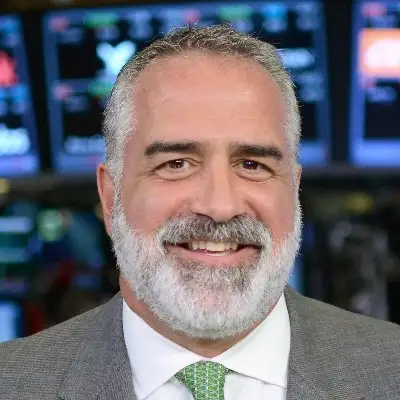
Hey gang, Kevin here, Life 22, and today we have our famous return guest, Kenny Paul Carey from Slatestone Wealth. Am I getting this right now, Kenny?
00:00:13 Kenny
I always screw it up. You are. Chief Market Strategist, Slatestone Wealth, you are.
00:00:17 Kevin
All right, And well, you came on, the first time you came on the show was last year.
00:00:23 Kevin
around this time.
00:00:24 Kenny
I was going to say it was about a year ago.
00:00:26 Kevin
Yeah, it was my it was my birthday last year that you came on. It was.
00:00:30 Kenny
When is your birthday? Happy birthday.
00:00:31 Kevin
It's tomorrow. It's tomorrow.
00:00:33 Kenny
Happy birthday. Mine was two weeks ago. Oh, yeah.
00:00:35 Kevin
That's why we were trying. Yeah, I was trying to schedule for tomorrow, but you're traveling. So I don't want
00:00:39 Kenny
to. Yeah, I got to go to. I got to go to New York.
00:00:42 Kevin
Oh, see, you're coming up to visit. There you go.
00:00:45 Kenny
Yeah, go
00:00:46 Kevin
to the city. Yeah. Well, good luck to you.
00:00:51 Kenny
But let's not even go there. It's a disaster in New York City. But you know what? They voted for it. So they're going to have to at least live four years with it unless the new governor somehow, if there is a new governor, somehow throws them out.
00:01:06 Kevin
Right, Throws them out or at least has the National Guard hanging out there to make sure things stay in control.
00:01:13 Kenny
Yeah, But
00:01:15 Kevin
So I guess with you going to New York City, what's the market look like now? What is like, what is Wall Street for the average Joe who thinks about it from the Wolf of Wall Street perspective that, you know, trader on the floor?
00:01:29 Kenny
Well, so I'll tell you, Wall Street in general, like the area is all condominiums, so it's all residential now. So the banks and brokers are all gone. All that stuff is gone. It looks like a regular neighborhood anywhere in New York City, right?
00:01:42 Kenny
There's kids riding bikes and mothers pushing strollers and people walking their dogs. And that never existed, right? Wall Street was the New York Stock Exchange. It was the banks. It was the brokers. It was everyone in suits and ties. And then the place emptied out at night. Now it's 24 hours, 24 hours a day. There's people there. They live there. They do everything there, right? So that's what the area looks like. Wall Street, the building, the New York Stock Exchange.
00:02:09 Kenny
still exists as it does, but it's gone through a number of transformations. And today, if you see it on TV, you see it on CNBC or whatever, you'll see that the 5,500 people that were there are no longer. There might be 100 people there in total today doing the job that 5,500 people did because it's all done electronically.
00:02:30 Kenny
And even the electronics don't happen there, right? The servers and the data centers are in Mahua, New Jersey, and they're in Ohio, they're in Maine, they're in Florida, they're all over the country.
00:02:42 Kenny
the trades don't like even happen there anymore. Right.
00:02:45 Kevin
But is that that's part of the servers being split up like that is that's for redundancy, right?
00:02:49 Kenny
So somebody that's for redu. Well, it's for 100% for redundancy, 100% after 911. Because remember, it wasn't that redundancy prior to 911 and after 911, while the exchange itself never got quote unquote damaged. What did get damaged was
00:03:04 Kenny
the cables and the T1 lines and the fiber optic cables that ran from the exchange, connecting all those computers to the outside world, ran through a conduit that went through the belly of the trade center and out the Hudson River and then out to the rest of the country and the world. And so when the trade centers collapsed, all those conduits got crushed and the wires and the cables and everything got crushed. And so therefore, the New York Stock Exchange was essentially neutered. You could turn on the lights and go there, but
00:03:31 Kenny
If you remember at the time, there was no trading. The place closed down for six days, which was, at the time, 2001 was a crisis. On a number of levels, it was a crisis because of not only the event, but then how US capital markets came to a complete standstill for six days, which is something that had never happened. And it created all kinds of financial panic, not only in this country, but really around the world. And so now, yes, that redundancy exists. So the New York Stock Exchange has got data centers in Mahwah where most of it happens, but there's
00:04:00 Kenny
backup data centers in other parts of the country, as well as all the data centers that run all the alternative venues and the NASDAQ and the other exchanges that exist, they're located all around the country too. They're not just in one spot because if they were and some terrorists decide to blow up that one spot, they'd bring the country to its knees again. Today, if they blow up the New York Stock Exchange, it would be a tragedy 100%, but we wouldn't have the same
00:04:27 Kenny
the circumstances we had then, because the other data centers that are located in Maine and California and Ohio and Florida and wherever would continue to operate. Now, it might get ugly. Nothing says it wouldn't get ugly, but the markets would no longer be affected. Now, if they started blowing up the country, then who really cares about what the markets are doing? Because we've got a whole other problem, right?
00:04:49 Kevin
Sure, But they would have to have a more coordinated attack. So that would be a lot of times.
00:04:55 Kevin
as an HVAC guy, right? So my perspective is if I have a pump go down, I need a redundant pump to be there ready to go, or at least a pump that I can quickly exchange. And so like, just for in case of emergencies, sometimes people have a lot of these things in place that redundancy exists on the off chance that something happens, something catastrophic, something that you're not anticipating. And sometimes it's as simple as something that you are anticipating. Hey, I'm in that threshold where that pump is going to go.
00:05:23 Kevin
but I still have the redundancy. And so planned or unplanned, a lot of times redundancy is, a very good method.
00:05:32 Kenny
Correct. So today we have redundancies all over the place, right? But, you have it in banks, you have it in brokers, you have it at the New York Stock Exchange, you have it at NASDAQ, you have it, everyone's really got a redundancy. Certainly anyone in the financial services industry has a redundancy. I mean, they're actually, they're required to have a redundancy.
00:05:51 Kevin
What came first, 9/11 or Fight Club? I feel like I feel like that was the premise behind Fight Club, wasn't it?
00:05:59 Kenny
Yeah, I think it was the premise behind Fight Club. I think it was. But one way or the other. So it was that event, you know, that, you know, I think we've talked about before, but one way or the other, it was that event that, you know, that really woke the country up because prior to that, everything
00:06:15 Kenny
that traded on the New York, traded at New York, right? The NASDAQ traded NASDAQ, New York traded New York stocks. You couldn't cross-pollinate. You couldn't trade NASDAQ names on New York. You couldn't trade New York names on NASDAQ until that event, because what that event caused us to realize is that, you know,
00:06:33 Kenny
the setup we had was very, last century, right? The world had changed, technology had changed, the whole idea of terrorism had changed. And so therefore, we needed to update and move into the 21st century, which we did. So today, the New York stock exchange still acts as kind of the face of US financial markets.
00:06:55 Kenny
But it only does about 20% or 22% of the total volume that trades. Everything else, the other 80%, trades on alternative venues and the NASDAQ and other exchanges, right? There are 10 exchanges that exist today. And then there are 40 or 50 different dark pools where they also trade stocks.
00:07:12 Kenny
that are not exchanges. They're owned by the brokers and the banks. And they're very profitable. So the banks and the brokers aren't going to let them go. But that was also born out of the events of 9-11. While they had been designed to develop prior to 9-11, they weren't really catching fire. But after 9-11,
00:07:29 Kenny
they really caught on fire. And today they're an integral part of the way stocks trade, right? And why it can be at times so volatile because there are so many venues where stock is trading and the computer, the automation, the technology connects them all together. And so
00:07:45 Kenny
you got day traders now that are trading for thousandths of a penny, right? They want to buy something at 20 spot 0001 and they can sell it in a different venue at 20 spot 0005, which sounds like nothing to you and me, right? It's 4 thousandths of a penny, but if you do that all day long and thousand share lots and 500 share lots, it ends up, do the math, it ends up being a lot of money over time.
00:08:12 Kevin
Sure. And that's,
00:08:14 Kevin
So essentially the New York Stock Exchange as a physical building has become what the King and Queen of England are. They're just a figurehead, right?
00:08:21 Kenny
It's just a figurehead, but listen, it still represents, what it still does is it is still...
00:08:28 Kenny
a symbol of America, capitalism, freedom, entrepreneurship. I mean, in that sense, it still is, right? And there's a cachet about having your company listed on the New York Stock Exchange. There is, let's be honest, right? People go and they list on the New York Stock Exchange. It's like, my God, I made it. And they have. But the truth is, the reality is because of the way technology is today and because of the technology we have, it plays a minor role in terms of trading, but it plays a major role in terms of appearance and
00:08:58 Kenny
and authenticity and that kind of thing. Right.
00:09:01 Kevin
That's why that's why the Mandami race was a huge thing for a lot of people, people that didn't even live in New York, because New York City is that idea that the heart capitalism and then all of a sudden you just put a democratic socialist involved and then all of a sudden it's like, man, you're changing up the symbol. That's like kind of revamping the American flag.
00:09:20 Kenny
Correct.
00:09:21 Kevin
Like it's not just, I mean, even down to, even down to smaller companies like Cracker Barrel, like a rebranding is like, it did something.
00:09:27 Kenny
Well, you saw what happened with Cracker Barrel, right?
00:09:30 Kevin
Right.
00:09:30 Kenny
That was a massive rebranding. It was a huge mistake, but it was a massive rebranding.
00:09:36 Kevin
And yeah, and so political systems do it. Everybody seems to do it, but you've got like, people still need, there's a psychological component to a lot of this stuff. And I don't think a lot of people understand that.
00:09:46 Kevin
The reason that they don't get rid of the Queen of England or the King of England is because they need that. draws their country together from an unquantifiable psychological thing, you know?
00:09:58 Kenny
Yep, 100%. Anyway, so let's talk about, let's talk, what do you want to talk about, markets first?
00:10:05 Kevin
Sure, we can talk about markets.
00:10:09 Kenny
OK, so I will tell you, I'll start this by saying a lot of the stuff that happened in the first quarter was not on my radar in January when we started the year, right? I didn't have $100 a barrel of oil priced into my view. I didn't have this Iranian conflict, certainly, worked into my view. I don't think many analysts did. There might have been talk of ruffling feathers and all that, but I don't think anybody in January had
00:10:36 Kenny
the conflict that we've been watching on their radar in January, right? Nor do I think they had the oil price on their radar either. But that being said, if you've watched what's happened ever since this conflict began, there's every reason for the market to have really, really backed off, right? Because it caught us out of surprise, right? You woke up Saturday morning to the headline that we started bombing Iran, and Israel started bombing Iran, and the strait was closed, and oil skyrocketed, and the market did
00:11:06 Kenny
off, but it didn't collapse. And I think that's a key point, right? Yeah, we saw at one point, the NASDAQ was down just over 10%, which puts it in correction zone. But the S&P for the year was only down about 7%, which was still well within what's considered normal. Now, if you look at where it was off its high, then yeah, it was down, I think, 11% at one point. But for the year, it was only down 7%. And so when you think about all the stuff that was happening that could have caused complete chaos, quite honestly,
00:11:36 Kenny
I'm fairly impressed that the market held in as well as it did. Now, there are individual names that got beat up. A lot of them were getting beat up even before that happened. Technology was a space that was getting beat up even before. But we came into the year with technology feeling a bit stretched, right? I was in the camp that had been stretched for a while, that I wasn't chasing some of those names that were trading at multiples that I couldn't justify.
00:12:04 Kenny
which means the stock I owned already was the stock I was going to own. If they pulled back, then I'd buy more. But if they were going to continue to be stretched, I wasn't going to buy them and I was going to take new money and allocate it to new.
00:12:16 Kevin
Because you anticipated it was going to drop.
00:12:18 Kenny
Correct. Right. And now, look, now Microsoft is off 36% off of its all-time high at 530, traded all the way down to 350. That to me is a screaming buy. So yes, did I start buying Microsoft again for myself? 100%. But if it runs right back up to
00:12:34 Kenny
520, I'm not buying again. Actually, if it trades much higher than 370 or so, I'm probably not going to chase it. But below 370, I personally would be buying Microsoft, right? But that's just the opportunities you have to look at that the chaos that this has created has, in fact, created opportunities for a long-term investor. It always creates opportunity for the day trader because the day trader is in and out, in and out, in and out. The day trader wants lots of noise and lots of volatility because that's how they make money. The long-term trader wants to eliminate
00:13:04 Kenny
the noise and wants to just find the opportunities that are created.
00:13:08 Kevin
See the trends past the fog of war.
00:13:11 Kenny
Correct. And so I was quite impressed with the way the market held up quite honestly over this last month and a half. And now we have this ceasefire. And you saw what happened on Wednesday. They announced the ceasefire. And the market went from below all three trend lines, rocketed higher right up through all three trend lines, sitting right on it, sitting right on the short-term trend
00:13:34 Kenny
line right now. Do I think it's going to hold? No, I think we're going to have more volatility, at least over the next two weeks, as we see how these negotiations go. Because remember, the ceasefire is just a pause. It's not a settlement. It's not a finality. It's not over. It's just at the moment a pause. And so I think the market will remain volatile. As long as oil remains in the high 90s, the market's going to remain volatile. And if they don't,
00:13:59 Kenny
If Trump and the administration doesn't get a chance to bring this to an end fairly soon, the problem is gonna be that oil stays elevated into May and into June. And by the time the midterms then are only four months away and people are gonna get, they're already frustrated, but they're gonna get more frustrated. And then it's gonna create political chaos in this country because then you have to worry about how the midterms are gonna go. And I came into the year with the assumption that
00:14:28 Kenny
that the Democrats were gonna take the House, but that the Republicans are gonna maintain control of the Senate. And in that case, you're gonna have a split Congress, which by the way, the market loves. And the market loves a split Congress because what it does, either nothing gets done because it's split, or talking heads and the cooler heads and the more moderate heads from both parties come to the middle and they eliminate the fringes on both ends. So you eliminate the ultra MAGA guys, you eliminate the far left progressives, and the moderates come to the middle to
00:14:58 Kenny
anything done. The market actually likes that. If you look at the prediction markets today, Kalshi and some of the others, they have us, they have the Republicans losing the House and they have it's 50-50 on the Senate, which is, you know, it wasn't that a month ago, right? But it is 50-50 now. And if it stays elevated like this,
00:15:20 Kenny
oil and CPI. You saw the inflation report came out on Friday, and it ticked higher, although we expected it to tick higher. So it wasn't a surprise. The surprise for me was that it wasn't worse than even the higher expectation, because that would have been bad. In fact, it was a little bit better than what the expectation was. So that's a positive. But
00:15:41 Kenny
Again, if oil stays like this for another three weeks, next month, CPI is going to continue to be elevated because it was the top-line number where we saw all the inflation. And if you take the core number, which actually eliminates energy and food because they're very volatile, inflation came in less than expected. So you can see it's all about energy right now, right? It's all about the price of oil. But the price of oil
00:16:05 Kenny
means something for everybody, whether you're filling up your car, whether you're filling up oil to heat your house, whatever it is.
00:16:09 Kevin
Buying something on Amazon, it's got to get trucked to you. Right.
00:16:12 Kenny
Yeah, and right. Transportation for food and other material, other stuff, manufactured stuff, whatever. It's all going to get out of it. And I told this story yesterday, it's funny. I drive an Infiniti QX60, which is like the SUV. And
00:16:30 Kenny
I don't drive that much because my office is six miles from my house. So I might drive 12 miles a day and then I drive locally. I'm not driving 80 miles a day every day, right? So I might fill up my car once every week and a half. Maybe it's every two weeks. So I went to the pump the other day. I think it was Thursday. I ran it right down to where it was almost no gas left in my car 'cause I wanted to see what it was gonna cost me to fill it up completely.
00:16:57 Kenny
And it cost me $82. Now, two months ago, it would have cost me $52. It cost me $82. And I looked at the price of gas on the, tank, on the, machine.
00:17:11 Kenny
It was $4.15. I hadn't realized we went from, two months ago I was paying $2.95, now I'm paying $4.15. I was like, holy ****. But it is what it is. And so, you know, that's going to be a problem, especially for people that have to fill up their tank every week because they're driving so many miles, right?
00:17:29 Kevin
Yeah, I realized that the price of gas, I saw at times I don't pay attention because I'm like, you, my vehicle gets filled up every week, week and a half. I got guys that have to fill up my work vehicles for me
00:17:40 Kevin
Twice a week. And they borrow one card and that card of mine tells me anytime it's used. It's saying, hey, you bought a coffee at 7-Eleven and it was $6.03. And then, all of a sudden it's like, hey, somebody ran the card for 80 bucks, 90 bucks, which in a big van,
00:17:58 Kevin
we got utility vans, those big vans. That's the going price. So a lot of times I went to squabble about it. And all of a sudden I called one of my guys and said, man, that bill you just gave me was $130. He's like, oh, the gas? I'm like, yeah, did two of you guys go at the same time? You know? And he goes, no. He goes, did you see the price of gas is like 4 something a gallon? And I'm like, holy smokes.
00:18:20 Kenny
Yeah. So it's crazy. I mean, so in that sense, it's crazy that
00:18:25 Kenny
If it stays like that for another five or six weeks, we're going to get into June already. And June is going to be, you know, here we are, summertime, it's driving season. People go to the Cape, they go to wherever they go, the shore, wherever they're going, to the lakes, wherever they're going. But they start to drive more and it's going to become more
00:18:43 Kenny
It's going to be even more noticeable, right?
00:18:46 Kevin
And then they might drive. It might curb. It might curb a lot of that travel.
00:18:50 Kenny
Correct. It might. It might curb it. And, you know, it might, maybe not. But either way, either way, it's going to be a problem
00:19:00 Kenny
for the midterm elections. And then if it goes complete, if it flips both houses and it's democratically controlled, then it creates a whole nother level of chaos. Because then what happens, the Democrats right away, because they've already said they're going to do it if they take control, they're going to impeach Trump. OK, so we're going to go through that again.
00:19:17 Kenny
And they'll succeed this time, I guess, if they control both houses, it'll be easier for them to try to do it. And then you have Trump out, you have JD Vance in, and you have a whole nother set of concerns. Not that it's a disaster, but it's just concern, right? That'll cause anxiety for investors, anxiety in the markets.
00:19:35 Kenny
And so that's what you have to kind of be worried about. So that's all the things now that I'm thinking about in the future, which doesn't mean I'm negative on investing or I'm negative on the market. I actually think we're going to make our way through this. And in the end, once we start to see the benefits of the big, beautiful bill and they're going to start to kick in,
00:19:51 Kenny
This quarter and next quarter, you're going to start to see the fruits of that labor come out. And you'll see it in the economic reports. You'll see it in earnings start this week. So you're going to hear from the C-suite. They're going to talk about what the next four to six months look like for them. I suspect that they're still going to be fairly positive. But if we suddenly see a lot of cautiousness in the commentary, then you'll see how the market will react, because then the market will reprice.
00:20:20 Kenny
the expectation.
00:20:21 Kenny
It's all about the expectation, because the market really prices-- the market's not trading on valuations today.
00:20:26 Kenny
It's trading on valuations what it thinks they're going to be three and six months out.
00:20:31 Kenny
So if that changes because the C-suite starts to be more cautious, all that means is, OK, people are not going to pay the same multiple.
00:20:38 Kenny
Stock prices will come in a little bit until supply equals demand, essentially, right?
00:20:46 Kenny
So there you go.
00:20:48 Kenny
That's my story.
00:20:50 Kevin
So to jump back to the current event side of things, sometimes it makes you wonder too, because this whole, if you look at how most of the Middle East in the last 6 to 8 months has reacted to the way Donald Trump has been handling things.
00:21:07 Kevin
It's almost like dealing with novice negotiators, right?
00:21:11 Kevin
I'm sure you've got a wide variety of clients, right?
00:21:13 Kevin
And some know how to trade on the market.
00:21:15 Kevin
Some have no idea.
00:21:18 Kevin
And then that's,
00:21:19 Kevin
On the bottom of the no idea side of the spectrum is where most of the Middle East is.
00:21:24 Kevin
They're kind of in their own little bubble.
00:21:25 Kevin
These are our philosophies.
00:21:27 Kevin
These are our things.
00:21:28 Kevin
These are how we do business.
00:21:29 Kevin
Now all of a sudden they're playing chess at a world scale.
00:21:33 Kevin
And the problem is you've got one of the best.
00:21:34 Kevin
And people, I'm not an ultra MAGA guy.
00:21:37 Kevin
I'm not the guy that like, you know.
00:21:40 Kevin
When people go, don't you, Donald Trump did this, Donald Trump did that.
00:21:42 Kevin
Like, I really don't try to drop Donald Trump's name that much because I'm not like an ultra, he's our fearless leader dropped to a knee.
00:21:50 Kevin
You know, I always make the joke with people, right, when they talk about January 6th.
00:21:54 Kevin
I always say, oh yeah, the day of our Lord.
00:21:56 Kevin
You know, I just, because it's a joke.
00:21:58 Kevin
I'm really pushing to the extreme.
00:21:59 Kevin
There are people that actually believe that is like the second coming of, you know, of Jesus.
00:22:05 Kenny
Listen, I hear you.
00:22:06 Kenny
I completely hear you, which is what makes me crazy, right?
00:22:09 Kevin
Because you like the guy, but at the same time, he does fly off the handle and you can read him, right?
00:22:17 Kevin
He's an easy read.
00:22:18 Kenny
That's right.
00:22:18 Kenny
He flies off the handle and he needs to keep, he just needs to keep as much.
00:22:23 Kenny
He can't, he cannot help himself, right?
00:22:25 Kenny
He can't help himself.
00:22:26 Kenny
The fact that he, the fact that he put out that tweet on Easter Sunday.
00:22:32 Kenny
Praise be to Allah.
00:22:33 Kenny
Dude, the praise to Allah.
00:22:35 Kenny
And you better ******* open up the street.
00:22:38 Kenny
It was just, I'm sitting going, how could, how could Susie, what's her name?
00:22:43 Kenny
Susie Miles, whatever her name is, you know, his chief of staff.
00:22:47 Kenny
Like I'm thinking, okay, Susie, where are you when he's doing this?
00:22:51 Kenny
Or when someone's doing it.
00:22:53 Kevin
Sometimes being part of that cabinet is like being the guy who cleans up after Aesop Fables.
00:22:57 Kevin
You know, you just sit there with a broom in a trash can and just.
00:23:00 Kenny
Agreed.
00:23:01 Kevin
But if you can look, if you can look past
00:23:04 Kevin
the chaos tweets or the truths or whatever they call them.
00:23:07 Kevin
Now, if you can look past all that, he's still like a shark in the water when it comes to trade negotiations, whether it's trade negotiations, whether it's a deal, whether it's ending a war and all that bad publicity, all the people that just don't like him because they judge him based on that emotional value of a tweet.
00:23:28 Kevin
It's like, man, you got to look past that.
00:23:30 Kevin
And if you could, if most Americans could look past that, they'd be like, holy **** we've got like the best guy to actually handle these novice negotiators.
00:23:38 Kevin
You know, the, you know, a lot of the Arabic countries are novice negotiators.
00:23:44 Kevin
If you took somebody who is.
00:23:46 Kevin
one of the alpha, what do they call them, the apex predators in the field for being a negotiator.
00:23:52 Kevin
And you said, wow, well, I would rather, even though he's an ******* I would rather deal with an ******* as the guy in the negotiating room, right?
00:24:01 Kevin
Like you're getting divorced.
00:24:02 Kevin
You want the cutthroat lawyer.
00:24:04 Kevin
You don't want the guy who's, you know, oh my, geez, everything scares him.
00:24:07 Kevin
Like.
00:24:11 Kenny
100%, 100%.
00:24:11 Kenny
So, you know,
00:24:14 Kenny
He's bold, he's brash, he's offensive.
00:24:18 Kenny
I get it.
00:24:19 Kenny
I get it.
00:24:19 Kenny
But you know what?
00:24:20 Kenny
In the end, he is the president.
00:24:22 Kenny
The same way Joe Biden was the president.
00:24:25 Kenny
You may not have liked him.
00:24:26 Kenny
He wasn't bold and brash because he hardly said anything.
00:24:30 Kevin
Right.
00:24:30 Kenny
But there were plenty of people that didn't like him, but they didn't suffer from this Biden derangement syndrome the way people suffer from Trump derangement syndrome.
00:24:39 Kenny
They really do.
00:24:40 Kenny
It's crazy to me.
00:24:41 Kevin
And so like where you and I can see past all the nonsense that Trump puts out, it seems like mainstream media has kind of created this cloud of war around the markets.
00:24:51 Kevin
Cuz if you could see past it, you would actually, the markets would be less volatile.
00:24:56 Kenny
100%, 100%.
00:24:57 Kenny
And the other thing is, the mainstream media, it's frustrating to me because they're the ones that suffer from this Trump deranged syndrome and everything, everything, everything, everything is from the perspective
00:25:11 Kenny
of negative, right?
00:25:12 Kenny
They accentuate the negative.
00:25:14 Kenny
There's nothing on ABC, CBS, NBC that I ever see is even slightly positive about the administration.
00:25:21 Kenny
I just don't see it, right.
00:25:22 Kevin
Right, there's never an attaboy moment.
00:25:25 Kenny
There's never an attaboy moment.
00:25:26 Kenny
And quite honestly, for anyone to think that what we did, we, the United States and Israel, by the way, taking out Iran's
00:25:35 Kenny
ability to threaten the world, if anybody thinks that that wasn't a good thing, I wanna sit down and talk to them because for as much as they said, oh, we don't do it, we can't do it, we don't have missiles, they launched the missile all the way to Diego Garcia, which means they could've launched the missile right into Europe.
00:25:51 Kenny
So all of Europe should be up in arms.
00:25:54 Kenny
And quite honestly, Americans should be up in arms.
00:25:57 Kevin
Right.
00:25:58 Kenny
Right, because they lied, they lie, they lie, and we took them out.
00:26:02 Kenny
And so now I think, I don't know why people in this country are not celebrating the fact that we took them out.
00:26:08 Kevin
Right, just like that, what was it?
00:26:10 Kevin
The entire, a good example of how, like, how they lie and how they try to, like, they're like a really novice PR team.
00:26:16 Kevin
Like, we blew up our own ships that got, like, stuck in the sand.
00:26:21 Kevin
Yeah.
00:26:21 Kevin
Trying to extract that pilot.
00:26:23 Kevin
And they took videos of the exploding ships and going, look what we did.
00:26:28 Kevin
Like, you made the Americans blow up the ships.
00:26:31 Kevin
Congratulations.
00:26:32 Kevin
This isn't going to be a return to Afghanistan.
00:26:34 Kevin
Like, we're not going to give you our helicopter.
00:26:36 Kenny
That's the part that frustrates me.
00:26:38 Kenny
And it frustrates a whole lot of people, right?
00:26:40 Kenny
But I just think as an American, the fact that we took out, they were the biggest bully in the Middle East.
00:26:47 Kenny
Ask any of the Gulf states, because they'll say the same thing.
00:26:50 Kenny
The Gulf states are so happy that we've done that.
00:26:52 Kenny
They're very happy that we've done that.
00:26:56 Kenny
But why people in this country are celebrating like they're trying to sell, they're trying to make it a failure and then celebrate it, which is crazy to me.
00:27:05 Kenny
It's just crazy to me.
00:27:07 Kevin
Yeah.
00:27:07 Kevin
And no, no, it's no, it's all right.
00:27:10 Kevin
It's just that it's those little things though.
00:27:12 Kevin
Like I'm just like, I'm a novice with the market compared to compared to the, you know,
00:27:18 Kevin
compared to Kenny Paul Carey, I'm a novice.
00:27:21 Kevin
I'm just an HVAC guy that's got some money in the market and I watch the news.
00:27:27 Kevin
And sometimes I get these little epiphany moments where I'm like, man, just as a regular Joe, if people could just see certain things from the middle or I'm coming from the right of middle, if people could see that, the market wouldn't be as volatile as it was.
00:27:44 Kevin
But the problem is you've got other, and you wonder,
00:27:47 Kevin
You wonder like why, like certain things happen for a reason and certain things, there's no such thing as a coincidence that some people would say.
00:27:55 Kevin
So you just wonder like why people create so much volatility.
00:27:58 Kevin
Is it really to overthrow Trump?
00:28:00 Kevin
Is it really to do this?
00:28:02 Kevin
Or is there like, maybe they're buying put options?
00:28:07 Kenny
Yeah.
00:28:07 Kenny
listen, and don't discount that because someone is obviously participating and making money out of all this chaos.
00:28:17 Kenny
But that happens on both sides.
00:28:18 Kenny
Let's be honest.
00:28:19 Kenny
It happens on both sides, right?
00:28:21 Kenny
They leak, people jump in front, they buy the options, they do this.
00:28:24 Kenny
They're on both sides.
00:28:25 Kenny
Right.
00:28:25 Kenny
Which only for me is another reason why anybody who's in the administration or elected government should not be allowed to have a personal training account.
00:28:34 Kenny
Their families, the wives, the kids should not be allowed.
00:28:36 Kenny
Sorry, you want to go
00:28:37 Kenny
public service, you can have the personal drag out when you get done.
00:28:40 Kenny
But these guys that spend 80 years in public service and elected government and all their families participate in all that is ******** in my mind.
00:28:48 Kenny
Complete ********.
00:28:49 Kevin
Right, because they got insider knowledge.
00:28:50 Kenny
They have insider information.
00:28:52 Kenny
If I have insider information, I'm going to jail.
00:28:55 Kevin
Right.
00:28:55 Kevin
You knew you were, if you knew we were going to bomb Iran before everybody else did, you know what I'm buying?
00:29:00 Kevin
Like I'm buying, I'm buying stock in steel manufacturers.
00:29:04 Kevin
I'm buying futures on stuff.
00:29:06 Kenny
Yeah.
00:29:07 Kenny
and the aerospace and defense names, of course you are, right?
00:29:11 Kenny
And if you know that the ceasefire agreement's going to be announced at 6.30 after the market closes, which is going to be a huge positive, you're going to go along the market before 4 o'clock in the afternoon.
00:29:24 Kenny
But here's the part that frustrates you about that, too.
00:29:26 Kenny
It's not like you can't see who's doing this.
00:29:28 Kenny
With all the surveillance and technology, all you have to do is go back, see who bought the biggest positions in those
00:29:34 Kenny
in those products, who went long at 3.59 on Wednesday afternoon and trace it right back.
00:29:41 Kenny
So for them to say, well, we don't know.
00:29:42 Kenny
What do you mean you don't know?
00:29:44 Kenny
Of course you know.
00:29:45 Kenny
All you have to do is go back and look.
00:29:47 Kevin
Right.
00:29:48 Kevin
It's just like it's like crime was years ago.
00:29:51 Kenny
Right.
00:29:52 Kenny
Because if I bought 100 shares of the S&P at 359 and the next day I sold it up, they'd come knocking on my door.
00:29:59 Kenny
What do you know?
00:29:59 Kenny
Who did you talk to?
00:30:01 Kenny
How did you know that?
00:30:02 Kenny
Why did you buy it at 359?
00:30:04 Kenny
You know, it's crazy to me, but whatever.
00:30:07 Kevin
No, and it is one of those things.
00:30:12 Kevin
So I guess to pivot a little, well, not even to pivot.
00:30:15 Kevin
So here's, because this is something that's controversial.
00:30:18 Kevin
I used to follow Crane and Company quite often.
00:30:21 Kevin
They've moved to different markets, so I don't get to see them as often, but they follow a lot of sports stuff and sports betting.
00:30:27 Kevin
And it's one of, there's always a huge debate whether, you know, athletes should or should not be able to bet on the market.
00:30:35 Kevin
And it's like, you know, and from that same perspective, like, no, you're in the game, because then what, at one point,
00:30:41 Kevin
At what point would you be able to throw the game, right, to throw the punches?
00:30:45 Kevin
It's like when the mob was allegedly involved in the, boxing circuit.
00:30:52 Kevin
Yep.
00:30:52 Kevin
when they took over Vegas.
00:30:53 Kenny
When they were or you mean that they are?
00:30:55 Kevin
No, yeah, well, I guess when Hollywood published it before they got told to stop, right?
00:31:02 Kenny
Yeah.
00:31:03 Kevin
But like the ceasefire, though, I have a feeling that ceasefire is, like you said, it's going to end.
00:31:08 Kevin
But why is it going to end?
00:31:10 Kevin
It's going to end because you have, as much as Trump can be irrational on Twitter, I'm pretty sure that the people in Iran are way more, well, not the people,
00:31:20 Kevin
But the administration in Iran are way more volatile.
00:31:24 Kevin
If you could see what their Twitter on Al Jazeera looks like, you know what I mean?
00:31:28 Kevin
Like they on their news network, they they're going to be like, nope, we're not taking this.
00:31:32 Kevin
They're going to act like very not novice is like a good catch all for people that are very like emotionally unskilled.
00:31:42 Kevin
Like if you go to a field of something that you're not.
00:31:45 Kevin
Immersed in.
00:31:47 Kevin
If I took you and brought you into the HVAC field, things would frustrate you.
00:31:51 Kevin
Those frustrations come from like the emotional lizard brain of the world, right?
00:31:55 Kevin
The things that like you start getting really confident in something, you're pulling from that logical part of your brain versus the more primitive, the more emotional state of your brain.
00:32:04 Kevin
And I feel like these people aren't used to this kind of chess game on the world stage.
00:32:08 Kevin
And so they're going to be very emotional.
00:32:09 Kevin
They're going to say, nope, screw you, we're putting our foot down.
00:32:12 Kevin
And they're negotiating from a position of weakness.
00:32:14 Kevin
And the ceasefire is going to end and it's not going to it's going to be to their detriment.
00:32:19 Kenny
Yeah, I agree.
00:32:21 Kenny
But listen, I hope that JD Vance is there now in Islamabad.
00:32:25 Kenny
I hope that there is real movement on the ceasefire and the ceasefire ends.
00:32:29 Kenny
I don't want to see this go on.
00:32:31 Kenny
I don't think anyone wants to see it go on.
00:32:33 Kenny
But yeah, but Iran has to understand they can't be a bully anymore.
00:32:36 Kenny
They can't be threatening the world.
00:32:37 Kenny
They can't be telling everyone, you know, who can live and who can die.
00:32:40 Kenny
They can't be doing that.
00:32:41 Kevin
Right.
00:32:43 Kenny
And so if this is the way that it has to get done, it's the way that it has to get done.
00:32:45 Kenny
And I think that I think the bulk of the world, quite honestly, whether they want to say it out loud or not, I think they're damn happy that we that we that we ended up doing what we did.
00:32:55 Kevin
It's that quiet part.
00:32:56 Kenny
Nobody ever wants to say the quiet part.
00:32:59 Kenny
100%, 100%.
00:32:59 Kenny
Anyway.
00:33:02 Kenny
So that's a deal.
00:33:03 Kenny
So that's what I think investors need to think about when they're just thinking about how to allocate money to the market.
00:33:09 Kenny
I don't think this situation should cause you not to allocate.
00:33:14 Kenny
At the very least, if you don't, if you're not yet sure about stocks or you think they're going to go on till a little bit more, you should at least be allocating money to the
00:33:22 Kenny
money market fund in your investment account so that it's there for when you need it, right?
00:33:28 Kenny
Because putting money in an investment account is a decision.
00:33:30 Kenny
You're only going to earn whatever the money market fund is paying.
00:33:33 Kenny
Right now it's probably paying about 3 1/2%.
00:33:35 Kenny
it's paying you something certainly better than the bank is going to pay you.
00:33:38 Kenny
But you at least want to stick to that discipline of taking X dollars, whatever it is.
00:33:45 Kenny
It's $100, it's $500, $1,000, it's $5,000, whatever the number is, put it there.
00:33:49 Kenny
So A, you put it in the investor account so you know you've got it there.
00:33:52 Kenny
And then when you sense that, you know, now's the time to buy, then you got the money there.
00:33:56 Kenny
You don't have to worry about transferring it in.
00:33:58 Kenny
Where's it coming from?
00:33:59 Kenny
Oh my God, I don't have it.
00:34:00 Kenny
You have it.
00:34:00 Kenny
It's there.
00:34:01 Kenny
So that's what people should
00:34:03 Kenny
continue to do, even if they're not putting it to work right away, right?
00:34:07 Kenny
They should put it in that account so they have it.
00:34:09 Kenny
So when they want to do it, they can do it because as an advisor, right?
00:34:14 Kenny
I mean, we manage over $2 billion of investor assets.
00:34:17 Kenny
So a lot of the accounts, some of them are completely fully invested because that's the way the client wants to be.
00:34:23 Kenny
Others, there are others that want to be more cautious.
00:34:25 Kenny
So we might have 5% or 7% of the assets in cash just waiting, right?
00:34:32 Kenny
For our modeled funds, that's what we do, right?
00:34:34 Kenny
We've got five modeled funds.
00:34:37 Kenny
Again, we're very specific in terms of what we're talking about.
00:34:40 Kenny
We have monthly investment, weekly investment committee meetings, we go over what's happening.
00:34:45 Kenny
We look at all the names, we look at the thesis, have the story changed and no stocks to cause us to either sell the stock, buy more, or is it just the price thing?
00:34:55 Kenny
If they backed off on price and the story is saying, then we'll put more money to work, whether the bombs are dropping or not, because you have to
00:35:01 Kenny
take advantage when the opportunity presents itself.
00:35:06 Kevin
Sure.
00:35:07 Kevin
That's, no, no, that's, no, it's really good advice out there.
00:35:10 Kevin
And so like one of the things that you just said that like, I'm guilty of, right?
00:35:14 Kevin
And you've told me this for years to keep putting money aside every week.
00:35:18 Kevin
And then every couple, a couple of times a year, I'll put in, you know, 100 bucks here, 100 bucks there, a couple of hundred bucks.
00:35:26 Kevin
Right.
00:35:27 Kevin
And I probably should do better at
00:35:30 Kevin
making an auto draft to the account, 50 bucks a week, whatever.
00:35:34 Kenny
The reason you make the auto draft is because then you don't have to do it.
00:35:38 Kenny
just happens electronically.
00:35:40 Kevin
Right.
00:35:40 Kenny
The auto draft happens.
00:35:41 Kenny
You don't even miss it, especially if it's 50 bucks or it's 100 bucks.
00:35:44 Kenny
You don't even miss it.
00:35:45 Kenny
just happens.
00:35:45 Kenny
It's like paying your electric bill, right?
00:35:48 Kenny
You should, it's what I say is you got to pay yourself first, right?
00:35:52 Kenny
So you pay yourself whatever it is, 100 bucks a week.
00:35:55 Kenny
You know, 100 bucks a month, whatever the number is that you can afford, you just set it up and
00:36:00 Kenny
And it's done.
00:36:01 Kenny
It just happens.
00:36:02 Kenny
And you might sweep it from your checking account into your investment account, government money market fund, but at least you know it's there.
00:36:07 Kenny
So then when you want to, you go, OK, I get $3,000 in the government money.
00:36:12 Kenny
I want to put it to work now.
00:36:13 Kenny
And so you put it to work.
00:36:14 Kevin
Right.
00:36:14 Kevin
Yeah, you and Robert Kiyosaki, pay yourself first.
00:36:17 Kenny
Pay yourself first.
00:36:18 Kenny
100%, you're going to pay yourself first.
00:36:20 Kenny
That's the rule of thumb.
00:36:20 Kevin
And that's what a lot.
00:36:21 Kenny
Of people don't do, right?
00:36:24 Kenny
A lot of people think, well, I pay myself first because I pay my mortgage.
00:36:27 Kenny
Okay, that's true.
00:36:28 Kenny
You're paying down your mortgage.
00:36:29 Kenny
So are you paying yourself?
00:36:31 Kenny
Yes.
00:36:32 Kenny
But I'm talking about paying yourself where you're actually putting your money in a place where you can invest it in stocks, right?
00:36:39 Kenny
Because yes, you're investing in your home.
00:36:40 Kenny
I get that.
00:36:41 Kenny
That's great.
00:36:42 Kenny
But unlike stocks, you can also invest money in stocks and do very well.
00:36:48 Kevin
And so I think having one of those KISS philosophies, sometimes people can trip over it, right?
00:36:53 Kevin
That
00:36:54 Kevin
Keep it simple, right?
00:36:55 Kevin
So if you like, because I've seen a lot of people, I have a lot of tenants and stuff over the years that, they'll pay themselves first.
00:37:03 Kevin
But it usually comes in the form of, and they'll make that claim, like, I always pay myself first.
00:37:07 Kevin
Well, they could, but they do it in the form of like alcoholism or, like buying too much weed.
00:37:12 Kevin
They'll invest in things that are really detrimental, but they're more hedonic in pleasure and whatever else.
00:37:18 Kevin
And they're like, well, yeah, but I always pay myself first.
00:37:20 Kevin
It's like, yeah, but
00:37:21 Kevin
Not future self.
00:37:22 Kevin
You're paying current self.
00:37:25 Kenny
Right.
00:37:25 Kenny
But even if you don't, listen, even if you're not true and you don't know, at the very least, you could put the money, you could just keep buying your S&P 500 fund, right?
00:37:32 Kenny
The ITOT or the VTI.
00:37:34 Kenny
You should just do that because that gives you broad exposure to the US market.
00:37:39 Kenny
The ITOT is a total return ETF, which means that includes not only the growth in the stocks, but the dividends that are reinvested, right?
00:37:48 Kenny
So that's a great one.
00:37:50 Kenny
If you only have one,
00:37:51 Kenny
or you want to start somewhere, you should start with ITLT, which is the Vanguard total return or the ITLT, which is the S&P total return.
00:38:00 Kevin
Right, which is, it's just, it's better than nothing.
00:38:05 Kevin
And I did this with my kids too, because I told them, hey guys, I will match you with, you know, like, because they all got some money coming, you know, for birthdays, Easter, whatever.
00:38:16 Kevin
And this was a couple of years ago.
00:38:17 Kevin
Then I said to them, I said, hey, listen guys, I will,
00:38:20 Kevin
you give me, you're getting 100 bucks a piece, right?
00:38:25 Kevin
So if you give me, whatever you give me out of that 100 bucks, I will match it as an incentive.
00:38:30 Kevin
If you spend it on stupid stuff, like I think you and I have talked about that, Robux, the kids games, you know, stuff like that, currency in video games, you know what, I'm gonna discern you from doing that.
00:38:43 Kevin
I'm gonna let you do it because you gotta make the decision.
00:38:45 Kenny
But you're not matching it.
00:38:48 Kevin
I'm not matching anything.
00:38:49 Kevin
I'm not buying double the Robux, but so my youngest.
00:38:53 Kenny
If they want to buy the S&P, you'll double it.
00:38:55 Kevin
You're right.
00:38:56 Kevin
And so any one of them who gave me money went into a custodial account on E-Trade.
00:39:01 Kevin
And like, and right, and it started with my youngest son.
00:39:05 Kevin
He was like 5 at the time.
00:39:06 Kevin
He's like, dad, I want to invest because that's what you said I should do.
00:39:10 Kevin
You make it seem like I should do that.
00:39:12 Kevin
And so he gave me all of his money.
00:39:14 Kevin
He gave me his like 50 bucks.
00:39:17 Kevin
And so I said, you just made 100.
00:39:19 Kevin
You just made 50 on top of it.
00:39:22 Kevin
And then the other kids were like, oh, well, that's not that big of a deal.
00:39:25 Kevin
Like, okay, guys, he did it.
00:39:28 Kevin
And there was a promo going on.
00:39:29 Kevin
So it was a new account and it was a new social and he got, E-Trade matched it.
00:39:36 Kevin
So he made 200 bucks off his 50.
00:39:39 Kevin
And the other kids were like, well, I want that.
00:39:40 Kevin
And I'm like, well, you missed the promo.
00:39:42 Kevin
It was first come, first serve.
00:39:43 Kevin
That's how it went.
00:39:45 Kevin
And now all of a sudden he's at like, he's made 30% on his $200 investment on top of, you know, like, I think he's at like 250 or 260 or something on his investment into the ITOT.
00:39:58 Kevin
And the other kids, like now my daughter's starting to follow suit.
00:40:02 Kevin
She's the next old, well, she's the oldest of them and she's starting to follow suit.
00:40:07 Kevin
And from that point, actually E-Trade pulls out of my personal bank account every year on the kids' birthdays, it'll pull 50 bucks, a gift from dad into those accounts. Each account for each kid, 50 bucks a piece. They just get this investment into the account. And we started that a couple of years ago.
00:40:25 Kenny
And that's good, right? That's a good way to get them not only interested, but it's a good way to show them what
00:40:36 Kenny
a disciplined investing approach will do.
00:40:38 Kevin
Right.
00:40:39 Kenny
And people think, you start $50. What difference does $50 make? Guess what? Guess what? It's going to make a big difference. If you put 50 away every week, suddenly 50 becomes 200, 200 becomes 400, 400 becomes right, it starts to grow.
00:40:53 Kevin
Right. The same way it can hemorrhage. What was it? Kevin O'Leary says the same thing, that the average adult will just, or, and he doesn't say adult. He says like,
00:41:04 Kevin
like lower income individual, right? So somebody that's in the poor spectrum, what you find is they'll spend 15 grand a year on stupid **** like coffee, like just going out to drink a coffee instead of like, hey, I could just get a bigger thermos. I could bring my lunch from home.
00:41:20 Kevin
just 15 grand a year. And to you or, I, 15 grand a year isn't a ton, it's substantial, but it isn't a ton. But at the same time, 15 grand is like half of those people's, half or a third of their income for the year. Right, correct. Yeah.
00:41:37 Kenny
Correct. But, I think people just need to understand that. And they also need to understand the sooner you start, clearly the more you're going to have.
00:41:48 Kevin
Right.
00:41:50 Kevin
So my daughter's going to be 11 this year and she's now, she's the one following suit in her younger brother's footsteps, right? So she, but she is old enough where she can actually do viable work with me. I've teached her, I've taught her how to, you know, paint ceilings and, you know, cut in and sweep up after a job site when we renovate an apartment. And so I'm like, listen, I'm like, if you want a job with me, anytime that I give you money, 50% of it has to get invested.
00:42:15 Kevin
50% of it because the money that she makes, she doesn't have any. And I said that percentage can go down when you get older because you've got more responsibilities, more liabilities, more things you have to pay for. But as a kid who doesn't have to pay for anything besides like, you know, stick on nails and stickers and candy, like you can afford to take 50% of it and tuck it away into this custodial account and make money.
00:42:39 Kenny
Yeah.
00:42:40 Kenny
Yeah, and they should. And then once they see it, the truth is, once they start to, so after the first year, after six months, they're going to see the, they're going to see how the account has grown reacts and how the money grows, right?
00:42:54 Kevin
Right.
00:42:54 Kenny
And then they'll see, listen, if they buy something that pays a dividend every quarter, they're going to see even a little bit more money deposited into their account because they owned a stock that paid them a dividend for owning it.
00:43:04 Kevin
Right. Yeah. And I have all those accounts set up per
00:43:08 Kevin
Per my friend Kenny's advice to auto, to auto reinvest the dividends.
00:43:13 Kenny
Auto reinvest the dividends, 100%.
00:43:16 Kevin
Right. And I explained that to the kids when I set it up. The 18 year old, she's a part of this too. She doesn't do as much with it. Obviously, she's working through having to pay, you know, car insurance and she's learning the real world side of things. Yeah.
00:43:31 Kenny
But that's right. As long as she's doing something.
00:43:34 Kevin
Right.
00:43:35 Kenny
Right, it's about the discipline about doing something, right? So, what else do you want me to tell you?
00:43:46 Kevin
Anything else? Well, last time we, I think last year at this time, we talked about AI in the market. I'm sure we briefly touched about it six months ago, but...
00:43:54 Kenny
AI is still very much, I still feel the same way, right? I think we're very much in the early stages. And this whole story about, you know, tech was stretched and, oh, AI is going to disrupt the world and going to eliminate all those jobs. I'm not in that camp. Yes, it's going to disrupt. Every industrial revolution we've ever gone through has disrupted some sector, multiple sectors, but we seem to have always come back because new jobs are created and the same thing is happening in the tech space, right? While it is eliminating some jobs, and look,
00:44:22 Kenny
Let's be honest. I was completely eliminated from the New York Stock Exchange because of technology. The job I did, running around, one of those guys that screaming yell, that bought and sold stock all day long on behalf of institutions around the world, that job no longer exists. Technology completely wiped it out. And so, you know, I understand, I'm one of the guys that got wiped out, quote unquote, from a job. But you didn't die. What did I do? I pivoted and there's a new
00:44:52 Kenny
new job, right? There's another opportunity. And so that's what's going to end up happening. I'm still in the same space. I'm kind of doing the same thing. I'm not actually the one anymore that's buying and selling stock. I did that for 40 years. I don't need to do that anymore. Now I'm talking to people like you. I'm talking to high net worth investors, ultra high net worth investors. I'm drafting plans. I'm helping them put together long range plans, not only for them, for their children, for their grandchildren, right? Helping them build generational wealth.
00:45:22 Kevin
And that's so and everybody panics about technology, right? We're so obviously the AI market is not going anywhere.
00:45:30 Kenny
No, it's not. And it's only no, it's not only is it not going anywhere, it's going to become more sophisticated, right?
00:45:37 Kevin
Yeah, no, I mean.
00:45:39 Kevin
**** in the year that I've been using Grok, like Grok is my go-to. When I started, I was, you know, when I started dabbling in them, like I think I used Chat TPT for like, you know, four questions. And then after that, I kind of went over to the co-pilot before it was co-pilot for image generation to see how goofy it was. You go down a rabbit hole. And now like, I kind of just stick with Grok. I've tested Gemini out. It's all right.
00:46:05 Kevin
Grok doesn't always give me the best answers, but...
00:46:08 Kenny
You have to be careful because they do hallucinate, right? Hallucinate is like they make up stuff or they get it wrong. All of them get it wrong at some point. So you have to, you can't just put the question in there and assume what they're telling you is 100% correct, because it isn't. You have to have some sense. So every once in a while, like I use ChatGPT A lot. I've tried Gemini.
00:46:31 Kenny
But I ask that a question, right? I like to test it sometimes and ask it a question, and the answer comes back wrong. And I say, Chat, you're wrong. That's not the answer at all. Here's what happened, and here's the number, right? If the S&P closed, you know, I say, what did the S&P do? So it might give me what the S&P did three days ago. I go, it's a correct. I want to know what the S&P did yesterday.
00:46:52 Kenny
right? What's the number? What did it do? Why did it do that? And so then it goes back and it apologizes to me. Oh, you're right. I'm wrong. I made a mistake. I'll try to correct it, blah, blah. And then it corrects it. But you have to have some sense of what you think the answer is versus just depending on them to give you an answer.
00:47:08 Kevin
Right, Because then, yeah, well, I mean, that's what happens.
00:47:11 Kenny
You could be wrong.
00:47:12 Kevin
Right. Well, that's what happens with mainstream media. I mean, 100%. There's people that are always questioning, always vigilant. And then you have the people that are just willing to just eat whatever people give them.
00:47:22 Kenny
That's right.
00:47:22 Kevin
And that's where you get so much animosity in the market.
00:47:26 Kenny
Well, you get animosity just amongst people, right? It is really causing so much division amongst people, right? Why can't-- I don't ever remember when I was a kid. Look, I'm 65 now, right? I don't remember when I was-- even in my 30s and 40s, that the political environment was such that it created
00:47:46 Kenny
hatred on both sides. I can't even have a conversation with some people because they're on a different political spectrum than I am. And you can't have a conversation because it turns into a fight. And I don't want to fight. I'm not interested in fighting.
00:48:00 Kevin
Right.
00:48:00 Kenny
If you want to have a conversation, fine. But if you want to fight that I'm not fighting. So guess what? No politics. If you want to be friends, I don't want to talk politics. Or we can't talk politics.
00:48:10 Kenny
But it was never like that when I was, 20 or 30 or 40 years old.
00:48:16 Kevin
Right. When I was on a, when I was on a, when I was on the local common council, like we would get in a drop. And this is the first time I ever experienced this just because of like the generational gap. I, and this is where I can see where like you watch old television shows, you watch two people argue and then they'll go have a beer. Right. I would get into drop, like
00:48:38 Kevin
knock out, drag out fights with other aldermen on the local common council over budgetary items. And then afterwards, you'd walk back in the next day and it was like nothing had happened.
00:48:50 Kenny
100%. And listen, on the floor of the exchange, all day long, I would fight. You and I could be best friends, but if we were in the same crowd on opposite sides, I'm going to fight like a *** ** * ***** to do the right thing by my client. And you're going to do the same thing for yours, but we'll go back and forth all day long. But then at 4 o'clock, the bell rings, you and I going out to dinner, we're going to have a beer, whatever. Right?
00:49:10 Kenny
but that doesn't seem to be the way it can be anymore.
00:49:14 Kevin
And I think a lot of that stuff leads to a lot of the mental health stuff because people can't let things go. So now all of a sudden it's like holding onto a tumor, like it's some kind of gold and it grows and it gets worse. And you're like, well, **** now by this point, like, I've got this terrible thing. And 'cause yeah, 'cause people can't, 'cause if you can talk to somebody, if you can argue with them,
00:49:38 Kevin
At least you're letting the idea kind of fester and grow or fester and die. And like it's got to do something. But if you hold on to it, it's just going to breed like in contention.
00:49:53 Kenny
And it doesn't do anything for your mental health at all.
00:49:56 Kevin
Right.
00:49:57 Kenny
Keeps you angry. There's nothing that there's nothing good about you're just angry all the time. It takes a lot of energy to be angry. Right. Now you're doing it for no reason.
00:50:06 Kevin
Right. Now you're doing it for no reason.
00:50:08 Kenny
That's right. Anyway, so there you go.
00:50:12 Kevin
Yeah. Well, hey.
00:50:13 Kenny
But here's the deal. I don't think from an investment perspective, right? I think the markets are going to remain a fairly volatile, A, until we get to some clarity on the conflict, right? Remembering that geopolitical headlines and issues create short-term chaos, but they don't ever price stocks in the long term because stocks are priced based on the economy, economic activity, margins, profitability,
00:50:38 Kenny
products that they're selling or not selling. That's what prices starts in ultimately in the long term. Geopolitics and even local US politics create short-term chaos and volatility. But sometimes in that chaos is the opportunity because things get mispriced, things create anxiety. And so people hit the sell button right away when they should be hitting the buy button.
00:51:01 Kenny
And so I think there's going to be continued volatility. I think the worst is over from the downside. We traded as low as 63.50 on the S&P. I don't think we're going to go there again, unless of course something happens that's once again completely unexpected.
00:51:17 Kenny
then I think there might be more pressure. But if we go along and we're negotiating and it looks like we're making progress and other nations are coming to the table and all that stuff, then I think the markets will get less volatile and start to refocus. And you might see that now starting this week with earnings. As earnings start to come out, you're going to see the focus is going to go. They'll put this
00:51:36 Kenny
ranting on the back burner while these negotiations are going on. And they'll start to focus on, okay, what's happening in this country, what's happening in the economy, what's happening in, you know, individual names that are being that are being reported. Now, just in the end, I think we'll be fine.
00:51:50 Kevin
You're so from a I don't want to play the devil's advocate. But like, so you say that, like global politics, global issues, conflicts, don't set prices on stocks for the long term. But but they can. I
00:52:06 Kevin
I guess maybe I'm misperceiving this, but like the Ukraine conflict. When Ukraine started, there was a bunch of factories bombed by the Russians, things like that. They wiped out the ability for anybody to get 410A refrigeration because it's all blended over there. And there's certain resources that they used to do it, which essentially then with US politics and trying to get rid of, you know,
00:52:31 Kevin
inefficient refrigerants, they eliminated 410A from the market entirely. And now all of a sudden that entire market's gone. That, well, that product, that entire product. So if you were a company that was literally just making that, you know, then so if you were to try to make it more of a universal topic, right, you blew up the widget factory. Widgets are only mined and made in Ukraine. You blow it up, you lost the entire industry. There's companies in the United States that are going bankrupt. Like that's,
00:53:00 Kenny
But like that refrigeration thing you're talking about, haven't we been talking about that for a while? Wasn't it going to be this move away from that in the 1st place?
00:53:08 Kevin
Sure.
00:53:09 Kenny
Okay. So that conversation already started. So people were starting to reinvest in this new, whatever the new technology was going to be. I wasn't going to continue to invest in the old technology knowing that we're moving away from it.
00:53:21 Kevin
Gotcha. Okay. So, but so from a broader standpoint, it was inevitably going to drop to zero.
00:53:28 Kenny
It was ultimately it was going to get eliminated.
00:53:30 Kenny
Because if we're moving away from it, if the policy is this new refrigerant and this old one's going to be eliminated, at some point, either the companies that are making the old refrigerant are going to retool and make the new one, or they're going to go by the wayside.
00:53:42 Kevin
Right. Which if you talk to anybody in my industry, a lot of them will tell you that a lot of times they're in such a governmental push to get this technology out there that it's never ready to go to market when it goes to market. Like 410A was flawed from the jump.
00:53:54 Kevin
R12, R22 took decades to come up with. And when it was released, that stuff was phenomenal. And that's why it went longer spans. And then all of a sudden the government's on this kick where we're starting to kind of evolve in this energy of green space. The ideas are evolving faster than the actual, the products can actually come to fruition with R&D.
00:54:21 Kenny
Yeah, right.
00:54:22 Kevin
And so right now we have 454A, which is the new one. And I'm sure you guys deal with a lot of it down your way because we've moved away.
00:54:29 Kenny
Yeah, in fact, it's funny because I think with the condo that I own, I bought six years ago, but the air conditioning is, my air conditioner is probably about 10 or 12 years old. So I think I actually have the old refrigerant.
00:54:46 Kevin
You may have R22, but it's most likely a 410A.
00:54:50 Kenny
Yeah, I don't know.
00:54:51 Kevin
So it'd be most likely a 410A, which you can still get it. It's hard to get R22. That stuff's like $2,000 a jug right now for a 25 pound pail of it. 410A is like 5, 600. It might be even higher. I haven't priced it in a hot minute. But, and then during the Ukraine war, it was 5, 600. Now that they're eliminating it, I'm sure it stayed, it went down and came back up. The 454A, and this is something that like they tell you we got to get away from fossil fuels, right? 450 of 4A,
00:55:21 Kevin
is a petroleum product. Like it is, it's the same way when you buy a mini fridge, freezer, they say R 400, R 600. Those things are either refrigerant grade butane or refrigerant grade propane. And so like they have all these fossil fuels that they're using as a refrigerant because they do work well, but they're all flammable.
00:55:44 Kevin
So now all of a sudden you've got things that are under high heat, high pressure. And so now when I'm installing an air conditioner at your house, I have to put in like, you know, leak detectors to make sure that there's no flammable gases.
00:55:56 Kenny
Right. And as you should, right? I mean, I guess that safety stuff and all that, I get it. What I'm wondering is when my air conditioner, you know, Craps. fails on me, you know, and I have to put in the new system.
00:56:11 Kenny
You put in the latest system, right?
00:56:13 Kevin
But do you like, so I mean, if you had a mini split a lot of times, if you have the Mitsubishi units on your wall, you'd end up having to replace the heads and the condenser. If you're like, if you have a central air, like a furnace,
00:56:27 Kenny
I have central air, but it's not a fur because I don't have heat. I just have the air conditioner, right? But yeah, I have one central system.
00:56:33 Kevin
So if you replace that, a lot of times the controls on them, essentially it is a furnace, right? It just doesn't have the natural gas or it doesn't have electric heaters in it or it just has an air coil on top and you just swap that air coil for one that can handle the right the refrigerant that you're using.
00:56:48 Kenny
Right.
00:56:48 Kevin
And then you, so a lot of times you can save the line set and you replace the condenser outside. So there's two pieces that you got to do depending on it. If you're, if the main guts of your unit, like the blower fan, the control boards, the thing that talks to the thermostat and the coil, like if that thing is getting older, you might have to make the decision, okay, I need an overhaul, but then you still leave the duct work. The duct work was.
00:57:10 Kenny
Yeah, right, you leave the duct work. But what's the unit outside is a condenser, is it?
00:57:13 Kevin
Condenser, correct, yes.
00:57:15 Kenny
And then inside, inside you got the blower unit.
00:57:18 Kevin
evaporator. So the evaporators inside, that's actually, that's what gets nice and cold. And then you have like essentially the unit itself, the furnace, right? And like.
00:57:29 Kevin
It's one of those things that they, or the air handler, right? In your situation, we wouldn't call it a furnace because it doesn't have heat, right? So it's an air handler. So the air handler itself has the A coil sitting on top of it, and it can just blow over it. So you can just get one that's just an air handler, and you can get one that's, you know, if you have a heat pump, right, like your refrigerant runs in the opposite direction. So instead of creating cold inside, it creates heat inside. It just blows over the air handler.
00:57:54 Kenny
Right, but what about, but do I need that, the big condenser unit outside? Or can I, if I have to replace the air handler, do I have to replace the condenser too?
00:58:02 Kevin
No, if the air handler goes and you don't have to touch the refrigerant side of the system, you can keep, you can replace that independently. If it's getting old, yeah, if you need to replace the refrigerant side, a lot of times you don't have to replace the air handler. Like if I install a furnace in someone's house, like, hey, they got furnace, hey, we can add air conditioning later.
00:58:22 Kevin
We can keep their old air conditioner and just swap out the furnace section, which is the air handler with the heating element. and it's one of those things. The industry, my industry, I've been trying to keep tabs on, but it is so volatile with, the government trying to switch things. And then you have people that are resistive in the market, right? Like I'm A technician in the field. I love my fossil fuels.
00:58:47 Kevin
because I've got to you've got to burn what $4 in fossil fuels to make $1 in electricity. So it's like refrigerant, the change of state from taking a refrigerant from a liquid to a vapor and vice versa, that hidden heat in BTUs between it, whether it's
00:59:07 Kevin
whether it's cooling BTUs or heating BTUs, that change of state, that hidden heat, that technology there is more efficient than burning of fossil fuels. The problem is it's you purchasing fossil fuels. It is cheaper for you to buy a dollar worth of natural gas and burn it and get 96 cents or even, you know, your hot water tank is if it's natural gas, it's 70% efficient, 75% efficient. So you're talking, you're getting 75 cents for every dollar.
00:59:35 Kevin
But if you turn into electricity, well, you might be paying $3 for that dollar, the equivalent in it. So it's the supply chain that actually gets you on the efficiency. The electric hot water tank is gonna be like 99.9% efficient. The problem is getting it to you. And then when you start going into change of state and you're starting to use the technology itself, well, the refrigerant is actually significantly more
01:00:02 Kevin
that there's the potential for more efficiency.
01:00:05 Kevin
It's just, is the technology incorporated into the equipment properly?
01:00:09 Kevin
Are we using the right refrigerants?
01:00:11 Kevin
You know, and then it's, then you still have the supply chain issue.
01:00:15 Kevin
If you're up where I am and you're trying to pull heat out of the 32 degree air outside, probably not a big deal.
01:00:23 Kevin
You start trying to pull heat out of like negative 10 degree air.
01:00:26 Kevin
man, you better have a really expensive unit to do it.
01:00:30 Kevin
And it's still not going to be the most cost effective way of doing it.
01:00:34 Kevin
And so they have these hybrid units now.
01:00:36 Kevin
And it's like, well, you know, we're below 10 degrees, we have the furnace actually kick on with natural gas, but we'll use a heat pump in between to give us heat.
01:00:45 Kevin
And our area, like you don't have to be that efficient with air conditioning.
01:00:48 Kevin
A $250 unit on Amazon will get you, we'll get you all the air conditioning you can want more.
01:00:56 Kevin
Sorry to brain dump on you.
01:00:59 Kenny
No, that's right.
01:01:00 Kenny
Here we go.
01:01:00 Kenny
We've been doing this for about an hour now.
01:01:02 Kenny
Tell me what else you need.
01:01:04 Kenny
Otherwise, I'm going to hit the road.
01:01:05 Kevin
No, problem, buddy.
01:01:06 Kevin
I will let you go.
01:01:09 Kevin
Yeah, unless there's anything else that you want to talk on.
01:01:11 Kevin
Otherwise, we'll reconvene in six months.
01:01:13 Kenny
No, I'm good.
01:01:13 Kenny
Six months is fine.
01:01:14 Kenny
Reach out anytime.
01:01:15 Kenny
You know me.
01:01:15 Kenny
I'd love to talk to you.
01:01:16 Kevin
Yeah, for sure.
01:01:18 Kevin
Me and my wife were talking about going down to Florida for a visit.
01:01:20 Kevin
And so Kenny Paul Carey and people on the other side of the state might be.
01:01:24 Kenny
Are you coming to the East Coast or the West Coast?
01:01:26 Kevin
We weren't sure.
01:01:28 Kevin
I think we were going to land somewhere near Tampa and kind of, we have friends on both sides.
01:01:32 Kenny
Yeah.
01:01:32 Kevin
And so we were going to just, kind of like when you go to visit Ireland, you hit on one side of the coast and you just kind of tour around.
01:01:39 Kenny
Yeah, So instead of sticking with it.
01:01:40 Kenny
So I'm on the East Coast.
01:01:41 Kenny
I'm over by Jupiter.
01:01:42 Kenny
So I'm on the East Coast.
01:01:43 Kenny
Tampa's, you know, Tampa's 3 1/2 hours away from me on the West Coast.
01:01:47 Kenny
You come my way, give me a heads up.
01:01:49 Kevin
But we live in New York.
01:01:50 Kevin
So anytime that like, unless somebody lives in Buffalo, which is a two hour drive for us, I got to go visit my mom in Connecticut.
01:01:55 Kevin
That's 6 hours.
01:01:56 Kenny
Yeah, right.
01:01:57 Kenny
Because you live way upstate.
01:01:58 Kevin
Yeah, right.
01:01:59 Kevin
So anytime I travel anywhere, I just anticipate to see somebody.
01:02:02 Kevin
I got to travel 6 hours.
01:02:04 Kevin
That's how my brain works.
01:02:05 Kevin
So
01:02:06 Kevin
But for sure.
01:02:07 Kevin
let me do a sign off here, guys.
01:02:09 Kevin
I appreciate everyone watching.
01:02:12 Kevin
There'll be a link in the bio where you can find our friend Kenny Paul Carey from Slate Stone Wealth.
01:02:17 Kevin
He has a great substack.
01:02:19 Kevin
He'll give you great recipes and things that you guys should cook every day.
01:02:23 Kevin
I love it.
01:02:25 Kevin
My wife doesn't like the demand I put on her for all these recipes I have to keep giving her.
01:02:29 Kevin
But we'll see you guys next time on Life 22.
01:02:33 Kevin
Thank you, Kenny, for coming.
01:02:35 Kevin
And we'll see you guys next time.