Subscribe
Share
Share
Embed
The podcast for high achievers who want to stay sharp, focused and full of energy despite their diagnoses. Those who know there has got to be something better than simply accepting decline.
Hosted by Julie Howton, a National Board Certified Functional Medicine Health Coach who used to suffer from crippling Rheumatoid Arthritis until she learned the tools and strategies to take her power back from autoimmunity.
In this podcast, Julie brings you interviews with thought leaders in the Functional Health and Wellness space. You will get actionable recommendations to Take Your Power Back and catapult your health. No fluff, just concrete, useful steps to improve your health!
We're really creatures of habits.
We live our life in patterns.
Those habits are based on our education,
our cultures, our mindset, our trouble.
Most of our habits are protections.
Cultural aspect is really important,
it might be digging around and finding
more deep down habits that people have.
To be a parent, I feel like I have a
tendency to reproduce the same pattern
to my kids and I really had to be
intentional and think about what I was
teaching them and what habits did I
wanted to set for them as good habits.
Welcome back to the inspired
living with autoimmunity podcast.
I'm your host, Julie Michelson.
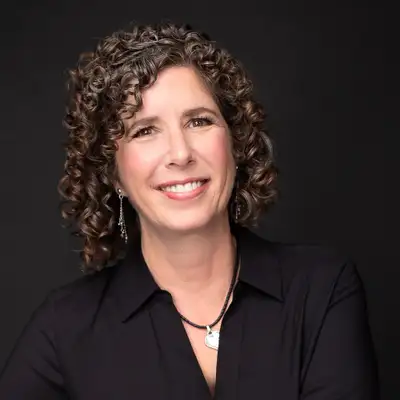
And today we're joined by Dr.
Emma Wagner, a distinguished chiropractor
from San Clemente vitality, who epitomizes
the essence of holistic healthcare.
With over two decades of experience
alongside her husband and partner, Dr.
Burton Wagner, she passionately advocates
for a healthy, active lifestyle through
an integrative blend of chiropractic
care, energy medicine, functional
medicine, and nutritional coaching.
Her dedication not only guides individuals
in tapping into their healing power, but
also fosters a deep sense of connection
and vitality, harmonizing the physical
and emotional aspects of wellbeing.
In today's conversation, we
are talking about changing
your habits to create wellness.
Dr.
Emma gives us tips to get us back
to our natural state, in touch with
nature, which allows the body to heal.
Dr.
Emma, welcome to the podcast.
Thank you, Julie, for having me.
I'm excited to have this
conversation here today with you.
I am as well.
And I would love just for listeners
to get to know you a little bit.
All of us seem to have an
interesting journey into
functional or integrative health.
Definitely.
Yeah.
Would you share your history?
Um, cause you actually, your family
has a traditional medicine background.
So share with us a little
bit of your journey.
So my dad is a medical doctor.
I was raised by a family.
That I'm that helping others and caring
for others in mind and my dad from a
very young age took me to the hospital
to do rounds with him really wanting
to get me interested in his practice.
Um, I never wanted to be a medical doctor.
And, uh, when my parents divorced,
my mom first met, uh, an homeopathic
doctor and we started homeopathic care
very early on around age 12, 10, 12.
And it started becoming the normal
in our house at that time too.
When you feel a little bit off,
you start taking care of yourself
and preventative care is really
important in, um, homeopathic.
And then being in France, Because I'm
French, if you can hear the accent.
I, there's a big focus on healthy
food, good food, eating well.
And in my family, there was,
my mom was a very good cook.
She loved cooking.
So there was always that aspect.
When I was 14 years old, I started
having headaches and naturally
the homeopathic was not working.
So I went to see my dad and I
asked him, dad, what should I do?
And he's like, well, you should take
some kind of Advil over the counter was a
different name because he wasn't French.
But sure, I felt like and, um,
is I can take up to six a day.
And I started taking some and
more and more up to six a day.
And I came back to my dad after
a few months saying, dad, my
headaches are still there.
I'm taking six at the other day.
What should I be doing?
And he's like, Oh, it's normal.
You just need to take something
a little bit stronger.
So I started taking something
a little bit stronger for a
few months, up to six a day.
When I got to six a
day, I went to see him.
I was 16 at the time.
And I'm like, okay, this
is not working anymore.
What should I do?
It's like, Oh, I just need to prescribe
something a little bit stronger.
And it was something with codeine.
At 16 year old in France,
kids starts drinking alcohol.
I was part of that.
And I started mixing the codeine
and the alcohol and very fast.
I realized that this was a very bad idea.
Very,
very bad idea.
And I could not focus on my studies.
I could not focus on anything.
Much of what I was doing, and it was
really affecting me, those headaches,
the coding, and That's when my mom took
us to, um, a silver mind control seminar
where we worked on the power of the
mind, doing meditation, respiration, um,
Visualization.
That's amazing.
Like what a gift to be
introduced to that at 16,
16 year old.
So at 16 year old, I started to
discover the power of the mind.
After that first night in the seminar, I
had a dream where my spiritual guardian
angel came to me and told me, Oh, Uh,
you don't need the headaches anymore.
You're not going to have headaches and
I never had headaches anymore So from
that moment, I decided to look at what
my mom knew that my dad the medical
doctor didn't Yeah, and I was I started
being very interested in that homeopathic
medicine uh in the power of the mind
and Meditation and astral traveling and
I started looking into energy healing.
I did my first energy healing
seminars when I was 18.
That led me into chiropractic school
when I was 21, moved me across
the Atlantic Ocean, came to the U.
S.
to study chiropractic in the U.
S.
And then when you start putting
your finger into it, I feel
like you're getting swallowed.
Deeper and deeper.
Yeah.
It's a giant rabbit hole.
Exactly.
So I started looking at
how nutrition affects us.
I started looking at
how emotions affect us.
How to really connect
the power of the mind.
So my practice is very unique and a
lot of my patients appreciate that
because I'm not just a chiropractor.
I am a chiropractor that does a little
bit of functional medicine, that does
a little bit of emotional work, that
looks at the power of the mind and the
pattern that are stuck in the body,
that looks at people's habits, that,
um, Are is able to, to look at really
how, what, what the body needs to really
function well and how to encourage that
normal function of the body, knowing
that the base of chiropractic is to
say that the body can heal itself.
Yes.
And it's about tapping into that natural
phenomenon that the body can heal itself.
I love that.
And, and that's the, that is the
whole point of this podcast is
that the body can heal itself.
Mm-Hmm.
. 'cause it is often.
the opposite of what medical
doctors will tell patients,
especially with autoimmunity.
I was told, Oh, you can't heal.
You'll just get worse.
You'll decline.
You know?
And so I love what you, what, what you
offer your, your clients and your patients
is what I call a very big toolbox.
So I'm not here to fix anyone.
And I tell people, even if I
feel like I'm an energy healer,
I'm not here to fix anyone.
I'm here to turn on your own healing power
so that you can heal yourself and give
you the tools that you can use because
I understand what you're needing, right?
And I'm going to, to assess, okay,
you're doing this, you're doing this.
That's right.
But have you looked into
that aspect of your being?
And most people are very aware of.
One two or three aspects, but they
might be missing a few different
pieces of their own puzzle.
I love that There's always yeah, we all
need the same things It's just you know
that hierarchy of the individual of
what do we need and what do we need now?
I say all the time.
I mean, I feel amazing, but I'm
still on a healing like I'm always
Like you in the rabbit hole learning
new things, but sometimes I need to
up level, you know, different areas
depending on what's going on in my life.
Um,
we're talking a lot about
autoimmune disease on your podcast.
And I think it's really
important to recognize that.
Yes.
When you have autoimmune disease,
your own immune system attack
pieces, different parts of your body.
And can be the thyroid
and Hashimoto's disease.
It can be the bones in RA.
It can be, there's a lot of different.
Piece that your body can attack because
it doesn't recognize your body as
its own anymore, and it's going to
see your body as a strange entity.
And so in my work, it's really
important to reconnect the body and
to reintegrate it as a whole, so
that We, the body doesn't need to
attack itself as much or not at all.
Correct.
And I always say, and it, you
know, it's getting, when you
get to that underlying causes.
And that's where the underlying
causes is so important.
Yeah.
It doesn't
matter which part of the body
or which system it's the same.
We're just, we're human.
We're, we're all designed, you know,
yes, we're uniquely individual, but,
and yet we're all designed the same.
As humans.
So, um, I know we have so many directions
we could go in, but I, I want to
talk a little bit about, because I
know you're an expert in this area as
well, habits and how habits can lead
to things like autoimmune or habits
can help us heal and lead to health.
Um, so if you don't, if you don't
mind taking us in the direction of, of
that world, I would, I would love to.
So for
me, we're really creatures of habits.
We, we, we live our life in patterns.
And those patterns allow
us to really, like, do our
things every day the same way.
And it's, those habits are based
on our education, our cultures, um,
our, our mindset, our trouble, and
most of our habits are protections.
And.
We're going to, it's very easy to create a
habit to not have to think about how we're
going to, how we got hurt in the past.
Right.
And maybe we got hurt going out, so
we're not going to want to go out
anymore, and we're going to make a lot
of reasons not to go out anymore, so that
we don't get hurt every time we go out.
So, when we look at habits,
we need to look at what, why
do we create those habits?
So, are they educated?
Again, and Our parents as
good as they are, and parents.
I always tell my kids
parents self charge for the
bad habits they, they have got from me.
Yeah.
and,
and I have a 19-year-old
and a 22-year-old.
It's hard to be a parent and
they're not born with a manual.
Sure.
I always say my to do, my oldest,
my oldest is the test kid, you know?
Mm-Hmm.
I feel like I have a tendency to
reproduce the same pattern and the same
habits that my mom brought in when I
was a child and at one point I'm like
this is not the way I want to raise
my kids and I really had to really be
intentional and think about what I was
teaching them and what habits did I
wanted to set for them as good habits.
I'm not perfect.
I didn't do everything perfectly.
Oh, darn.
Back to that human thing again.
Uh huh.
But I think even for ourself, it's, I know
they're going to have to let go of some
of those habits that I created for them.
The same way I had to let go of some
of those habits that my parents,
my culture, had created for me.
So it's interesting for me because
I was born and raised in Africa.
Um, Then I moved to France for 10
years, and then I moved to the U.
S.
for 10 years.
So, I see those three cultures, and I
see the difference in how we are expected
to function and to interact with each
other in those three different cultures.
Yes.
So that cultural aspect is really
important and recognizing that it's not
because McDonald's is what American mom
give to their kids and it's a comfort food
and it feels good to go to McDonald's that
it's actually good foods and that it's
a good habit to set for the kids, right?
It's a good habit to set for herself.
Finding the strength to be like,
okay, this is not serving my
higher self, and this is not the
direction I want to be creating.
That's where, when we create habits,
and when I help people create
habits, I'm really interested
in where the higher self want.
And what do you want to,
to create out of your life?
And it might be a very easy habit,
it might be very, it might be
digging around and finding more
deep down habits that people have.
Like, we are talking
about autoimmune disease.
I have a client that came to me,
and when I was asking her about the
food she was eating, she's like,
well, I make my own sourdough bread.
and she has ra uh,
i, I have had those clients
and, and for a while I would leave
her alone because every time I would
bring up the food and how I felt
like the food was inflammatory in her
system, and that food would create.
More information.
She's like, well, I do everything.
Perfect.
I even make my own bread.
Right.
So it was hard to get into that
conversation with her because she was
kind of refusing to go look into that
habit because she was 100 percent sure
she was doing everything right already.
So after a few visits, when the trust
started building and we're looking at
other pieces of the puzzle, one day she
arrived and she's like, my knee are sore.
painful.
I'm so inflamed.
I feel so, so wrong.
I told her, I'm like,
let's, are you ready?
Let's test your bread because, um,
I had a little bit of a bread with,
our sister had brought me some bread.
So or she had brought me a big piece
of bread and I'm like this bread
that you're eating is not good.
I could tell I could feel it in my body.
She had give me a piece.
I'm like, we need to talk about
this bread and you have to stop it.
And she's like, well, I'm ready to
take more medication from our RA.
I'm just feeling so bad.
I'm like, before you do take the
medication, stop the bread within three
weeks, our inflammation reduced 80%.
So
No surprise here, but I
love, I understand that
it doesn't surprise you.
I love, um, I had a client, I joke
because you know, often I always, I say
to clients, you know, it, you didn't
get in this condition of health or
lack of health overnight and healing.
This is going to take time.
Um, and my weakest hit.
Ever was with a client who
also happens to be a friend.
Um, I, but now at almost same
story, except that she had RA and
ulcerative colitis and I, it was
the same, but I bake and I make my
own bread and we eat really healthy.
She was eating very little protein,
um, you know, real food, whole food.
And sure enough, she's one of the
few people that I can go to her house
for dinner now, because, um, she
still bakes, but she does not bake.
It's sourdough bread with gluten anymore.
And you have
to understand that the flour itself is
the problem and you can find better flour.
Yes.
But you need to be very
intentional because it's hard to
find those flours that are good.
And it's not about the sourdough bread.
It's about the flour itself.
Well, and it's cute
because she has a bag of flour from Europe
that
she wants to try.
That she's had for like six months or
so because she doesn't want to, you
know, it's like she wants to try it,
but at the same time, she feels great.
Why, why would she want to rock the boat?
Um, and that's a whole nother podcast
we could talk about the, because
especially with the difference in
the Europe and, uh, what
we can, what we've done to the
food system in this country is.
Scary and is I'm
really excited about the
change coming around me
too.
I can't wait.
You mentioned McDonald's and I was
thinking like, Oh, you know, and it's,
it is such a relief that at least some
changes are coming down the path because
they're really bad, bad trajectory.
And again, when we know.
So, um, I mean, I think, you know,
the things are so much healthier in
Europe and other countries where they
haven't adulterated their food system.
It's, it's not like we don't
know what to do, right?
Let's just let food be food again,
and we'll all start to heal.
Yes, exactly.
Yeah.
So a patient of mine was telling me
that in the town next door in Laguna
Beach, California, um, they're putting
all their 5G tower on their water tower.
So all the water is getting
irradiated by those 5G.
And we know, I mean, I'm,
I like homeopathy a lot.
I, I really believe in the
power of the water to hold
resonance and to all vibration.
Oh my gosh.
And I'm thinking about those.
I don't know where anywhere else in the
country they're putting that, those 5g
tower, but if in Laguna Beach they're
putting in the water, the water, those
5g tower on top of that water tower, it's
going to create so much disease in the
population and people are going to make,
but I eat healthy, I do everything I need,
I drink water and water should be healthy.
No,
I would drink water out of plastic
before I would drink that water.
That's for sure.
It's really
understanding our environment and
understanding how an environment is
affecting us and why it's affecting us.
Yes.
And, and what are the key and
testing, what are you reactive
to in your environment?
Because in autoimmune disease, I
think the environment is really key.
And I think parasites is really key too.
And looking at that parasite
load to see if there's any of it.
Well, and.
The internal environment Of
the internal environment.
Yeah.
Chest emotion.
Yep.
And I know you work with
all of that as well.
Um, which like you were talking
about, sometimes we need
to really dig deep Mm-Hmm.
, um, to get to, you know, where
does this habit come from?
I, I love that you said, and I wanna
just highlight all of our habits are.
stories, those tapes that run in our head.
Like you said, we're
protective, especially as kids.
Um, and so step one is, is
often recognizing, you know,
where, where did this come from?
And that's not something that
typically, you know, it's a process.
It's a process, but it's not a
difficult process.
It's not a hurtful process.
It's not something where you're
going to have to hurt yourself or
really have trauma again and again.
It's a very easy, simple process where
you can really reconnect to those
traumas so that you can let go of those
trauma and start living differently.
I love that.
And so how do you help be like, where
do people start if they're like, okay,
you know what, I haven't really looked
at my habits and how I'm living.
And, um, you know, again, there is a
little part of, I felt like the, the gal
who was baking her own sour bread, because
she was trying to do the right thing.
Right.
Um, I think also we've been misled and
misguided as to what the right thing is.
Um, so where do people, how do you
help people start that process?
I always start with an assessment.
And, and I find that people, I
am able to read people through
what they're saying, through what
they're doing to how they explain.
It's a little bit of NLP neurolinguistic
information, Uhhuh, um, where I'm able
to, to see to, I, I, I feel like people
tell you what's going on, but they tell
you in a normal way and they'd tell you
like, this is, this is normal for them.
Right?
And if you're able to hear that
normal, that is not normal.
So I'm going to give an example
because I had that happen with
my husband yesterday in the car.
Um,
my husband sometime denies that he's
losing energy and he doesn't want to
Recognize that he is losing his energy and
so and he's going and as soon as he drops
energy is going to Make a story about it.
I I I didn't do it.
I didn't lose my energy.
It's just this happened Yeah, and
and so yes, he was very very I, I
saw it happening and in the moment
I'm like, see what you just did here?
You denied your loss of energy and
by just like dismissing it because it
didn't want to, it feel it, it's really
hard to recognize that you're doing
something that hurts yourself, right?
Sure.
Because we're not intentionally ourselves,
it's not intentional, and as soon as you
recognize it, you're able to change it.
Ah,
there's the key.
There's the key, but first you have
to recognize it and you have those
protective mechanism that is going
to make you make a story about it
so that you don't really recognize.
So somebody like me, probably somebody
like you are able to just feel it,
feel it, look at it and tell you,
you look at what you're doing here.
Right.
Yeah.
And, and as soon as you're looking
at it and you're like, wow.
I'm aware of it.
I acknowledge it.
I can change it, but first you
have to see it for what it is.
I love that.
Do you have any tips for people who
aren't working with somebody like
you or myself, um, who, who's like,
Oh, I, I want to start noticing.
I want to be at least that awareness
because you can't create, you can't
change anything without awareness.
That's always step one.
Yeah.
For me, journaling is very good.
Step for people to start looking
at what their pattern, automatic
writing, journaling, just allowing
you to look at what you're doing.
Reread what you wrote and, and, and maybe
journal about your disease, journal about
what you're doing, your relationship
with the world, with your relationship
with yourself, because in autoimmune
disease, again, you're attacking yourself.
So what do you think about yourself?
Right.
What relationship.
Look at what triggers you.
Be aware of it.
Most people, when they get
triggered, they dismiss it.
Well, because it's uncomfortable.
It's very uncomfortable.
Yeah.
Yeah.
I love the, I think the tip in it, you
know, I'm guessing some listeners are
going to hear this and say, you know,
Oh, I do journal, but you, you just
gave a nugget that I want to make sure
everybody picks up on, which is re read.
what you wrote.
Yes, you can, there's a cathartic, you
know, healing modality in journaling.
You know, we can get a lot out of
journaling, but when, when we're
talking about trying to create change,
re read what you wrote, because you
may be surprised at what you read.
Yes.
And, and, and if you don't
have the clarity, have
somebody else that you trust?
It doesn't have to be a therapist,
but it might be your husband.
It might be your best friend.
It might be someone who's
not triggering your daughter.
That is not somebody that's not
you, that you trust enough that
can give you an honest, like,
what do you mean in writing this?
What it really means for you.
Because sometimes we write things and
it's just so part of the story that we're
not really paying attention but when
somebody else writes it, it's like what
do you really mean when you say that?
So key, and I feel, I mean, for
everybody to optimize health You know,
this is important across the board,
but especially by the time you are
experiencing autoimmune symptoms.
This is, you know, we need to
start figuring out, okay, what
is really going on in there?
What is driving?
Um, you know, and yes, environment
is huge, but our perception of
environment is really important as well.
Very
important.
And it's our stress response
to our environment that is
creating that autoimmune disease.
Maybe we cannot change the environment,
but we can change our reactivity to it.
Amen.
And I think to change that
reactivity, if we want a second
tip, meditation really helps people
change their, their reactivity.
Yes.
And
how pause and
distance and contemplate and take
distance from that environment
that can be triggering.
And I find that meditation, I know
for me, meditation changed my life
and really like allowed me to open
myself to a different world and to a
different connection with my environment.
And I think everybody
has access to meditation.
Actually, that meditation
doesn't have to mean.
Sit, don't move, breathe and be quiet.
I really love walking meditation
and walking meditation.
You have to be by yourself, no noise in
your ear, no music, no boom, boom, boom.
Just being your thoughts, contemplate,
observe the world, pay attention to
what's going on in your environment.
Connect to it.
Look at the birds, look at
the clouds, look at the ocean.
I mean, I'm at the ocean,
but you get the idea.
Feel the breeze.
Yeah, exactly.
Yeah.
Yeah.
Connecting with your,
your physical senses.
And I love, cause I was going to ask you
and I didn't even need to, I, I sometimes,
and I'm sure you experienced this too.
You say the word meditation and you
could see somebody's stress level.
Go through the room because they
think they have to sit without
doing anything
for 10 minutes.
So I, I think that that is a huge
takeaway is, you know, it can be a
walking meditation and thank you for
clarifying, um, that it doesn't mean
you're listening to music or a podcast
or a, uh, All of those things are fine.
If, if you need to walk, but
that's not meditation walking
meditation.
Yeah.
Um, for me, meditation is really
inviting life inside of you.
Yes.
And it's observing how that life flows
through you and it can be done through
the breathing if you're meditating and
just immobile, but it can be through
the, the rhythm of life through the
walking and that walking really create.
Something in the brain that helps
put you in that more relaxed state.
And for beginners, I find it easier
to do walking meditation than
just sitting meditation because
people, we live in a world where
we don't know how to sit anymore.
Right.
Yeah.
So the walking is going to help
us get that relaxation going.
Well, and I love, you know, if some
listeners may feel like, Oh my gosh,
we're jumping all over the place.
But really the thread is,
if we were to get back.
To how humans were designed to live, you
know, it's, and we live in a modern world.
So we have to take steps to compensate.
We have to compensate for
the 5g on the water tower.
We have to compensate
for the constant input.
Yeah.
The food, you know, how messed up our food
system is all of that is why we need to
take these extra steps because our natural
state is to allow life to flow through us.
We just have lost touch with that.
I really feel like
the humanity or culture at this time
is really pushing us against nature
and we as a culture feel like we should
have nature adapt to us and to our
need rather than us adapting to nature.
Well,
we've been trying that.
And it's for years and it's been the
culture for years and it's really changing
that mindset that I am highly adaptable,
I can adapt any environment I'm in and
I can love that environment and I can
respect that nature that yes is violent,
yes it's traumatizing, yes it can be
dangerous, but it's also beautiful,
it's also marvelous, it's also magical.
And if we, if we tap into that.
side of nature that's marvelous
and it's amazing and it's so well
created when you think about it.
If, if you choose to be part
of the nature, and adapt to
it, I think you feel better.
Yeah.
Well, cause that's how we're
designed to be, you know, I'm
sure for you is the ocean.
I have the mountains, you know, there's
always something, um, or I watch my,
you know, we have horses and chickens
and dogs and, you know, I'm jealous.
Watch the animals and, you
know, and, and it's just.
Yeah, and I think
that's what cat and dogs, I think cats
and dogs in the house is so powerful and
why and dogs are so companion and support
animals because they have, they give
us that ability to reconnect a part of
our, ourself to that human, that nature.
Yeah.
And it is sad that today we only have
dogs and cats that we have access to.
And most people accept, You.
I'm very blessed.
With your horses and your
chicken.
I'm also blessed enough to be
well enough to take, I could not.
I've lived on 10 acres and
taken care of all those animals,
10 years, a lot of work.
I couldn't have imagined ever
being well enough to do that.
So it is, it's, it's a, it's a
huge gift on, on both sides and,
um, but you know, I already drank
the, the healthy Kool Aid, right?
So I, I'm already all in,
I'm in the rabbit hole.
I lit, you know, And so And I don't
like this word of being a rabbit rabbit.
I think the rabbit hole is really
the, the, the pharmaceutical system.
It's, it's, we've been lied so much and
for so long, and it's been 80 years,
maybe 120 years since Rockefeller created
that big, that new medicine and started
using petrochemicals in our healthcare.
And.
And we feel like this is normal.
And this is what everybody
thinks that's the normal for me.
That's the rabbit hole.
Well, that's true.
If you're, yeah, yeah,
it's, um, it's true.
I need to come up with a better, because
even the Kool Aid, like, I can't say
it without qualifying, not actually
Kool Aid, because between the dyes
and the sugar, I would never, it's
not possible.
I think it's really about re Reformatting
how we talk about those things because
how we talk about it is really going
to create our mindset and our mind is
going to see like we were talking about
McDonald's and how McDonald's considers
as a comfort food in the United States.
Just saying the word comfort food.
There's nothing about McDonald's
that will comfort your
body.
I get nauseous when you
say the word McDonald's.
Right.
And I used to eat it years ago, you
know, when I was younger, I, I ate
it and, and as a kid, to be fair and
talk about the changes, um, when I
was little, we would go to McDonald's.
You could, you know, there was,
you didn't eat in the restaurant.
It was actually, you know, real
beef, the fries were cooked in beef
fat, the, it was a whole, it was not
different.
Yeah.
Yeah.
Yeah.
Yeah.
And, and so I love, I am excited
that we're in a time where there
seemed to be enough of us having a
conversation that we want to change that.
I love it.
I love it.
It's I, somebody asked
me, well, how do you feel?
And I said, I feel hopeful.
Me
too.
You know,
um, very
hopeful.
Yeah.
The time is changing and I think, yes,
it's, it's hard right now because we're
seeing all those things and especially
when people discover that they have
autoimmune disease or any kind of chronic
disease, diabetes, cancer, they're like,
oh shit, you know, and yeah, what do I
need to do but What I love is that we
finally have good tools that we can use,
that we can put in place, that we can
start working on us and start changing
those habits that you were talking
about, that is around food, about around
what we think, about how we do stress.
Yeah.
Yeah.
And we're, and we're
able to change all that.
And then our body.
Takes over and that natural ability
of the body to start kicking in and
it's like, wow, my body can do this.
I had a patient, um, yesterday
coming in and she's like, I
cannot believe how strong I am.
She's a cancer survivor.
She's been under my
care for so many years.
Six or eight months.
She's like I can't my husband
even was surprised at everything
I could do Everything I was
able I was keeping up with him.
I was even doing more than him
They they're rebuilding a house
and they just bought a house and
they're just whatever doing to that
house but She's like, I'm painting.
I'm doing this.
I'm doing that.
And my head and I stopped
when I need to stop.
I heard you.
I know what to do in terms of habits.
I cannot push myself too hard, but I'm
surprising myself of how strong I am.
And I'm like, this is beautiful.
This is what I want to hear.
Well, and the only limit on
that is the limit we put on it.
Exactly.
Really.
And I see it too.
I live it because even today I would
have, there's a part of me that
thinks I can't feel better than this.
And yet I know in six months I will
because that's been the past several
years where I think like, oh, I'm here.
And then I'm like, wow, well, now
I have more energy and I'm stronger
and I want to learn something new or,
um, and, and so to, it circles ties
beautifully back into this noticing,
you know, you were talking habits.
And I want to clarify for listeners.
We're also talking about your thoughts.
Yes.
Like this is where habits start.
Yes.
Yes.
And so, yeah, it can be a little
uncomfortable or sometimes.
So to
give an example to your, to, to, to
your, to your listener, um, about,
um, um, A year ago, a little bit more
than a year ago, in September last
year, I came back from a traveling
trip to France and I recognized that
I was not in the shape I wanted to be.
I was not feeling as good as
I wanted to be and I needed to
really like step up my game and
really like look at my own habits.
And in September, I decided
I was going to work out.
My first I was very resistant
at first because I'm like,
I have a very physical job.
I'm a chiropractor.
I push on people all day long.
Uh, I I stand up.
I thought I, I, before September
last year, I was like, I cannot,
I'm not going to work out.
I'm going to be too tired.
Well, I was tired.
I was not feeling good.
I was a little overweight and I'm
like, okay, what do I need to do?
And the message I got was I
need to start working out.
So I started working out
every morning, no excuse.
At first it was just 15 minutes
because that's all I could do.
And slowly I started building
up and, Quickly enough, I was 45
minutes every morning, and I've
been doing this for over a year now.
And I just met a friend the other
day that I hadn't seen in about
a year, and he looked at me and
was like, Damn, you look younger.
Yes.
And I do.
And I do feel better.
And I have more energy.
And my mind works better.
And I feel more excited about life
than I have been in a very long time.
So
Yeah.
And I love the, we talked earlier
about, you know, we're constantly, we
always need to reassess and it's not,
Oh, do these things for 50 years and
that's going to work for you forever.
I mentioned before we started recording,
I was sharing about how now I'm in
clinic more than just working at home.
And the first two weeks that I was
in clinic every day, I got inflamed.
I was tired.
I was like, Holy cow.
What's going on.
And I realized all the things that
were back to nature incorporated
in my daily routine that I
didn't even think about anymore.
The grounding between clients, the
sunshine being out with it, just
things that were part of my day.
I was like, Oh my gosh.
I need to now create intentional
routines to make sure that I'm doing
the things I tell my clients to do
because my, my schedule changed.
Yeah.
Yeah.
And so
self care is super important.
And if you don't take care
of you, nobody else will.
Yes.
And if you don't do what makes
you happy, you won't be able
to take care of anybody else.
That's
for sure.
That's the, or maybe you
feel like you can, but at one point.
Your energy will run out.
You're, you will drain yourself for sure.
So it's really important for
me to get your good routine
up to know what you need.
Is it a walk on the beach?
Is it a walk hugging a tree?
Is it spending some time 20
minutes outside outdoors?
Something I recommend
all the time for people.
I think people need that sun and
that sun feels so good on our skin.
Um, and 20 minutes in
the morning and get sunlight
in your eyes even better.
I personally like it at lunch,
but that's a different story.
But figure out what works
for you and, and try it.
Give yourself enough
time to, to adapt to it.
Because yes, at first, if you're
used to being sitting all the
time, and I recommend that a
lot, is having a stand up desk.
At first standing up throughout the
day, it's going to feel weird and your
back is going to react differently.
And you might need to stretch a little bit
more because you decide to shift from just
being a sitting position to a standing
position sometimes during the day.
But learn what your body needs, pay
attention to what your body needs.
And I know we live in a society
where we're not taught that from a
young age, unfortunately, I think
it would be a normal, basic course.
And Elementary school where
what does your body needs?
What do you need to do
every day to feel good?
And go experience doing it
and see how it makes you feel.
Absolutely.
And it, and you had, had said it earlier
too, but this listening to our body, which
most people, by the time they find you
or me, you know, they're not listening.
They haven't been listening.
They don't want to feel the hurt.
They, you know, all the things.
Um, they don't trust
their body anymore.
A lot of them don't trust their body
anymore, especially in autoimmune
disease, because look, my body,
every time it's hurting me, and I
don't understand why it's hurting me.
It's just hurting me.
But it's because it's giving you
information and you're not listening.
100%.
100%.
But I love, I want to add to your, yes,
listen to your body, but you Said it, and
I wanna highlight again, the, there's a
difference between resistance in doing
something new and actually having your
body tell you, this is not for me.
You know, so it's like, okay, give
yourself time to adjust to the new
habit and listen to your body really
discern what's really going on here.
. Yeah.
And, and if you're doing something
that you know is really good for you.
And maybe you're, you decided to
just start drinking more water
or start exercising a little bit
more or having better thoughts and
rephrasing some negative pattern
that you have and that you're saying
to yourself, saying I am love, for
example, is a really good pattern and
a really good habit in my dictionary.
So.
When you, when you start doing this,
start doing it regularly, give yourself
a chance to, to see what is going
to be brought up by that new habits.
Yeah.
That's amazing.
Uh, we could talk for hours and hours,
but I promised you I
would honor your schedule.
So you've already given us so many
amazing tips, um, but we're at
the point of the podcast where.
And you could repeat something
or say something new.
What is one step that listeners can take
starting today to improve their health?
I don't like that question because,
because, because everybody's different
and something that might work for
your neighbor might not work for you.
So it's listen to yourself.
Look at what, what is it that you, you
feel you need to, what, what is your
higher self really wanted you to do?
And go do that.
I love it.
Ask yourself what makes you alive and
go do something that makes you alive.
Love that.
That's amazing advice.
And it's, it's essential for everybody.
And, and actually something that
so many listeners need to hear, you
know, because we don't, we don't
tend, we, we have to relearn the,
you know, Oh my gosh, what about me?
What about me?
And make yourself your VIP.
It's okay to be a very important person.
It's okay that you're the
center of your universe.
Yes.
It doesn't mean that you don't care
about anybody else, but you're,
you're a VIP in your own world.
I love it.
Be, be your own VIP, be your own VIP.
Amazing.
Dr.
Emma, thank you so much
for joining us today.
It
was a pleasure talking
to you today, Julie.
For everyone listening, remember
you can get the transcripts and show
notes by visiting inspiredliving.
show.
I hope you had an amazing time and
enjoyed this episode as much as I did.
I'll see you next week.