Subscribe
Share
Share
Embed
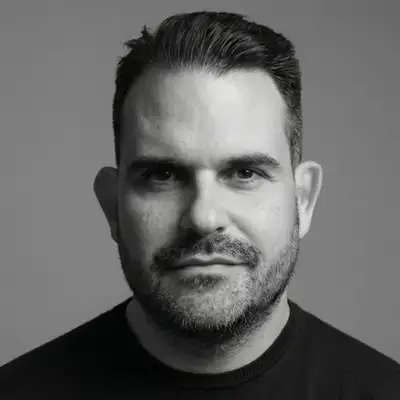
In this return appearance on the Maffeo Drinks podcast, Paul Thomas, whom host Chris Maffeo dubs "the king of insights," shares wisdom on how to escape the marketing "ivory tower" and understand real consumer behavior.Paul advocates for marketers to personally observe products in various venues rather than relying solely on data. The conversation examines how brands should adopt occasion-based marketing over demographic targeting, striking a balance between aspirational positioning and pragmatic distribution strategies. Paul critiques the research industry's shift toward "faster and cheaper" methodologies at the expense of quality, encouraging brands to conduct fewer but better studies.The episode concludes with advice on creating an "insight ecosystem" that balances qualitative observations with quantitative data, emphasizing the value of curiosity in understanding how consumers interact with drink brands in different contexts.Timestamps:0:00 Introduction to Maffeo Drinks Podcast00:19 Welcoming Back a Special Guest01:00 Diving into Key Topics02:00 Understanding Consumer Insights05:46 The Reality of Market Segmentation07:57 Strategies for Brand Placement14:09 The Importance of Research31:56 Balancing Qualitative and Quantitative Data36:18 Final Thoughts and Wrap-Up
The MAFFEO DRINKS Podcast is a leading drinks business podcast delivering actionable insights for drinks leadership.
For founders, directors, distributor MDs, and hospitality leaders navigating the tension between bottom-up reality and top-down expectations.
20+ years building brands across 30+ markets. Each episode features drinks builders: founders, distributors, commercial directors, sharing how the drinks industry actually works. Not the conference version. Honest conversations.
Insights come from sitting at the bar.
Beyond episodes: advisory for leadership teams, subscription with episode deep dives and principles to navigate your own reality.
Beer, wine, spirits, Low and non-alcoholic.
Bottom-up Insights & Episode Deep Dives at https://maffeodrinks.com
Welcome to the Maffeo Drinks Podcast, where brands are built bottom up. I m Chris Maffeo and in each episode, me and a new guest crack how drinks go from one bottle to one case to one palette. Hit follow and leave a review to help new drinks builders find it. Now let's break it down together. Hi, Paul.
Chris Maffeo:Welcome to the Maffeo Drinks Podcast.
Paul Thomas:Hi, Chris. Nice to be here again.
Chris Maffeo:That's the first time we have a guest for the second time, and it's an honor to have you because as I named you last time, you are the king of insights for me.
Paul Thomas:Well, I appreciate that. Nickname is still not caught on globally, but hopefully this second opportunity might reinforce it.
Chris Maffeo:I see you have one of your shirts, so I'm really honored about that as well.
Paul Thomas:Well, I've just flown back from two weeks in India, Chris, and all of my good shirts are in the washing machine or drying. Therefore, I'm down to the clothes that my wife won't let me leave the house in.
Chris Maffeo:Let's dive in. I've prepared a set of questions for you. And, because it's the second episode that we do together, I want to touch base on quite a few items, but the fact that we shouldn't be in the ivory tower, that's a big topic for us. And insights are coming from sitting at the bar. We all agree with that.
Chris Maffeo:Something about research methodology, because you know, my aversion for focus groups and research as such and I'm more of a qualitative guy, but I understand and I acknowledge the fact that there is a need for quantitative, especially for big companies. And then I want to talk about occasion based marketing, adaptation of occasions. How do we bring cocktail culture to scale? Because this is one of the topics I'm focusing on lately. How do we get out of the 50 best bars bubble and echo chamber to bring cocktail culture to the world?
Paul Thomas:Sounds like a plan to me.
Chris Maffeo:So let's dive in. So, I want to quote you on something you wrote on LinkedIn some time ago. You said, you're not your consumer, you're miles away. Get out there.
Paul Thomas:Yeah. Where it came from is I had a group of my team coming over from Spain and Germany, and I organized some, like, store visits, not bars, but supermarkets. There can be a temptation when you're in your home market to say, I don't need to go. I don't need to go. I know Tesco, Sainsbury's, Waitrose, but we did them in South London.
Paul Thomas:We did these store checks in Vauxhall. And it quickly dawned on me that living in Surrey with my online Waitrose order arriving once a week, The real world is very different out there. You know, I had never seen a situation before where every bottle in the spirits aisle had security netting. So all of these attempts we make with point of sale and advertising to premiumize brands, you then arrive in the supermarket and nets over everything, even own label spirits, even no and low spirits, everything. There was a Sainsbury's right next to Vauxhall Station.
Paul Thomas:The ready to drink cans had a security cap on it. And as I was standing there with my colleagues, my jaw on the floor, a young guy with a big coat walks past us, grabs three of these, puts them in his pocket, runs out the store. And you read in the papers how there's a theft epidemic in London, but it just goes to show how far away you can be from the real people, the real shelves, the real supermarkets or the real bars, even in your home market. And it's just sort of talking to me, there's a need to get out there more when we sit in our ivory towers and talk about point of sale strategy in off premise. And then you start to, how do we premiumize our brands?
Paul Thomas:And then you see the reality of those supermarkets. It makes you think very differently about whether the off premise at the moment is that channel.
Chris Maffeo:Wow. Wow. So I guess we're not gonna solve here the theft crisis and epidemic, but it's it tells me a lot about the fact that, you know, it goes back to our discussions about PowerPoint presentation. You know, you tend to always think, you know, London Heathrow and the Selfridges and the Waitrose. Whenever you want to scale, you go from Selfridges to Waitrose rather than from wage rolls to Sainsbury and Tesco.
Chris Maffeo:And it tells us lot about the exercise that we must do to get out of the of the echo chamber, the marketing bubble, the the ivory tower.
Paul Thomas:And the equivalent for me as well, you know, if we go back to the bar, which is always my favorite place to be, it's so easy to go to the top 50 where your sales team have already prepared the bartender to make sure your brands are on the back bar, and they're naturally completely spontaneously gonna recommend your brand for the cocktail. Go in and go into a Mitchell and Butler's chain, into a weather spoons, go into a local pub and see what, how your brand is appearing there. That will give you a real understanding of how people are really interacting with your brand. That's not to say that those and we'll talk about it later. The top 1% of bars aren't important for creating that halo, But I wish more of us had the bravery to take our leaders, to take our teams to where things are real rather than where things are perfectly polished to create a perfect impression, which is easy, easy to say.
Chris Maffeo:How can we crack this? Because there is this called the leafy saree with online waitress orders. And for those non familiar with waitress is the most premium supermarket chain in The UK probably. And a test queen Vauxhall, which is South London, a more basic neighbourhood. Let's call it.
Chris Maffeo:There is an element of market segmentation even within a single city. I mean, London is a bit of a monster of a city. Of course, it's like a country within a city. But how granular can we get in these geographical segmentations where we actually have, like, the Selfridges, the the Harrods, and we have this kind of situations, high crime, lower income, because there's something to do for me on the ability of certain premium brands to scale that sometimes we are pushing for scale in places where we shouldn't probably scale those brands.
Paul Thomas:Yeah, it's a great question. I mean, whether throughout my career, I've seen different segmentations, whether it's $1.09 90 in terms of bars, whether it's gold, silver, bronze, whether it's gold, silver, bronze, platinum, even right to the top. Understanding that within the same city, are very different types of bars. The reality is if you want to be a brand of the scale of to use some competitor examples, Johnny Walker or Tanqueray, you have to be in all those bars, you cannot be a scale brand just in the one and the nine. What that means is you have to think about innovation, which allows you to have a portfolio.
Paul Thomas:So if we take Tanqueray, Tanqueray 10 for the top bars, then you've got your more premium flavor expressions, maybe for the middle bars. And then you've got your basic Tanqueray, which might be a pouring gin in certain with a 90 or you've got to think about serve strategy. In my very top 1%, I want my gin to be served in a French 75 in the nine, I want it to be in a gin sling. And then in the 90, I accept it's just going to be a gin and tonic. So it's really having those strategies, having your account managers trained in understanding the kind of outlet they're going to, and what's useful for them.
Paul Thomas:That's a really key point for me, which is so often brands go to bars and try and push a message. Whereas actually we really need to understand the outlet we're talking to and what do they need. If I deliver this beautiful premium crystal cut cocktail wear for the dog and duck, not very useful for that bartender, to be honest, who probably just take it home or who just keep it in the backroom. So we really need to tailor those strategies to that outlet segmentation. And for our marketers in particular, less so our commercial teams, less so our sales team to understand the difference between those types of outlets, they've got to get off their backsides and go and see them and not be afraid of seeing their brand in the dog and duck or in a weather spoons.
Chris Maffeo:I was discussing with, with Filippo Matti, my business partners on some projects. We were talking about Campari, for example, Campari is always talking about the Negro. There's no Negro without Campari. That's a famous tagline that they've been using for a while, but then if you go to the basic bar in Rome, it's going to be a Campari and orange or Campari and soda or Campari on ice with a slice of orange. There are different kinds of things.
Chris Maffeo:And also like a bit of recruitment to be done, especially for products with a particular taste profile that is very polarizing, like a bitter could be. And then as Laocaela, put some orange juice, which is very sweet and brings you into the category. In whiskey, I always use the example of my favorite Boulevardier, which I've come to known as a Negroni drinker. When I started to work for whiskey companies and projects and I didn't like whiskey, I thought, okay, like how do I get in? Okay.
Chris Maffeo:I know vermouth. I know bitter. I just wish the gin for the whiskey. So, but it's very interesting. The exercise to sell it to the management, to sell it to the bars.
Chris Maffeo:You know, there's always this element of selling story and also understanding the ecosystem. I've had loads of fights with management visiting me in markets where they wanted me to list a certain brand in the top 1% where the bartender was looking at me like basically fucking crazy. Do you want me to put this thing that it's on promo every other month on a supermarket shell in the middle of nowhere? And at the same time, sometimes like they want to scale the super premium ones into the Tescos of the world and then expect rotation that is never going to happen. And then you get a call from the buyers like, this is the last order I've ever made of this product.
Paul Thomas:And I think there are brands that through their portfolio can be everywhere. Johnny Walker is a good example through the different colors. You can have Johnny Walker red in your Tesco and in your lowest bar, right up to Johnny Walker blue and even some more premium variants. So there are some brands that can do it, but the vast majority are better off focusing on selling really well where they're meant to sell versus trying to be everywhere. I think distribution can be a false metric sometimes.
Paul Thomas:I think distribution is vanity. Rate of sale is sanity in these sort of things to return the favor. I think I've seen you say on LinkedIn many times, it's better to be selling really well in one or two outlets than it is selling badly in a 100.
Chris Maffeo:A 100%. A 100%. We both worked for Asahi at different times. We never worked together. I hate myself.
Chris Maffeo:I should have stayed a bit longer. Coming from the beer angle rotation plays a huge role because it's all
Paul Thomas:about space in the fridge or the keg. Yeah, exactly.
Chris Maffeo:There's a shelf life on a bottle. There's a tougher shelf life on the keg because once you open it, you know, three days and it's gone basically. So there is this element in coming to the spirits world. I've got into this kinda, like, cultural shock where everybody were measuring themselves on distribution, and then you see bottles are probably brought two years ago still there unopened.
Paul Thomas:What we might call prestige whiskies or any other category. Part of the reason that the bartender will accept them being on the shelf is they're almost like a beacon of quality. If you look at the back bar and you see don't know, brand doesn't immediately come to mind, but you see something, oh, let's say Johnny Walker Blue again, which is a $100 for 25 milliliters. You probably won't sell it that often, but everyone's gonna see that as an impressive sign compared to beer. Consumers are smart.
Paul Thomas:If they see bottles collecting dust, even in spirits, they're gonna not go for it.
Chris Maffeo:I think it's sort of like what you were saying. It's also this kind of like price anchoring that many venues do. It's like the like the spaghetti with lobs in a restaurant for £80. Then it, that helps you sell the 25 or carbonara, you know, made with special eggs. You just go for it then because it all of a sudden becomes a cheap alternatives.
Chris Maffeo:It's also about occasion. We discussed that a lot last time. If I remember correctly, you're also, have an aversion for demographic segmentation as I do, maybe a bit less.
Paul Thomas:No hugely because I hate the idea of being put in one category as a person, and that's the only way I'll behave. Know, we talked about it before, the what I'll choose on a Friday night in a stylish bar in London is completely different to when I've had an argument with the wife and I've stormed to the pub on a Sunday and I just a beer and then to come home and apologize and realize that I was wrong all along. Occasion segmentations include in trouble with the wife, but it's, I think it's probably quite a common one.
Chris Maffeo:You know, how do you identify with which occasions are, you know, good for a certain brand?
Paul Thomas:And this is where, Chris, if you can, quantitative data can help you. You know, what we're here we go, selling, keeping my industry alive, I've got to sell it. If you are able to run something like a demand space segmentation, so you understand the different needs of the consumers on one axis, and the different occasions or context on the other, it's actually very easy to bake into that data outlet segmentation. So you start to understand, well, if my demand space is called look sophisticated or stand out or connoisseurship or whatever it might be, it allows us to go right, that's relevant for these kind of drinks in these kind of outlets. And then it allows you to be very targeted.
Paul Thomas:So if you know that the consumers may need is to look sophisticated, look good, stylish show off, that typically is in a high end cocktail bar, it makes it really obvious for you to go, right, I need my brand to appear in a way which helps that consumer to stand out, whether it's in beautiful fancy cocktail, or if it's beer, I want to be seen pouring granola reserve, not the classic Peroni. Alternatively, if the occasion is chill out, relax, kick back, and they're doing it in a local dive bar in New York, I'm not going to invest in my brand, I might invest in glassware, I might invest in the staff wearing my brand so that people see it and make a choice. Having that kind of data can allow you to be very focused with this is my brand, this is what I want it to stand for, this is how I'm going to serve it and these are the kind of outlets I will target. Now, of course, if you know your market really well, you can do it bottom up and go, I know these are the kinds of outlets we have, therefore let's think about it from that way up.
Paul Thomas:But I think if you're going to run research and spend money, a good demand space occasion segmentation is probably the one thing that all businesses should try and have.
Chris Maffeo:I mean, I've been working with demand space in my time in Carlsberg. And I agree with you. I I tend to call it occasion to simplify it because I mean, especially now people that haven't been working in multinational now, they may find it a bit too complex to digest now, but the challenge on this one, and it's connected to the research element, but it's connected to the scale element and we will spoke speak about later. There is this element that if we identify that there are, let's call it like 400 venues that are suitable for that specific demand space, then why does the management want me to scale it to 303,500 outlets? Yeah.
Chris Maffeo:That's where the Vauxhall paradox, we can call it like that now.
Paul Thomas:That's what about the Vauxhall docs? That works quite well.
Chris Maffeo:That's where the Voxer paradigm come into existence. Because then you want to drive it into venues that where there's not at all that demand space, but because of, you know, scale objective of a certain brand or troubles on another brand within the portfolio, then you end up in chasing the wrong outlets and may actually alienate the good job that you have done in those 300 that you started with?
Paul Thomas:That's a super question. I was just hosting a demand space or occasion segmentation training in Delhi last week on this exact topic. So without my presentation in front of me, what I would say is consumers are never wrong. They can consume you wherever they want to. Your brand might be positioned and look sophisticated, but it is not a problem if a consumer wants to drink me whilst they're sitting on the sofa, whilst they're having a date night, whilst they're meeting a couple of guys in the pub, great.
Paul Thomas:It adds to my P and L and hopefully my bonus, which would be nice. However, it allows a brand to be focused in the way it chooses to show up. The way we often describe it is you want to activate and appear every sense that you're spending on advertising or below the line or in store activation to target that demand space. You want your brand, it's heartland to be in that occasion. You want it to over index in that occasion over time.
Paul Thomas:Two wonderful examples out there are Corona in that sense of kicking back, enjoy the beach, unwind, right? There would also be some people who think Corona is quite a classy drink, it's in a bottle, it's premium, but I might drink on a more special occasion. Aperol Spritz is now a super one for clearly being anchored in that aperitivo moment. But you know what, if there's somebody who wants to drink an Aperol Spritz at a brunch, why not? You become associated with a moment with an occasion, but then volume can come from elsewhere as well.
Paul Thomas:You just want more volume to come from that occasion if you can, because it allows you to be consistent. Advertising money, activation money is limited. We can't try and say our brand is the perfect whiskey for every occasion. We can say it's perfect for this one. And some people will listen and choose that.
Paul Thomas:Others will go, well, no, I bought it for that. And that's fine. Provided they're buying your product, they're never wrong.
Chris Maffeo:It's one of the things that I was saying like a few years ago, the fact that ultimately I was often the guy when I was with my marketing hat on, that I didn't want my brand marketed into like more basic level outlets, so to say. Then when I was responsible for a P and L, then I started to change my mind actually like explicitly.
Paul Thomas:What you said there is very often the difference between market teams and global teams. Market teams have the reality of a P and L. Global teams have the long term, often the equity, the health of the brand in their mind. And often it's finding that sweet spot. Peroni sits on its one single plinth on Oxford Street, but actually it's also selling in ZZ's and Pizza Express, you know, it's both.
Chris Maffeo:Absolutely. Absolutely. You know, to agree with you on the fact that ultimately, if the pricing is right and there will be some rotation in that outlet, actually that outlet was a good option. I give an example. It was just recently I was with some friends, know, we were in normal pub.
Chris Maffeo:We were like 10 guys, you know, we had a meat seller or goulash or whatever, heavy check food. And then four or three of the guys, they, they want a spirit and like a digestive after it was a kind of like a lunch dinner. And Zacapa was listed in that venue. So he had like very basic mainstream brands. And then there was Sappa there.
Chris Maffeo:And it struck me because, because I have this kind of like Terminator eye for back bars. I was like, what the hell is Sappa doing in this back bar? You know, there's no connection whatsoever with all the other brands, But that day, basically, this guy, you know, they had a couple of shots. I at least saw ten four CL pours of that. So if it hadn't been there, that would have gone for something cheaper and totally different.
Chris Maffeo:But because it was there, that was a kind of like confirmation of what she's saying. You know, the fact that when you expand distribution, regardless if the place is the right one for a global team kind of play may drive rotation. Of course it was sporadic, but that helps your bones.
Paul Thomas:Yeah. You know, I think there's two thoughts within that. Number one, there's being pragmatic. So if your whiskey sells up $200 for 25 millilitres sharp, yeah, that tells you you're only going to be at a certain percentage of bars. You're not going to put that brand in Weatherspoons.
Paul Thomas:But then the other thing that's really important to me is we mustn't be snobs. Let's take Peroni as an example, right? Perhaps for someone like me or you, that kind of moment is wearing a nice suit, we're in a cocktail bar, that's our moment of looking sophisticated. Definitely not this shirt. But actually for other people who might come from lower socio economic classes, maybe taking their family to Pizza Express is their moment to look sophisticated.
Paul Thomas:I think that's so important. I think marketing is a very elitist function. We tend to forget that different people still have those same needs. Even if you have $1 in your pocket, you still want to try and look your best at some point, you'll still choose a better brand. And that might not be the $1,000 a shot brand, but I think brands need to stop being so elitist and start being grateful that consumers choose our brand.
Paul Thomas:I'd rather a consumer choose our brand in a slightly lower outlet than they choose a competitor.
Chris Maffeo:A 100%. I'd like to build on what you're saying. Is there maybe a like a job to be done in like loosening up a little bit, the target occasion in the sense that when you explain it to the team, then that moment of show off or whatever that would be, or maybe explain it in a little bit like wider elements. That is not only the the riverboat with George Clooney.
Paul Thomas:That's but that's why insights start at the bar. Get your marketing teams out to go to the bar. Stop them sitting there dreaming about George Clooney on the riverboat. Get them to the pub. Listen to them with a group of builders or plumbers drinking peroni, because it shows a sign of status, because they can afford pironi.
Paul Thomas:They've had a good week at work, right? They've had good clients, they've done a good job. That will help you understand how you activate your brand. Stop going to the 1% bar where your Peroni is served in a crystal cut champagne flute. For me, it's really obvious.
Paul Thomas:We live in a class system elitist industry. I hate to say it. I'm talking about marketing. I'm talking about even market research. We also work in incredibly ageist industry, no one wants to speak to people 65.
Paul Thomas:Even though people 65 are drinking a lot, have a lot of money and buy our brands. So if you can't afford to spend money on research, use the eyes that God gave you.
Chris Maffeo:It makes me think of, back in the days when I was working with Chile as a market, you know, one of the biggest pool for premium brands, if I remember correctly, Antofagasta, which is a minor city. There are minors move there. Yeah. They have good money that they've earned, and they want to invest them into what feels premium to them. You know?
Chris Maffeo:So in a normal regular strategy, we only focus on Santiago because that's what target consumer is. While and you would totally declass Antofagasta as, oh, that's a minor kind of city, while probably most of your volumes are actually coming from there.
Paul Thomas:Yeah, it's exactly that. You know, as well as doing segmentations through outlets, geographical segmentations are also important to take The UK. I know it's the same in Italy where there's such a divide between the North and South, entirely the same in most markets, to be honest, you know, so it was just in India and you talk about tier one versus tier two cities a lot and the difference is phenomenal. The difference is absolutely phenomenal.
Chris Maffeo:Even within the same region, I remember I was talking to a wholesaler, actually sorry, was an agent. He was explained to me in Lombardia, which is the same region, like the region of Milano. And then there's Brescia there's a lot of factories there. And then Cremona, which is a very kind of like farmland, but they are neighboring province. And he was saying, you sell so much more in Brescia because there's so many people working in factories that then when they finish the shift, they want to show off.
Chris Maffeo:They're all well dressed, looking for kind of like bling bling kind of occasion, table service, vodkas, clubs. While in Cremona, people would actually more drink maybe at home and it's much more agricultural kind of society and it's neighboring provinces. It's so incredible. Let's go back to the research. I haven't forgotten the importance of research.
Paul Thomas:I keep reminding you. I'll tell, tell you every time I need it as I'm unemployed. So come on.
Chris Maffeo:You wrote, I'm quoting you, please stop commoditizing research. The push for faster and cheaper is one thing, the sacrificing of quality is another.
Paul Thomas:Yeah, I think that's really, really important. What's happening in the industry at the moment is at one end, you've got high end consultancies doing these big demand space things that I'm talking about. And then at the bottom end, you've basically got sausage factory, quick, cheap, dirty, and the guys in the middle of being squeezed. My view of research is it's always better to do one thing really well than to do 20 things really badly. I think a lot of the reason that people hate market research and go it's a waste of time and money isn't because I hate market research, it's because I hate bad market research.
Paul Thomas:They hate research that's done quickly without consideration. If my industry wants to persuade people like you to recommend to clients you work with, we need to do some research. It means we need to do it properly. There are occasions when cheap and dirty is okay. But unfortunately, the industry is tricking itself more and more that all occasions can be like that.
Paul Thomas:You know, let's not get into AI because that's a whole separate conversation, but it's the same principle of there is a reason that focus groups have existed for two hundred years or probably longer. The reason is if you have a really trained moderator who's good at having a conversation with people, you can get really good answers if you choose the right topic and the right moderator. The problem Chris is that nine times out of 10 the moderators only been out of university for two years, they don't know anything about the category or anything about the client. So you end up basically going well, I could have had that conversation myself. Okay.
Paul Thomas:So what I'm putting my flag in the ground for is number one, do more research yourself with your own eyes. That's number one. Know you agree heartily about that. Number two, if we're going to pay for research, let's do it really well. Let's do less but better when it comes to research, because it can be transformational, Chris, if you do good insight work, it can multiply your brand speed.
Paul Thomas:If you get the right insight for growth, you're in such a rich place. If you just spend it on rubbish research, you'll never do it again.
Chris Maffeo:Again, I'm always shooting at the at the quantity of research now, but because I'm, I'm always focusing on the fact that, you know, if you are moving the first steps in the market as a small brand owner, you don't need a quantitative research. I've never had that luxury. I've never had that budget, you know, like when, when I, when I was an S and B Miller, the budgets I had were really tiny because I was always in the export department. So how could I burn half of my budget for the year on a market research that then I had no money to implement anyway? Part
Paul Thomas:of the trick is knowing when you need data. Data can be very dangerous. Your example, brands breaking through categories. We all know that tequila is booming, It's one of the few growth spots globally. So that means margaritas and you mentioned Palomas are booming.
Paul Thomas:That doesn't mean if I'm a gin brand or a whiskey brand, I should jump immediately to make a poloma with my brand. It could be depending on it, but I think it's being choiceful with the data you have, using the knowledge you have in the right way, but being consistent to what your brand is. Two of the biggest examples for me of where data is used really badly, statistics about environmentalism. 75% of consumers say they pay more if your brand is sustainable. No, they won't.
Paul Thomas:They've just been asked a question in a way that they're going to say yes. And then there's the thing about Gen Z and the big boom of brand purpose that we had for ten years. When it comes to the point of purchase, consumers will not buy your brand because you are associated with a particular cause. Now it might, if it's genuine over time, let's take a brand like Absolute that's done a lot of work with the LGBT community and has done for years and from its Swedish heritage, it's all baked into the brand. Then you get brands who try and jump on every bandwagon and that for me, and again you'll have statistics, oh, Gen Z are 90% more likely to buy your brand if you support a cause.
Paul Thomas:No, not, they don't have any money. It's a bad research is the problem again. I spend a lot of my time, too much time, certainly in my boss's opinion too much time, looking at LinkedIn and going that's bad research what you're doing there, right? If you ask people questions like that directly, do you want to buy from an environmental sustainable brand? Who's going to say no?
Chris Maffeo:How do you find a balance between qualitative and quantitative? How do you balance the insights that you have in the course? Like me and you sitting at the bar, talking to the bartender, talking to the people next to us at the bar to actually scaling that and having some evidence in the quantitative?
Paul Thomas:Yeah, great question. I think there's two ways. Number one, we live in a world of AI summaries. If we can get all our marketers globally once every two months to meet a bartender, write up some notes and put them into AI. We can actually very quickly, even informally have a great source of knowledge.
Paul Thomas:Okay, and then it's understanding what quant can do and what qualitative can do. For example, you might use quant to define an occasion that you think globally is the right one for your brand. Let's use the example of Corona, their moment is always about relaxing and feeling carefree. Okay, so that quantitative, it will tell you in India, relax and feel carefree is 32%. In China, it's this percent in UK it's that.
Paul Thomas:What it doesn't tell you though, is exactly how an Indian consumer relaxes and feels carefree in the market. How does a Chinese consumer do that? So that's where going and spending time with bartenders or with consumers yourself to better understand the occasion can be really powerful. Because even if quant teaches you that there's a global opportunity for a brand, the exact nuance of how that plays out in those markets is the trick. We often talk about global and local.
Paul Thomas:And that's the way I think you might consider almost your quant creates your global targeting opportunity and then your local qual allows you to bring it to life in a meaningful way.
Chris Maffeo:So if I get it right, you can use it in a sort of bottom up and top down way. Exactly. Actually start with the qual and then identify and then the see if there's meat on the bone with the quant or getting a quant from a global
Paul Thomas:And then bringing it to life locally. Yeah, exactly. It works both ways. And I think I always say this, I think global and local needs to be a constant three sixty degree exchange of knowledge. What can often happen, and you've worked in these big organisations Chris, is that the global teams sit in their ivory tower and then the local team think well these guys are idiots, I don't want to listen to anything they say and then the global team will say well I don't want to talk to the local guys because they don't know anything about my brand.
Paul Thomas:If you can start to bring each other insights about this is how the consumer works, is what bartender tells us that relationship that I hate this word reciprocity of ideas don't know if I pronounce that right, let's move on creates a really powerful insight ecosystem. So that's how, you know, it can be easy to think that your one conversation with a bartender doesn't matter. But suddenly, if lots of people are having those conversations with bartenders, that can create a huge amount of qualitative knowledge for a business.
Chris Maffeo:Before you said ecosystem, I was exactly thinking about ecosystem because that's a word that I'm using a lot because it's exactly that it's an insights ecosystem that brings together qual quant, you know, global local bartenders, brand managers, salespeople. If you stop blaming the other thinking, you know, more and you get a little bit more. I call it bottom up curiosity that enables that conversation and doesn't shut the door, you can go a long way.
Paul Thomas:And honestly, curiosity does not kill the cat. It informs you like businesses where their marketers are curious are the ones that succeed, right? The ones that want to understand their consumer, that want to understand the moment, the bartender, they're the ones that will do really well. The ones that just sit there producing monthly KPI reports, looking at their brand health tracker once a month and going, our awareness has gone from 60 to 61. Oh, it's gone back down to 60.
Paul Thomas:Doesn't teach you anything, go and use your eyes.
Chris Maffeo:So let's wrap this up, Paul. I'm aware of your of your time, and I know it's Friday, so I just realized that we recorded on a Friday last time as well.
Paul Thomas:Well, that's the the nice thing, of course, on a Friday with the sun shining here after a very long two weeks in India, there is a possibility for me to finish a little early and go and add to the on trade rate of sale myself this afternoon. A little practice what I preach a little bit.
Chris Maffeo:So let's just wrap it up and then let people know, I'll listen, how they can find, and if you have some final thoughts for them.
Paul Thomas:Brilliant, well, you'll find me on LinkedIn, often giving quite controversial and unpopular opinions. You will find me in the pubs and bars of The UK and globally. My final thought, joking aside, be again, Chris used the word curiosity. It's curiosity as an industry which will help us grow. How do we delight our consumers better?
Paul Thomas:How do we understand the occasions better? If you stop feeling curious about an industry as amazing as alcohol, then there's something wrong with you. That's my opinion.
Chris Maffeo:Paul, thanks so much. It was fantastic to have you. I'm looking forward to have finally a pint.
Paul Thomas:It's overdue.
Chris Maffeo:Thanks for listening to the Maffei drinks podcast. If you enjoyed it, please hit the subscribe button. Also a small ask, please leave a review wherever you listen. Reviews make such a big impact and help other drinks builders discover the show. Feel free to contact me for feedback on LinkedIn chrismafeo or on Instagram at mafodrinks or at mafodrinks.com.
Chris Maffeo:And remember that brands are built bottom up.