Subscribe
Share
Share
Embed
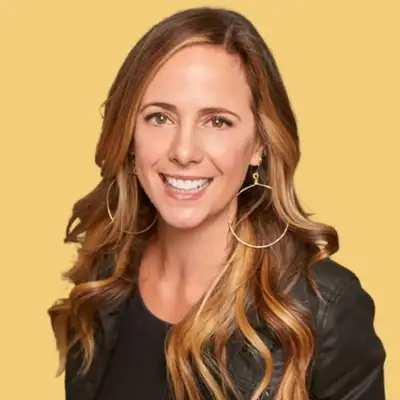
Host Stacy Havener brings you the storytelling tips, sales strategies, behavioral secrets, and inspirational stories that help YOU turn your words into dollars. Learn from sales and marketing experts. Meet finance and investment leaders, founders and fund managers who have made it, and the ones on the rise. Because there are people behind the portfolios. Their stories matter. So does yours.
Presented by:
Ultimus Fund Solutions // www.ultimusfundsolutions.com
GemCap // www.geminicapital.ie
@stacyhavener // www.billiondollarbackstory.com
Stacy: It's amazing and
it's such a great example.
Of the idea that people
do business with people,
Bob Dorsey: they do, and these guys
were incredibly patient and in the
long run it probably was one of the
best investments they ever made.
But honestly, when, uh, We started
going, we were starting to be profitable.
We actually were to the point
where we were starting to make
partnership distributions.
I remember they said to me, they
said, Bob, we didn't think we'd see
a penny of the investment we made.
We just made it because we
know you and we like you.
Stacy: Hey, my name is Stacy Havener.
I'm obsessed with startups,
stories, and sales.
Storytelling has fueled my
success as a female founder in the
Toughest Boys Club, wall Street.
I've raised over 8 billion that
has led to 30 billion in follow-on
assets for investment boutiques,
you could say, against the ads.
Yeah, understatement.
I share stories of the people behind
the portfolios while teaching you
how to use story to shape outcomes.
It's real talk here, money,
authenticity, growth, setbacks, sales
and marketing are all topics we discuss.
Think of this as the capital
raising class you wish you had
in college mixed with happy hour.
Pull up a seat, grab your notebook,
and get ready to be inspired
and challenged while you learn.
This is the Billion
dollar Backstory podcast.
I find the most magical moments in a
story are when things that don't seem
to belong together, combined to make
something uniquely special, something you
couldn't have imagined until you saw it.
And now that you've seen it.
It makes all the sense in the world.
That's certainly the case with my
next guest, Bob Dorsey, co-founder
of the Financial Services
Powerhouse Ultimus Fund Solutions.
The Ultimus team represents over 400
billion in assets under advisement.
Serves more than 450 investment
management clients representing over
1500 funds, and has over a high.
825 employees.
This is a story of startup to
scale up of epic proportions.
And it's interesting, you know, FinTech
and finops and all the backstage
elements of financial services have
gone through a tech revolution.
It's about optimization and
repeatability and scale.
But whenever I spend time with Bob,
I'm reminded that while all of that new
school stuff is important, There's nothing
more important than the old school.
People.
The people we serve as clients, the
people we work with as colleagues,
the people we collaborate with as
partners and service providers.
From a butcher shop stall at Finlay
Market to the halls of financial
services fame, Bob shares the
importance of putting your clients
first and staying true to your roots.
Bob isn't in the day-to-day trenches
anymore, but anyone familiar with the
Altima team knows that his people first
Midwest, Values are alive and thriving.
The founder's legacy lives on in a firm
who knows who they are and who they serve.
Here's to culture.
Without further ado, meet
my friend Bob Dorsey.
Bob, thank you so much
for being here today.
You and I have known each other for a very
long time, and the conversations we've
had over the years have been amazing,
and I am so excited to invite people to
be a fly on the wall or a fly sitting
on the bookshelf as the case may be
with that beautiful backdrop behind you.
Thank you for being here.
Thank
Bob Dorsey: you for having me.
I've been looking forward to this.
Stacy: Yes, as we were just
saying in the green room, I mean,
who knew the next phase of your
career would be podcast star?
Bob Dorsey: It wasn't on my bucket
list of things to do, that's for sure.
Stacy: Well, it is now.
You could check it off, you
know, add it to check it off.
Okay, so that's, that
feels good sometimes.
So I wanna start, of course, being
that this is a, a podcast about story.
And specifically about backstory, I'd love
to start with yours and I have the benefit
of knowing a little bit of that story.
So I'm gonna suggest that you
start at the butcher shop.
Can you do that for me?
Okay.
Bob Dorsey: Yeah, sure.
My dad was a second generation
butcher at Finlay Market here
in, in downtown Cincinnati.
My grandfather started the business.
My dad inherited it, and uh, I was
the only boy out of four children
and I happened to be the oldest.
So I was the heir apparent to
be a third generation butcher.
My mom saw my future a lot
differently than, uh, my dad did.
So anyway.
I worked there as a kid, started
in the second or third grade,
and grew up in that business.
Was a wonderful business.
It was hard work, but learned a lot, a lot
of stuff that I still think about and do
today, but as I was getting a little bit
older, my dad's health deteriorated and
it became pretty obvious to my mom that.
I was getting a step closer to being that
third generation butcher, and my mom said
to me, you are going away to college.
We gotta get you out of town so that when
you're away in college, we can sell the
business to somebody else and you won't
be that third generation to butcher.
And I was all on board with that
because I had different career plans.
I always thought I wanted to go
into public accounting, took some
public accounting courses in high
school and uh, That really helped
me get started on, on my career.
So I owe a lot of it to my dad who
taught me a lot of stuff as a kid,
but to my mom who really helped
steer me in the right direction.
Stacy: Ah, I love that story and
I'm gonna ask you some specific
questions cuz there's always
stories within the story, right?
And I, I know there's some gems in
there from the butcher shop that
I wanna come back to and I find it
just so amazing and interesting how.
People's journeys actually go, right.
I mean, yeah.
The fact that you knew in high school you
wanted to be in an accounting when your
dad was a butcher, like all of that sort
of magic together makes you who you are.
All the threads, even though they seem so
disparate and so disconnected, don't they?
Bob Dorsey: They do.
But in addition to working at the butcher
shop, With my dad, I would always sit with
him at home, count the cash, do all the
deposits, all of those types of things.
So you worked real hard.
Then you could see, did you
have a good week or a bad week?
Yes.
Was it gonna be a good week in
the Dorsey house or, or not?
And I'll tell you, if it snowed on a
Saturday when market was open all day.
The next week was not a fun
week at the Dorsey house.
We didn't make any money.
Yeah.
So as I think back on it, there were
a lot of little steps along the way
that I, I really learned to appreciate.
But at the same time, it also, I.
Made me realize I can't
take certain things for
Stacy: granted.
Oh, I love that.
Okay, so you're, we're gonna come back
to the market, but, so you've decided
this is it, I'm gonna be an accountant.
So how did you go from accountant now
to founding Ultimas Fund Solutions?
I mean, take us all the way through.
Bob Dorsey: Sure.
Sure.
Well, when I was in high school,
I took an accounting class.
I went to an all boys Catholic high
school here in Cincinnati, and I had
this really great teacher my senior
year and he taught accounting and
I told him I was very interested in
getting into the accounting profession.
And we talked about some of the local.
Universities here, but he recommended I
at least go and visit Christian Brothers
College in Memphis, Tennessee because they
were very well known for their accounting
program and their engineering program.
And my mom was all for it
because it got me outta town.
There were a number of good schools
around, but that got me out of town.
So I ended up down there and
Brother Larry, who had suggested
I go there was absolutely right.
The accounting program was top-notch
and actually the course I took
my senior year in high school.
Was the same course they taught
their freshman year in college.
So it was a great refresher.
I got to fix the mistakes from the
first time around in that class and it
really propelled me to having a good
accounting career at Christian Brothers.
Stacy: And so now you're, you've
got accounting degree in hand.
You're not going back to the market.
Mom said, no way.
So how does it go from college to Ultima?
Keep going.
Bob Dorsey: Sure they were
successful in selling the business
while I was away at college.
That's good.
And that worked out well.
But I wanted to get in
the public accounting.
I had worked while I was in college
at a local c p a firm in Memphis,
but I really wanted to come back.
To Cincinnati, interviewed with all the
big eights that I could and ultimately
got a, an offer at Arthur Anderson to
work in the tax department in Cincinnati.
And so I came back, started, and.
When I started, I thought, okay,
if you're gonna be in public
accounting, you gotta be a partner.
And if you're gonna be the partner, you
might as well be the managing partner.
So when I joined, I was like, what's the
fastest anybody ever made partner here?
Who's the managing partner?
How old is he or she?
Yeah.
And three and a half years in,
I realized this is hard work.
I really don't wanna work 80 hours a week.
And in public accounting,
you tend to think.
That ends on April 15th.
No, the 15th of every month is a deadline.
Oh.
For different types of clients and stuff.
So the busy season was all year long.
And it took me a few years to
realize that, but that's when
I realized there's more to life
than being a public accountant.
Yeah.
Stacy: Yeah.
And I think, you know, oh no, I know.
I know what part snacks I'm
gonna have you go there.
So basically, It's funny, I wouldn't have
thought that until you told me this story
because I, I associate that type of, you
know, you hear it with investment banking
and there's certain careers that are just
known for like really late nights and all
these things, and I, I agree with you.
I think most people think tax season
is the thing for an accountant.
So your next leap was
to the fund side, right.
No.
Bob Dorsey: What ended up happening,
I had worked for one of my clients
was in the construction industry.
Oh, that's it.
Had been working on their engagement
the entire time I was there, and
I was out at their office one day
and the controller said to me, I.
Oh yeah, I need an an assistant
controller and I need a tax manager.
Do you know anybody or any of your
coworkers who might be interested?
I thought about it for a
second and I looked at him.
I said, how about me?
And he said, you would be perfect.
So we chatted.
I had to go back and tell Arthur
Anderson I was interviewing and that
I was wanted to take this job and they
said, congratulations and good luck,
and we look forward to continuing
to work with you in a new role, not
as an employee, but now as a client.
Yeah, sure.
So I got there and it was a great company,
but after about a year and a half I
realized working in the office of a
construction company, you were overhead.
And I really didn't wanna be
in a job where I was overhead.
I uh, and I get it.
The guys who operated the cranes and
the trucks and the bulldozers and
all that, they're the money maker.
Yeah.
But when I found out I was
just overhead, that was kind
of really disappointing to me.
Yeah.
So I ended up, Talking
to my brother-in-law.
We met when I started at Arthur Anderson
and we were at a family function, and
he told me, and one of his best friends
was the C F O of an organization in
Cincinnati, named it Lesner Financial.
And he said to me, Sully's
looking for a new controller.
Anybody in your group?
From Arthur Anderson
who might be interested.
I said the exact same thing.
I said, how about me?
And he said, uh, well call
Sully and he'll talk to you.
So I called Sully, went in one
evening and chatted with him.
He had me come back on a
Saturday morning for breakfast.
We chatted.
He offered me the job
on uh, Monday morning.
I took 24 hours, talked about it
with my wife and decided, yes, I
wanna go ahead and make that move.
And that was the step that got
me into the mutual fund business.
That's
Stacy: right.
Okay.
I forgot the construction piece,
which is an interesting one
as we, as we continue along.
But my gosh, even at, at this point in
your career, I mean, you can see the.
One of my favorite mantras, which
is people do business with people.
I mean, you're seeing
it so in so many ways.
And so, okay, so you're now, you've
made the leap from, so it's butcher
to accountant, to control owner,
construction company to now the
fun business and it's so linear.
Doesn't this all make sense?
It does,
Bob Dorsey: but it does.
But you would've never put that
group, no Industries side by side,
by side, or would you Would've never
projected that as your career path?
Stacy: No.
No.
So you're now, you're in the Fun
biz, which is obviously where
you're gonna make your career home.
And tell us how it went
from there now to Altima.
Bob Dorsey: Yeah, it was great.
When I joined Lesner Financial,
I was the controller and.
At Leshner.
Their business was investment advisory
work, but they had one of the first
money market funds, both taxable and
tax-free money market fund in the country.
So Bob Leshner was a real entrepreneur,
a risk taker, and some of hi.
What I learned was him and a
lot of it rubbed off on me.
So ultimately I was able to move up
to the CFO F position, and we were
working, most of our effort wasn't
so much at the corporate level.
It was on our family of funds and
getting everything priced out and
all the day-to-day stuff you do with
funds and we grew that business, but.
One day Bob came to me and
goes, this is a cost center.
Is there any way we can take this cost
center and turn it into a profit center?
And I said, I don't know, but
we'll, we'll think about it.
Mm-hmm.
Shortly thereafter that we did
a small acquisition of a small
fund group out of Florida.
I believe they had four
or five equity funds.
They converted into us and
we were now servicing them.
So in theory, we had our first outside
client and they became part of us.
And then we said, okay, if we're
gonna do this, we really don't have.
All the technology, everything else.
And Bob Leshner told me, he said, go make
friends, start going to industry events.
Yes, get yourself out there.
It's not what you know, it's who you know.
So start shaking hands,
learn what's going on.
Listen.
And that's how I ended
up really getting into.
The business development side of
our, our service company and the
attorneys that represented the fund
group we bought, I told them we
wanna start doing this as a business.
And I said, do you have any clients
or advisors who are thinking about
getting into the fund business?
And lo and behold, they did.
And our first two clients were
referred to us by that law firm.
And then we were on our way
doing mutual fund servicing.
Wow.
Stacy: So you acquired the first,
the first thing was an acquisition.
Were the other two acquisitions as
well or was it a servicing contract?
Bob Dorsey: Those were
servicing contracts.
Ah, cause Ah, okay.
Because now we had clients.
Yep.
One was somebody we bought, the other two
we were now servicing it at Got Got it.
And, and things like that.
So, Also the accountants for that client.
I got to know them.
They seemed to like what
we were doing, and our own
accountants were Arthur Anderson.
I started talking to them and one thing
led to a next, they would introduce me.
To somebody in a different office
of theirs who was doing mutual
fund servicing or accounting for,
for the mutual funds and stuff.
So it was just the power of the network.
Yeah.
What we did was simply reach out
and, uh, Bob gave me plenty of space
and he said, just go meet people.
Mm-hmm.
You can't sell sitting at a desk.
You need to get out and meet people.
And so I did.
And our business crew quite nicely.
Uh, so much so that a
little bit down the road.
Bob had the opportunity to sell Lesner
Financial and our family of funds that
were known as the Midwest group of
funds to countrywide home loans, the
big mortgage group out of California.
And they wanted to get into not only.
The mutual fund space to offer products,
but they liked the idea that we were
doing the servicing because not only
were they one of the largest mortgage
originators in the country, they were one
of the largest mortgage servicers Yes.
In the country.
And so they just thought
this was a good fit.
Sorry to say it wasn't a good fit.
No, but it was a great experience for
us and I knew we were kind of doomed.
We were the Midwest group of funds.
And they were countrywide and we thought
a lot differently than they did, and they
thought a lot differently than we did.
So it ended up being not the best
of transactions, but it was what
we really needed to try to take the
servicing business to the next level.
Stacy: You know, it's such a great
story and, and thank you for sharing
that because the culture and the values
and the people, again, are really where
the synergy happens or it doesn't.
And I was chatting about
this with another friend.
You hate to hear stories like this
cuz of course every, you know, you
think things are gonna work out
perfectly and they, sometimes they're
great and sometimes they're not.
However, It's also oftentimes the
spark for a new business idea, right?
You get these breakaways,
you get these spins.
It happens in the asset management
space with portfolio managers, and
as it turns out, it happens behind
the scenes as well, because that's
basically what happened with you.
So now you're there, you
realize it's not a good fit.
And that was the spark, correct?
To go and start.
What became ultimate
Bob Dorsey: it.
It was.
And, uh, When we started the firm,
we ultimately hired, he became my
partner, John Splain, who worked in
the legal department and Mark Seger.
I hired to be the controller
after I got promoted to the C
F O position and one day mark.
Came into my office and, uh, he said,
this is probably career suicide.
He goes, I really like
you, but I hate it here.
And I said, mark, I'm not real keen
on what's going on here either.
I had lunch with another employee.
Earlier in the week and she's not happy.
And he goes, well, that's
good because I had lunch with
John Splain, he's not happy.
And I said, okay, we can
all agree we're not happy.
And he goes, yeah, what
are we gonna do about it?
So the other woman decided not to
pursue it, but Mark, John and I.
Started meeting on Saturdays, on
Sundays, trying to put together a
business plan, and we spent a lot of
our time in Mark's Den or living room.
He, he was the best typer
of the group, so he got.
To do all the typing.
John and I were belting out ideas and
things like that, and we came together
with a business plan and we didn't
know if it was gonna work or not,
but we kept working at it because it
was really something we wanted to do.
We got to the point where we
were finally ready and we.
Collectively, and actually the
person who didn't join us, she
knew that we were going to leave.
So the four of us resigned simultaneously
and said, we want to go do this
Stacy: ourself.
So now you've got this business.
You mentioned that you, you
had some angel investors.
Can you share with us that story?
I know the story and it's such a good one.
I, I want people to hear
how this came to be.
Bob Dorsey: Sure.
Well, we talked to lots of different
folks trying to get loans or money
and have them invest with us and
we were pretty much striking out.
And then, uh, a good friend of mine,
Called me and said, what are you doing?
And I told him, you know,
we're starting this business
and here's what we want to do.
We need some investors to help out.
And I, he said, well, explain it to me.
So I did.
And uh, he goes, I really don't
understand it, but I'm willing.
To meet your partners.
And he said, uh, you know, I've
got another friend who you know
that might be interested in, in
investing with me into your business.
So we all got together, we
spelled out our business plan.
I think they just shook
their head the whole time.
I got, we really don't know what mutual
fund servicing's all about, but we know
Bob and, uh, we'll go ahead and, uh,
Help him and his partners get started.
So they made the initial seed
investment in, uh, Altimas.
Stacy: I love that.
And what industry were they in?
Bob Dorsey: One was in the construction
industry and one was in the,
uh, building materials industry.
Stacy: I mean, is this coming
full circle for anybody when
you're hearing this story?
Right, because we, I mean, it's
amazing and it's such a great example.
Of the idea that people do business with
Bob Dorsey: people they do, and these
guys were incredibly patient and in
the long run it probably was one of
the best investments they ever made.
But honestly, When, uh, we started
going, we were starting to be
profitable, we actually were to
the point where we were starting
to make partnership distributions.
I remember they said to me, they
said, Bob, we didn't think we'd see
a penny of the investment we made.
We just made it because we
know you and we like you.
But I mean,
Stacy: that's venture,
that's Angel, right?
I mean, you don't it know it is.
And my gosh, look how far.
You've come look at the
company you've built.
It's so great.
Thank you so much for sharing that
cuz I, I think for people who are.
Starting something, entrepreneurs,
whether they're in the the investment
space or not, uh, it's just very
inspiring to hear how you started.
There's one other piece I wanted to go
back to, and I hope people, before I go
back to it, let me just pause and say, I
hope that people see that when you share a
backstory, you don't necessarily have to.
Just list all the bullet points and you
don't pause, you don't take a breath.
You just say, I was here, I was
here, I was here and I did this.
Then I did that, and then
here and now I'm here.
Here I am, and you know, whatever.
There's so many opportunities to have
conversations along the way of that
backstory, and that's what we're doing.
And I wanna go back to,
The market, the butcher.
Yeah.
Again, because target market, maybe not
something you'd think about if you were
a butcher, but you probably should.
And actually you did Bob, and
you've shared with me how you
differentiated your dad's butcher
shop, for lack of a better phrase.
And how you really developed
a niche clientele, and I was
hoping you could share that with
Bob Dorsey: us.
Sure.
Well, when we worked down at Finlay
Market, Finlay Market was an indoor
market that had 32 different vendors
and they sold ev all sorts of meat,
cheeses, delicacies, everything, and
then outside the market were fruit
stands and it was, there were dozens
of them, so it was really the ultimate.
Competitive business because we
could only get our meat from the same
five or six meat packing houses and
sausage makers and stuff like that.
So you had to at some point
distinguish yourself and for
years these people would come and.
Market was open from seven in the morning
to seven in the evening, all day Saturday.
And it was only open two other
mornings during the week, half days.
And so we made 95% of our money on
Saturday and people started showing
up early because they wanted to get
all the fresh, the freshest meat,
the freshest sausage, all of that.
And probably by two o'clock on
Saturday we made probably 80.
Percent of what we were gonna make
for the week, but these people started
showing up at three o'clock and three 30.
A lot of them were.
Nurses who worked in Cincinnati,
Finlay market sits at the bottom of the
hill and up on top of the hill is the
University of Cincinnati, but also the
major hospitals and medical centers.
And so every Saturday afternoon
they would take the bus down.
Get dropped off at Finlay Market
and this one lady who kept coming
to us every week, her name was Mrs.
Lewis, she said, oh, do you have any fresh
spare ribs left and we're gonna have this
big cookout for Memorial Day weekend?
And I said, yeah.
I said, we got plenty left.
And showed her.
And she said to me, she said, I remember
telling her if you want this week after
week or holiday after holiday, just
let me know and we'll set it aside for
you so you don't have to rush here.
She goes, would you do that?
I said, sure.
It's easy, you know, we've got it.
If you want it, we'll save it for you.
So this went on for about a year
and then she started telling her
other nursing friends about it.
And every time she came in, she
introduced me to one of the her other
nurses who were in the same boat.
Long story short, years later, We would
probably have a dozen or more people say,
Bob, next week, can you set aside this?
We're gonna have big picnics,
we're gonna have stuff like that.
So my dad, on Saturday mornings,
as I was wrapping up all the
stuff and setting it aside and
putting into bags and tagging it.
He goes, you took that many orders.
I said, yeah.
I said, they just tell me the
week before what they want.
I wrote it down, I packed the orders.
He goes, well, that's great.
Well, it was word of mouth.
All I did was try to be nice.
To one of our customers
because she was so frustrated.
It was hard getting off work,
getting on the bus, getting there.
Yep.
And competing with all the other
customers for all the fresh meat.
So, and it was fun
because not only did they.
Tell us what they wanted.
That was, you know, fresh.
They also started buying all
their other stuff from us.
So, yes, and, and really just gets
back to trying to do something
nice for one of your customers.
And I'll never forget, Mrs.
Lewis, she was always so nice to
me and whenever she introduced
me to one of her nurse friends,
she goes, this is my friend Bob.
He'll take care of me.
Stacy: Love that.
Yeah, it was.
I love that.
It's such a great story, and even
as you're talking, I'm like, you
could literally take out the fact
that this was your dad's butcher.
Mm-hmm.
Shop and insert Ultimus fun solutions,
as crazy as that sounds, you just
described what you do today, what
your team does today, because Mrs.
Lewis and her friends had a problem.
And it wasn't a problem that you might
think she had, wasn't just that she
needed spare ribs, it was that she was
a nurse who took the bus who was rushing
to try to get to the market before it
closed, and she didn't wanna get like,
you know, just the drags of what was left.
And you solved that problem for her.
You made her life easier.
And in so many ways, that's what you
do when you're a service provider
of anything, solve problems and
make people's lives easier and
Bob Dorsey: better.
You're absolutely right.
And by her introducing us to her friends.
Yes.
Once we started Altima and once we
started working with our clients,
our clients and our business partners
were our best referral network.
Stacy: Well, you've shared
with me that you've never
made a cold call in your life.
You've never written a resume.
Cuz of course you kept saying, how
about me to everybody you met, right?
Who had a job, which is brilliant.
Um, so there's a career tip for
anybody who's looking for a job.
How about me?
Works really well.
Ask Bob Dorsey, and you
never made a cold call.
Right.
Yeah.
And so talk about that.
Bob Dorsey: Well, when we started
Altimas, and even a little bit
before that at at Lesner Financial,
I would try to build a network.
I started talking to the accountants,
the attorneys that we were working
with, and asking if they knew anybody
that would benefit from our services.
And so they usually made the introduction
and some of those introductions were
going to industry conferences being
there, and then, Having those people
introduce me to a, a prospect or whatever.
But then as we continued to move forward,
I thought the best way to get involved
was one, get on I c I committees, two.
Go to these events, listen to what
people say and share knowledge.
And so I really think we were
successful in building our business,
not because we were good salespeople.
I think we were good spokesman and
we could answer their questions.
And so we did that and.
My partners would always laugh.
I'd come back from conferences with some
pretty large bar bills and dinner bills
and breakfast, paying for breakfasts and
lunches and dinners and stuff like that.
But we got to know our
clients and got to know them.
Yeah.
Well, and I was always a, a big fan of
the fact that if your friends ultimately
hire you, Friends won't fire friends.
So it put the burden on us to do a really
good job above and beyond, so that a
friend would never have to reach out
and say, you guys aren't doing the job.
I gotta fire you.
It really is, it's, uh, building
relationships, allowing these
people to be your friends.
You are their friends, and
it's why I think so many of our
relationships are still in place
from even before we launched Altimas
to even the first year of Altima.
A lot of those clients are still with us.
Stacy: Isn't that amazing?
And I think this is an interesting
topic actually, because a lot of
people might challenge and say, you
know, The asset management industry
is becoming more commoditized.
Certainly the back office is commoditized.
They might challenge and say, you know,
it's just like it's mutual fund in a box.
You know, hi, I want a mutual fund.
Here you go.
There it is.
And we know there's so
much more to it than that.
There were other players and there are
other players that do the things that
you do, just like on the fun side where
there are lots and lots of of funds.
So why did the world need.
Another back office provider.
Why did the world need
Altimas when you launched it?
I'm not sure the world cause you were an
Bob Dorsey: underdog.
I'm not sure the world needed
another mutual fund service provider.
They just needed a different
service provider because our
approach was mutual fund services.
Is a professional service.
You need accountants, you need
attorneys, you need shareholder service
reps, you need compliance people.
All of us were providing some
level of professional service, and
that's what we focused on early on.
Wanted to answer questions.
We wanted to be, you know, a
real consultant to 'em and we
wanted to solve their problems.
And back when we started, and I
was just looking at some statistics
the other day, there were about
20 companies that did what we did.
Okay.
Probably the 12 to 15 biggest
were big banks, trust departments,
some IT companies who did this.
Many were public or part of public
organizations, and there were a lot of
mutual funds starting at that time, and
those mutual funds couldn't afford to
hire the biggest and best because they
couldn't even afford their minimum.
So there was a market there,
but more importantly, if we
help those people succeed, we
get the share in their success.
Yeah, and that's really what happened.
A lot of our clients that joined us
in the first five, six years, not
all of them were raging successes,
but we had quite a few people who
kept going up and up and you knew.
You were doing something right because
then your competitors started calling your
clients because now they were big enough.
Yeah.
To be clients of the big guys.
So the world didn't
really need another one.
I think they just needed
something different,
Stacy: you know?
I love that.
And so another one of my
favorite things is the world.
It's not about better.
It's not about like, well,
I'm better than, than them, or
we're better or this or that.
It's different.
And you, you nailed that and it's how can
we be different so that ultimately you
kind of get into this category of one and
you can differentiate by who you serve.
Which is what you described, right?
We saw a white space in the market,
a gap, startups, younger, smaller,
newer fund companies that were
just not getting the attention, the
service, the help that they needed.
And oh, by the way, when you stepped
into that, you were who you were.
You were Midwest, nice.
You were real people.
You were a person on the other end of the
phone, and the relationships were great.
So you grew together.
How amazing is that?
It's not better.
It's different.
It's serving someone special.
Bob Dorsey: It it is different.
And one day, one of our newer clients
called me and uh, I answered the phone
and he goes, you answer your own phone.
I said, yeah, it's pretty simple.
The phone rings, you
pick it up, say hello.
He goes, oh, I was really calling
just to talk to your administrative
assistant to get on your calendar.
I said, well, one, I don't have
an administrative assistant.
Two.
That's my direct number.
You can call me anytime you want.
And I said, what do you wanna talk about?
Do you have time to talk about it now?
Because I do.
He goes, well, yeah, let's talk about it.
Oh, that's so good.
I think that was different because back
then in big organizations, you'd call
and you might have to call multiple
times, get somebody to take your call,
and then they had to run it up the
flagpole to somebody else to get the
answer that they were gonna share back.
So that phone call.
I shared a l time and time again
with our new employees, shared
it with existing employees.
I said, you cannot hide behind voicemail,
and then you cannot hide behind email.
Uh ah.
They're hiring us.
You have to answer and
you have to be responsive.
Stacy: So that's a perfect segue because
I think one of the things I love about
Altima is exactly that vibe, that it's
people first, you put your clients first.
It's also people first at the company.
You put your employees first, and
you have just this incredible people
first vibe to you, and that's great.
It's also, I would imagine very
challenging because you're not
a small boutique shop anymore.
You serve a lot of boutiques.
You also serve a lot of big companies,
but you've grown significantly and you
have private equity, which I think there's
a perception that when private equity
comes in, they come in for one reason.
Efficiency, money, liquidity event.
And you'd think there might be people
who think if I put myself in their
shoes, that all of that would go away.
You know, you take private equity money.
This is, this is a new game now.
How have you managed as a company
to keep that culture and that vibe?
I.
Yeah, as you scaled.
Bob Dorsey: Yeah.
We actually did this twice.
Back in I, I guess it was probably 2012.
John Ling came to Mark and I and
said, this has been a great run.
I think I'd like to cash out, but before
you cash me out, I wanna move to Florida.
My kids are grown.
I want to go down to Florida
and I still wanna work.
I just don't wanna be a partner anymore.
So we use that as an opportunity.
To go look at in the marketplace, and
we went to our angel investors and said,
would you guys like to be bought out?
So we were able to work out a deal where
we would, we bought John out, we bought
our angel investors out, and Mark and
I still got to own 50% of the company.
And we had a new partner.
It was a private equity firm out of
Philadelphia named L L R Partners,
and we talked to a lot of people.
Every PE firm wanted to have
control, whether it's 51% or more.
These guys came to the table and
said, we will be your partner.
And we said, we want you as
our partner and let's work
together to grow the business.
And we did.
And they didn't focus on
so much the financials.
They looked at our business plan
and said, why are you doing this?
Why aren't you doing this?
Have you considered doing this?
Ah, yeah.
Have you, why don't you
hire more people over here?
And so we took this company
that was, I guess maybe about
that time, 11 or 12 years old.
And said, okay.
This was a good first step.
Yeah.
How do we get to that next step?
And L L R really helped us
get to that, that next step.
They came in challenged Mark and
I, they really wanted us to get out
of our comfort zone a little bit.
And like I said, they were great partners.
And I think at the end of the day, we
wouldn't have had the second transaction
if we had not had the first transaction.
But nothing culturally changed?
No.
When L L R came in and we had 20
years of building that culture, so
that when G T C R came in and bought
us, the culture was already there.
We'd been living and breathing
that culture for 20 plus years, and
everybody bought into the culture.
Yeah.
Uh, all of our employees, we talked
about answering phones promptly,
returning calls promptly, all of that.
I don't know if you remember
years ago there was a commercial.
On tv and it was a guy, he walks
out of his office and he's got
a bunch of papers in his hand.
He goes, I just got off the
phone with a, a longtime client.
Then they fired us and he
said, we got complacent.
It was an email, it was a
text, it was this and that.
And he said, A friend fired us.
Uh, so then as he told the story,
the people were sitting there
and he starts handing out airline
tickets, and he said, we need to go
spend some time with our friends.
And at the end of the meeting,
they said, oh, Where are you going?
And the guy in the commercial
said, I'm gonna go visit that
friend that just fired us.
Oh, well, there's one more piece to that.
One, if you've got friends and
you treat your friends well,
friends, don't fire friends.
Friends will allow.
A mistake.
If you fix it and grow from it,
they'll be part of your growth,
but they don't wanna be neglected.
And that's what that
commercial was all about.
Yeah, and I think I thought about
that a lot was every time you
know, something was happening.
I'm thinking, oh, last thing I
once a friend firing a friend.
Stacy: I love that.
What a gray anecdote and I think
you know, and great advice.
For people who are building no matter what
part of their evolution they're in, right?
Because I think this
wasn't private equity.
People standing next to you with
a stopwatch timing, how long
it took you to do stuff, right?
This is a totally different,
totally different environment,
and so, Maybe that's a good place
to segue as entrepreneurs and
certainly as entrepreneurs who
are scaling, whether it's asset
management or FinTech or whatever.
What advice do you have for people who are
contemplating either an angel investment
venture, private equity, like what did
you learn through those experiences that
you could share with people listening?
Bob Dorsey: Well, I've always
been big on storytelling.
I was never the smartest man in the room.
And the day I would've become the
smartest man in the room, we were doomed.
So, uh, always had, when potential
clients came in, always had the team
there to show that it just wasn't Bob
Dorsey or Mark Seger or John Splain, that
there's a big team of people behind us.
And I would always tell the team,
don't be afraid to speak up.
And even as we prepped for things, I
would tell new employees, staff, whatever.
Whenever we were in meetings,
I would always tell 'em, don't
be afraid to ask questions.
There are no dumb questions,
just dumb answers.
And I could give plenty of dumb answers.
But what was important was
you answered the question.
And so when we be.
Having client meetings or whatever, they
would come to the table with lots of good
questions, and I didn't have to answer
'em all because we had really good people
who could say, yeah, I can take that and
would explain, yeah, what was going on.
So in a small organization,
you think maybe there's just
one center or two of influence?
I will tell you, if we could get
a prospect to come in and visit
us, we would win the clients
because it wasn't Mark or I.
It was, yeah, the employees that
they were gonna hire to do the work
day in and day out, so I love that.
In that world.
I usually made the introductions and I
tried to step away quickly because they
all were smart, they were service minded.
And they were the ones having to deal
with the clients day in and day out.
And it was always refreshing when a
client would call me and say, I just want
to tell you how great he is, how great
she is, how they went out of their way.
I never got tired of getting
the compliment calls.
No.
Stacy: Oh, you never do.
And what about on the other side?
What about when you were
dealing with private equity?
So that's great as you're
building your business.
What about when you were sort of
saying, Hey, we should get some capital.
What advice do you have for people who
are considering that in terms of picking a
Bob Dorsey: partner?
Well, we interviewed quite a few back
in 2012, and it was pretty evident
in the first round of interviews.
They, a lot of them had their own agenda.
Here's what we're doing,
here's how we do it.
Take it or leave it.
And we left it.
Others came and said, we
really wanna be your partner.
Yeah, we really want.
To help you grow.
How can we help you grow?
And there were more than one firm that
we narrowed it down to, but in the
end, that's why L L R got the business
was they listened to us and they were
very interested in everything we did.
And they weren't micromanaging it.
They would ask, is that
the best way to do that?
Is that industry standard?
Was that homegrown or are you using
some purchase software for that?
And they really wanted to
understand our business and that's
what made them good partners.
Some people just want the money and
have, that's what I was gonna say.
The private equity firms sit on the side.
L l r was a great partner for us and
helped us get to that next level.
And so if anybody's gonna go out
looking for private equity, I would
recommend getting, you know, somebody
to lead that search for You get
somebody who knows the market, knows
the private equity firms in that market.
There's lots of private equity, but not
everybody understands the mutual fund
business or the mutual fund servicing
Stacy: business.
Yeah, that's a great point.
And I think you, you hit it that as you
were talking, I was like, ah, it's kind
of a, do you just need the capital I.
Or is it more than that?
Right.
Because some people, to your
point, I just need the money.
I don't really want the advice, I
don't need the strategic help, I
don't need, I just want the capital.
And that's much different than what
you described your relationship.
Yeah.
With your private equity firm.
So that's great.
That's awesome.
Okay, so this has been amazing.
I love the stories.
I love the.
The commonalities between so many
different parts of your journey,
Bob, from, you know, the butcher
shop to construction, to the fund
business, and I can see all those.
Lessons and values today in Altima,
and it's just amazing getting the
backstory of the business you've built.
I end with some questions.
It's a playoff of Bruce questionnaire
and nobody seems to remember one of
my favorite shows here inside the
Actor's Studio with James Lipton.
It was a fabulous show.
Mm-hmm.
Um, did you ever watch it?
I didn't, no.
See, yeah, I did.
That was the only one.
It's so, okay.
Well, so basically he would interview
actors, talk about their, so
their journeys, their backstory,
their career work, and at the end
he would ask him some questions.
So I have a couple of his and
couple of my own, but just helps
us get to know you a little better.
So here we go.
Start with an, an easy one.
Okay.
Okay.
What book inspires you?
Bob Dorsey: The one book that
probably inspired me the most
was a book called On Fire.
It was written by, uh, John O'Leary,
and I heard him speak at, I believe
it was one of our business partners
client Summit a number of years ago.
And it's about a guy who, when
he was nine years old, was burnt
a hundred percent of his body.
Oh geez.
And he survived.
And what he was able to
overcome, But what he was able to
accomplish was incredibly amazing.
Wow.
Wow.
No matter how bad a day you
have, I think about John O'Leary
and everything he overcame.
I'm thinking, wow, it's
really not that bad of a
Stacy: day.
There you go.
I love that.
I have not heard of that book.
That's awesome.
Thank you for sharing that with us.
Okay, so staying with inspiration,
changing it up to what place inspires
you, what's your happy place?
Bob Dorsey: If you asked me that
as a kid, I probably would've said
summer camp or things like that.
The place that we're the happiest
now is, uh, we have a condo in
Longboat Key Florida, and that
is a wonderful place to go.
It's a wonderful place to recharge.
It's a wonderful place to relax.
So long boat key,
Stacy: and knowing you, are
your grandchildren there when
it's this, this happy place.
Because I know it is.
Bob Dorsey: Yeah.
And thankfully it's big enough
we can get all of our kids, all
of our grandkids currently in.
I got a feeling we might be bulging
at the seams in five or 10 years.
Stacy: That's awesome.
Um, okay, so now we're gonna,
we're gonna switch gears.
We're gonna pretend that.
Okay.
You are a rockstar, which is what I always
say to everybody, but now, like you're
a little, you're a literal rockstar.
You're, you're gonna perform to a sold out
stadium wherever you want it to be, right.
And as you walk out onto the
stage, they're gonna play
some hype music for you.
Okay.
And so what song do they play?
What's your walkout
Bob Dorsey: anthem?
Well, we did do this at a
client summit a few years ago.
You did?
Stacy: I must have seen it then.
Bob Dorsey: I don't know.
But it could be any ac dc song.
But the one that I walked out to
was You Shook me all night long.
Stacy: That is amazing.
Any ac dc song in that one
is just, that is awesome.
So good Bob.
Okay, here we go.
What profession, other than your
own, this is gonna be interesting.
Would you like to attempt professional
Bob Dorsey: golfer?
I know I couldn't do it,
but I'd like to attempt
Stacy: it.
I love that.
Okay.
There's a lot of people probably
nodding their head on that one.
I thought you were gonna say butcher.
Bob Dorsey: No.
No.
Stacy: Okay.
You've already done that.
Bob Dorsey: What professional.
I sliced the tip of my thumb off already.
I don't, I don't need any
more scars from butchering.
Stacy: What profession
would you not like to
Bob Dorsey: do?
I don't think I'd wanna be
a professional bull rider.
And the, the reason I say that was years
ago when Urban Cowboy came out, everyone
started to have those mechanical bowls.
Oh yeah.
Yeah.
Oh, wow.
Yeah.
Well, I did one night I
was out with some friends.
We tried to do it.
I was sore for a week.
I can't imagine how those
professional bull riders get back
up week after week, week after week.
It was one of the most painful
experiences of my life.
Stacy: Papa, that is so good.
Okay.
Okay, so this is actually a
really interesting question for
you, given that you have retired.
Yeah.
What do you want people to say about you
after you've retired or left the industry?
I mean, you're still in the industry,
but what did, what, what do you
want people to say about you?
Bob Dorsey: Wow.
I, I guess there's a couple things.
One, I hope they would say he was never
too busy for me to take time out to
chat, to answer my questions, and more
importantly, care what I had to say.
Secondly, you know, I hope people
would say, good guy, honest,
and somebody I wanted to have
dinner with or breakfast with.
It was never a job.
Hanging out with Bob Dorsey.
It was a lot of fun.
Ah, so I, I would hope our clients, our
business partners, all of the employees
and everybody else I know in the
industry would say he was a good guy.
Stacy: I would say that I vouch for that.
You are so much fun to be around.
Your stories are wonderful.
You've built an amazing business
with some very, very special people.
I am proud to know you and I have
really enjoyed our conversation today.
Thank you so much for being here.
Bob.
Bob Dorsey: Stacy, thank you.
I really enjoyed it.
And quite honestly, as I was prepping
for this, I'm thinking how are we
gonna squeeze this into an hour?
Because yeah, most people would
tell me, When Bob calls, you better
have a couple hours ready for a
lot of conversations and stuff.
So I'm glad we were able to stick
to your timeline as best we could.
Aw.
But thank you very much for having me.
You did a great
Stacy: job.
Oh, thanks for being here, Bob.
Thank you so much.
Thank you.
This
Bob Dorsey: podcast is for
Stacy: informational purposes only
and should not be relied upon as
a basis for investment decisions.
The information is not an offer,
solicitation, or recommendation of any
of the funds, services, or products, or
Bob Dorsey: to adopt
any investment strategy.
Investment
Stacy: values may fluctuate
and past performance is not a
guide to future performance.
Bob Dorsey: All opinions expressed by
guests on the show are solely their
own opinion and do not necessarily
reflect those at their firm.
Stacy: Manager's appearance on
the show does not constitute
an endorsement by Stacy
Bob Dorsey: Havener or
Havener Capital Partners.